
Excerpt: Janošík Headquarters and Showroom by Jakub Janošík transforms a closed 1950s hall into an architecture of connection and merging. The design reflects on quality windows and their ability to shape space and atmosphere. It opens the building to the meadow and landscape so the essence of windows, openness, and smooth transitions with nature can be clearly felt and continually experienced in everyday use.
Project Description
[ Text as submitted by architect] Beneath the ridge of the White Carpathians, where forest turns into meadow, stands the new headquarters and showroom of Janošík, a company producing windows and doors for contemporary architecture.
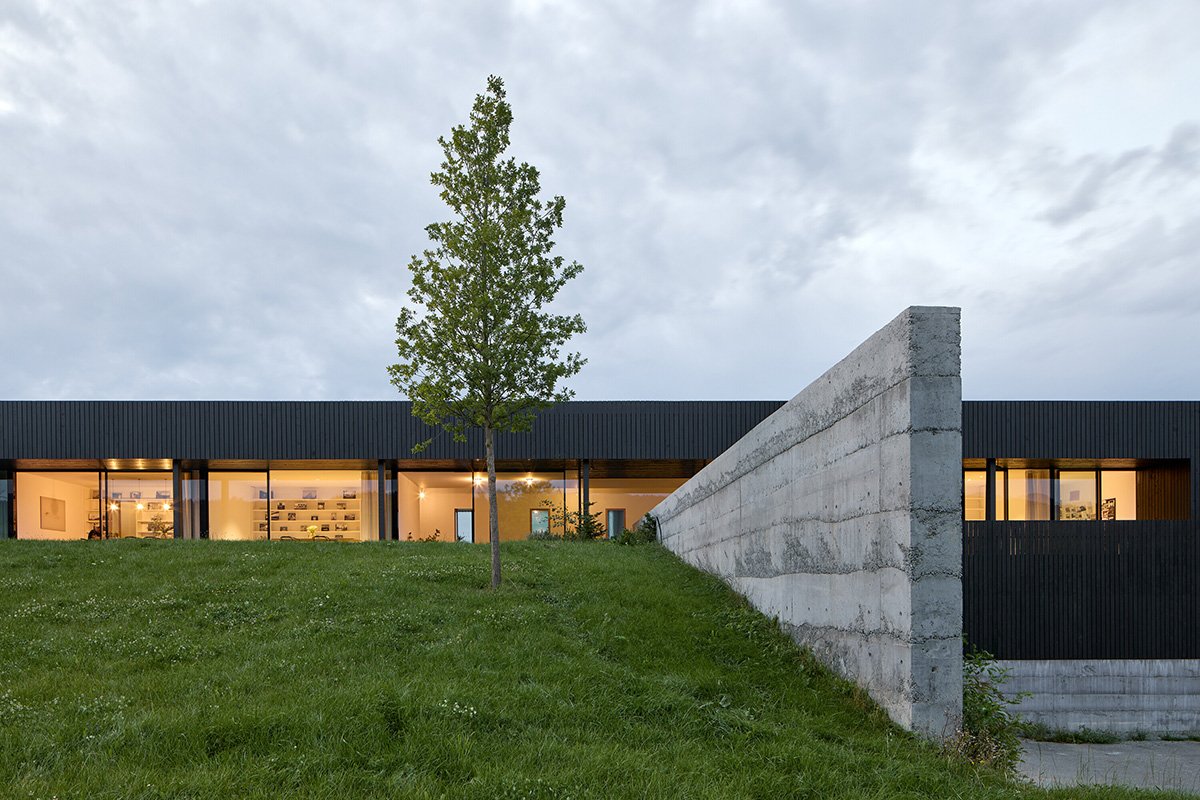
The architecture arose from reflections on quality windows and their ability to shape space and atmosphere through connection with the surrounding landscape. The building was reborn through the reconstruction of a 1950s cooperative hall, originally used as a grain warehouse. What was once a closed structure has been opened both symbolically and physically. A barrier has been transformed into a link between the building, the meadow, and the distant views—so that the very essence of windows could be revealed. The building is called Spoj—The Link.
The architecture was designed by Jakub Janošík, who shapes the design and artistic direction of his family company:
“We wanted to create a pleasant space for work. Also a place where we can present our products—windows, doors, sliding walls—where people can not only see them but also experience them. The surrounding nature and hills have probably influenced our perception of architecture in close relation with the landscape. It is something we are reminded of here every day.”
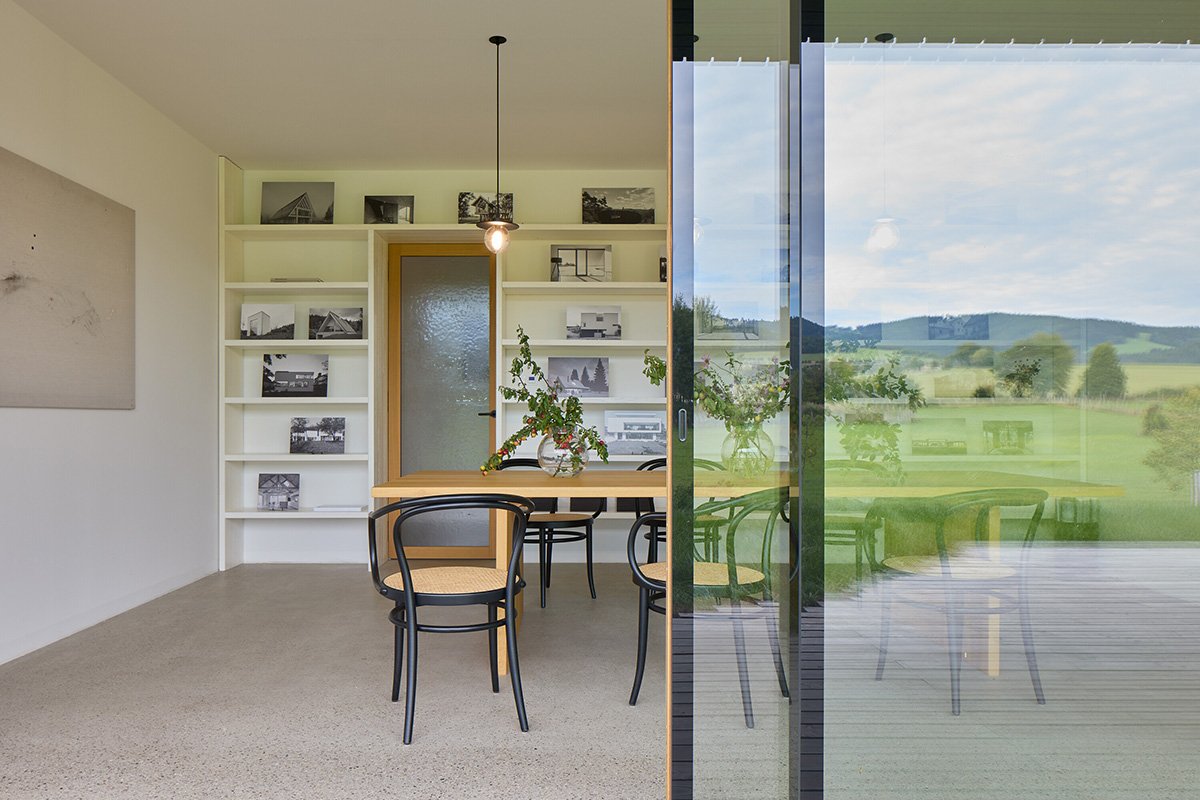
Windows—Product and Atmosphere: The building is interwoven with a variety of window and door solutions, both as a showcase of possibilities and as an experiment in form and function. From sliding large-format glass walls to smaller, specific windows, in different materials and details.
It also presents unconventional designs: sliding windows that float on an electromagnetic field, allowing even unusually large sizes to be moved aside; pivot doors; a seating window where the glass retracts so you find yourself directly in the garden; a window levitating in the middle of a glass pane; windows and doors clad in brass or corten.
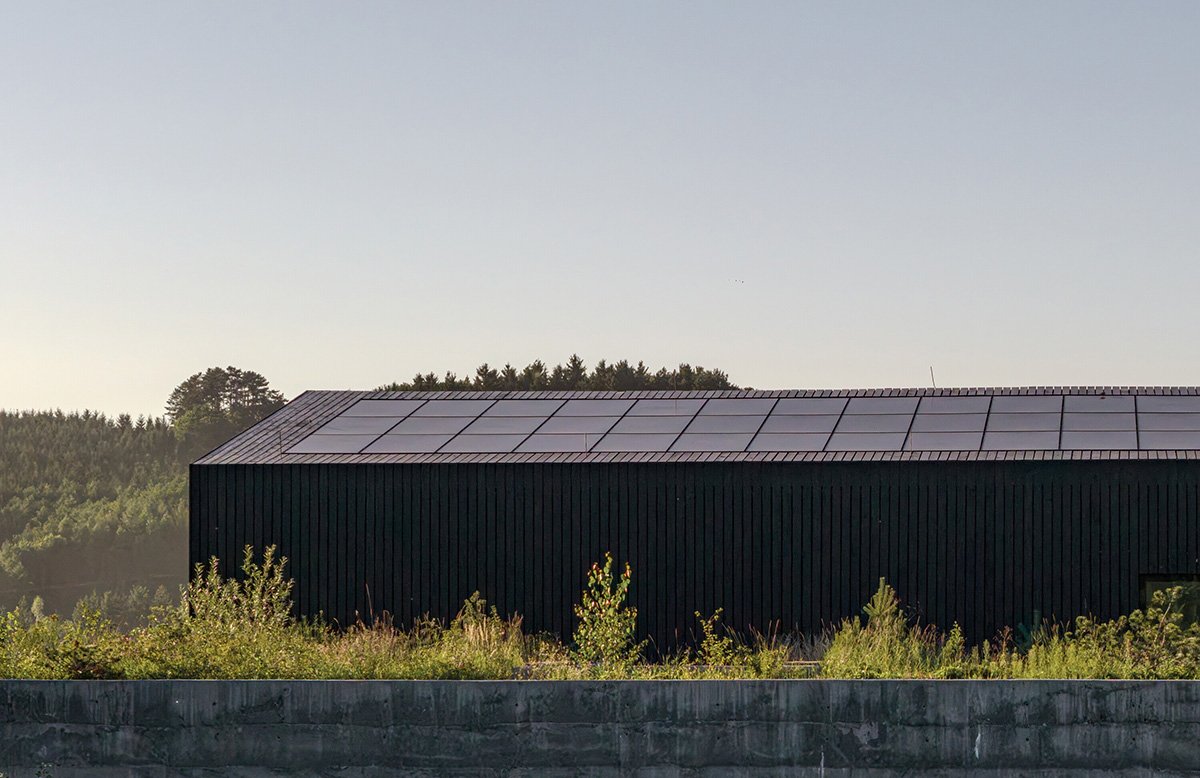
Architecture of Connection and Merging: The architecture and atmosphere of the building were shaped by thoughts about quality windows: about embodying the philosophy of connecting architecture with landscape, about openness to nature, smooth transitions between interior and garden, and unobstructed views. At the same time, there was the wish that the building itself would not disturb the landscape. It is therefore rougher and darker on the outside, restrained and calm inside.
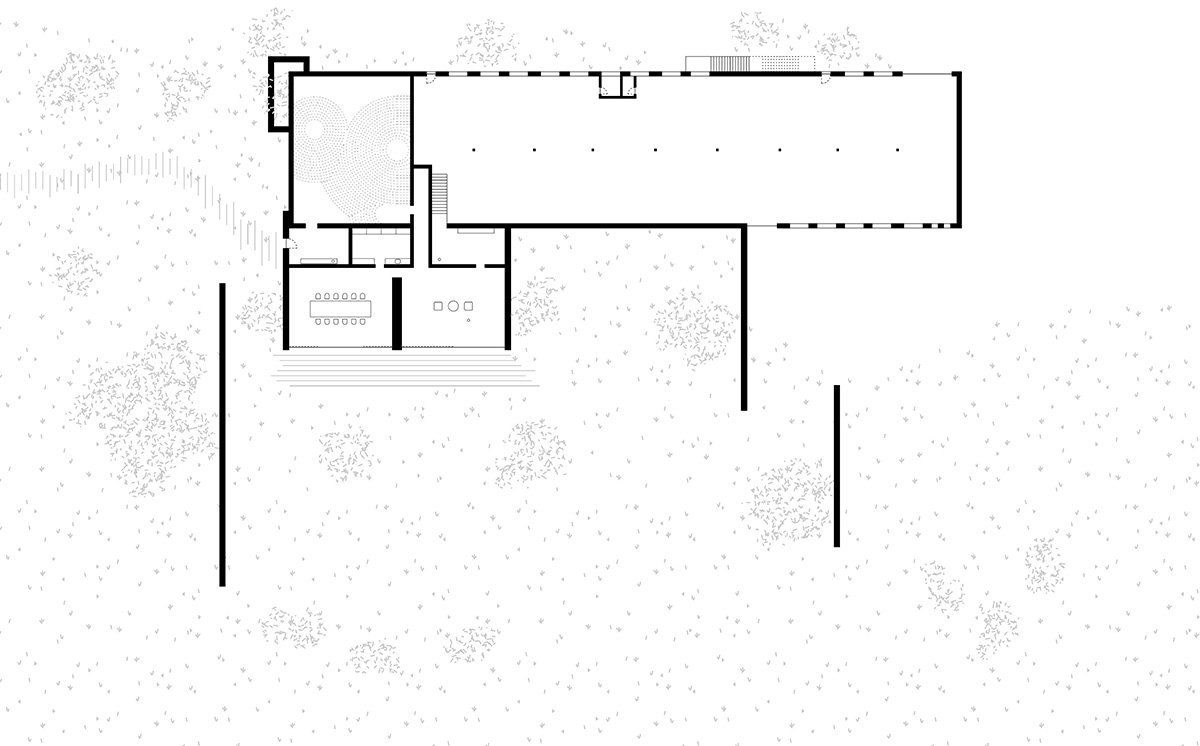
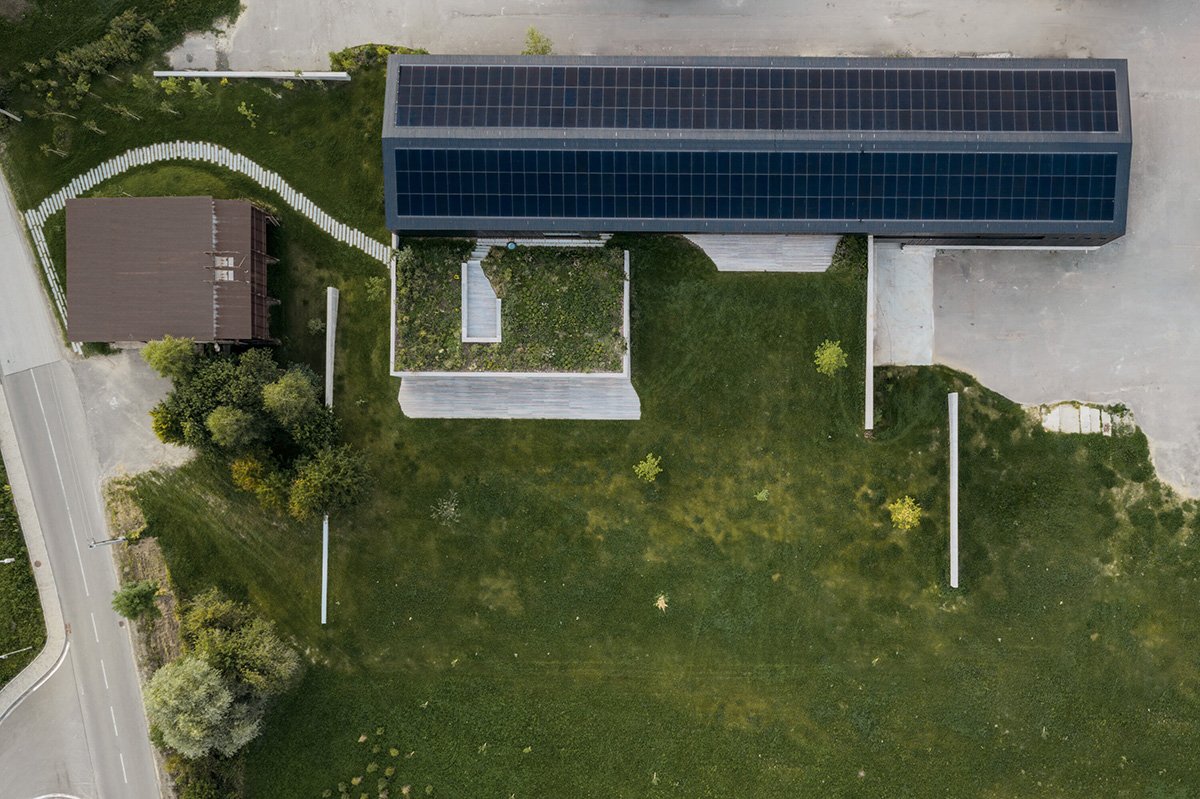
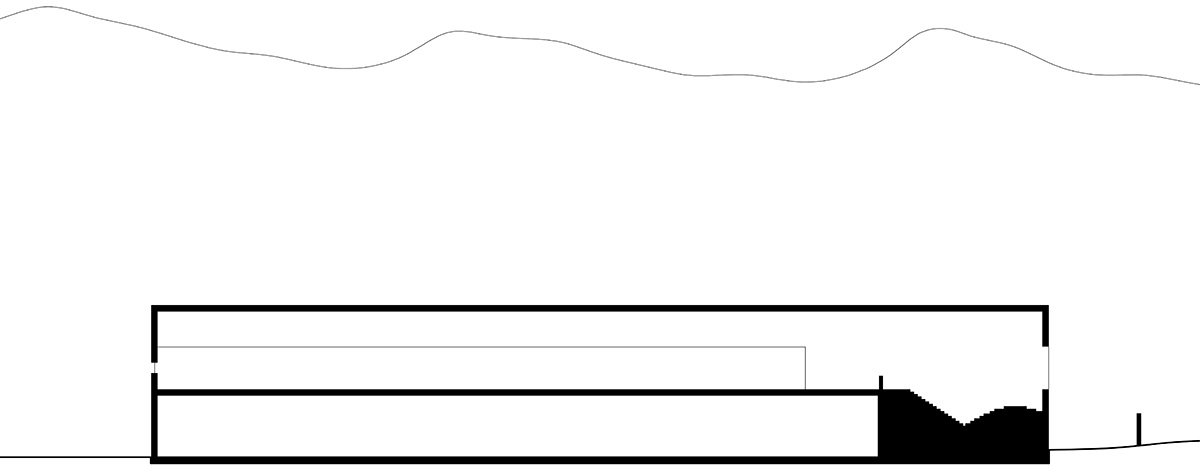
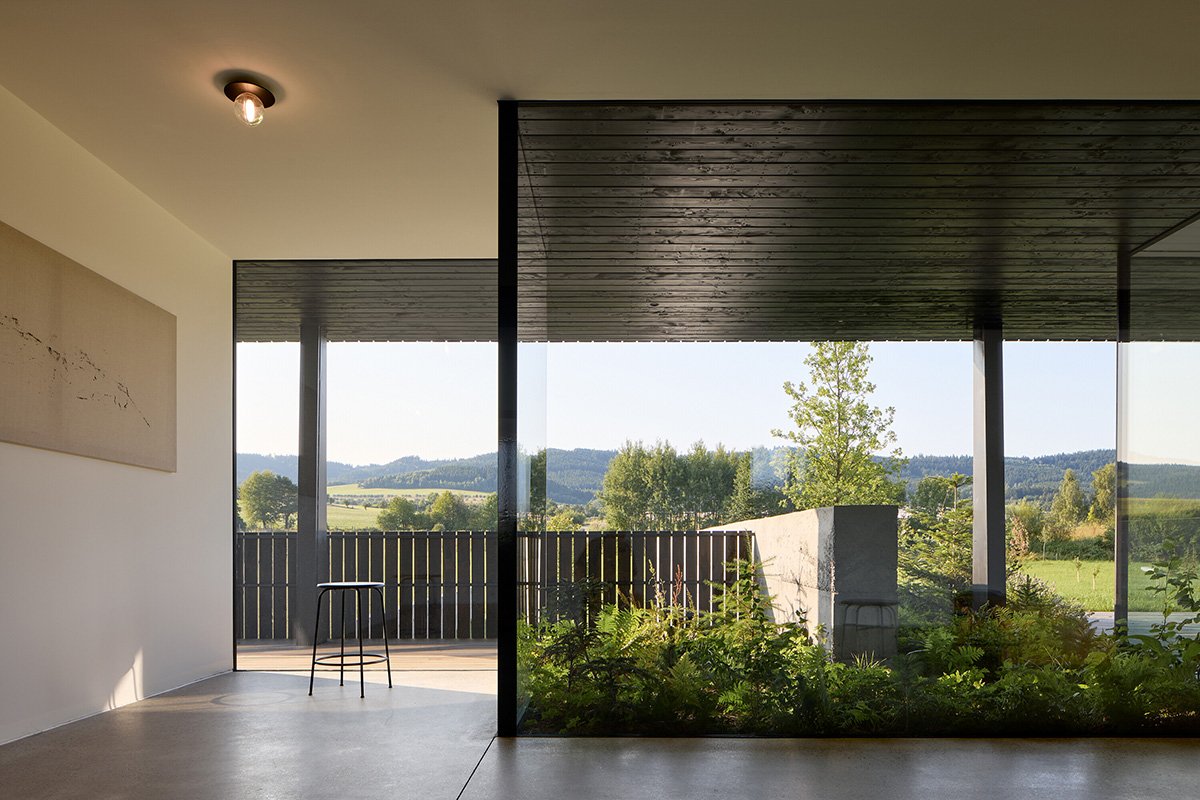
The architectural mass intertwines two volumes: the original hall with its traditional gabled form, and a new concrete “embrace” opening the building to the landscape. This draws the meadow right up to the building, and from the offices five metres above ground one steps directly onto it. Originally, the hall was separated from the meadow by a road and a fence, enclosed by walls.
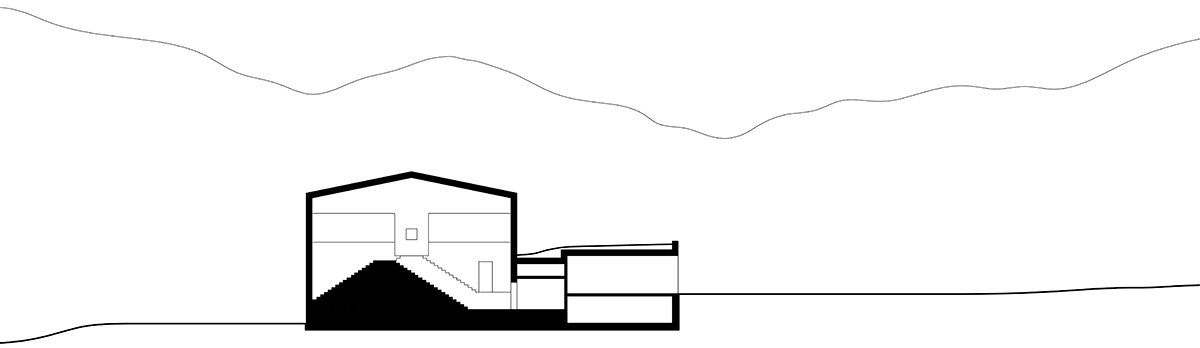
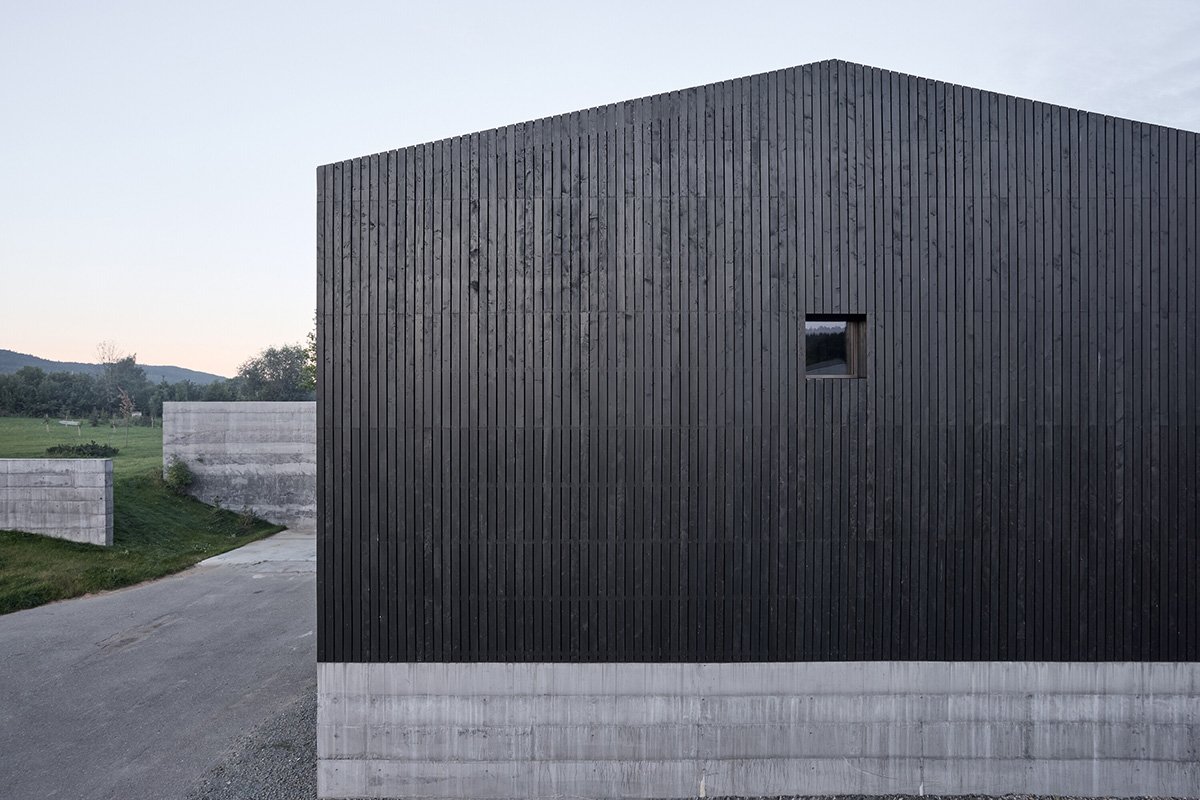
The form of the original hall has been reduced to its most essential lines, highlighting the dialogue of the two volumes. From three sides the building appears as a monument; towards the landscape, softened and pushed into the terrain, it becomes a light horizontal line.
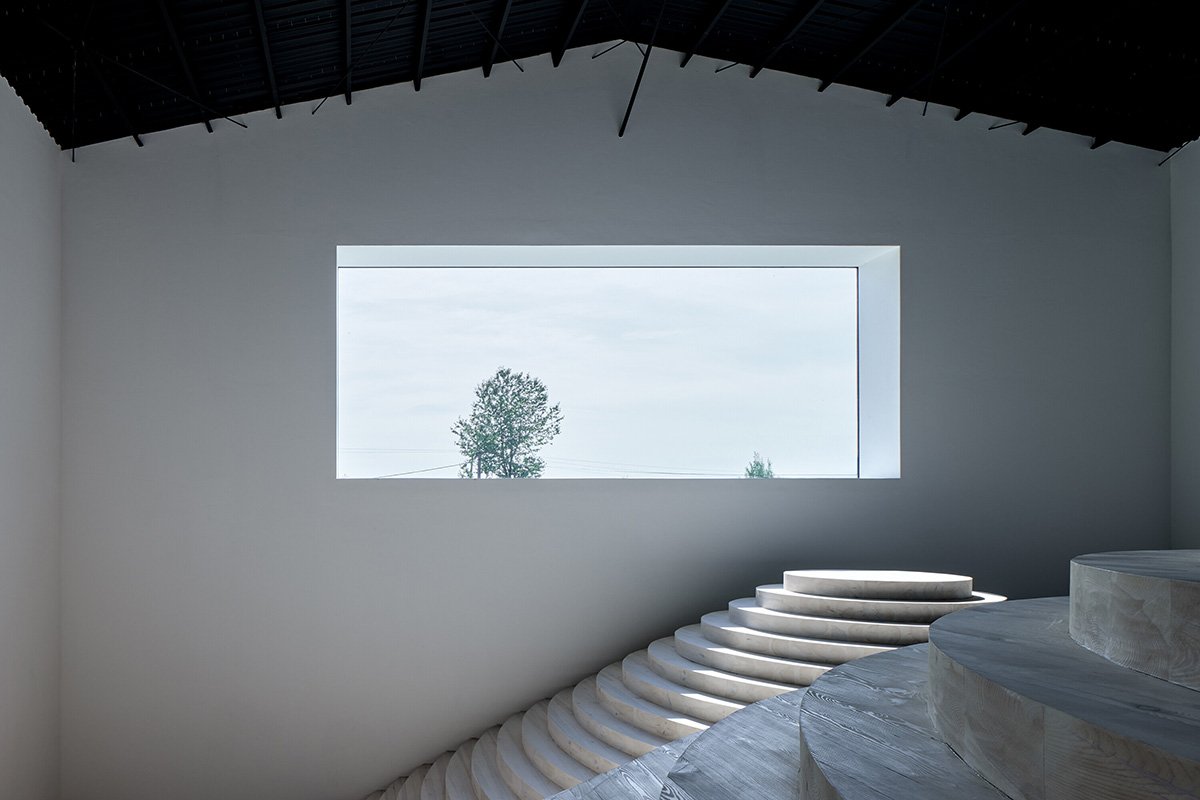
To highlight the steel structure inside, the hall was insulated from the outside and clad in black-painted timber. Four cut-outs were carved into this wooden volume. A single large window is on each gable end. The largest—measuring 9 × 3.2 metres—is on the main façade, revealing what happens inside and serving as a clear sign for visitors. On the opposite side, by contrast, appears the smallest picturesque window.
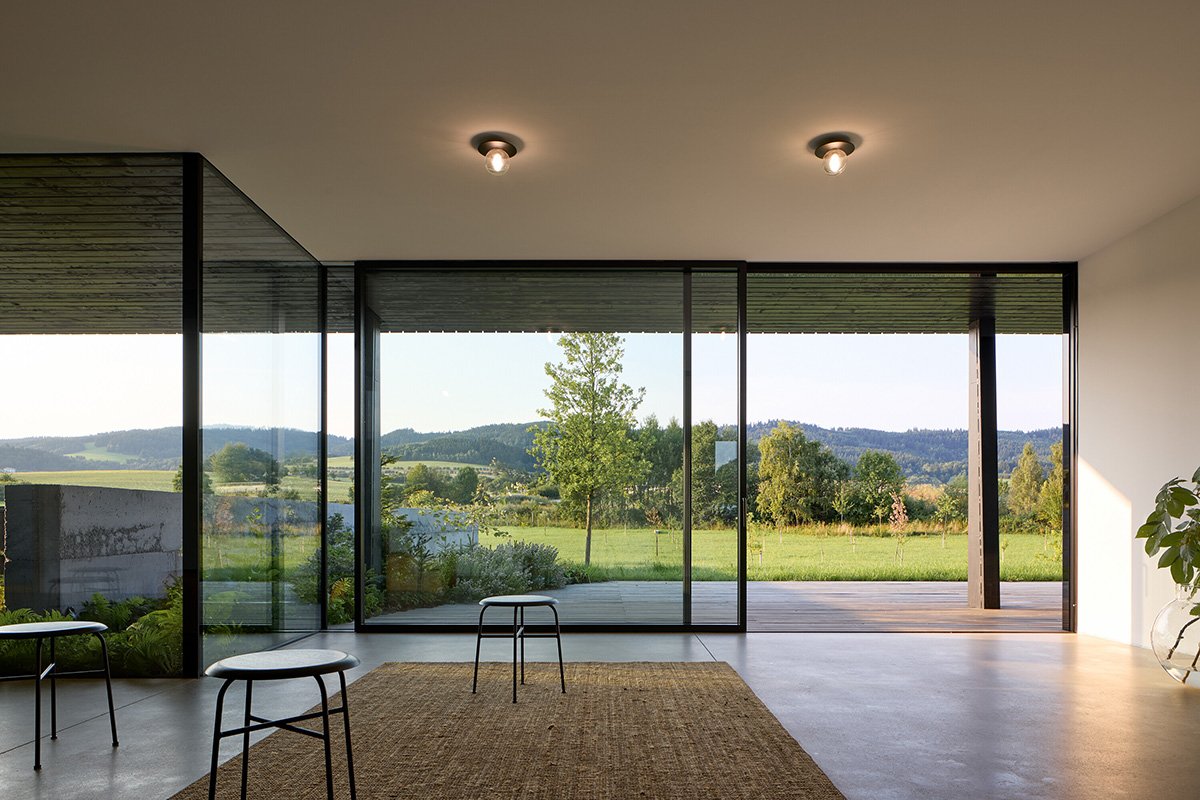
Loggias are recessed into the sides of the building, enabling direct access from individual offices; on the southern side, they extend into a terrace and garden. They also act as shading, protecting the interior from overheating in summer and allowing low sun to enter in winter.
Environmental Approach: Instead of demolition and new construction, the existing structure was reused. Insulation and window replacement reduced energy demand. The building warms in winter with southern sun, while roof overhangs and loggias shield it in summer, eliminating the need for air conditioning. On hot days, underfloor cooling can be used. The roof is fitted with solar panels flush with the surface, blending with the black volume of the building—helping it remain unobtrusive in the landscape.
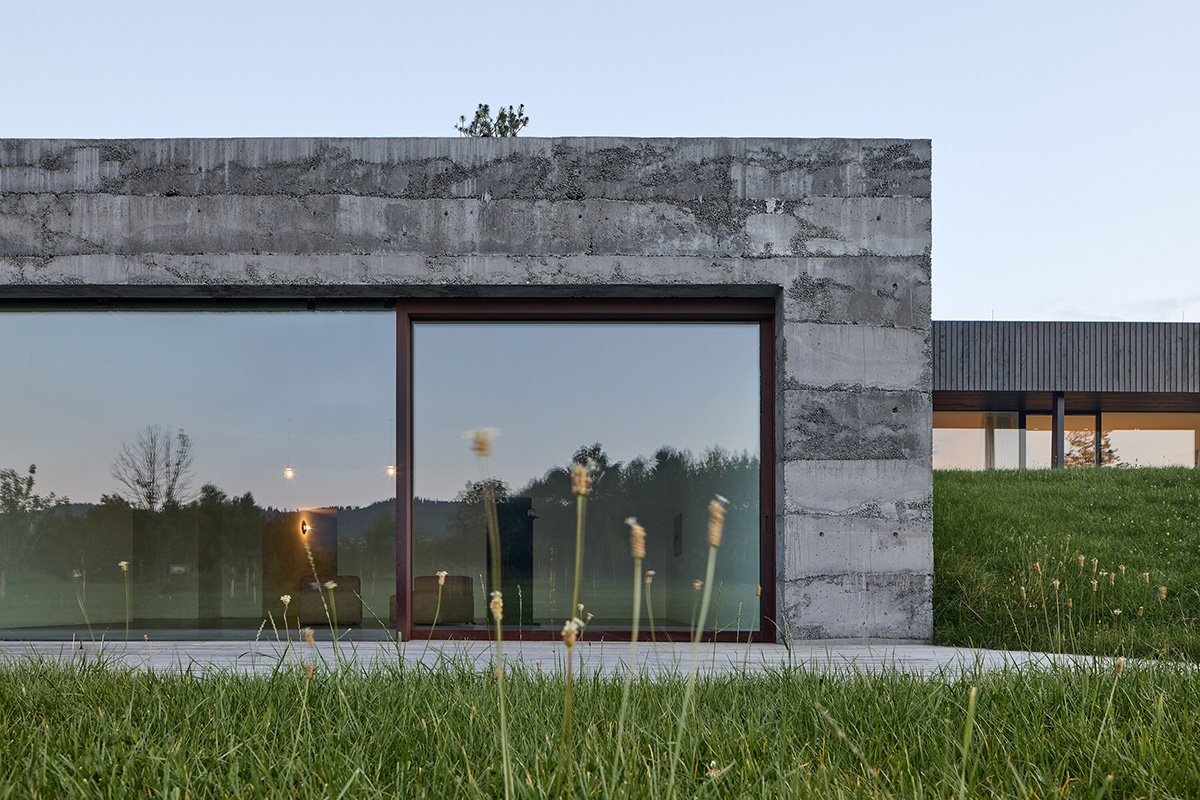
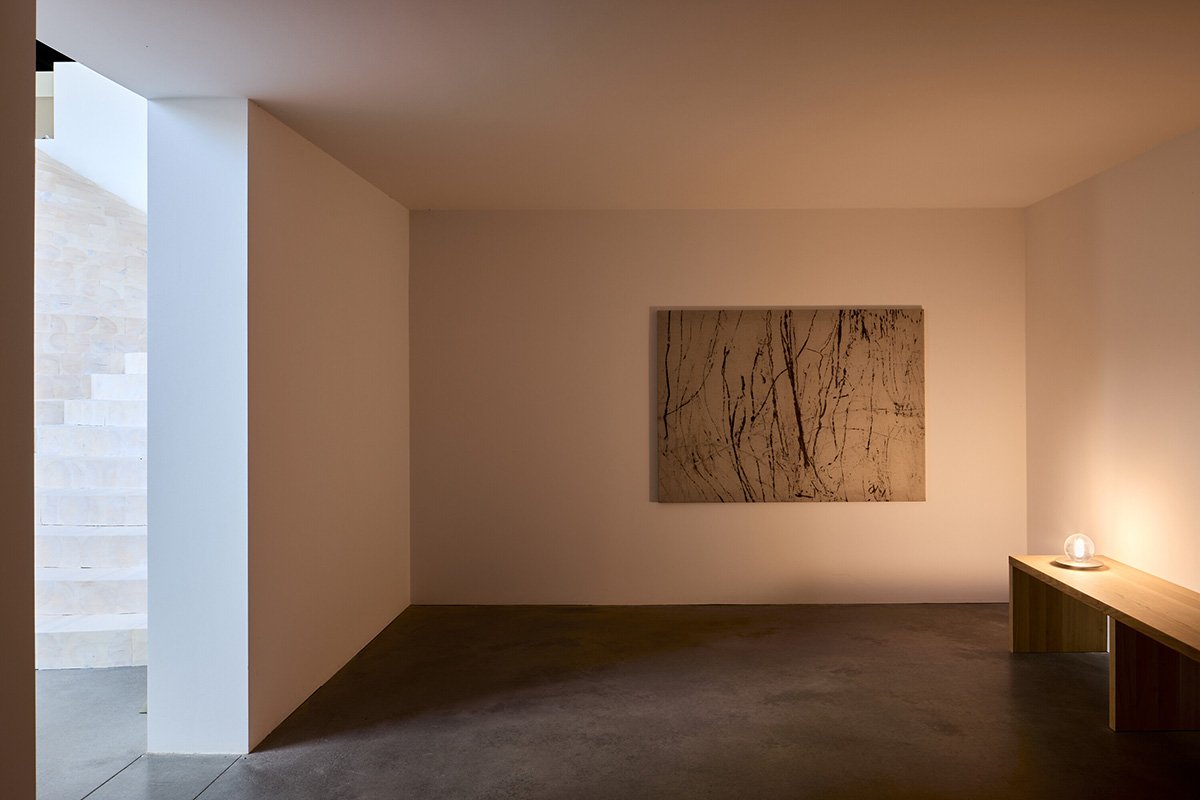
Materials: Material and colour choices were defined by ideas of restraint, to let the forces of nature resonate inside and merge with the landscape outside. The façade is clad with black-painted larch showing the natural wood grain. Concrete is tinted in a sandstone shade and poured in layers to appear geological rather than technical. The interior is white—a gallery for images of the landscape—enriched with bleached spruce, natural oak, dark grey concrete, and linen. Its expression follows the traditional Wallachian architecture.
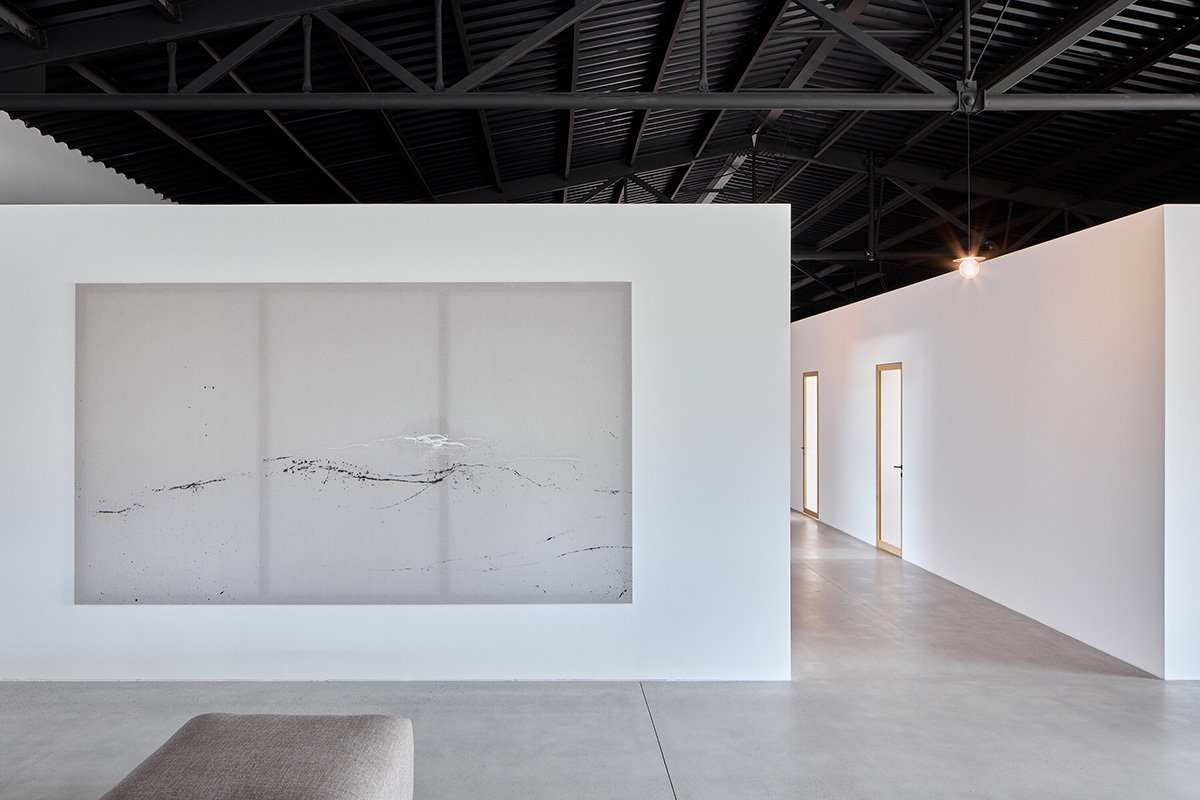
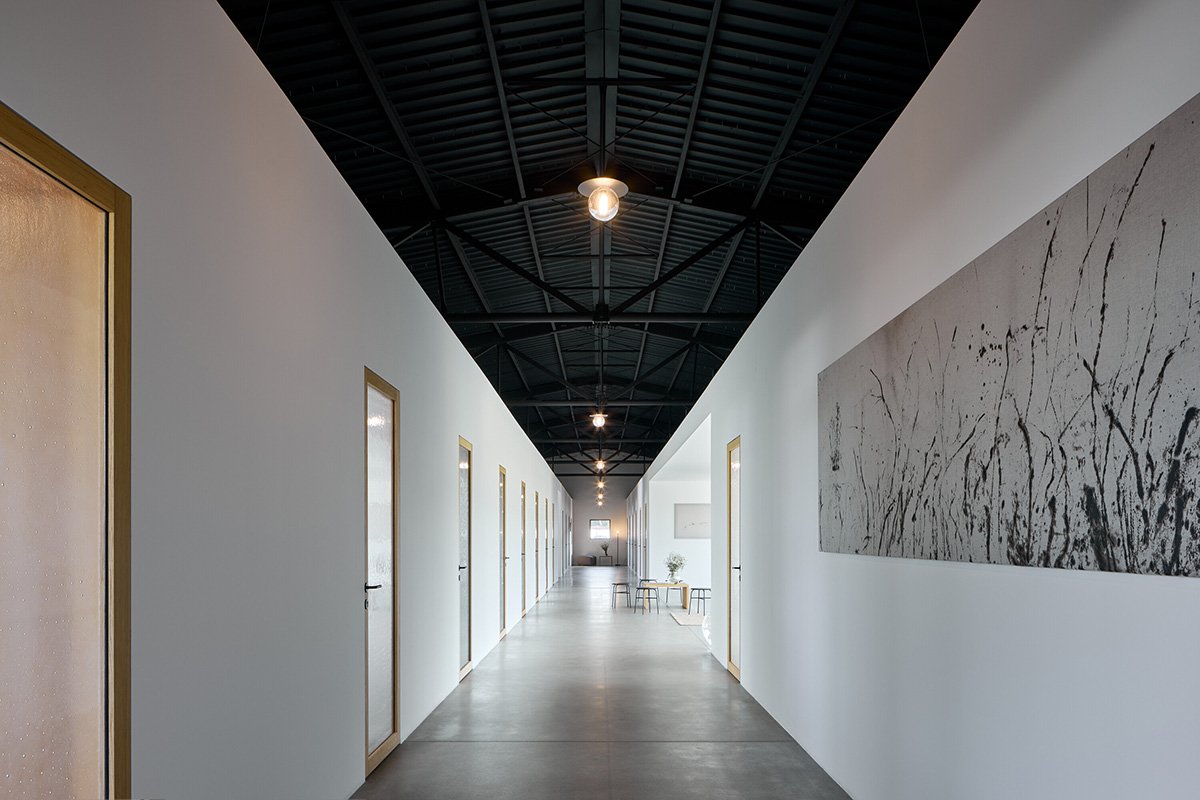
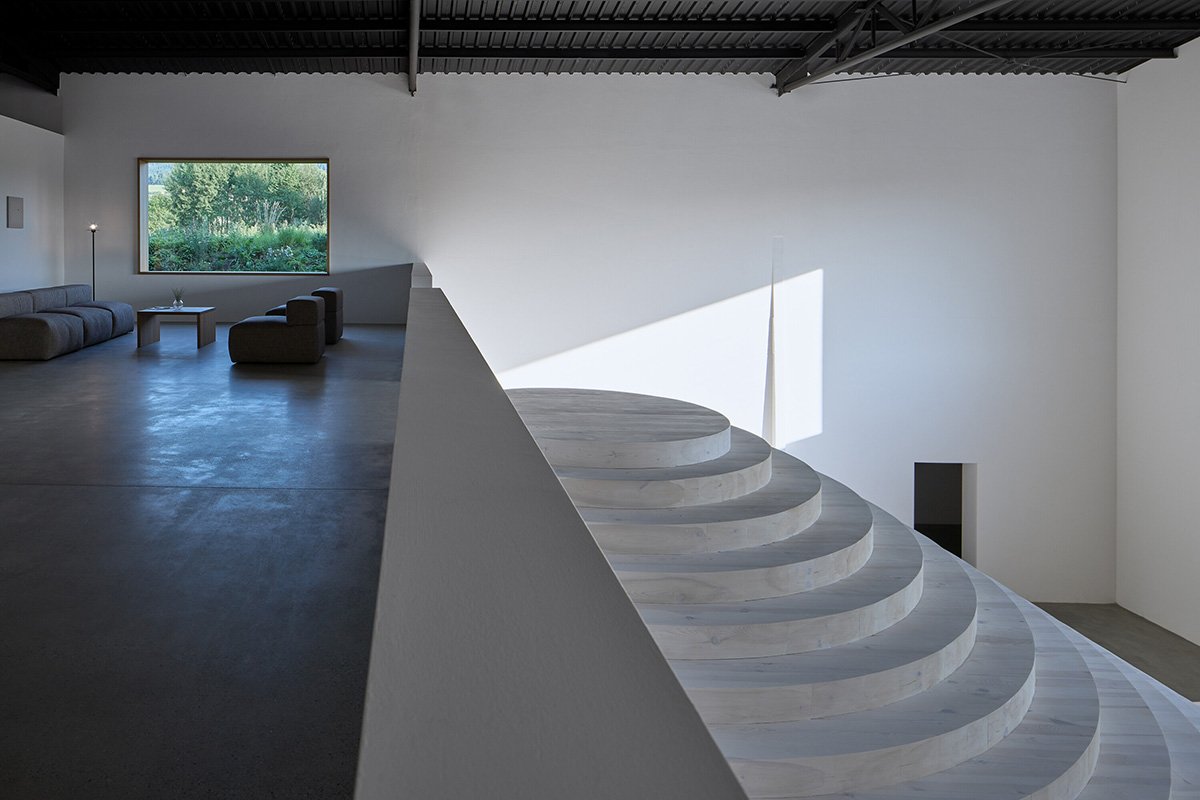
Interior—Both Empty and Occupied: The interior space is shaped by recessed loggias, the open roof, and a central corridor crossing the building. Offices and meeting rooms are placed along the sides, enclosed for undisturbed work. The central area is open like a communal square, connecting to the garden and meadow through a sliding glass wall.
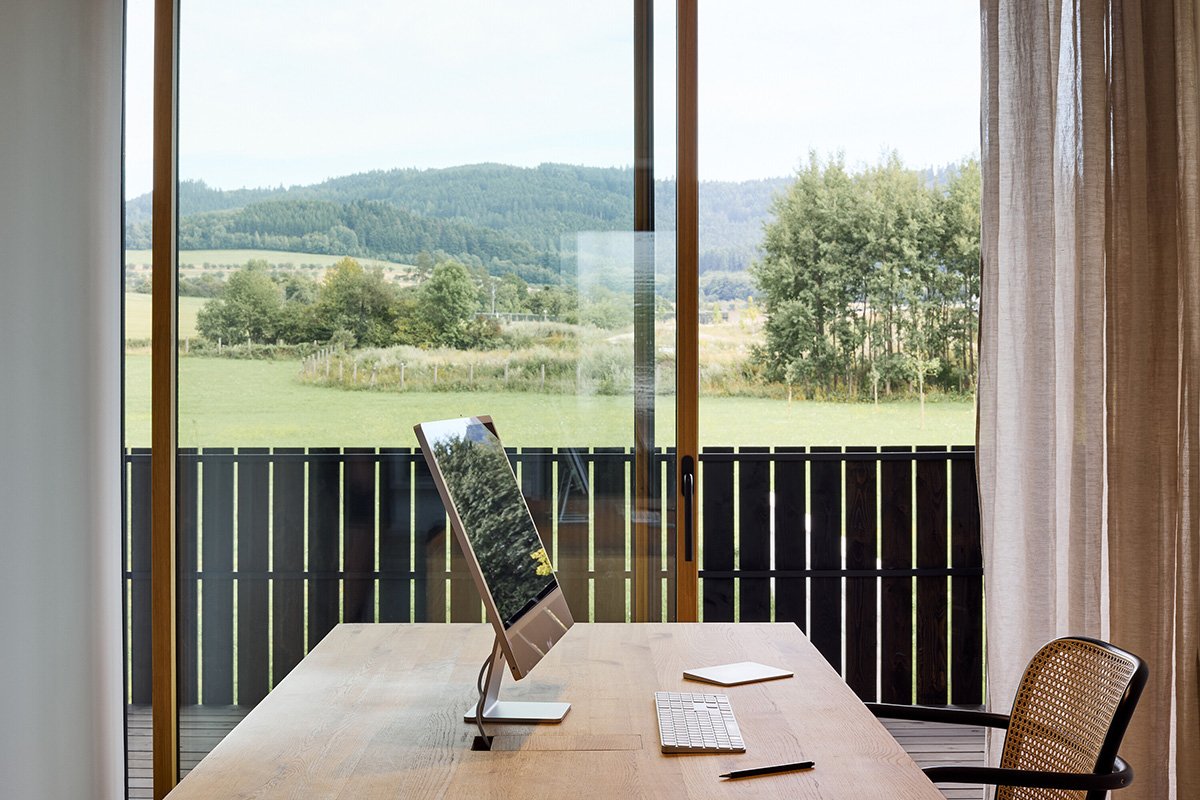
The furnishings were made to measure for the building. Tables, shelves, and the kitchen were crafted in the company’s own workshop, with metal details and seating produced nearby. Standard products are rare—chairs by Ton, Audo, or LD Seating, and office equipment.
The furniture design does not draw attention, decoration is almost absent. The space is instead filled with ever-present views of the landscape and the natural forces flowing inward, shaping moments of space: structure, light, darkness, proportion, height, rhythm, transitions between open and closed, and surprise.
From Nature to Culture: Where the powers of nature did not reach, three artistic-design interventions extend the relationship between building and landscape. They emerged from discussions about atmosphere and its development.
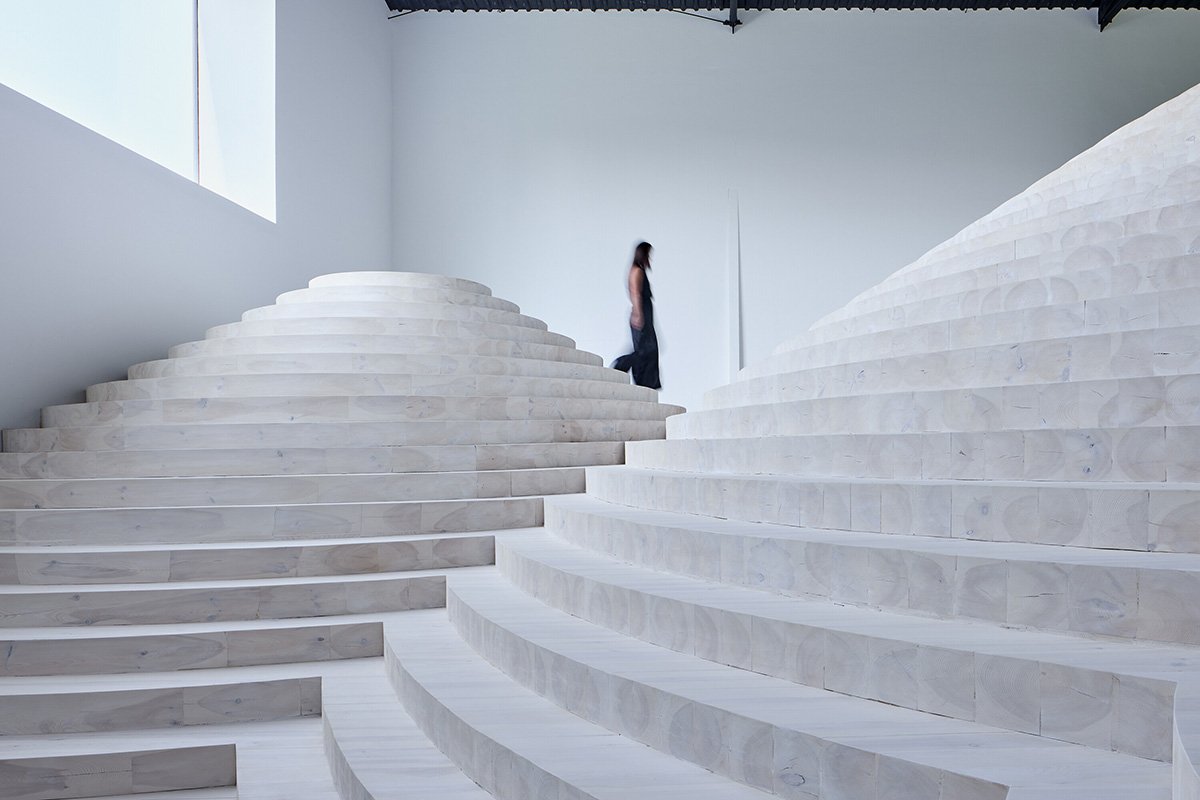
Hills, Maxim Velčovský: Behind the low, dark entrance hall opens a space of 12 × 15 metres with a height of 12 metres. Into it projects the largest window of the building, reinforcing the abstraction of the space. Here, Maxim Velčovský designed an object somewhere between sculpture and staircase:
“The staircase depicts the silhouettes of the surrounding White Carpathians, famed for their unique nature. Made of solid wood—forty cubic metres of pine—it embodies natural beauty and reminds us of craftsmanship. Its hill-shaped mass represents the union of natural force and human skill, tied to cultural heritage, craft traditions, and woodworking. The staircase also serves as a kind of amphitheatre, a place to gather or gaze at the landscape through the vast window, since the view from one place to another is a key theme here.” — Maxim Velčovský
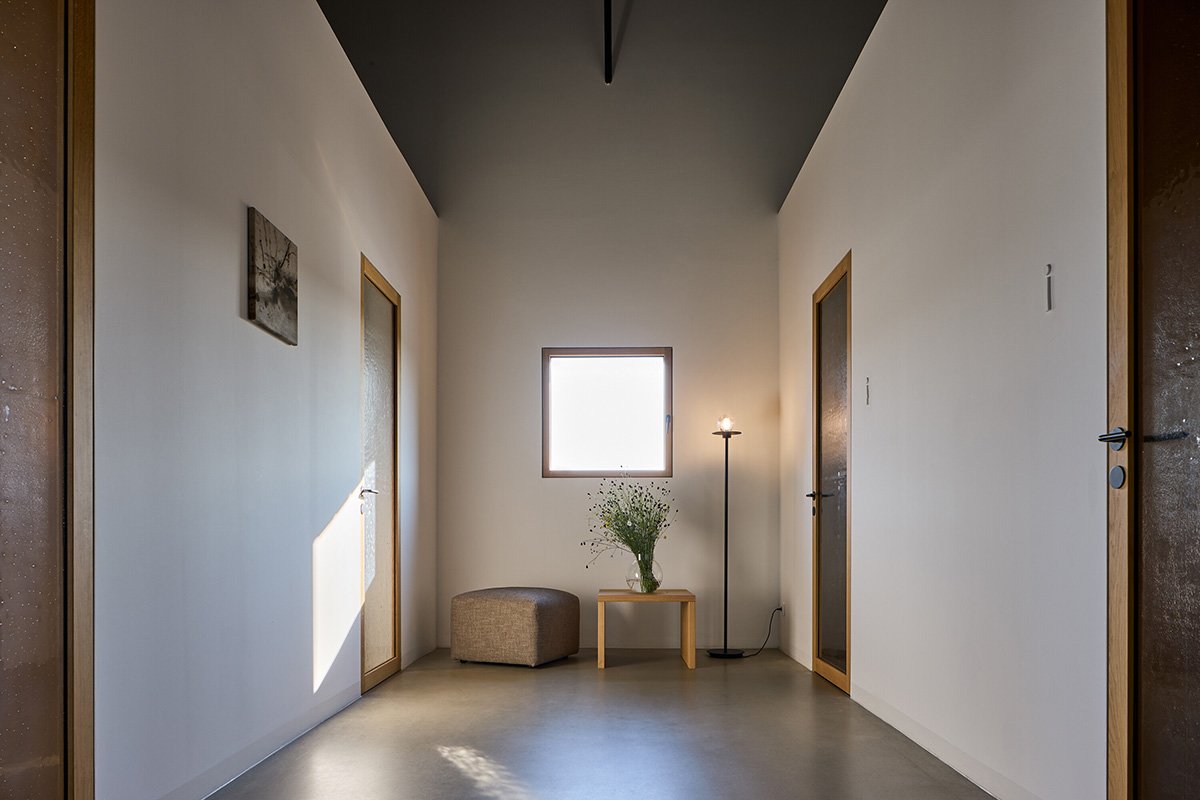
Through Landscape, Lukáš Musil (Musa): The emptier spaces of the building are animated by a cycle of 15 paintings by Lukáš Musil, tailored in size, mood, and technique:
“It was like meeting humanity again. To inscribe the landscape. To pronounce Man. To whisper deed. From inside out and back again. To pass through. Heartbeat, calm, reconciliation. Landscape entering from outside in. Through. Linearity and freedom from effect for effect’s sake. Lightness and untamed spirit. A dialogue with the Wallachian landscape. Pigment applied from the back, penetrating through the canvas, quietly speaking into the space. A sense of the ineffable.” — Lukáš Musil
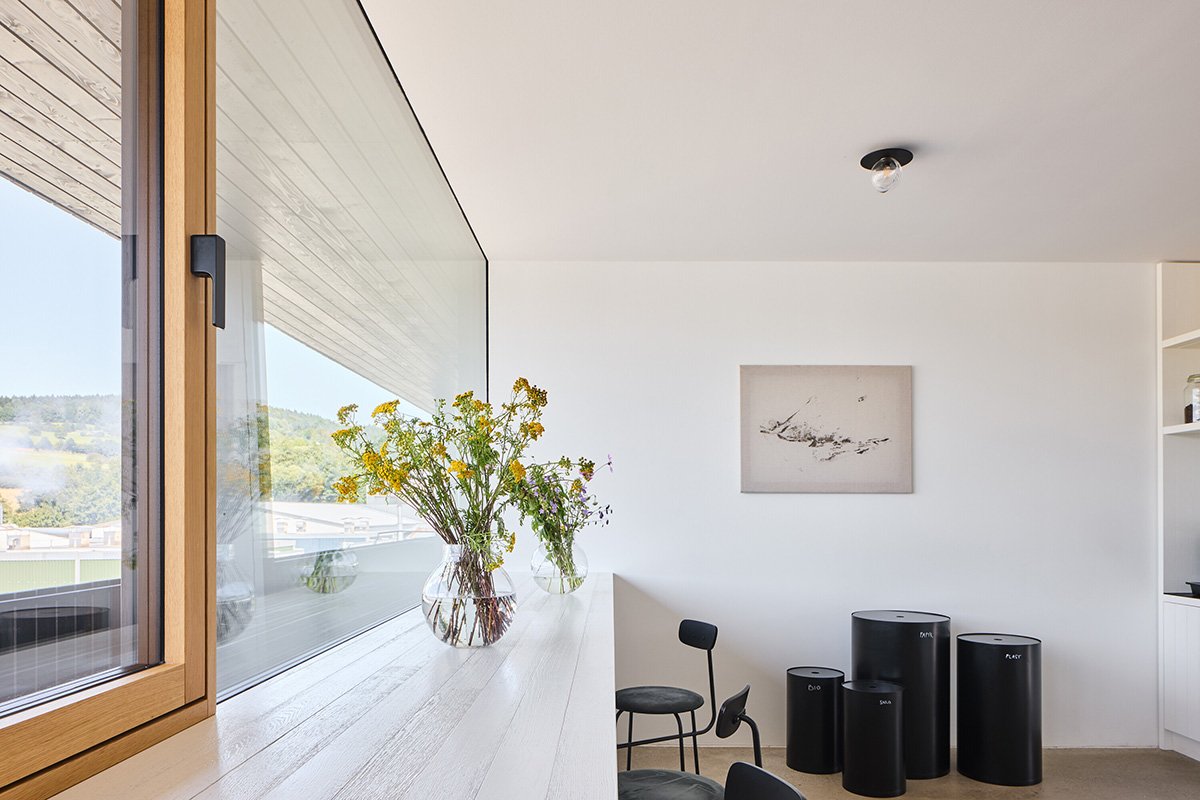
Holt, DECHEM Studio: The raw structure of material, stripped of ornament, was translated into glass. DECHEM Studio created a collection of pendant lights, lamps, and vases of varying sizes. The design relies only on the spherical form, while the texture of the glass is vivid and unique in each piece. The same principle was used for the glass in the office doors, transmitting light while preserving privacy.
Simple Garden: The garden around the building continues the surrounding landscape. It was planted with trees and plants from the region: oaks, firs, birches, linden trees; a meadow with an orchard of apple, plum, and cherry trees. On the concrete extension—low pines and wild strawberries, even dog rose and hawthorn.
Drawings


Images


