Excerpt: Las Liebres B by Martin Gomez Arquitectos is a single-story residence designed for harmony with nature. The elevated structure, built on concrete, features wooden volumes connected by outdoor spaces, enhancing interior-exterior connectivity. Natural materials and landscaping enhance tranquillity, privacy, and integration with the surroundings while balancing efficiency and aesthetic harmony.
Project Description

[Text as submitted by architect] Las Liebres B is one of four typologies designed for Comarca Las Liebres, a gated community in Colonia de Sacramento, set in a topography and environment of natural beauty. The plot features a park with centennial trees and broad views of the Uruguayan countryside. The client’s brief was to capture in architecture the spirit of the project, creating a space of tranquility and connection with nature, for both temporary stays and permanent residence.


Designing a house for a gated community that is still under development presents a significant challenge, as fully conceiving the neighborhood involves working on all the elements that compose it. This requires considering different functions, scales, and timelines, which is reassuring when establishing a shared identity among the houses and the design elements of the neighborhood.
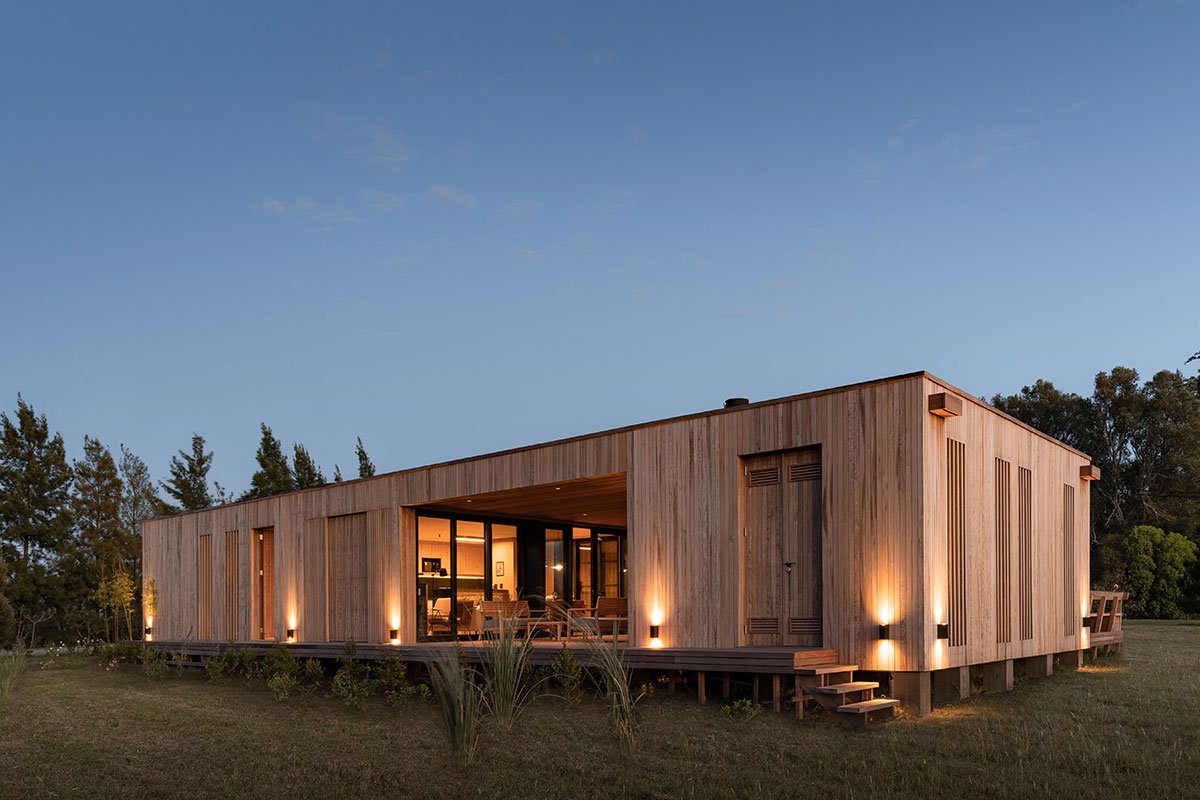
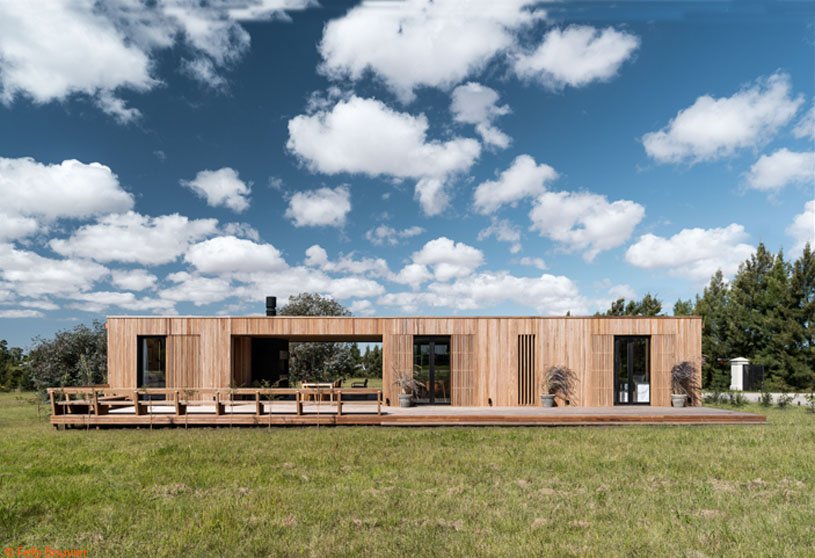
The house is developed on a single floor, slightly elevated above the natural ground, resting on concrete bases, and consists of two volumes connected by a covered exterior space.


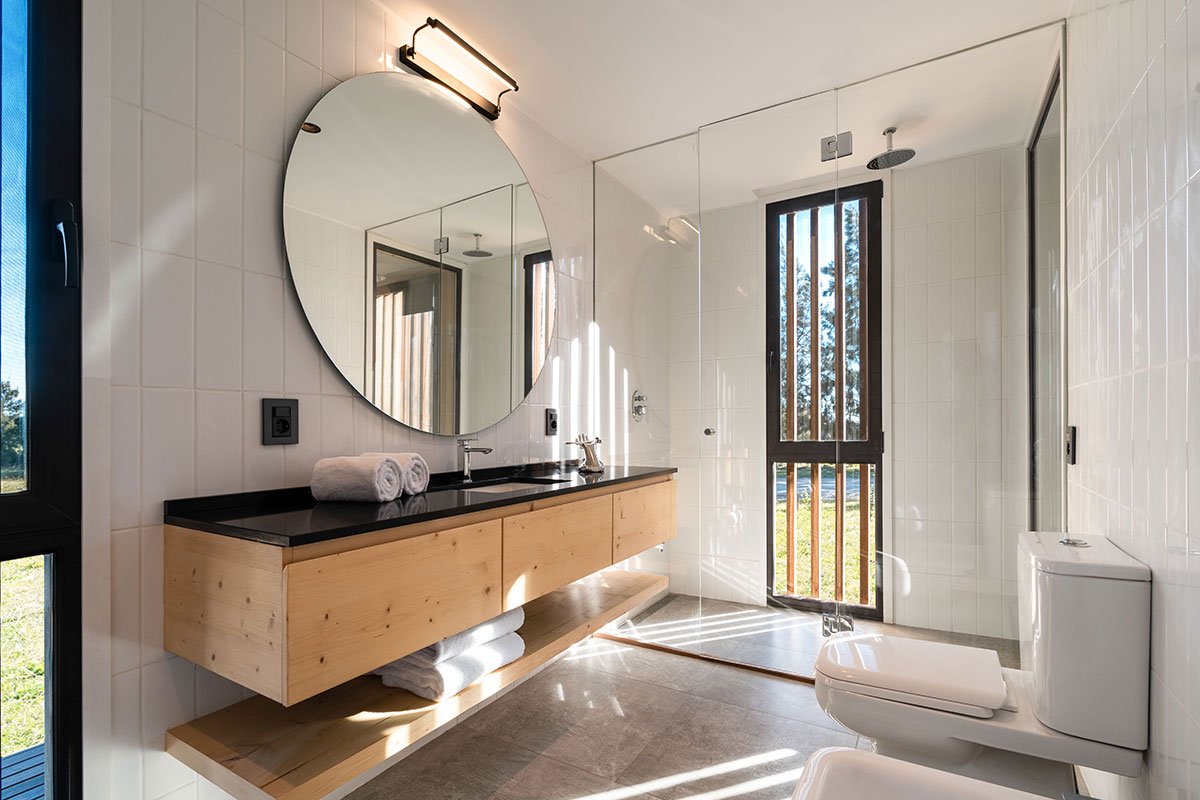
The larger volume features a living-dining area with a guest toilet and an integrated kitchen, comprising the social area of the house, which connects to a large deck to the north and the section of the gallery that houses the barbecue area. A main bedroom with an en-suite bathroom adds to this main volume. The second volume consists of a bedroom with an en-suite bathroom and a space designated for the laundry room.


To address privacy in such an open house, work was done with the landscaping studio to create, through vegetation, the appropriate filters to respond to various needs. This allows for separation from street views, diversion of uncomfortable winds, control of excessive sunlight in summer, and the creation of cozy outdoor spaces that encourage living in nature throughout the year.
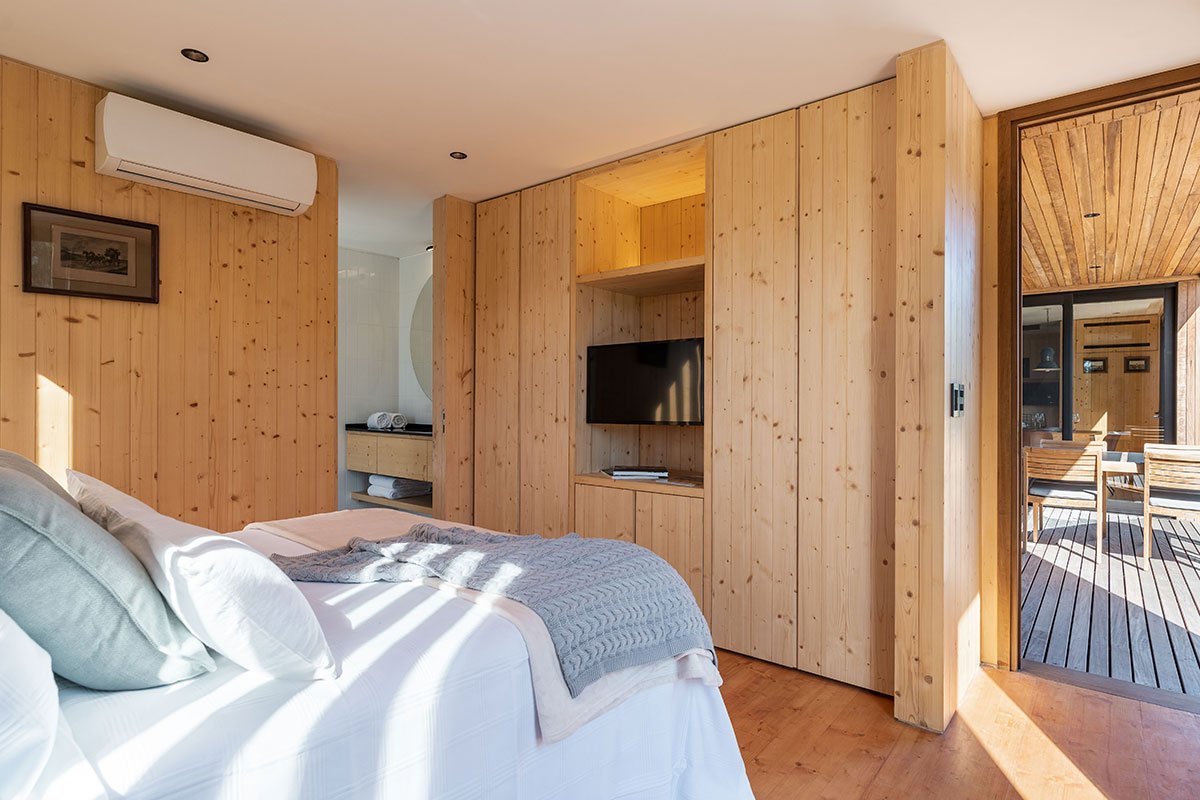

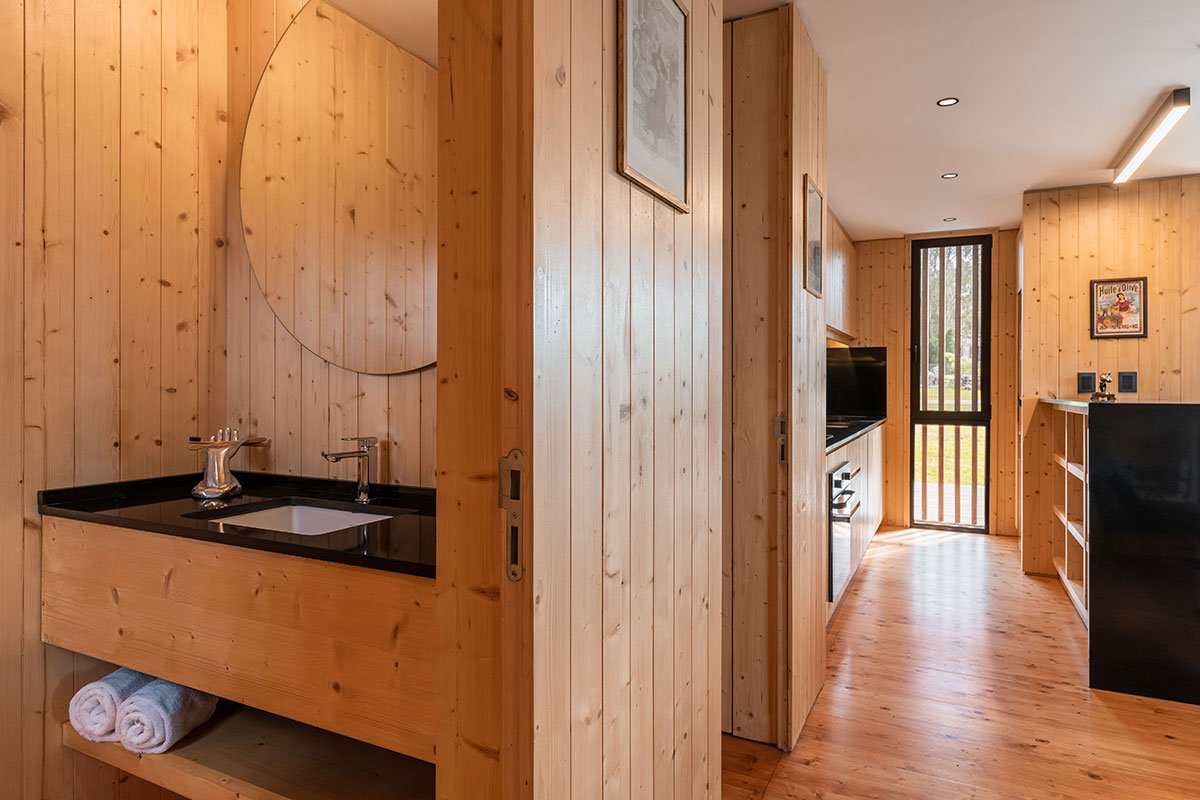
Referring to the centennial forest and the color palette of the countryside, almost exclusively wood was chosen, with lapacho being the selected exterior wood for its benefits against the climate, as well as its aesthetic qualities and the warmth needed to relate to the environment. The noble aging of lapacho is another great advantage. For the interior, spruce was chosen for its freshness and brightness.

The construction took place in two stages, beginning with a workshop production phase that optimized time and allowed for precision and quality control of the finishes, as well as efficiency in the different installations. Then, the prefabricated modules were assembled on-site, where exterior elements, service connections, and some finishing details were added.
Images