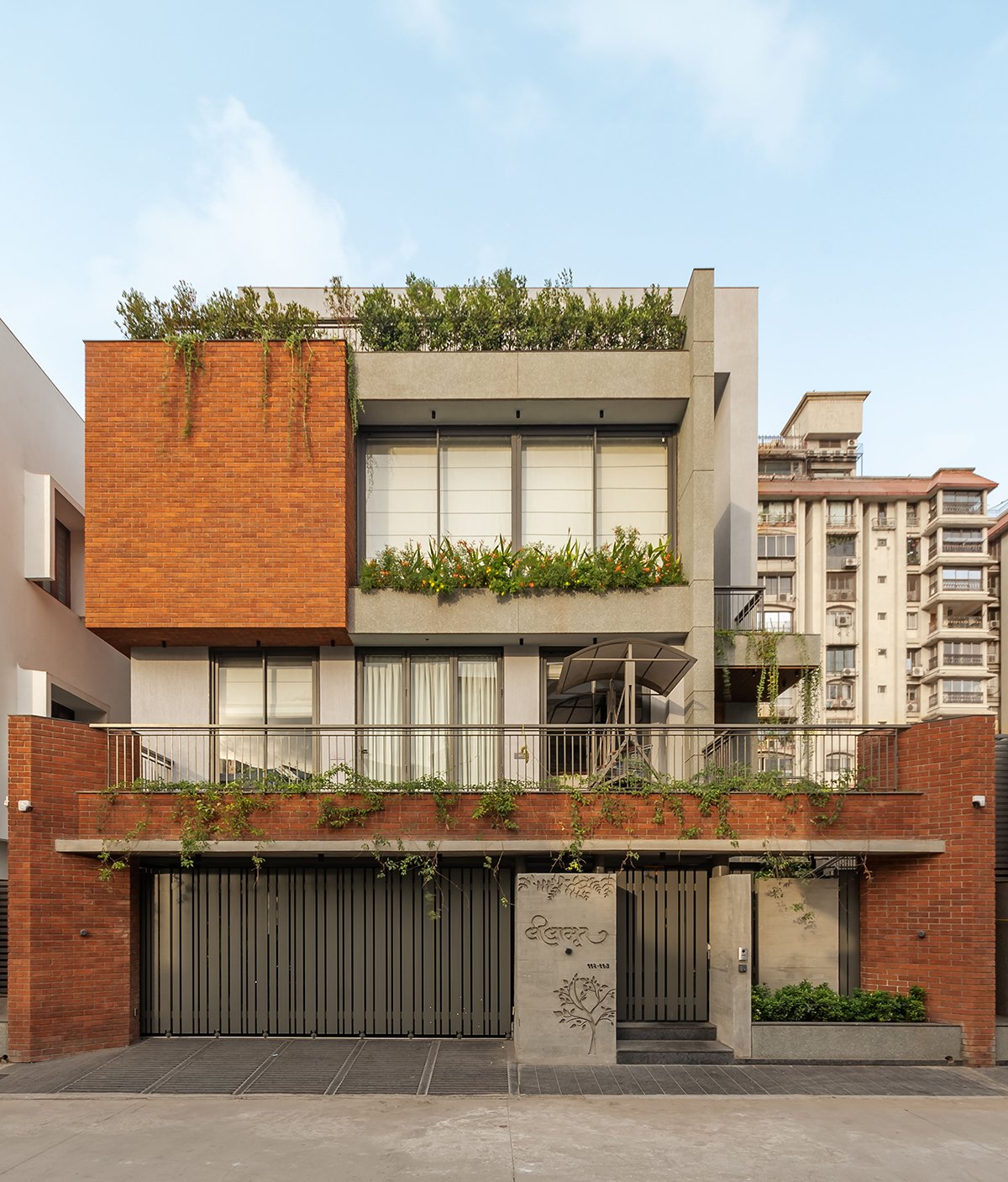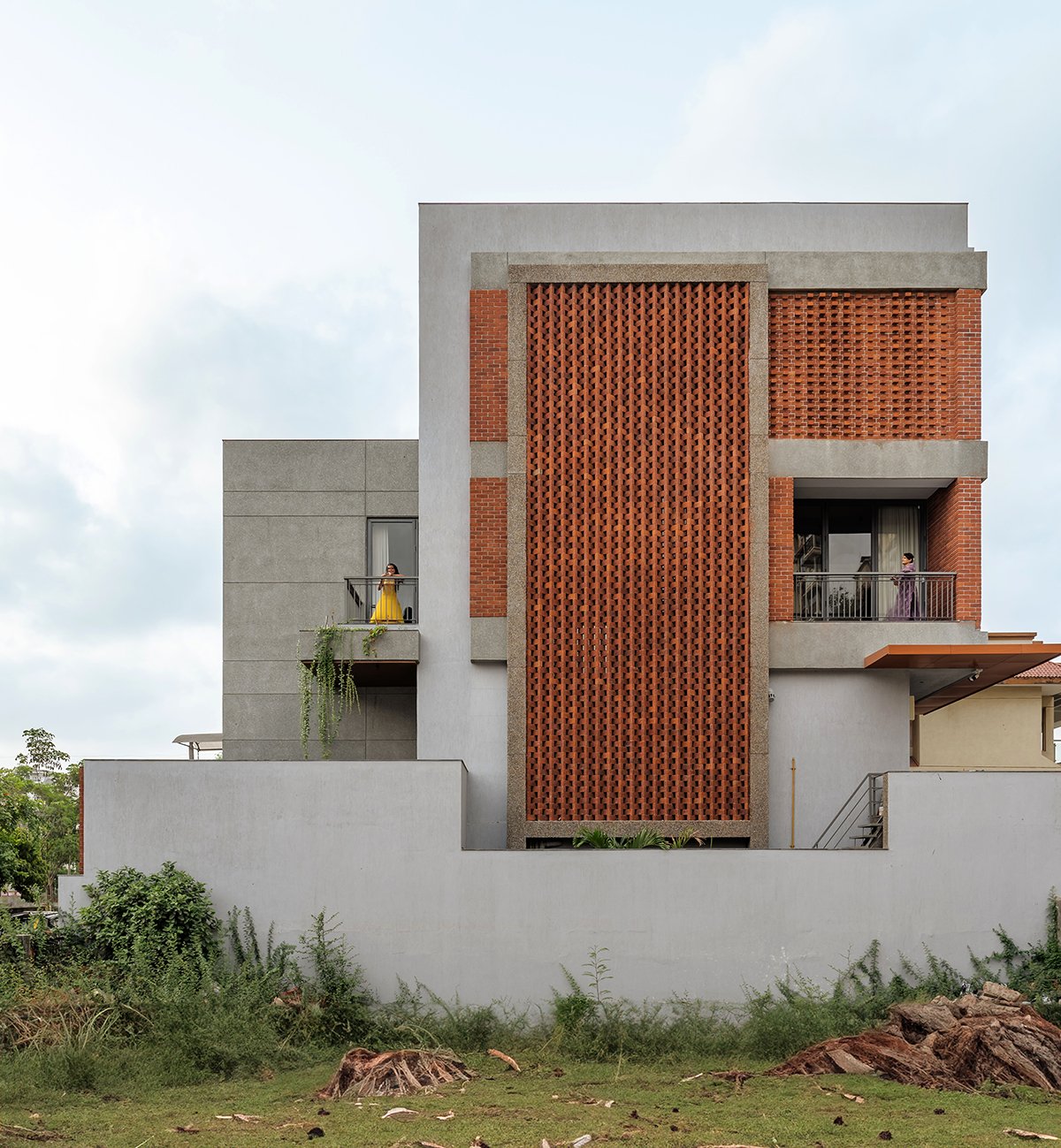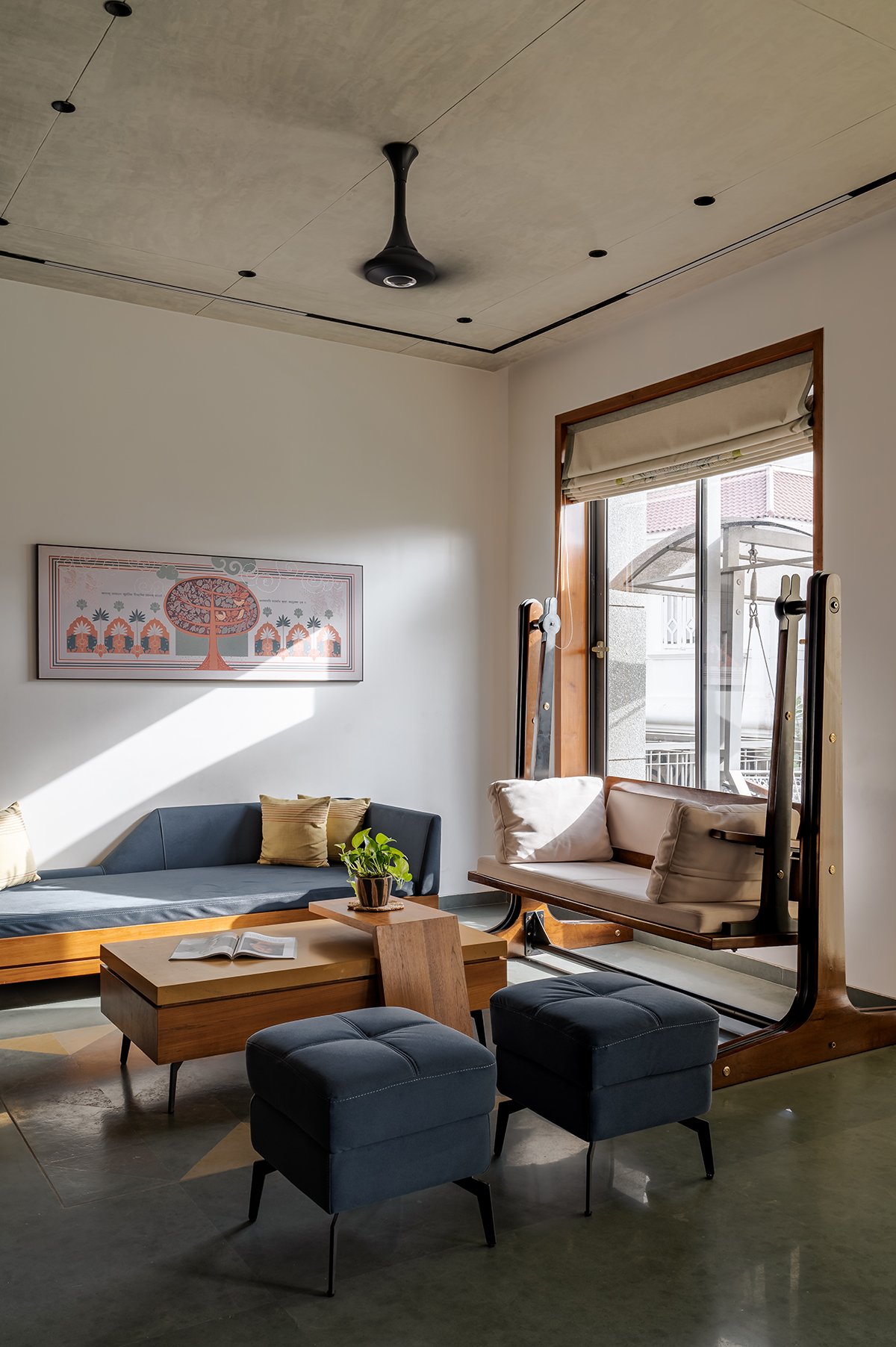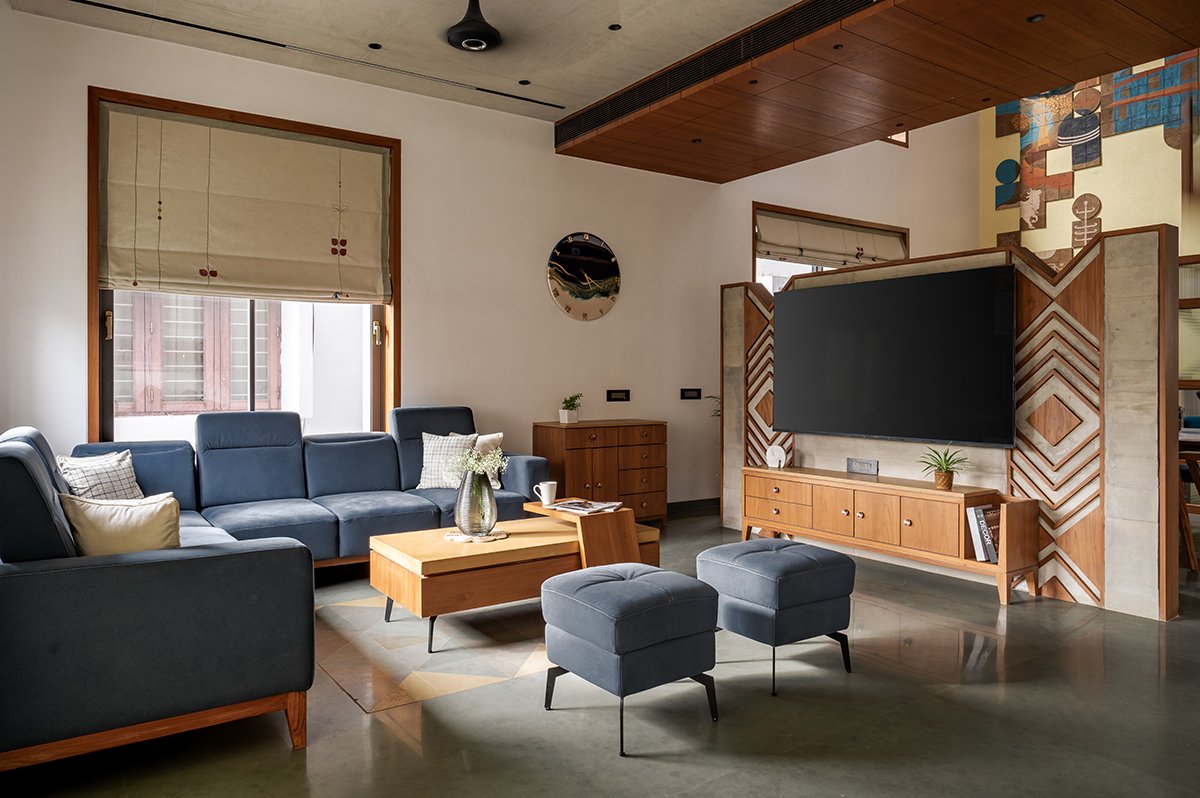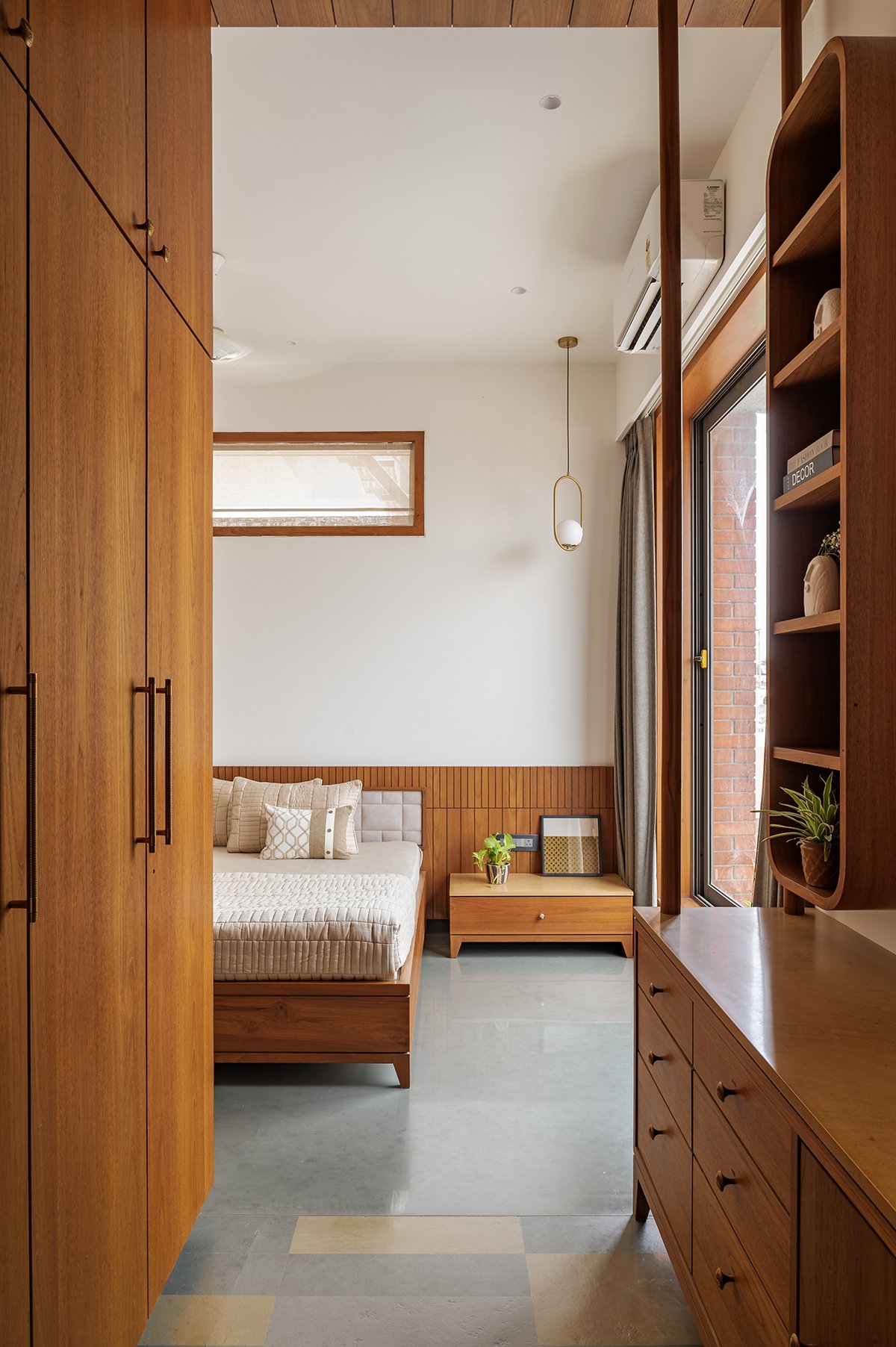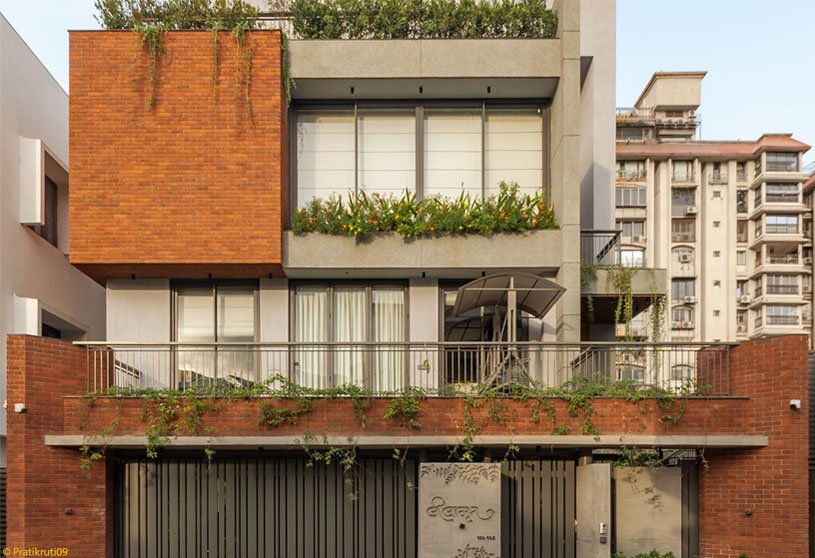
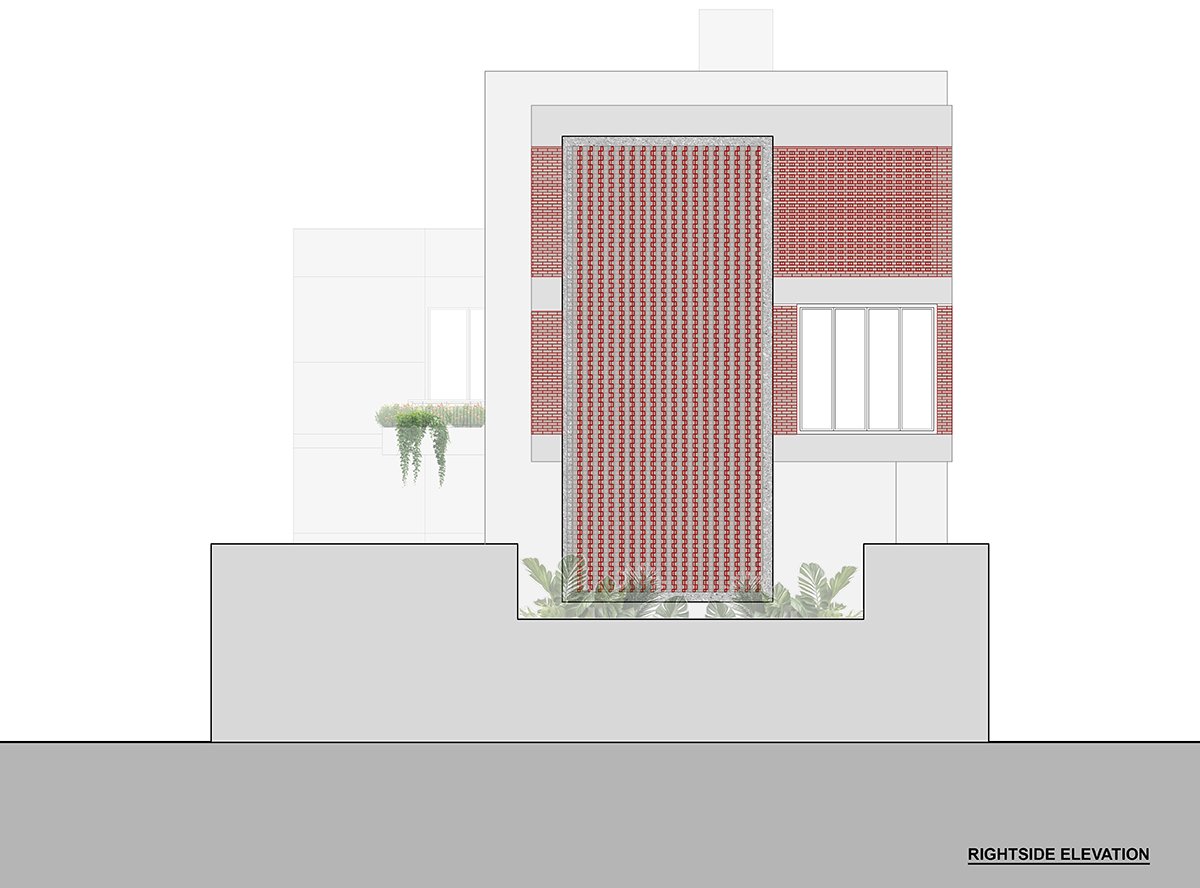
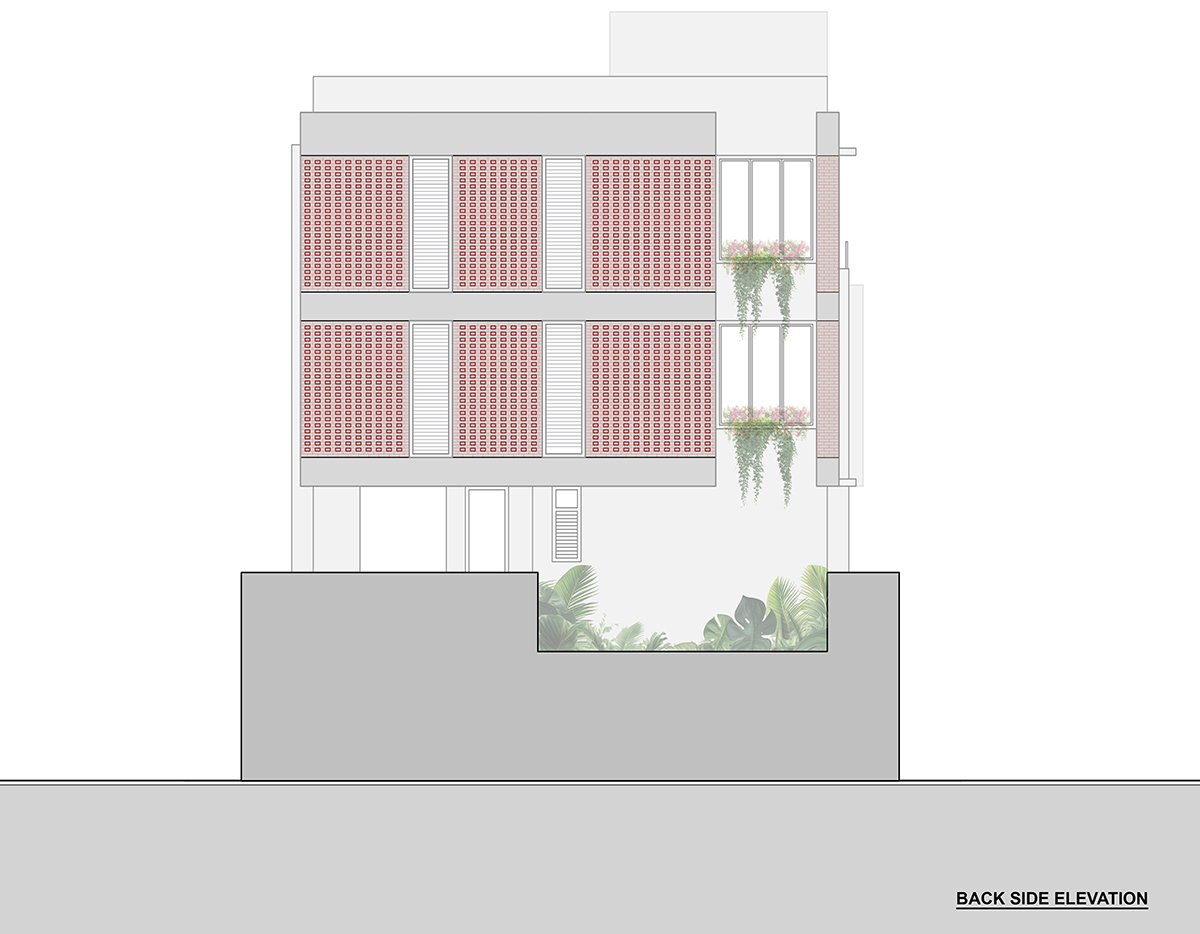
Excerpt: Leelamrut by Design Team Architects is envisioned as a residence that balances traditional yet modern functioning with a touch of sustainability. The design plays with exposed brickwork masses and exposed RCC, punctured by openings and balconies for porosity. Almost full-heighted windows with wooden frames, terracotta jali in a herringbone pattern, and an earthy material palette create a harmonious, light-filled, and intimate abode.
Project Description
[Text as submitted by architect] Area: “Leelamrut” is a residence located in the prime location of urban landscape of Surat, Gujarat. The name “Leelamrut” was after LEELA+AMRUT; the names of client’s parents, who are deeply rooted to their cultural core values. These values became main inspiration for Ar. Kevin Naik of Design Team Architects. These family values are tied with their native home in Dhamdachha village of Gandevi, Navsari.

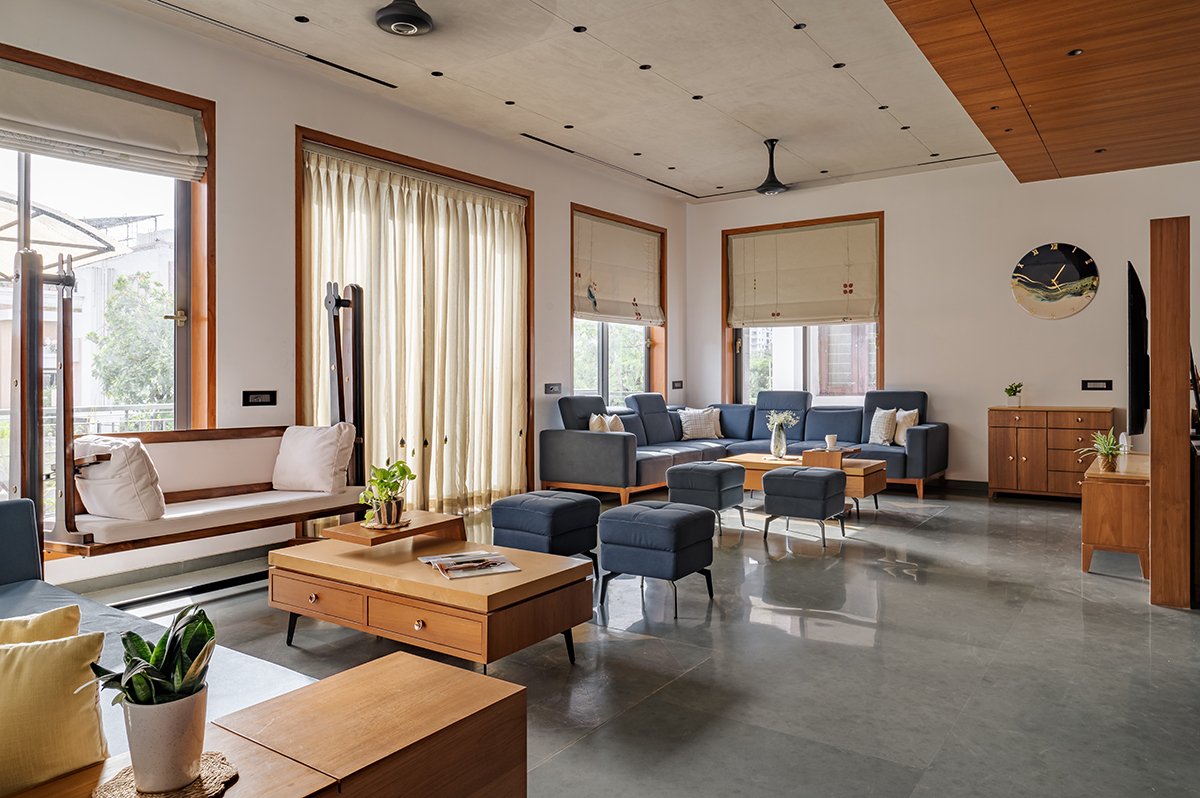
To create equilibrium between three generations, with inclinations of traditional yet modern functioning homes which should inherit their family legacy was the aim of design; all in addition with a touch of sustainability.
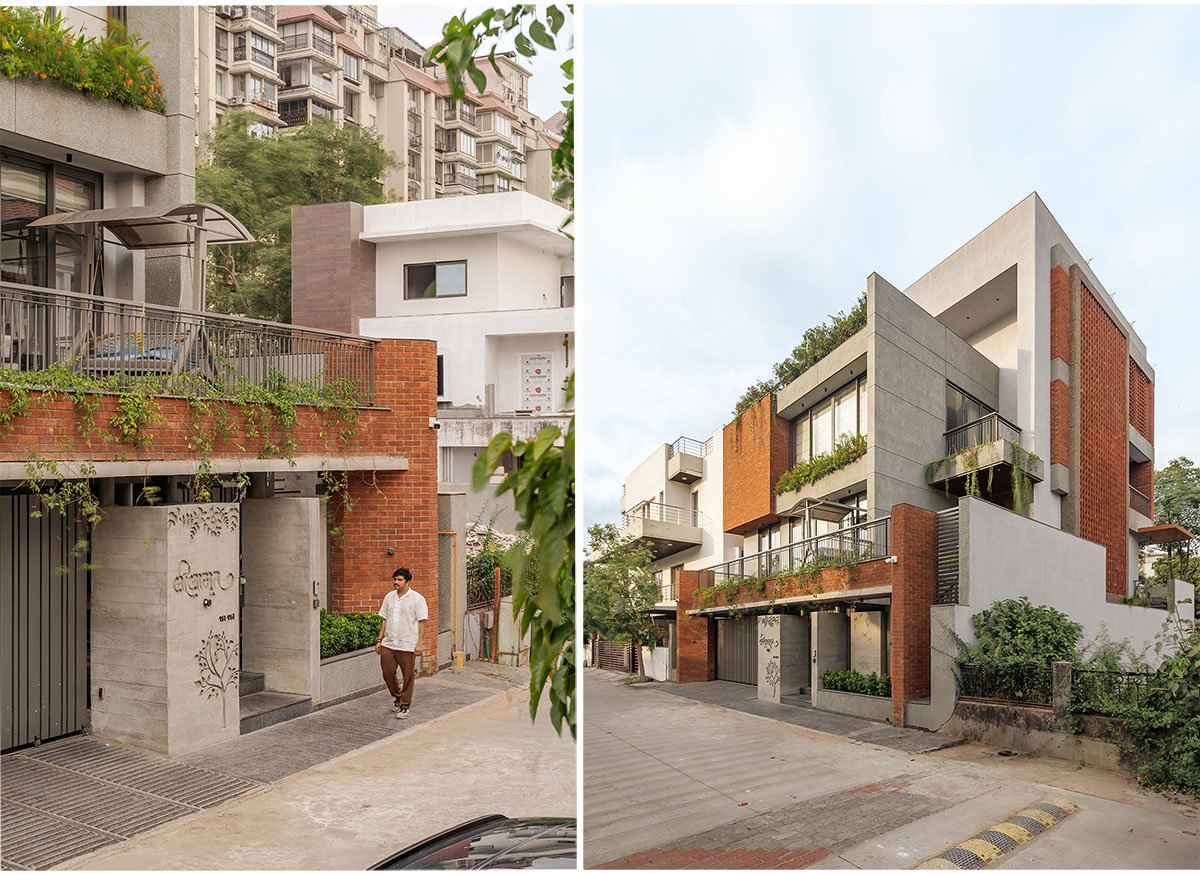
There is a theatrical play of exposed brickwork masses with exposed RCC masses in the exterior facade. The notion of elevation design is to use the very square exterior as a backdrop from which various forms of masses are extruded; with puncture of openings and balconies to add porosity in solid forms.


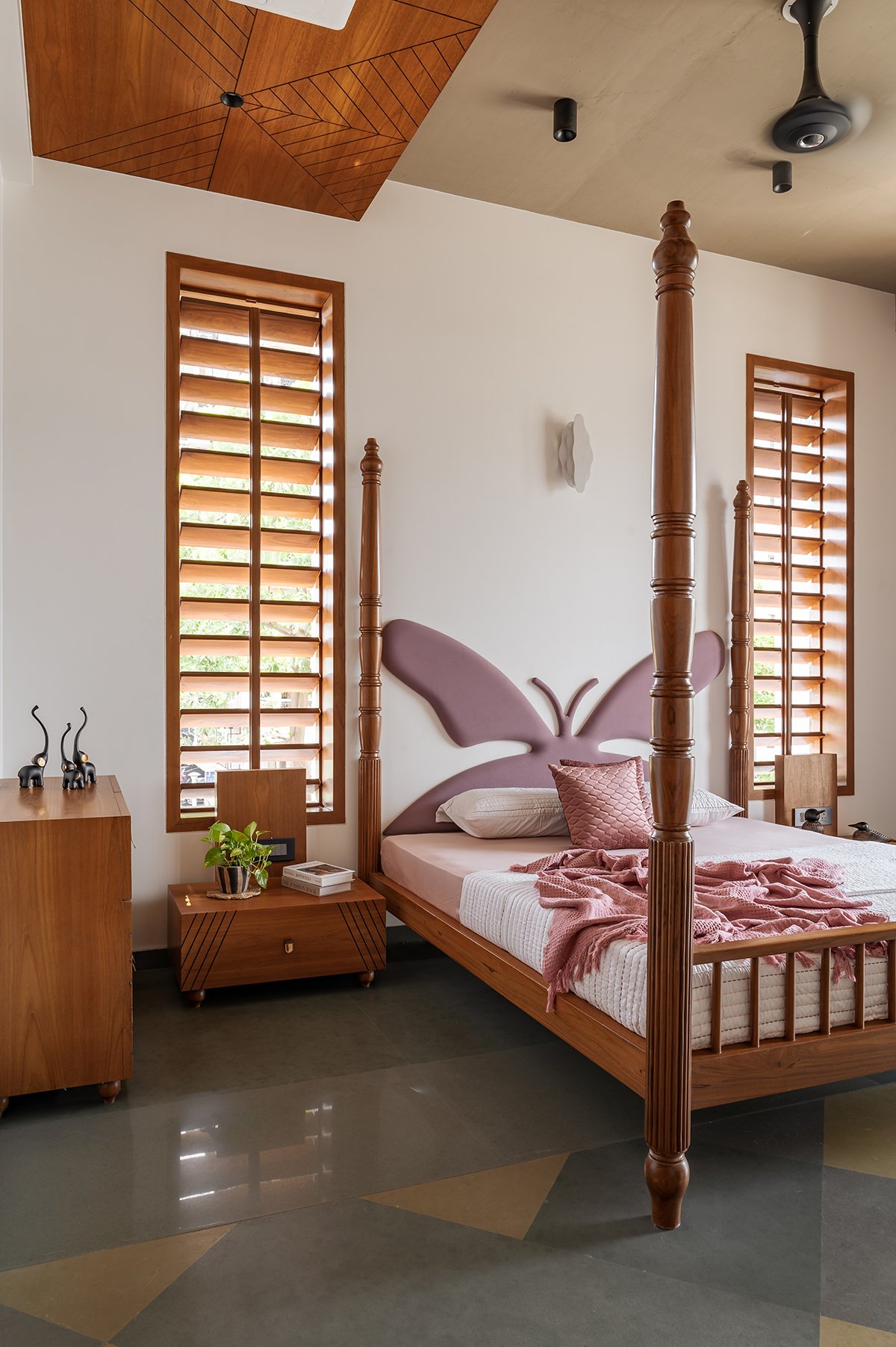
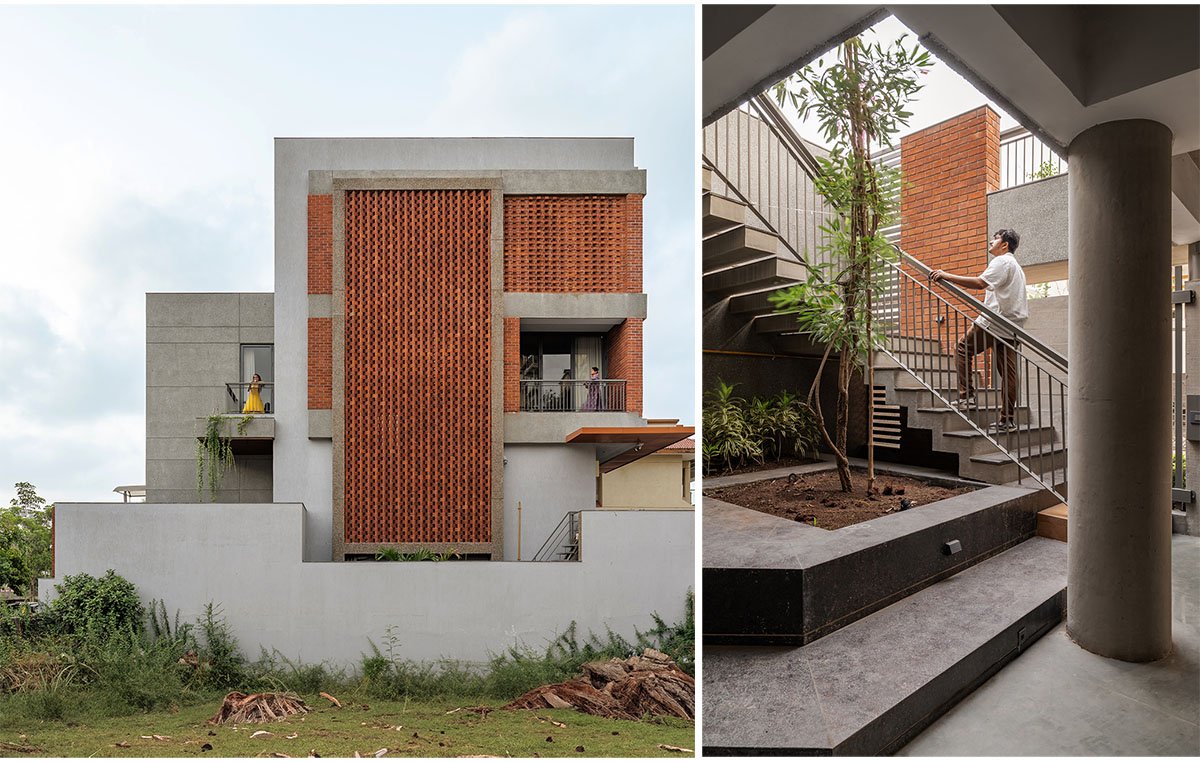
“One should be able to absorb ample amounts of natural light and air” said the client, thus the intervention of almost full heighted windows with wooden frames was created. To block the harsh sun of south, as a passive cooling element, the intricate terracotta brick jali was designed in herring bone pattern, which added the layer of intimacy of natural light into interiors.

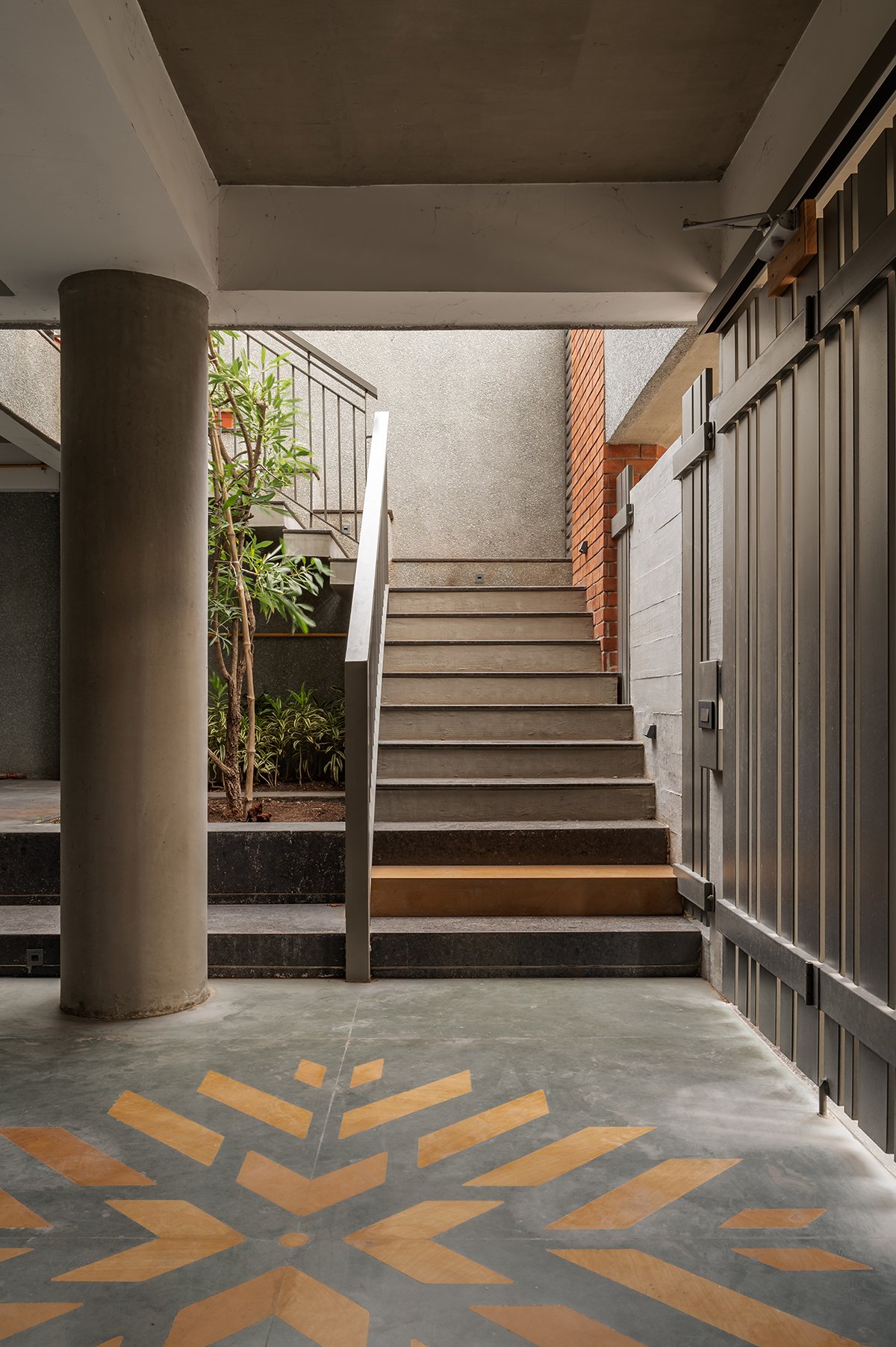
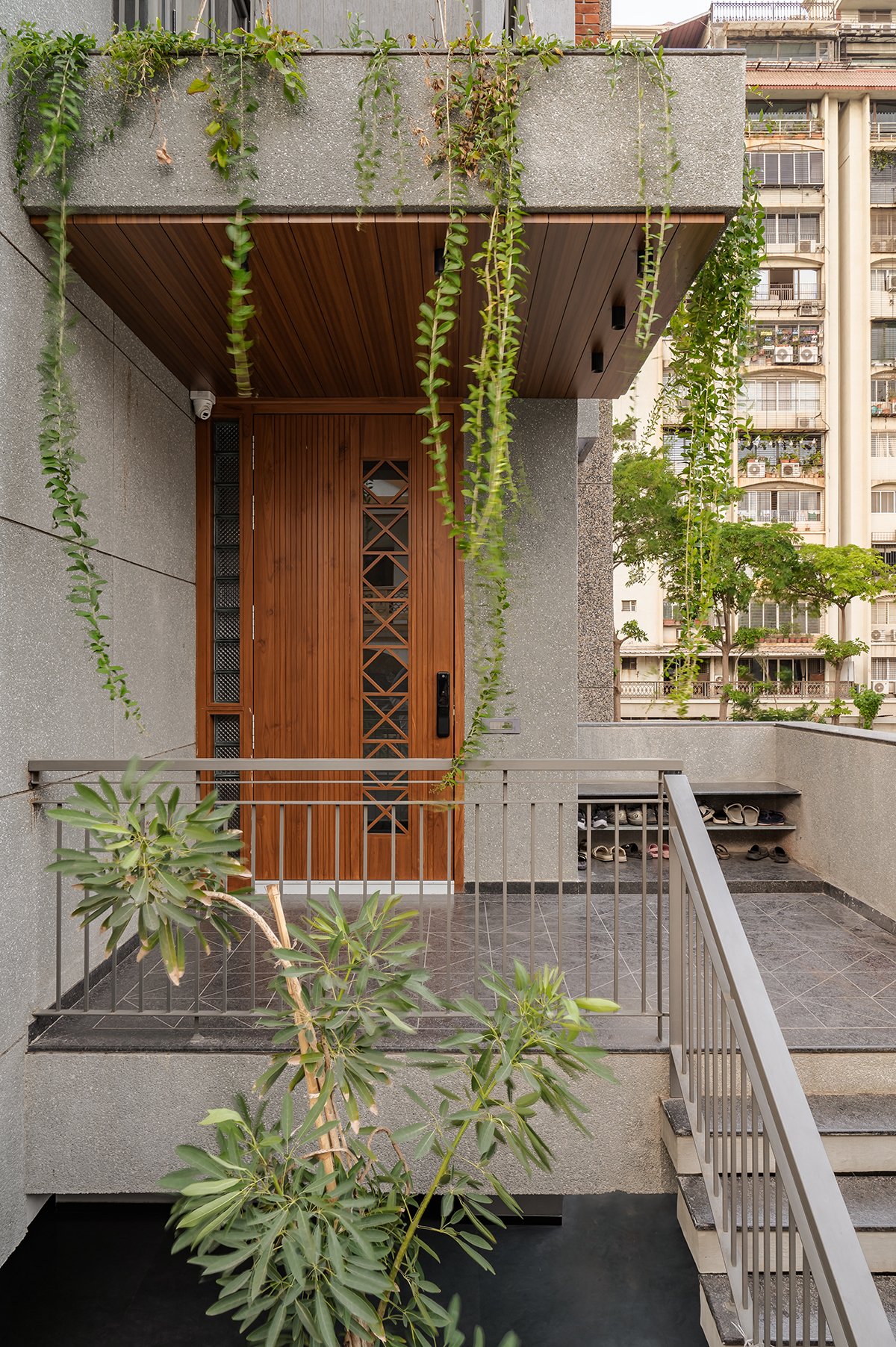
“The home should be reflecting the persona of people residing in”; is the driving force while composing material palette. The entrance stairway is imagined as a journey from lush green landscape to the humble abode. The dark granite flooring acts as a backdrop that highlights surrounding greenery. Yellow Jaisalmer sandstone is used as a path finder in this play of grey and green. The very space of entrance, geometrical pattern in flooring and the first step, called “yellow step” of Jaisalmer sandstone, are mindful ways of leading one further onto the path.
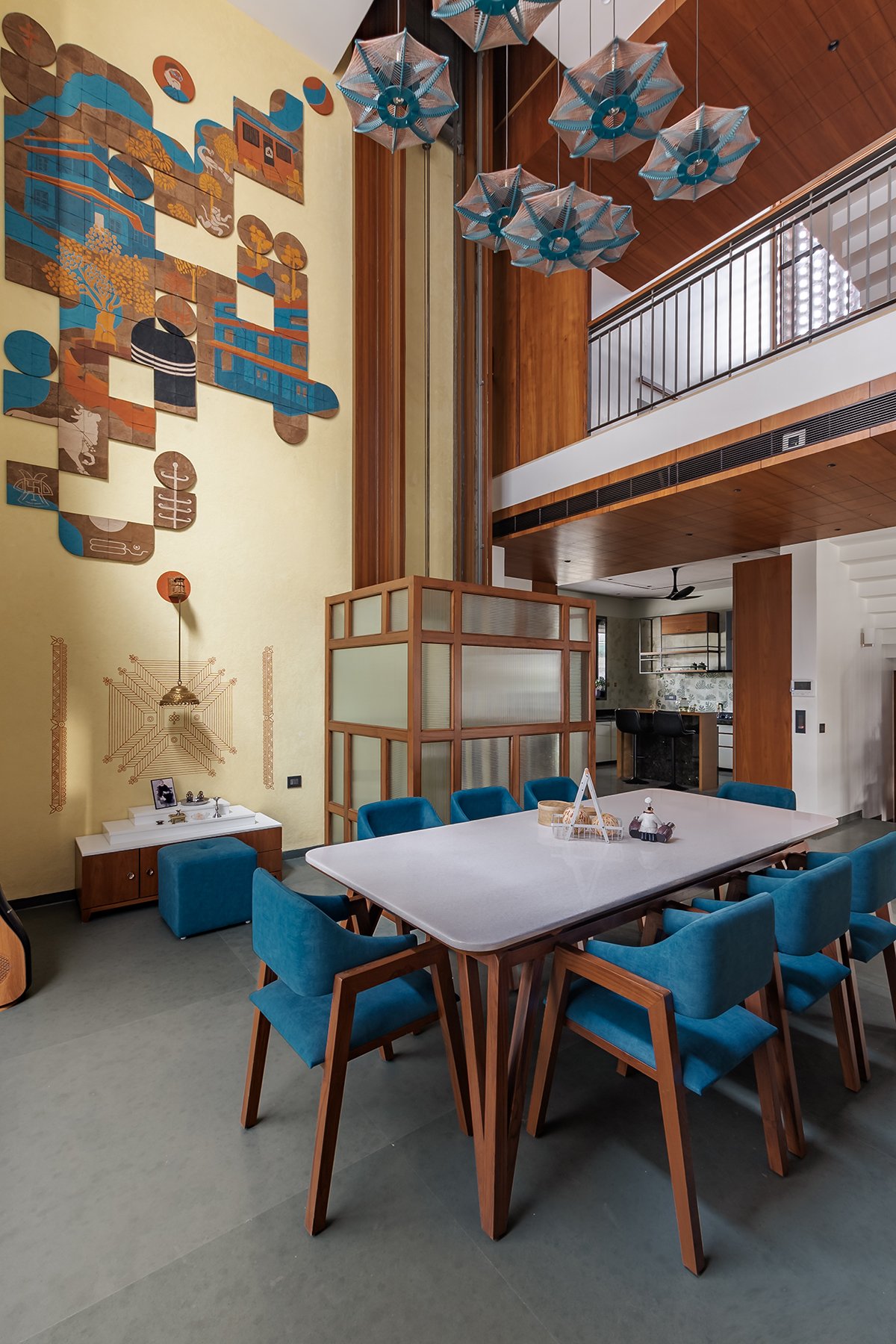
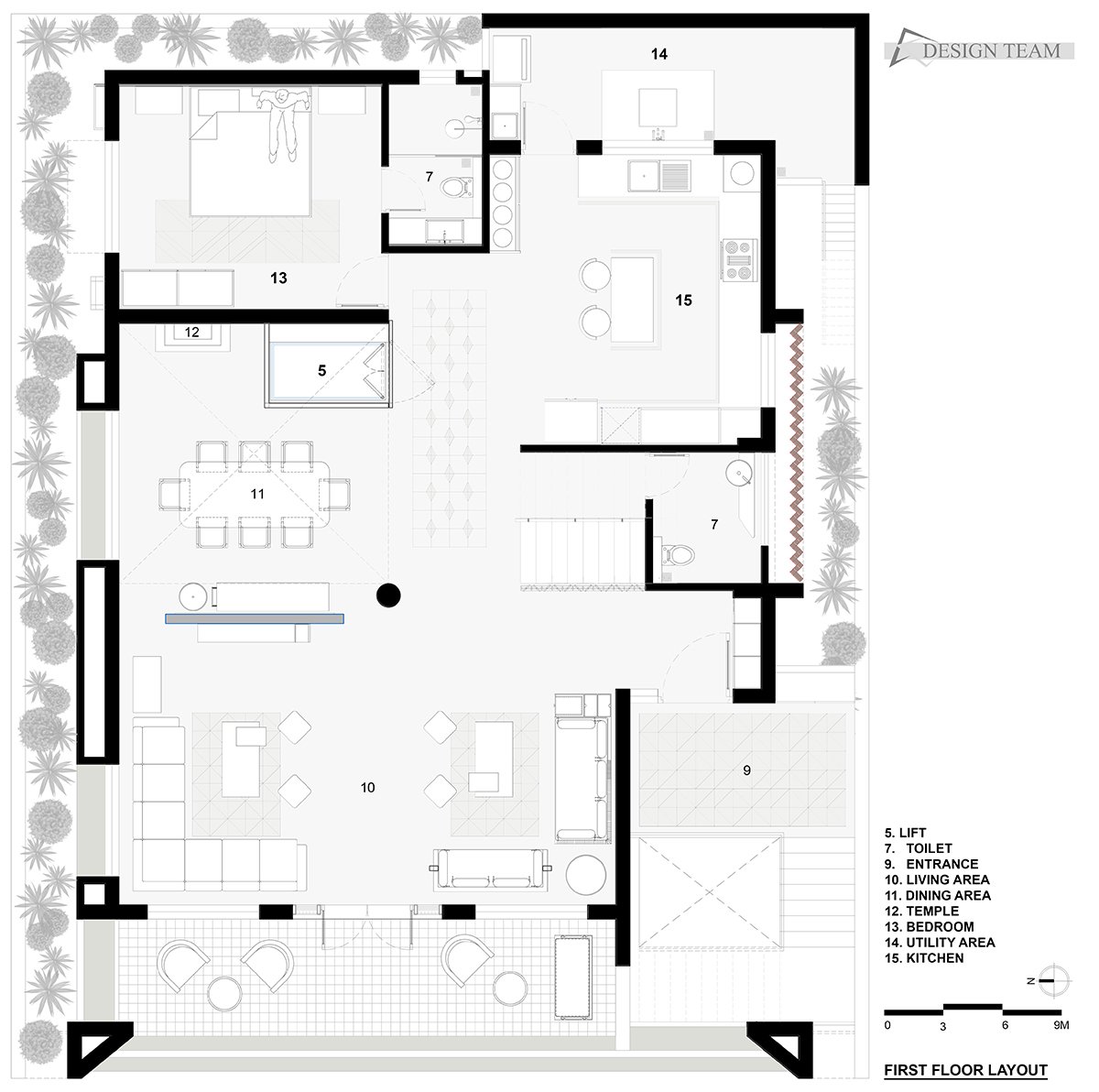
The spatial arrangement is a play of volumes with smooth overlap of private and public spaces. The almost square plot is divided by central volumes; the double heighted dining space & the open staircase well. On one side of this volume is a formal & informal living area and another has kitchen & parents’ bedroom space. The upper floors are reserved for bedroom spaces.
The double height volume of dining and staircase is divided by a bridge connecting the master bedroom to daughters’ bedroom on the 2nd floor.

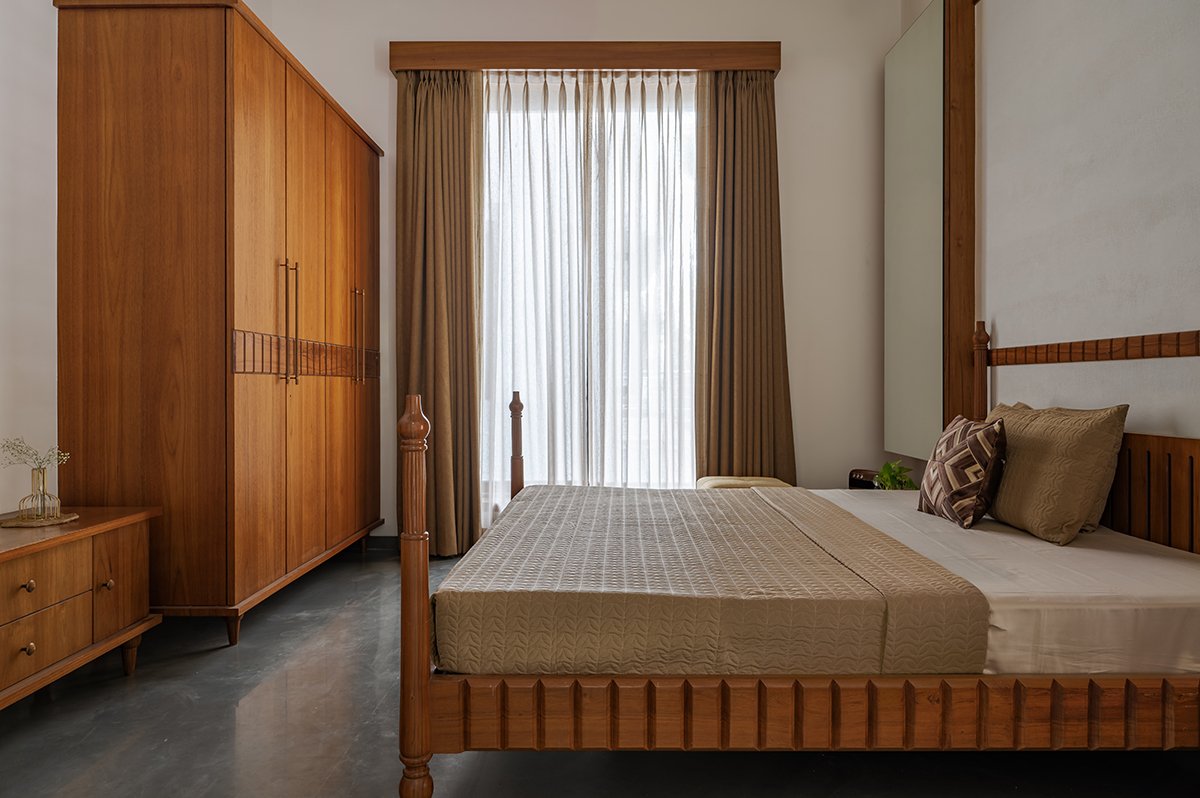
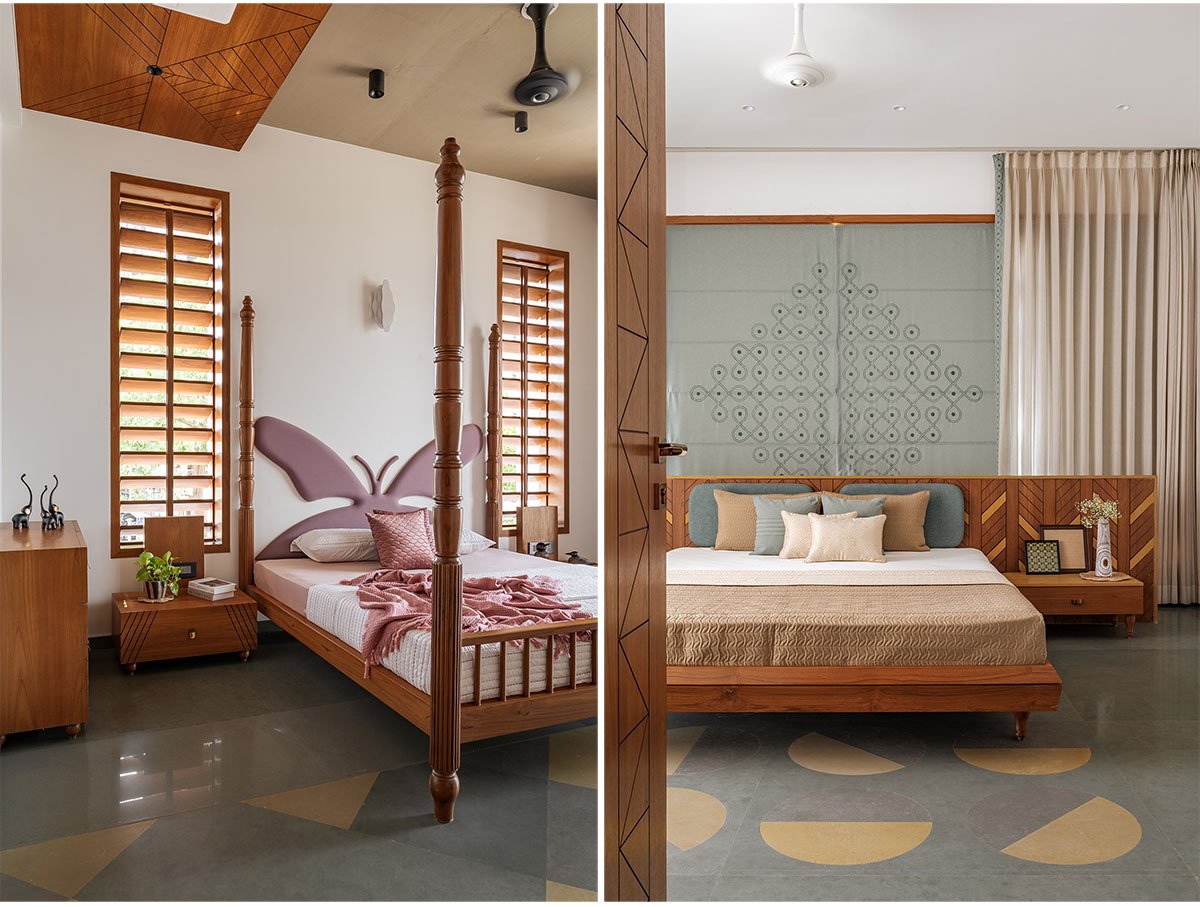
The interiors are a play of a very few colors; mostly grey Kota floor with yellow sandstone highlighters, softness of wooden furnishing and a play of exposed RCC & exposed brickwork as a pinch of salt in all of it. A composition made up of intricate geometrical patterns in different furniture pieces and flooring that reflects earthen interior language.
Drawings



Images