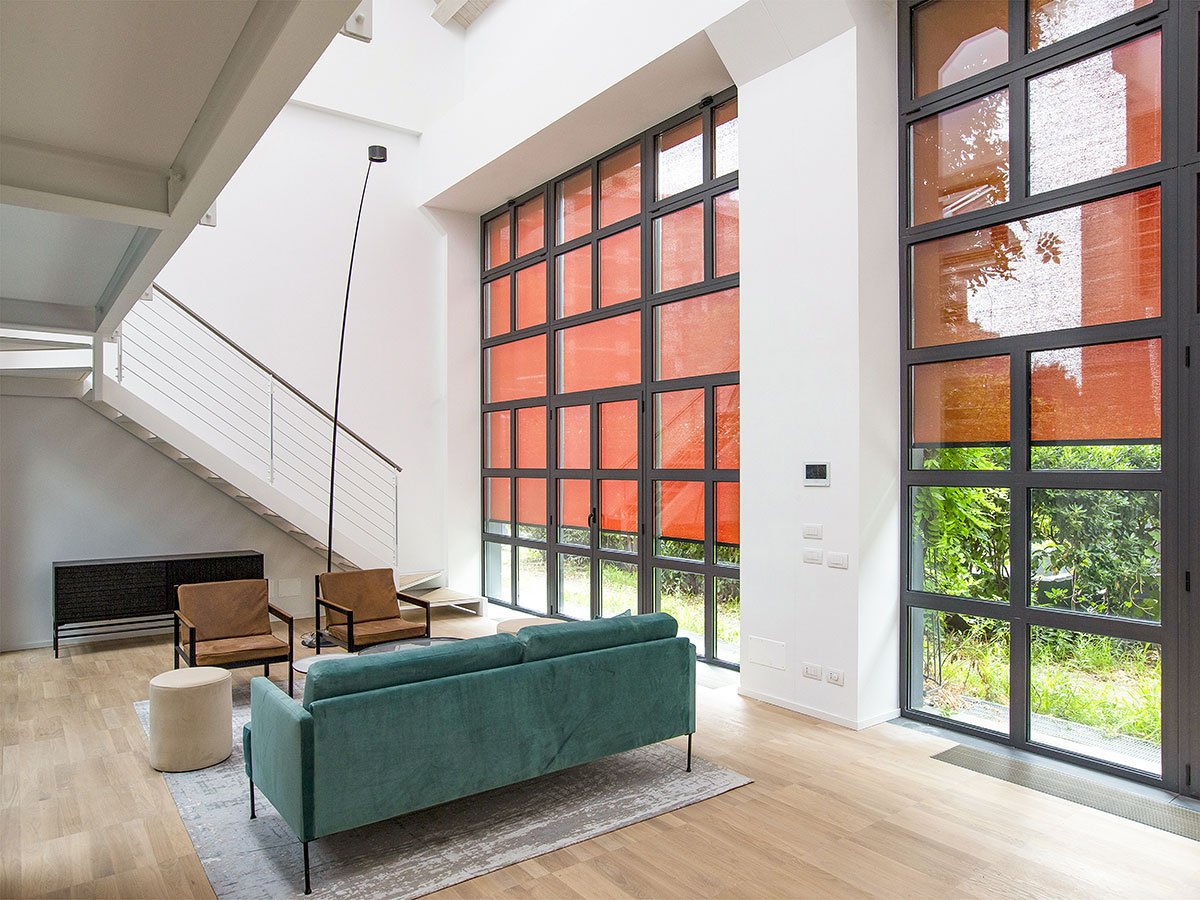
Excerpt: LOFT – Industrial Living by Botticini + Facchinelli ARW features the adaptive reuse of a post-war industrial structure into an elegant residential complex. The design integrates large windows, mezzanines, and private green spaces, enhancing light and spatial quality while preserving its architectural essence. A contrast of dark gray plaster and lush greenery highlights the industrial character, blending historical charm with modern living.
Project Description
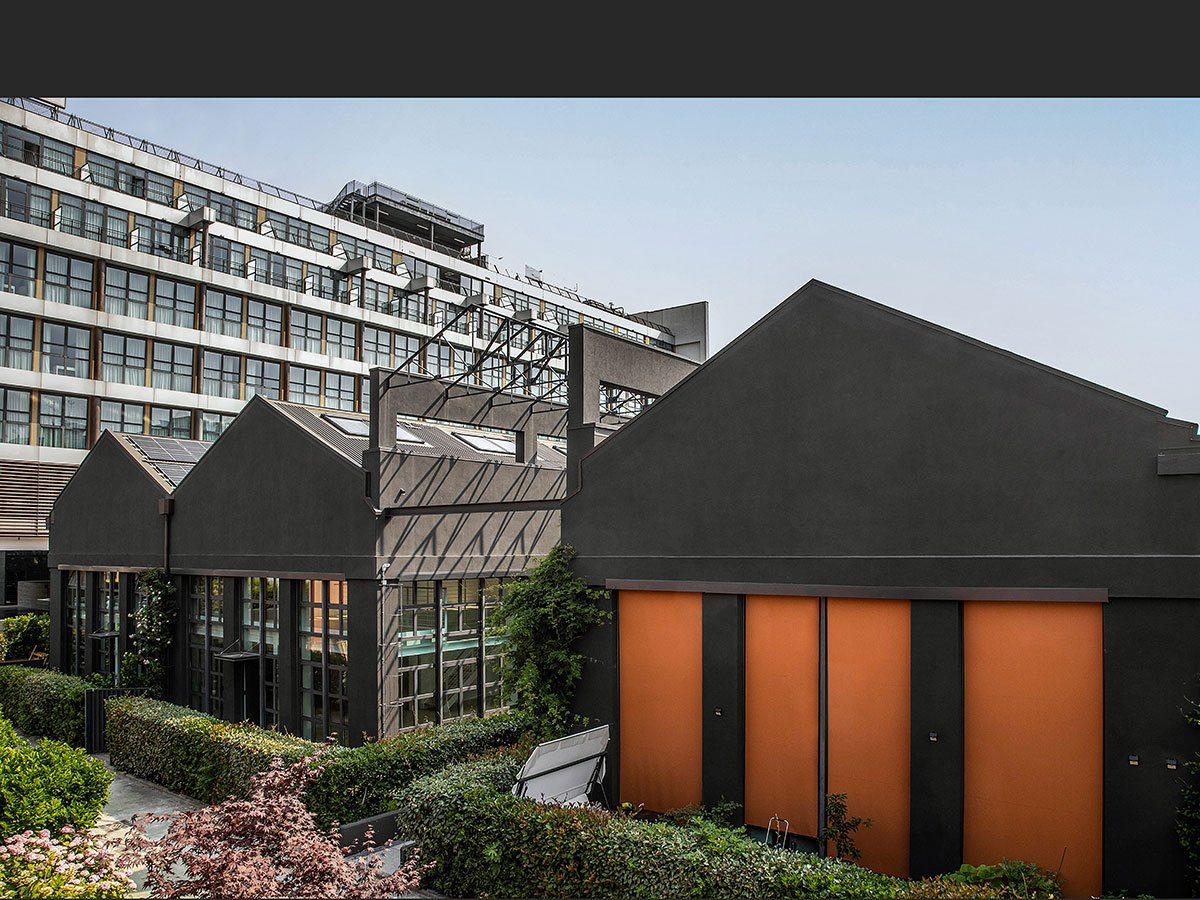
[Text as submitted by architect] LOFT is a residential project that intervenes in the recovery of a typical post-war industrial structure located on the outskirts of Milan in the Viale Monza area, near the metro stop and the railway link. The architecture consists of three blocks with a typical gabled section and an internal steel structure. Three long parallel industrial ships have a building and are incised by patios that allow the space to be recovered for residential use.
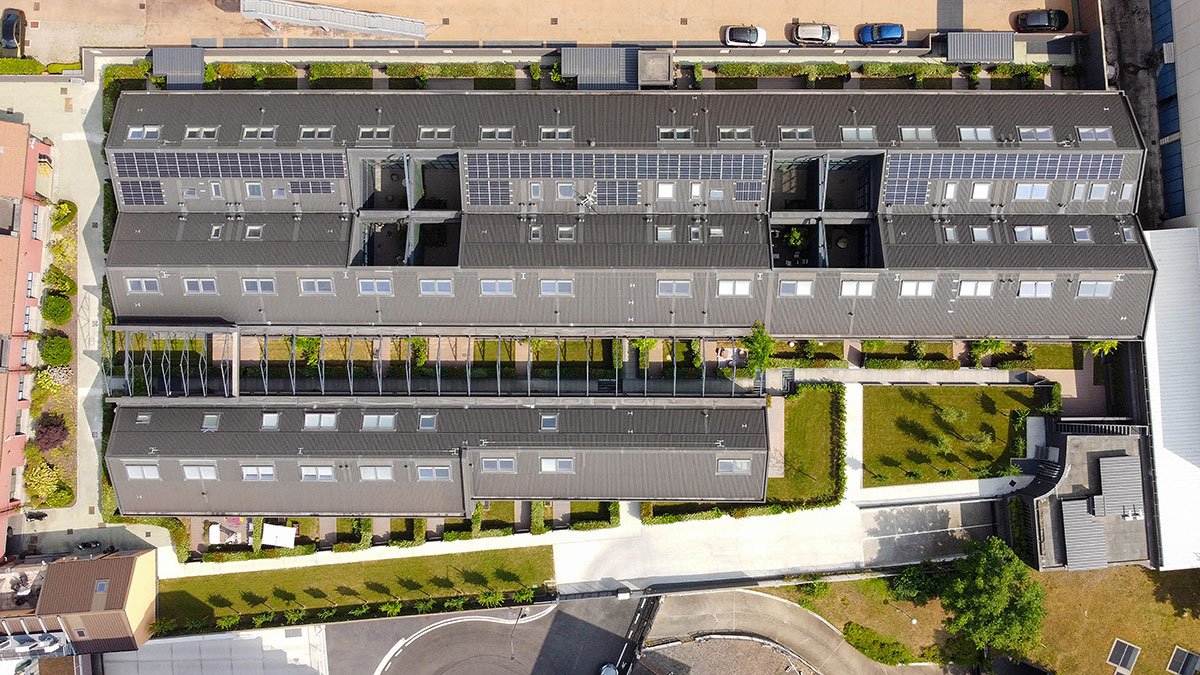
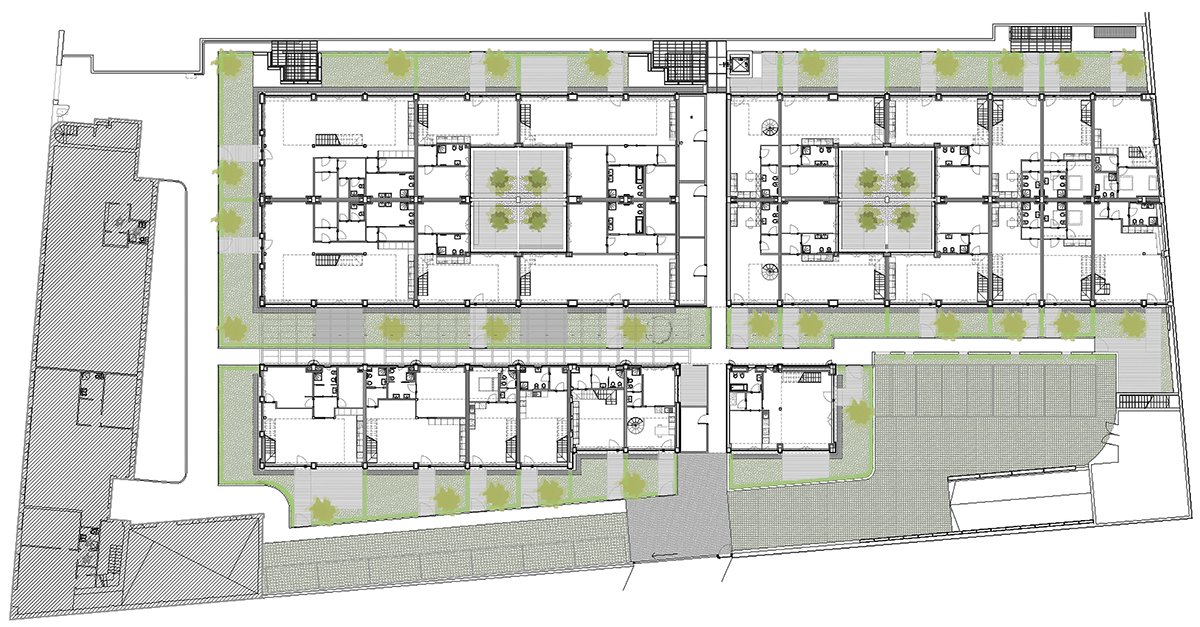

The set of 25 lofts in via Columella constitute an elegant residential complex, developed on the ground floor and mezzanine, with volumes of different sizes and all equipped with a private garden, both with internal patio and external garden, while 4 apartments are equipped with loggias which face the outside.

Each housing unit is equipped with at least one garage/parking space in the garage located in the basement, with access via a ramp from the Via Parmenide driveway entrance.
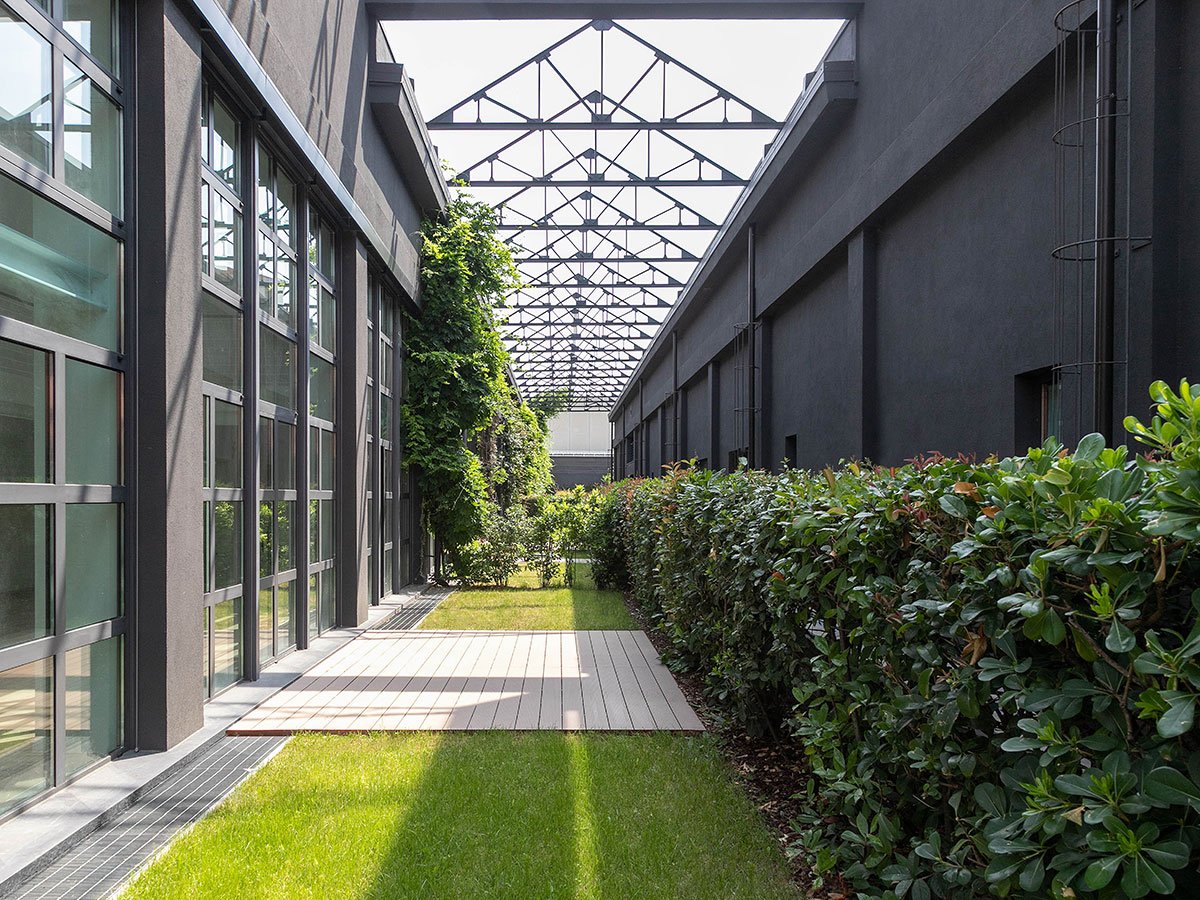

There are two pedestrian entrances, respectively from Via Parmenide and Via Columella.
With the aim of keeping intact the characteristics of the industrial building from which the intervention takes shape, it is enriched with large windows, private gardens and internal patios.
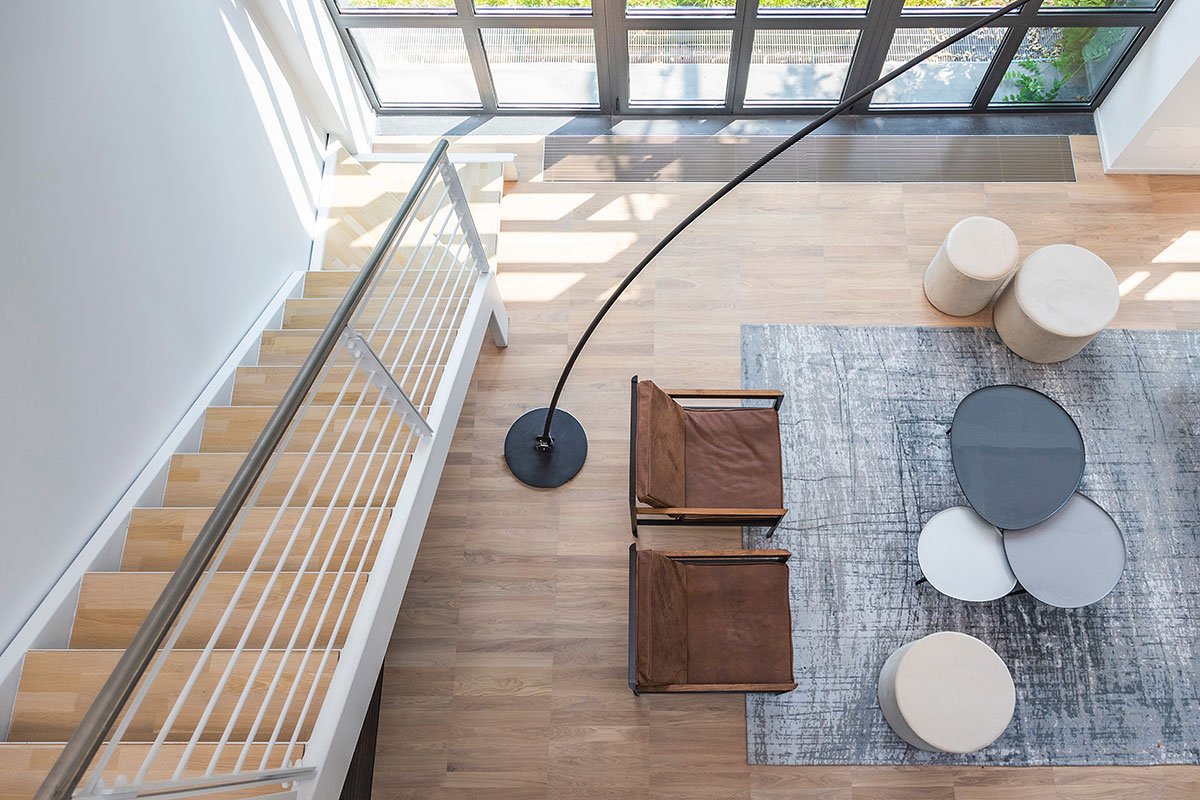
The lofts offer housing solutions diversified in size and volume, with high energy performance. The generous internal height allows for the insertion of mezzanine stages and the use of dark gray for the plasters in contrast with the intense green that envelops the structure, creates a new dimension of great charm and spatial quality, where the important presence of light, together to the private greenery around, it also promotes privacy from an acoustic point of view. Inside, each housing unit was designed with the intention of maintaining chromatic and material continuity with the pre-existing building, integrating conservative project elements with more innovative structural interventions.
Images