Excerpt: Nam House by CTA | Creative Architects showcases climate control design strategies for achieving thermal comfort in modern tropical architecture. The design includes structural insulation and a three-layer wall system to reduce heat transfer. Solar heat gain is minimized through strategic shading and orientation, while natural ventilation is enhanced through large openings, allowing for efficient airflow and cooling.
Project Description

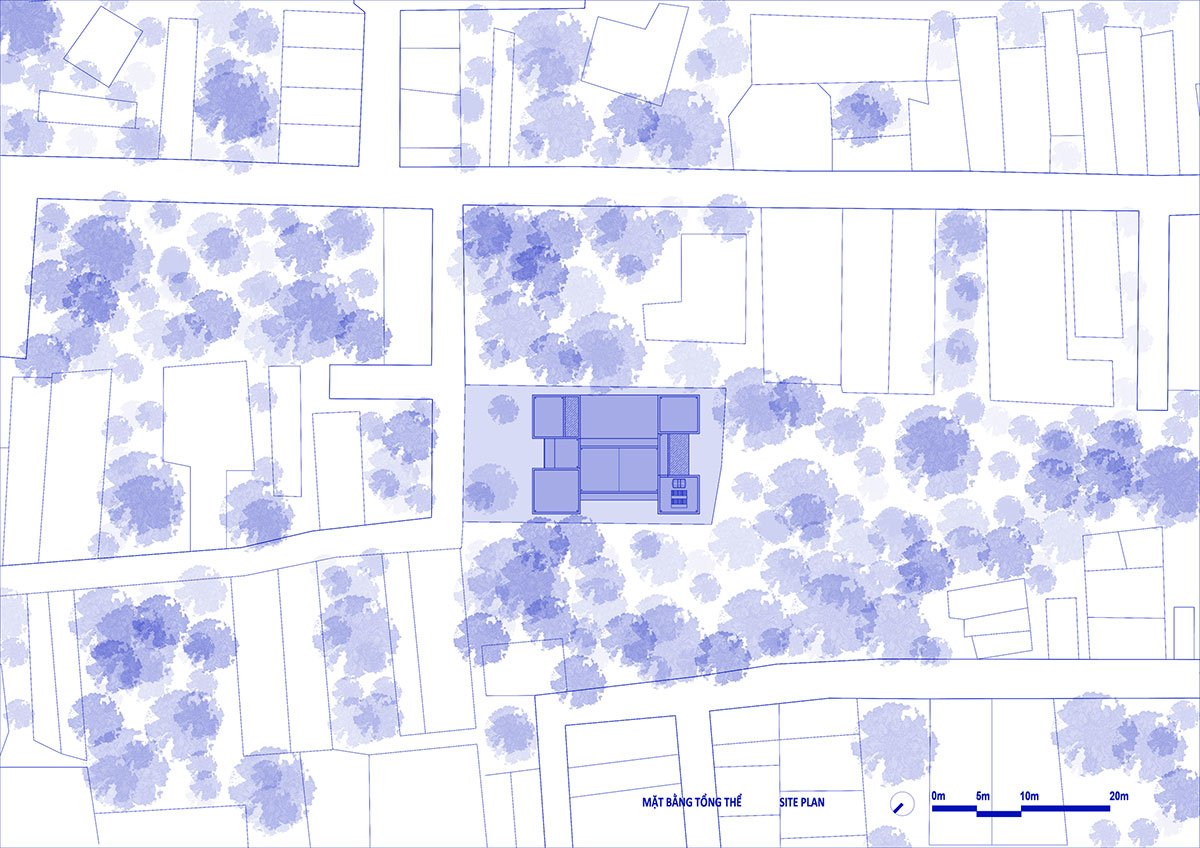
[Text as submitted by architect] Nam house is situated in a minor alley, given by their grandparents throughout many generations traditionally, hence their neighborhoods are close relatives. To be more specific, the abutting house belongs to the owner’s mother and the other adjoining land area is also the property of their relatives. Thus, the owner’s desire is to connect their home with the surrounding environment, especially their mother’s house.
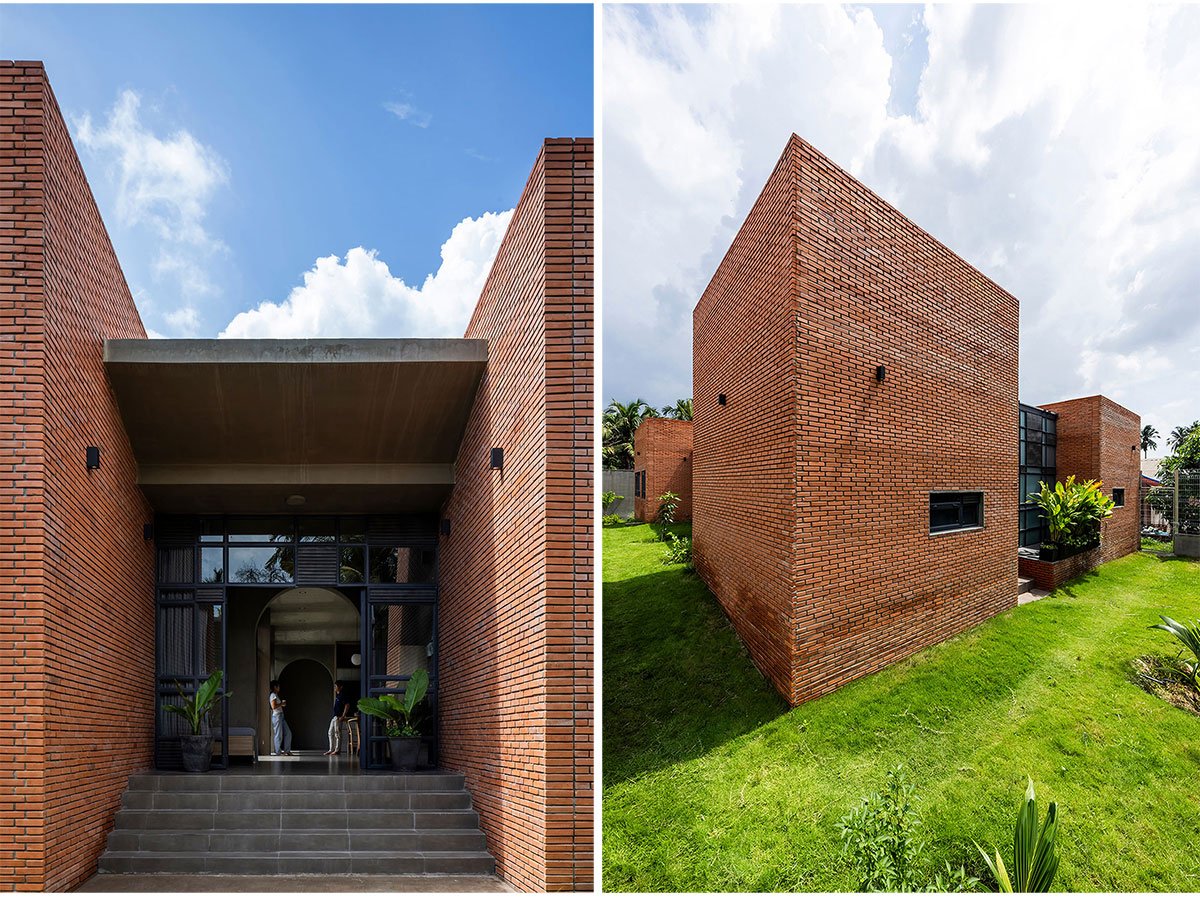
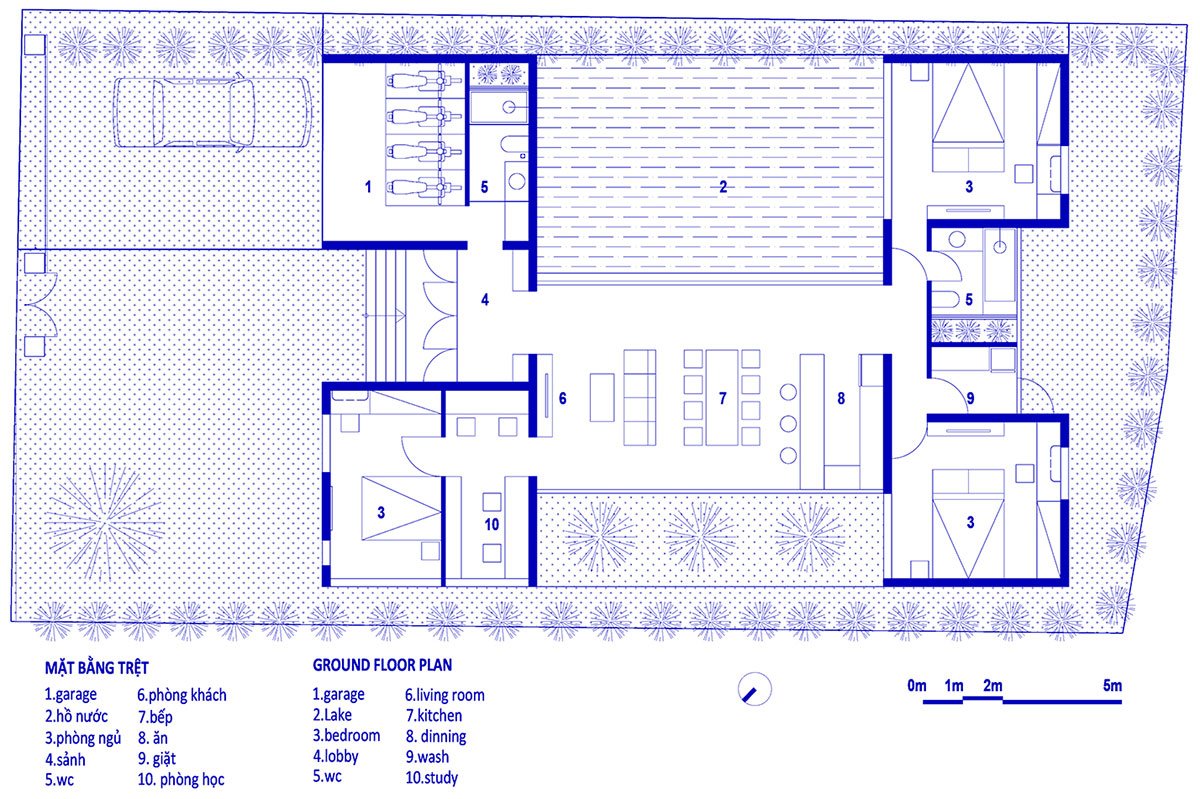
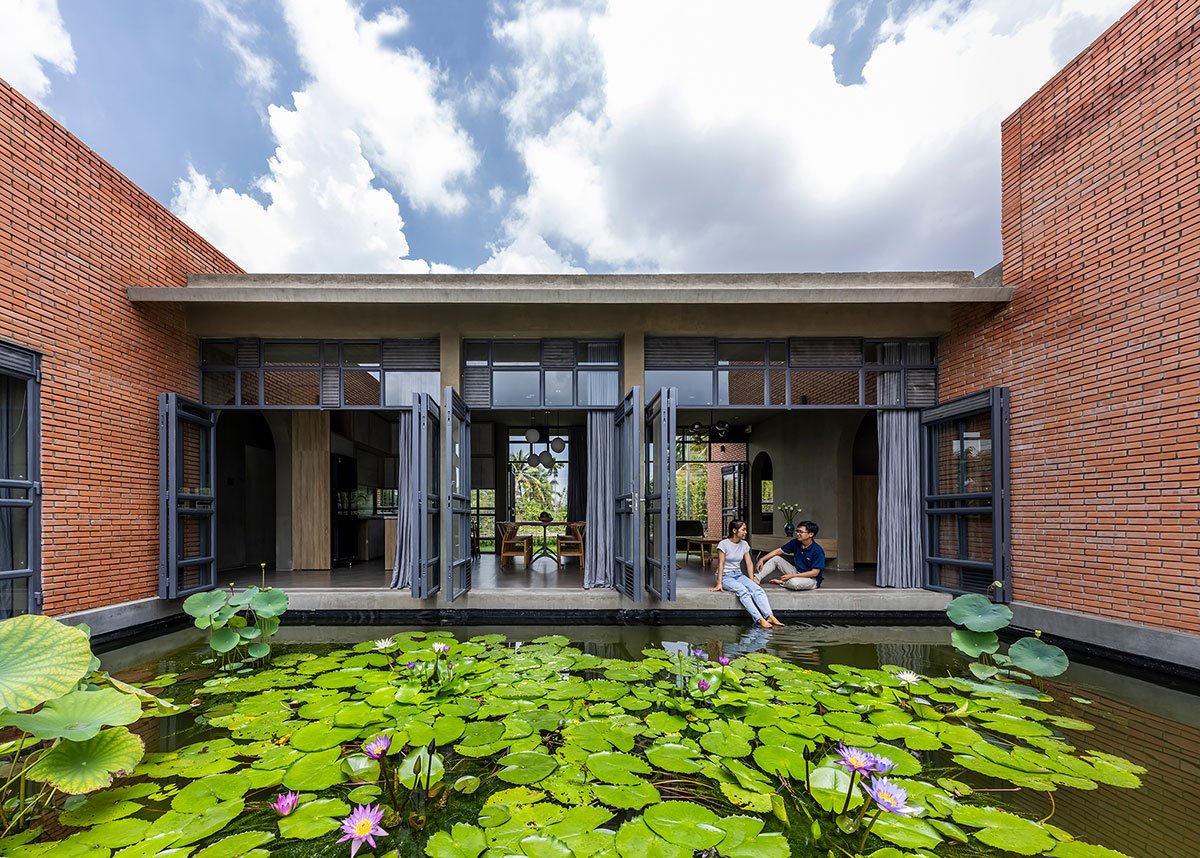
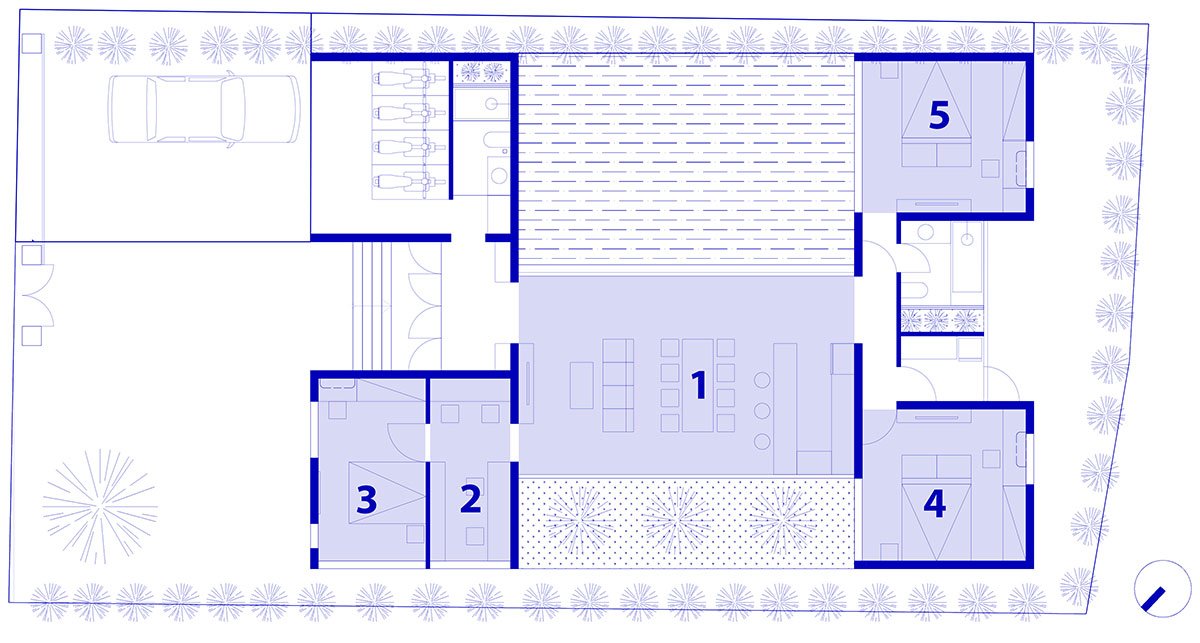
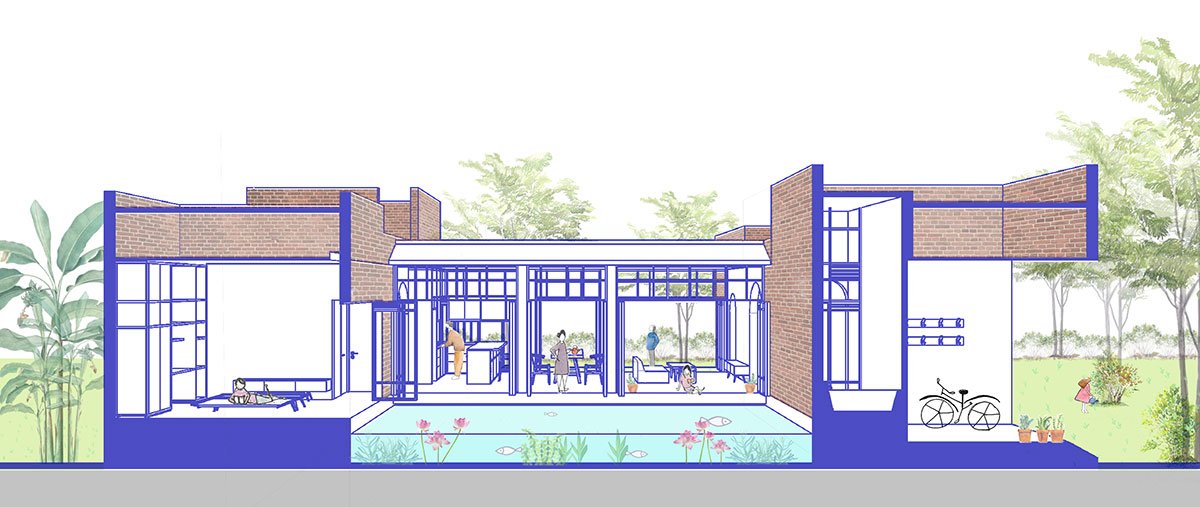
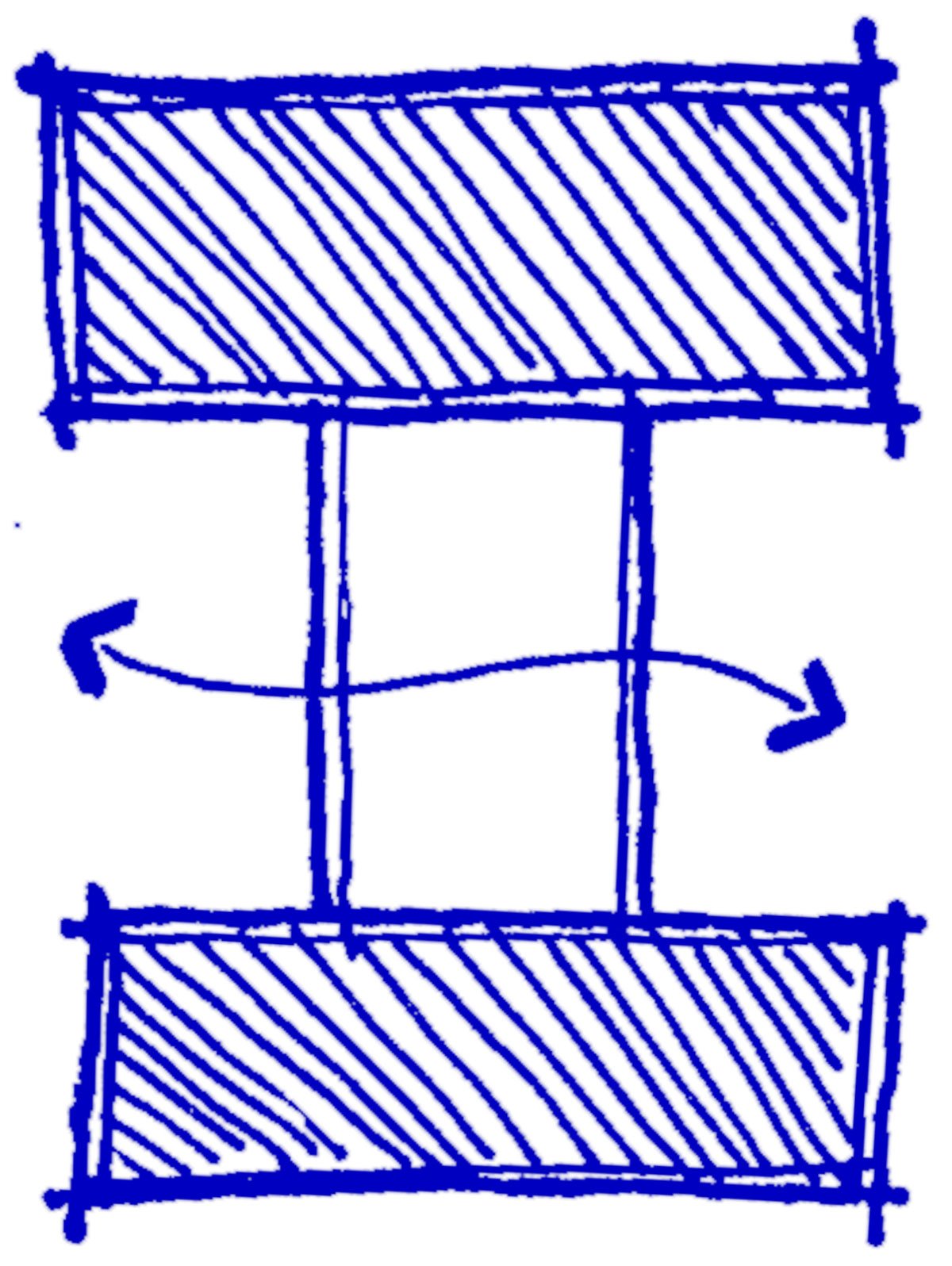
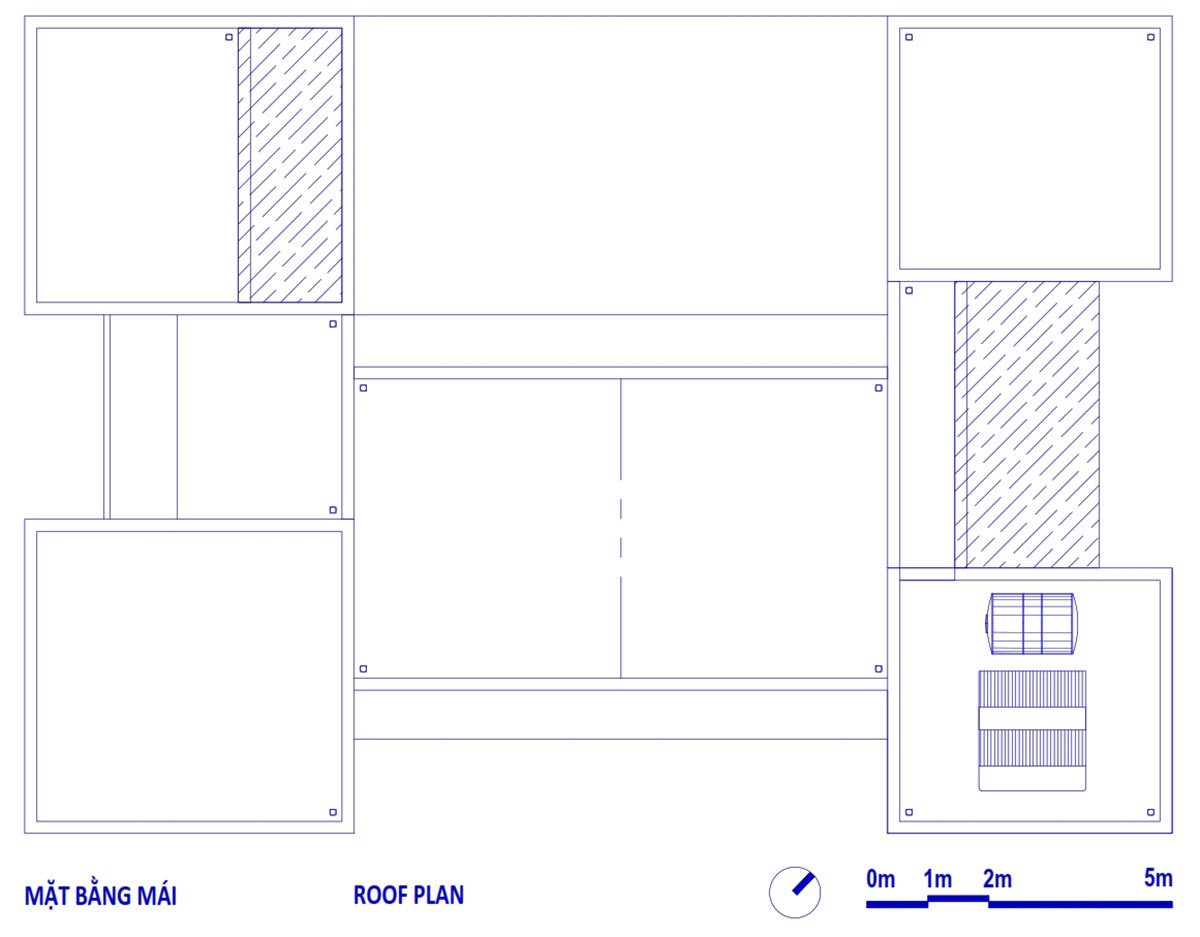
Consequently, the designing process comes to a solution in which the building would be split into 3 distinctive blocks, with 2 solid blocks at front and back of the house connected by a void block in between.
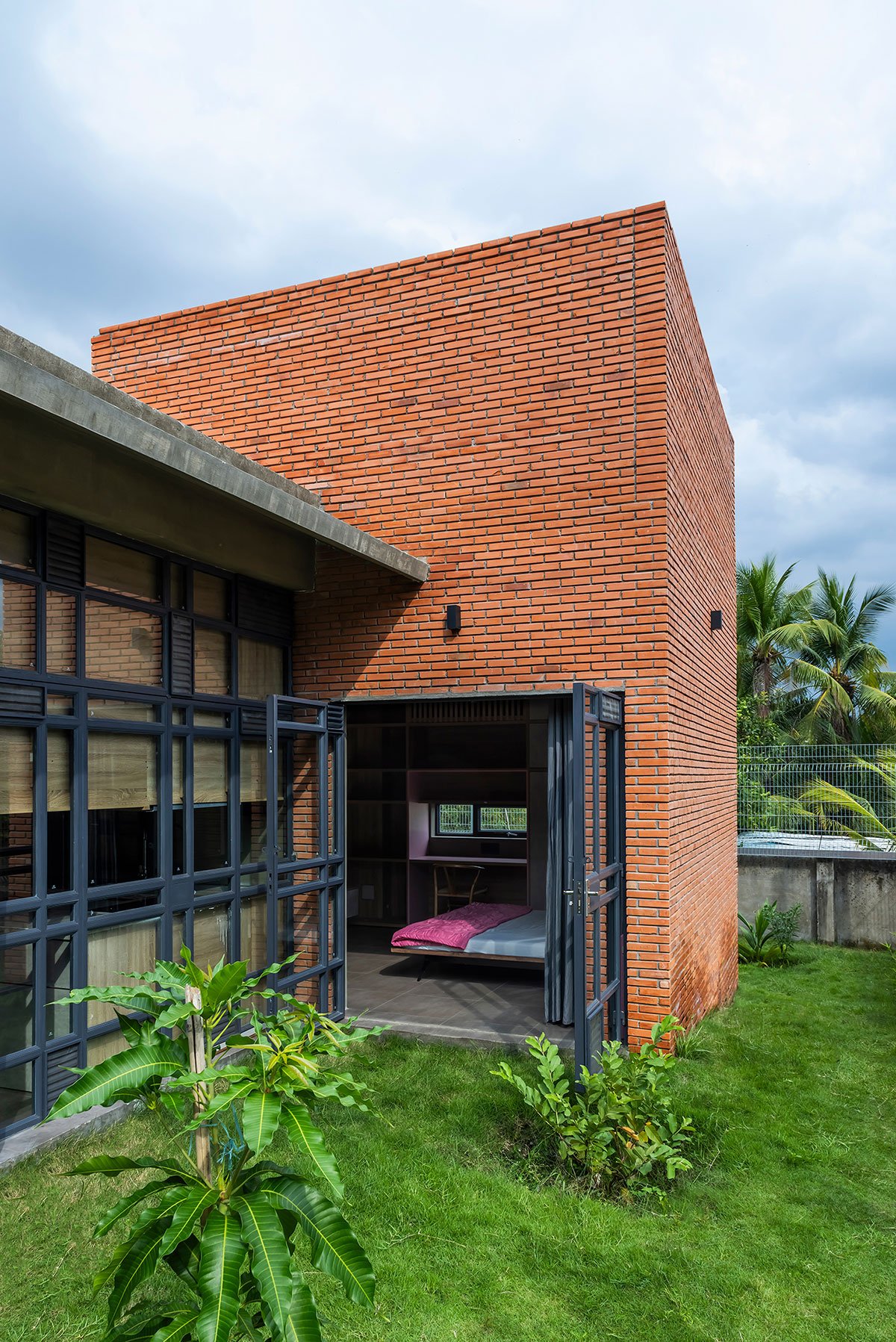
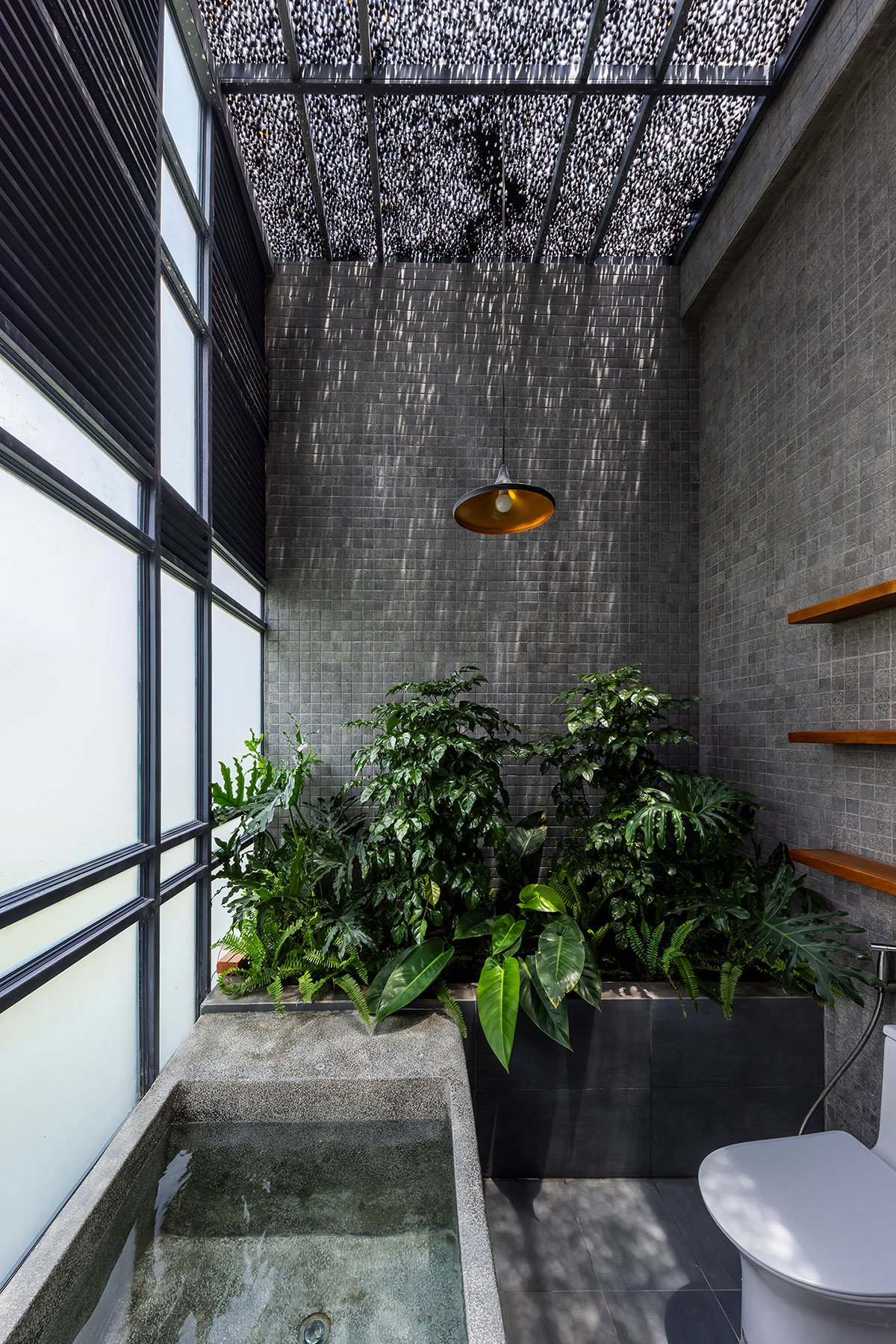
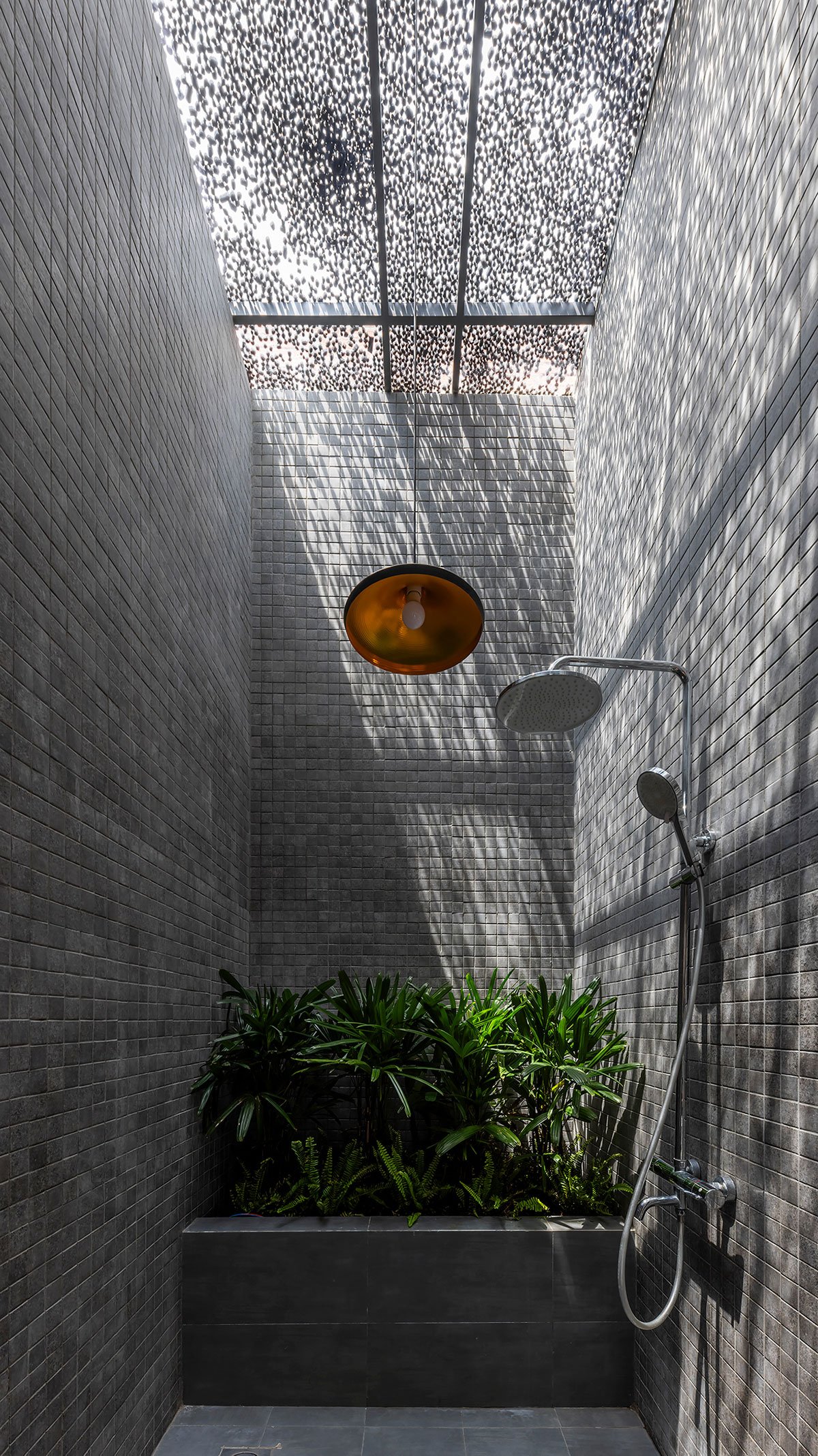
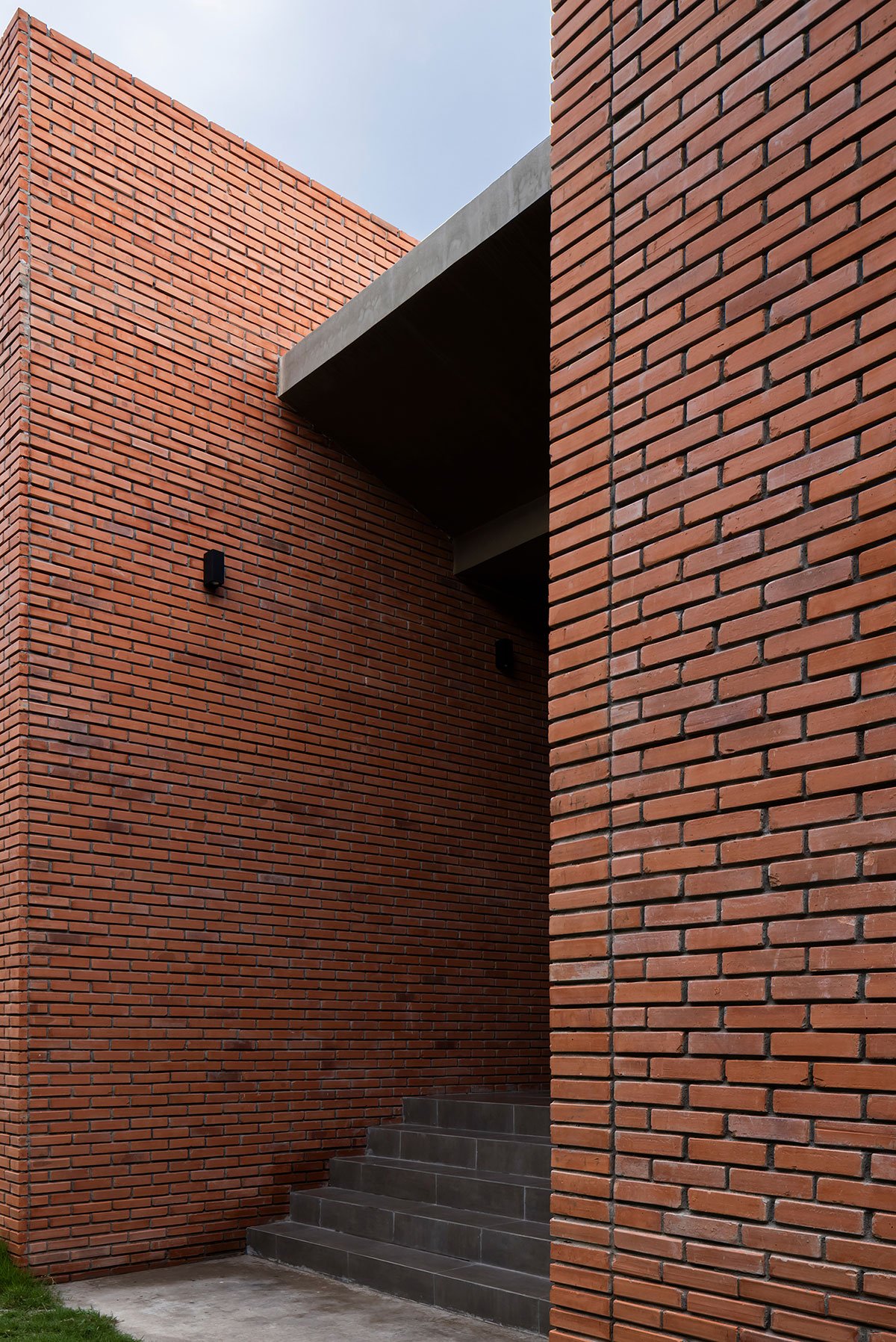
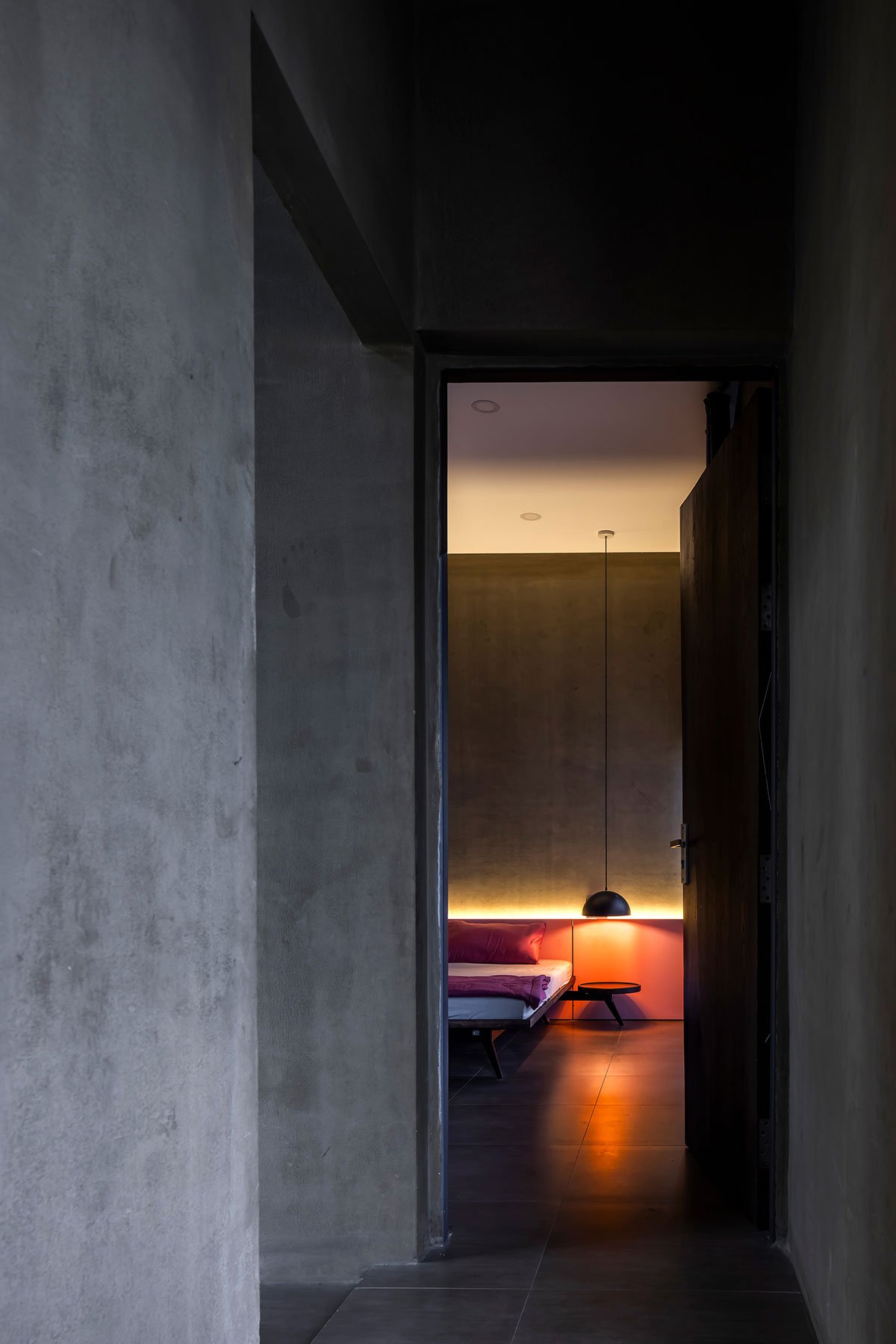
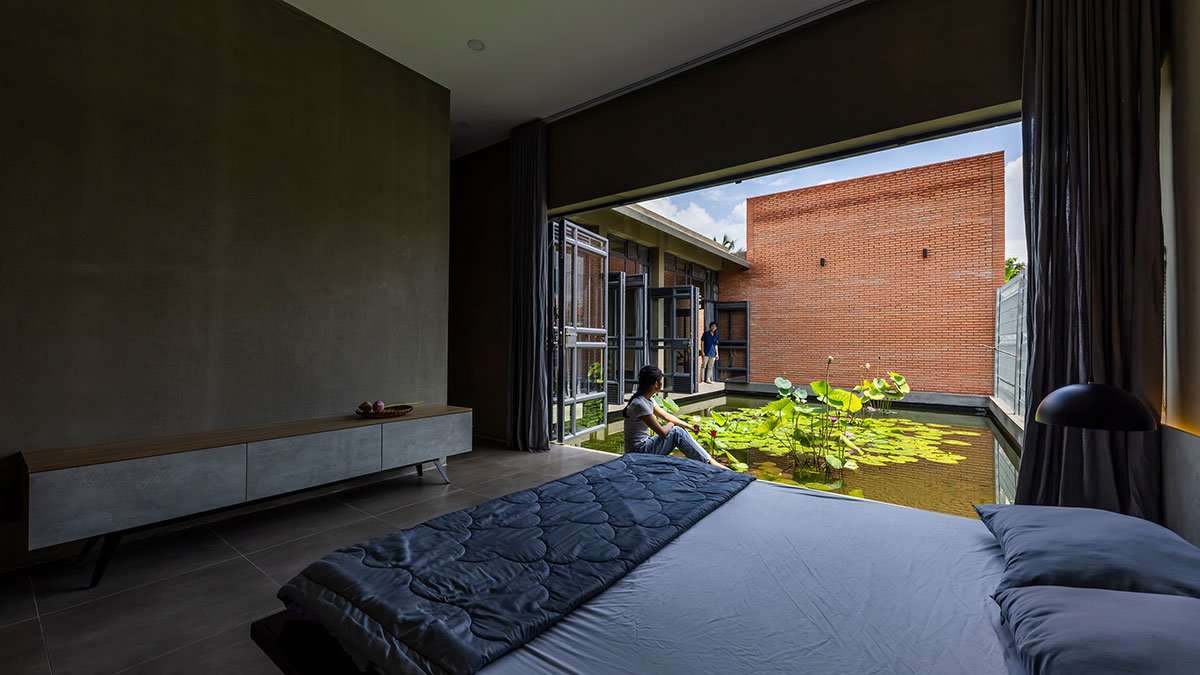
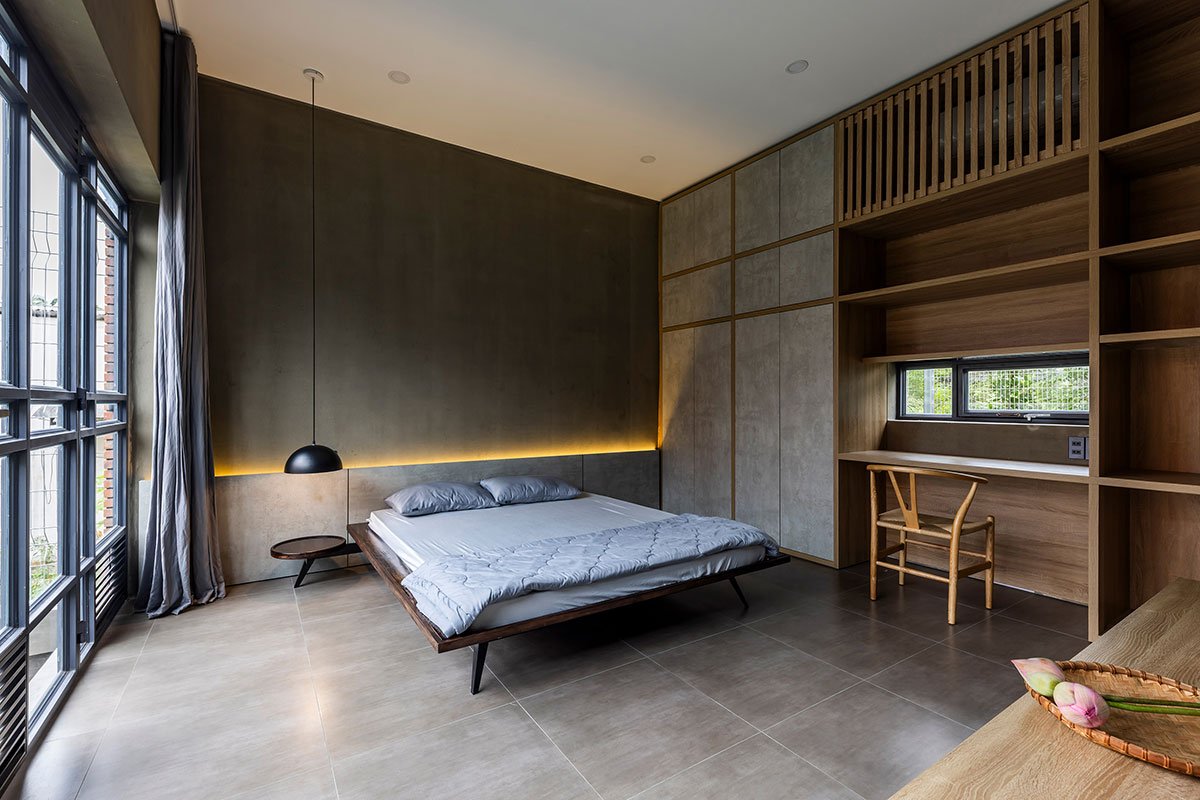
The front block is designed for the garage, toilet, entrance, bedroom and study room. Because of the privacy functioning, this block is mainly covered with dense walls. The back block is arranged for 2 bedrooms, bathroom and a laundry area. These are also private spaces so the architects also decided to surround it with dense walls.
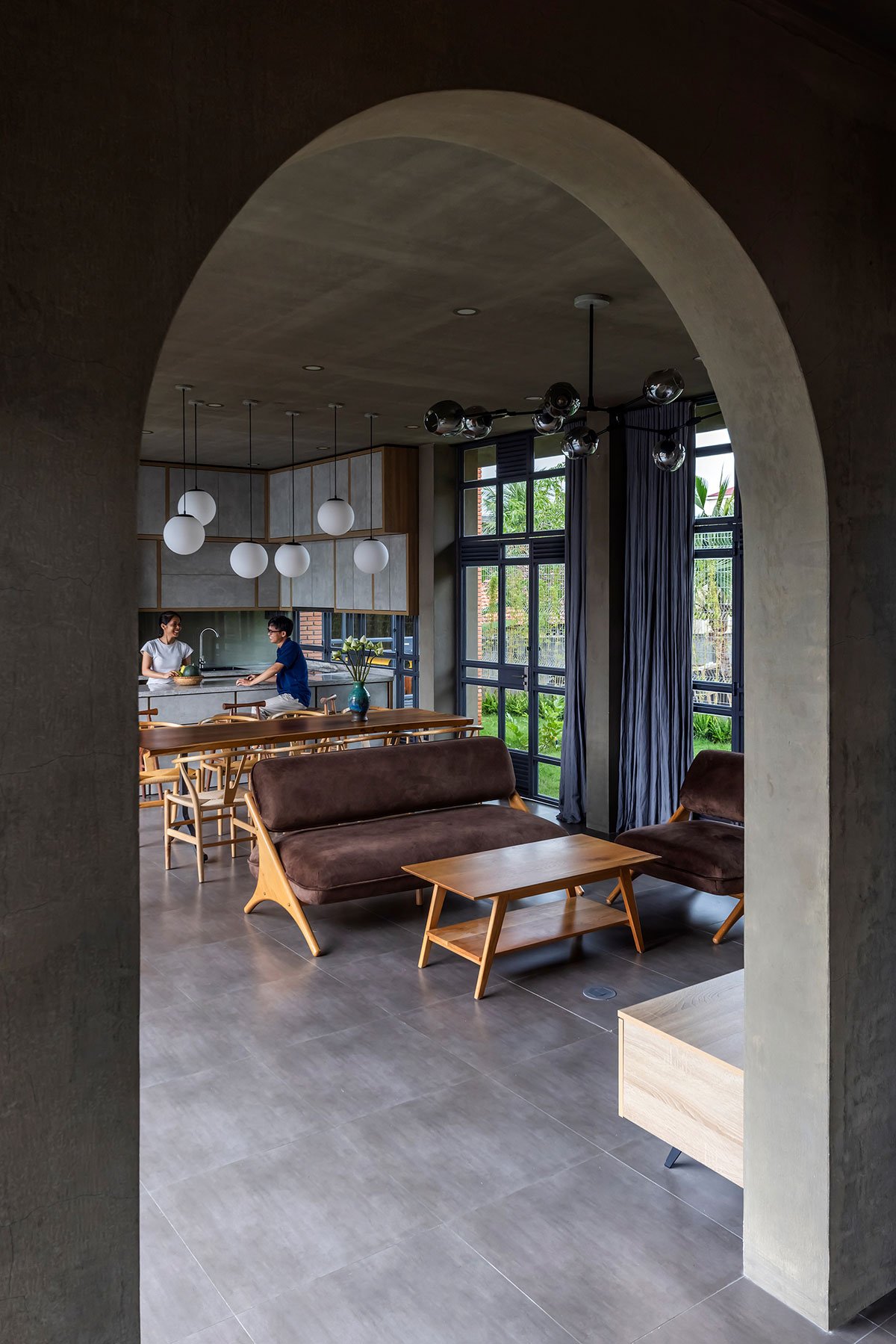
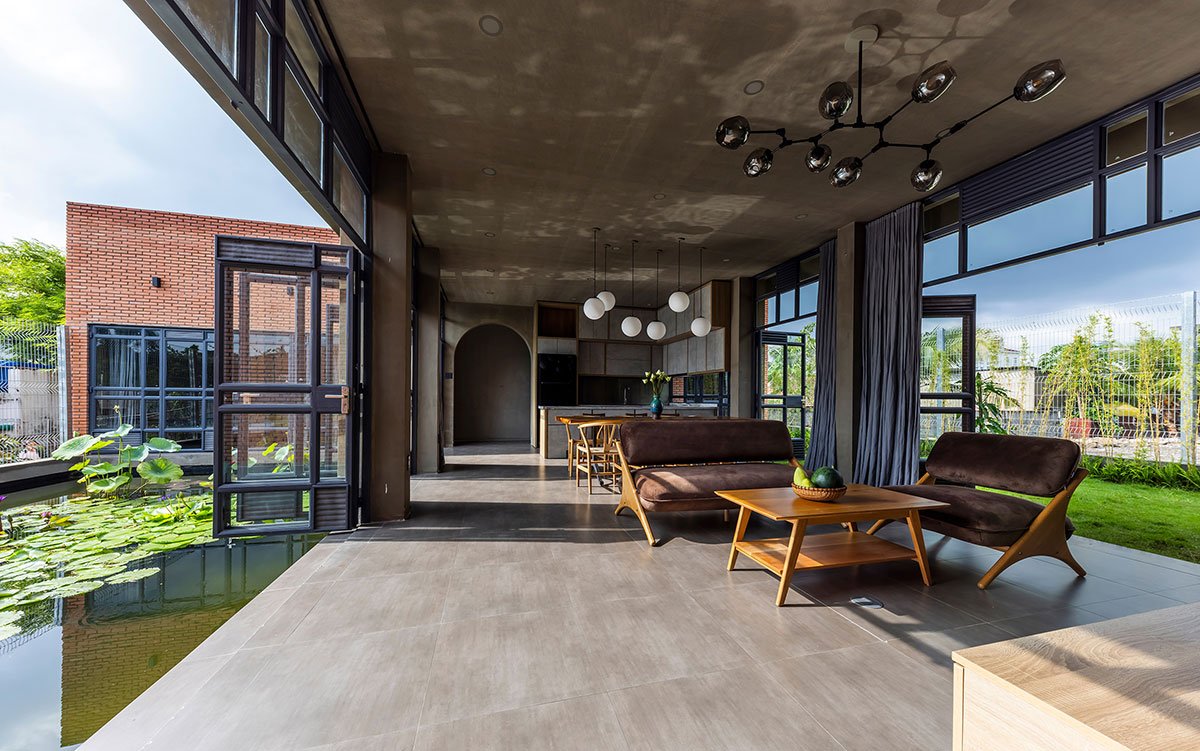
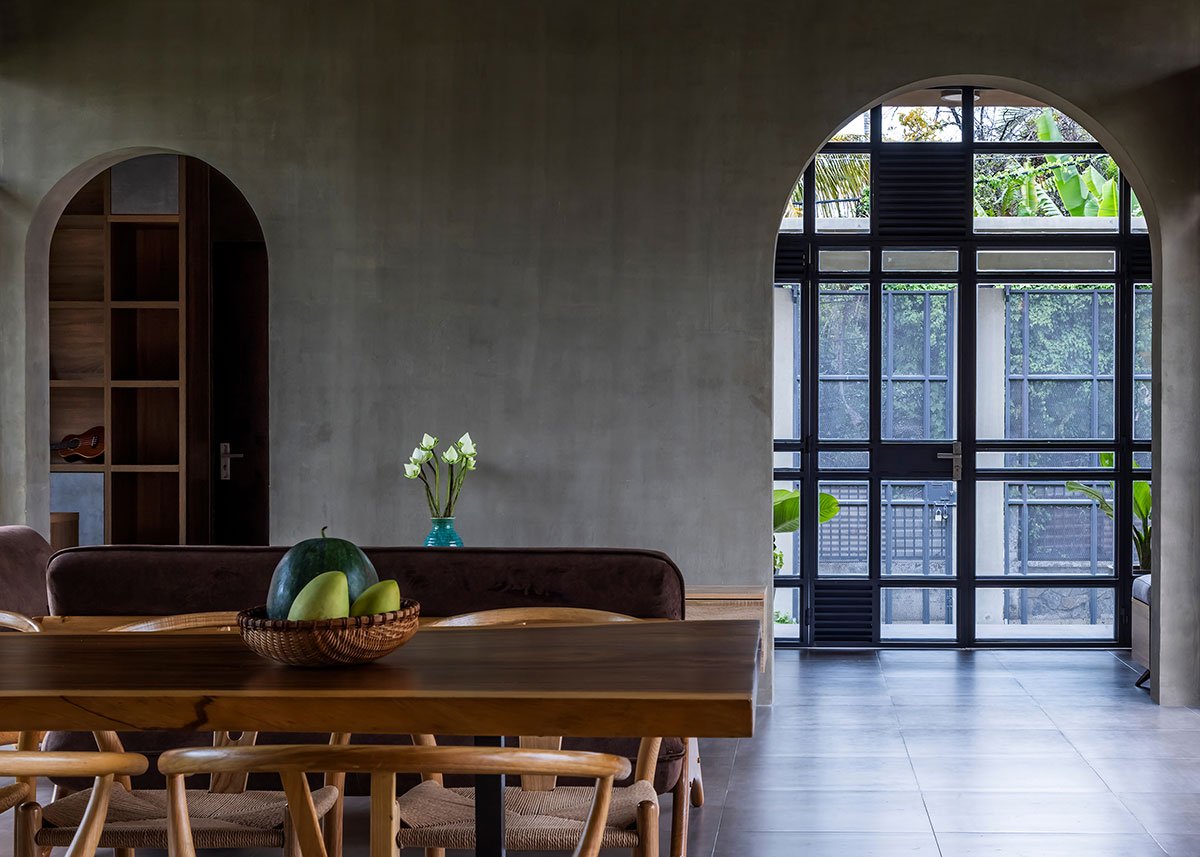
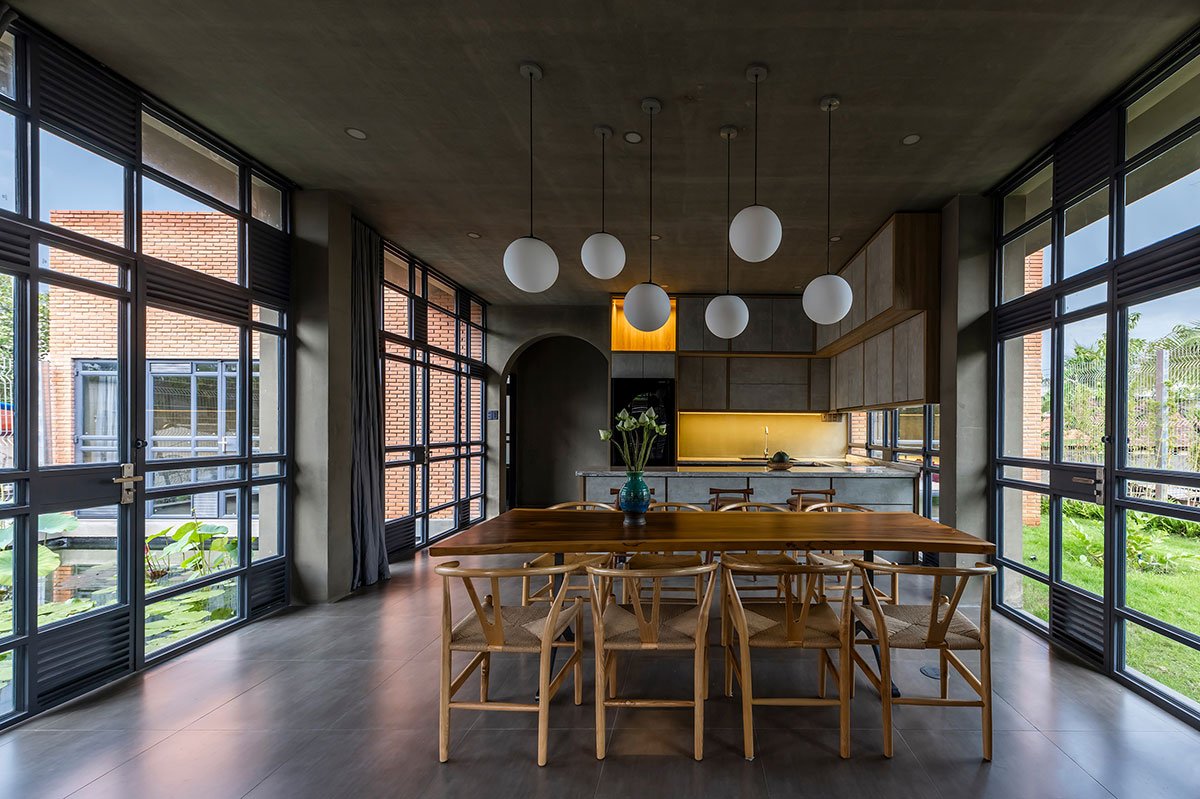
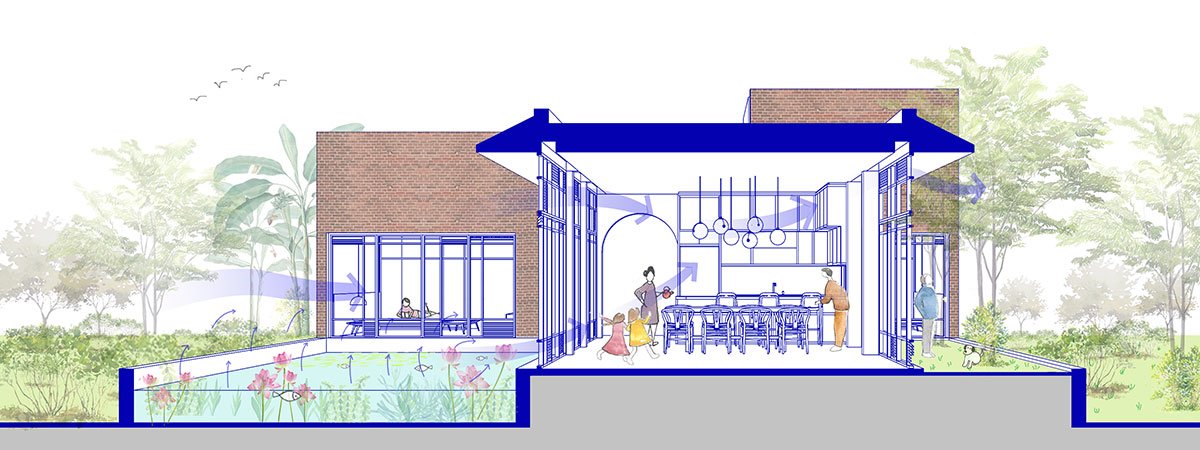
The middle block is built for the dining area, this is an open space created to connect with the natural elements and the owner’s mother house. Even though opening both sides of the house induces a large amount of sunlight going through, the 2 blocks at both ends appeared as a shelter preventing a part of the sunlight effectively.
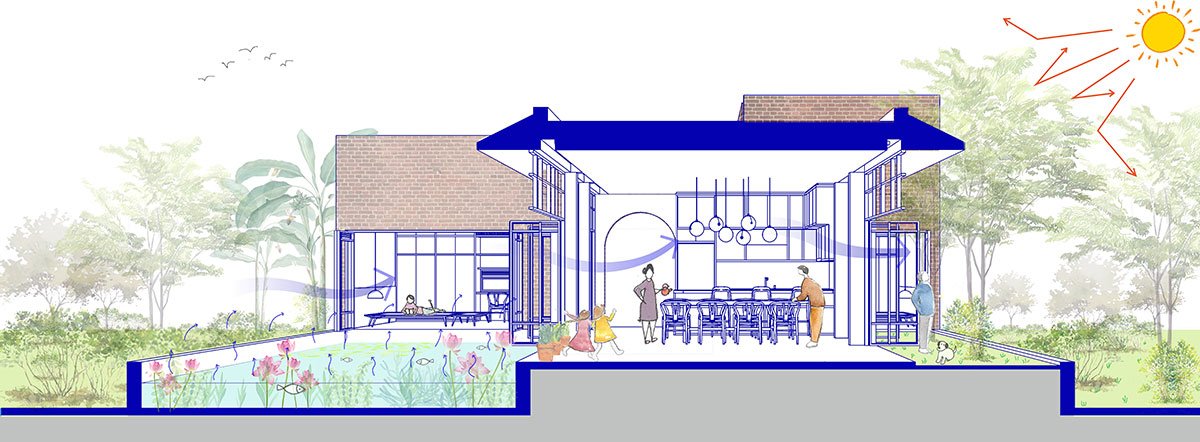
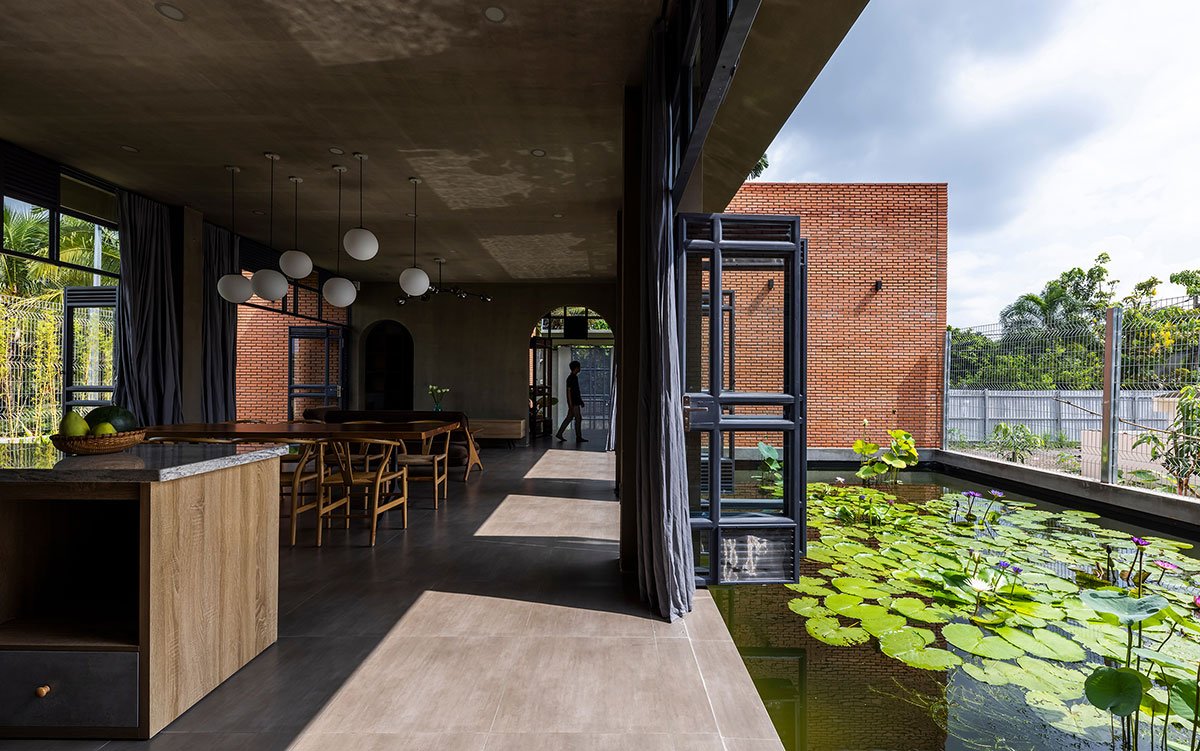
Bioclimatic Architecture Design Solutions: 5 climate control design strategies for achieving thermal comfort in tropical modern architecture.
Structural insulation: Heat transfer through the house structure can be divided into 3 stages:
+ In phase 1, the exterior of the building receives heat from solar radiation or heat transfer from the surrounding environment.
+ In phase 2, the heat is transferred from the outer surface to the inner surface by conduction.
+ In phase 3, the heat is transferred from the inner surface to the indoor spaces in the form of convection and heat radiation.
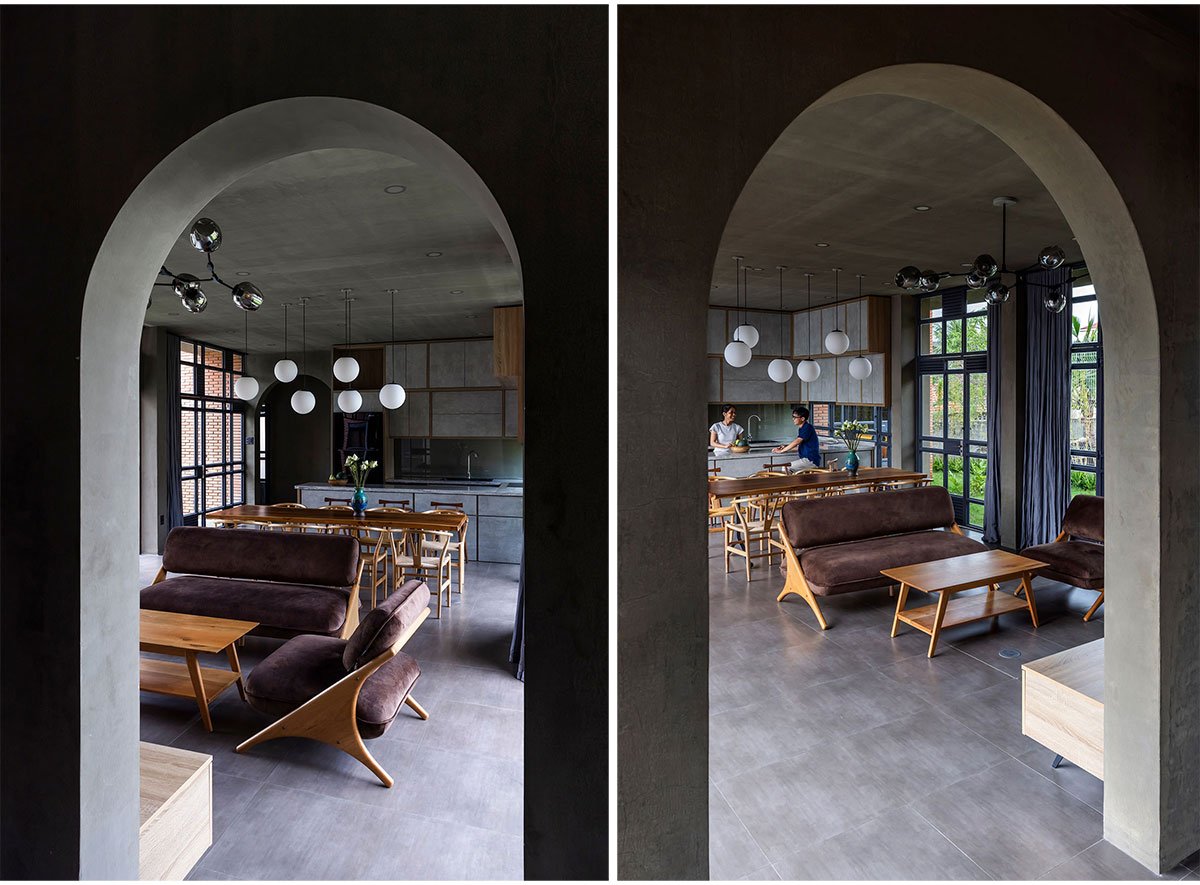
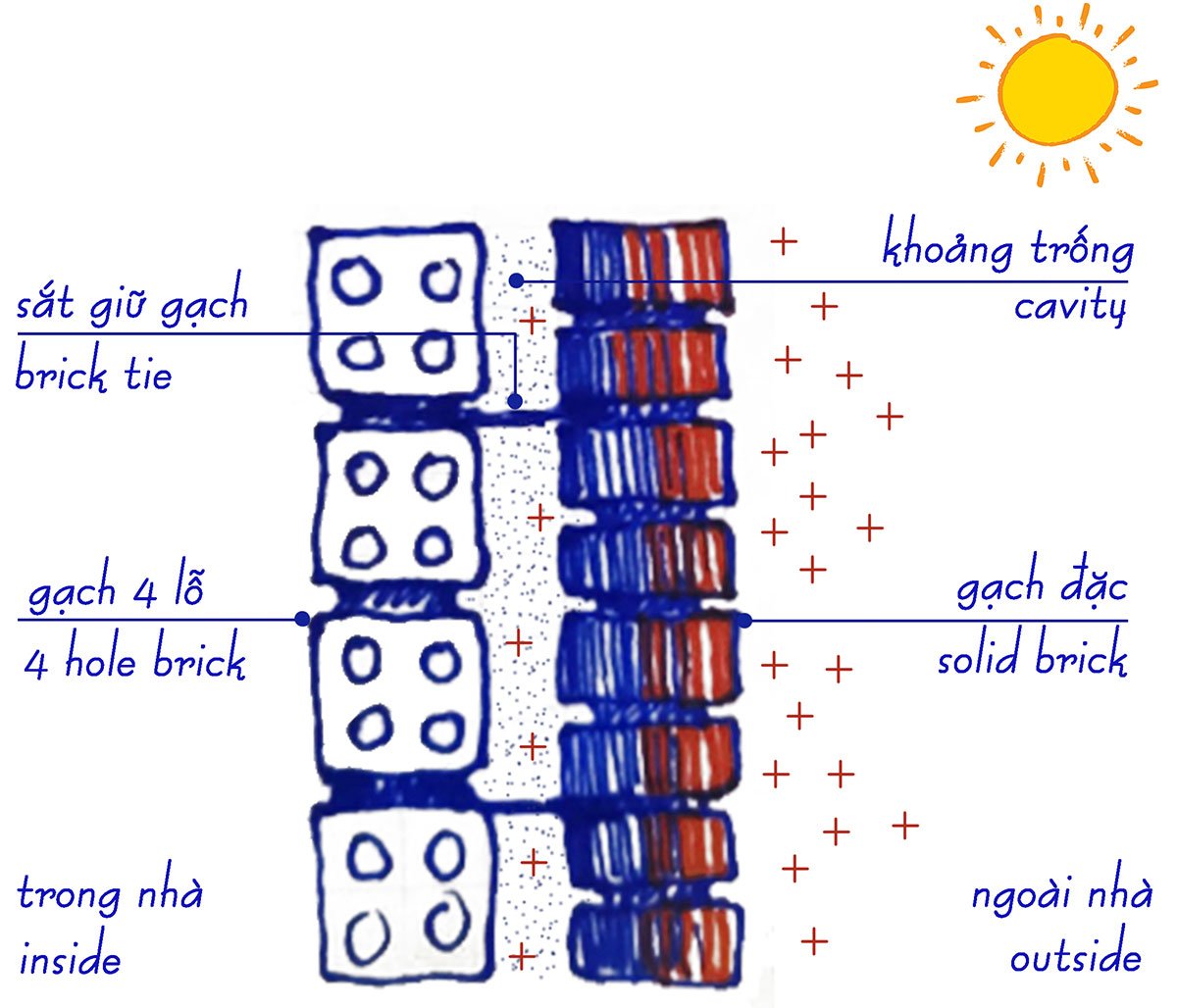
The wall layers separation solution aims to prevent heat transfer through the structural surface. The outer shell of the building is protected by a 250 mm thick wall, consisting of 3 layers:
+ First layer: a solid brick layer that blocks most of the heat from sunlight. This layer has the advantage of great heat resistance but the disadvantage is the heat retaining for a long period of time.
+ Second layer: the air layer that completely separates the inner wall from the outer wall which is constantly being heated by the sun. Thereby minimizing the heat transfer from the outer wall to the inner wall.
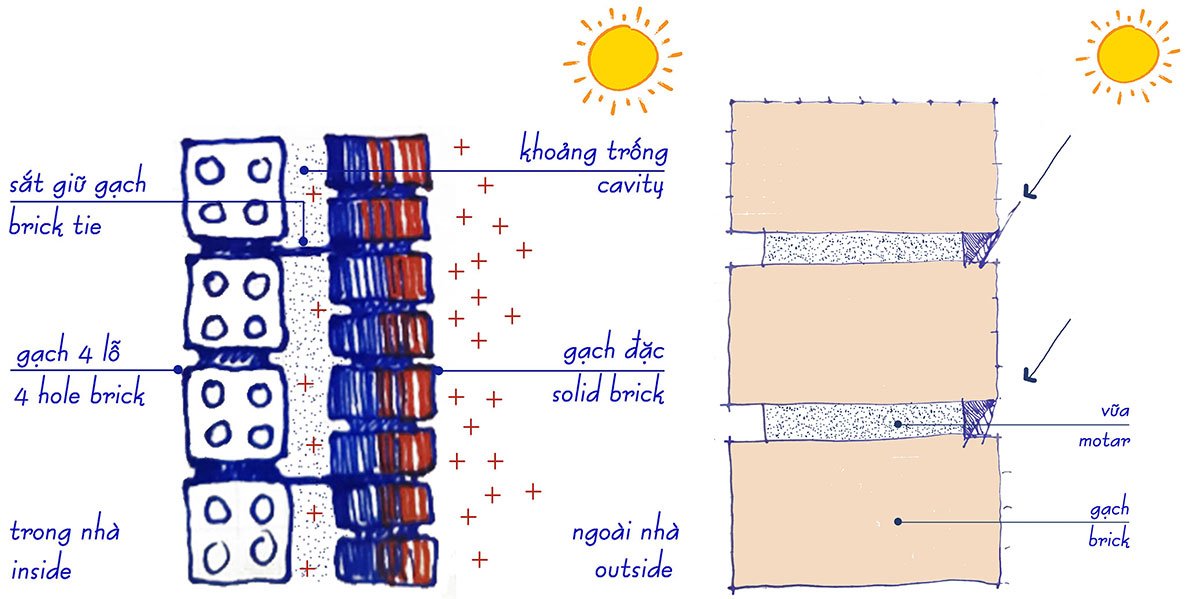
+ Third layer: the inner wall layer built with 4-hole brick walls. Utilizing the 4 hollow holes structure, this can increase the air cushion layer reducing heat transfer (To be specific, heat appears because the air layer is heated due to close contact with the outer wall layer although the air helps prevent heat transfer. But the air itself contacts the outer wall layer continuously heated by the sunlight, the air is also heated up. Nevertheless, the amount of heat transferred is much less than the phenomenon of direct heat conduction).
Passing through three layers of structure, the heat from the sun has been entirely blocked. Simultaneously, the outer wall only has 80 mm of thickness and can release heat very briskly when the sun goes down.
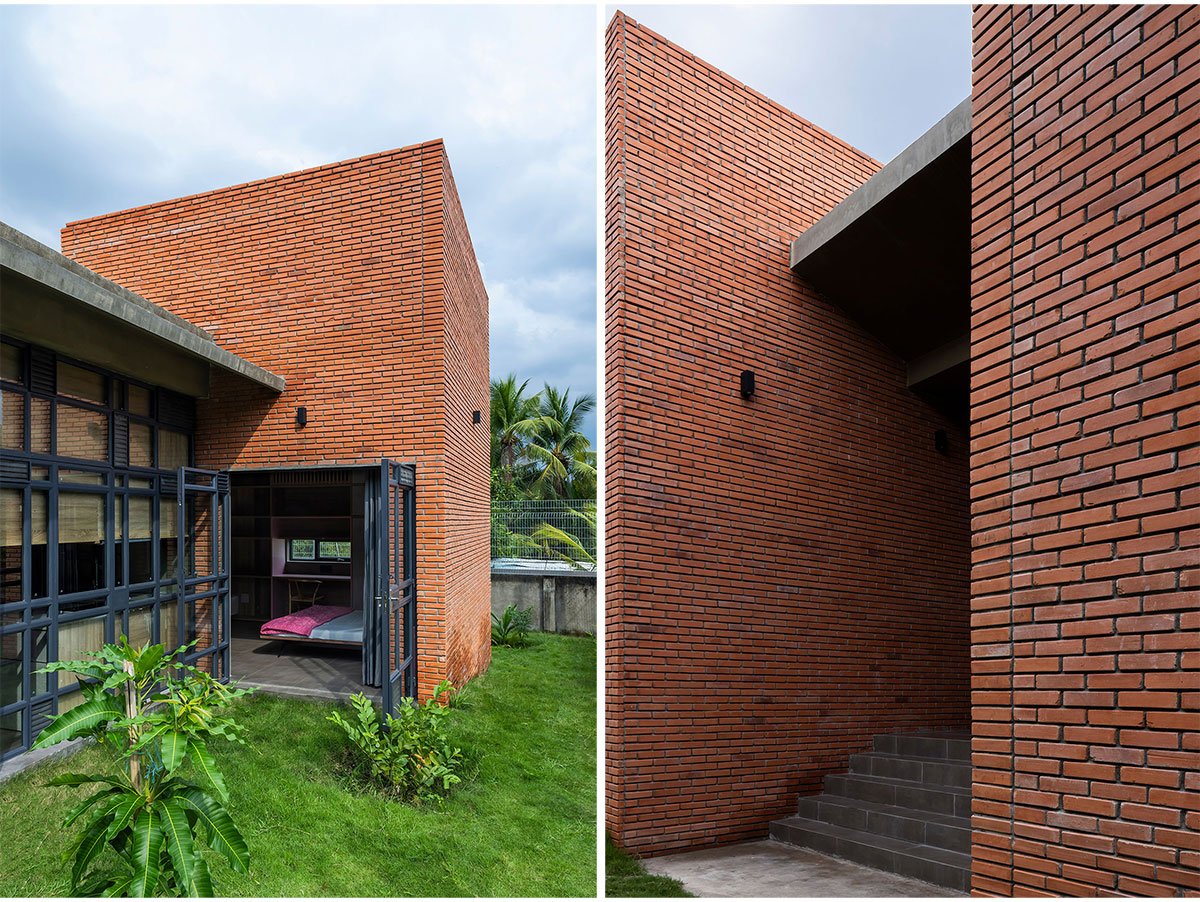
Minimizing solar heat gain: The outer wall surface is the place that receives the most direct sunlight in all the house. In order to lessen the amount of heat that shines through the house, the architects need to reduce this surface area.
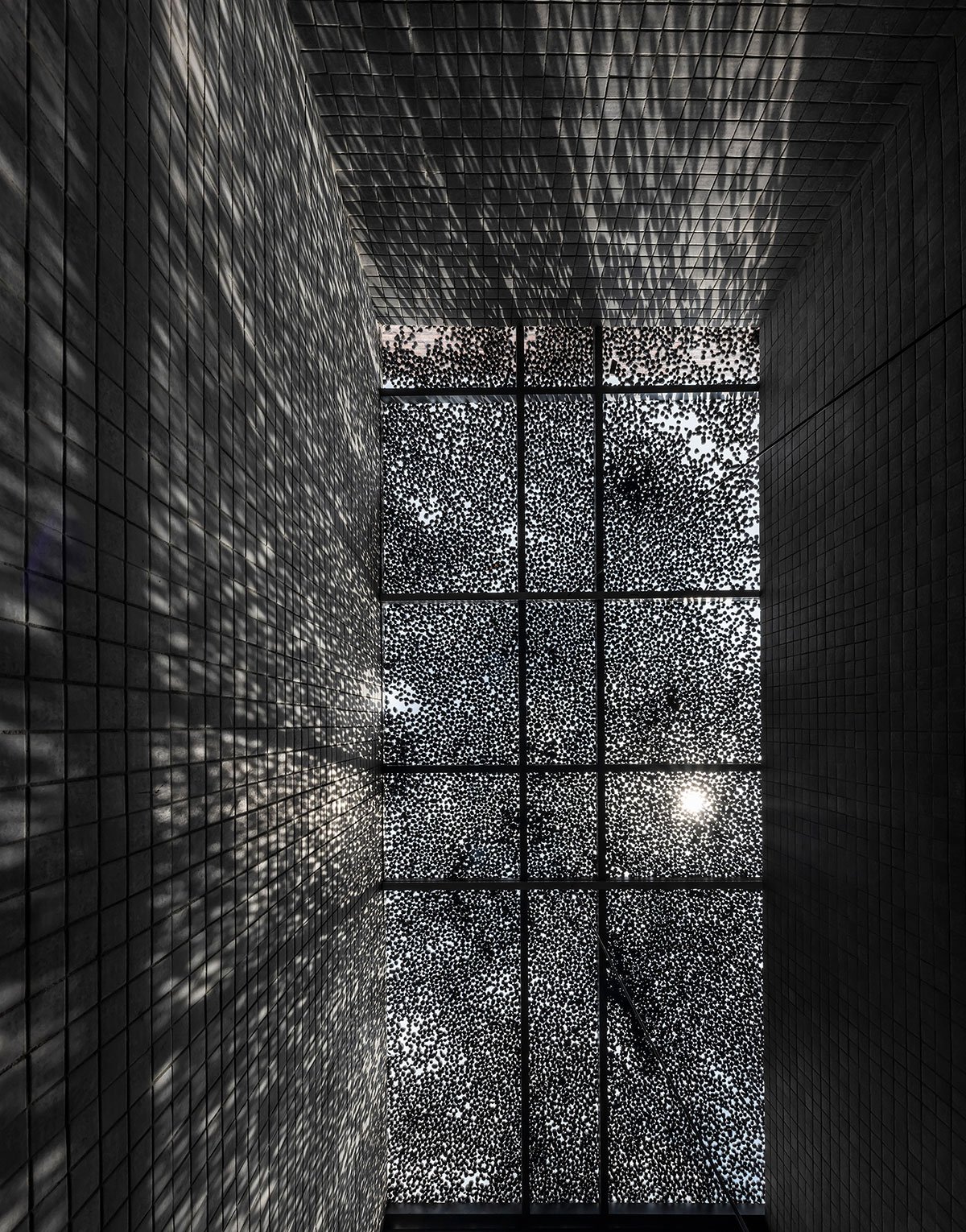
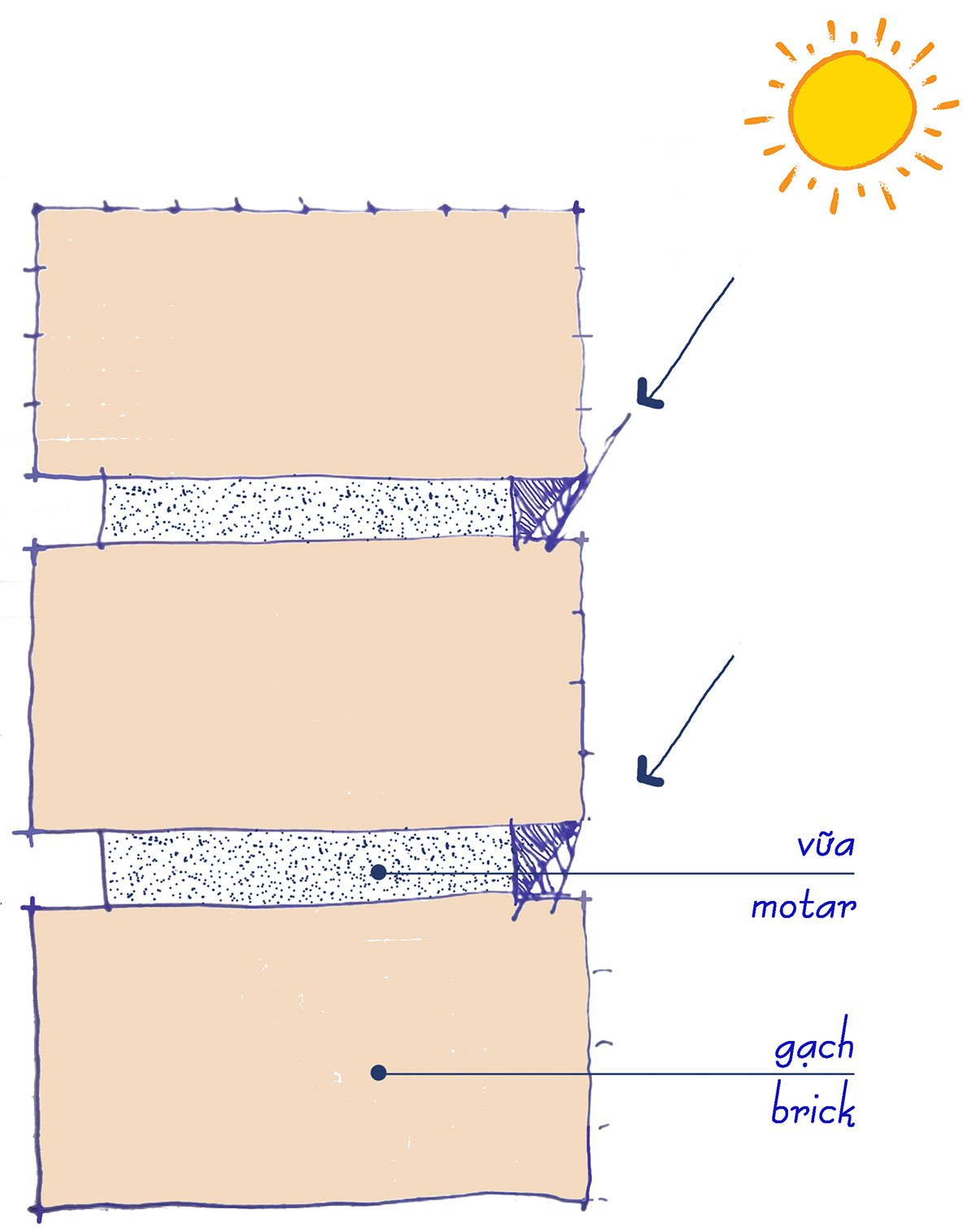
The heat offload solution is using a raked mortar joint: The outer walls are built with bricks of size 40 x 80 x 180, these bricks are connected by a 10mm thick mortar layer. This mortar layer is built 10mm below the surface. By using this building technique, with various sun angles, it creates a shadow area on the wall surface, the area of this mortar layer accounts for 20% of the total wall surface. This built-in joint can help the wall be shaded from 70-80% effectively. Sometimes small changes can create a big breakthrough, this detail helped the wall to decrease 14-16% of the heat directly radiating the walls.
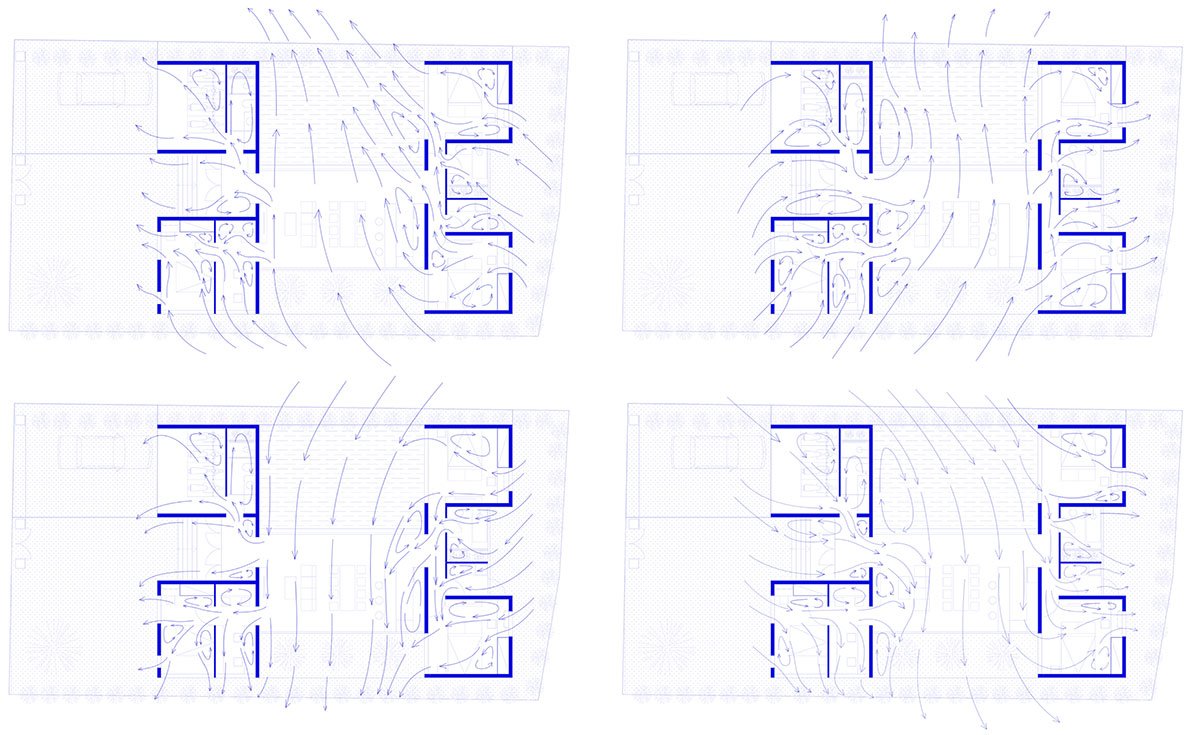
Enhance natural ventilation: Windows and usage habits: Once-daily, people are often slothful to open windows, mainly because they often forget to close the windows, and sometimes it is the security issues that most people are concerned about. Therefore, although the house has many windows, they are shut all day long. In these situations, the windows only play a role in natural illumination and utterly invalid ventilation. Therefore, the natural ventilation system in the house is practically paralyzed.
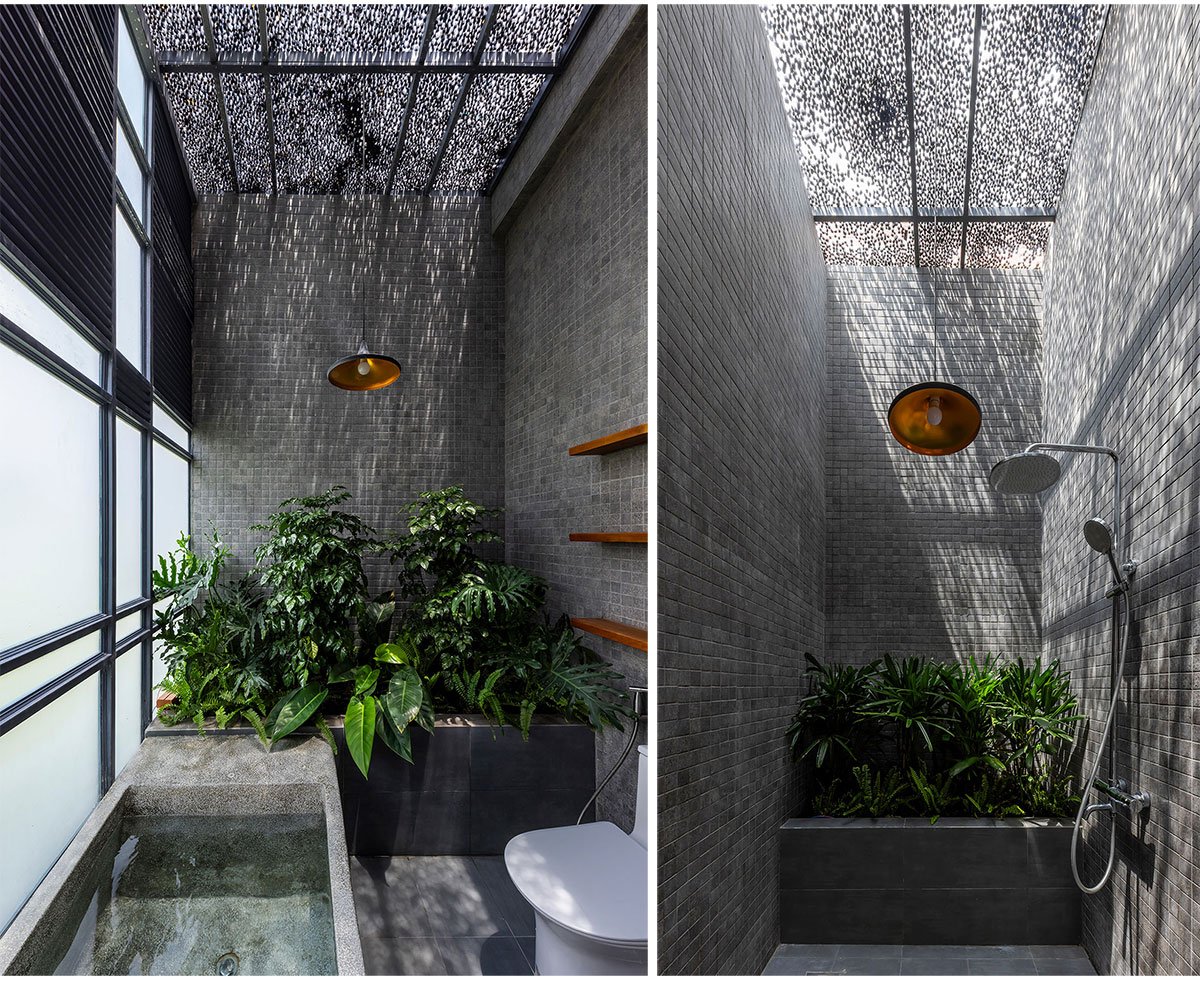
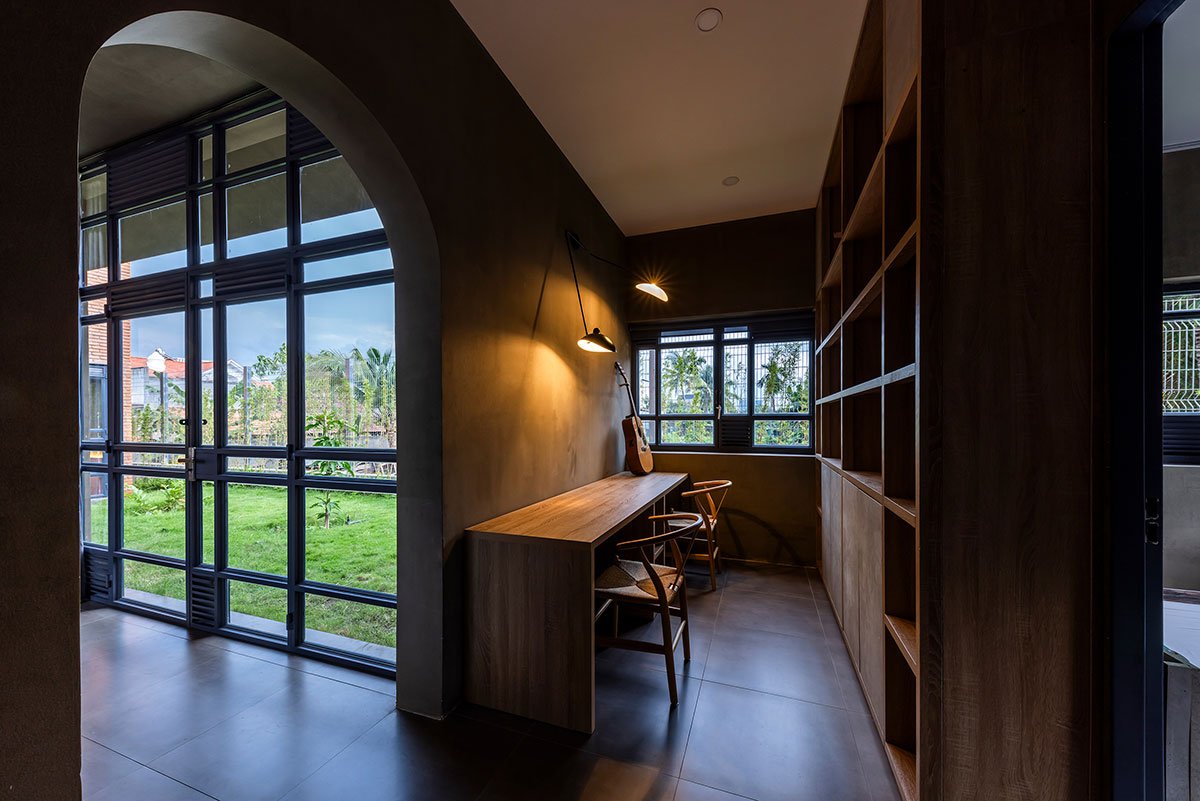
Furthermore, the house is constantly heated by the ambient temperature, combined with the greenhouse effect, the heat accumulation of walls, floors, roofs, etc. This process raises the temperature in the house constantly, heating up the air. Since the natural ventilation system is incapacitated, this generates the hot air that cannot escape at the corner of the house. This process occurs ceaselessly from 8am to 5pm, causing the heat gap between the ambient temperature and the house to rise up to 8-15 Celsius degrees. So as to cool the air temperature, the ventilation has to be available 24/7, it becomes an independent system separate from human’s activation.
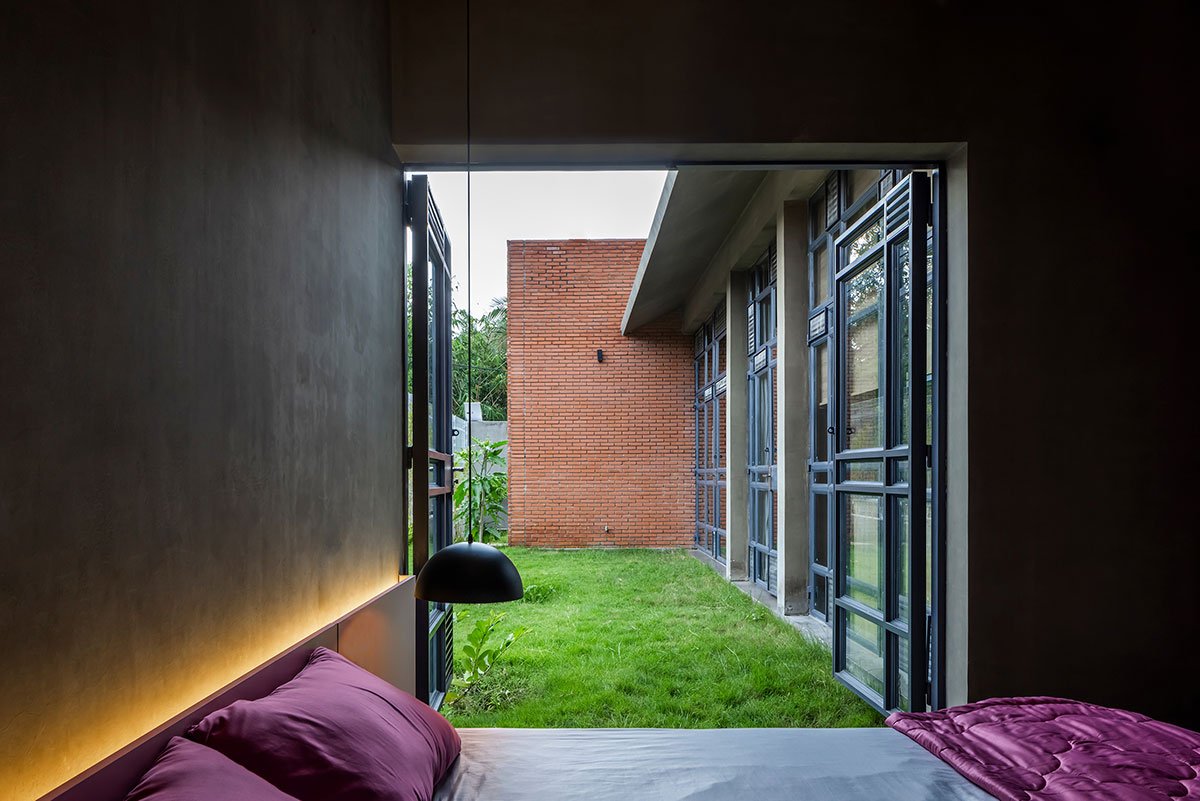
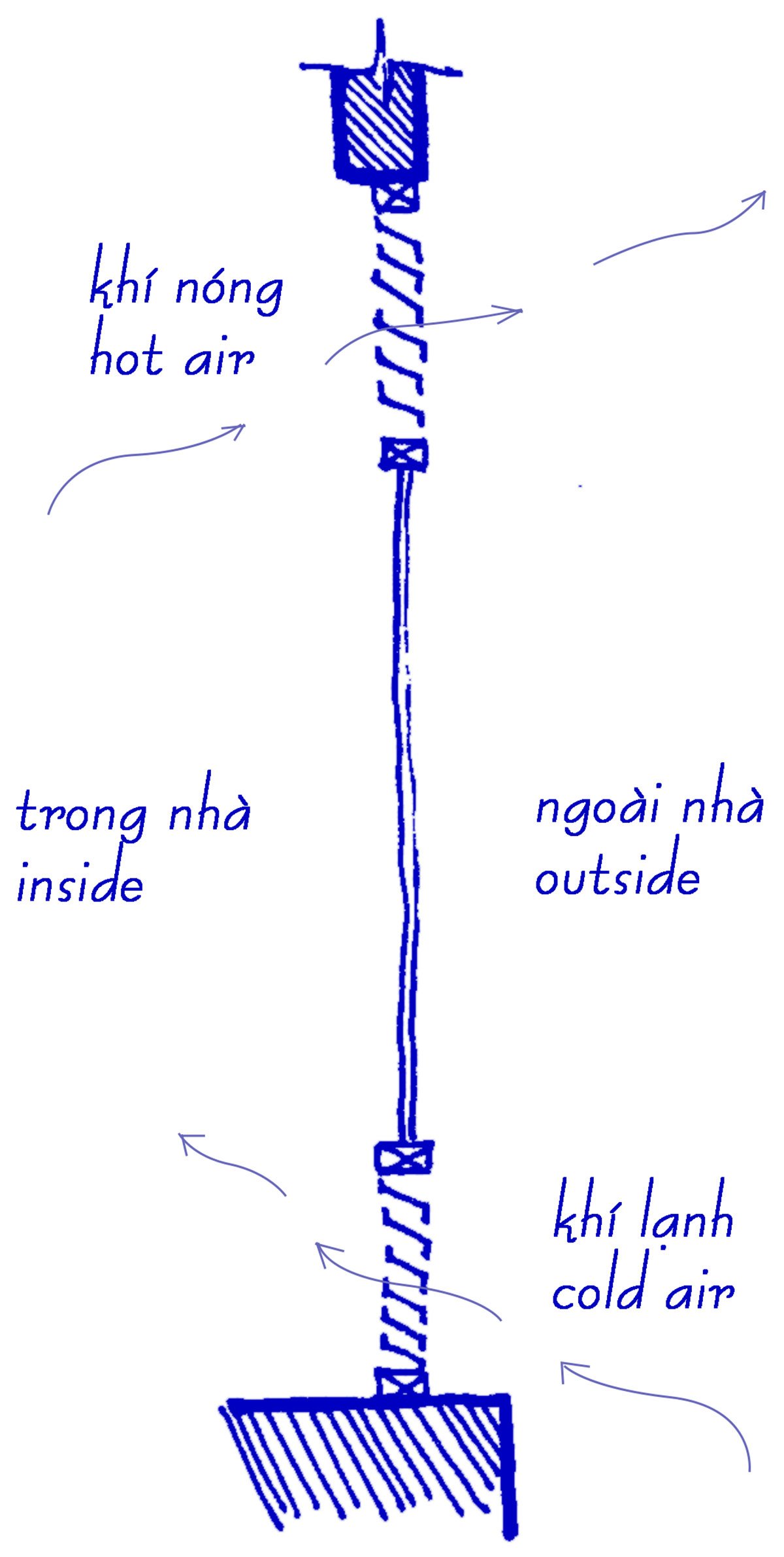
To completely solve this problem, all door systems including windows and doors are integrated with Z-shape shades. This shade will be arranged at 2 positions: low part to draw in cold air, high place to release hot air. In addition, each space is arranged with at least 2 windows (except for the walking doors) to refresh the air flow throughout the house easily.
Drawings
Images