Excerpt: National Institute of Water Sports by MOFA Studio creates a bold iconic statement that transcends functional pragmatism in institutional architecture. The design seeks to integrate water sports’ cultural and economic significance into education, ensuring state-of-the-art training and development for local lifeguards and tour operators. They aimed to balance local ethos with a global approach, using local materials at the ground level and a poetic floating roof to create a balanced educational experience.
Project Description
[Text as submitted by architect] India, as a developing country, is progressing at a significant pace. One of the primary indicators of development in any nation is its education quotient. Our education system is evolving in parallel to other markers such as finance and healthcare, and we have begun to prioritize forms of education that, while unconventional by global standards, are highly relevant and rational within the regional context.
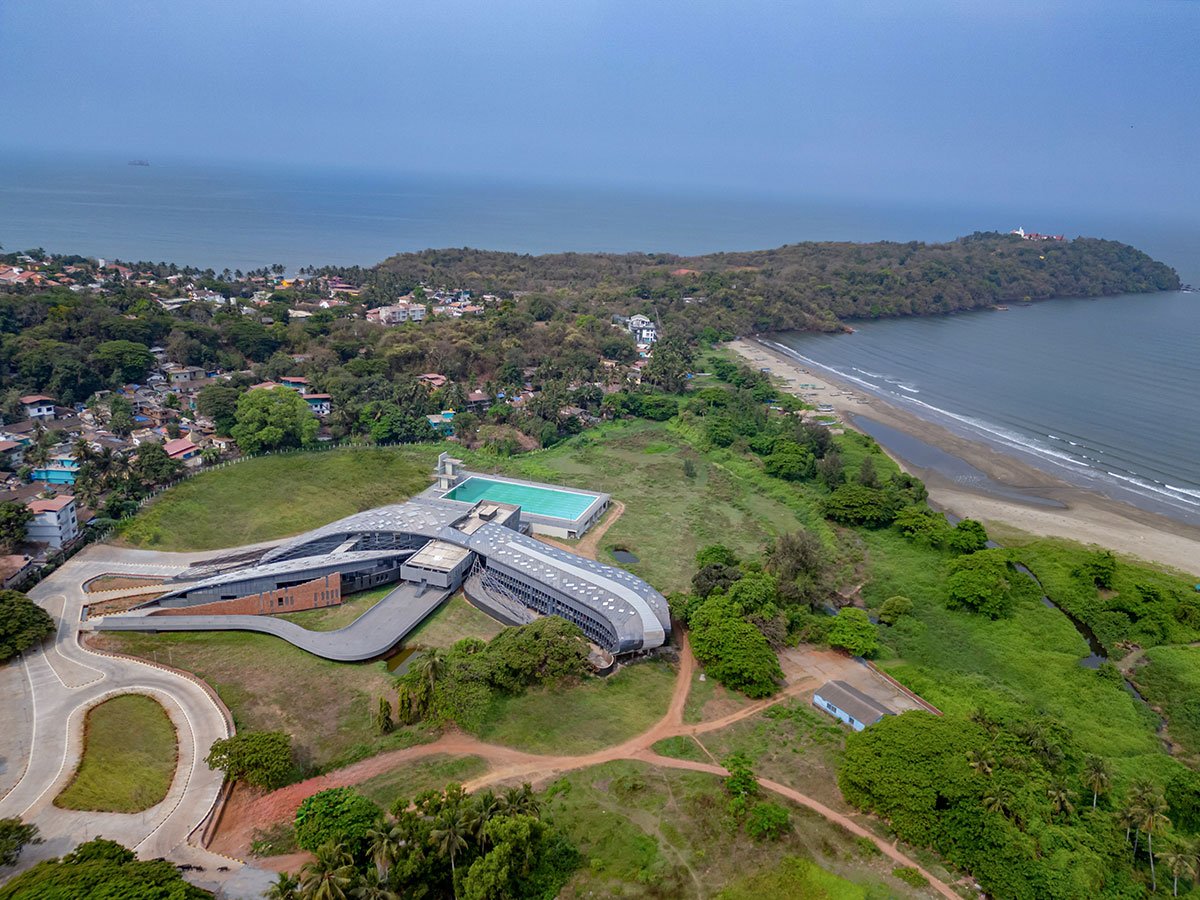
Goa, with 70% of its land along the coast, relies heavily on the sea for its economic growth. There’s a local saying: “In Goan blood, God mixed some sea salt too.” Apart from fishing and tourism being the key industries, marine tourism has also evolved as an independent stream over the years. Recognizing this unique relationship and the need for formalizing a systematic development in adventure sports and marine tourism, the government decided to establish the largest Water Sports Institute in Southeast Asia in Goa, also ironically, the smallest state of India.

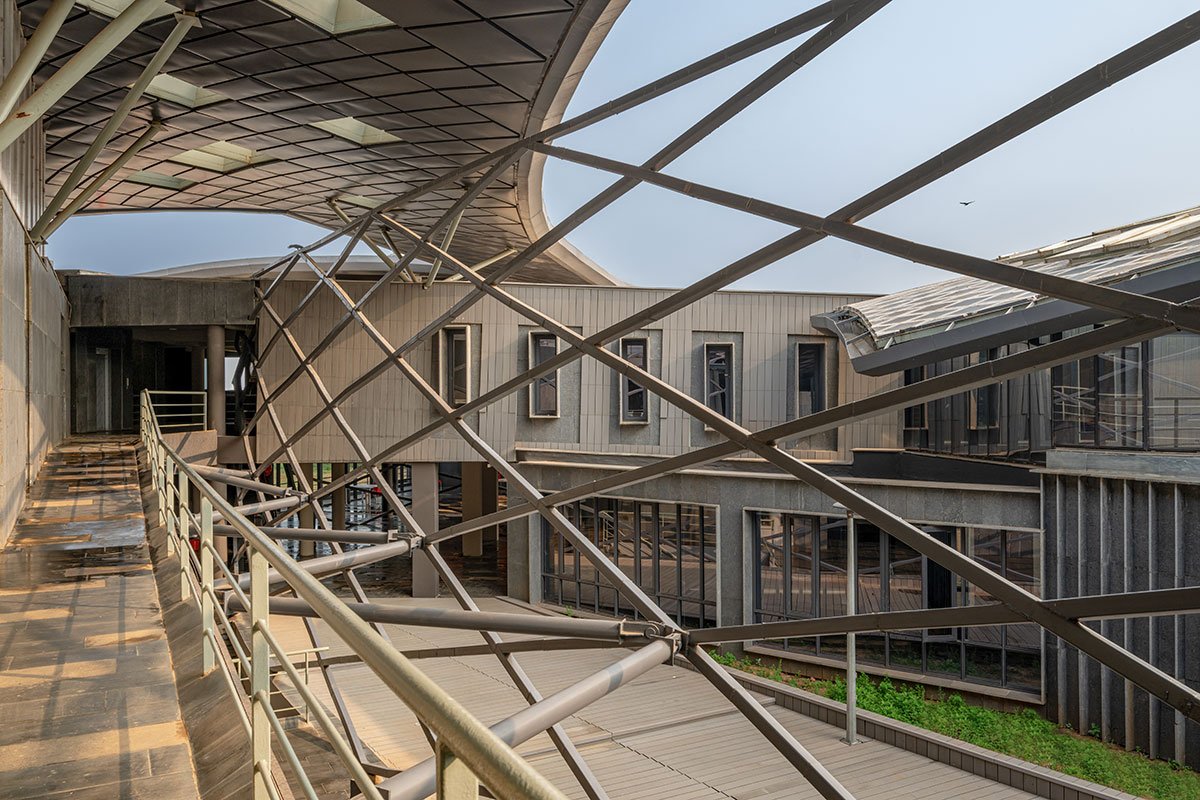
When it comes to public institutional architecture in India, governments tend to follow a more pragmatic and understated approach. Interestingly, in the case of design for the National Institute of Water Sports in Goa, the state government released an international level competition, with a dual purpose; firstly, to make a bold iconic statement, that places Goa on a global map and secondly, an expression that treats the institutional architecture beyond the functional pragmatism.
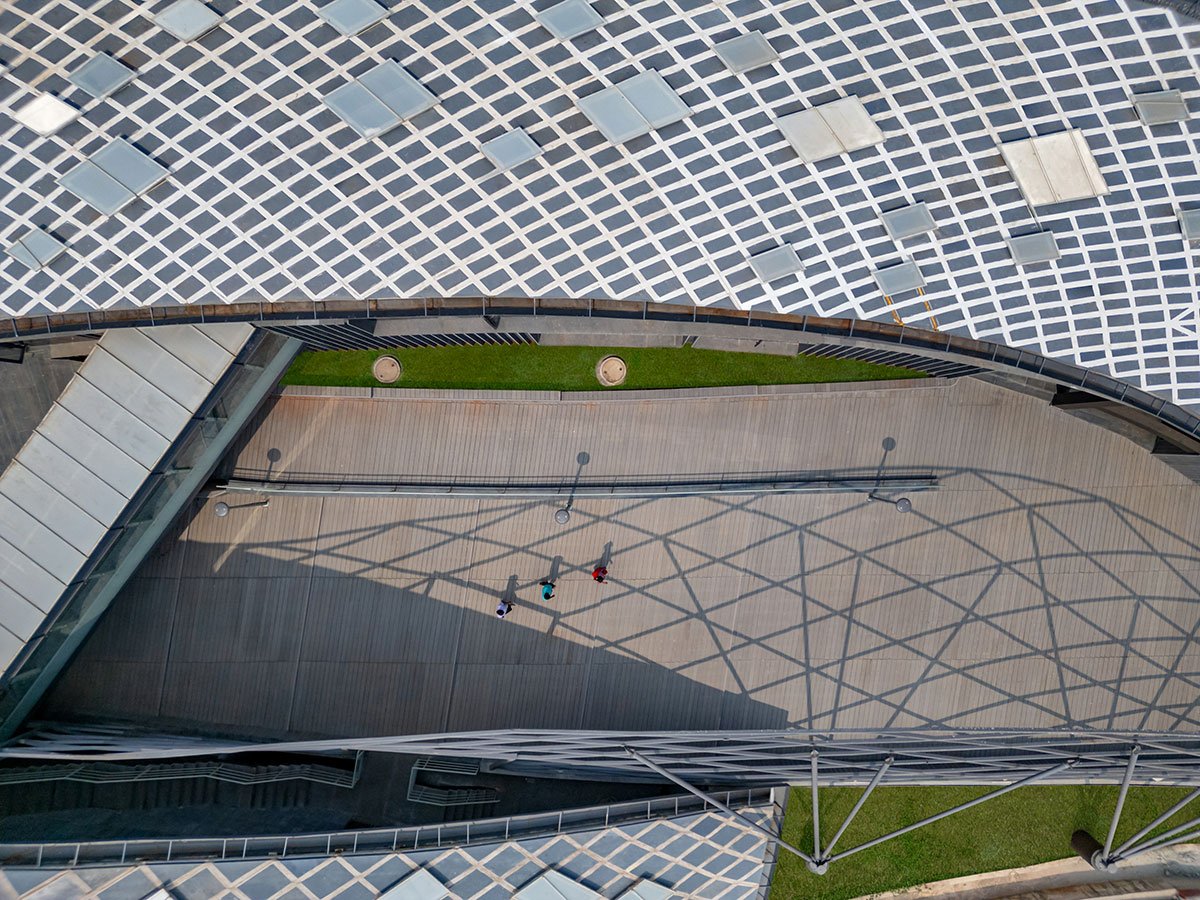
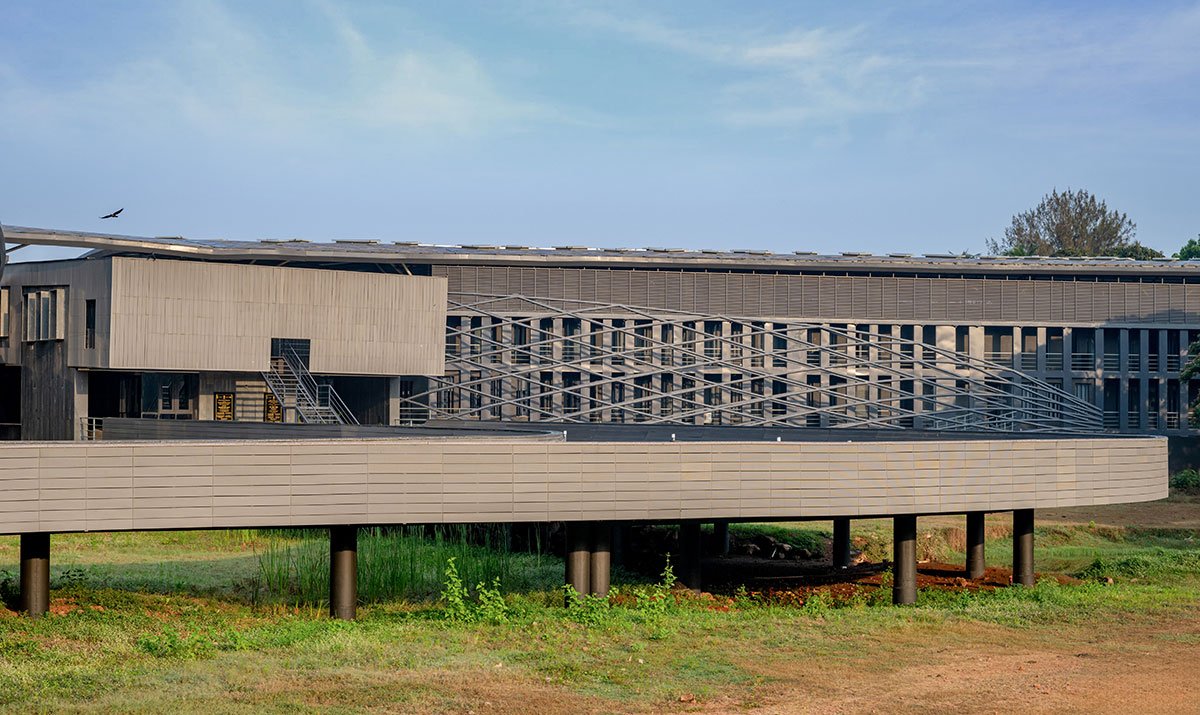
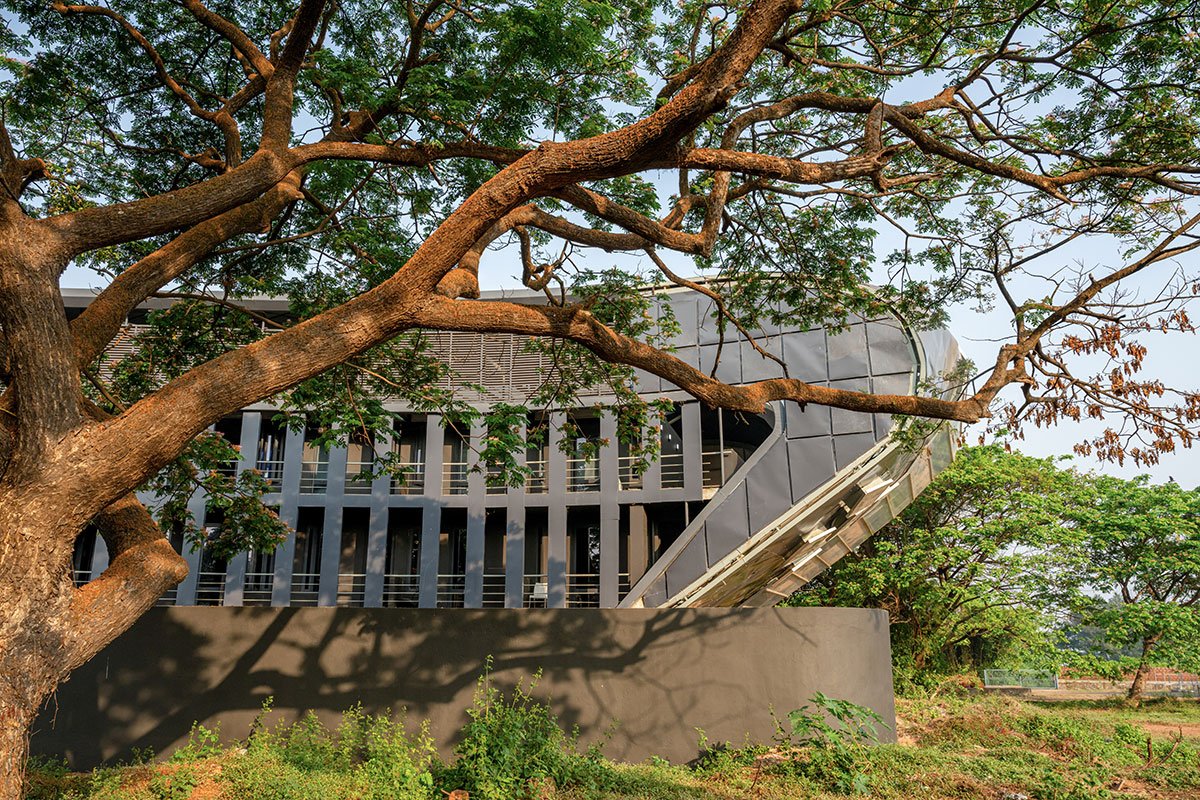
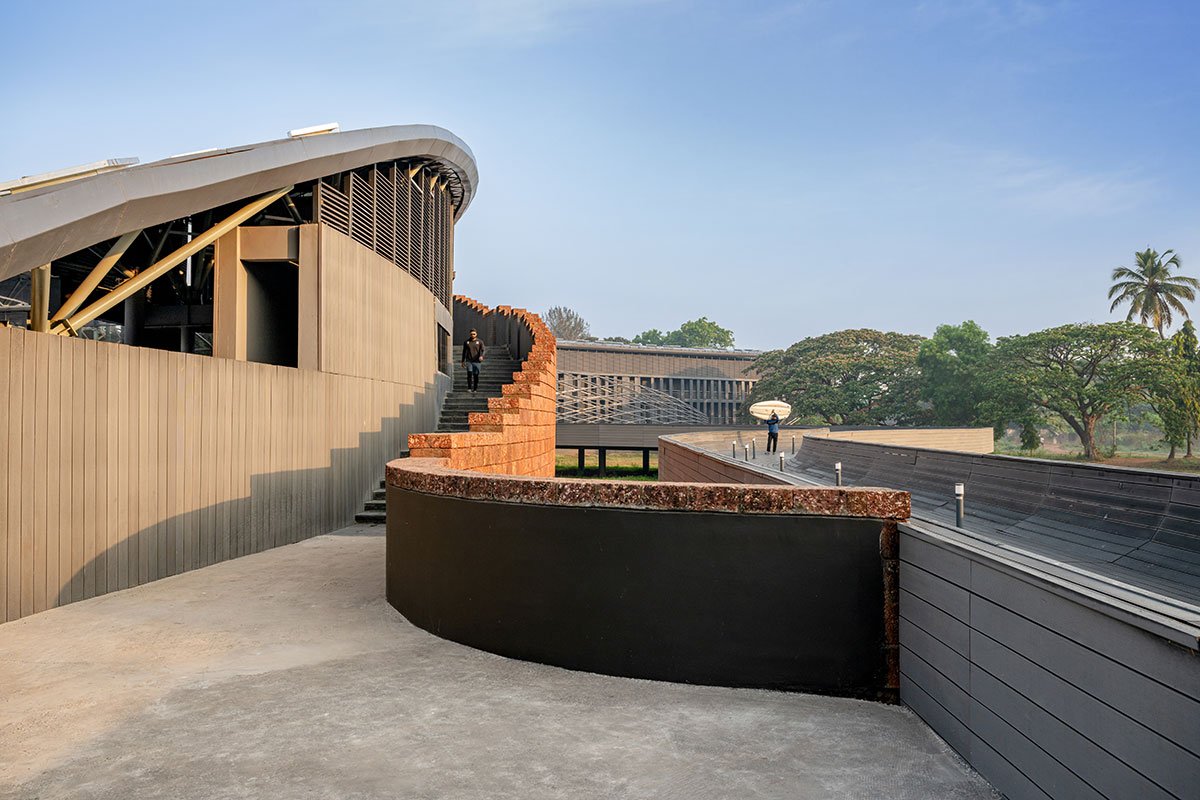
Commissioned through the competition as a winning entry, the designers were looking for an expression that would integrate the cultural and economic importance of water sports into the educational fabric, ensuring that training and development for every local lifeguard to a tour operator in this field, is state of the art and globally competitive. With the use of local materials at the ground level and a poetic expression of the floating roof, they wanted a balanced relationship between the local ethos and the global approach.
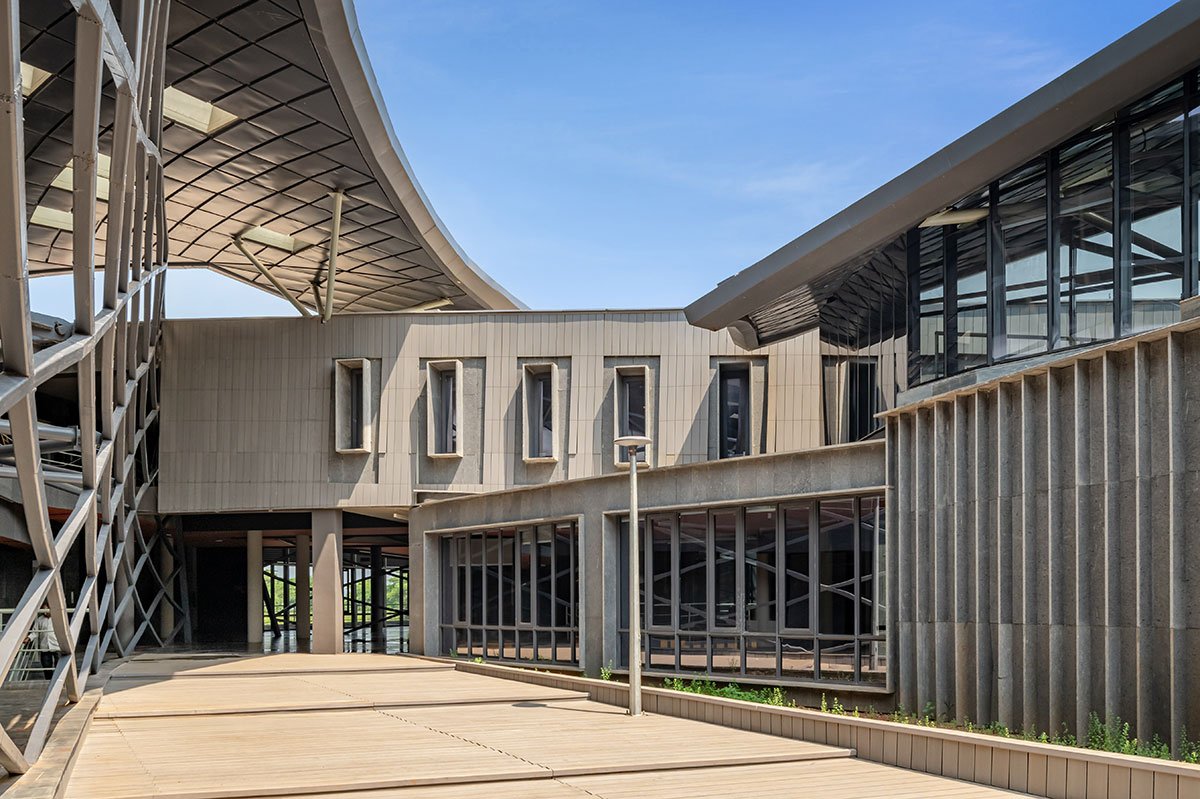
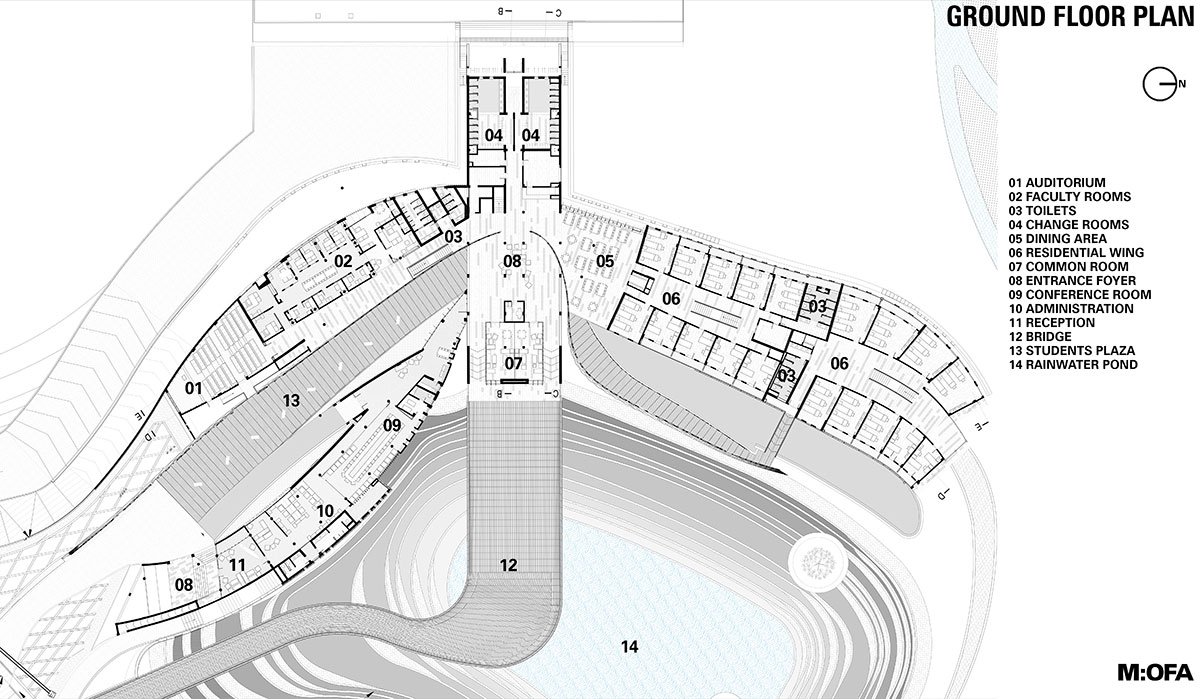
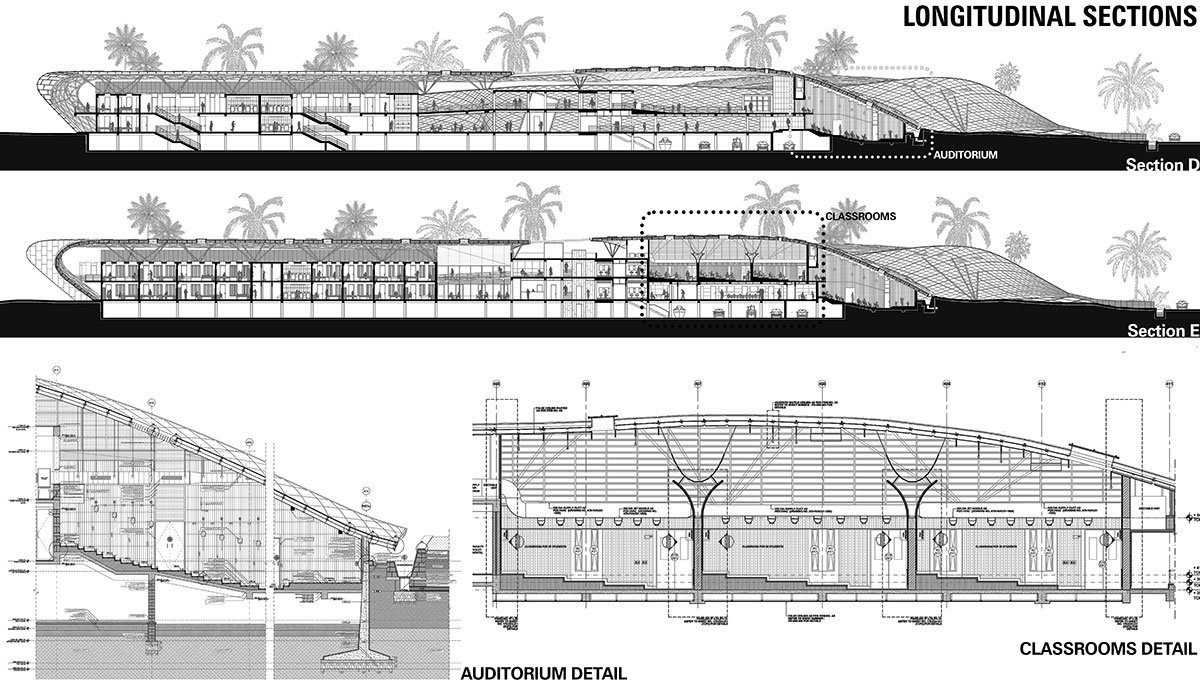

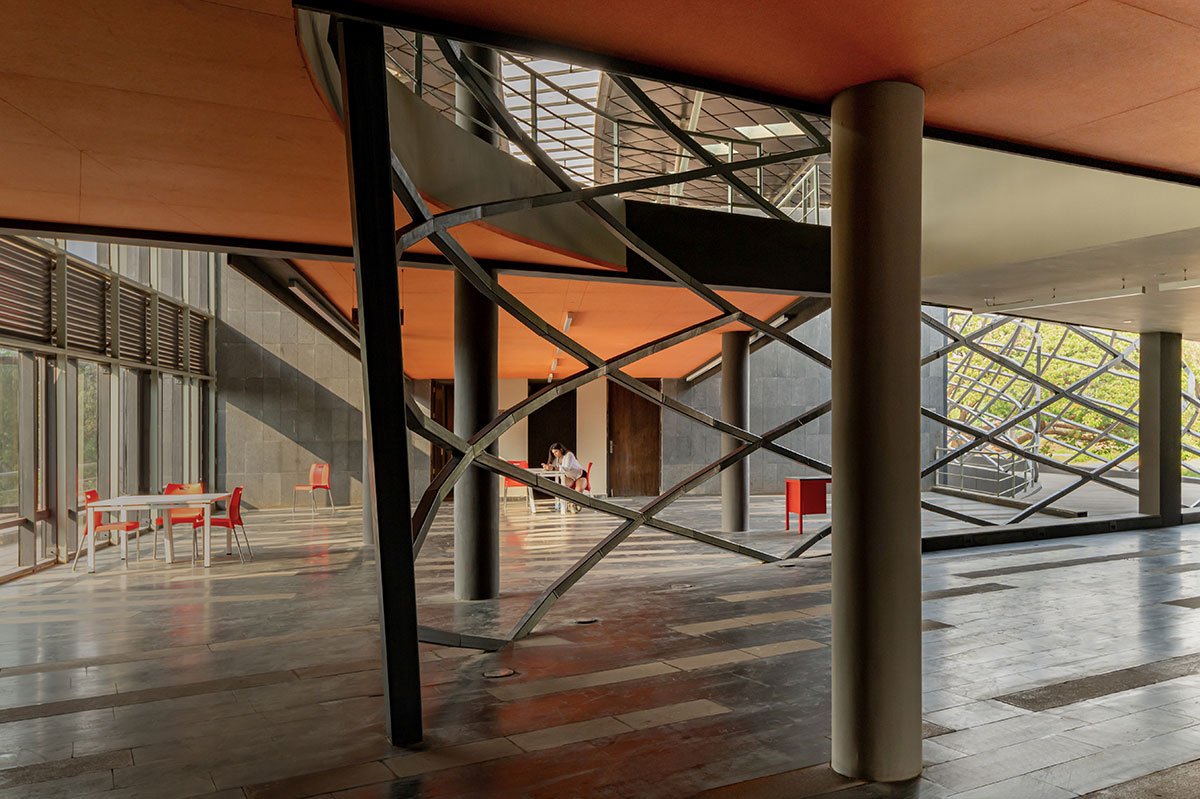
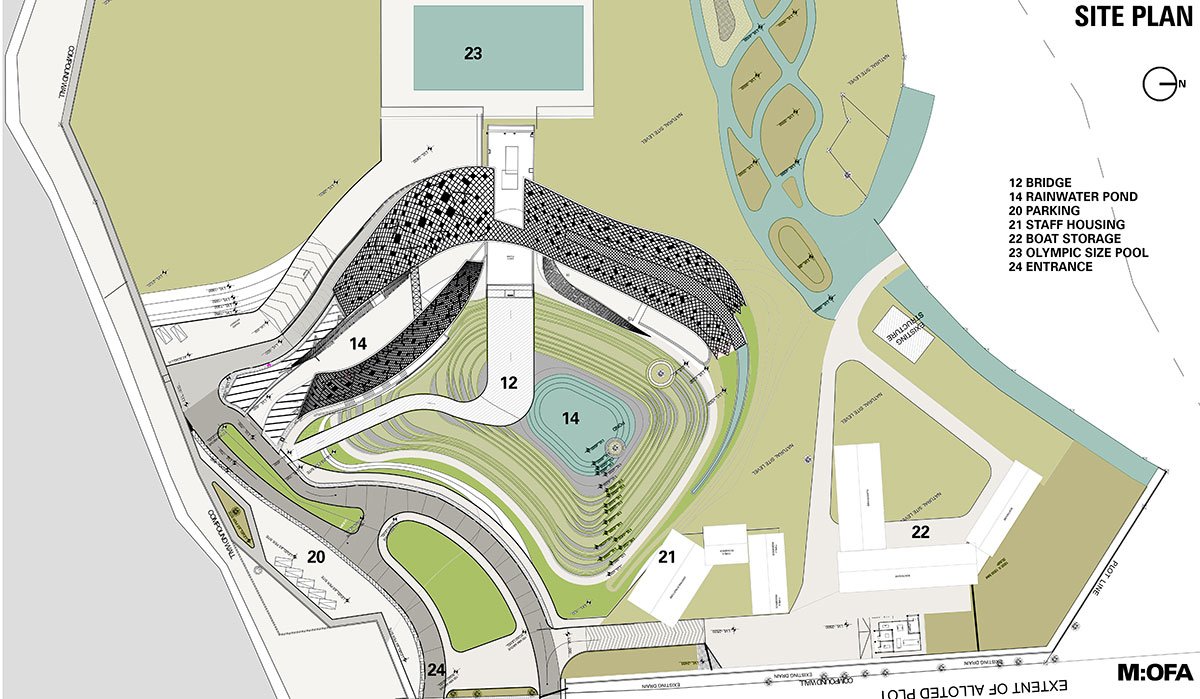
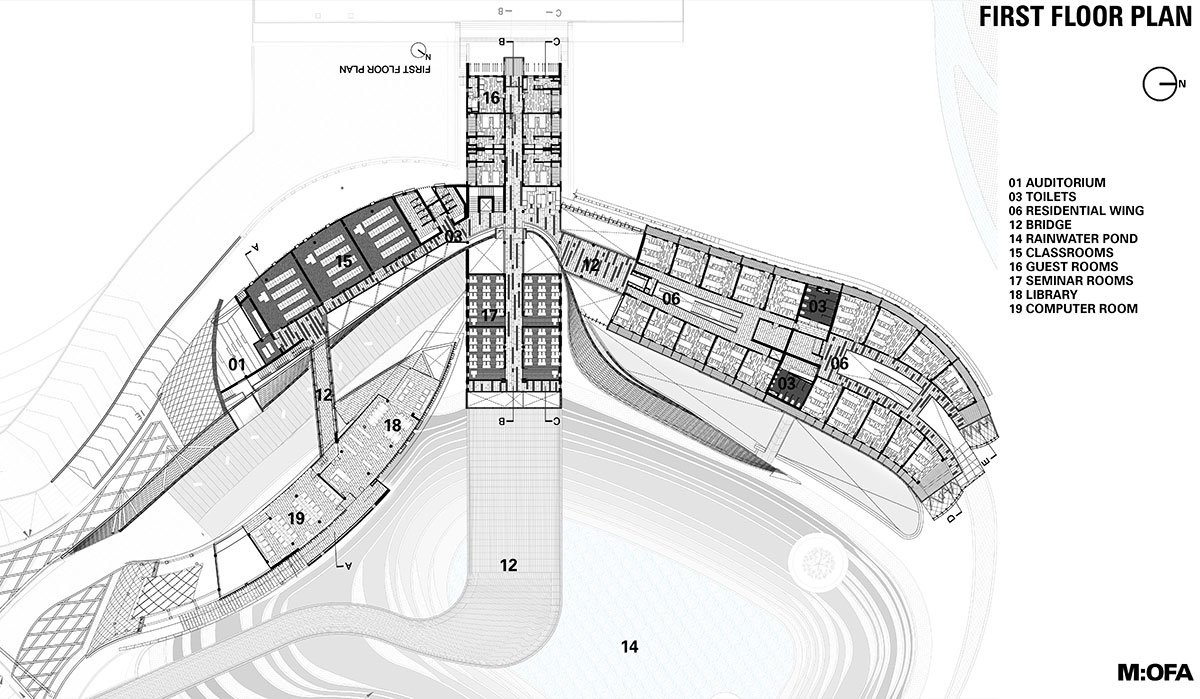
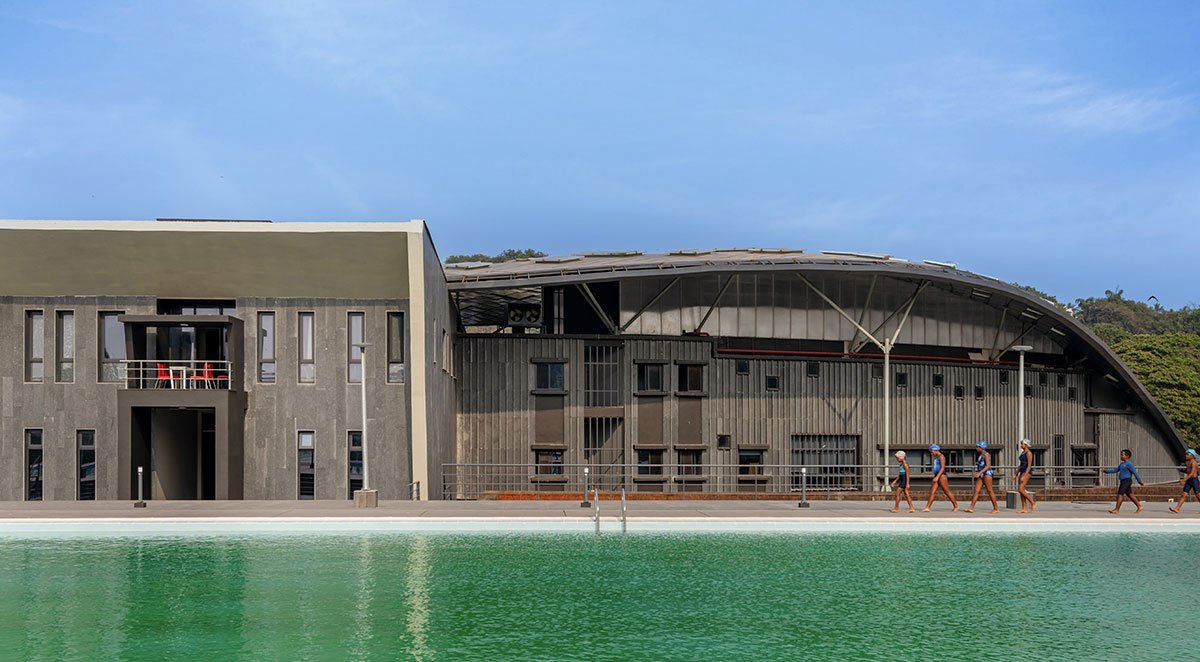
The designers started by categorizing the functional brief into bigger zoning chunks. While the institutional, administrative, residential and recreational functions retained their individual zones, the space between them would be rather fluid and continuous thereby creating these sub functions essential for those informal interactions between various groups of people, defined by their roles on the campus. For the overall language, they searched for an expression that connects the architecture to its broader context, of the sea and the Goan town that resides alongside.
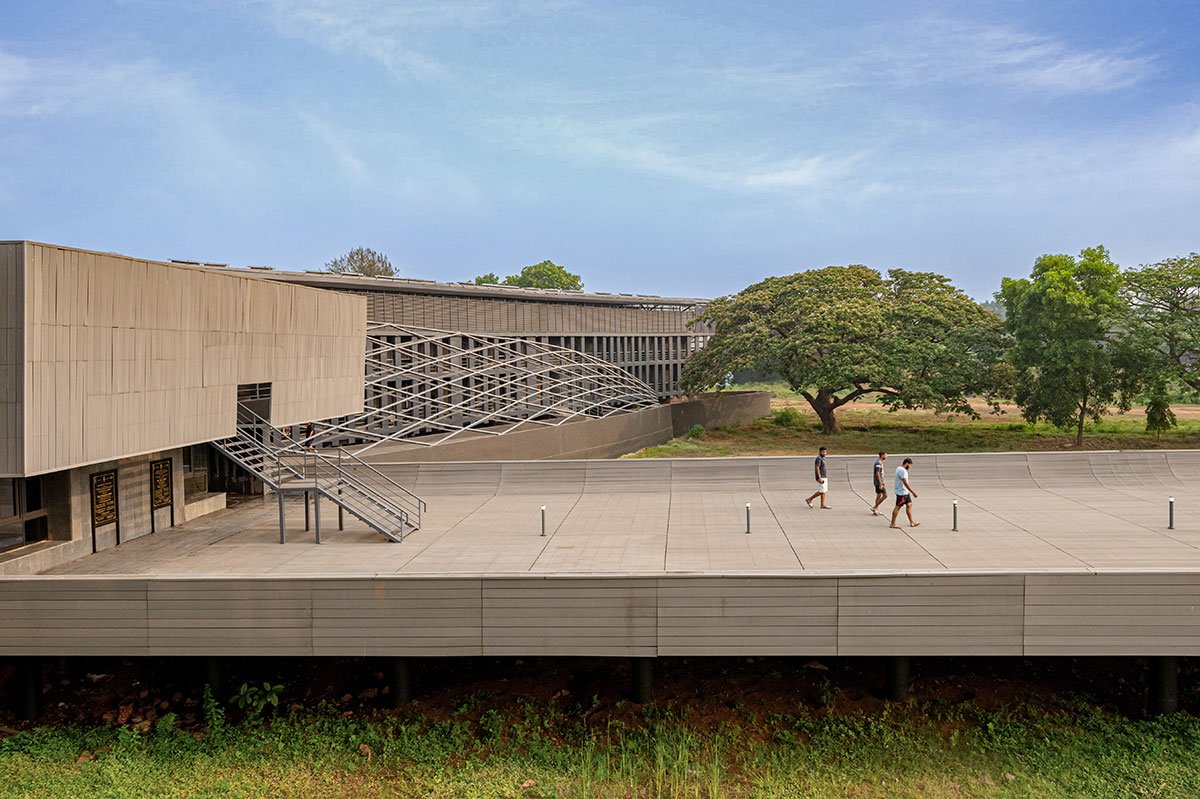
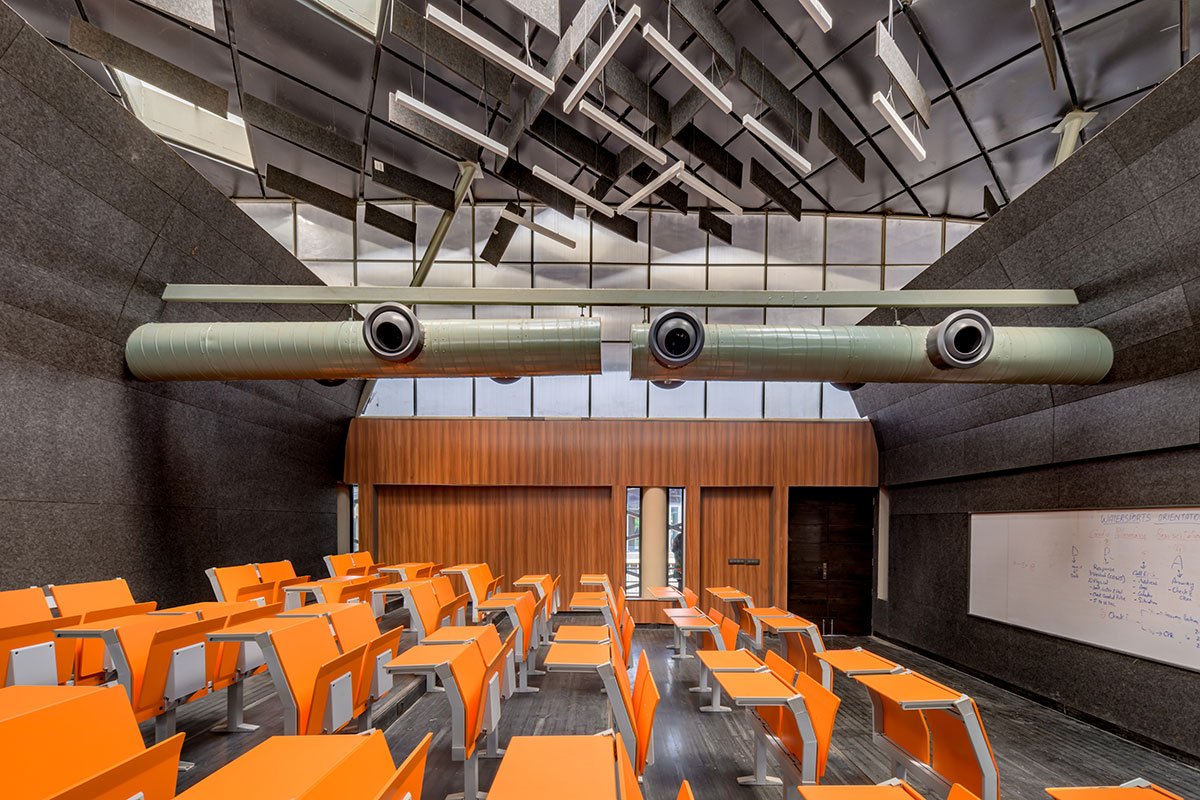
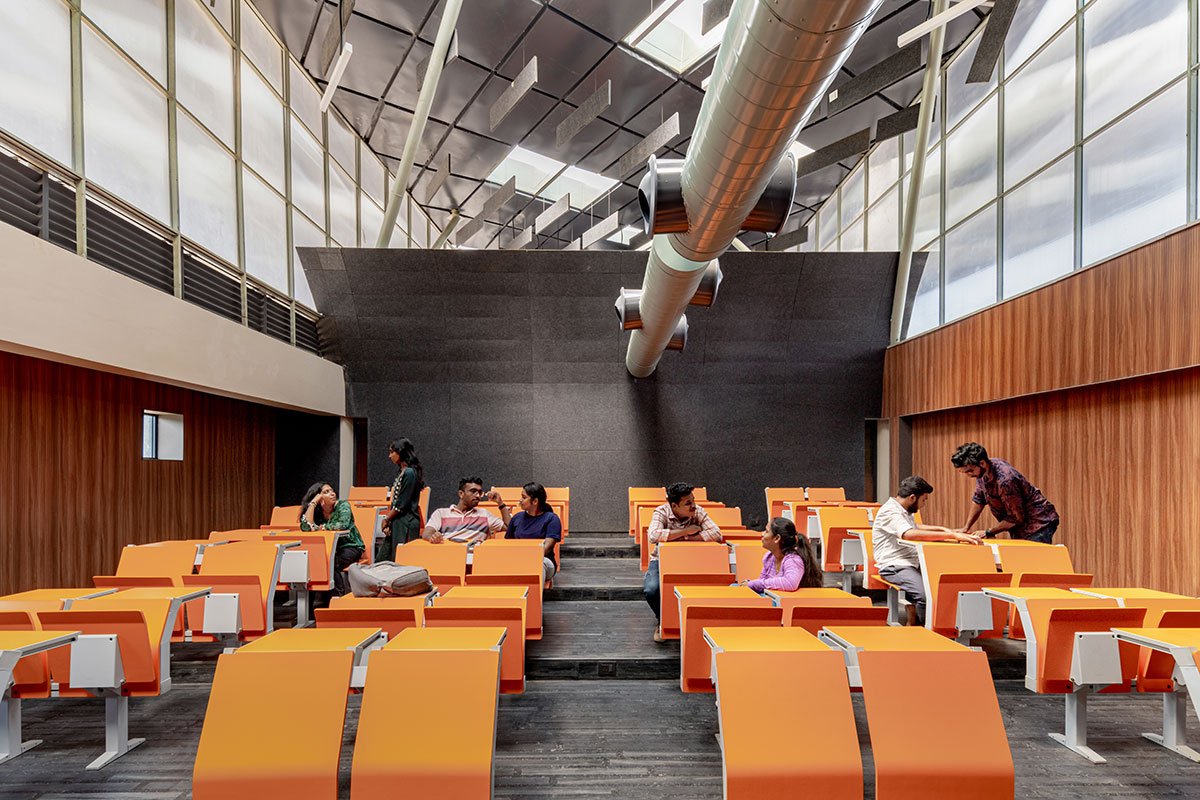
Adventure water sports is perceived as a leisure activity, on the other hand institutes usually tend to box in formal functions from the informal. Here, the surfers, who find the thrill in the sea, in order to retain their attention within the classrooms temporarily disconnected from that rush, the designers attempted to translate that adrenaline and the constant tension created between the forces of the sea and the surfers engulfed within them. It was important to create this fine balance between the practical day today functionality yet maintaining this constant dynamism.
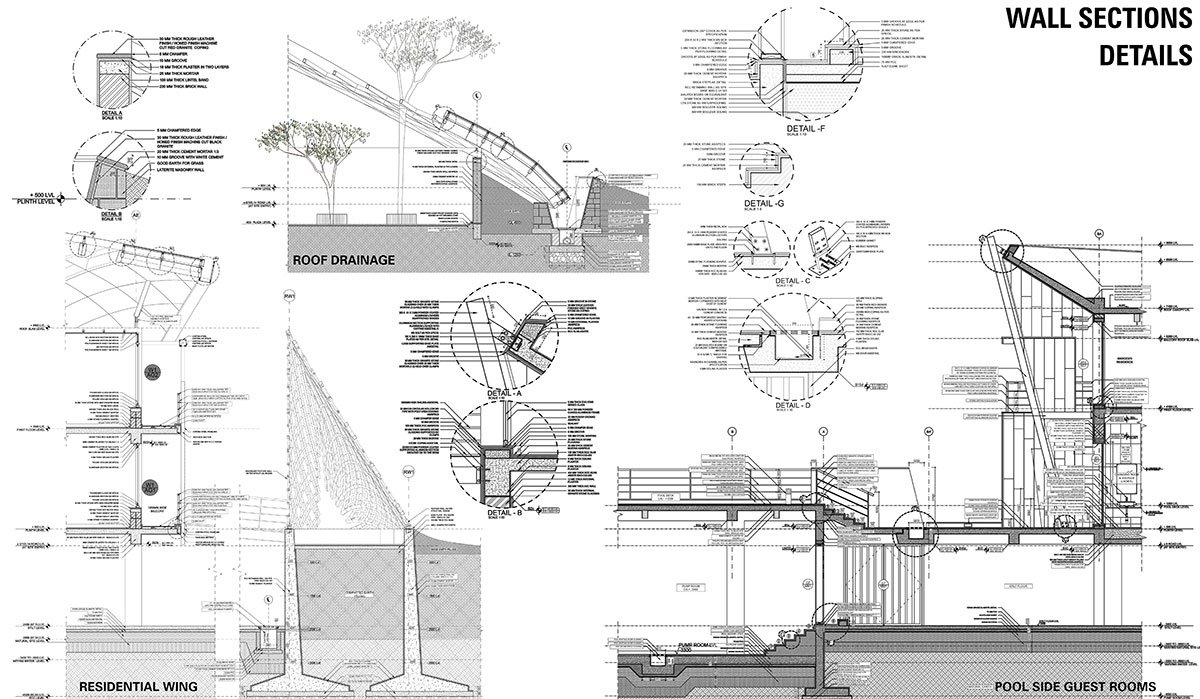
Building a project at this scale, with an expression that gives due importance to this kind of an institute, in extremely tight Government budgets, came with its own plethora of challenges. The tight budgets and the lowest bid contract, were two constraints that led the designers to adopt a systematic approach. The fund distribution across the project had to be equity based through the choice of right materials and the use of technology was needed to simplify construction methodology literally, like a child’s play. While one part of the office dealt with bureaucratic clearances, the other part was constantly simplifying and innovating newer, simpler methods of construction closer to the hard ground reality.

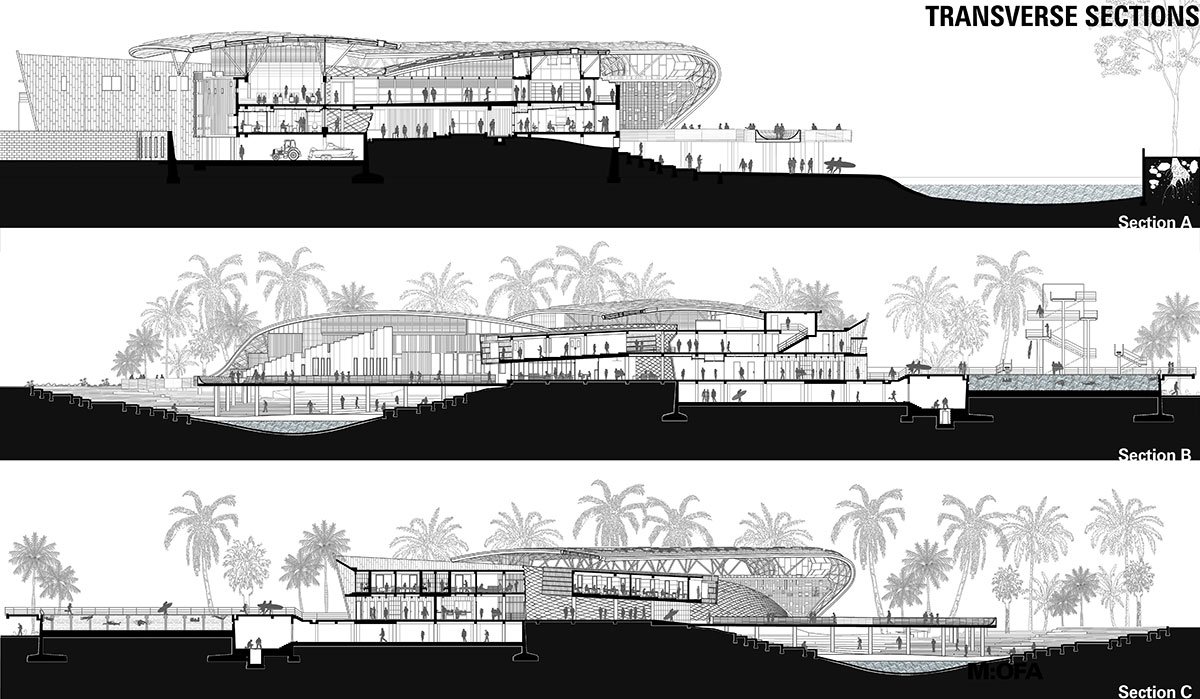
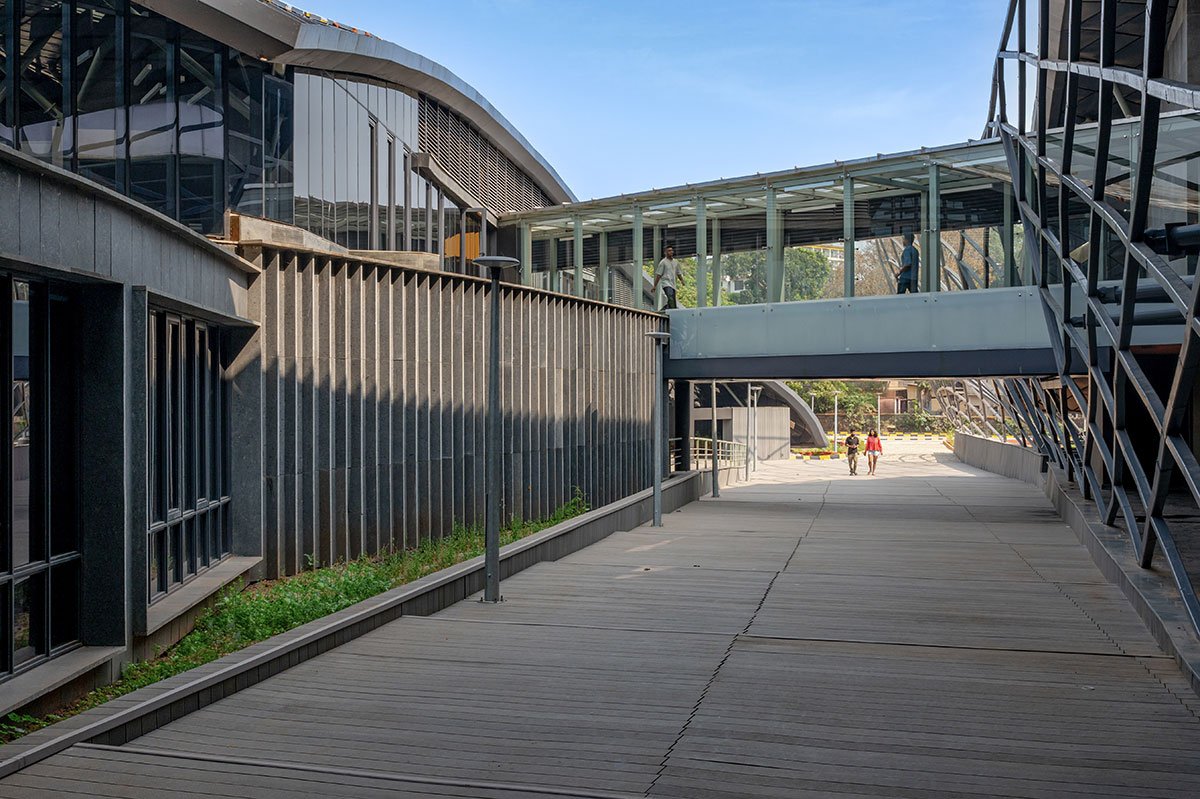
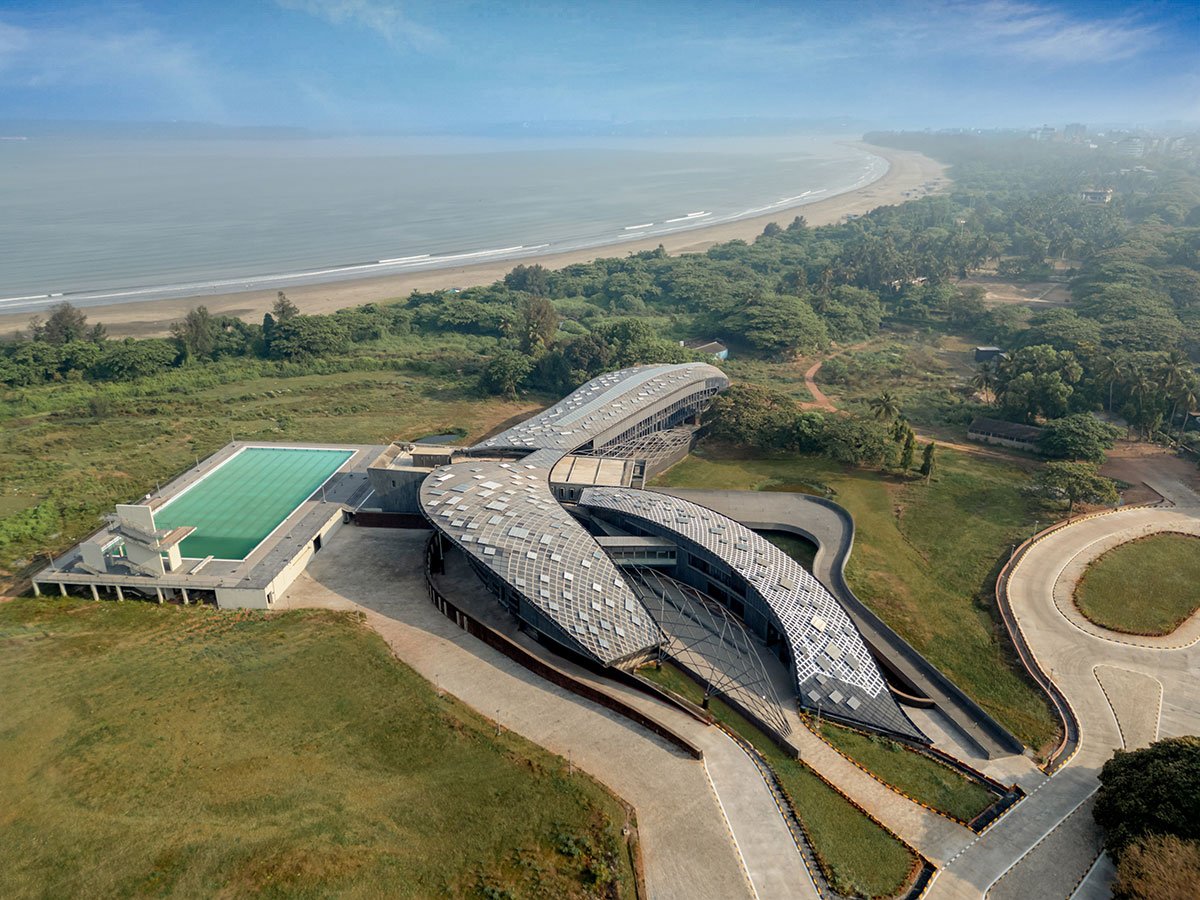
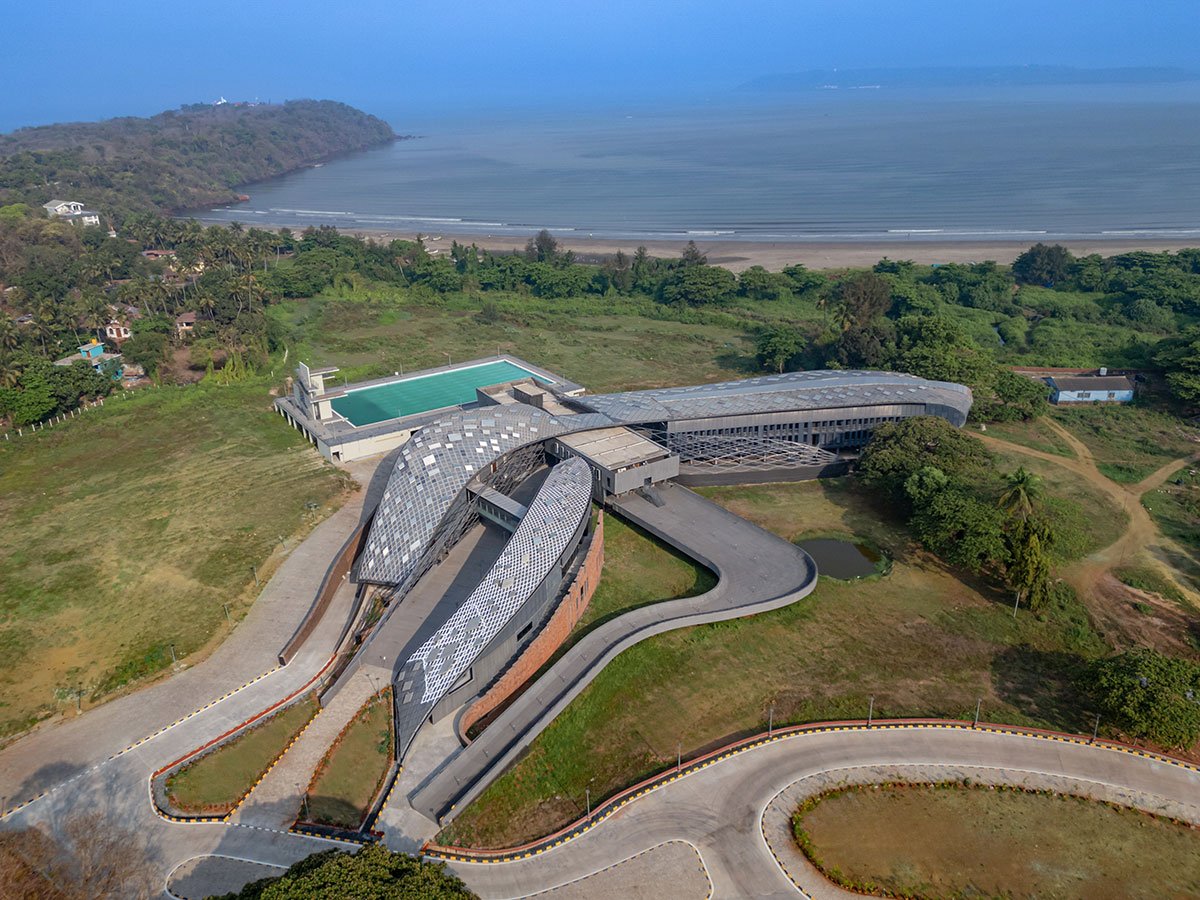
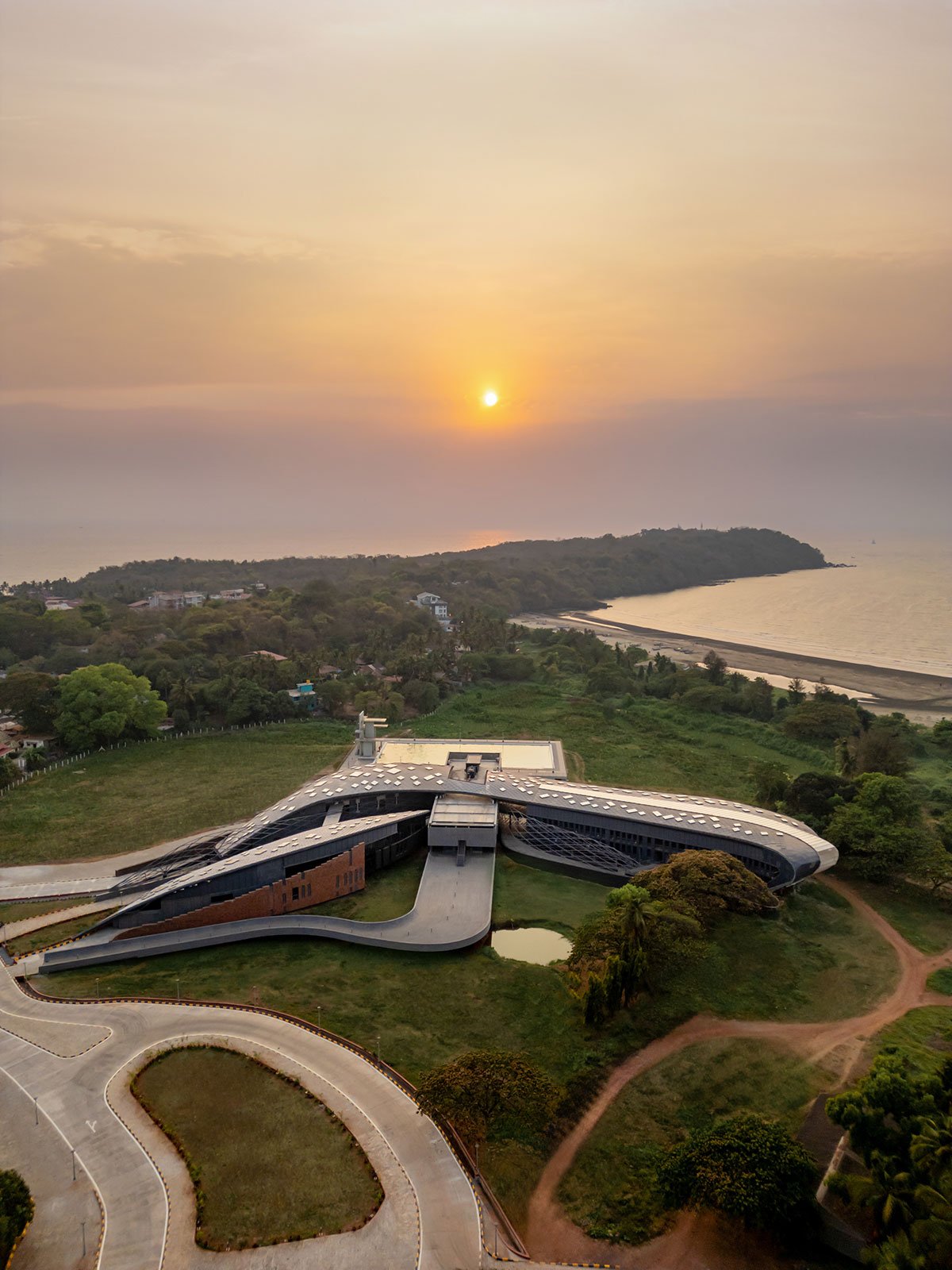
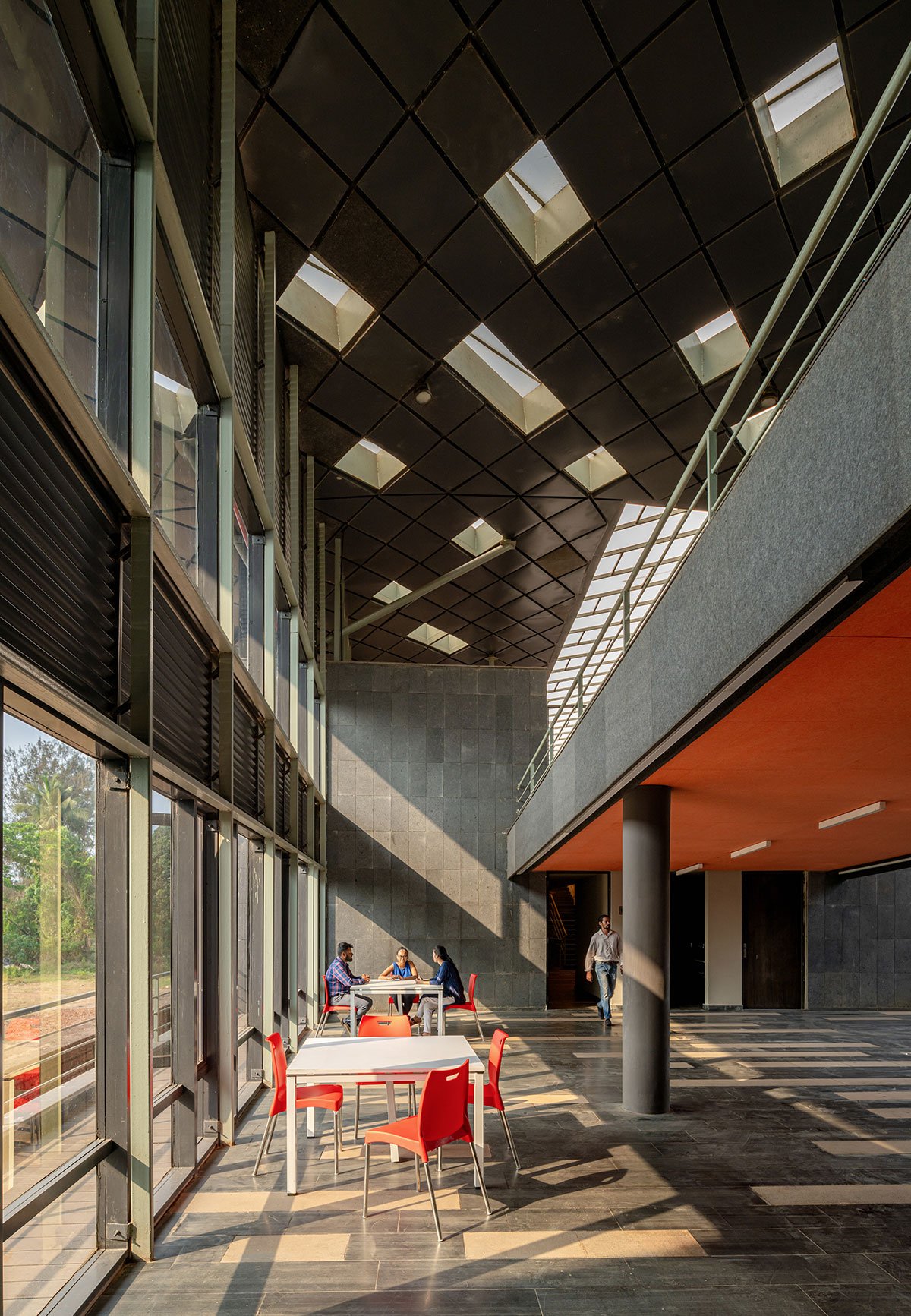
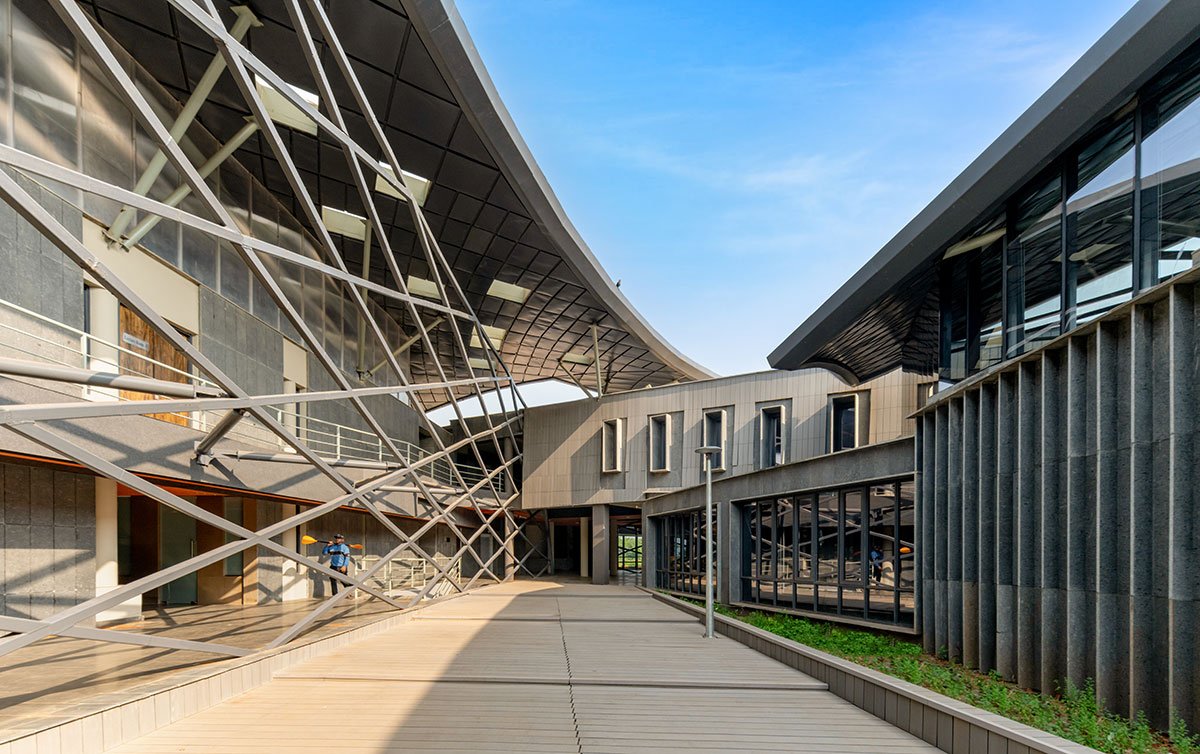
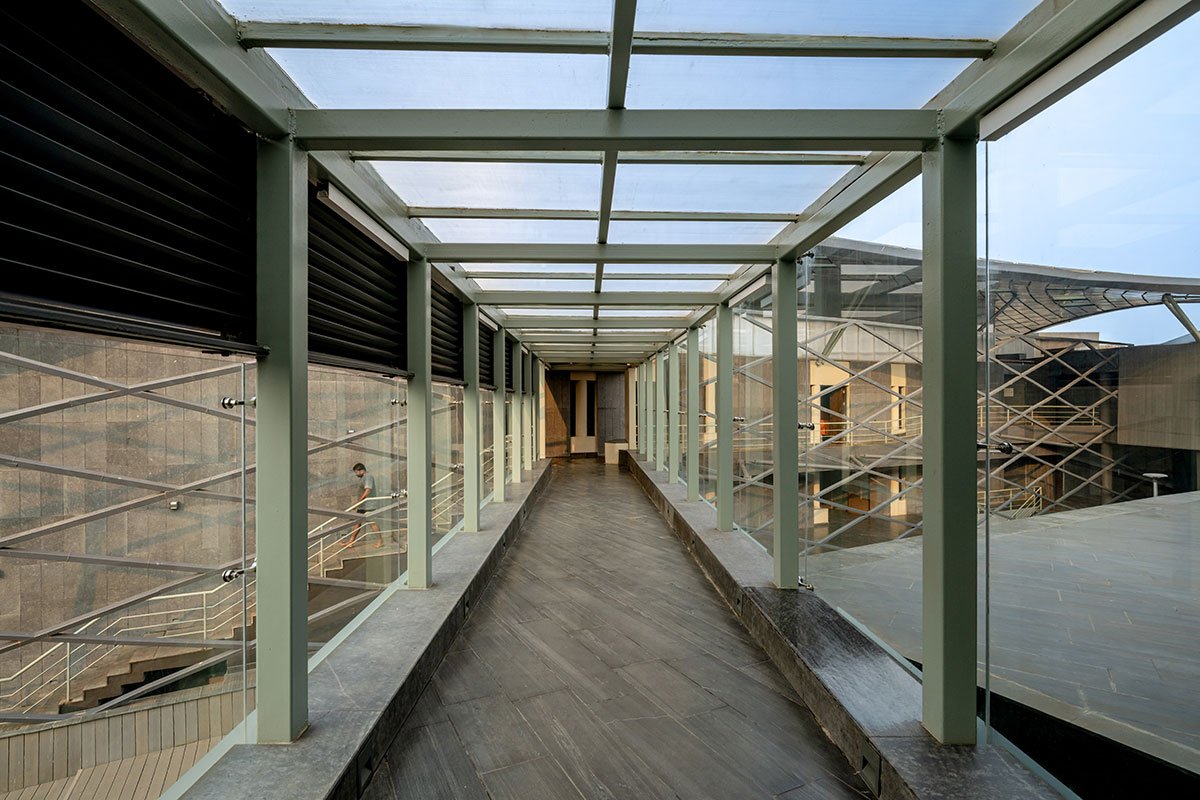
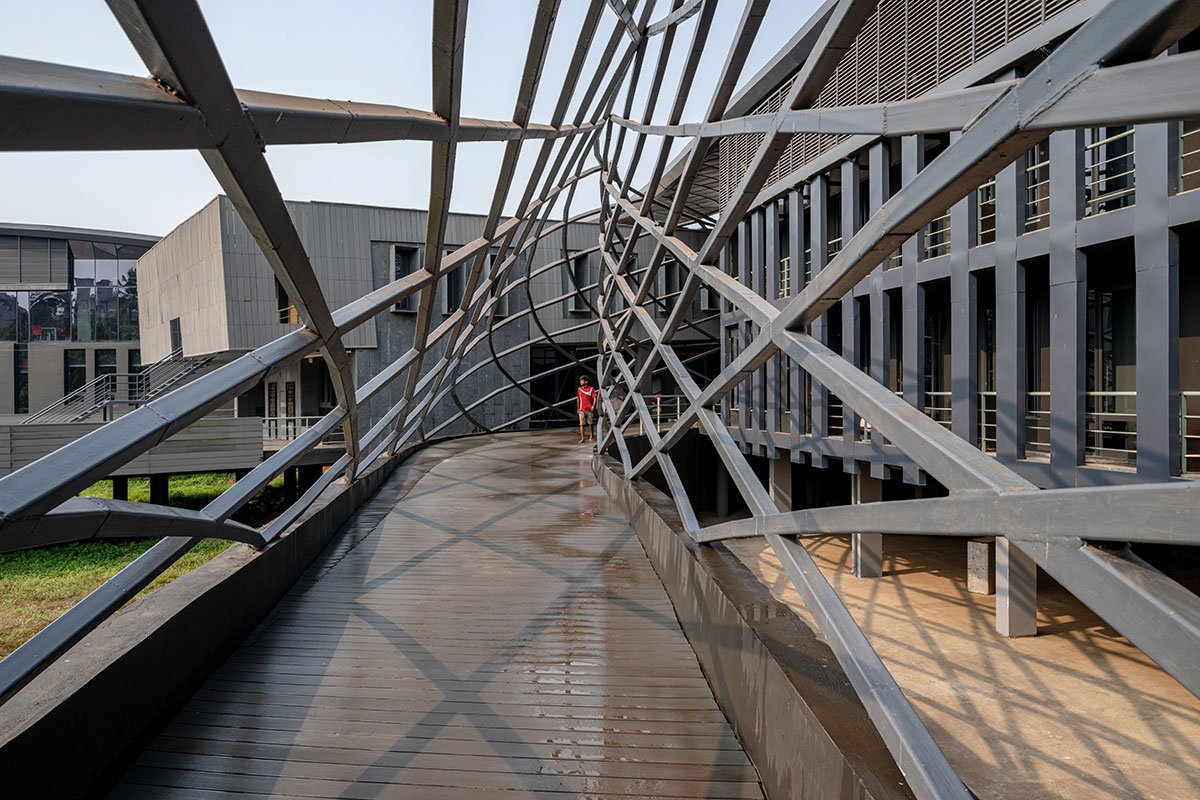
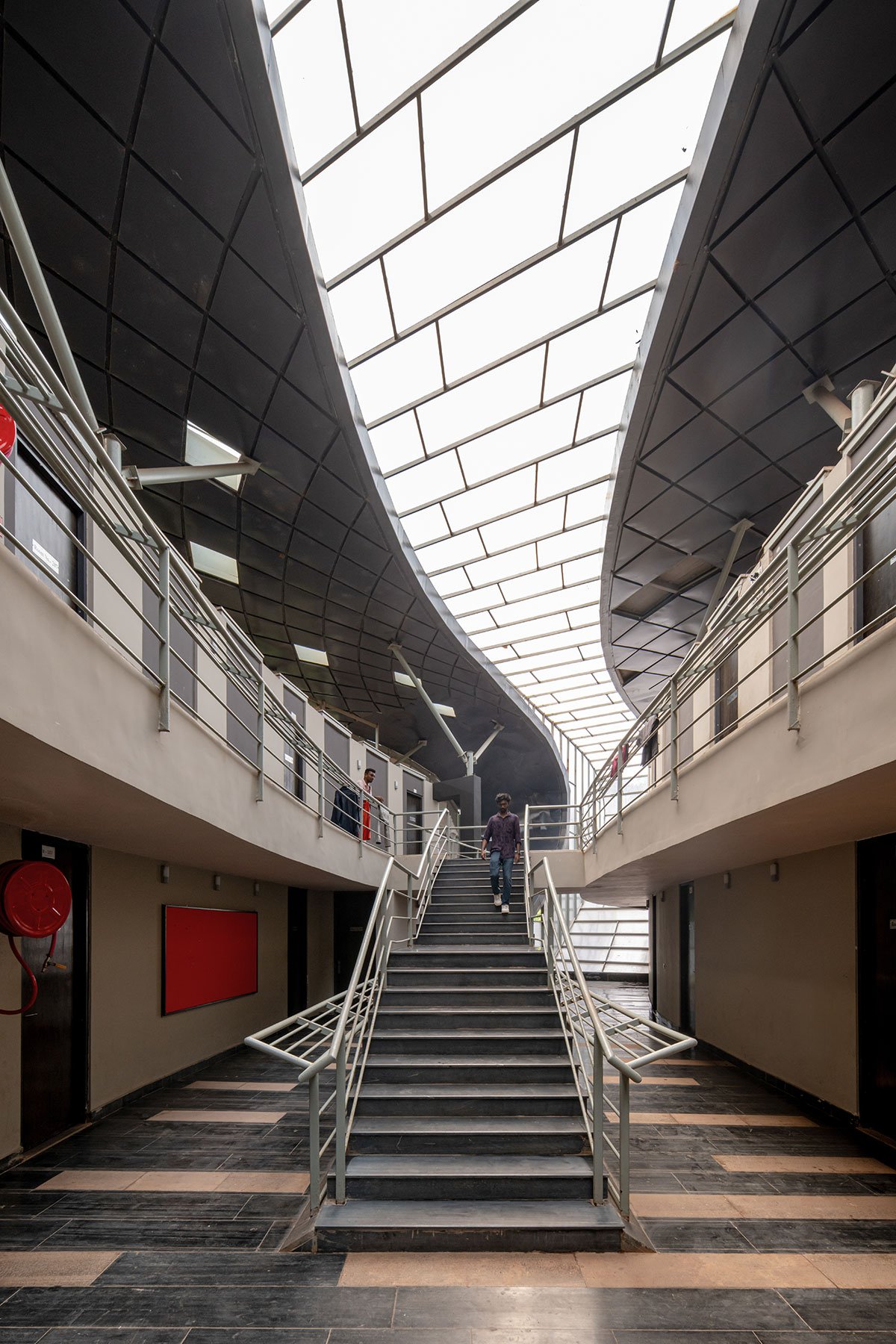
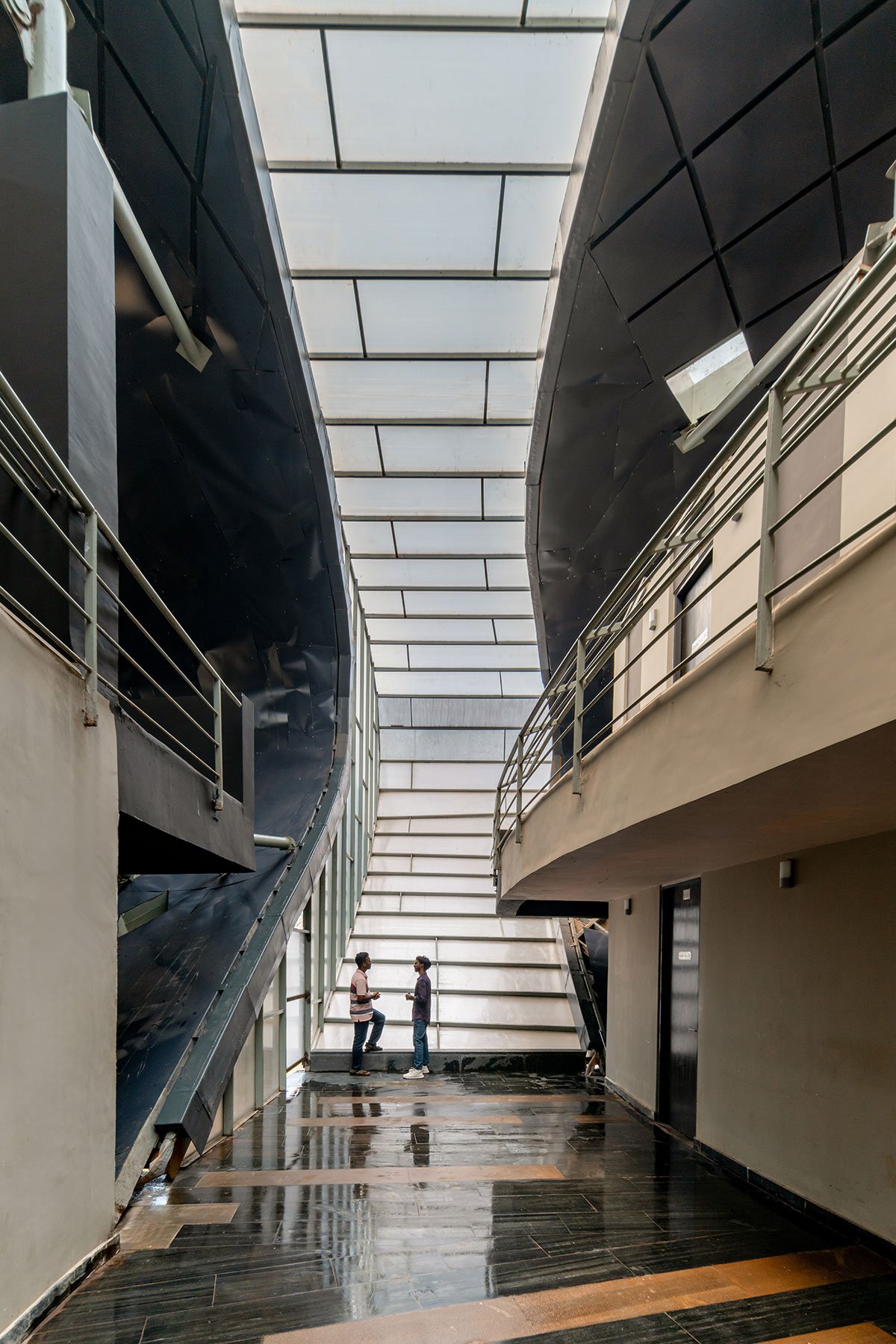
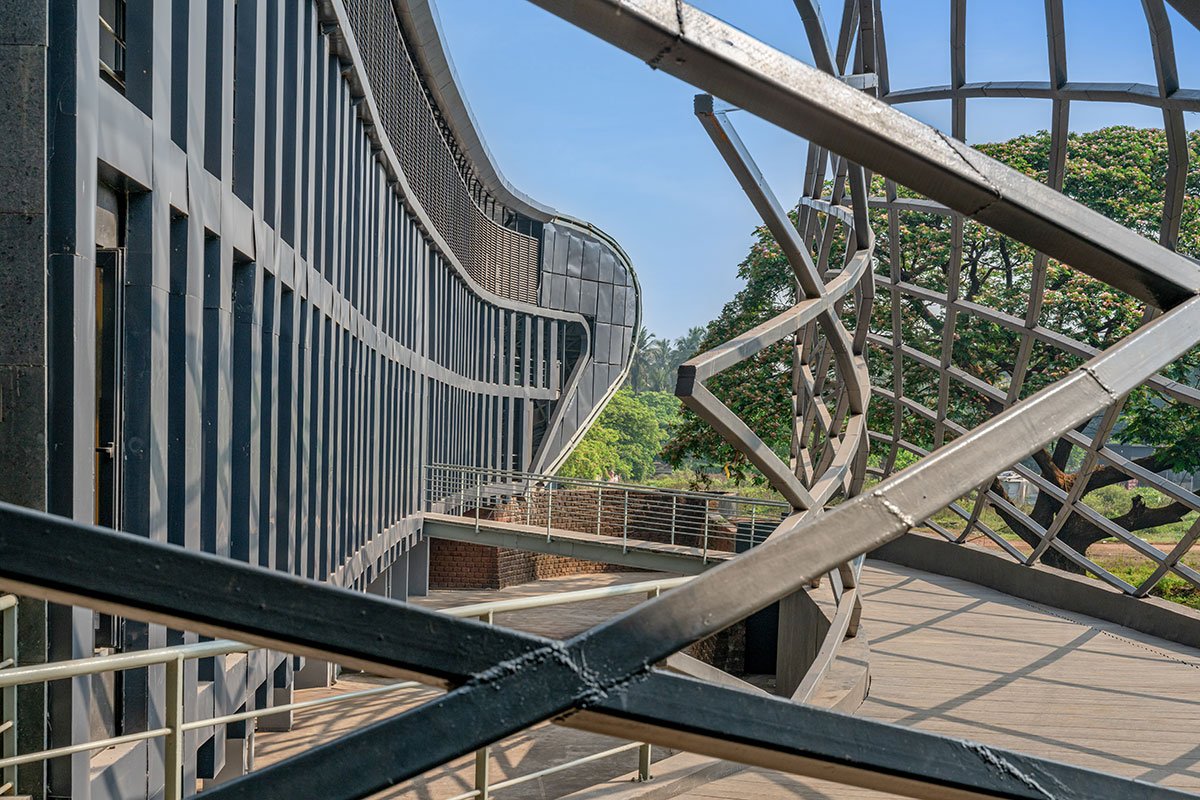
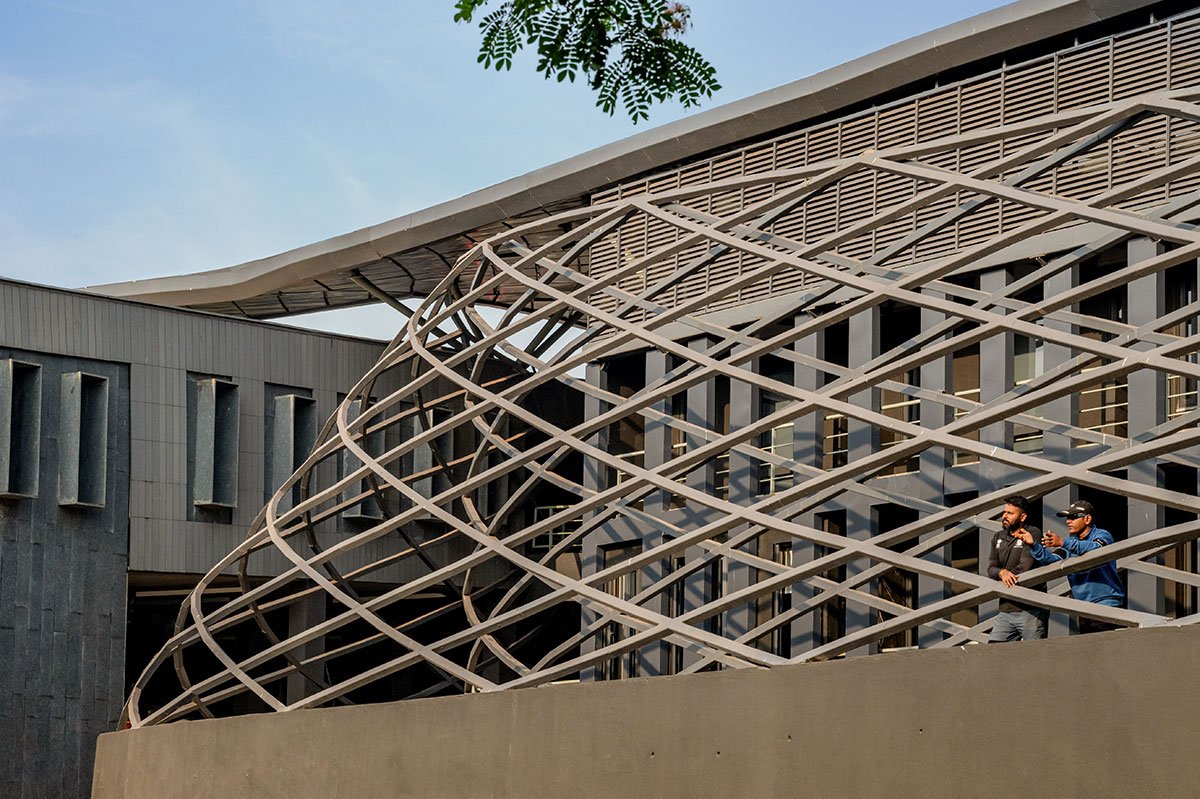
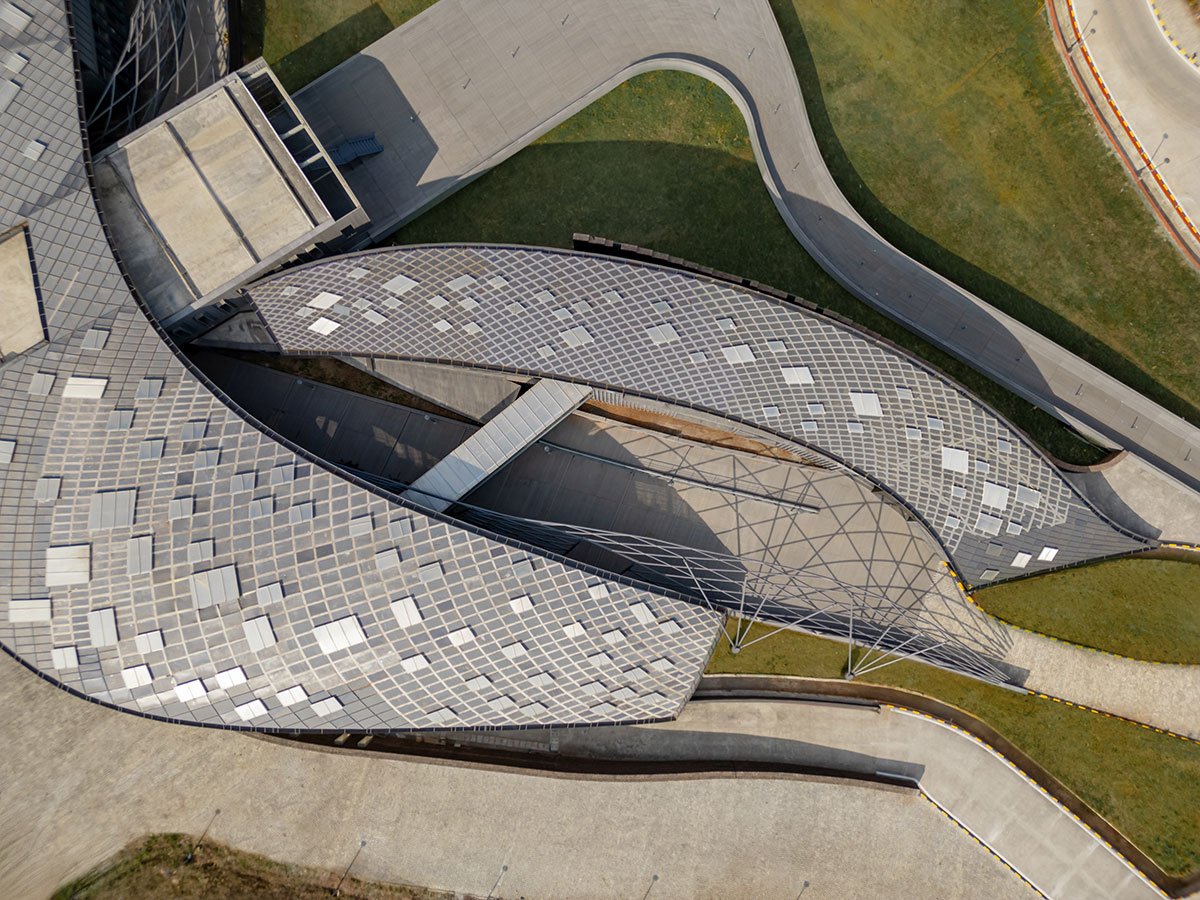
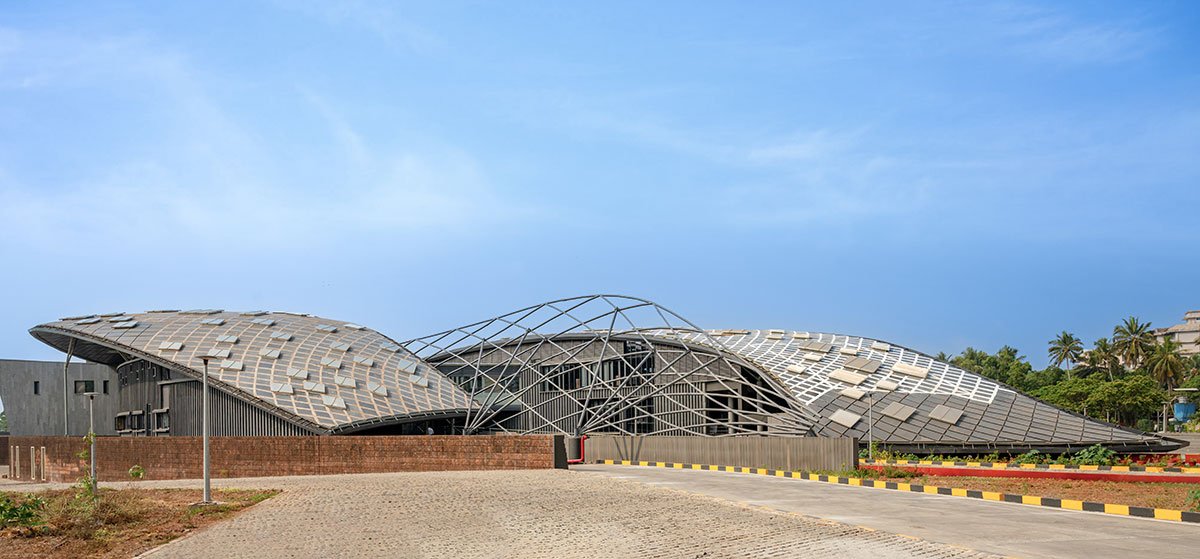
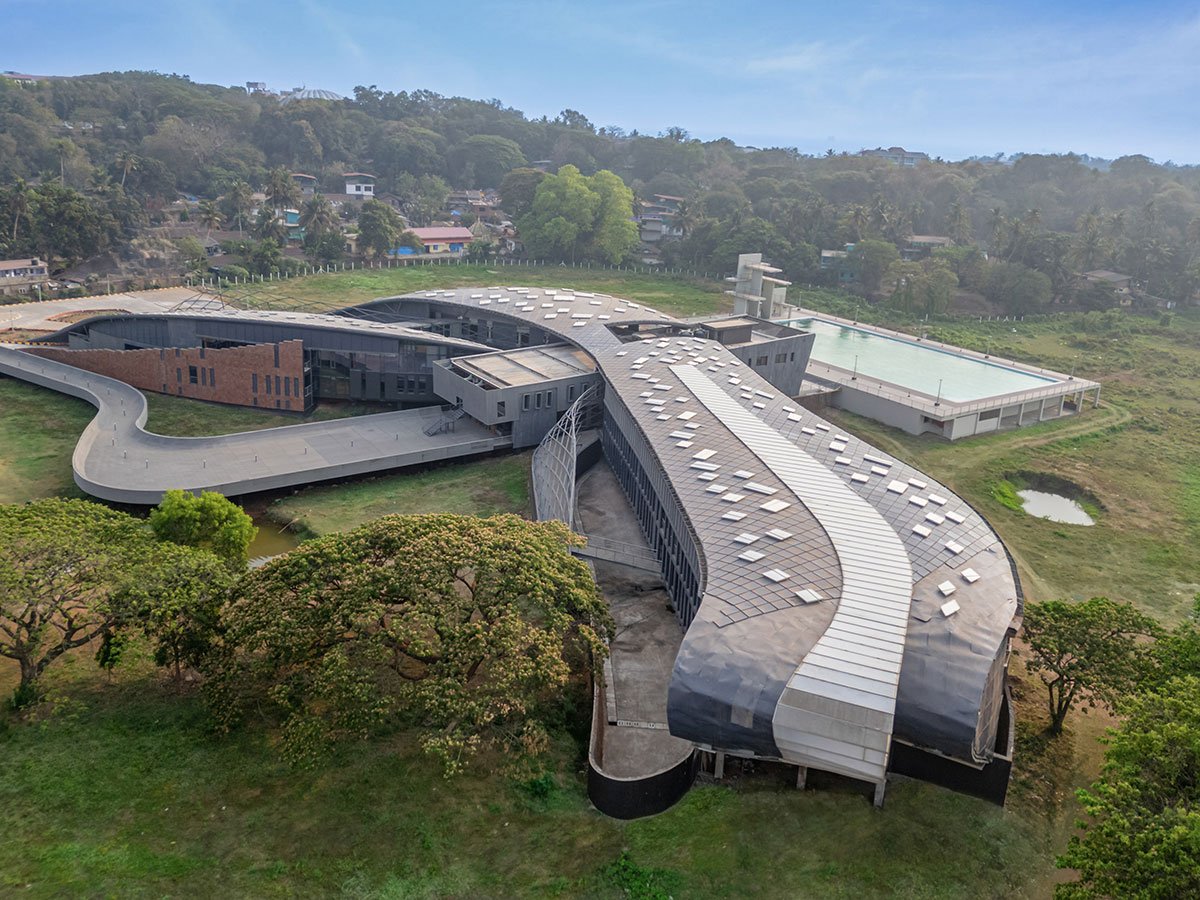
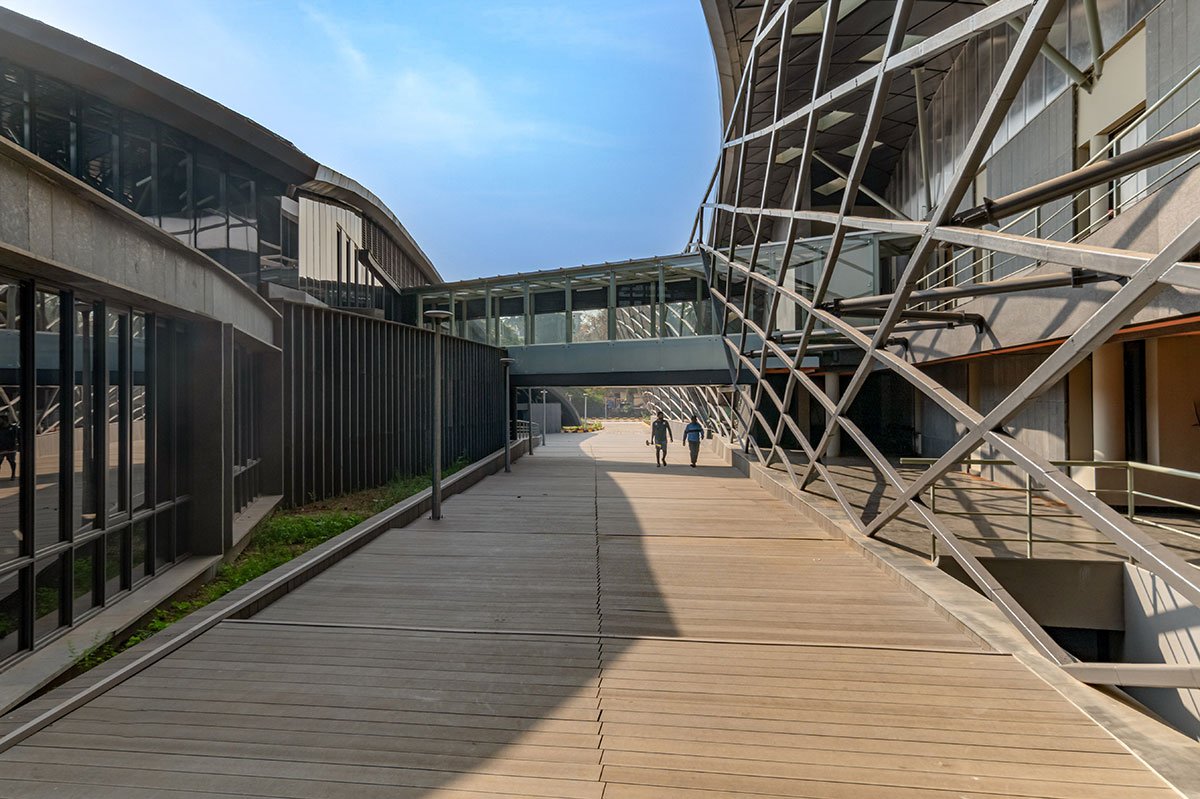
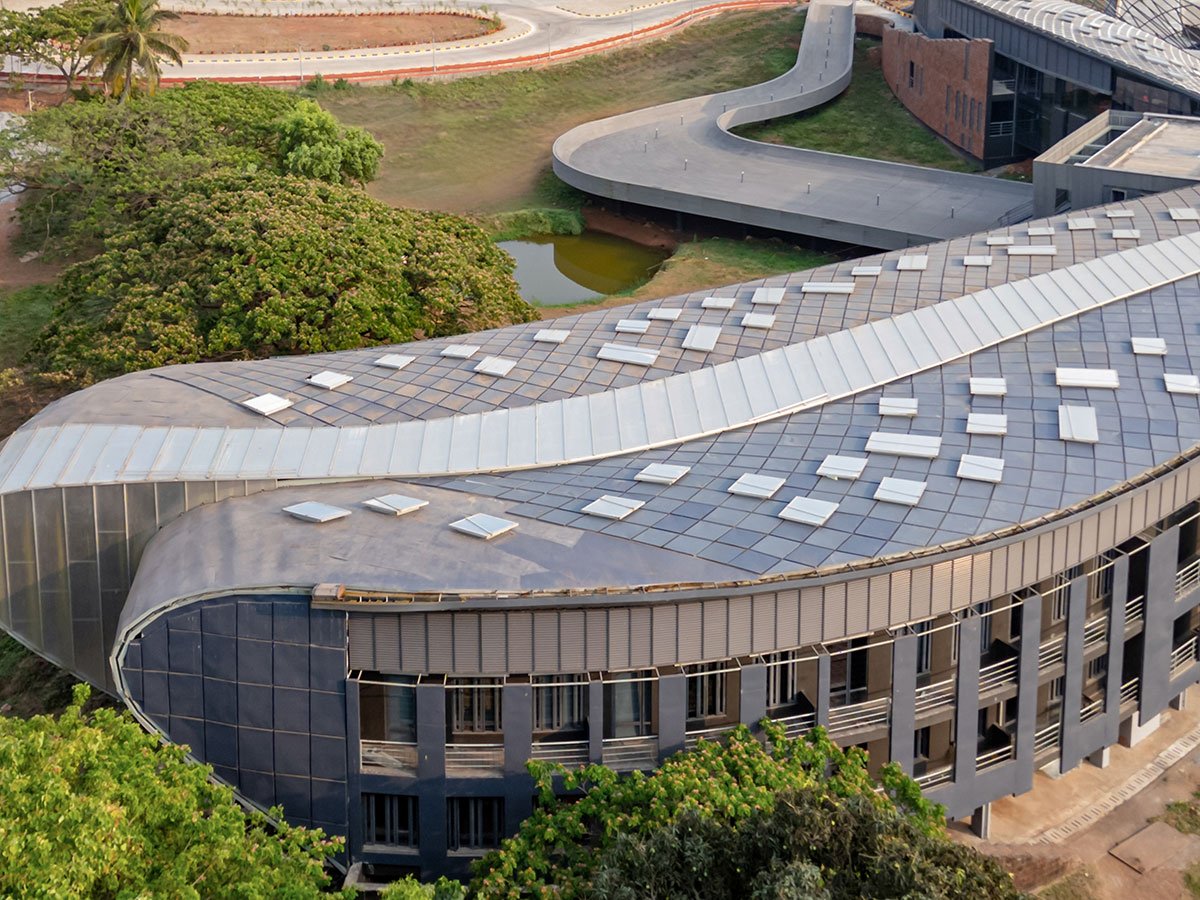
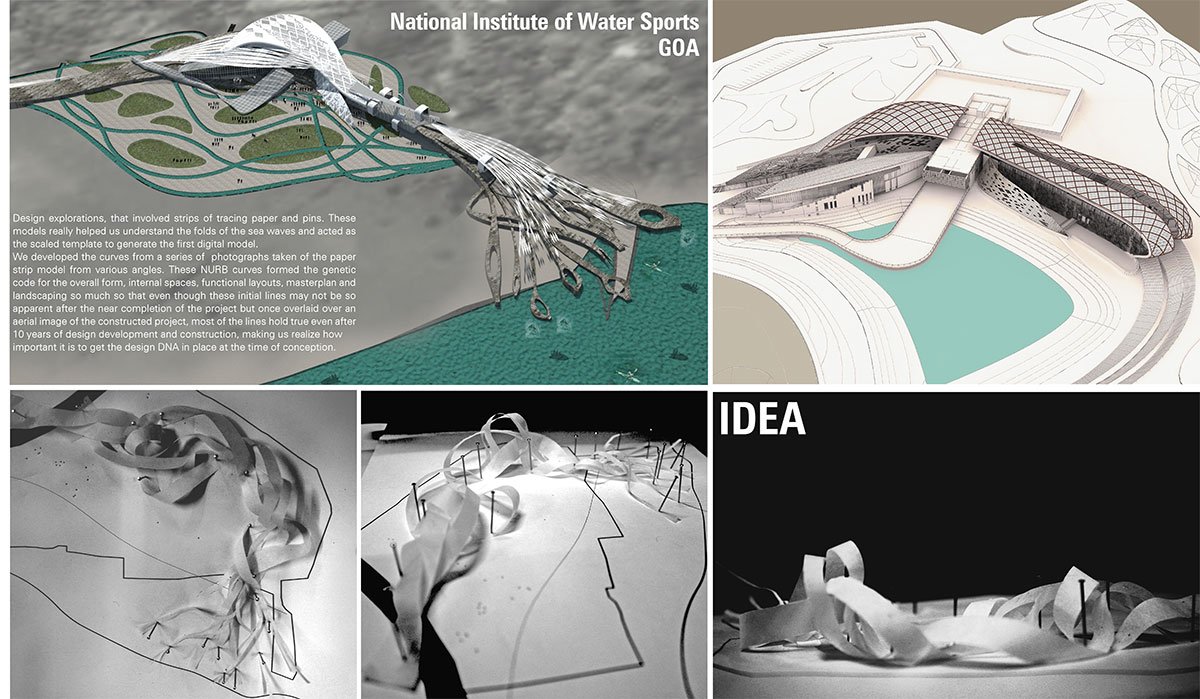
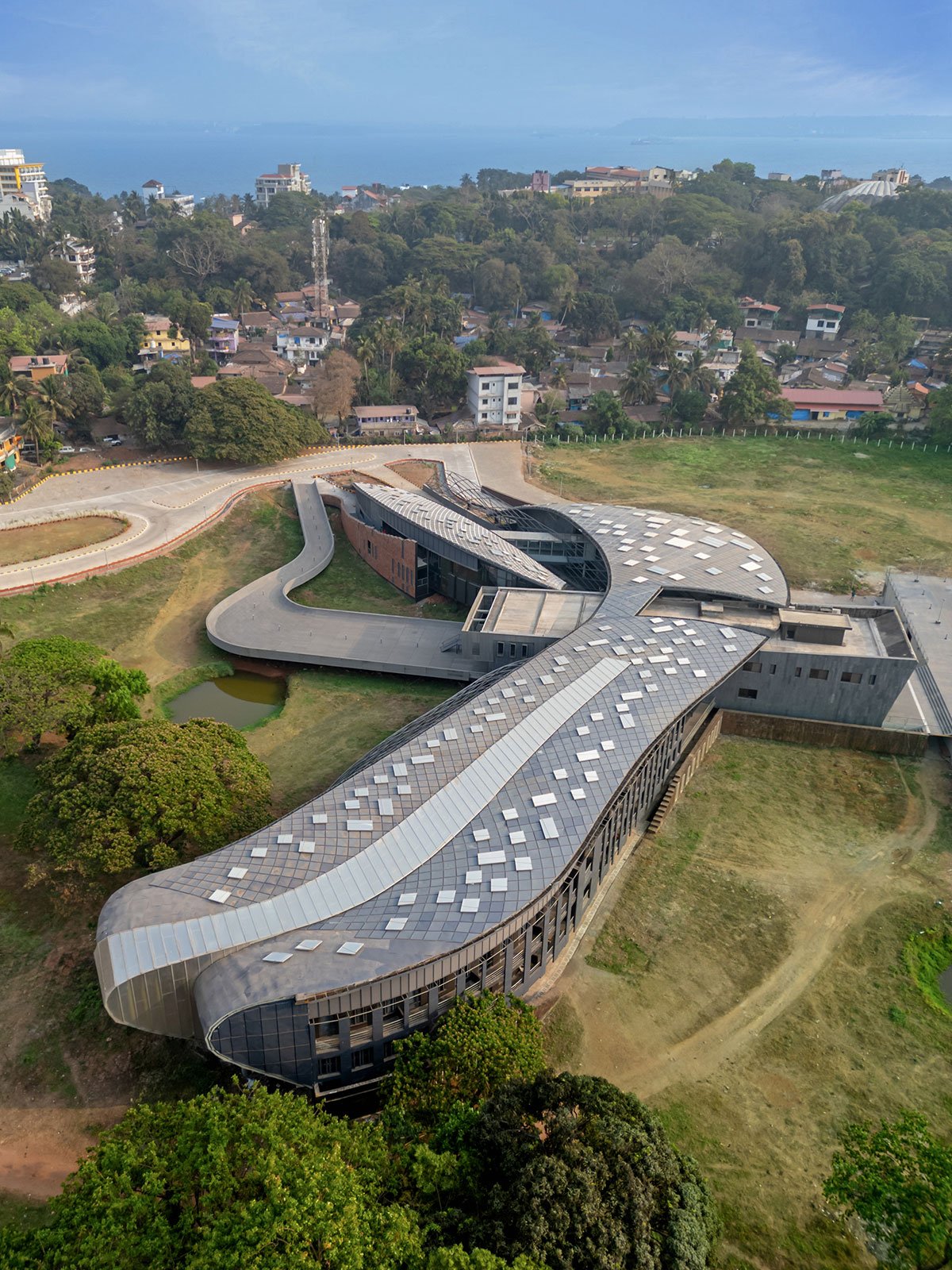
The architecture for NIWS is inspired from the dynamic nature of the sea. It erupts, rises and folds into a series of trochoidal waves ready to engulf everything that comes its way. Viewed from above, it appears like a mythical creature born from the adjoining Arabian Sea, mimicking its nature. While, from the ground, within its spaces, it appears to be in constant motion with its shifting perspectives. The eye doesn’t rest at a single point, with its multiple point of views and continuous movement spine, the architecture intends to blur the perceptible notions of its elements.
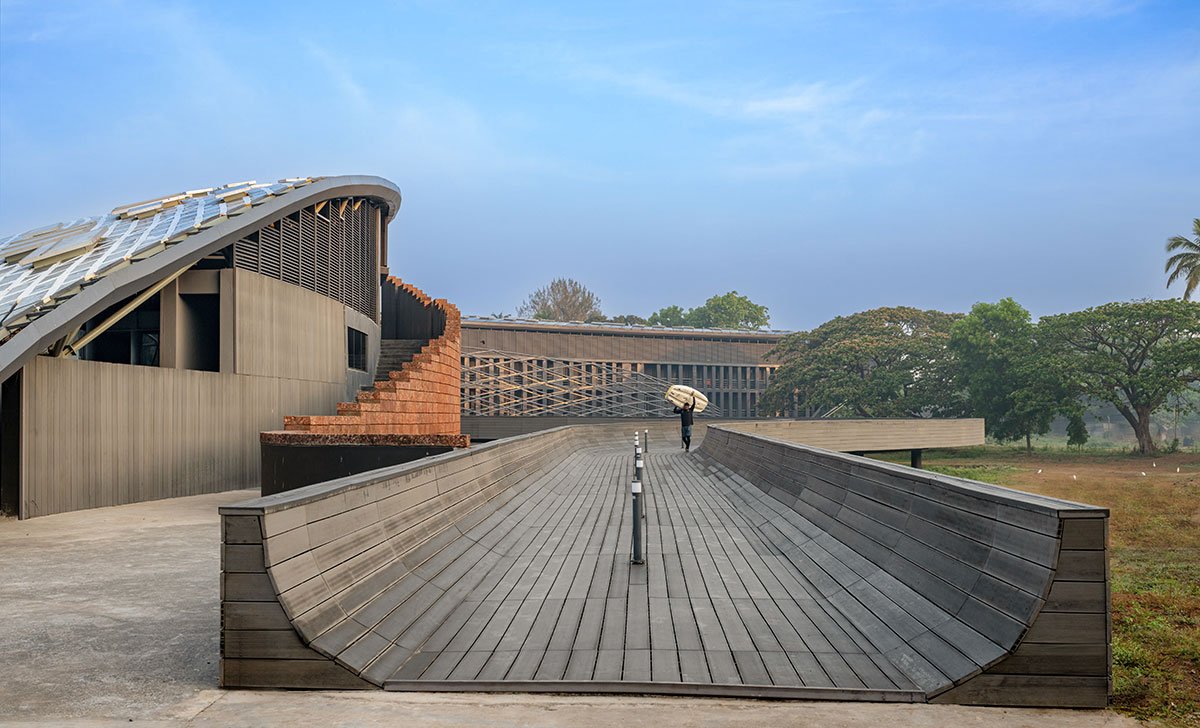
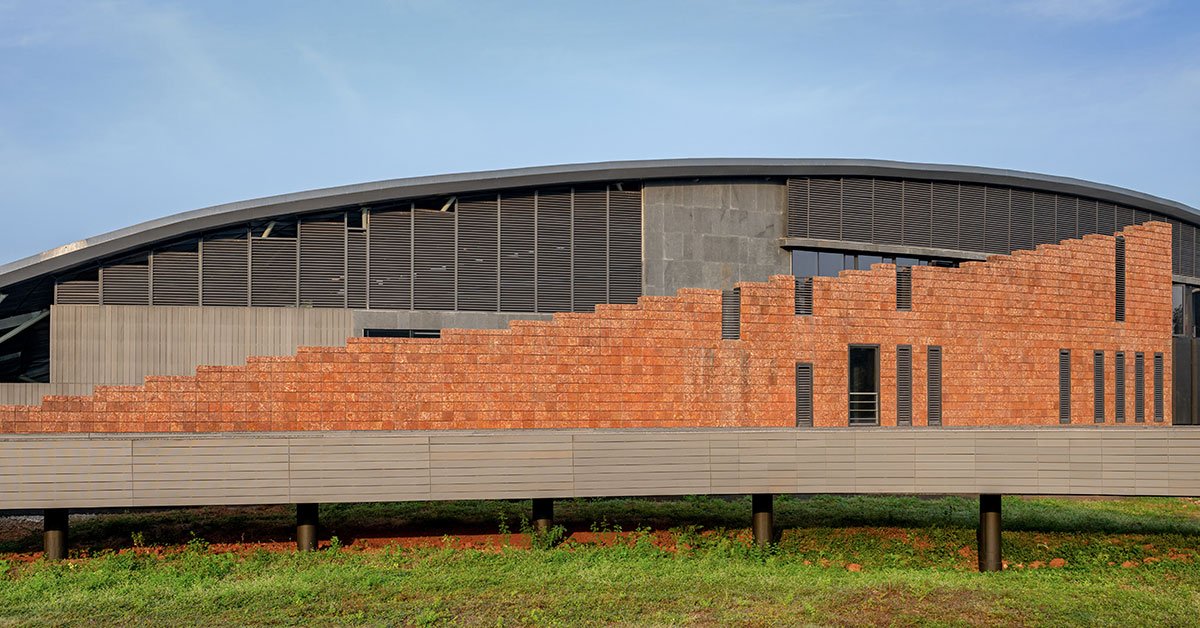
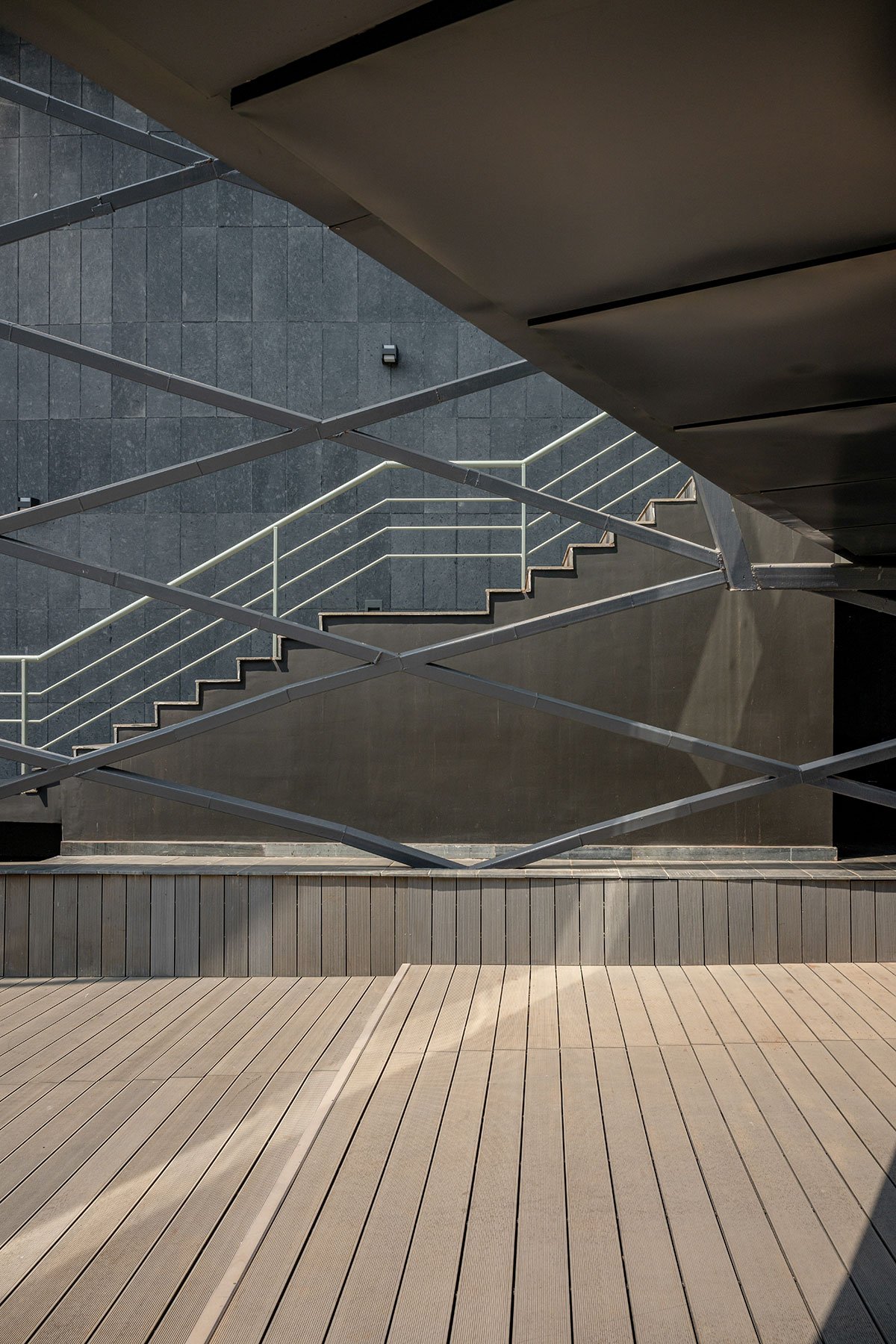
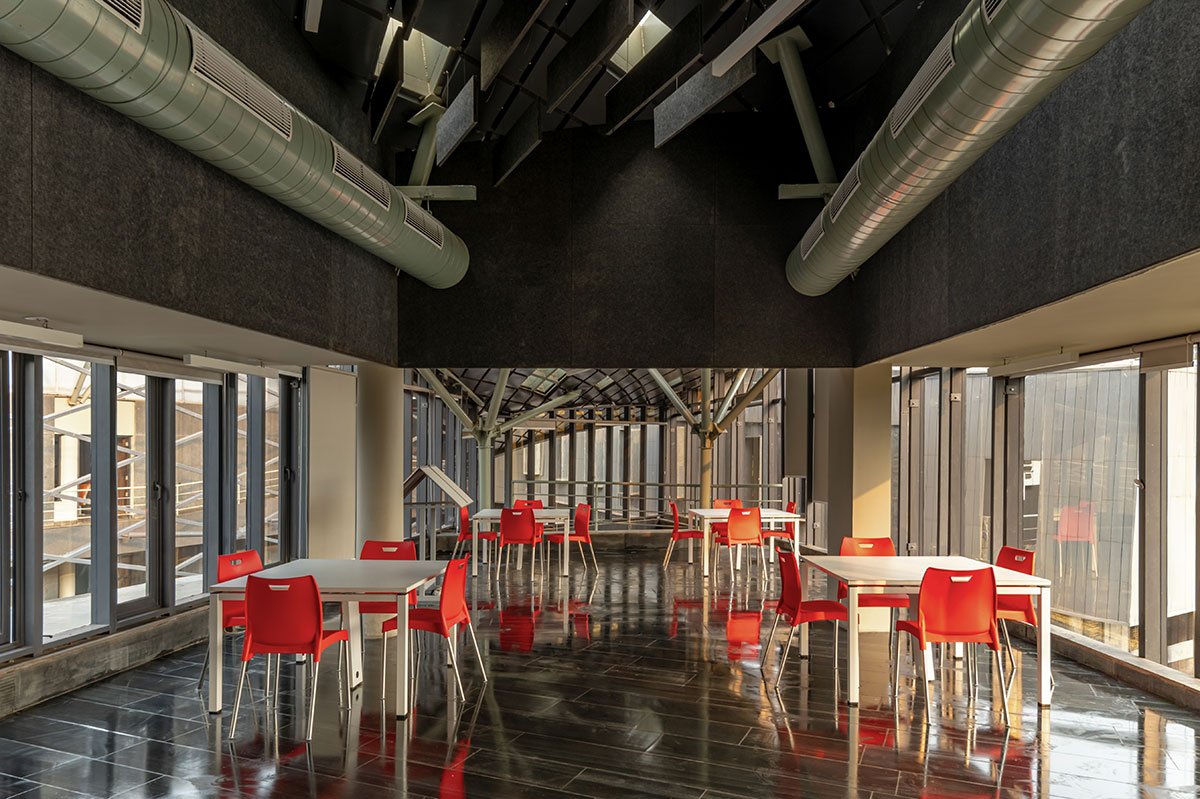
The walls, floor plates and the roofs indulge in this fluid dialogue at various points that once rendered by the ever-changing play of light and shadows, it creates this tense, disruptive narrative for its users like a theater where motion is a constant and the pause is a search. The architecture thus becomes a conduit, ensuring it’s not a static structure but a lively inspiration for adventurers gearing up for water sports.

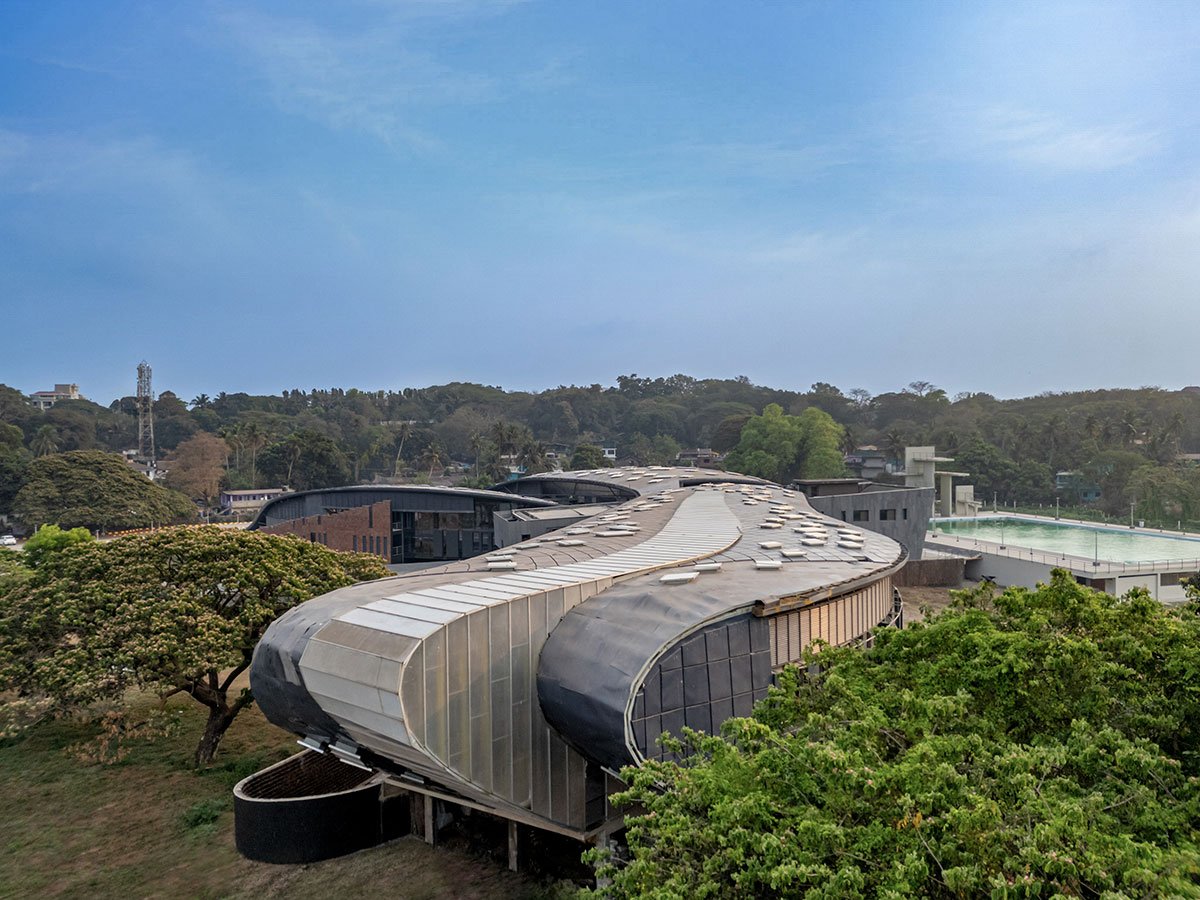
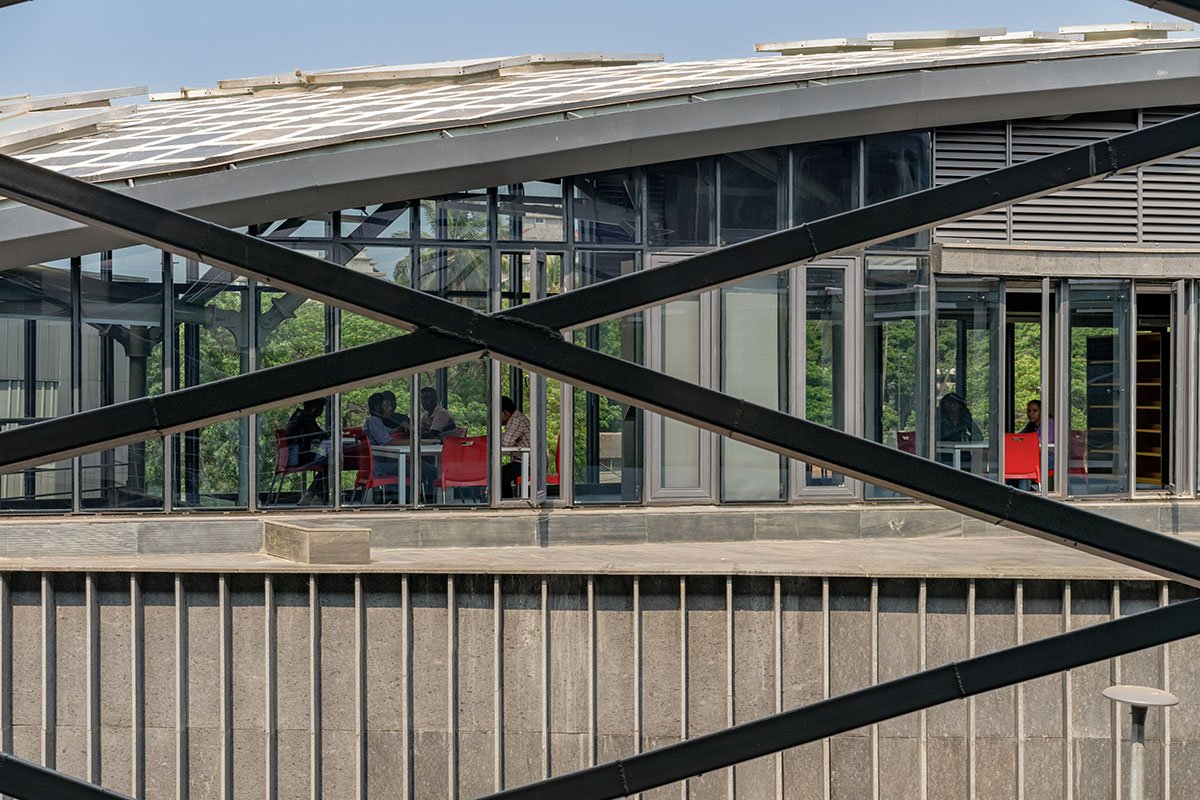
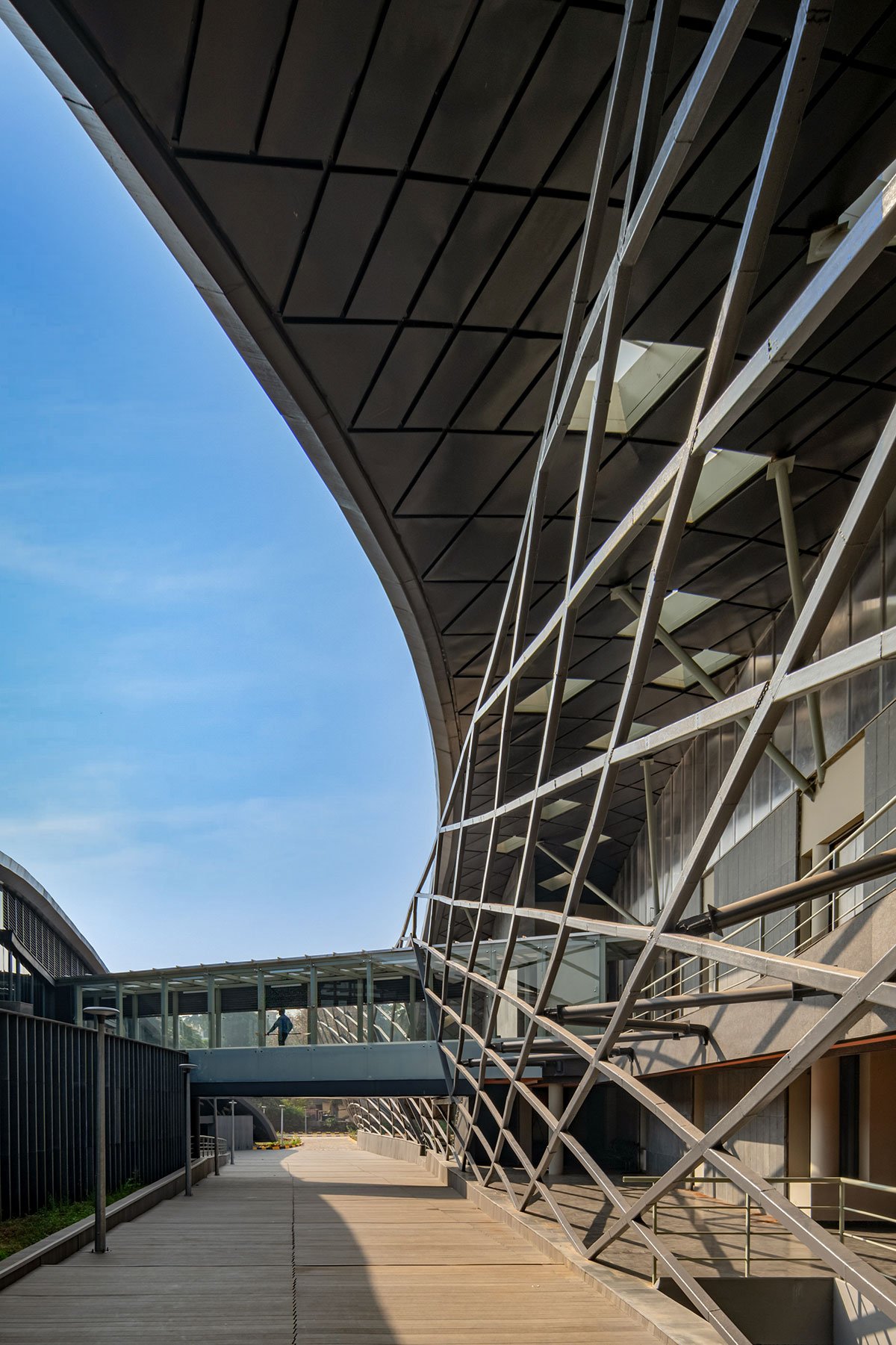
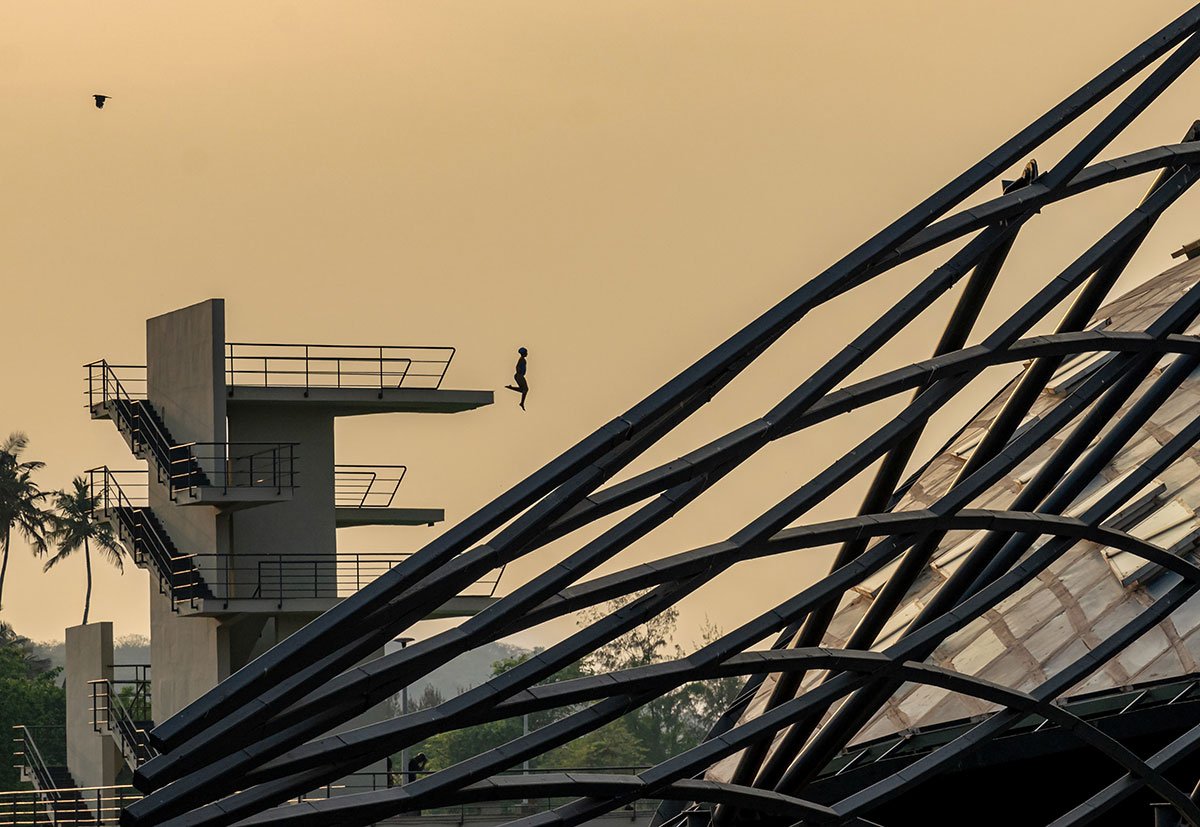
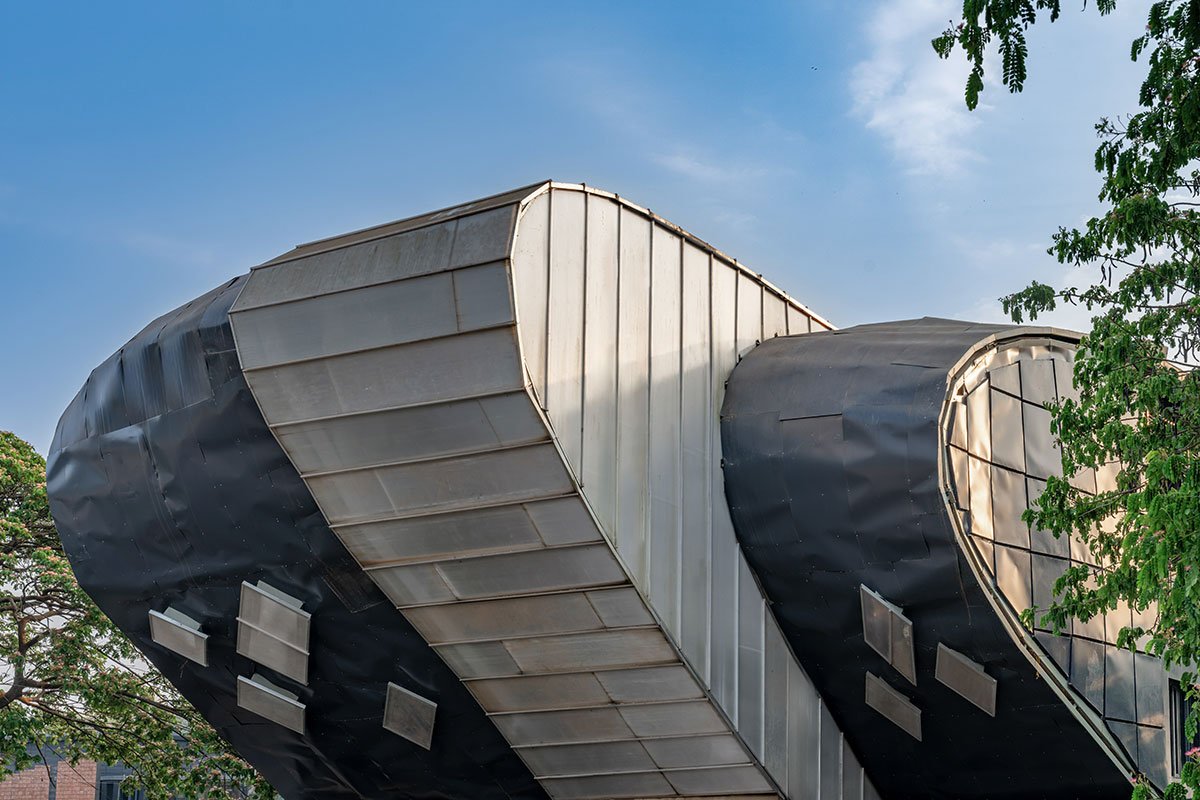
The building’s constant motion is captured through digital fabrication of the mega roof structure clad using color-coated roofing sheets, allowing cost control in a government project with a limited budget. Resolved as a grid shell structure using trapezoidal paneling; the 4000 Sq m. roof for NIWS drapes the entire complex like a free flowing wave. It is designed as a light weight structure with a pressure equalization system.
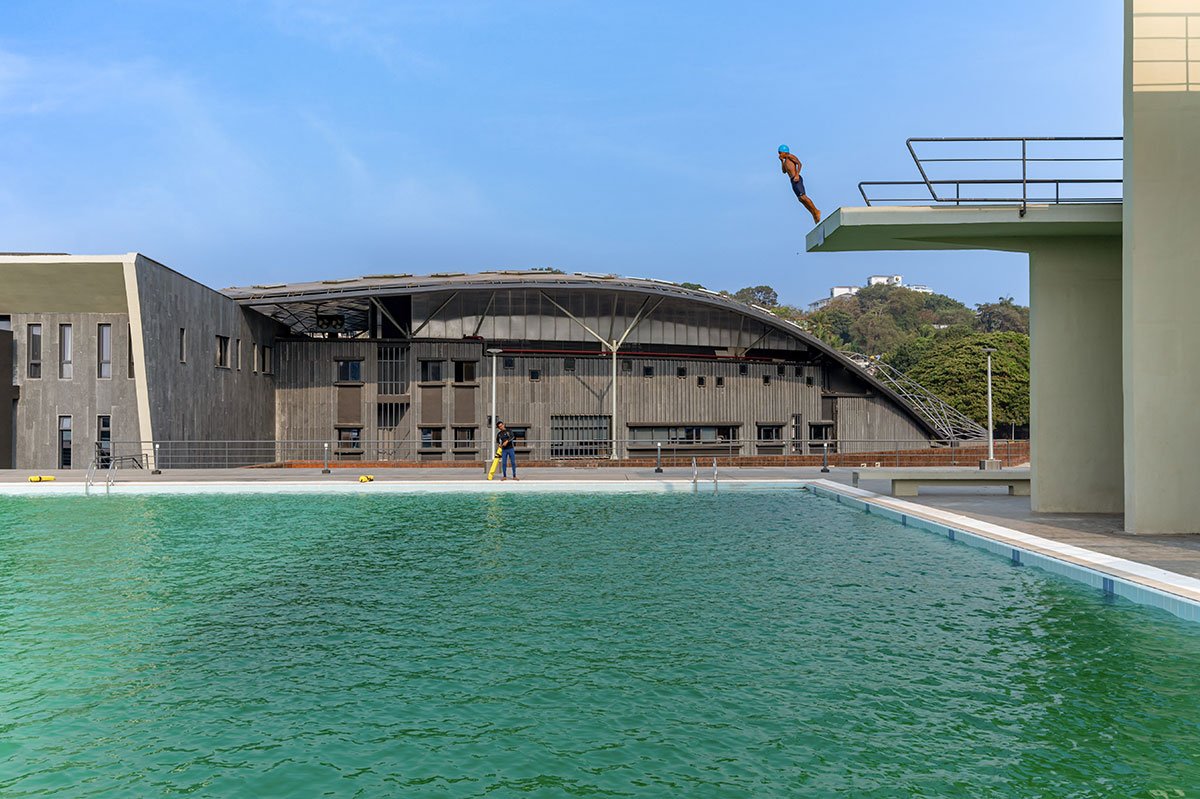

Comprising more than 15000 pipes of varying length, the structure is constructed in smaller part modules, large enough to be lifted & put in place manually. Over 5000 customized roof panels, each with a unique shape and size, were CNC cut and folded to fit together like a jigsaw puzzle over the large parametric wave roof. The assembly creates continuous gutters, ensuring unobstructed water flow and making it one of the most complex digitally fabricated roofs in India.
Drawings & Renders
Images