
Excerpt: Onça Warehouse by Estudio Pedro Haruf is a requalification project that involves restoration of original elements, architectural expansion, and interior design. The restoration uncovered original timber trusses and a colonial roof by removing a PVC ceiling and exposed the original brick walls. Woodwork, windows, flooring, and trusses were restored, while the facades were revived with reopened windows and traditional whitewashing.
Project Description

[Text as submitted by architect] The warehouse is a commercial and service space located in the small town of Onça do Pitangui, in Minas Gerais. It offers products from agroforestry systems and handicrafts made by local small-scale producers, as well as serving coffee and regional baked goods to both residents and tourists.
The project occupies a small building from the early 20th century. The construction, adjacent to a colonial house, has two floors: the ground floor, which sits slightly above street level, and a basement that adapts to the slope of the land. The property is located on the right side of its lot, at the entrance to the town, just before the town hall square.


The architects approached this requalification project through three distinct fronts: restoration of the original elements, architectural expansion, and interior design. They started by highlighting the historic architecture, removing a PVC ceiling to reveal the timber trusses and a colonial roof. They stripped the walls to expose the solid brick used in the original construction and restored all the woodwork, including windows, flooring, and trusses. On the front and rear facades, they restored the original decorative elements, reopened windows that had been blocked, and revived the painting using traditional whitewashing techniques.
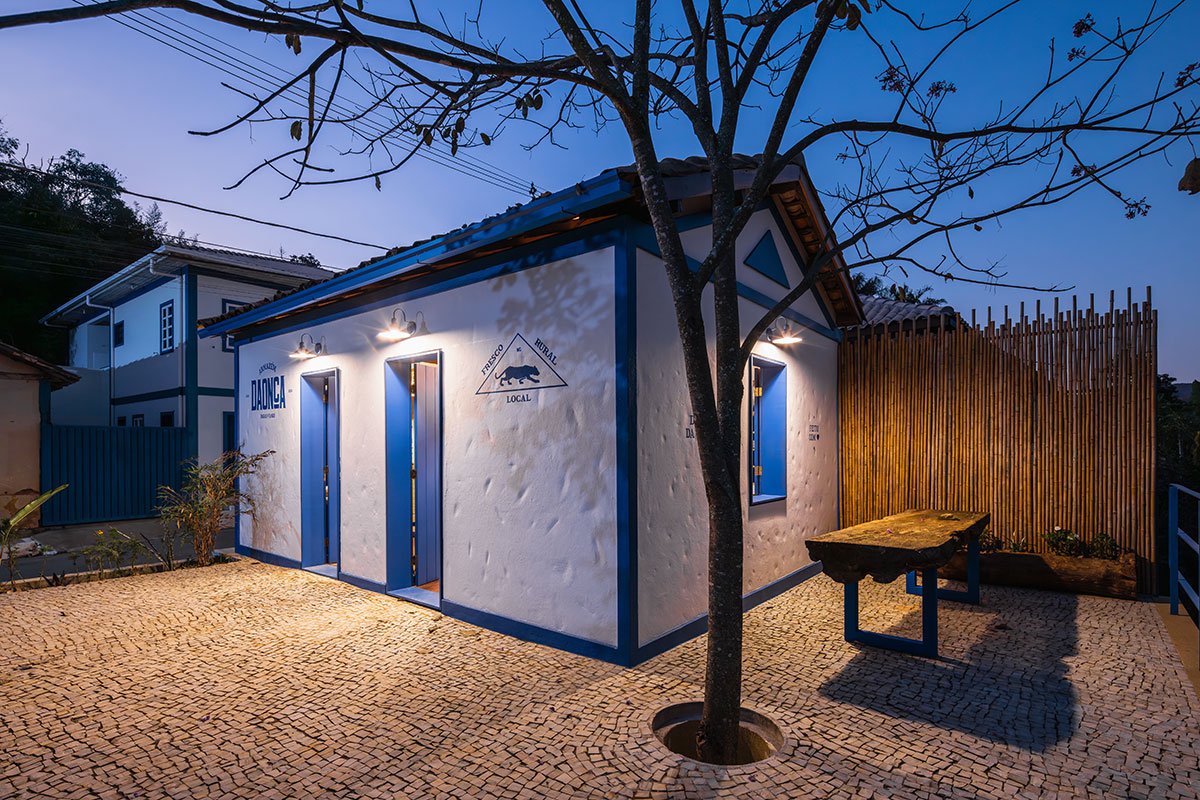

Another design move was to create an architecture that serves as a kind of pedestal for the existing building—a discrete structure presented as an open space at street level. In the basement, the administrative areas and public restrooms were placed. The staircase also leads to the natural terrain, where community events can be hosted.

To access the courtyard and, consequently, the basement, the architects modified the side facade of the building, transforming windows into doors and replicating the baseboard and crown molding patterns from the front and rear facades.


For the shop’s interior, the architects designed a large central piece of furniture that organizes the flow of the space, functioning as a checkout counter, display area for refrigerated counters, and a showcase for agroforestry products. On one side, a large tiled countertop and a solid wood cabinet complement the café’s functions, providing space for a coffee machine, sink, and storage for items both for sale and for use, such as cups, plates, and utensils.
Images


