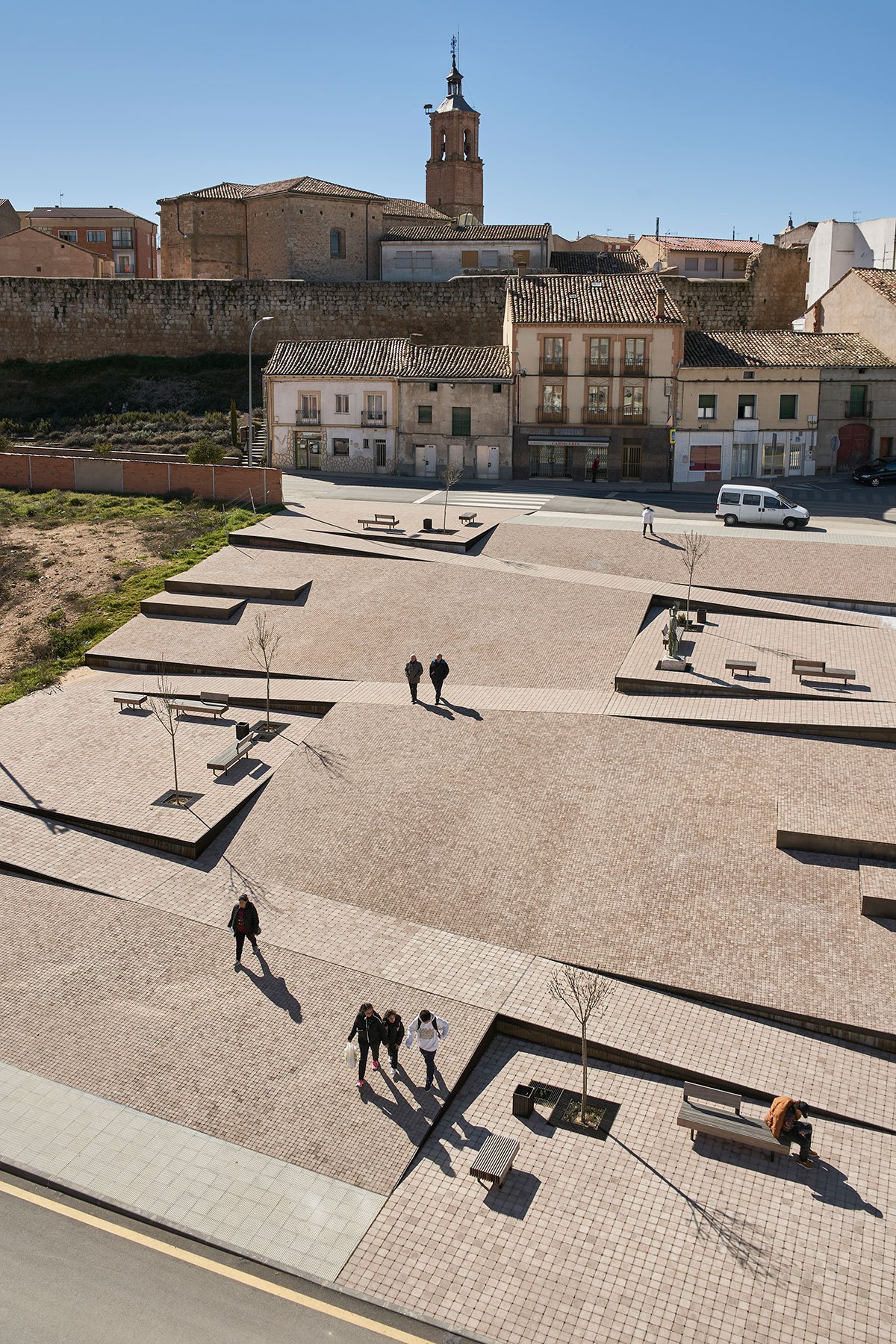
Excerpt: Plaza del Zarrón, an urban design project by BOV Estudio, aims to create a fluid and inclusive link between the old town and newer areas, bridging a five-meter elevation difference. The project prioritizes accessibility and connection, allowing everyone to freely move between parts of the town. It weaves together Almazán’s historical roots and contemporary life, focusing on individual freedom for walking, resting, and socializing.
Project Description
[Text as submitted by architect] The Plaza del Zarrón is envisioned as a space for everyone, addressing the natural flow and needs of all citizens in Almazán. By focusing on the wall and the old quarter and observing the movement of its inhabitants, the designers aimed to create a fluid and inclusive link between the old town and the newer areas, bridging the five-meter elevation difference that previously acted as a barrier. This project prioritizes accessibility and connection, allowing everyone to freely move between parts of the town that were once separated. The lines and folds of the new Plaza del Zarrón reflect the town’s pulse and offer various pathways, routes, and spaces for each user to experience without hindrance. This public space weaves together Almazán’s historical roots and contemporary life, where the freedom of each individual, whether walking, resting, or socializing, is at the heart of its design.
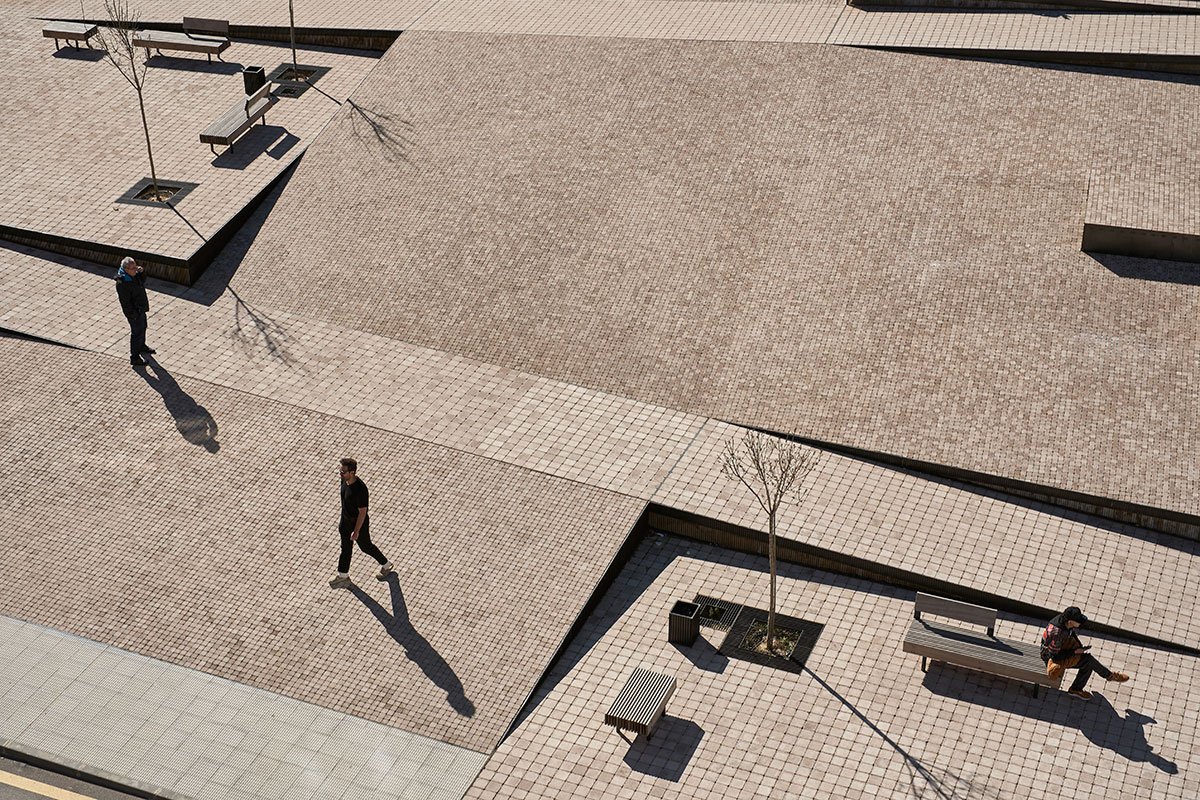
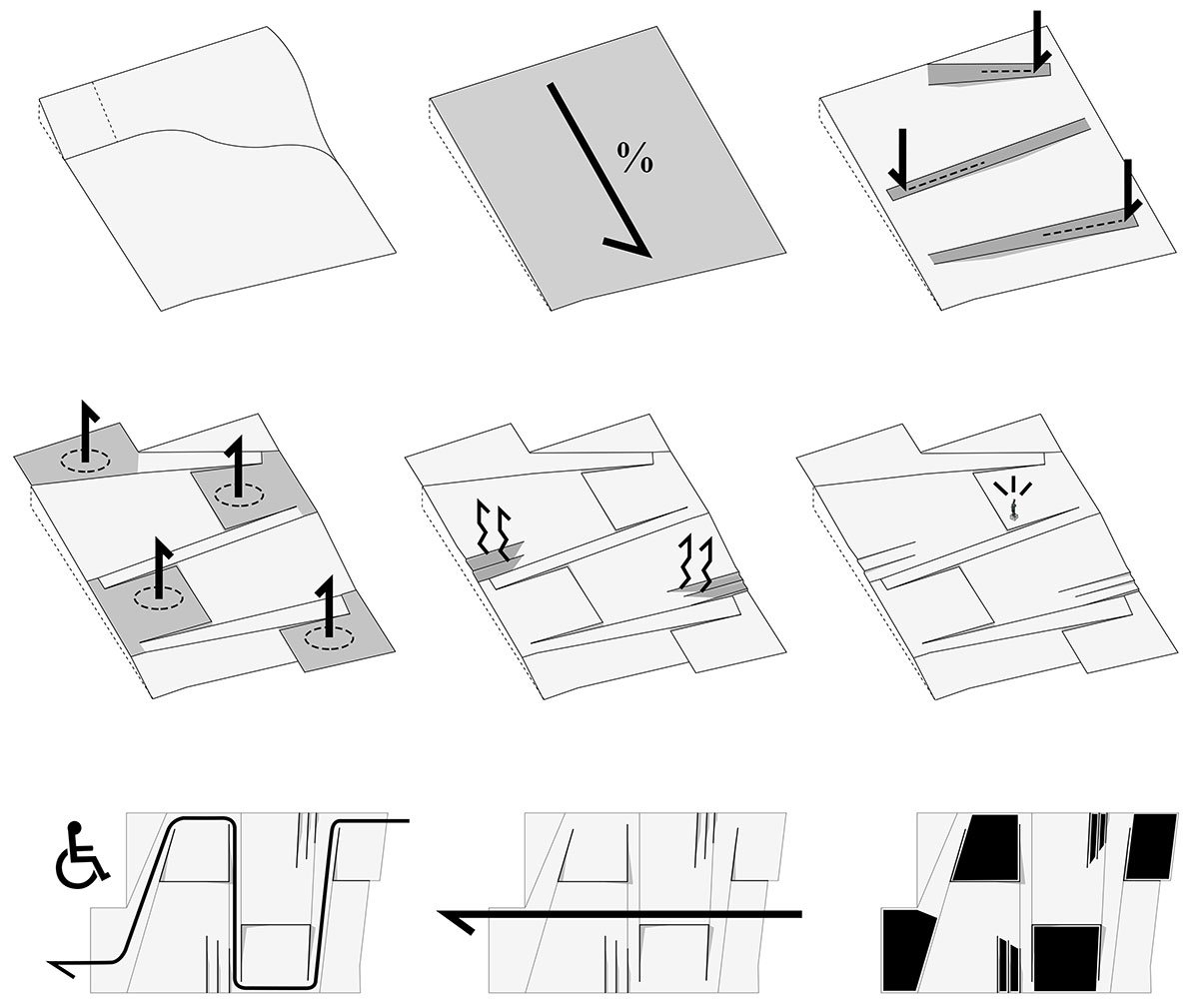
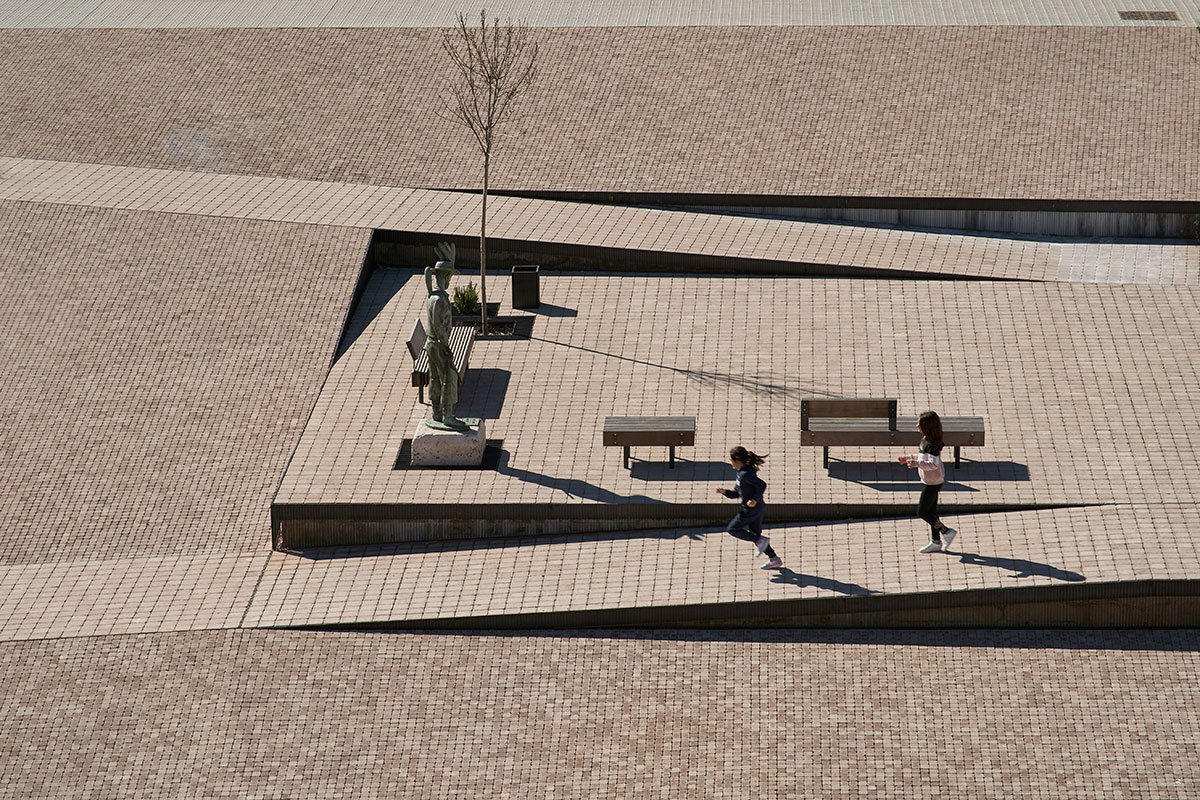
The design of Plaza del Zarrón distributes the elevation change smoothly across its surface, creating a series of sloping, zigzagging platforms that ensure universal accessibility. Along this main path, flat areas emerge, creating small plazas within the larger square. These inner plazas will house seating, trees, and the relocated Zarrón sculpture, offering spaces for gathering and reflection. Smaller alcoves and steps serve as informal seating areas and make it easy for people to gather and socialize, while the thoughtfully planned geometric layout helps soften inclines to enhance accessibility. This complex arrangement, born from a precise geometric study, allows efficient resource use and ensures smooth execution, resulting in a functional and welcoming space for all.
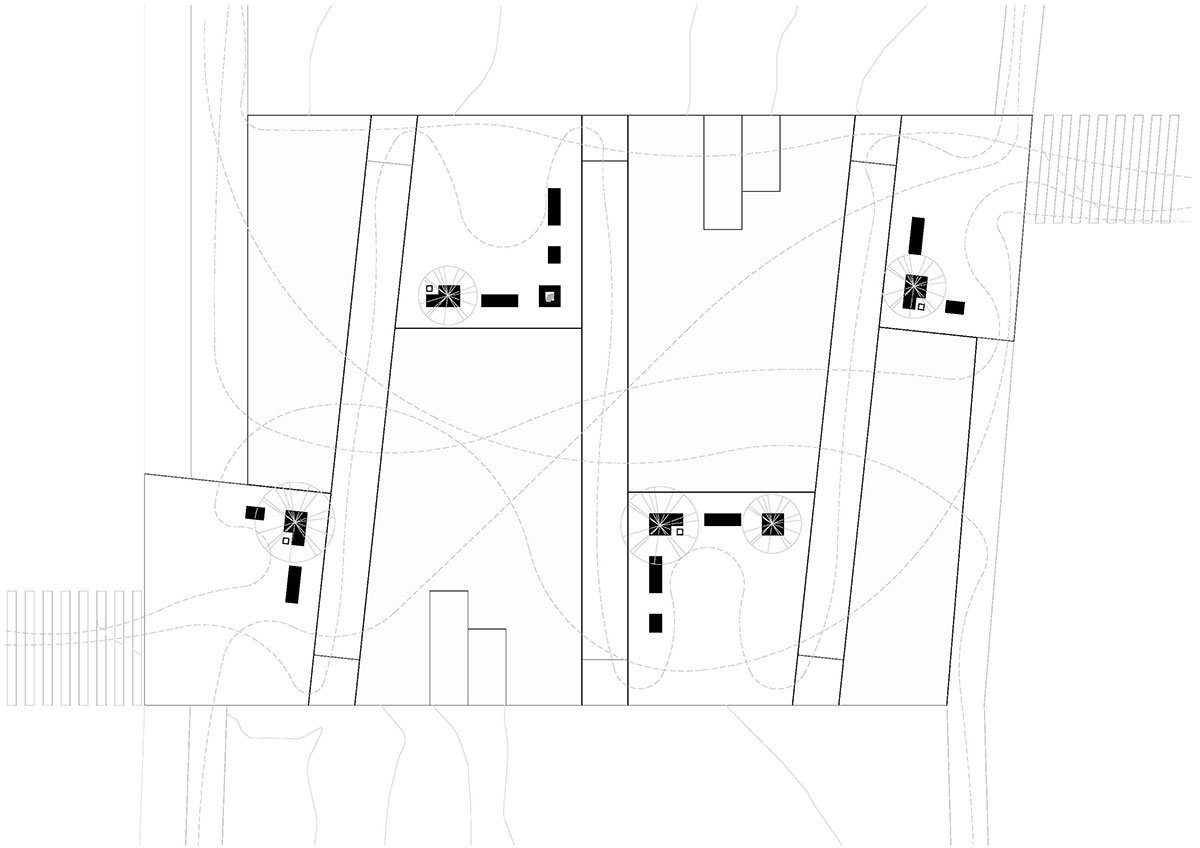
Each year on May 17, Almazán celebrates San Pascual Bailón, accompanied by the traditional Zarrón dance—a festivity recognized for its Regional Tourist Interest. Historically, this celebration featured the Zarrón sculpture prominently displayed in the Plaza Mayor. By relocating it to the Plaza del Zarrón, the designers symbolically link Almazán’s historical essence with its modern-day life.
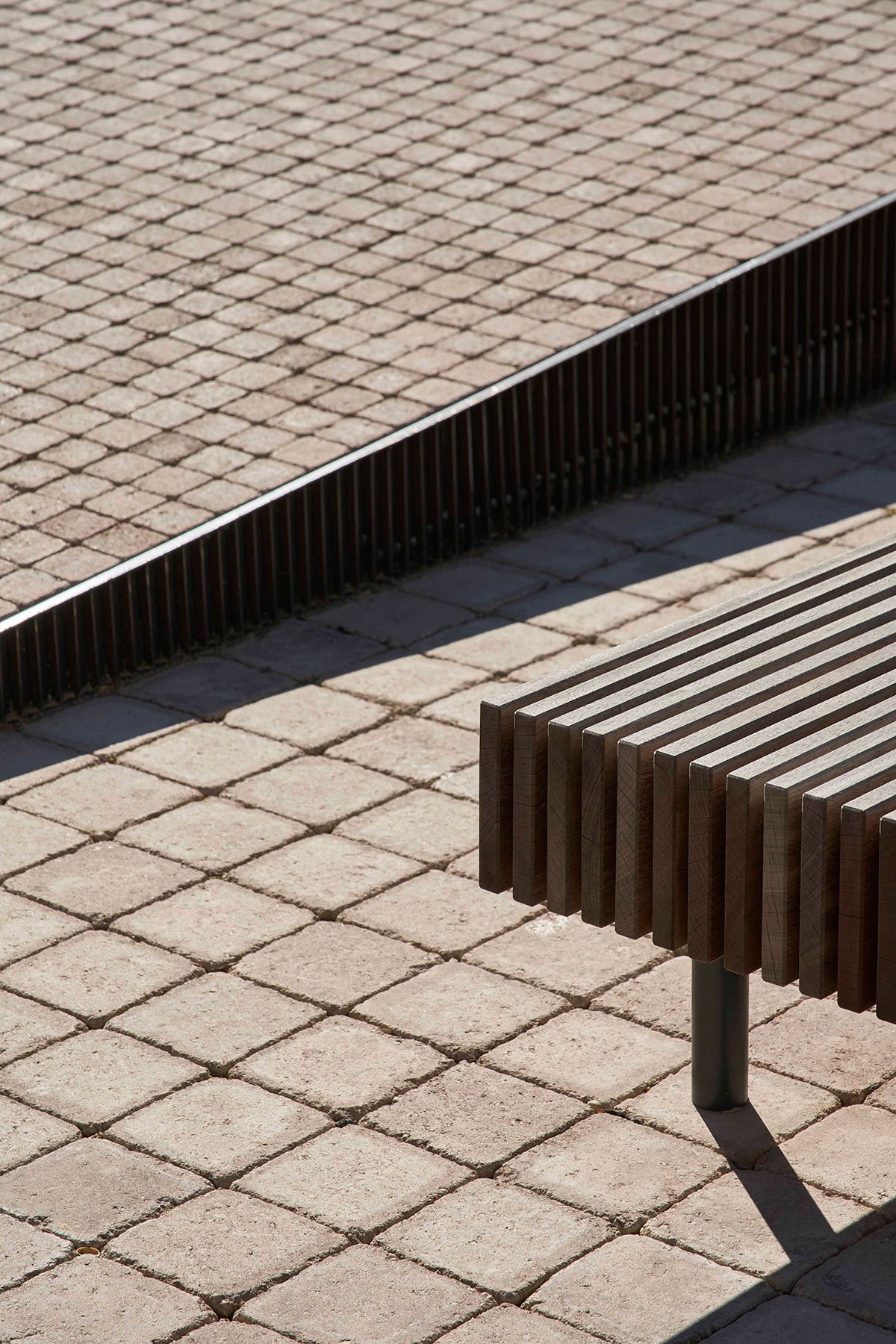
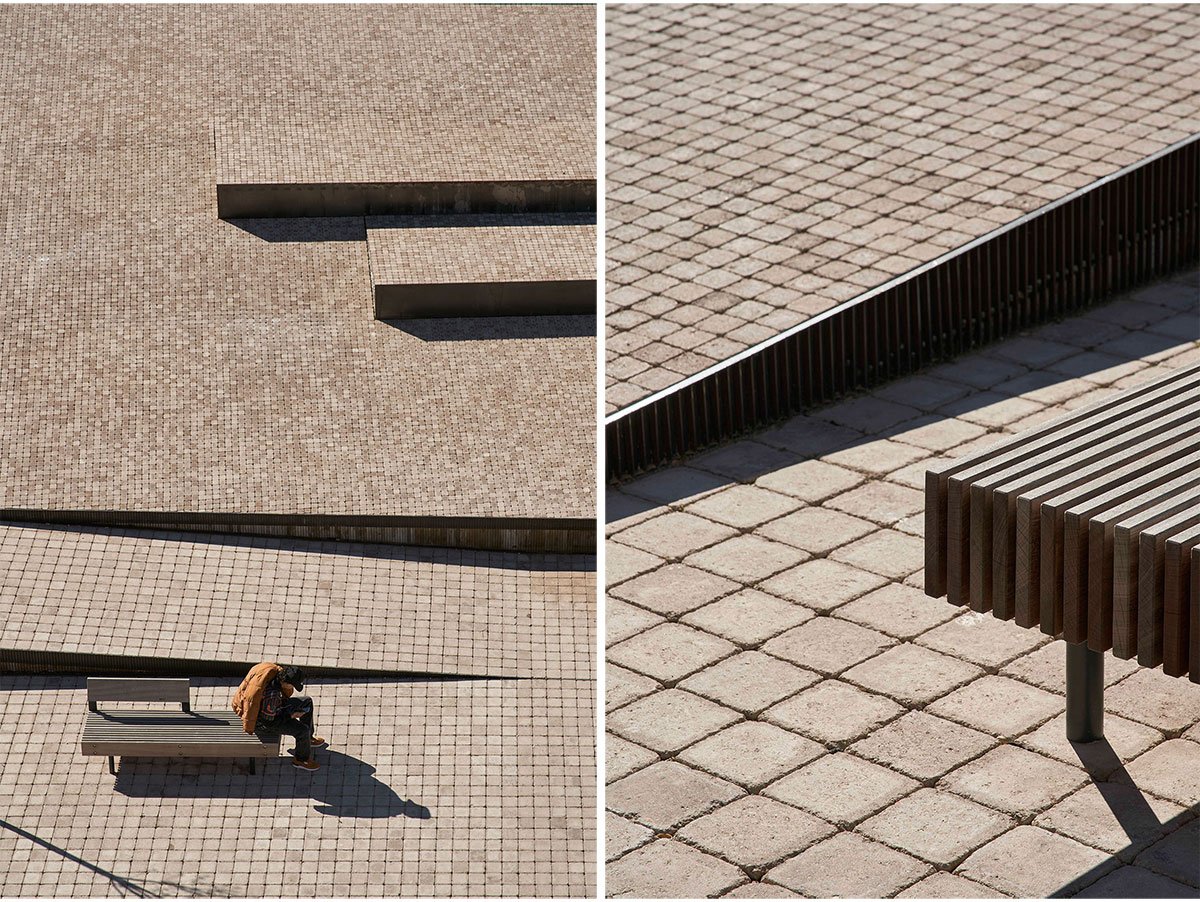
The Plaza del Zarrón harmonizes the town’s heritage with contemporary design by selecting materials that resonate with Almazán’s traditional aesthetic. The designers used aged concrete pavers, wood, and metal lattices inspired by the town’s historic forges and carpentry. The aged concrete, in particular, echoes the tones and textures of the old town, reinforcing visual continuity between the new plaza and the historic areas. The paving layout, composed of 8×8 and 16×16 slabs, defines the square’s areas for movement, gathering, and rest, enhancing accessibility through subtle material transitions.
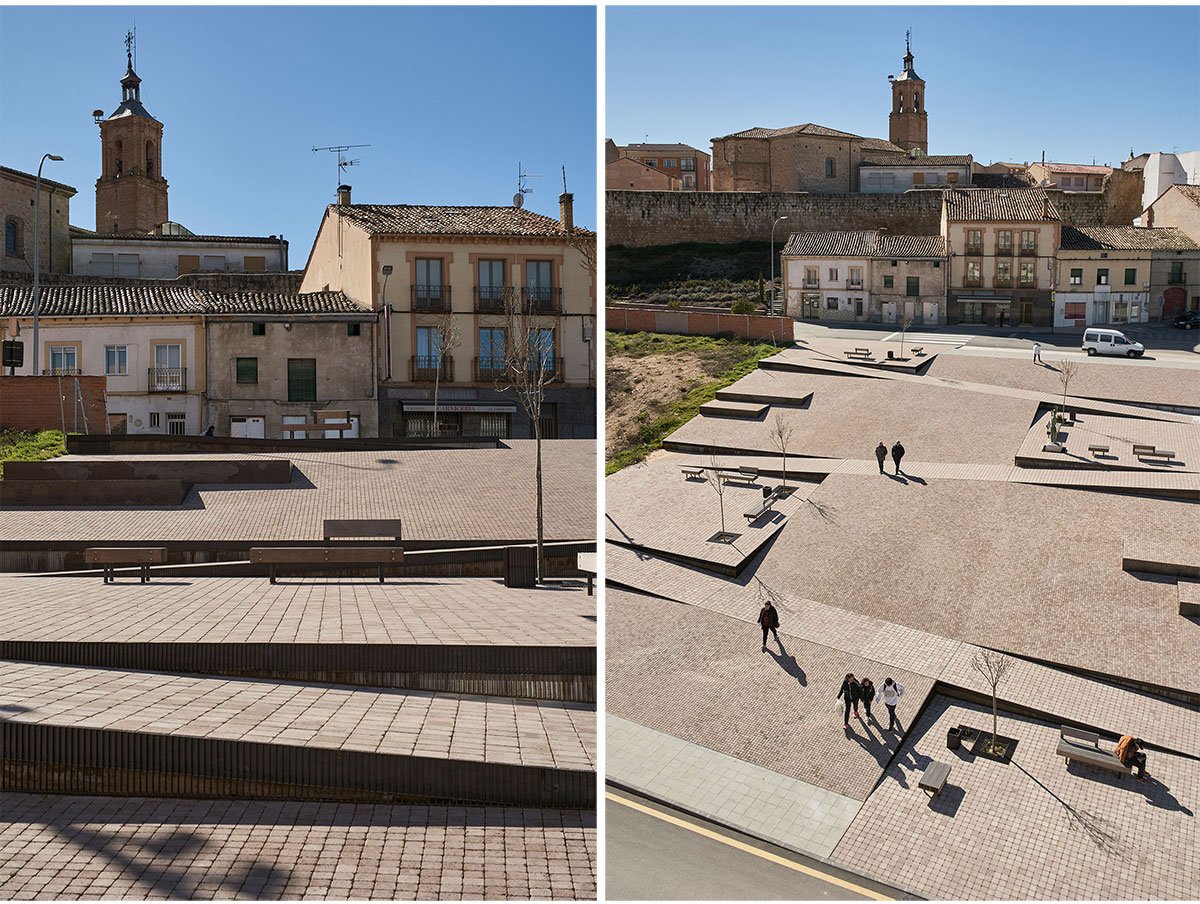
The seating areas are strategically arranged within the plaza’s inner squares, aligning with the paving grid. Wooden benches of varying sizes and backrest designs invite people to sit freely, enhancing the space’s flexibility for interaction and relaxation. Native, deciduous trees add seasonal interest, providing shade in the summer and sun in the winter, making the plaza a dynamic and ever-changing space. As for lighting, it’s integrated into the vertical edges of the plaza’s folds, accentuated by metal lattices that diffuse the light.
Images