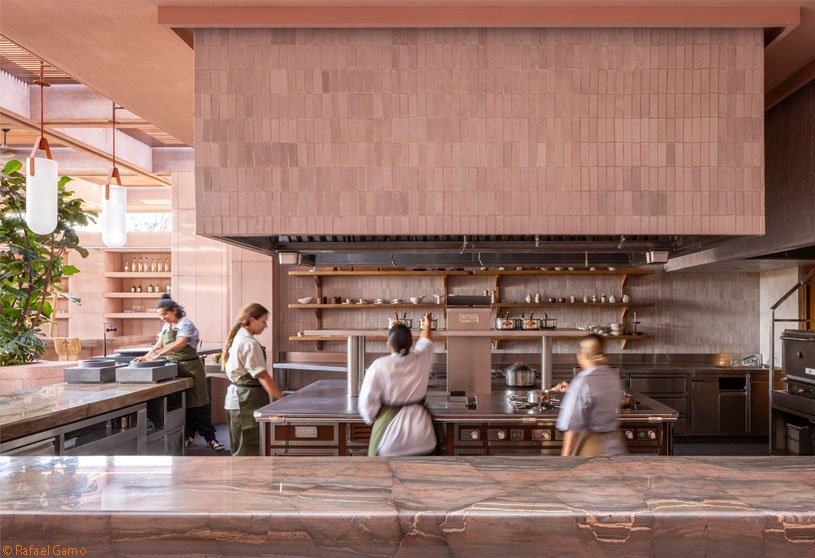
Excerpt: Rubra by Ignacio Urquiza and Ana Paula de Alba is conceived as a discreet restaurant defined by a sequence of spatial transitions that disconnect guests from the urban context and immerse them in nature. Blind façades, compressed thresholds, and monolithic volumes frame views toward the ocean and Sierra Madre, while a single sand-toned concrete material creates seclusion and balance between food, light, and landscape.
Project Description

[Text as submitted by architect] Rubra is a discreet restaurant on Mexico’s Pacific coast designed by Ana Paula de Alba and Ignacio Urquiza for chef Daniela Soto-Innes. The project is located on the Punta Mita peninsula, at one end of Banderas Bay. Lush vegetation flanks the access route. Guests can arrive on foot, by bicycle, or in a golf cart, along a path that disconnects them from the urban context and leads to a blind façade, inviting curiosity about what lies beyond.
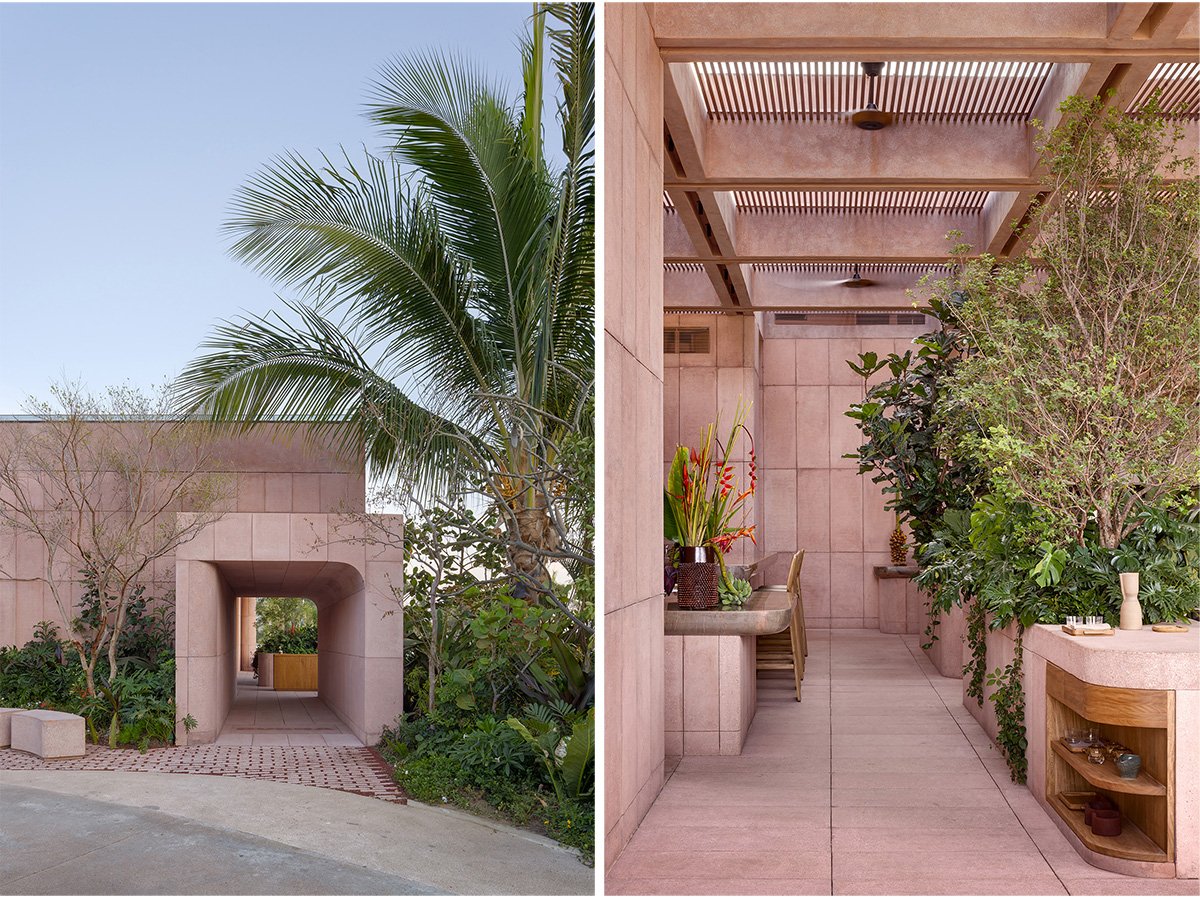

A low tunnel (2.1 meters high and 6 meters long) opens onto the main terrace, a generous space with views of the Sierra Madre Occidental and the ocean horizon. The space is composed of volumes of different heights and dimensions that define the structure and contain the program: open kitchen, wine cellar, and bars. Raised flowerbeds also function as benches, shaping the primary seating area.
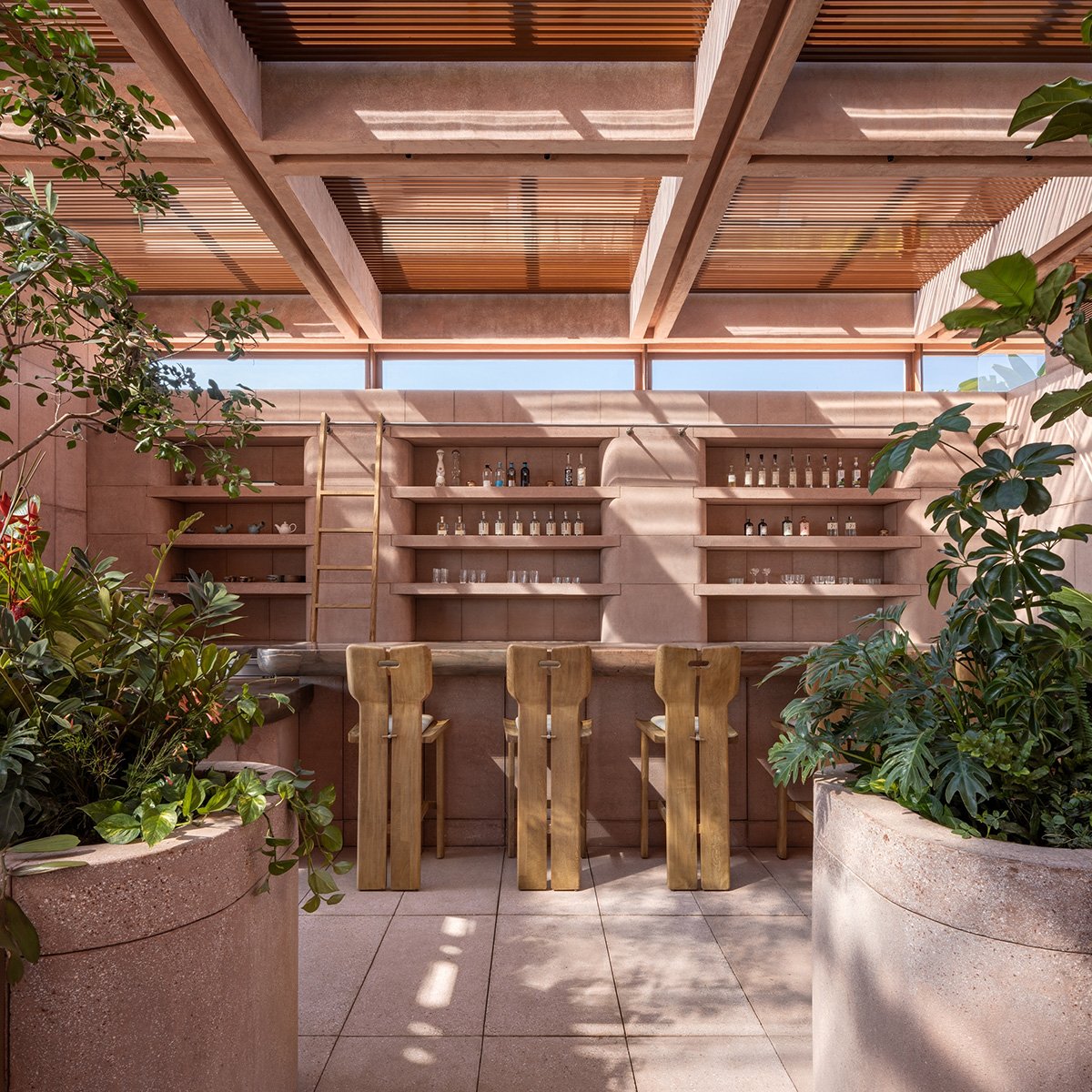

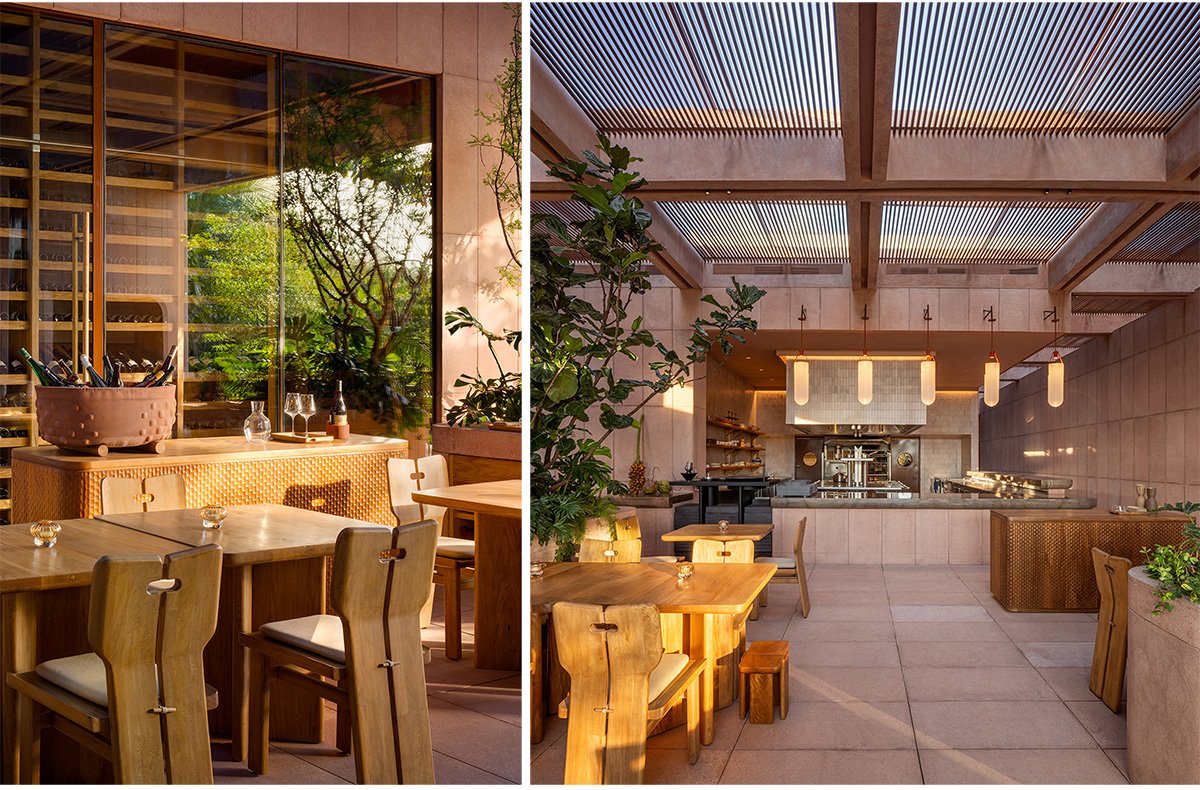
The strategic layout creates a spatial rhythm that directs views toward the natural surroundings, keeping the built environment out of sight and offering a sense of seclusion. Openings between volumes promote cross ventilation and bring in ocean breezes.
A large roof spans a column-free, 10 x 15-meter space, supported by a pergola grid that frames wooden lattices and filters natural light throughout the day. Programmatic volumes—like the kitchen and wine cellar—serve as structural supports, creating shaded exterior spaces. Depending on the weather, a sliding glass façade can enclose the main dining room, forming a climate-controlled interior that retains an outdoor atmosphere.


Rubra is built from a single material. In collaboration with Pablo Kobayashi, the team developed a monolithic, sand-toned concrete structure—stained and textured to evoke coastal geology. Its rigid modulation is softened by rounded corners, referencing traditional Pacific architecture.
A palette of warm woods and lush vegetation complements the sand-colored volumes. Landscape design by Thalia Davidoff incorporates endemic species, as if the Nayarit jungle had been brought into each planter, blurring boundaries between inside and outside, between natural and built.

All furniture and accessories were custom-made. Chairs, benches, tables, coat stands, and service pieces were co-designed by Ana Paula and the studio. Tableware, pans, and sculptural objects were created by guest designers including Claire Lippman (CHerie), Nouvel Glass, Mauviel, and Carlos Matos.
Rubra offers a singular culinary experience shaped by Daniela and her team. From spatial configuration to the smallest detail, the project evokes the soft light and privacy of palm-thatched enramadas. The repetition of a single material and the clarity of its layout eliminate excess, creating an architecture of quiet balance and focus—where food, light, and nature exist in continuous dialogue.
Drawings


Images


