
Excerpt: Southwest House by Tantai Architects is a minimalist contemporary residence that incorporates light and wind as essential elements, making it unique and contextually adaptable. The design is inspired by the integration of light and wind in traditional Thai arts and architecture. The house derives its name after the southwest monsoon, which brings air mass from the Indian Ocean between mid-May and mid-October.
Project Description

[Text as submitted by architect] Light, shadow and breezes have long been playful elements used in traditional Thai arts and architecture. The pedestal in Thai architecture has layered and undulated elements, bringing a compelling effect of light and shadow. The fabric in traditional Thai paintings looks delicate as if being gently blown by the wind. Inspired by the integration of light and wind in traditional Thai arts and architecture, the design of the Southwest House has light and wind as the essences, incorporating both elements in a contemporary twist that suits the project’s context and requirements.

The Southwest House is located in Kaset Sombun district, approximately one hour’s drive from the downtown of Chaiyaphum province in the northeastern part of Thailand. The site enjoys the spectacular presence of the Phu Langka mountain and mountains in Phu Khieo – Thung Kamang Wildlife Sanctuary. Originally, it was home to two old timber houses. Due to their decrepit condition, the houses were torn down, and the new one was built as a replacement. The house bears the name ‘Southwest House’ since it intentionally embraces the southwest monsoon which brings about the air mass from the Indian Ocean between mid-May and mid-October.


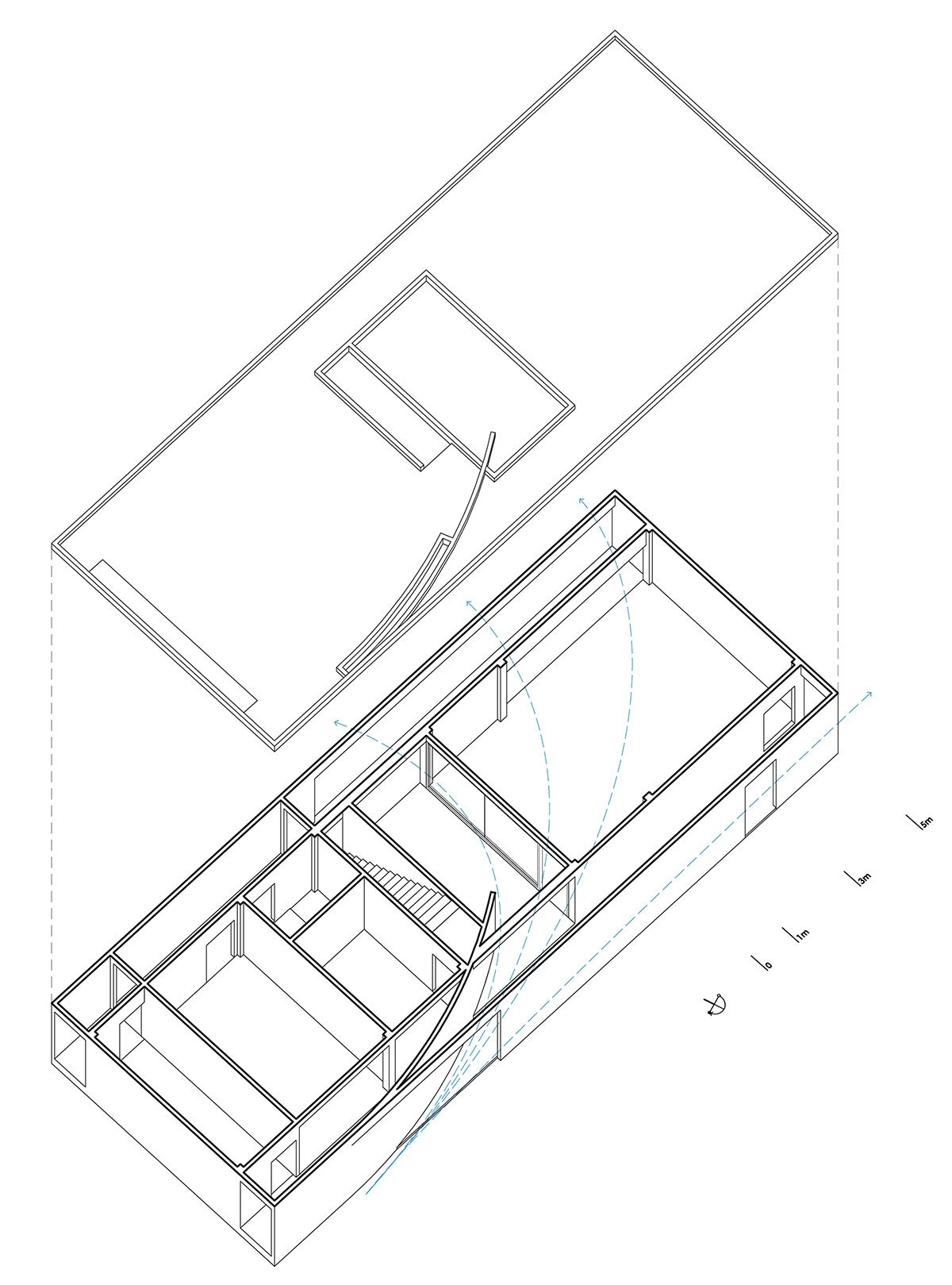
The house is divided into two main sections. The multipurpose area on the eastern side provides ample space for relaxing, hosting guests, conducting religious ceremonies, and enjoying leisurely activities according to the Northeastern Thai way of life. On the western side are private functions including a bedroom, a bathroom, a shrine room, and a kitchen. The timbers torn down from the old houses are processed and given a new life as flooring materials.


Since Thailand is predominantly exposed to the sun from the southern side for much of the year, the corridor is strategically positioned to the south side of the house with the addition of two wall layers to block excessive sunlight. The outer wall layer is gently curved towards the multipurpose area, creating a large opening for the air to circulate through the house. With the narrow inlet and the wider outlet, the opening consequently increases the pressure and velocity of the air, providing greater comfort for the multipurpose area.


Despite the southern facade appearing very minimalistic, it boasts an intriguing effect of sunlight shadow produced by the curved wall. Similar to the facade, the wall in the bedroom’s small courtyard relishes the magical phenomena of light that shines through the small skylight. Although solid walls surround the bedroom, the skylight offers the room a glimpse of the exterior’s climate and time.

In contrast to most of the surrounding houses which are capped in gable roofs, the house has a flat roof which offers a leisure space for reveling in the breathtaking and expansive mountain scenery. Even though the house breaks from the vocabulary of neighboring vernacular architectures, it shares the same foundation of taking a local climate and way of life to the heart of the design.
Drawings




Images


