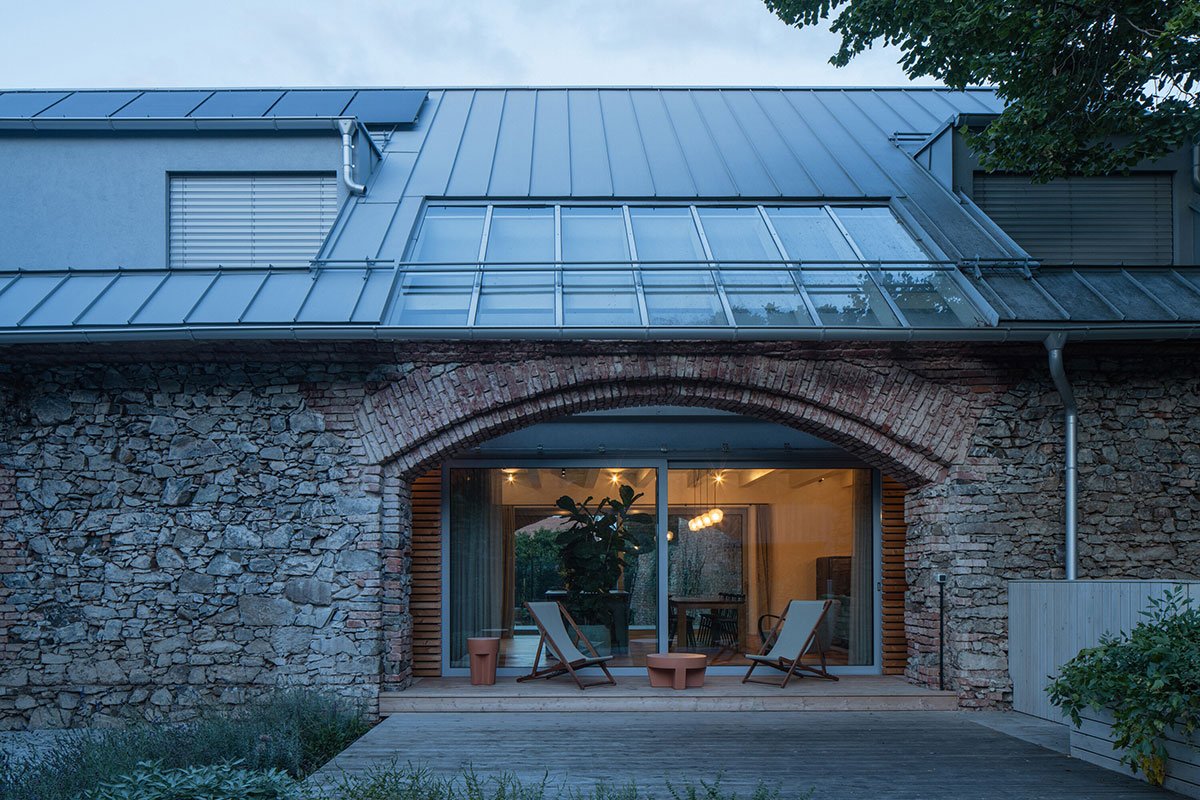
Excerpt: ‘The Forgotten Barn’ by Karnet Architekti features the transformation of an old barn into a family residence while preserving the original structure. A prefabricated wooden house was placed inside the barn, preserving its stone shell and stabilizing the structure. The boundary between the interior and exterior was dissolved, and the building was approached with care similar to heritage preservation.
Project Description
[Text as submitted by architect] Václav and Marie used to visit their grandmother in the small town of Dobříš, nestled at the foot of the Brdy Hills. When the opportunity arose to buy a plot of land with an old stone barn right next to her garden, they didn’t hesitate for a moment. They wanted their children to be able to visit their grandmother through secret passages in the fence, help her weed the flower beds, and, at the same time, put down their own roots. They hoped to create a space where they could listen to her stories and nurture a relationship that would remain with them for a lifetime.
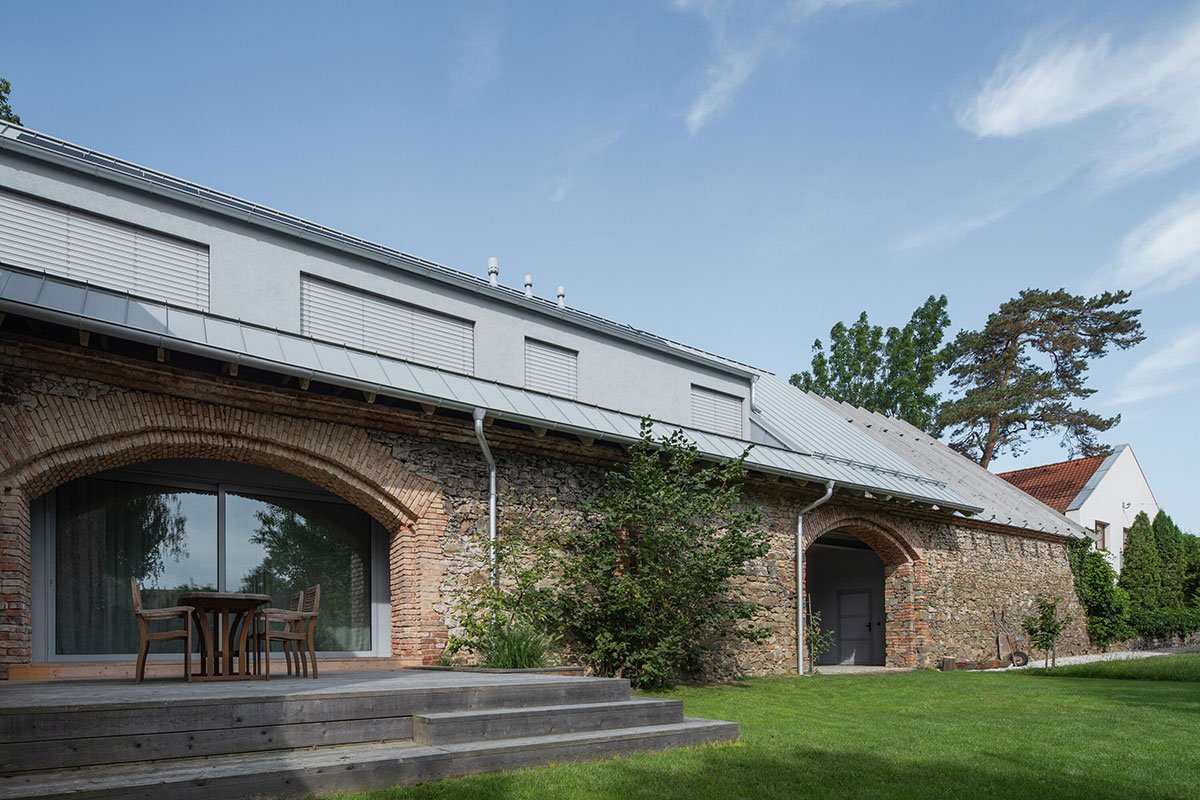
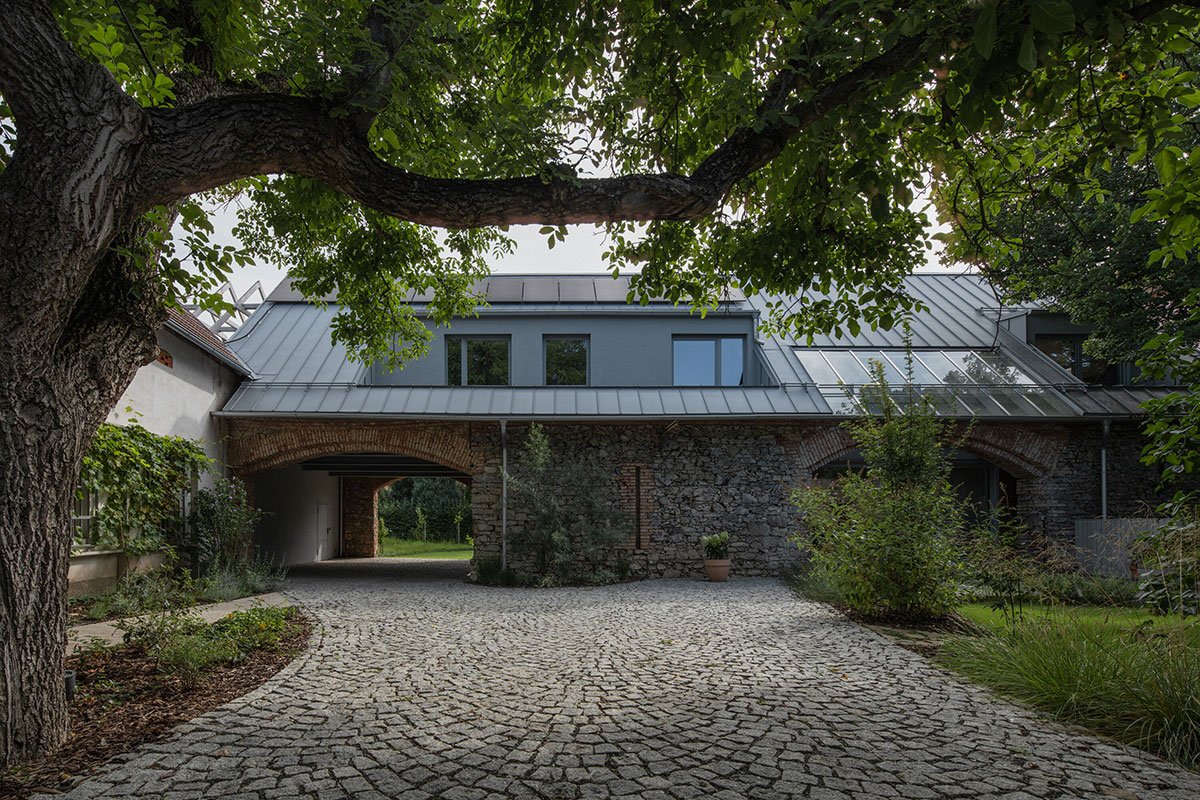
But what about the barn and its memories? Tear it down and build anew? Originally, that was one of the plans. After previous experiences, they didn’t want to go down the path of reconstruction. However, when they peeked inside, they immediately knew what to do with it. They decided to build a new home inside the barn. Its stone shell remained, the structure was stabilized, and a prefabricated wooden house was placed inside.

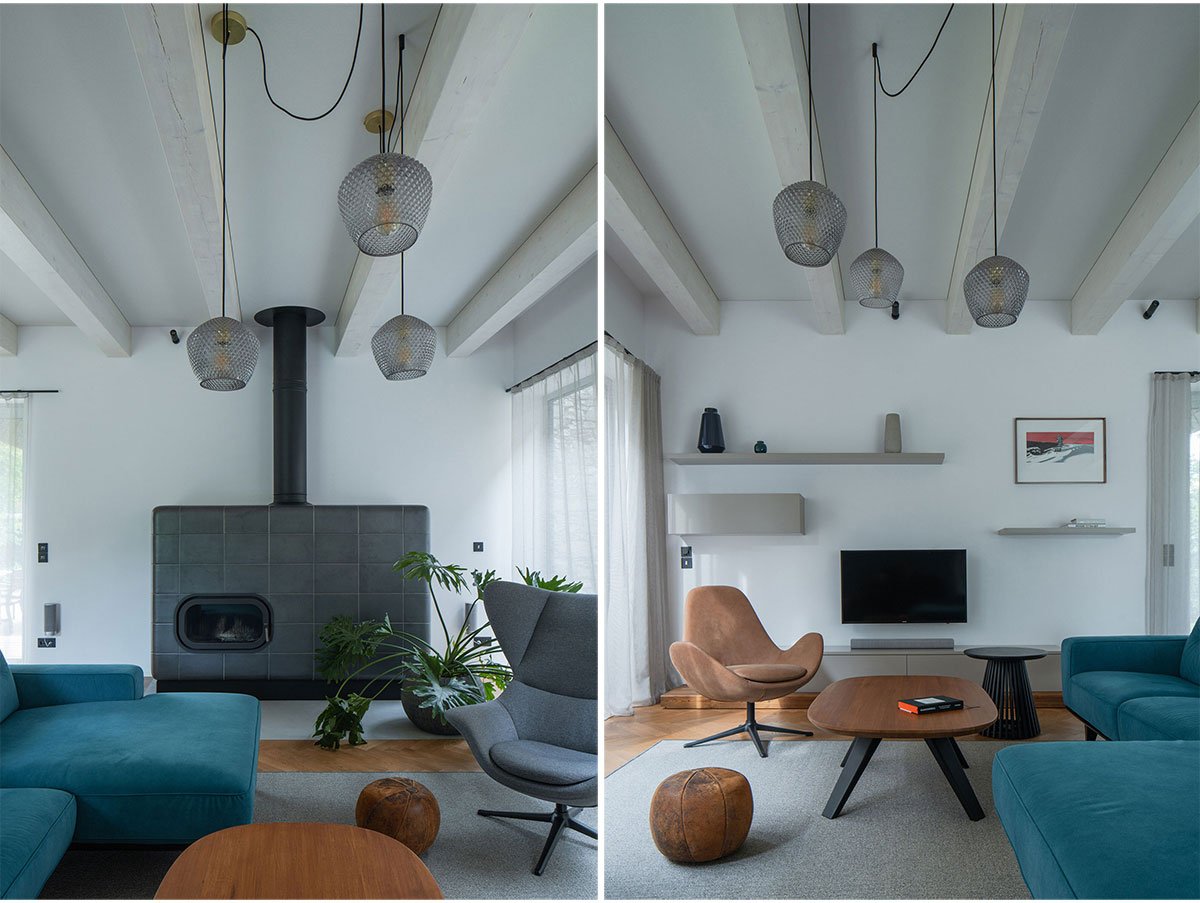
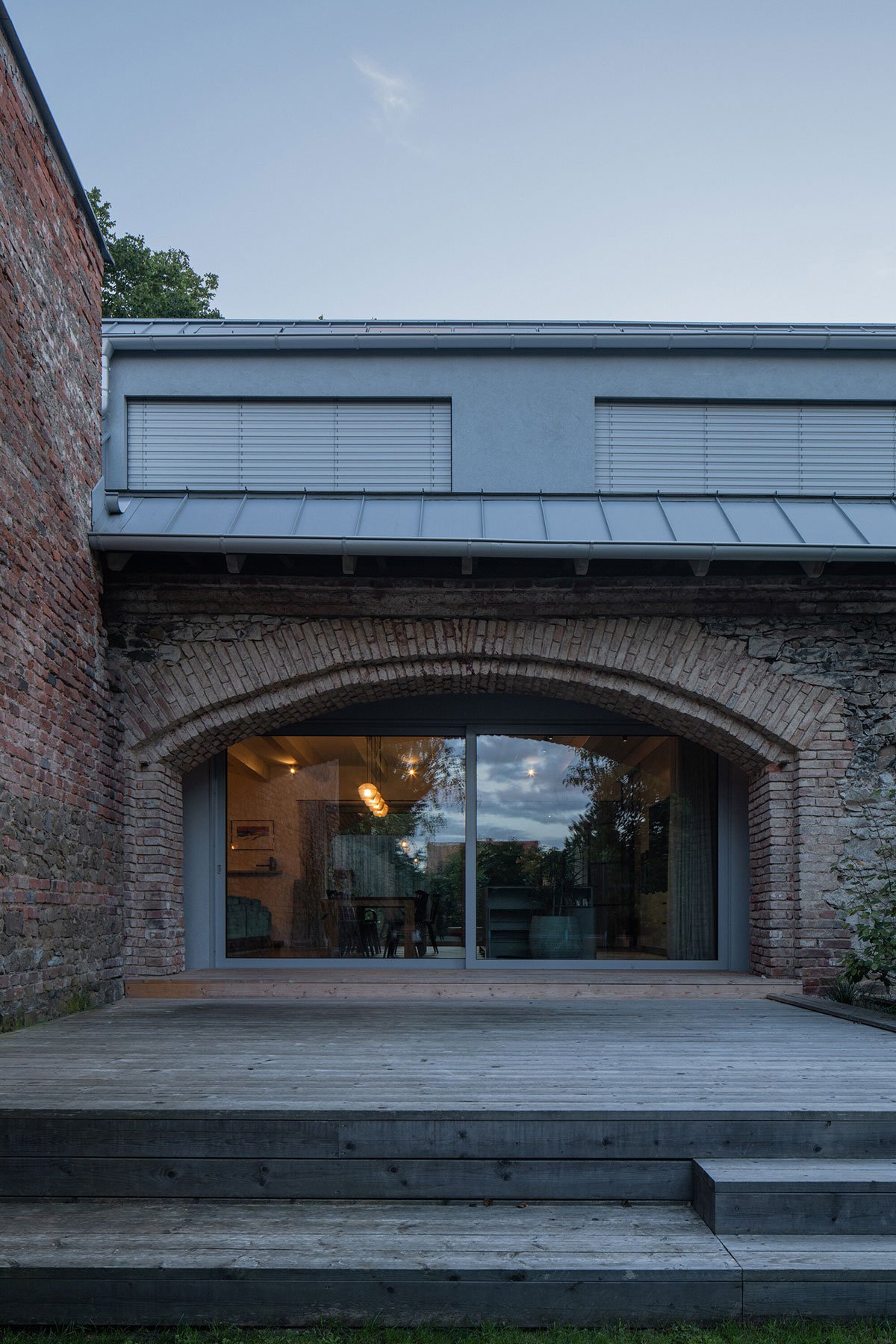
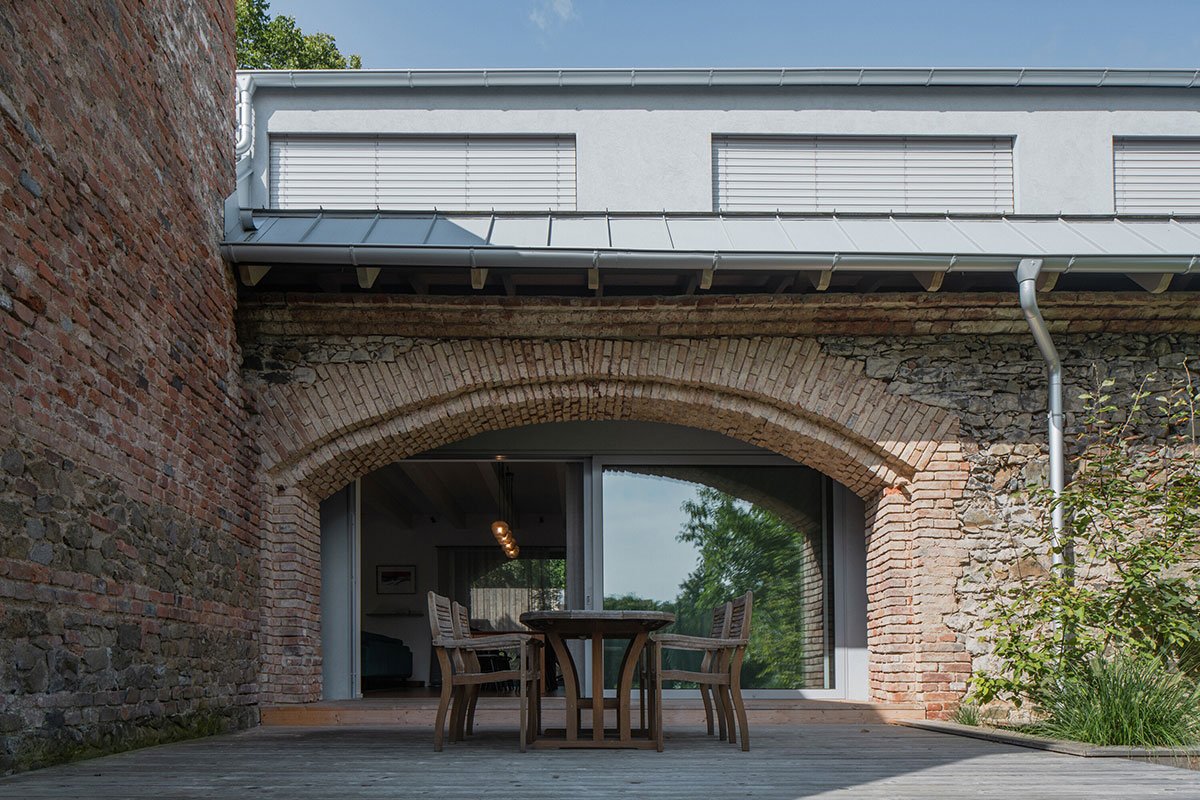
The layout was adapted to the original masonry and vaulted openings yet remained structurally completely separate. The boundary between the interior and exterior has dissolved. The new has woven itself through history, and today it’s difficult to determine where the inside begins and the outside ends. The path outside leads only through the atmosphere of the past and the traces left by previous generations.
The building, whose history dates back at least to 1912, clearly called for preservation. Hay was stored under the handcrafted roof beams, and farmers would pass through the arched stone passages with their carts. Over the years, however, the barn accumulated layers of plaster, extensions, and wooden elements. All of this had to make way for the new purpose.
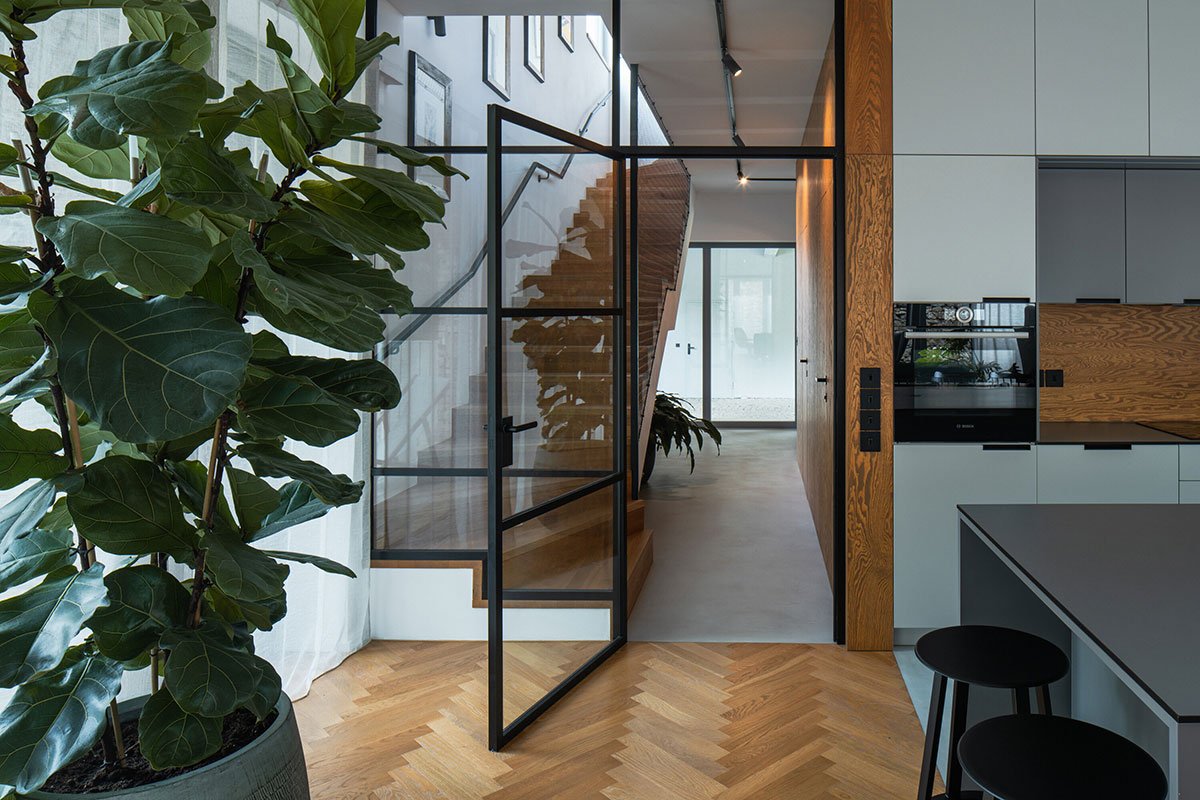

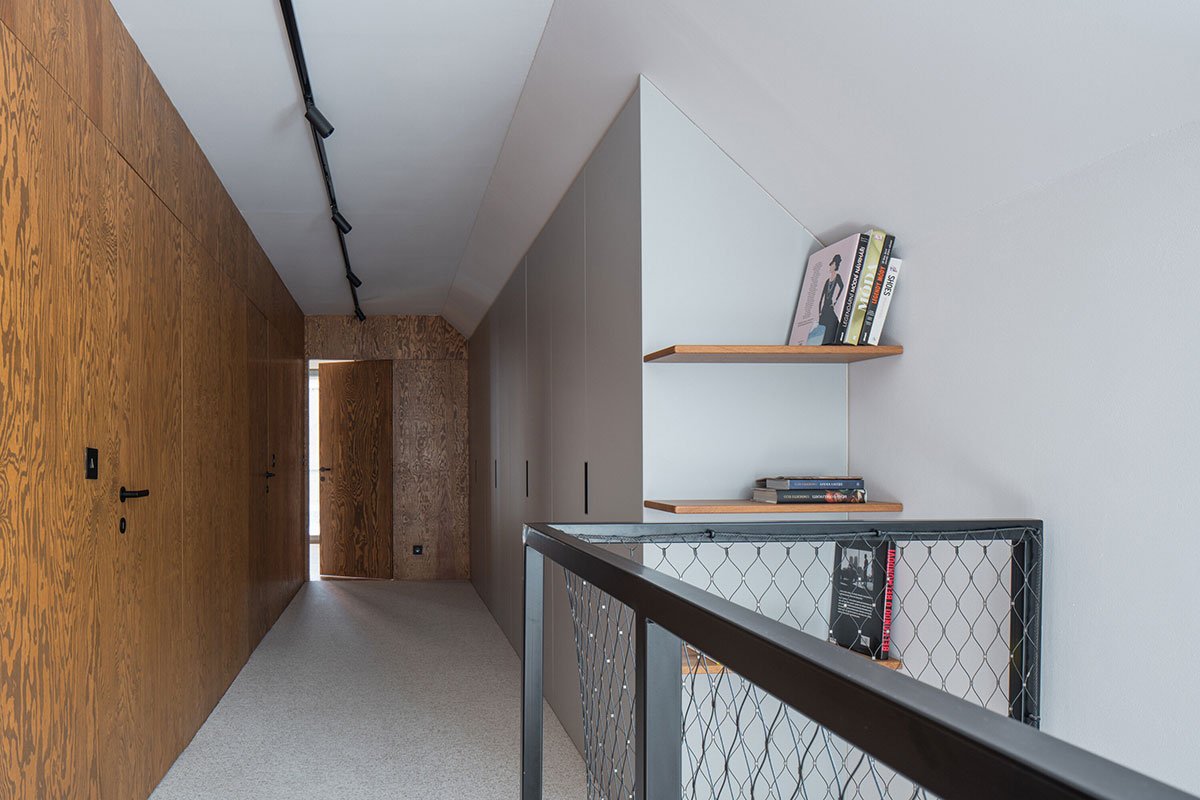
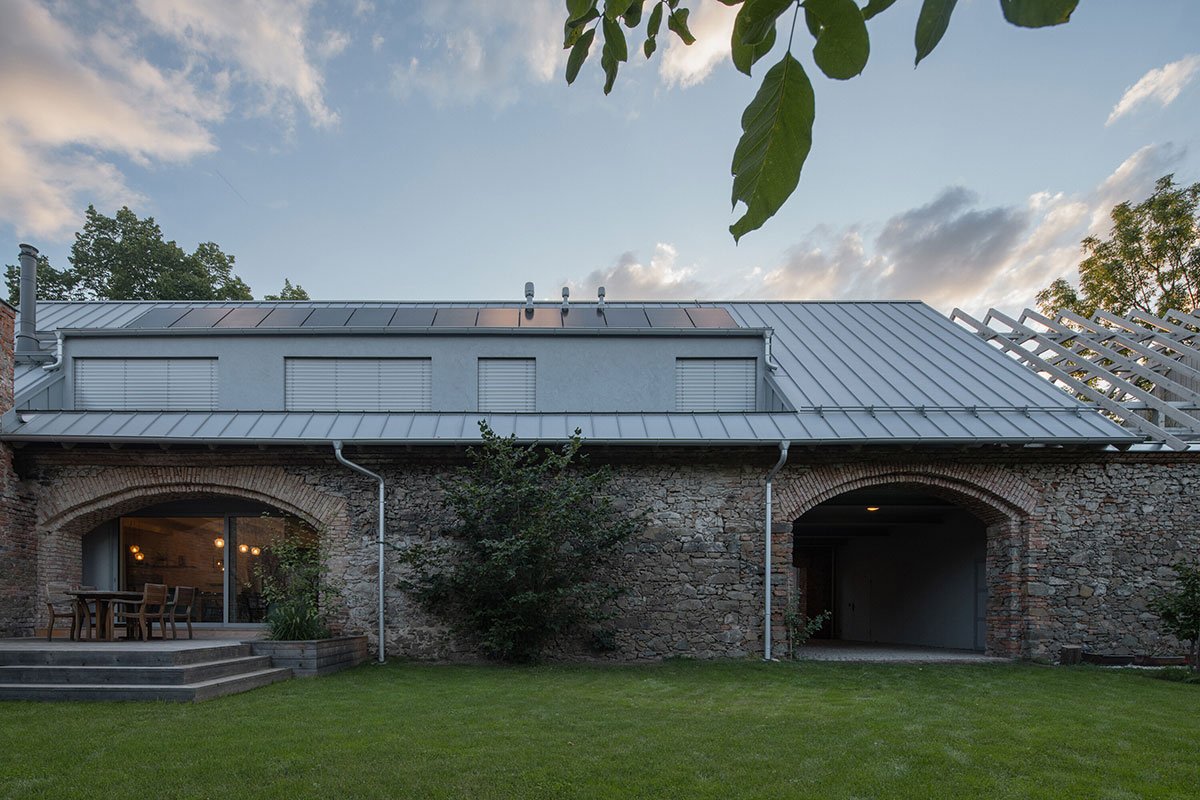
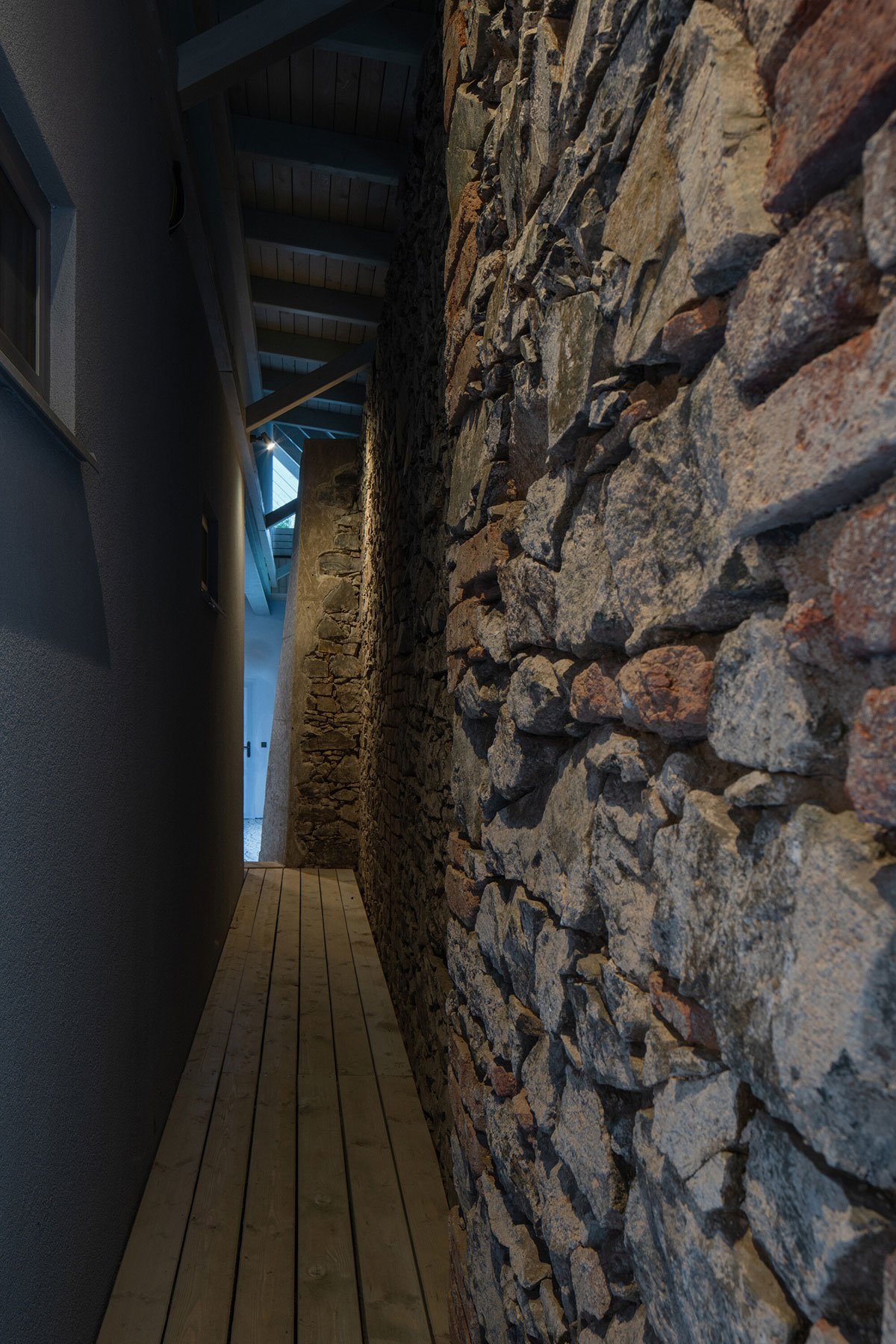
Stripped back to its brick-and-stone shell, the building was approached with a care almost akin to heritage preservation. The stone walls, lacking foundations, were stabilized with a concrete overlay and, in some areas, cladding, which helped preserve and protect them from further deterioration. The architects removed the old roof and, after years, reopened the original ventilation openings. Due to its poor technical condition, the internal vertical bracing wall had to be replaced with a steel structure arching over the passage in the northern part. The new foundation slab was placed within the building with enough clearance to avoid compromising the stone walls. At this point, the building was ready for its new phase.


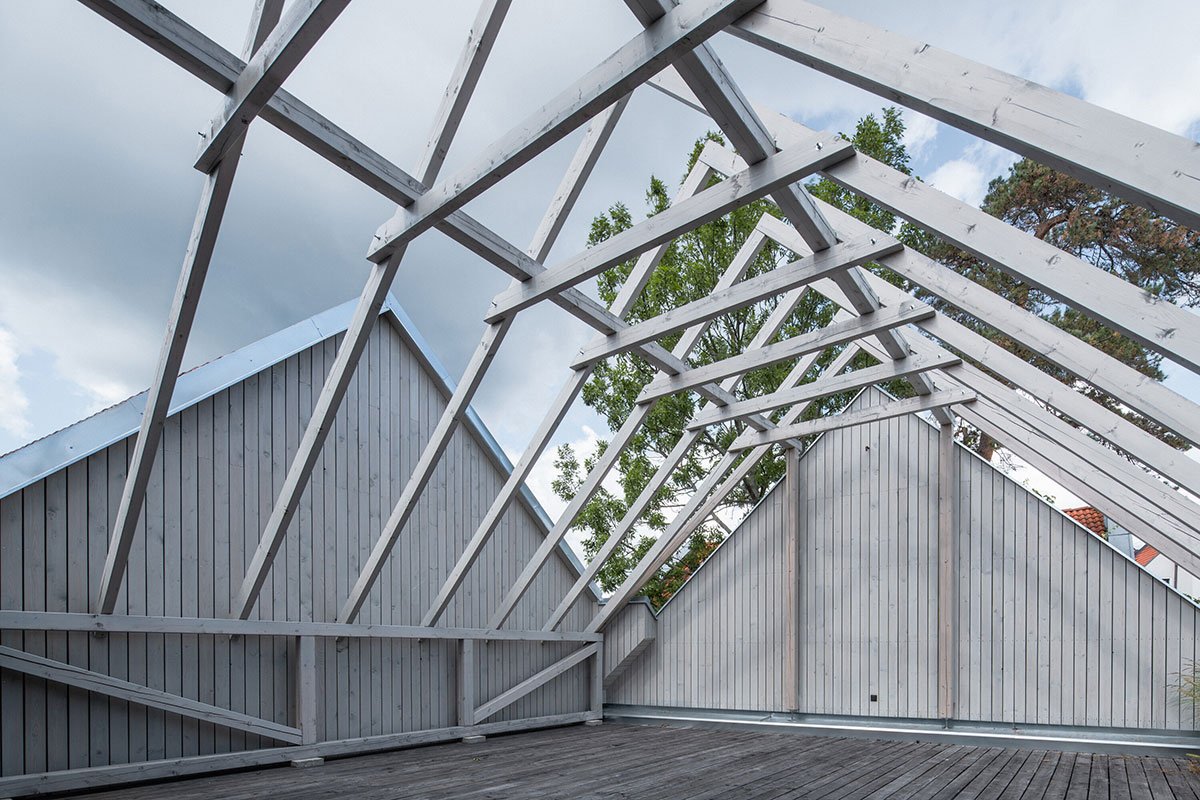

From the first concept, the architects knew that the stability of the original walls’ foundations must not be compromised, so it was clear that a timber structure would be inserted into the barn. A major challenge was solving the roof structure, ceiling constructions, and the generous roof overhangs designed to extend over the top of the stone walls for their protection, combined with the longitudinal dormer. Thanks to the collaboration with the engineers from Martinice Group, everything was resolved without any need for changes to the original concept, and the shell of the building was completed in just ten days.
Given the height of the original wall, the contractor’s designed slanted supports for the rafters of the overhang, which proved to be a very elegant solution, even in the areas under the dormers. The perimeter structure was designed to be very slender, which enabled gaining several centimeters of additional space inside. The wall assembly is only 333 mm thick and is diffusely open, which was essential for natural ventilation. Additionally, it features an installation cavity, which is often used to adjust the positions of light fixtures, switches, and outlets.


The barn divides the plot into two halves, creating two gardens with different characteristics, whether in terms of privacy or the time of day when direct sunlight falls on them. Each half offers a different way of use, whether for relaxation or practical purposes, which proved to be crucial for the layout of the inserted timber structure.
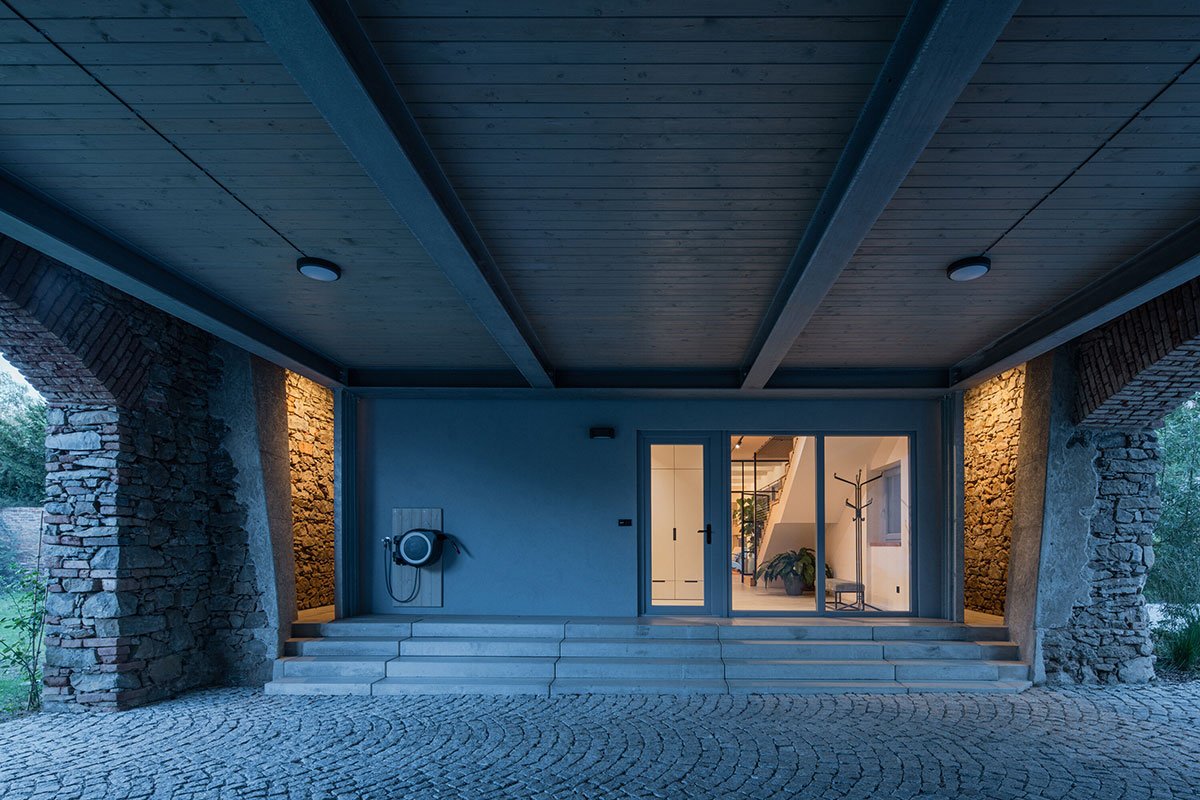
The access to the house is from the west, which allowed the use of the upper northern pair of vaulted passages as an open parking space while also providing space for larger equipment to pass through to the other half of the plot. Right next to the passage, in the upper part of the house, is a workshop and an outdoor storage area for seasonal sports equipment, covered by the upper floor.
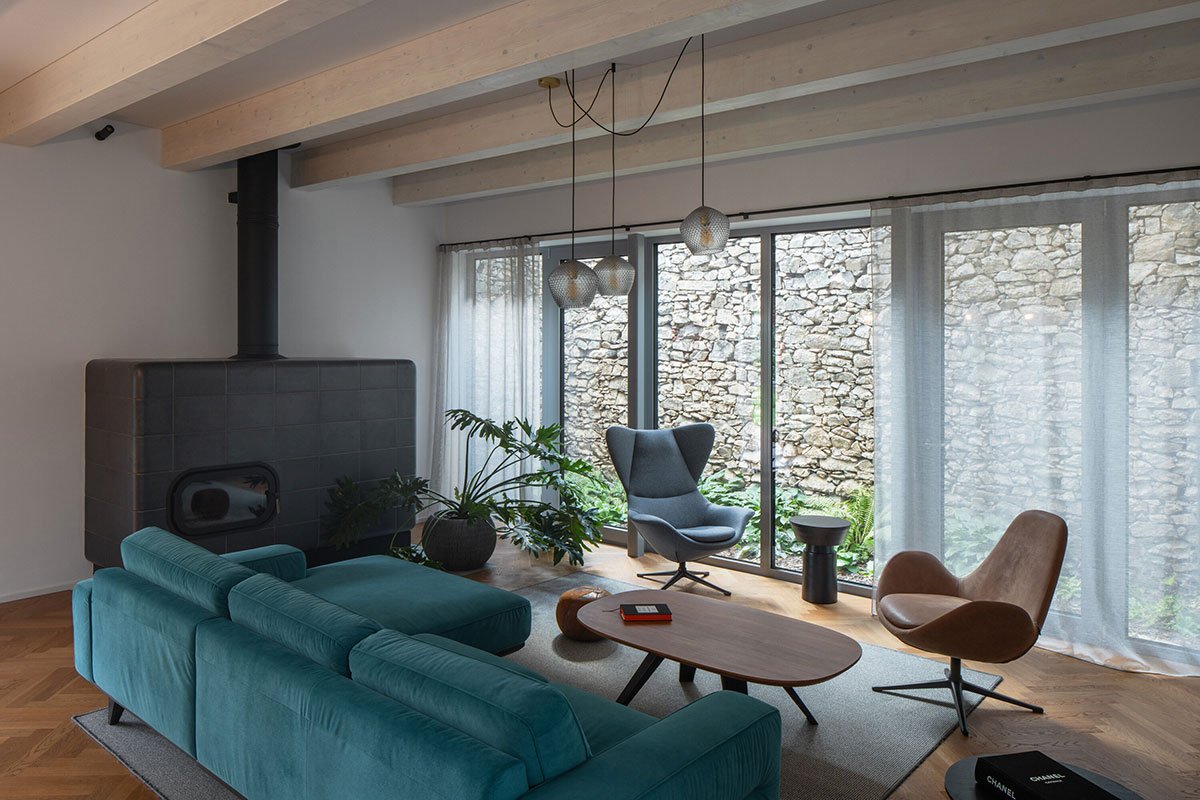
The main living area is situated between the second pair of vaulted passages, in the southern part of the house. In front of the passages are two terraces, one facing the quieter half of the plot, filled with afternoon sunlight, while the opposite terrace welcomes the morning rays. As a result, there was no need to visually disrupt the stone wall of the barn with a traditional pergola. You simply choose the terrace where it’s most comfortable at the moment.

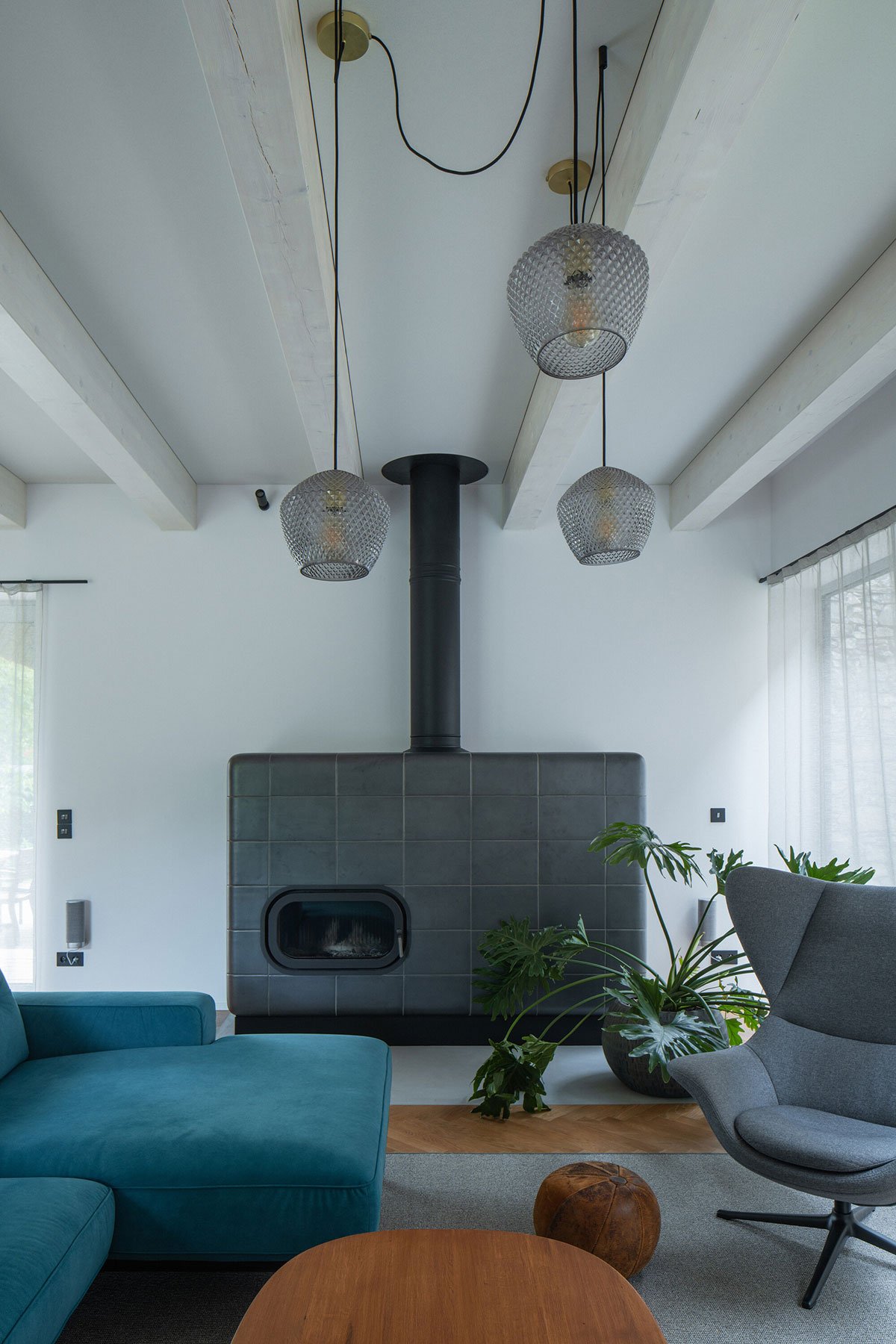
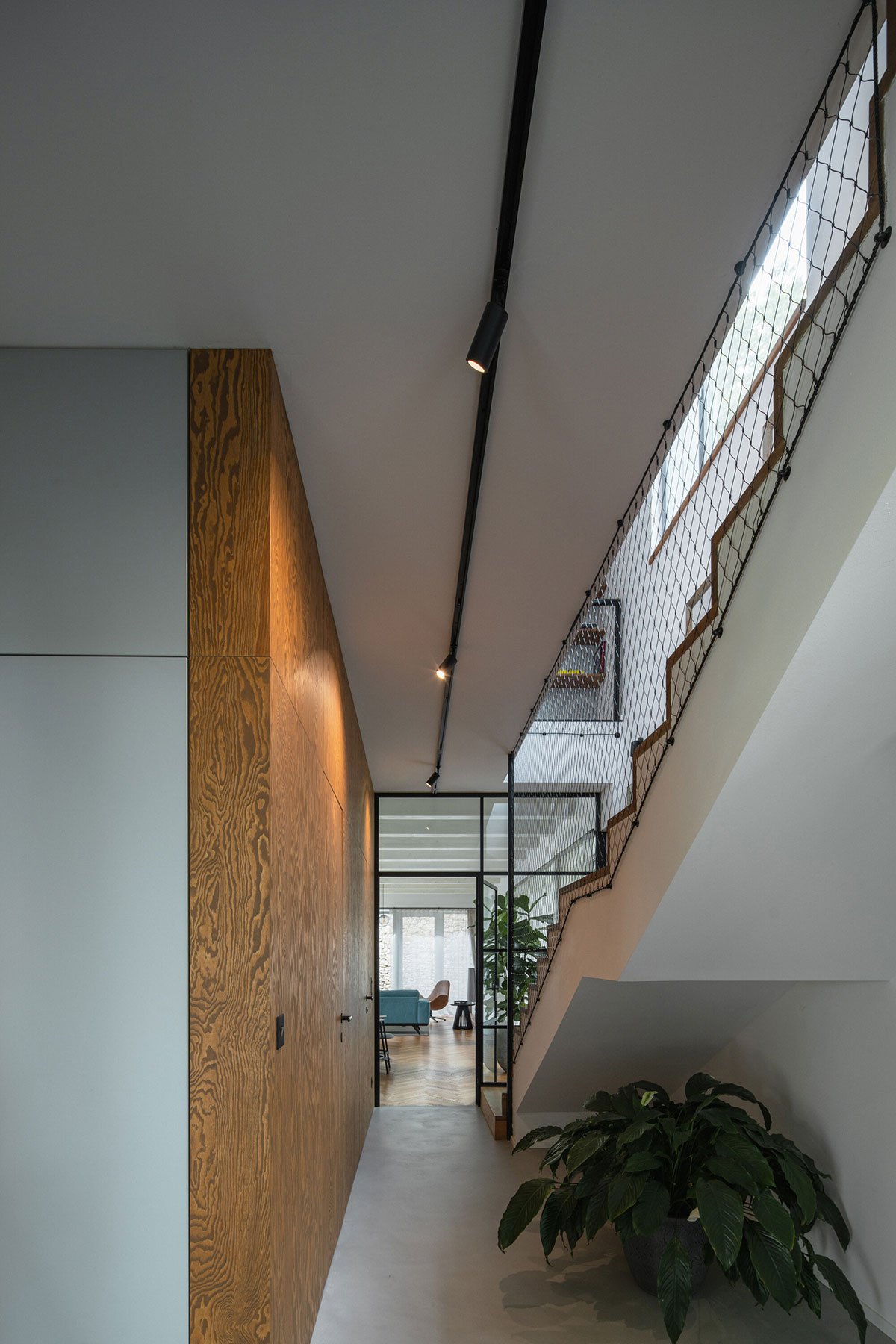
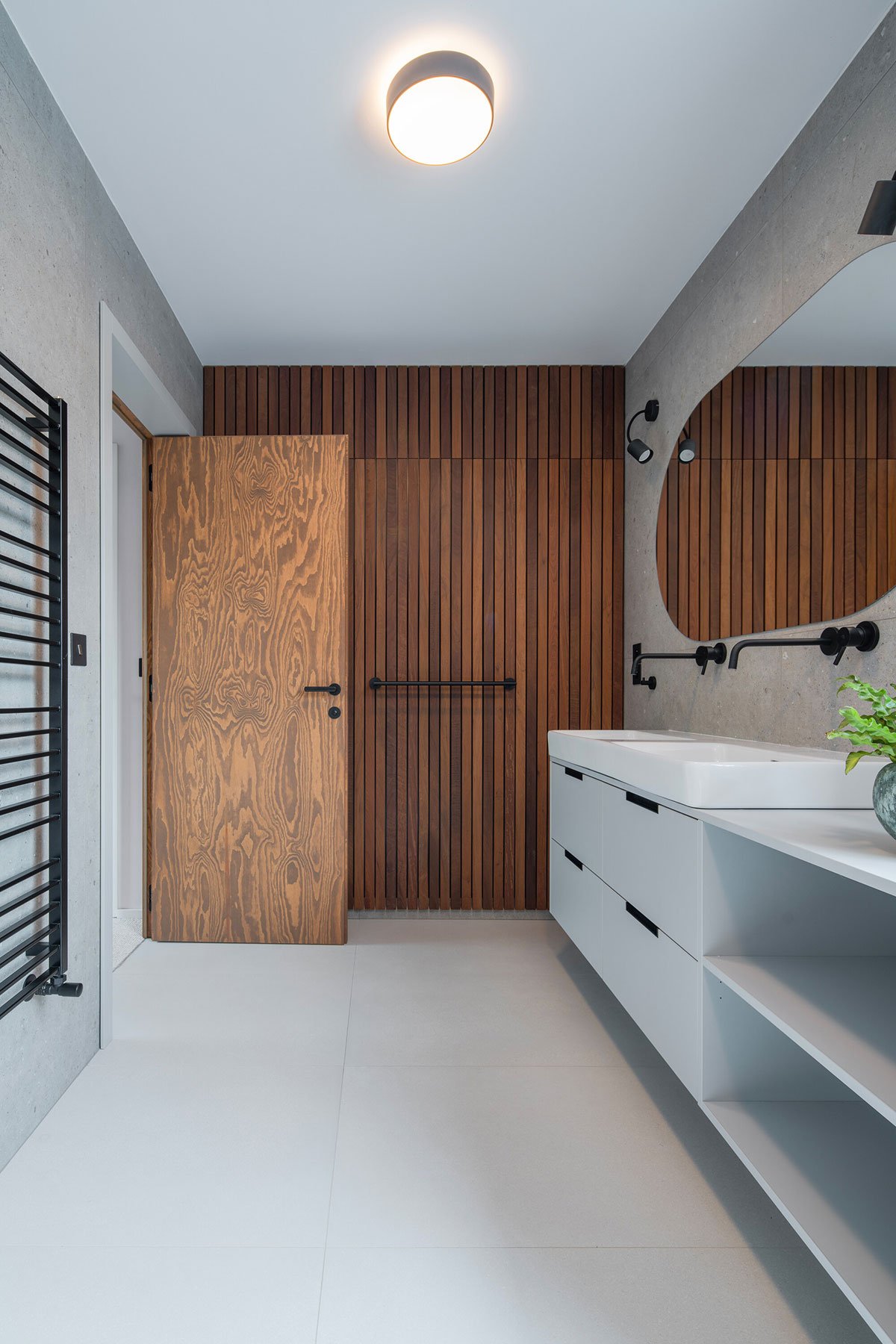
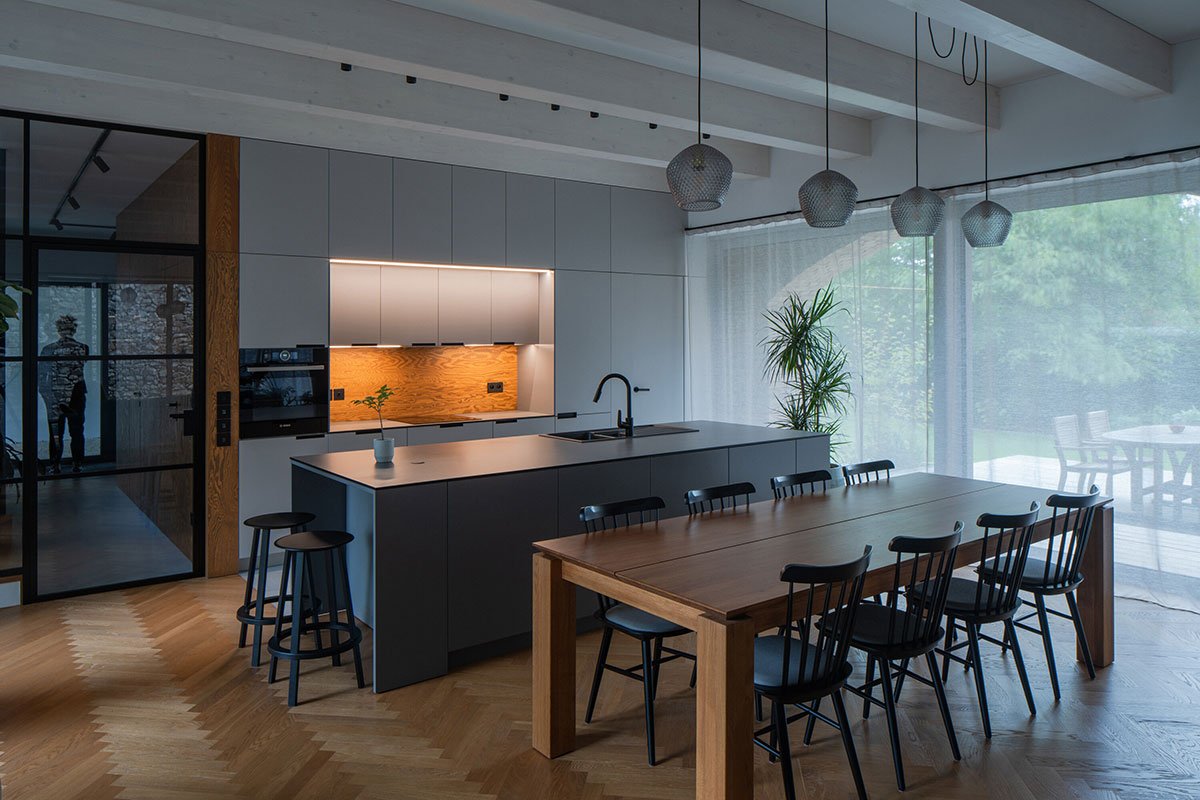
The morning rays filter through east-facing windows into the children’s rooms and the upstairs bedroom, which also includes two bathrooms and a study connected to the guest room and a small gym. Above the passage, a large terrace was created on the upper floor. A key element of the design was working with light. To bring as much light as possible into the interior, part of the roof is glazed, and the building uses large-format windows, through which light flows into the living space, guided by the offset stone wall. The common living area is connected to the kitchen and dining room, allowing the family to remain in constant contact. The ground floor also includes a technical bathroom.
Drawings


Images