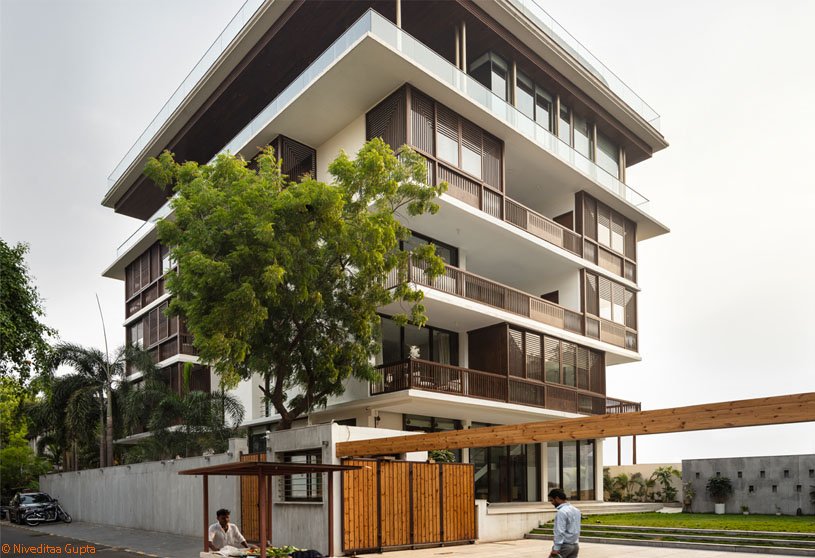
Excerpt: The Light House by SJK Architects, wrapped in operable timber lattices, is a private residence designed for a multi-generational family. Its contemporary ‘jaali’ facade shields against heat and diffuses light, creating playful patterns. The design creates a nature-connected sanctuary at each level, with a central atrium topped with a skylight filtering harsh sunlight and creating a lively social core for a family that values togetherness.
Project Description

[Text as submitted by architect] Nagpur, a city in the western Indian state of Maharashtra, experiences exceedingly high summer temperatures that often cross 40 degrees Celsius. Located within a dense, gridded urban neighbourhood in this city, the Light House is designed as a contemporary private residence for a multigenerational family that cherishes the value of togetherness.
The house sits on a tight plot of 38 m by 23 m adjacent to the site of the family’s earlier residence, a two-storeyed bungalow which had become insufficient for their growing needs. SJK Architects was commissioned to design a simple home that would anchor both present and future generations, offering a timeless space where family bonds could grow stronger over time.

Hailing from north India, the family — the grandmother, her two sons and their wives, and three grandchildren — held deep nostalgia for ‘havelis,’ large residences with communal courtyards (chowks), projecting balconies (jharokhas), and intricate brick or stone lattice screens (jaalis) vernacular to many western and northern regions of India. These climate-responsive dwellings, along with the timber-based ‘wada’ residential architecture more predominant in Maharashtra, served as an inspiration for the design of the new house. Tempering the harsh heat and inviting gentle, controlled light into the interiors was a primary design consideration.


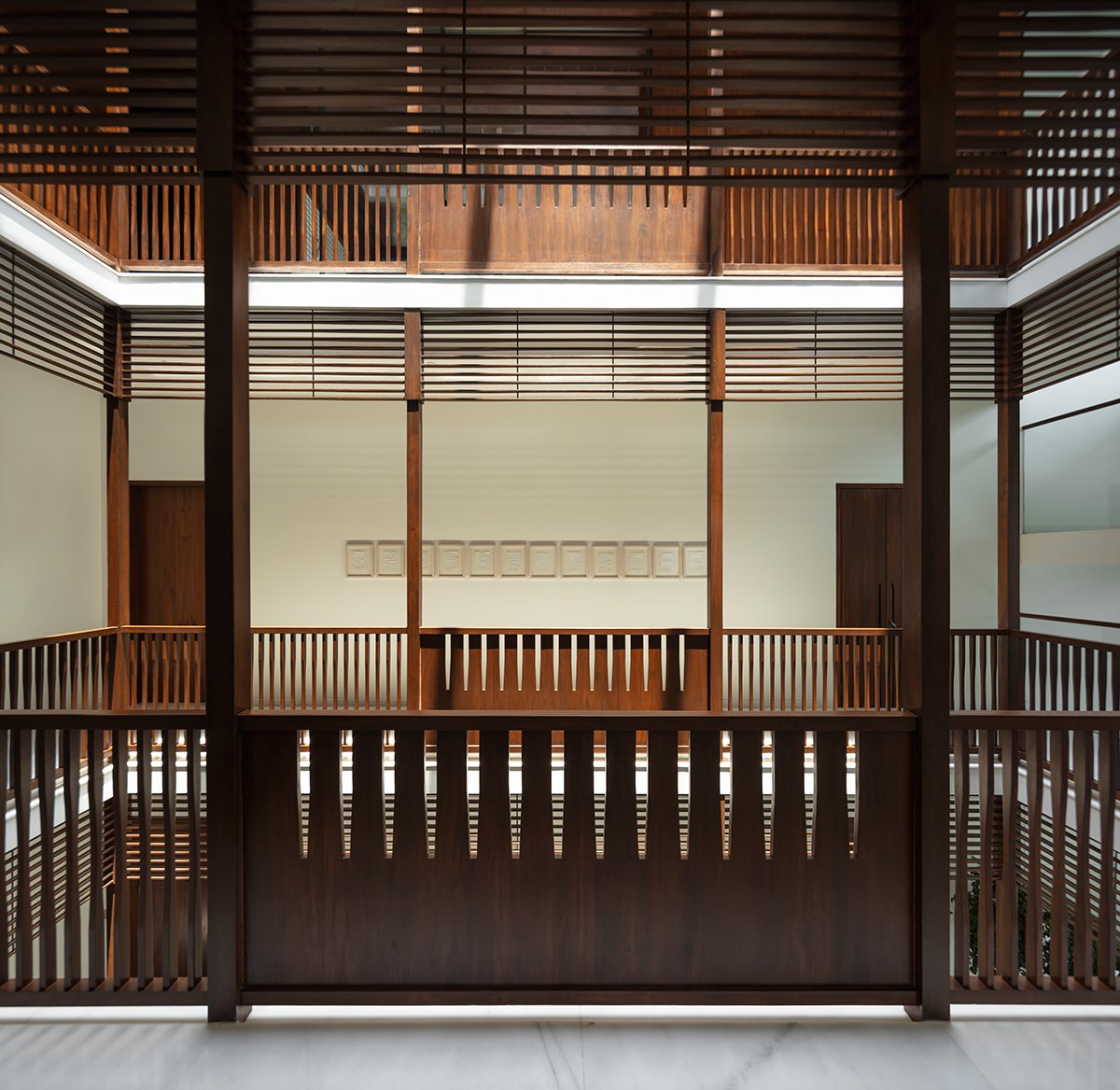
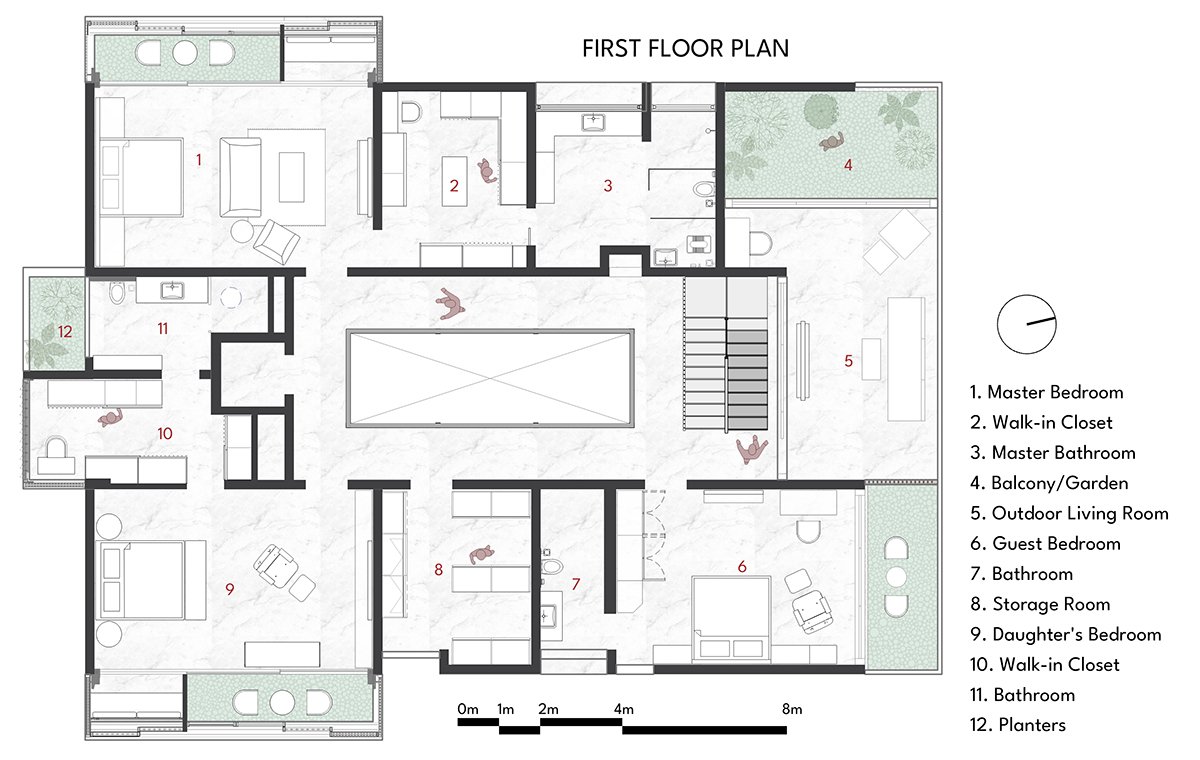
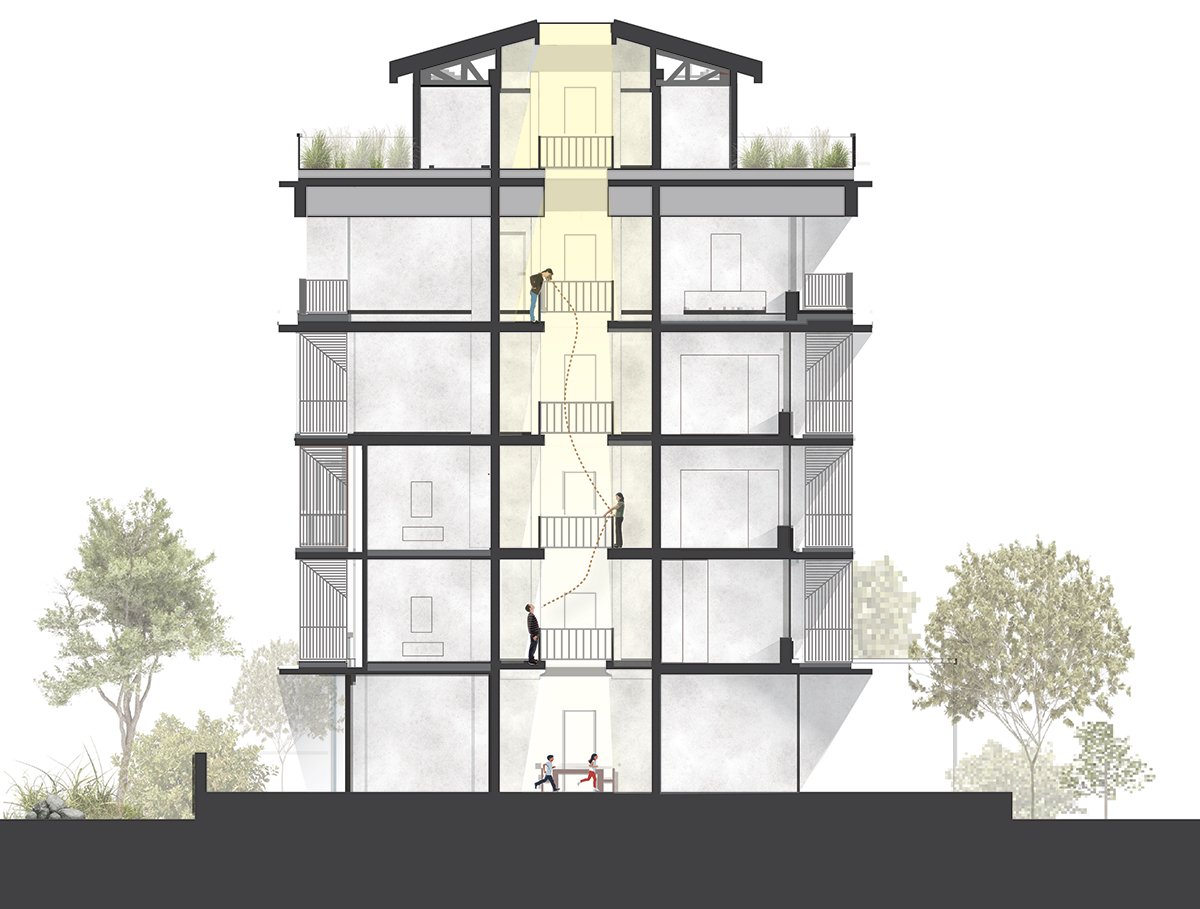
The six-storeyed volume is designed to maximise the use of the buildable site area. An eight-foot-wide, linear atrium slices through the volume centrally, with its proportions derived from detailed studies of scale and sun movement throughout the seasons. The atrium draws in diffused light to the lowermost level, where the family’s informal living area is planned. This space forms the social heart/core of the residence, and facilitates aural and visual connections across all levels. The more private functions, such as the bedrooms, are planned towards/along the tree-lined site periphery, and accessed via interactive semi-private corridors around the central atrium; the corridors are designed as mini-galleries, displaying curated art within carved niches.
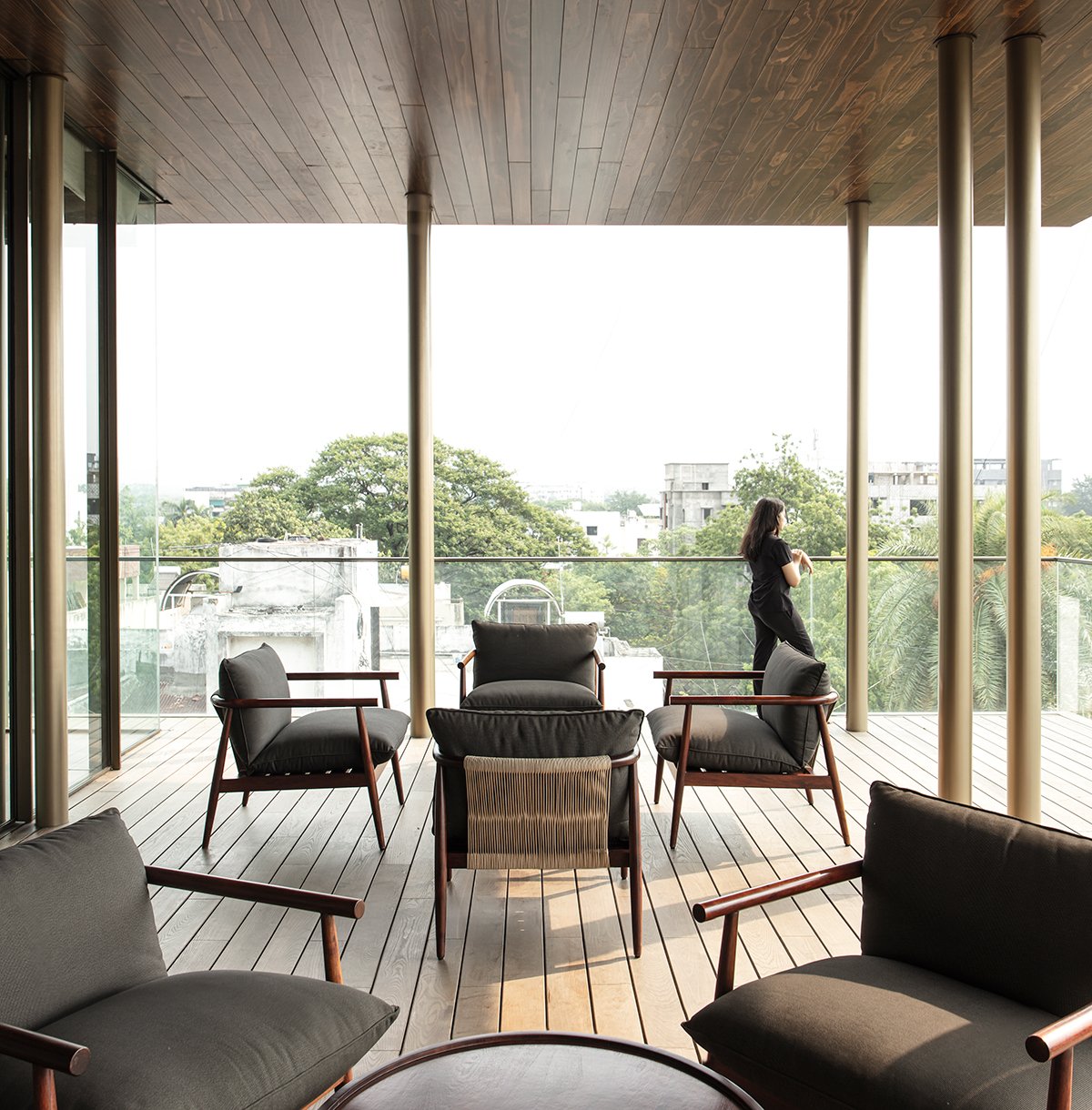
Vertically, the programme is split such that each generation enjoys its own space and privacy on the first four levels. The fifth level is designated as the guest entertainment zone and features expansive living and dining areas that can host large gatherings of around twenty people each, while the topmost level hosts a spa, jacuzzi, and gym within a recessed, fully glazed structure capped by a hipped roof. A deck lined by vegetation surrounds this structure, crafting a secluded retreat with splendid city views.
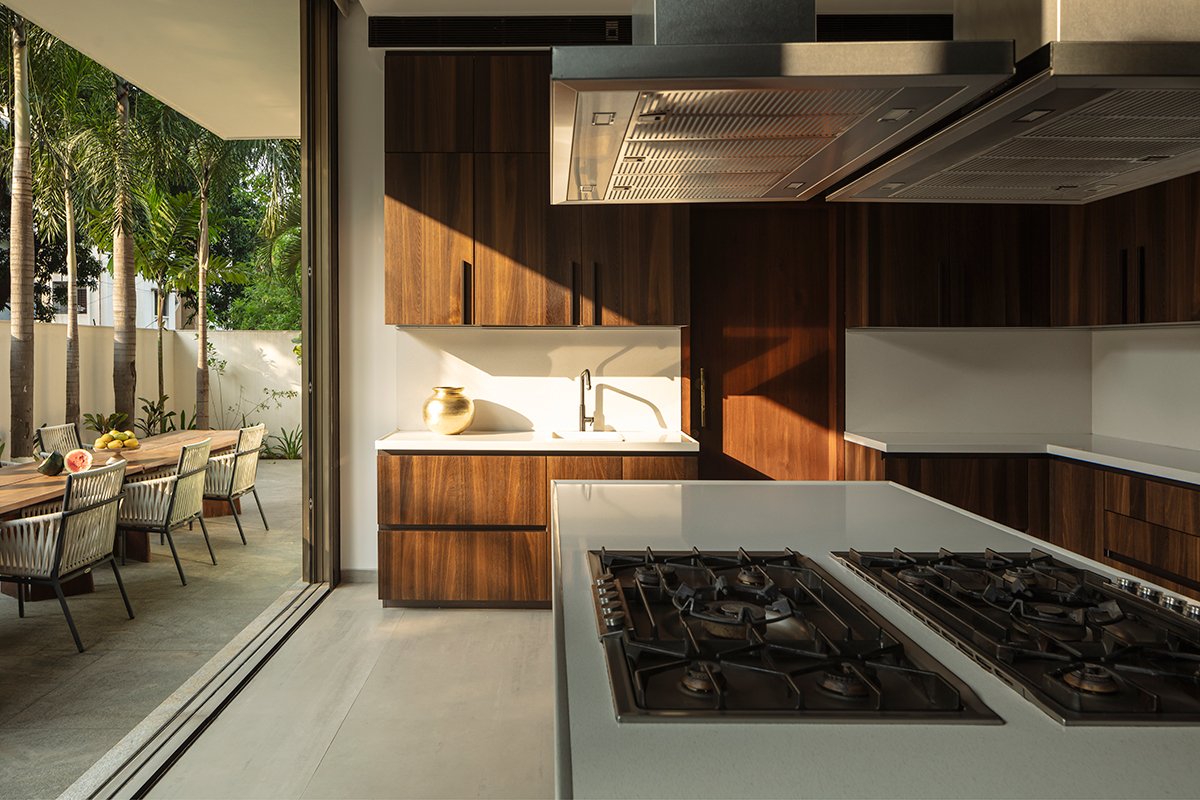

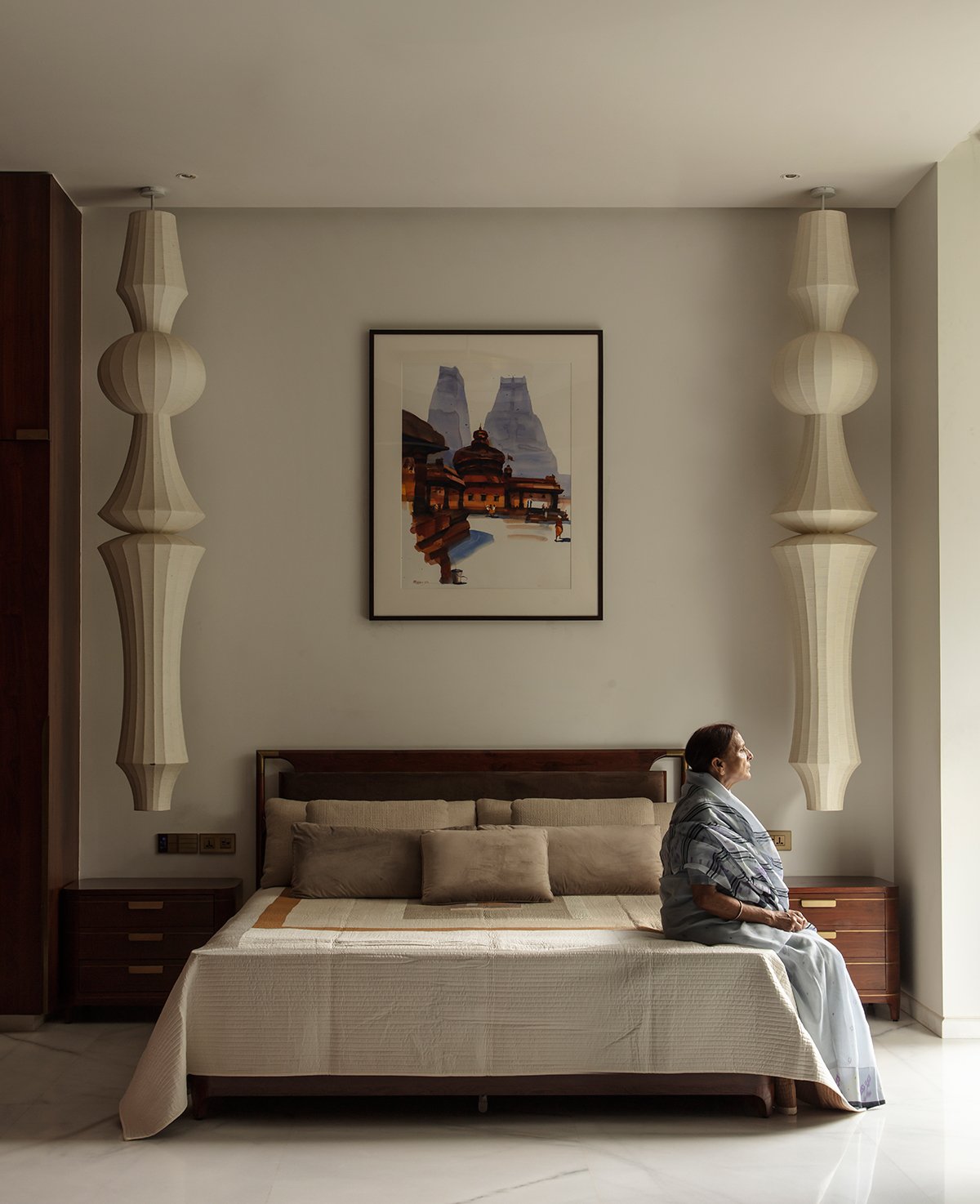
The grandmother’s suite and main kitchen are planned on the ground level, facilitating direct access to outdoor spaces designed as dining, lounging, and garden areas — respecting her desire to remain rooted to the earth and participate in cooking and gardening. An office suite on the same level ensures that the family’s personal conversations can play out in the central informal living area without any interruptions.
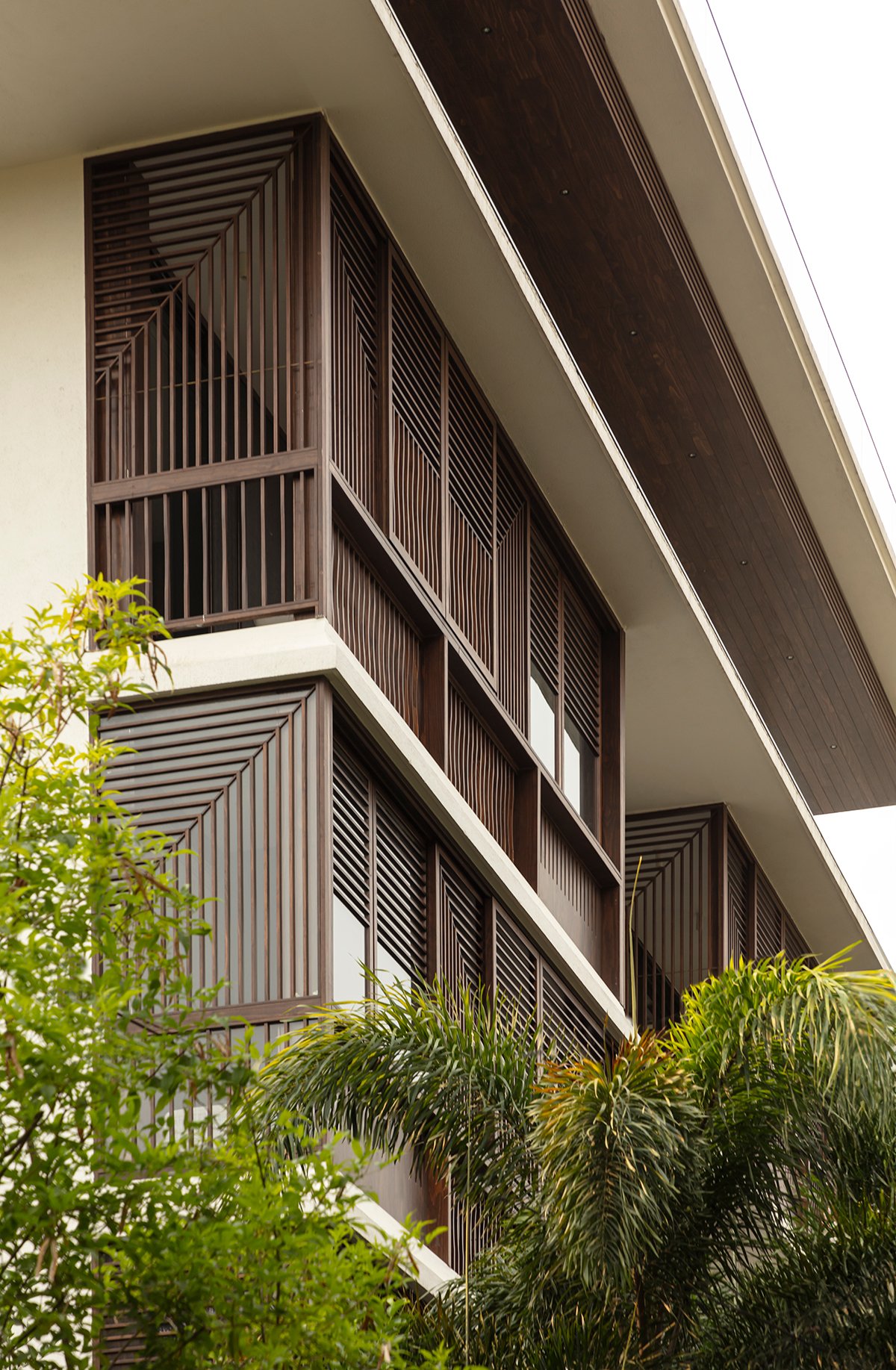
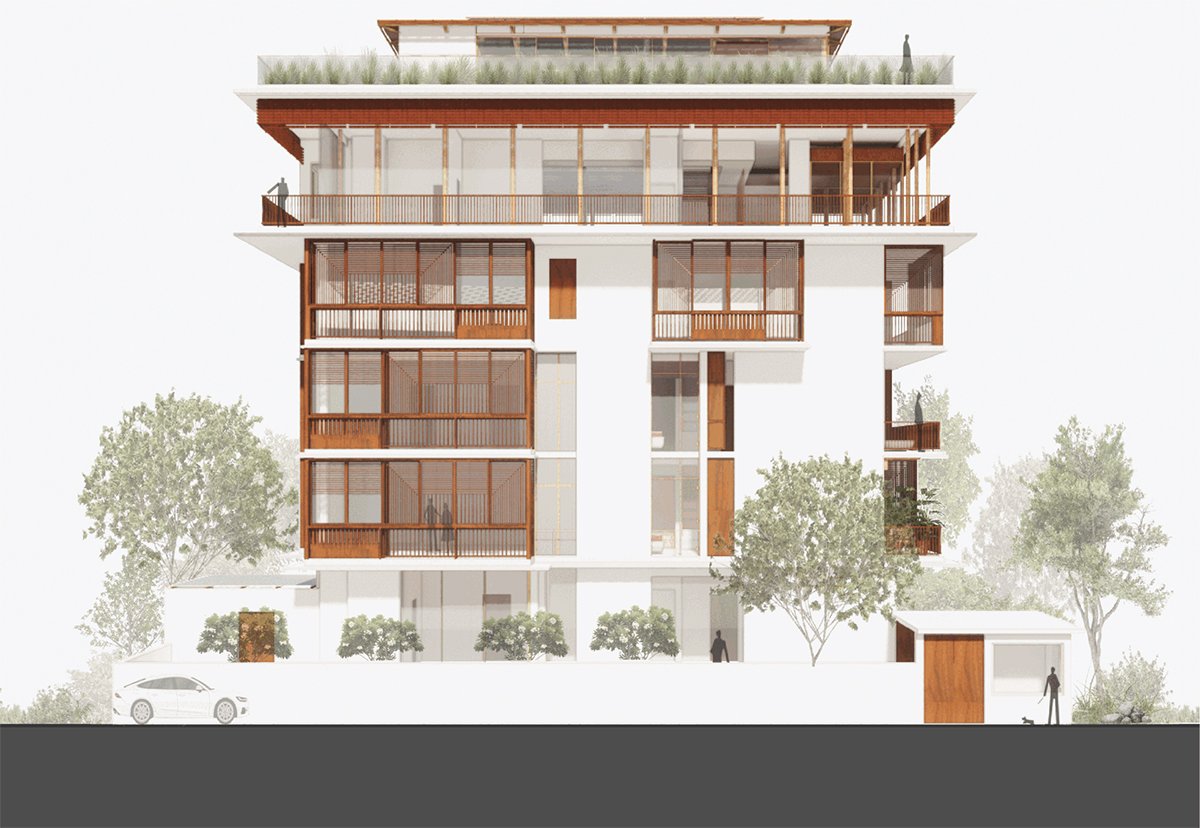
The three upper levels are dedicated to the older son’s family, the younger son’s family, and the grandson and his future family, respectively. Each comprises two master bedrooms at the southwest and southeast corners with walk-in-wardrobes and ensuites, along with a guest bedroom, formal living room, pantry, and a shared family terrace along the north, looking onto the garden designed on the site of the older bungalow structure. The bedrooms are enveloped in 8-feet-deep balconies that expand the perception of space within the narrow bedrooms, and serve as a heat and rain buffer. One-third of the balcony area is customised into jharokhas positioned differently across levels, creating a dynamic facade. They are furnished as per individual needs and are designed with the provision of being fully air-conditioned, if needed.
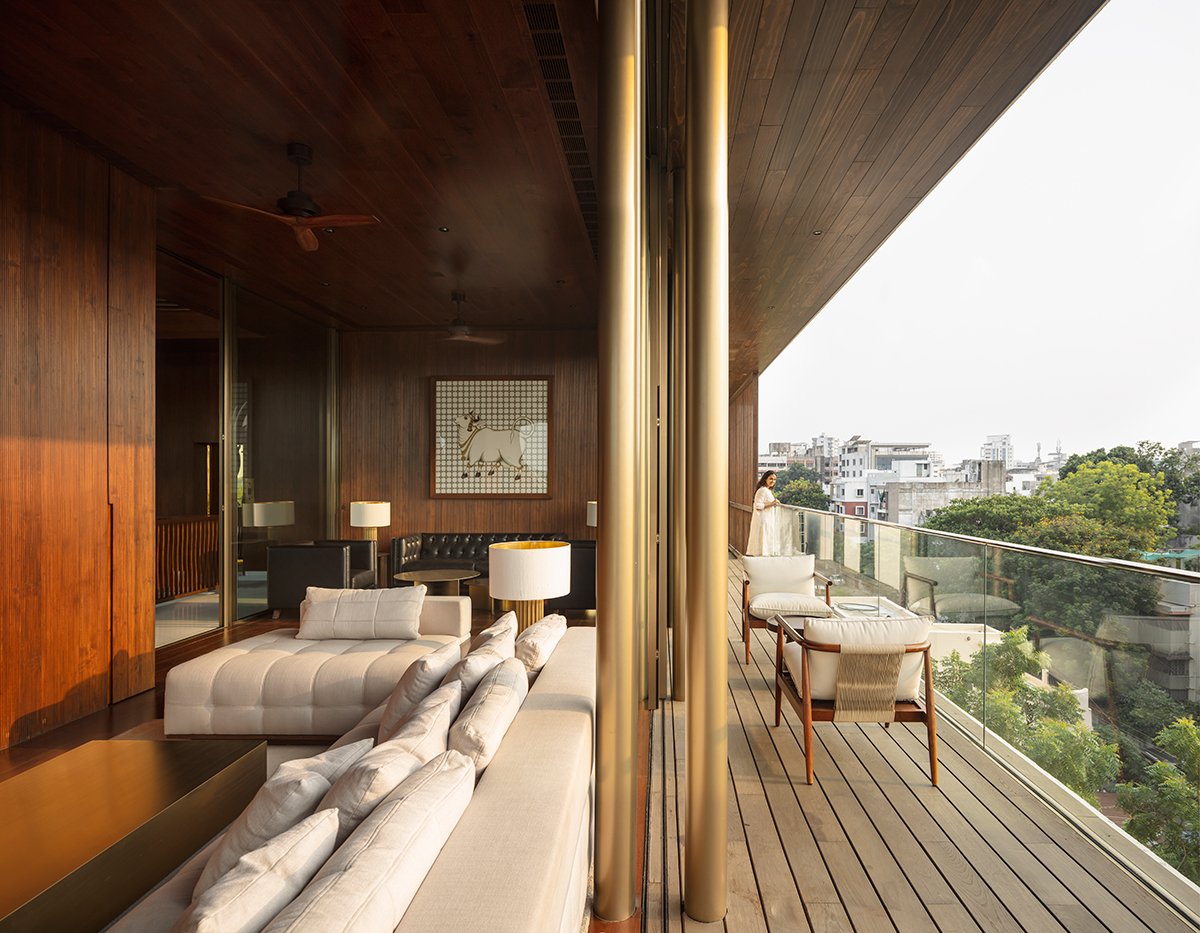


This outermost layer of protruding jharokhas and balconies is veiled in operable timber lattices, offering privacy in the dense neighbourhood. The sleek geometric patterns for the lattices are derived from abstracting motifs found in vernacular architecture and cast a dynamic interplay of light and shadows that transforms the interiors into a living canvas throughout the day. Much like the traditional jaalis of havelis, the lattices are also an essential climate control device that diffuse the region’s harsh sunlight and facilitate airflow, effectively cooling and ventilating the interiors.
The design adapts this vernacular element for a contemporary context by utilising visual and material innovations to drive operational efficiency, ease maintenance, and advance sustainability. The lattices are crafted in Accoya pine wood, a high-performance softwood sourced from sustainably managed, FSC-certified (Forest Stewardship Council) forests in New Zealand. Given the scarcity of sustainable forestry practices in India and the slow growth rate of local hardwoods like teak, this imported, fast-growing softwood effectively combines the benefits of natural timber — such as longevity, carbon absorption, and insulation — with environmental sustainability, even when substantial quantities of timber are required. The timber is pre-treated for moisture and termite resistance and complies with modern system window designs, allowing a warranty of fifty years for external use, a remarkable advantage not typically attributed to the material.

Leveraging these advantages and technologies, the lattices are designed as a system window featuring sliding and folding panels that can be easily operated and maintained, even at heights of up to 3.5 meters. The design also integrates mosquito mesh and glazed panels, allowing for customisation based on individual preferences for illumination, privacy, and ventilation.
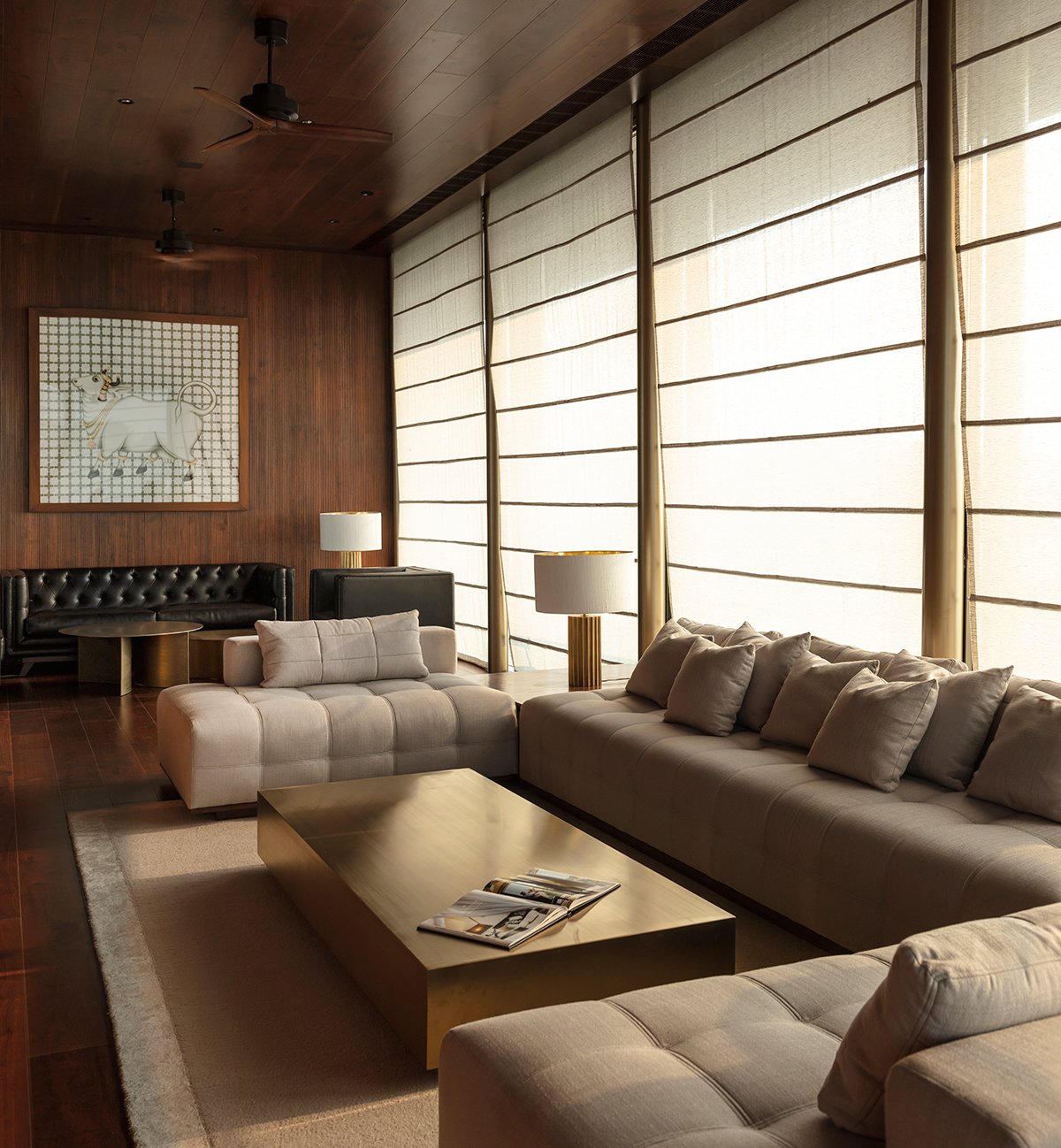
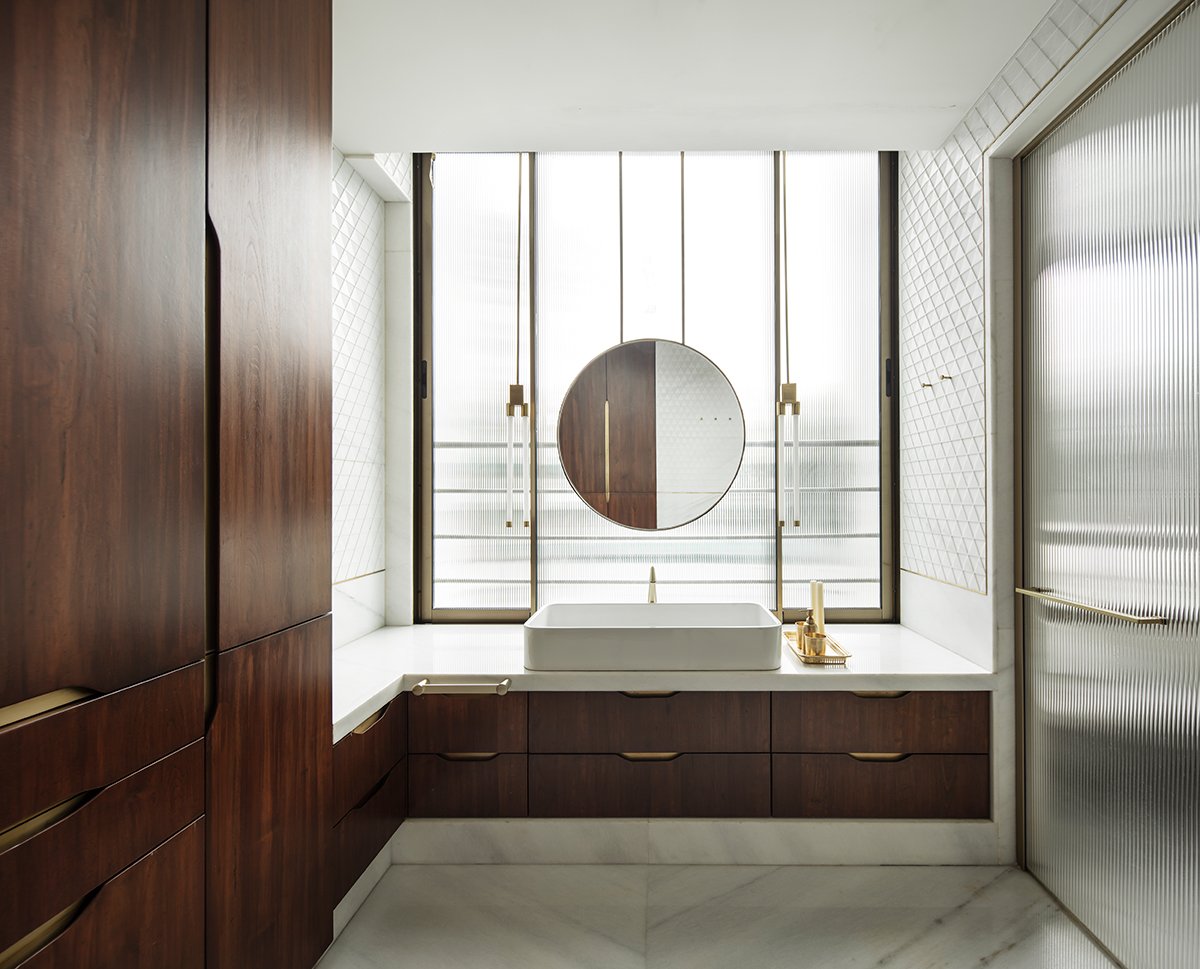
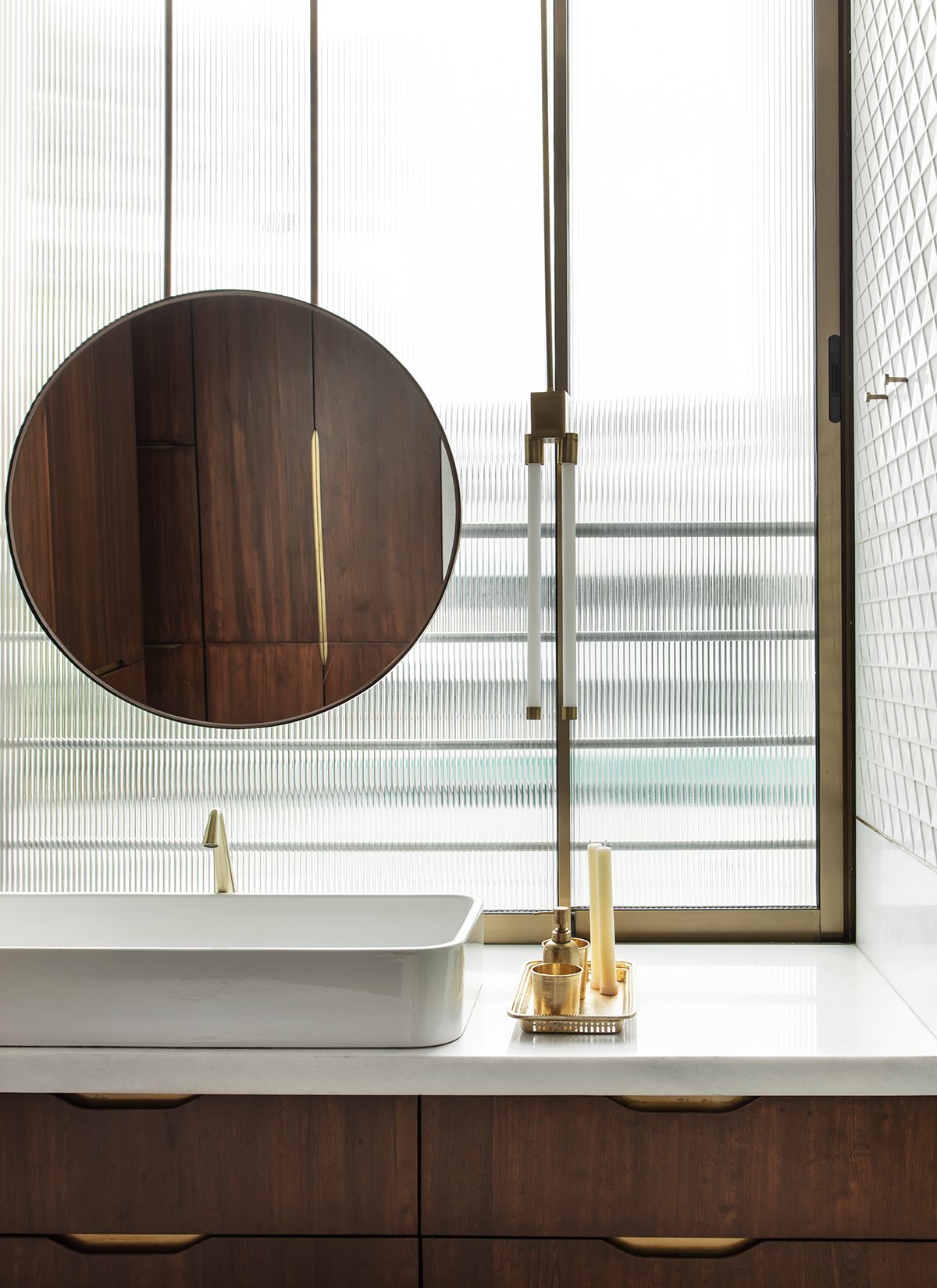
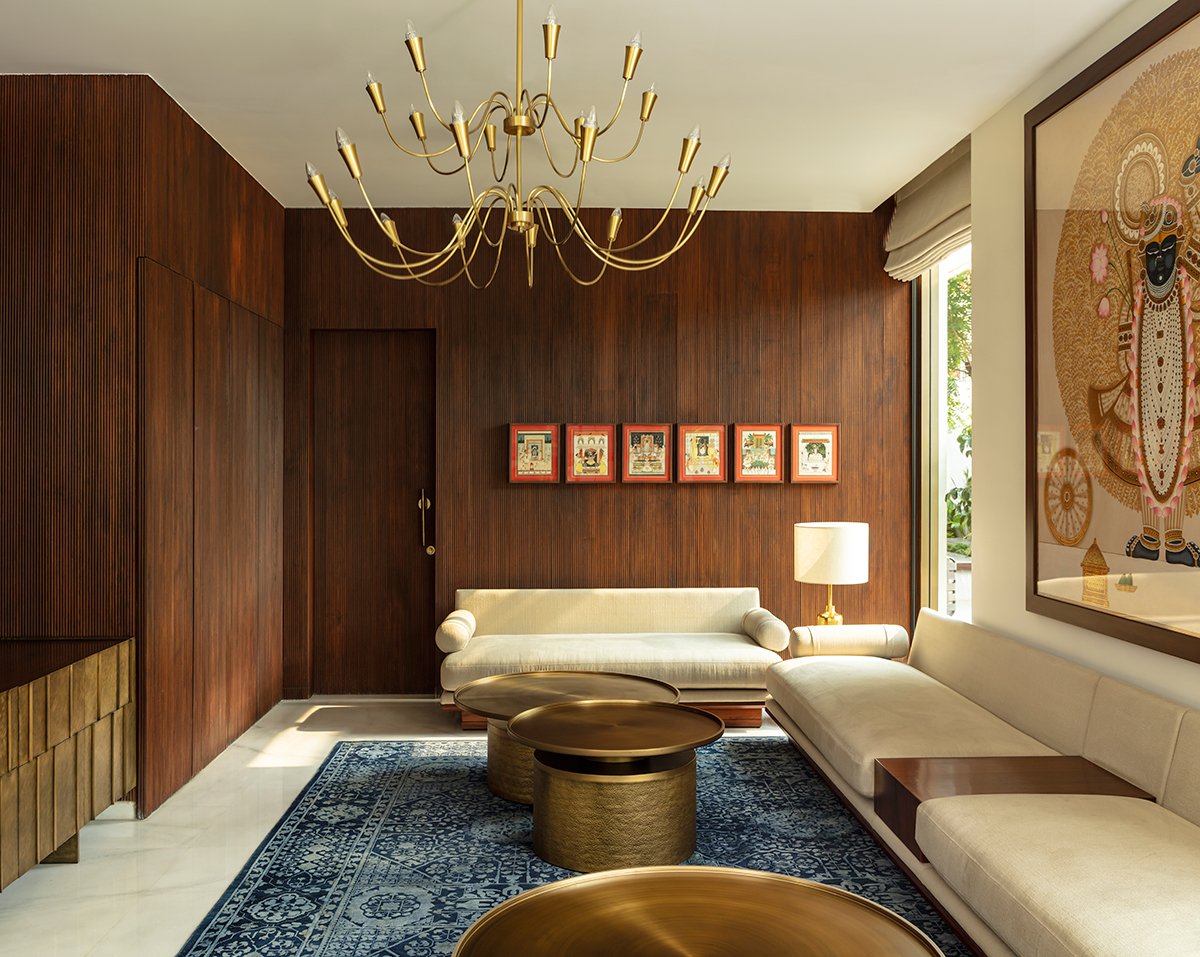
The use of timber continues within the interiors, along with white Esil marble and brass, creating a timeless, cohesive visual vocabulary for the house. Recycled Burma Teak, in fluted surface treatment, is utilised in multiple areas as a panelling material, adding a touch of warmth. The railings and brise-soleil of the central atrium, too, are crafted in recycled Burma Teak wood, underscoring the architects’ dedication to sustainable construction practices. Executed on-site by local carpenters, the design of the railings and brise-soleil exemplifies an innovative approach to traditional craftsmanship.


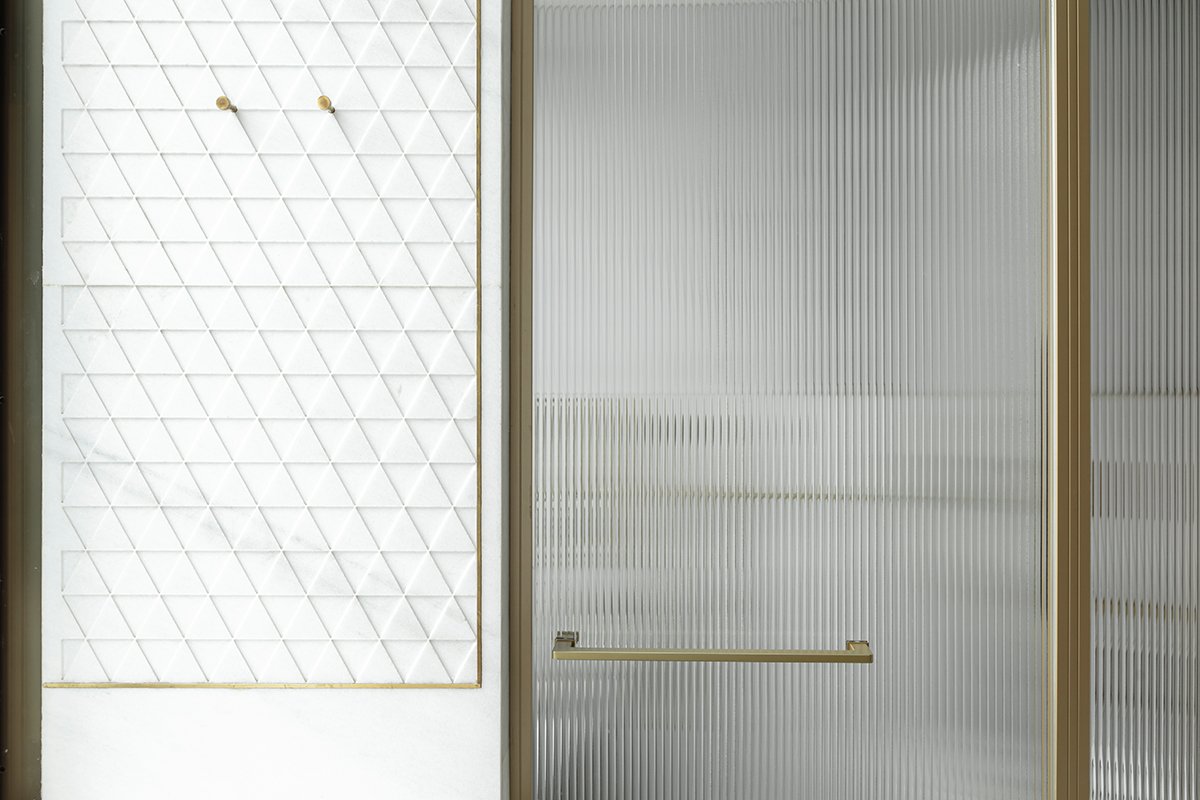
The furniture includes a range of custom designs, featuring some pieces constructed of timber, others incorporating both timber and brass, and a few crafted entirely in brass. Characterised by contemporary rounded silhouettes and soft upholstery in muted tones such as beige and grey (except for black in the grandson’s suite), the furniture exudes comfort and understated luxury. Tactility is intentionally introduced by way of textures — patterns derived from regional saree weaves, like the traditional triangular and arrowhead motifs, or stone carvings from historic structures, are CNC-carved onto marble in each bath. Pops of colour are added through curated art pieces, including traditional art forms such as Pichwai, intricately detailed ceramic artwork, a monotone series of frames, and statement rugs in wool and jute-and-hemp. Decorative lights, custom-made in brass and glass, introduce another layer of crafted embellishment to the home.

As our cities get denser, multistorey homes will become the standard for multi-generational families. Marrying social norms with built form to create an adaptive architectural language will be the challenge of a changing society. Through its thoughtful zoning, reinterpretation of traditional elements, and sustainable construction practices, the Light House seeks to strike the right balance between culture and modernity. With warm sunlight filtering through the lattices and the brise-soleil of the central atrium, the house crafts a space where privacy and connection, tradition and innovation, seamlessly coexist, reflecting the family’s values and aspirations.
Drawings


Images