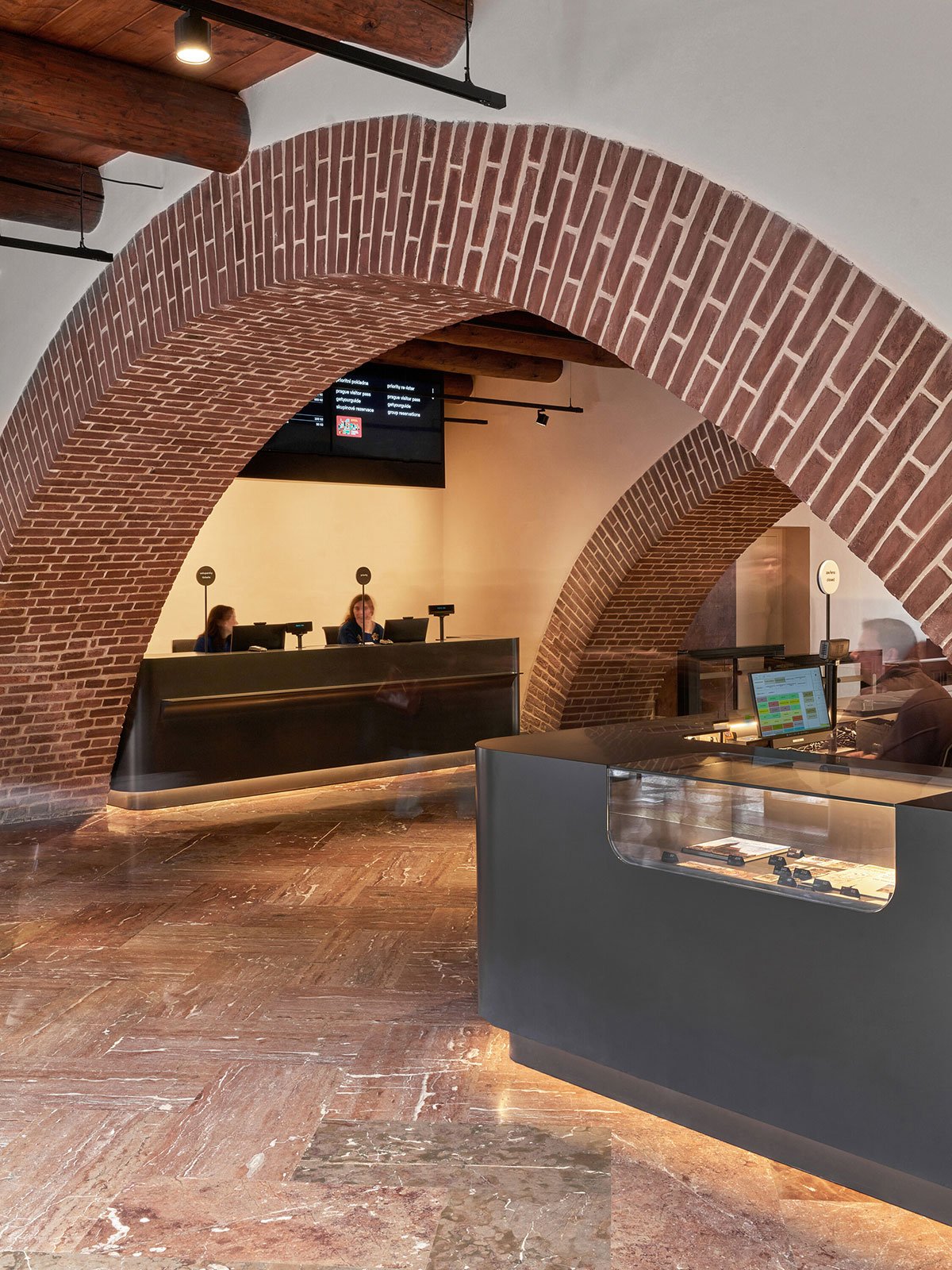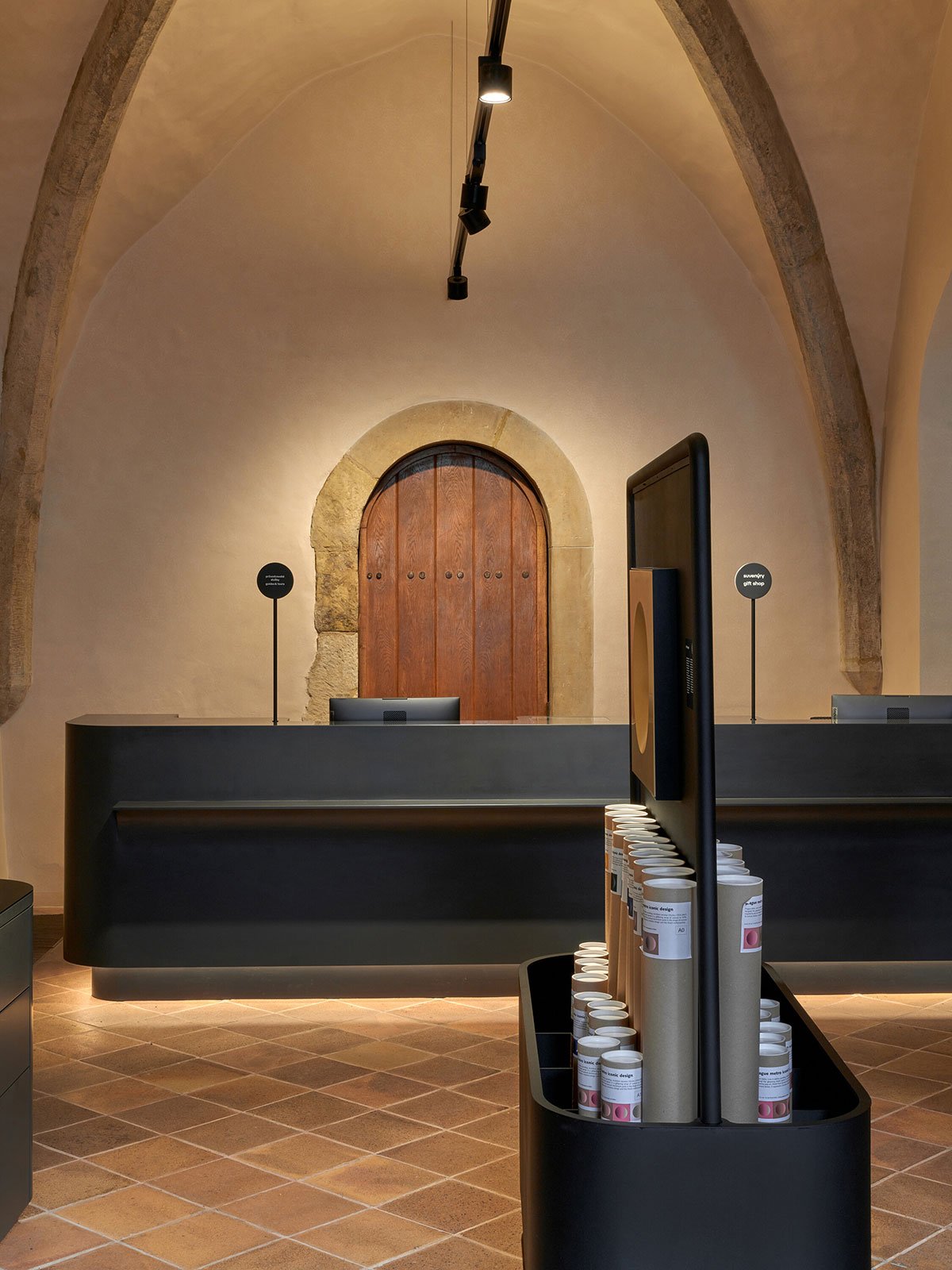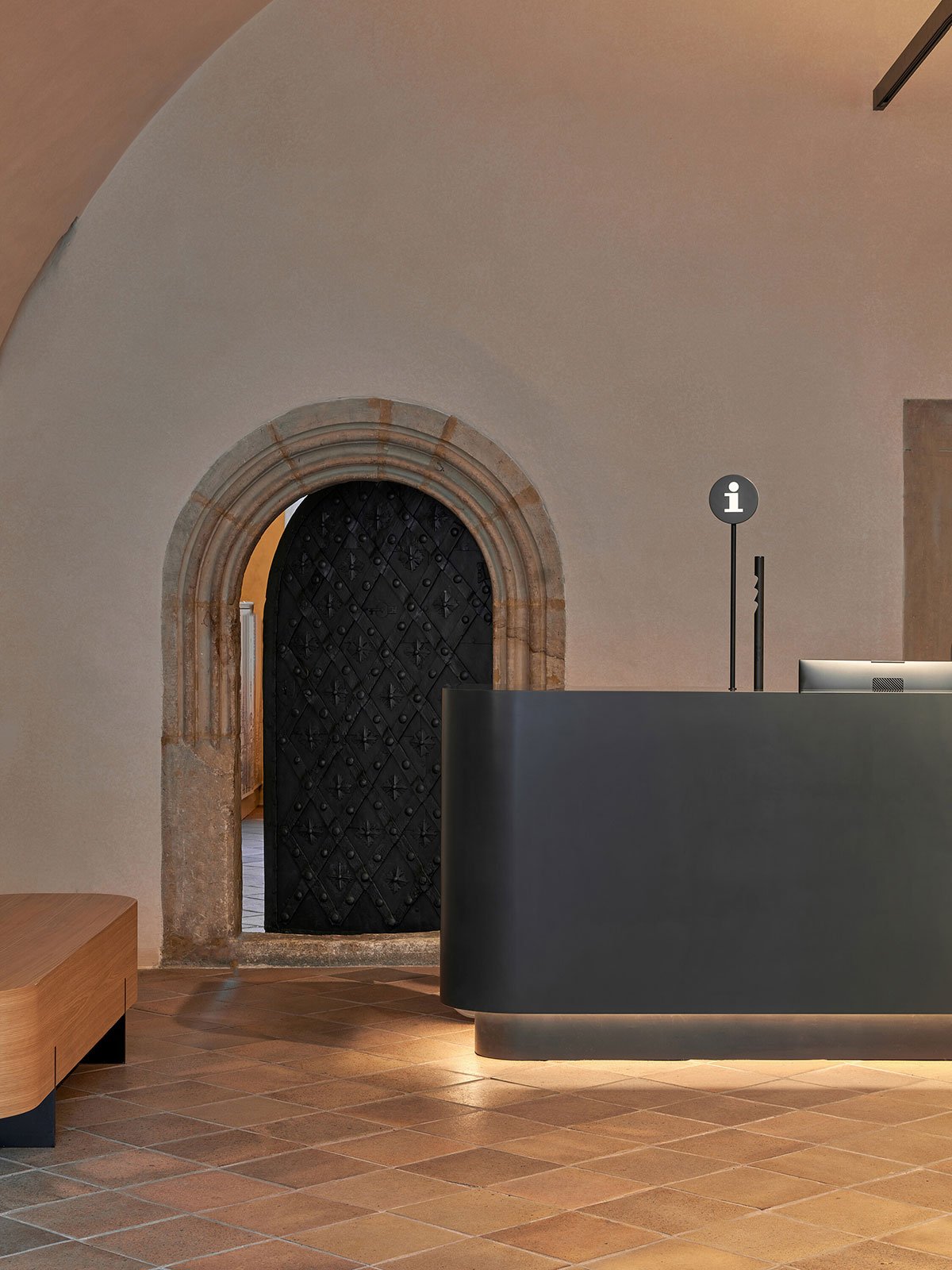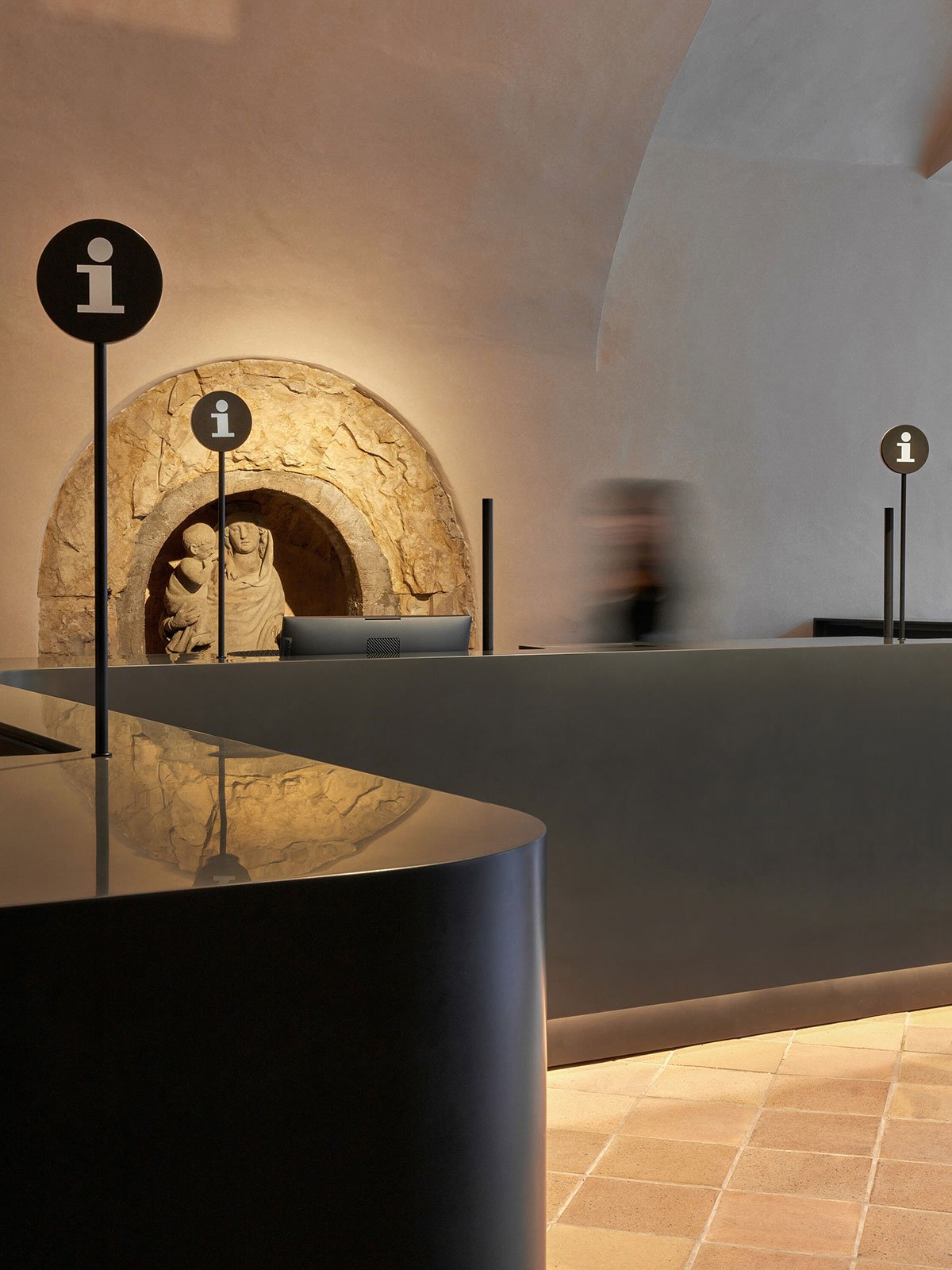
Excerpt: The Old Town Hall’s Ground Floor Interior, designed by Studio Olgoj Chorchoj, combines simple functionality with a toned-down formal aspect. The interior design features a new unit for various functions, catering to current visitors’ needs and fostering a healthy work environment. The new elements incorporate natural movement in space, preserving the original architectural details of the Old Town Hall.
Project Description

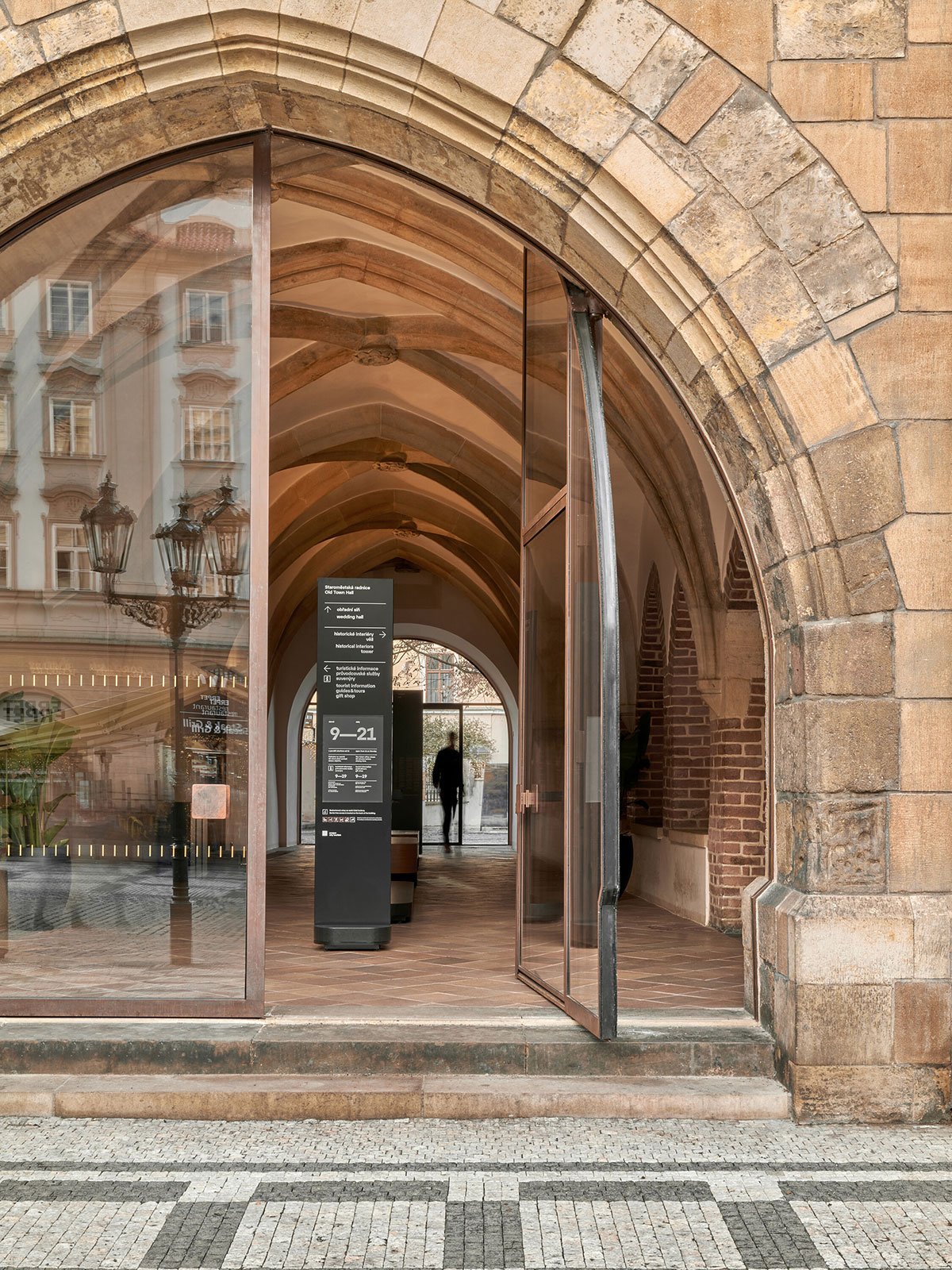
[Text as submitted by architect] The City of Prague together with the Prague City Tourism opened a new tourist facility on the renovated ground floor of the Old Town Hall – a symbol of the overall cultivation of tourism in the Czech capital. In addition to tourist information services and guided tours, it also offers the first brick-and-mortar souvenir shop with cultivated souvenirs exclusively from local creators.
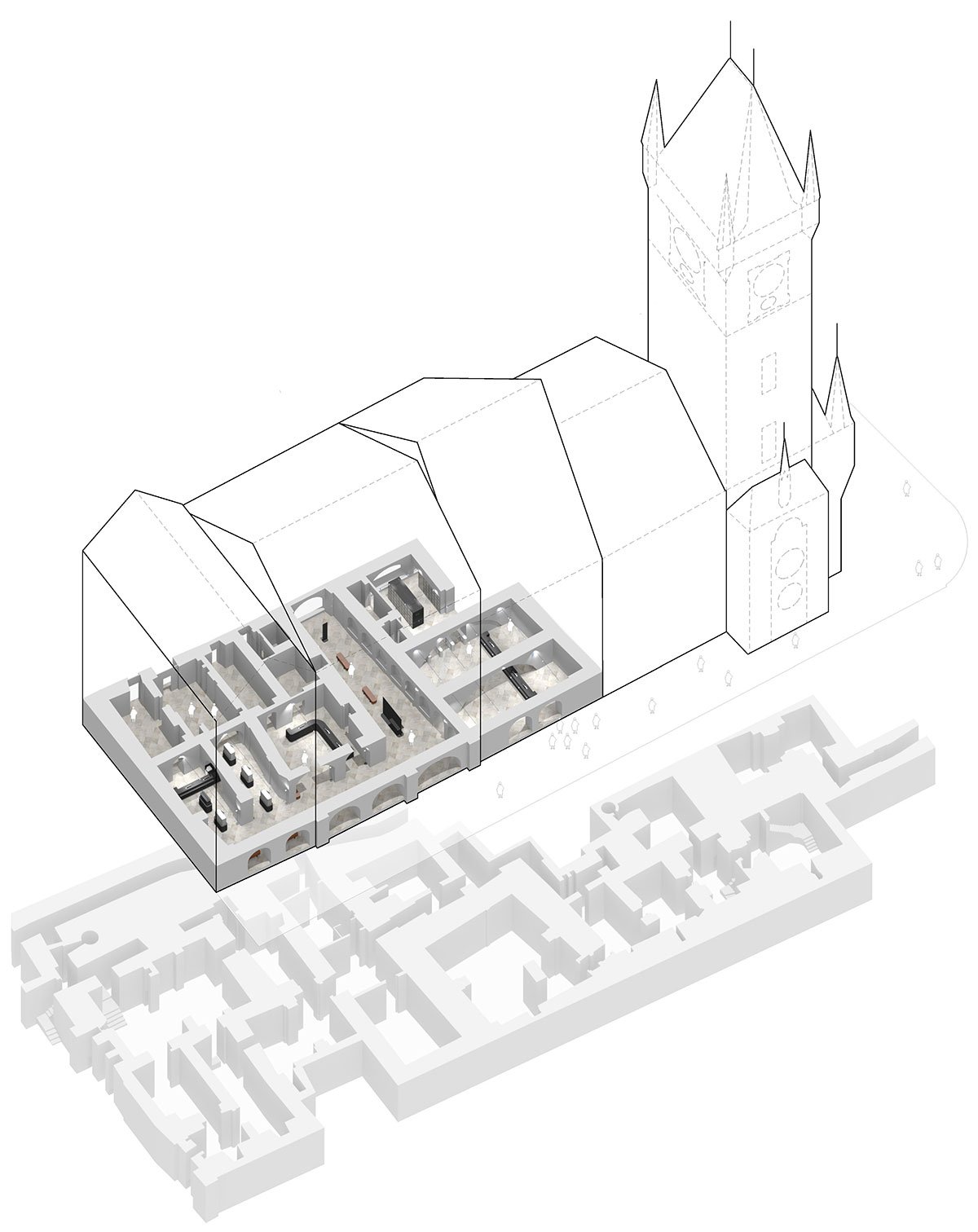
Studio Olgoj Chorchoj continued on the SGL’s structural reconstruction project of the Old Town Hall’s ground floor with the design of interior elements – built-in and freestanding furniture, lighting, and wayfinding elements.

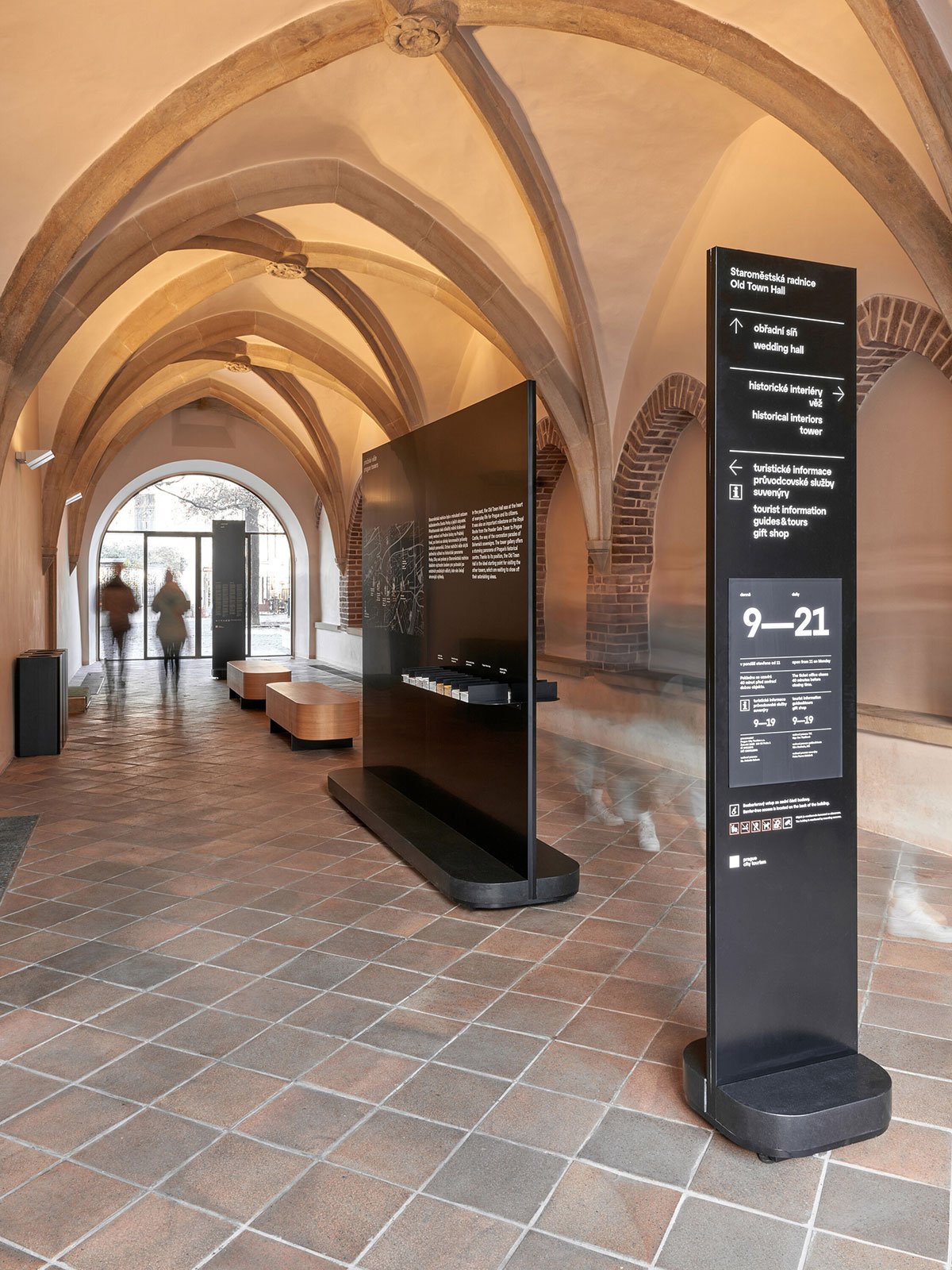
The concept of interior design is essentially the materialization of simple function with a highly toned-down formal aspect. The newly designed elements are not intended to compete with historical architecture; they are purely meant to serve their purpose and are therefore very simple, constructed with an emphasis on durability and precisely executed details.
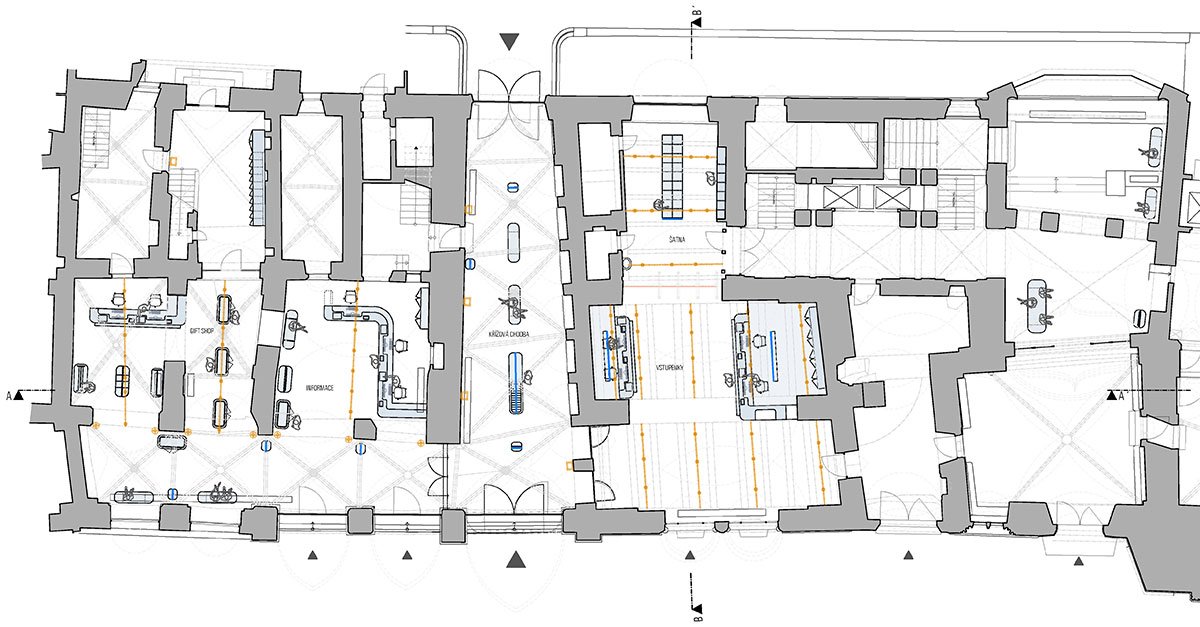

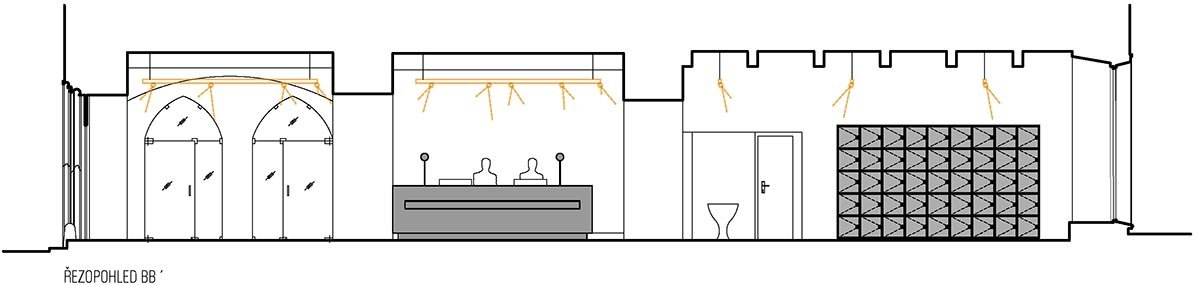
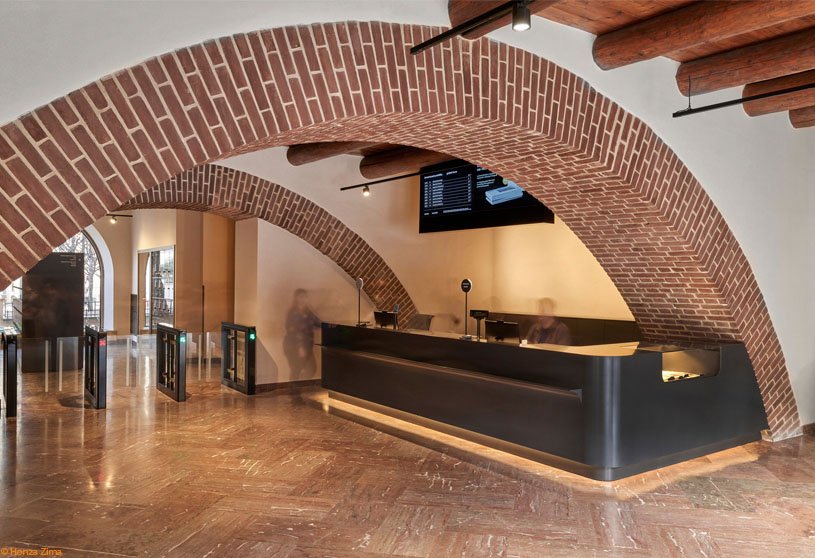
The interior design project of a part of the historic Old Town Hall ground floor includes the allocation of ticket sales, an information centre, a gift shop, and facilities for visitors and staff. The aim was to create a new unit for each of these functions that would meet the current visitors’ needs and create a healthy and inspiring work environment. The layout and morphology of the new elements take into account the natural movement in space and do not disrupt the original architectural details of the Old Town Hall – the walls breathe, the elements touch them only minimally, and do not cover anything.


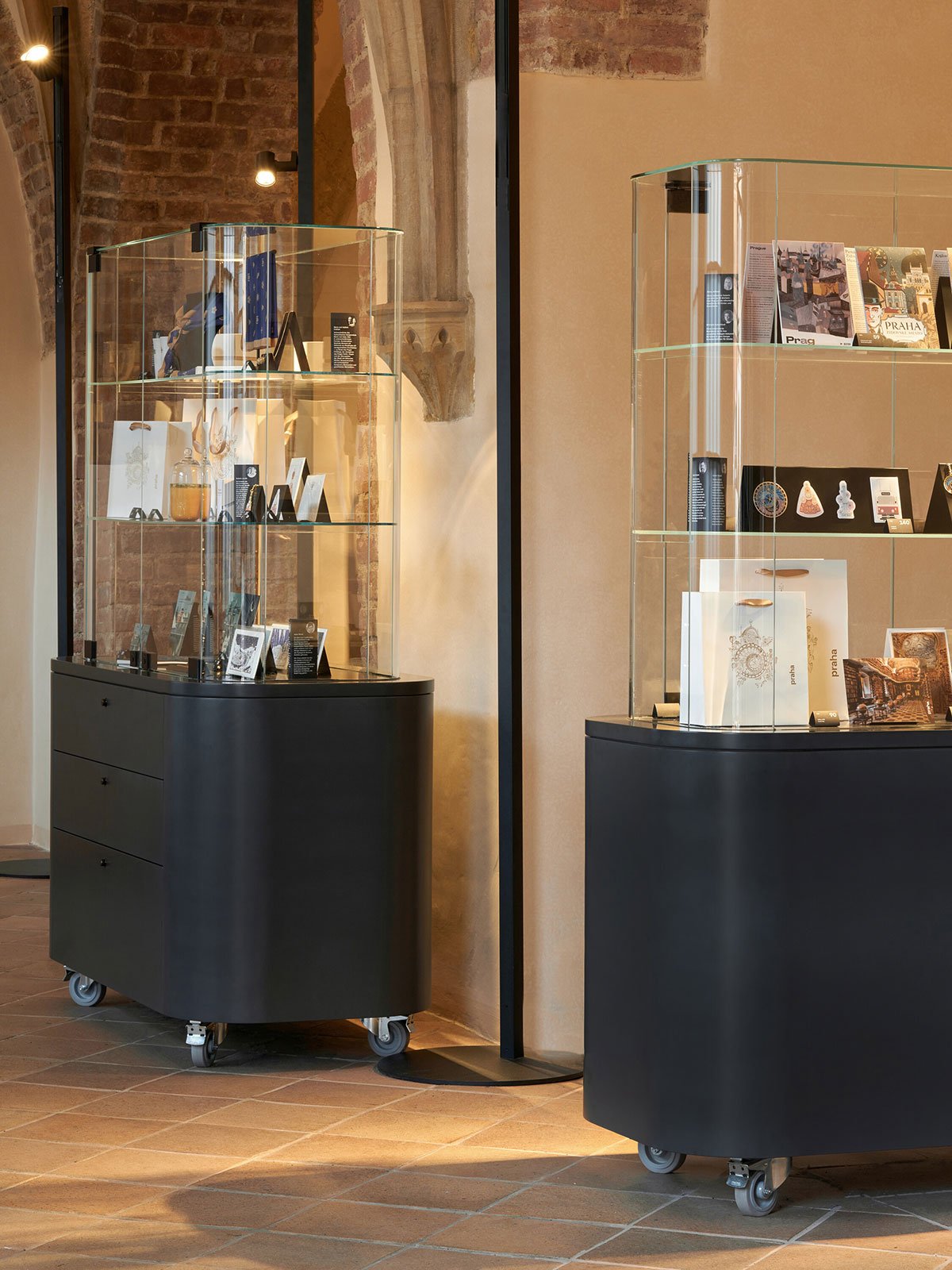
The main aesthetic concept is the clear differentiation of the new elements, reflected in the choice of materials, colours, morphology, and placement within the historic environment. The appropriate choice of materials allows the elements to have rounded shapes without visible joints, with the motif of rounded corners permeating throughout the interior – on benches, pedestals, showcases, and counters, including their details.
The lighting system was designed to allow the Gothic vaults, workstations, and items displayed in the showcases to be illuminated without the need for any new interventions in the historic masonry. It also allows for variability in the future, when some elements may be relocated.
Images