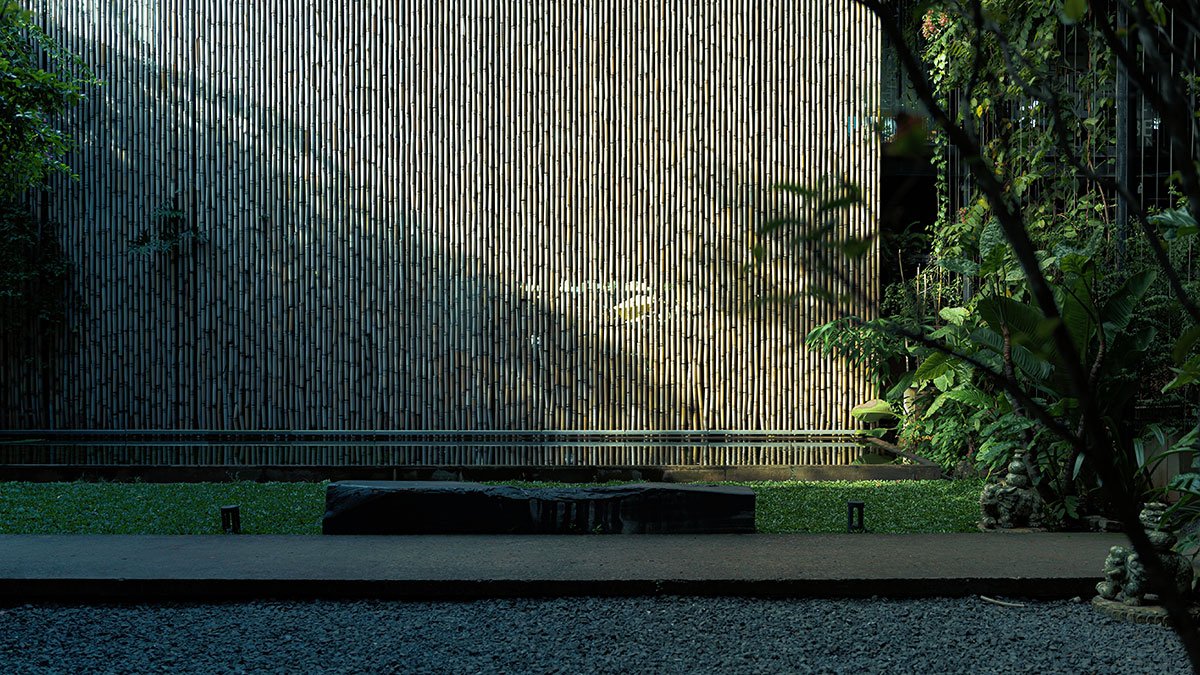
Excerpt: The Vibes Co-space by Infinitive Architecture features a sustainable, eco-friendly design that focuses on spatial transition. The design incorporates buffer zones, covered spaces, and shaded walkways, allowing for gradual thermal shifts between indoor and outdoor environments. Through natural ventilation, solar shading, and microclimate optimization, the design ensures comfort and ease of transition between the spaces.
Project Description

[Text as submitted by architect] The Vibes Co-space is a multi-functional complex with an approximate floor area of 2,000 m², designed around the concept of spatial transition, drawing from traditional principles while incorporating sustainability-driven architectural solutions and material applications.

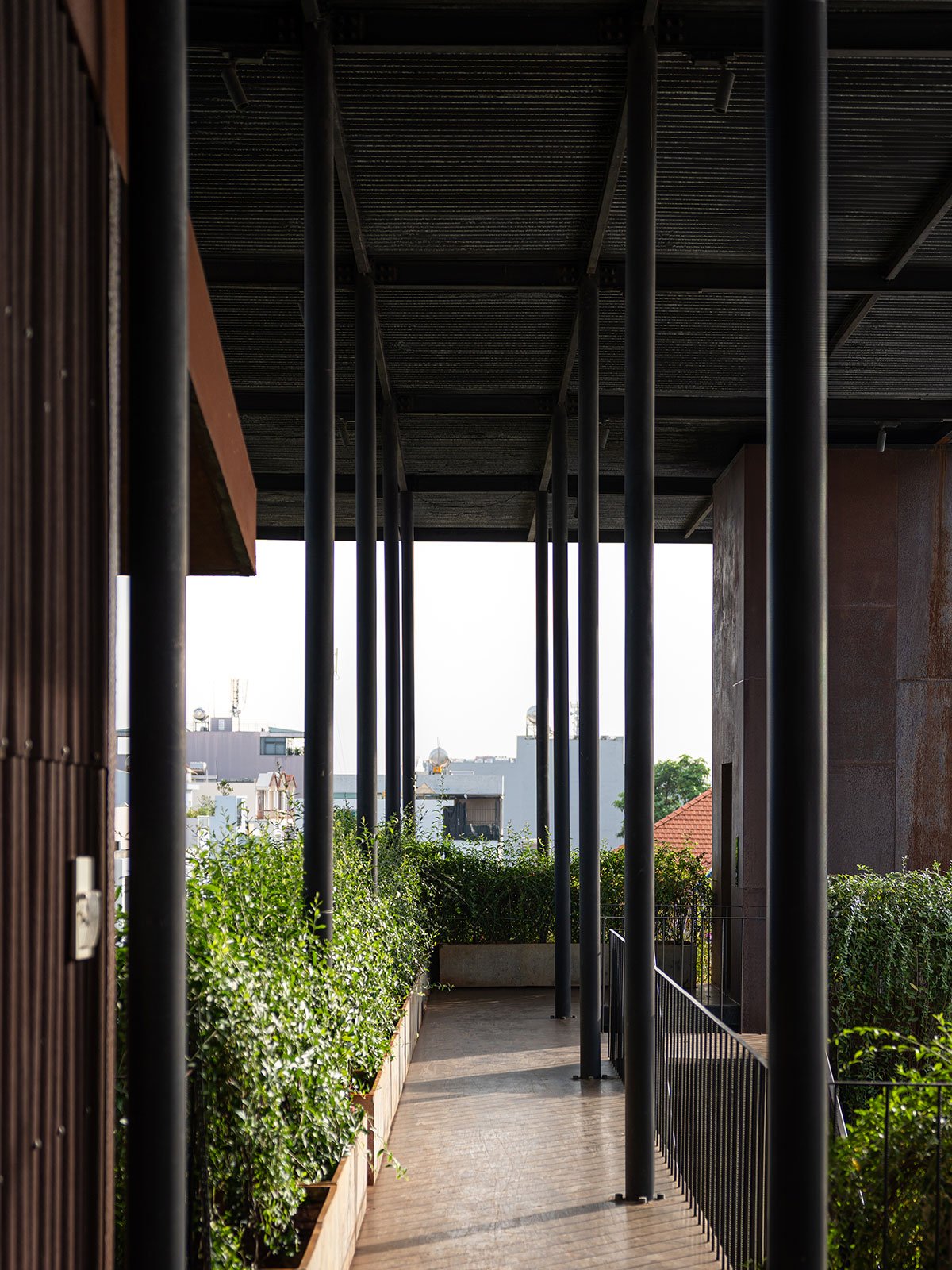
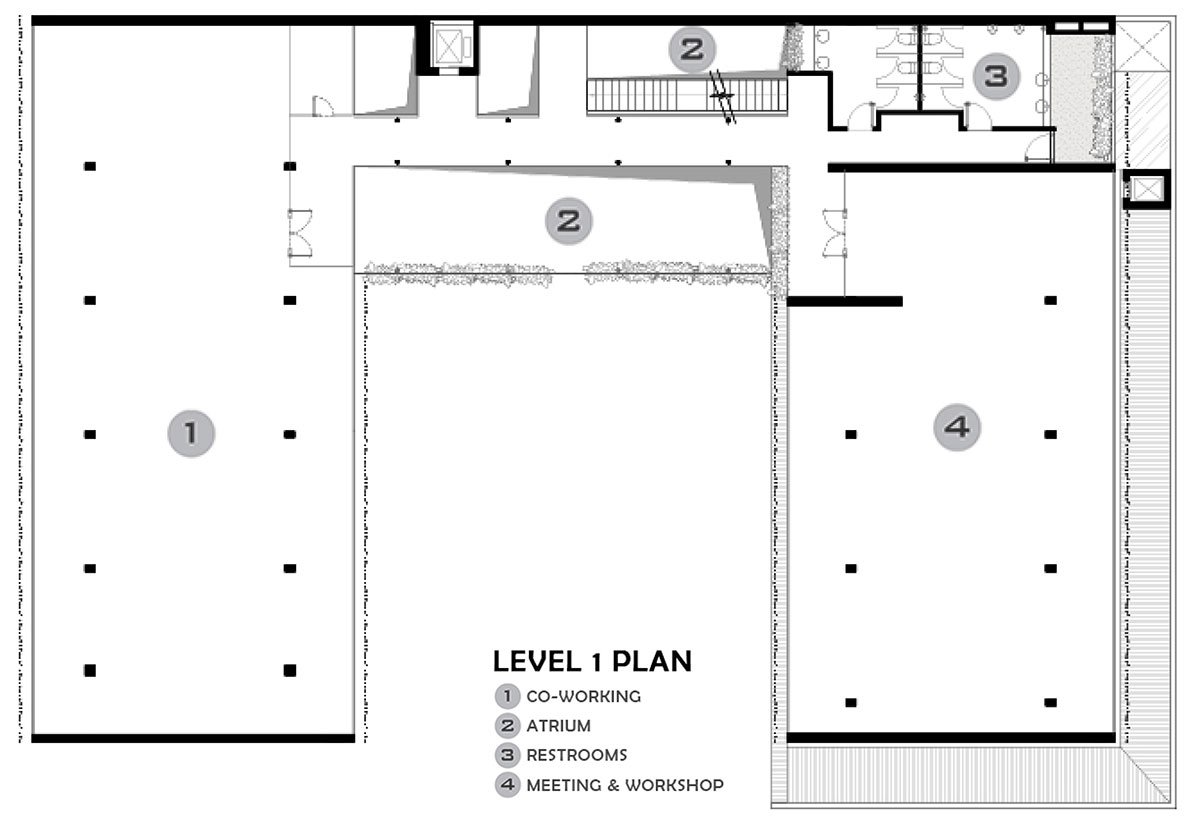
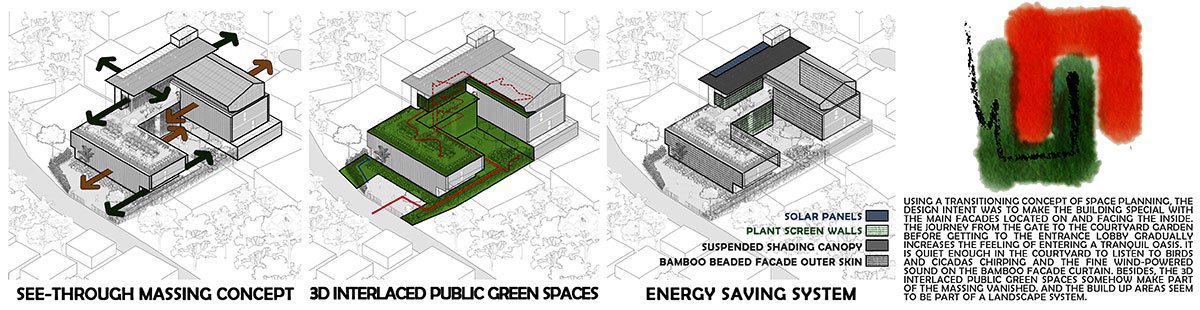
The transitional experience is achieved through a series of buffer zones interwoven between spaces, guiding circulation between functional blocks and enriching the atmospheric quality of the built environment. These transitional zones consist of covered spaces and shaded walkways that punctuate circulation paths and wellness areas, allowing gradual thermal shifts that enhance comfort when transitioning between indoor and outdoor environments, as well as between open-air and air-conditioned zones. Natural ventilation, solar shading, and microclimate optimization are the core elements underpinning this approach.
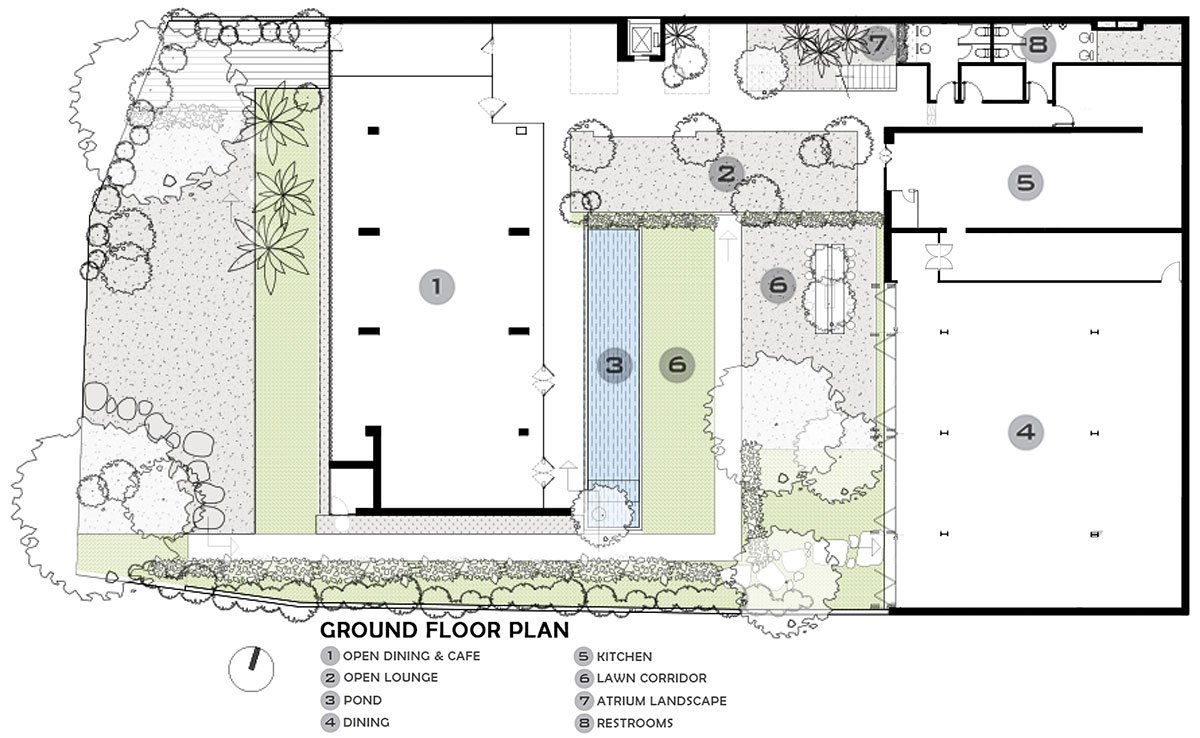

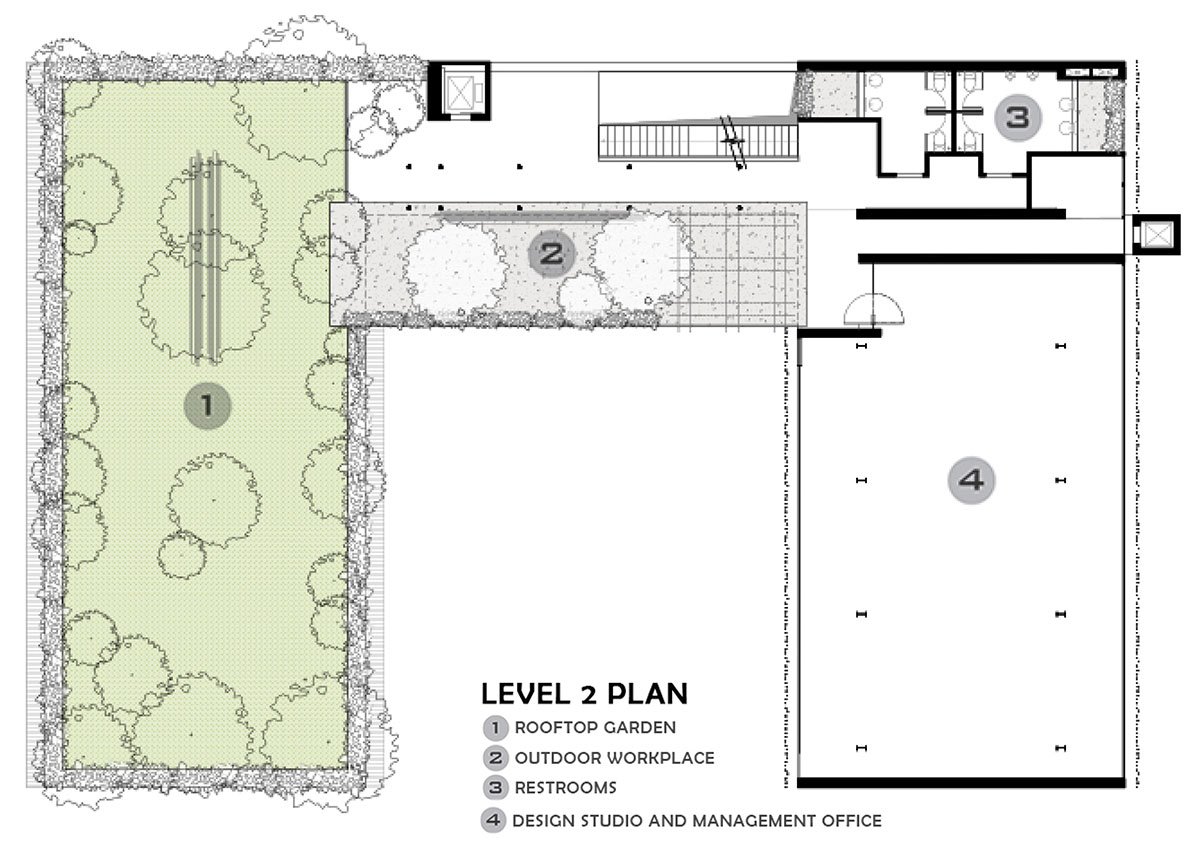
The spatial transition strategy also defines the façade as an external buffer, while the right-hand entrance route functions as a transitional pathway leading to the project’s central courtyard. From this vantage point, the building’s elevations showcase a dynamic interplay of verdant surfaces, including the courtyard itself, a rooftop garden on the third floor, and multi-storey vertical landscaping, seamlessly integrated between the bamboo curtain screens, which serve as visual pauses.

The building is enveloped in a climate-responsive shading system, composed of over 84,000 bamboo segments, forming a series of freely suspended screens along the façades. Set 600mm away from the glass curtain wall, these screens maintain 40% transparency, preserving the visual porosity of the massing while effectively reducing solar radiation, glare, and cooling energy consumption.


Remarkably, the bamboo envelope has exhibited unexpected durability, maintaining stable performance even after five years of continuous exposure to wind loads and a tropical climate characterized by intense sunlight and heavy rainfall. The segmented vertical arrangement of the bamboo elements ensures that each unit supports only its own weight, thereby prolonging its structural integrity while producing a gentle, resonant sound when swayed by the wind.
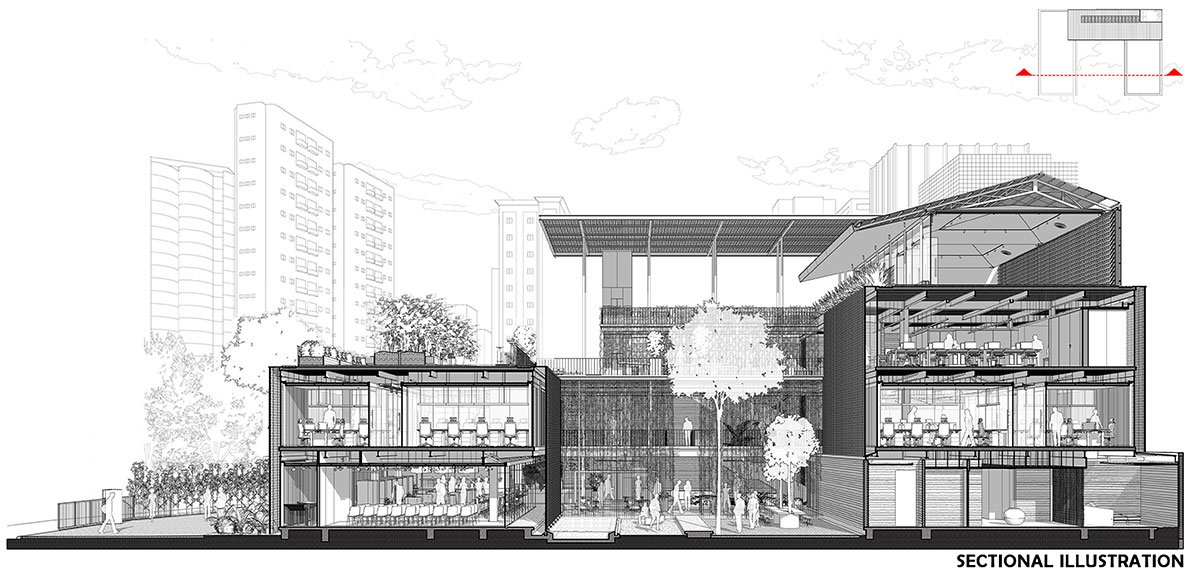
With the double-skin façade system—comprising a glass curtain wall and bamboo screen—covering 80% of the elevations, except for the gable ends, the interior spaces are optimized for daylight penetration, ensuring that 100% of rooms receive natural illumination.


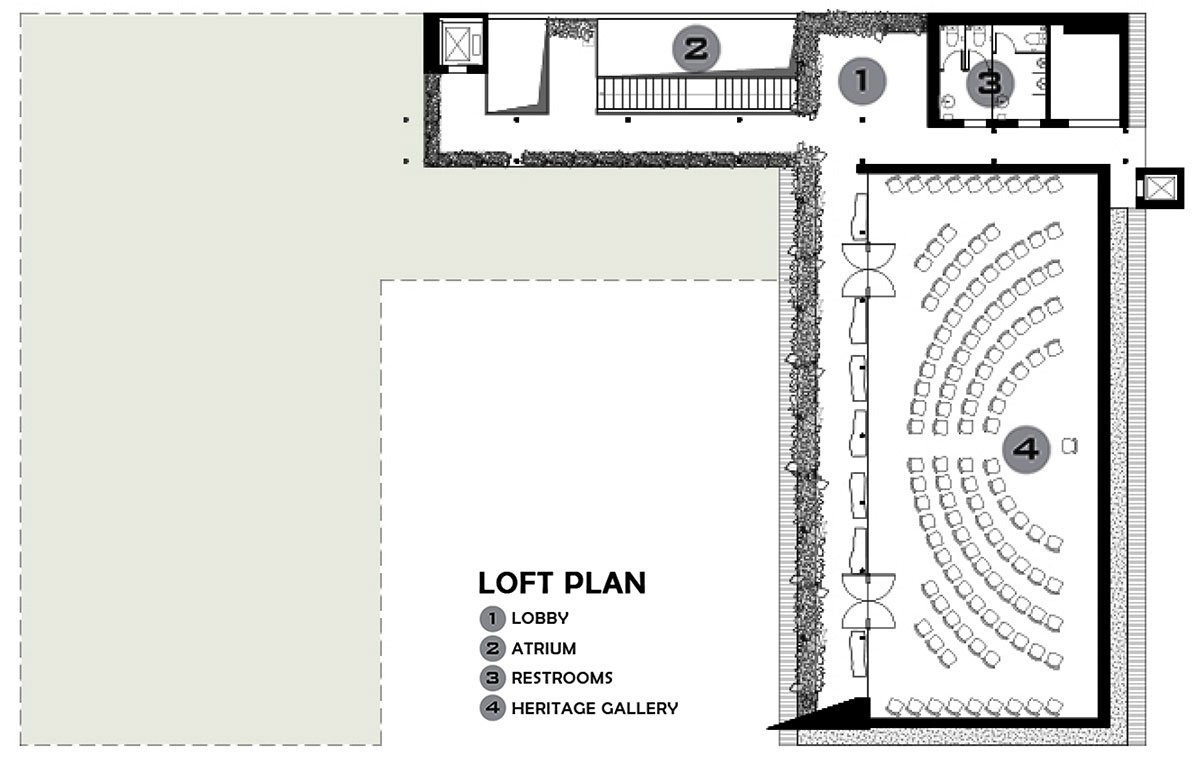
The hollowed-out core of the massing is designed as a lush, four-story atrium, serving as the primary circulation hub and a suspended green oasis that fosters social interactions. This central space is imbued with filtered light, shadows, and vegetation, creating a seamless connection to the adjacent courtyard. The interwoven spatial layering ensures that all activities maintain a direct relationship with greenery, regardless of their horizontal or vertical positioning within the building. As a critical transitional zone, this open-air core reinterprets biophilic architecture, offering a climatic and sensory alternative to the conventional lobbies and corridors typically found in commercial and office buildings.

Completed in 2021, The Vibes Co-space was constructed during the COVID-19 pandemic and has since become a recognized coworking and event space. More recently, dedicated office areas have been repurposed for workshops and events, alongside the introduction of a new addition—The Vibes Fusion Restaurant, replacing the former work lounge. All images are recent, captured during 2024 and 2025.
International Recognition: The Vibes Co-space exemplifies an architectural paradigm that harmonizes sustainability, spatial continuity, and environmental responsiveness, establishing a new benchmark for contemporary workspace and event venues.
Drawings
Images