Excerpt: Tono House by Studio Aatman is a compact residential interior envisioned as a calm, clutter-free home for a young family. The design explores restraint, where fewer elements, softer transitions, and a limited palette create a composed and intuitive space. Rooted in minimal, Japanese-influenced sensibilities, the home focuses on spatial clarity, timelessness, and everyday living that feels effortless and enduring.
Project Description

[Text as submitted by architect] Tono House is a compact residential interior designed for a young family, envisioned as a calm, clutter-free home that supports everyday living while remaining visually understated. The project explores the idea of restraint—where fewer elements, softer transitions, and a limited palette come together to create a space that feels composed, intuitive, and long-lasting.
Designed for a couple and their infant child, the home needed to balance practicality with warmth, allowing the interiors to evolve as the family grows. Rather than relying on overt stylistic statements, the design focuses on spatial clarity, integrated storage, and subtle detailing, ensuring the house remains calm despite daily activity.


Client Brief: The client’s brief was clear yet nuanced: a home that feels light, uncluttered, and easy to maintain, with an emphasis on functionality and safety for a young child. They desired a neutral, soothing environment that avoided visual noise, while still feeling warm and lived-in. Flexibility was key—spaces needed to adapt over time without requiring major changes.
Design Style: If the project were to be defined stylistically, it would align with minimal, contemporary interiors influenced by Japanese sensibilities—where simplicity, balance, and restraint guide decision-making. The approach avoids trends and instead focuses on timelessness through proportion, material continuity, and calm tonal variation.


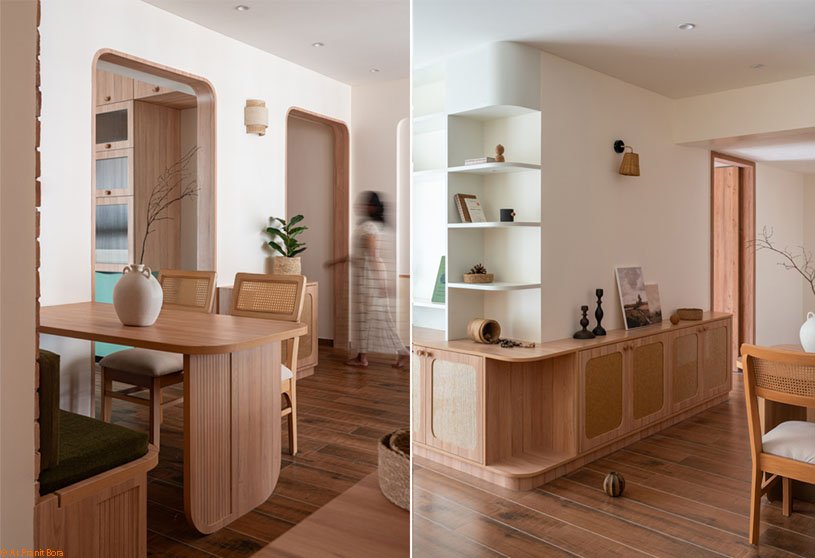
Inspiration & Concept: The core idea behind Tono House is the concept of “one tone” living—a cohesive visual language where materials, colours, and forms flow seamlessly from one space to another. The inspiration stems from the belief that calm interiors enhance daily life, especially within compact homes. Instead of contrast-driven design, the house relies on tonal depth, texture, and careful layering to create interest without disruption.
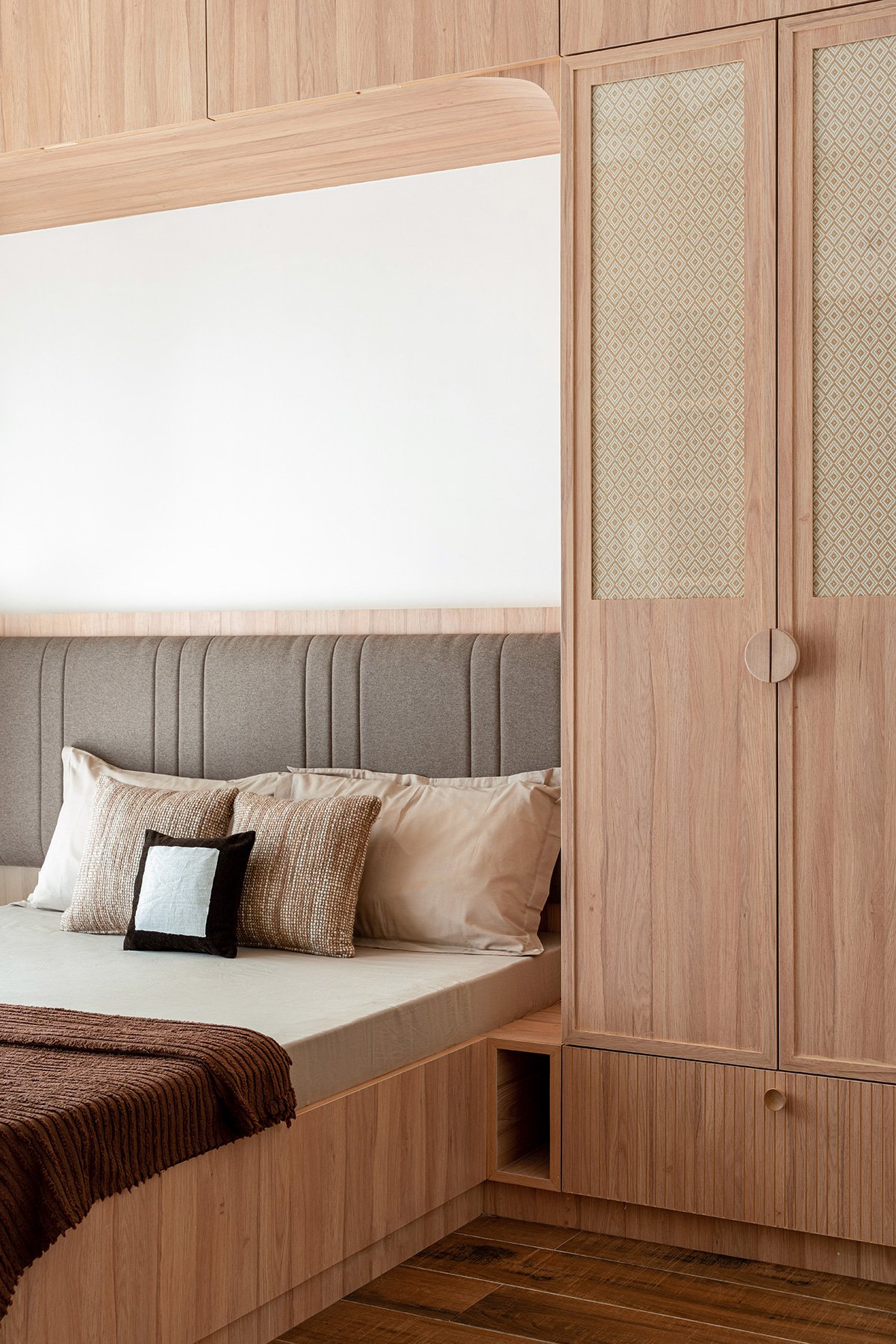
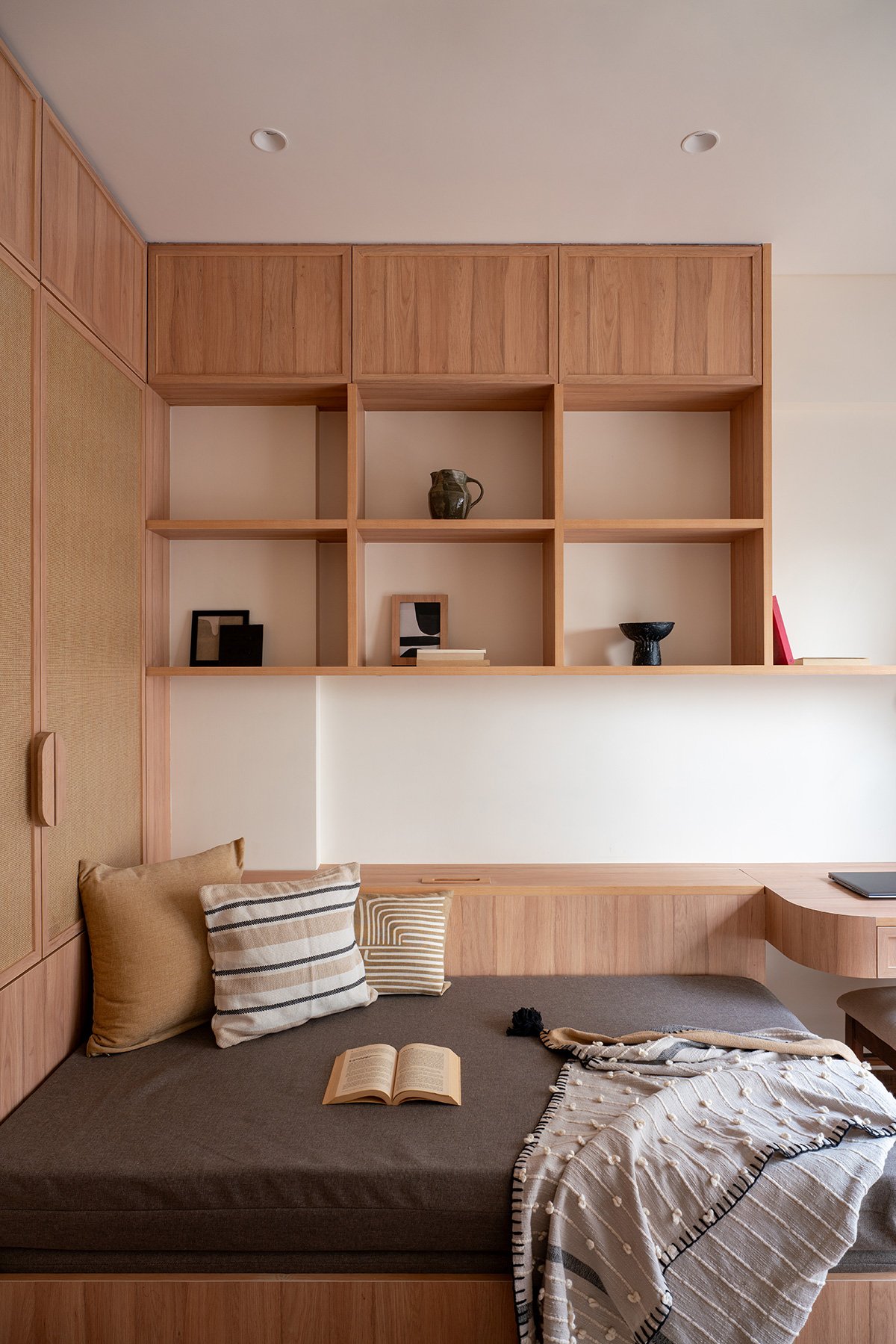
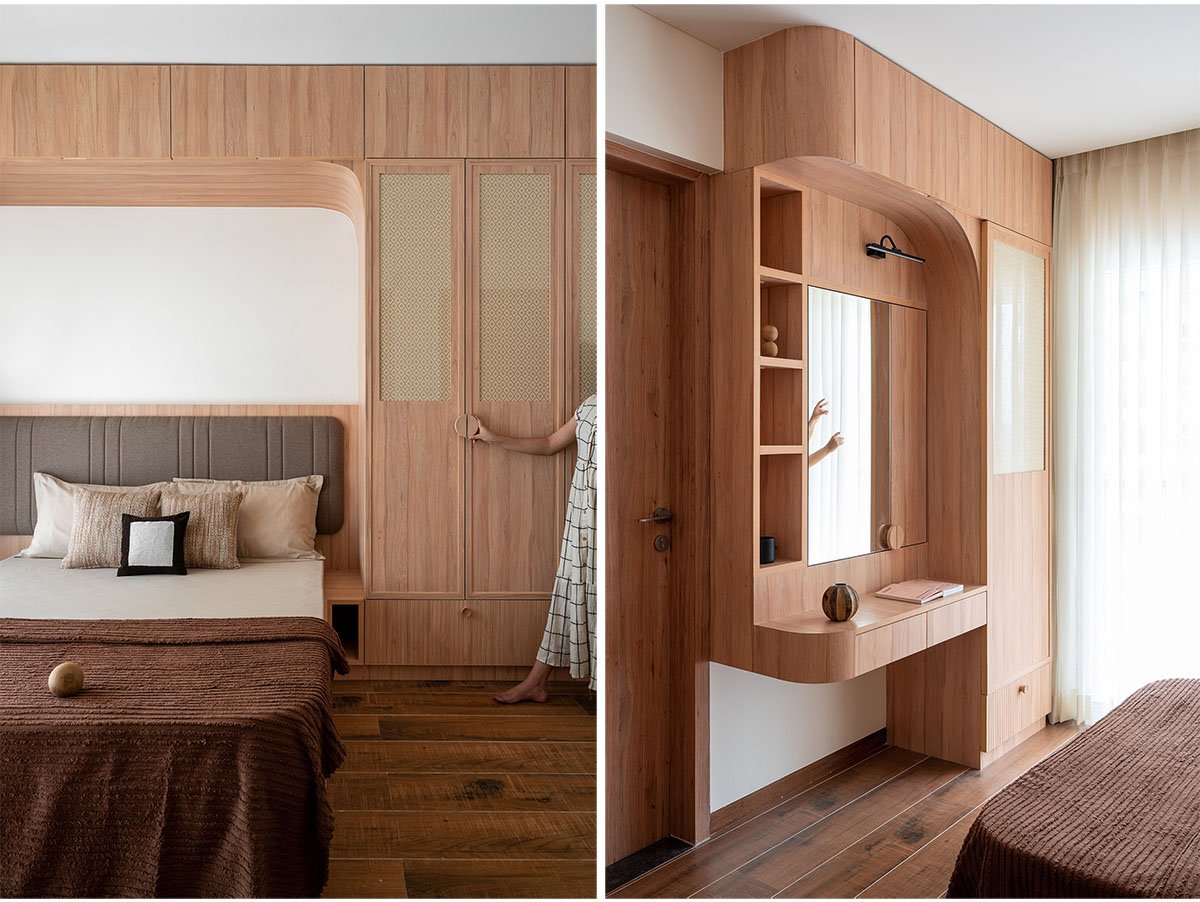
Spatial Configuration: The spatial planning prioritizes openness and visual continuity. Storage is integrated into walls and furniture to reduce clutter, while circulation remains intuitive and uninterrupted. Each space is designed to feel connected yet distinct, allowing the home to function efficiently without feeling segmented. This was achieved through precise planning, custom furniture solutions, and a disciplined layout strategy.
Challenges & Constraints: One of the primary challenges was working within a compact footprint while accommodating multiple functional requirements. Additionally, the design had to respond to the evolving needs of a growing family, ensuring safety and adaptability without compromising aesthetics. These challenges were addressed through custom detailing, smart storage solutions, and a clear design hierarchy.
Materials & Construction: The material palette is intentionally restrained. Natural finishes, soft laminates, and subtle textures are used to create warmth and durability. Construction techniques focused on clean detailing, flush surfaces, and precision-led execution, ensuring longevity and ease of maintenance.


Use of Colour & Details: Colour is used sparingly and thoughtfully. A neutral base is complemented by muted accents—such as soft greens and earthy tones—that add depth without overpowering the space. Details like curved edges, concealed hardware, and tactile finishes enhance safety while contributing to the home’s understated character.
Favourite Design Element: One of the most rewarding aspects of the project is the seamless integration of storage into the overall design language—where functional elements become part of the visual calm rather than standing out as separate components.

The USP of Tono House lies in its quiet confidence. It demonstrates how restraint, when applied with clarity, can create a home that feels timeless, adaptable, and deeply personal—without relying on excess or ornamentation.
Tono House is not designed to impress instantly, but to reveal itself gradually through daily use. It is a home shaped by everyday routines, evolving needs, and a belief that good design should feel effortless.
Images