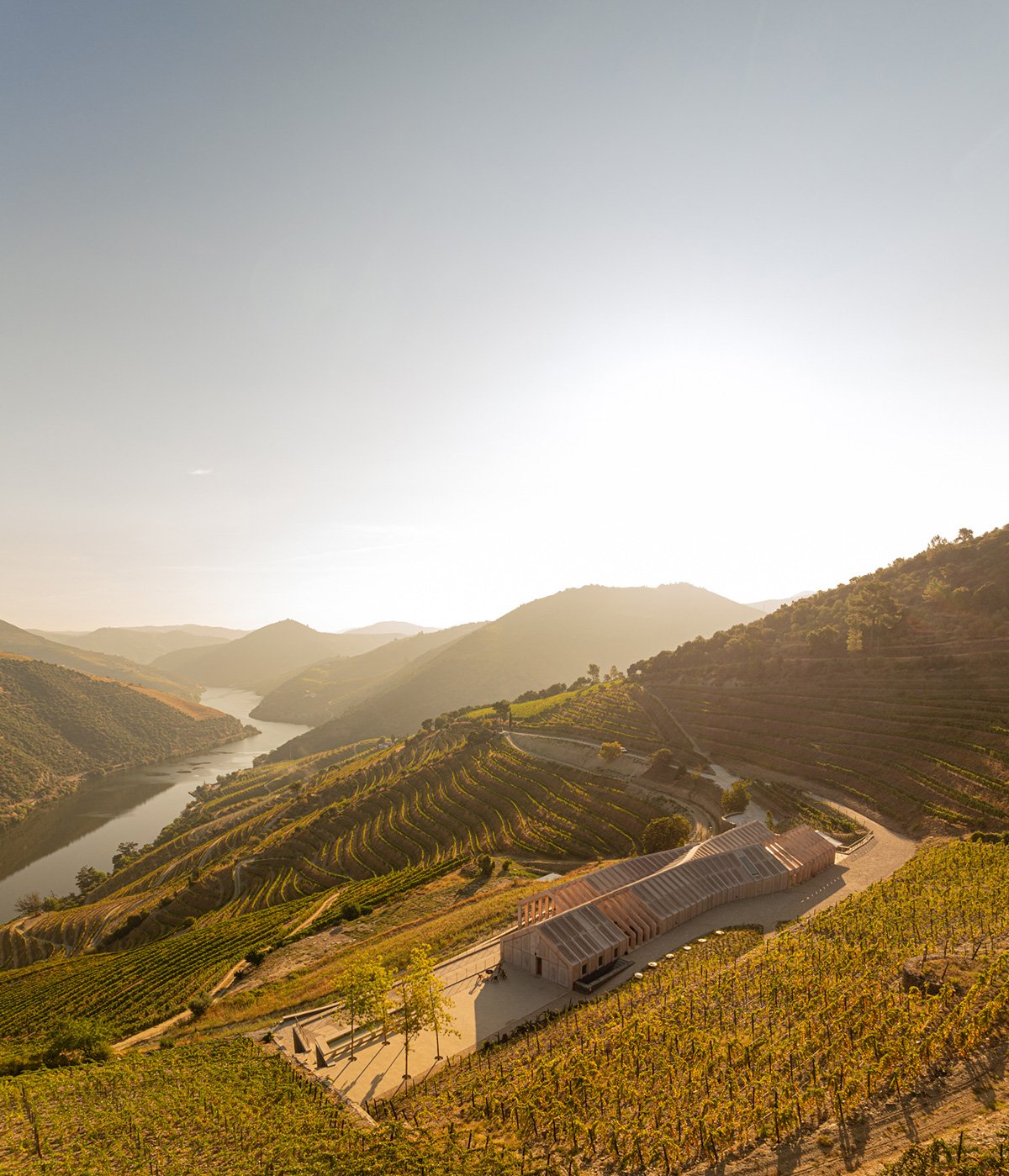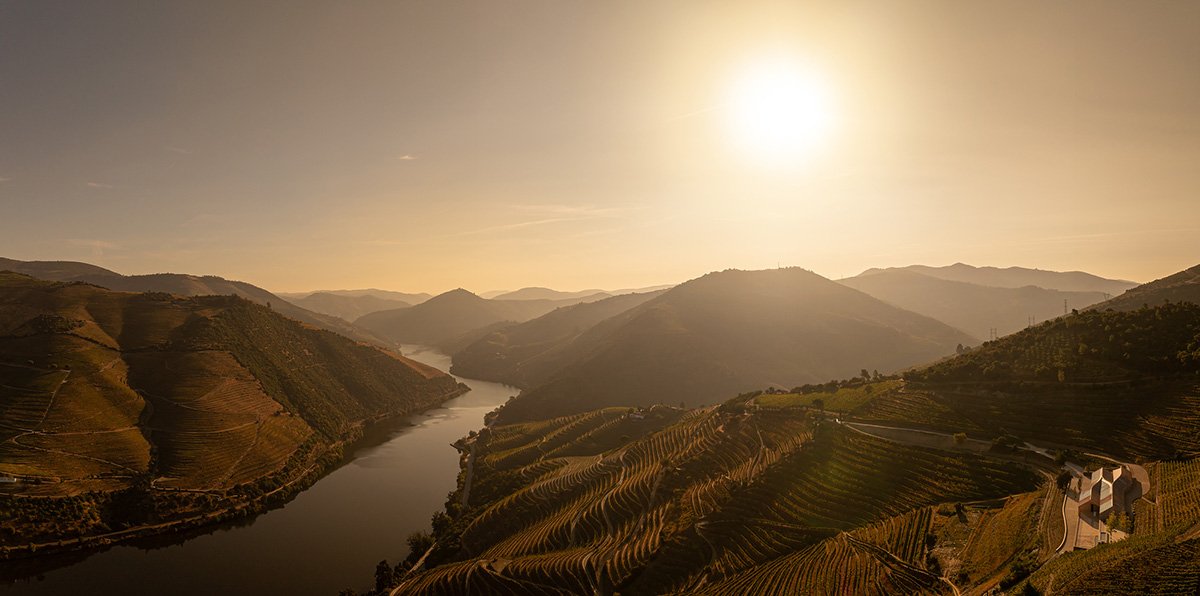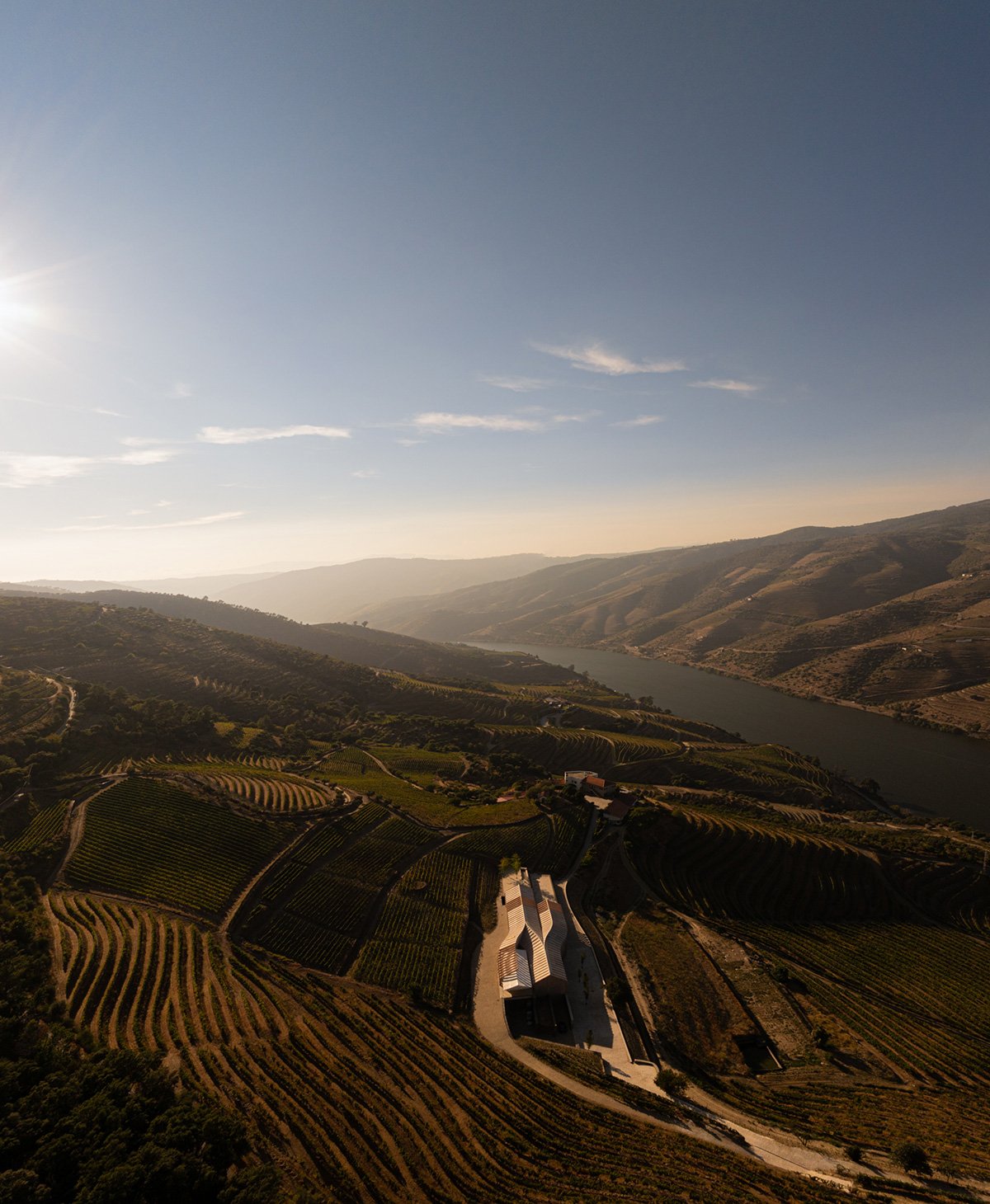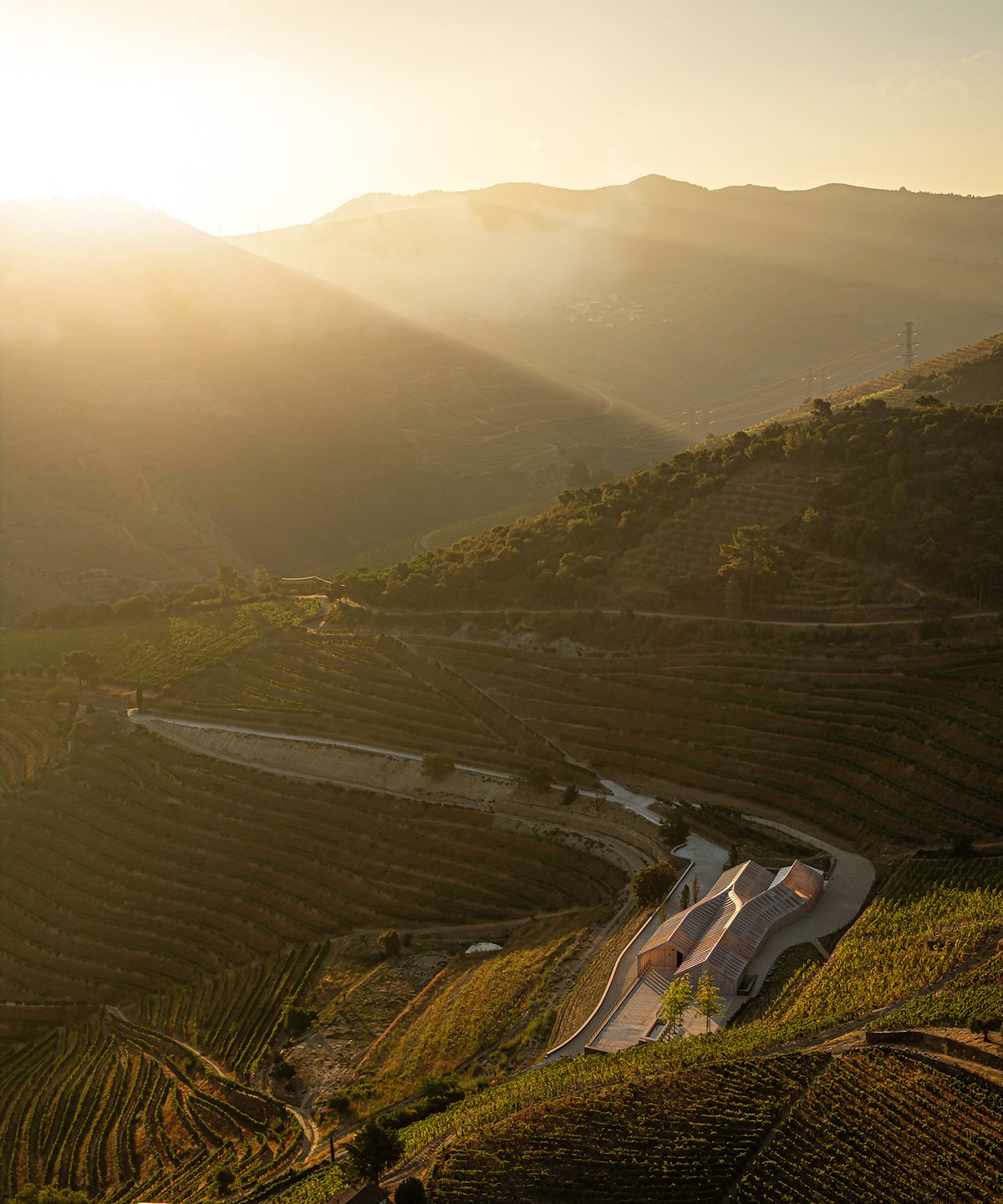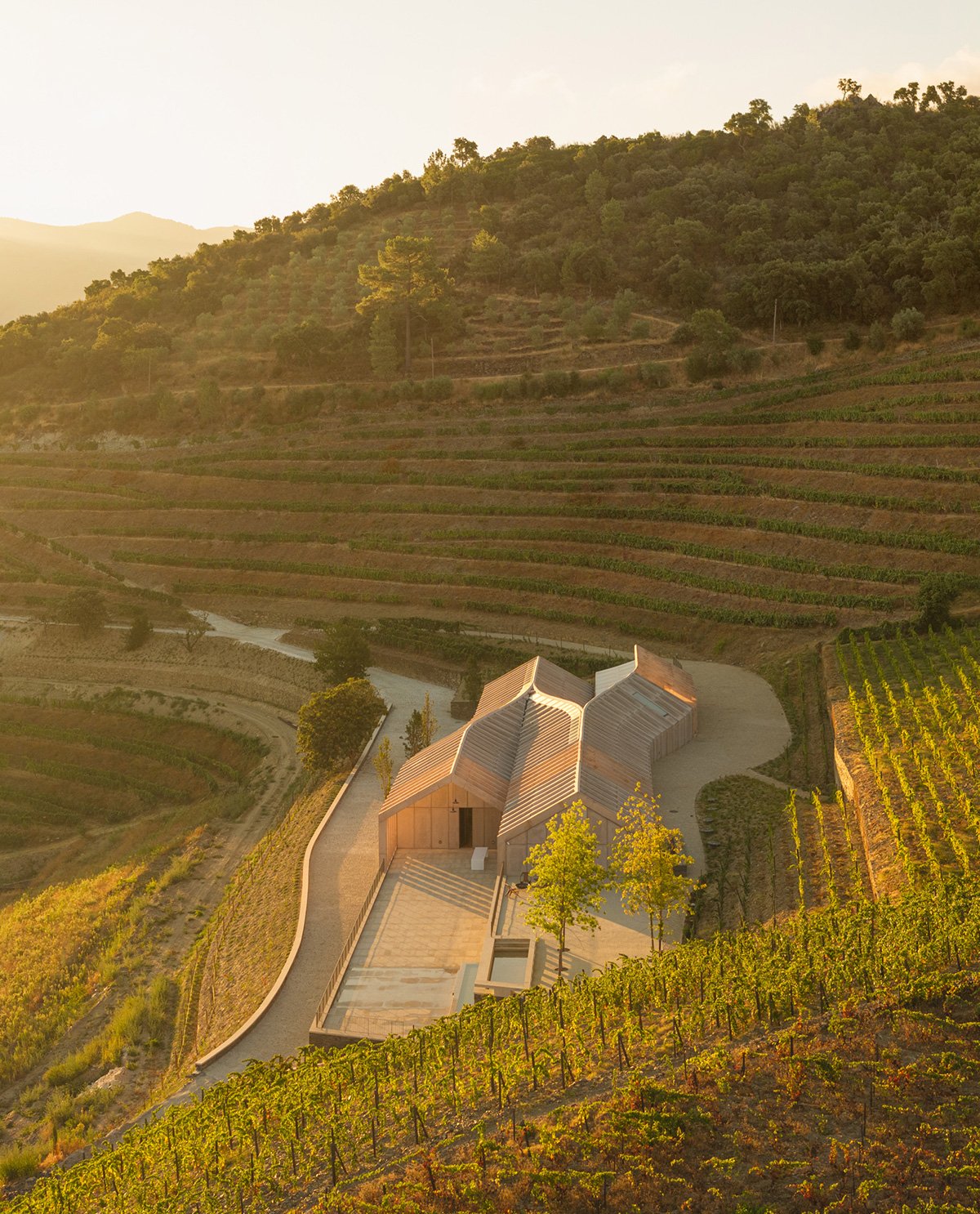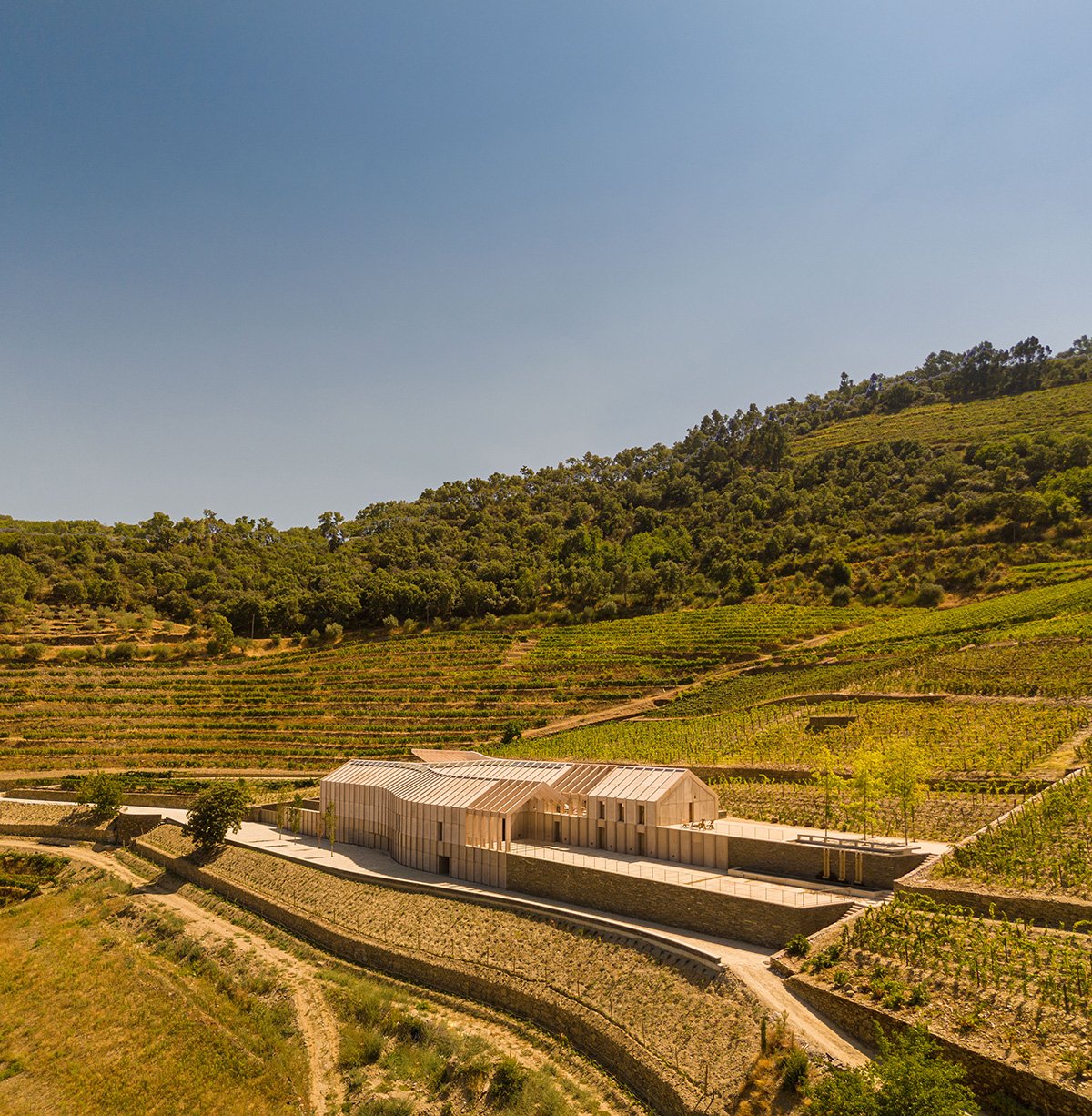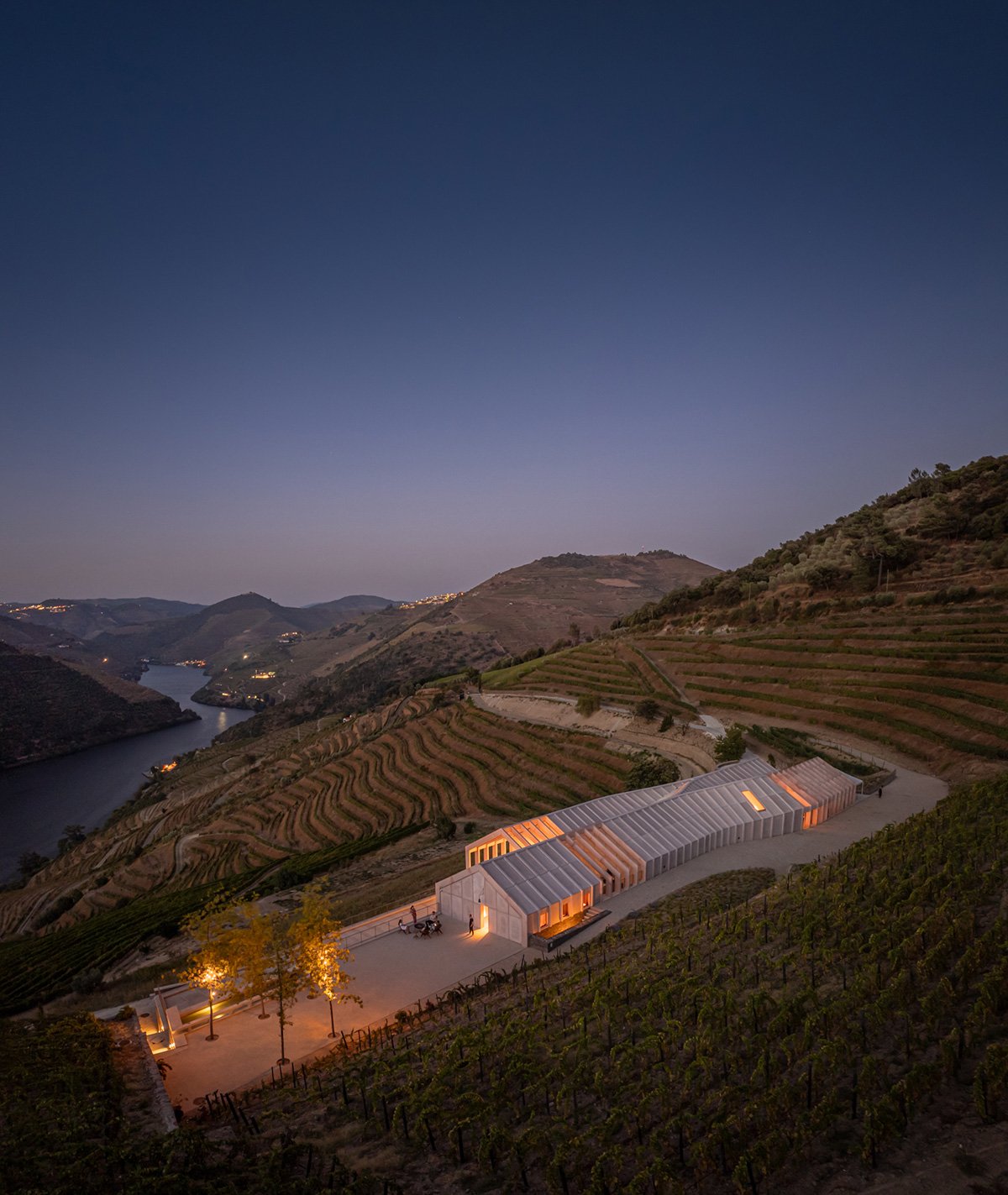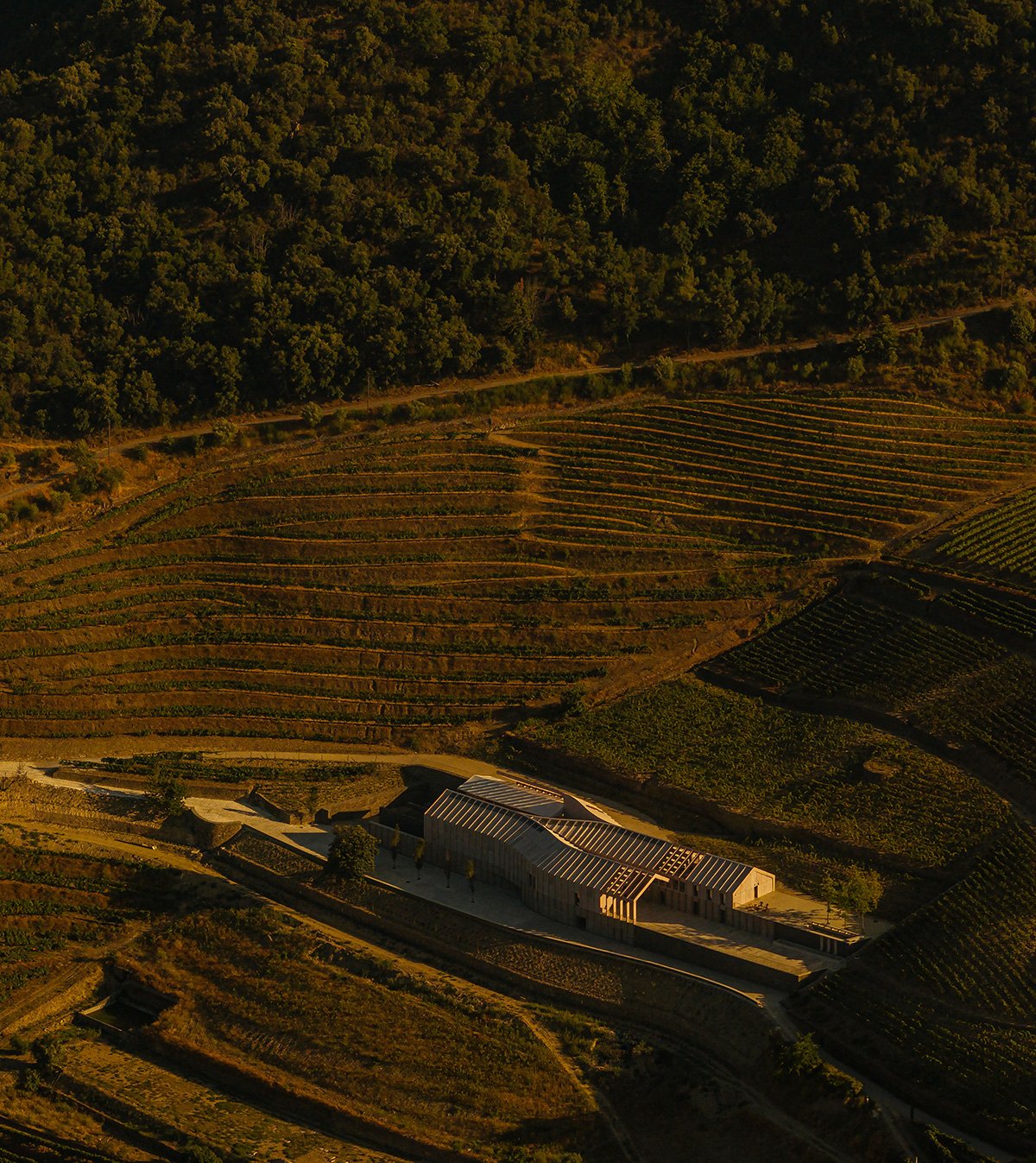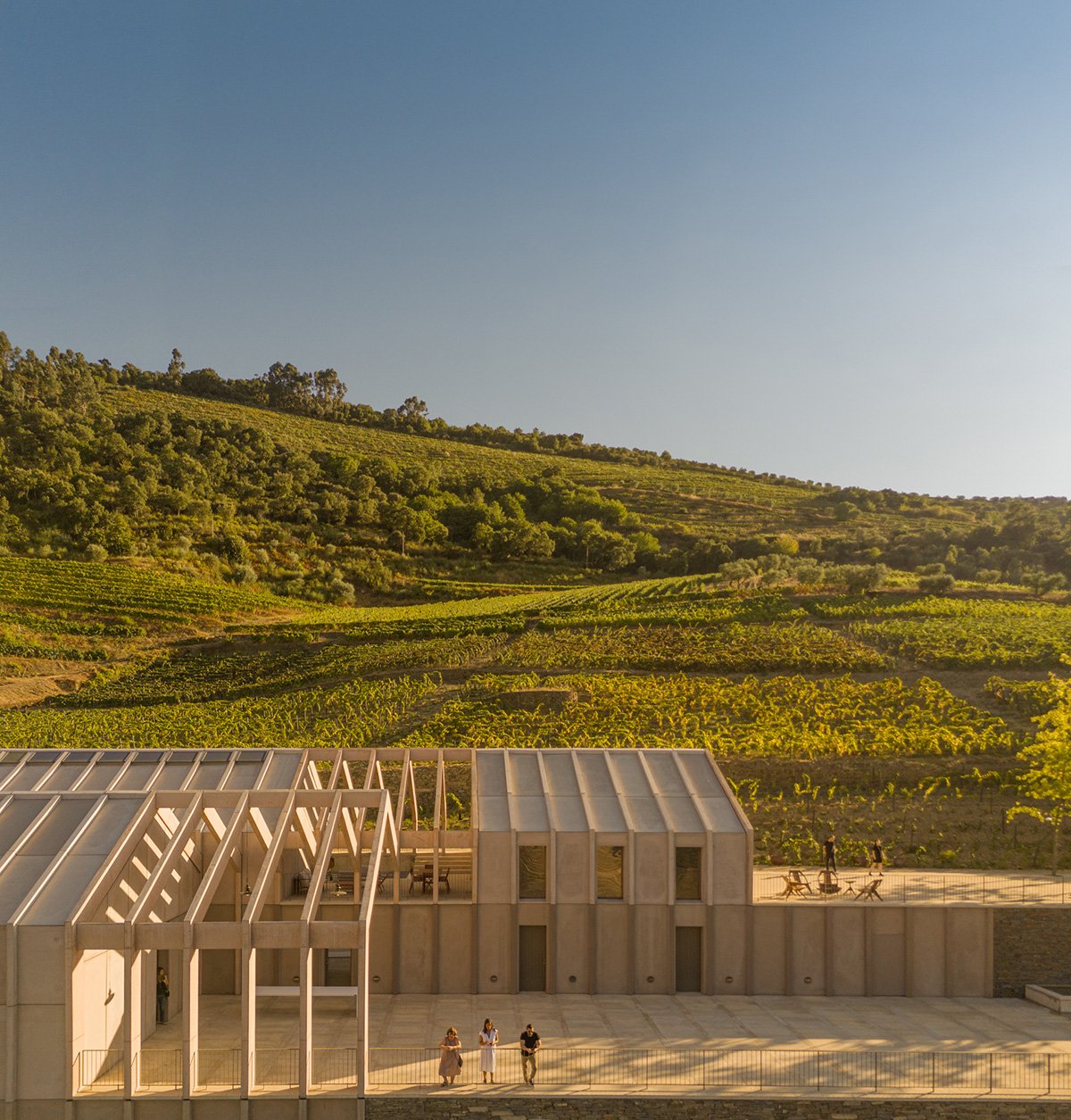
Excerpt: Wine Cellar of the Quinta de Adorigo by Atelier Sérgio Rebelo is an architectural project that honors the landscape and local culture of the Alto Douro Vinhateiro. The horizontal curvilinear shapes mirror the zigzags of the vineyards, while the downward movement of the building reflects the gravity-based winemaking process. Tradition, topography and sustainability are integrated into a contemporary winery rooted in its place.
Project Description

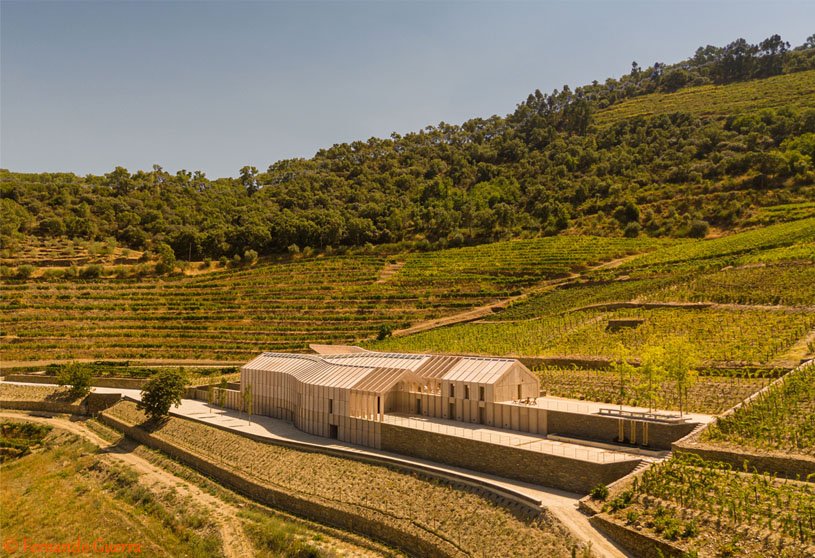
[Text as submitted by architect] The winery at Quinta de Adorigo was completed in 2024 and is part of a family wine tourism development that also includes a hotel, which is still under construction. This quinta is located in the Alto Douro Vinhateiro, Portugal’s most prestigious wine-growing area, listed by UNESCO as a World Natural and Cultural Heritage Site since 2001.
The exceptional beauty of the natural surroundings, the millennia-old human occupations and the centuries-old tradition of wine production motivated an architectural project that honors the landscape and local culture and presents innovative construction strategies and effective sustainability.
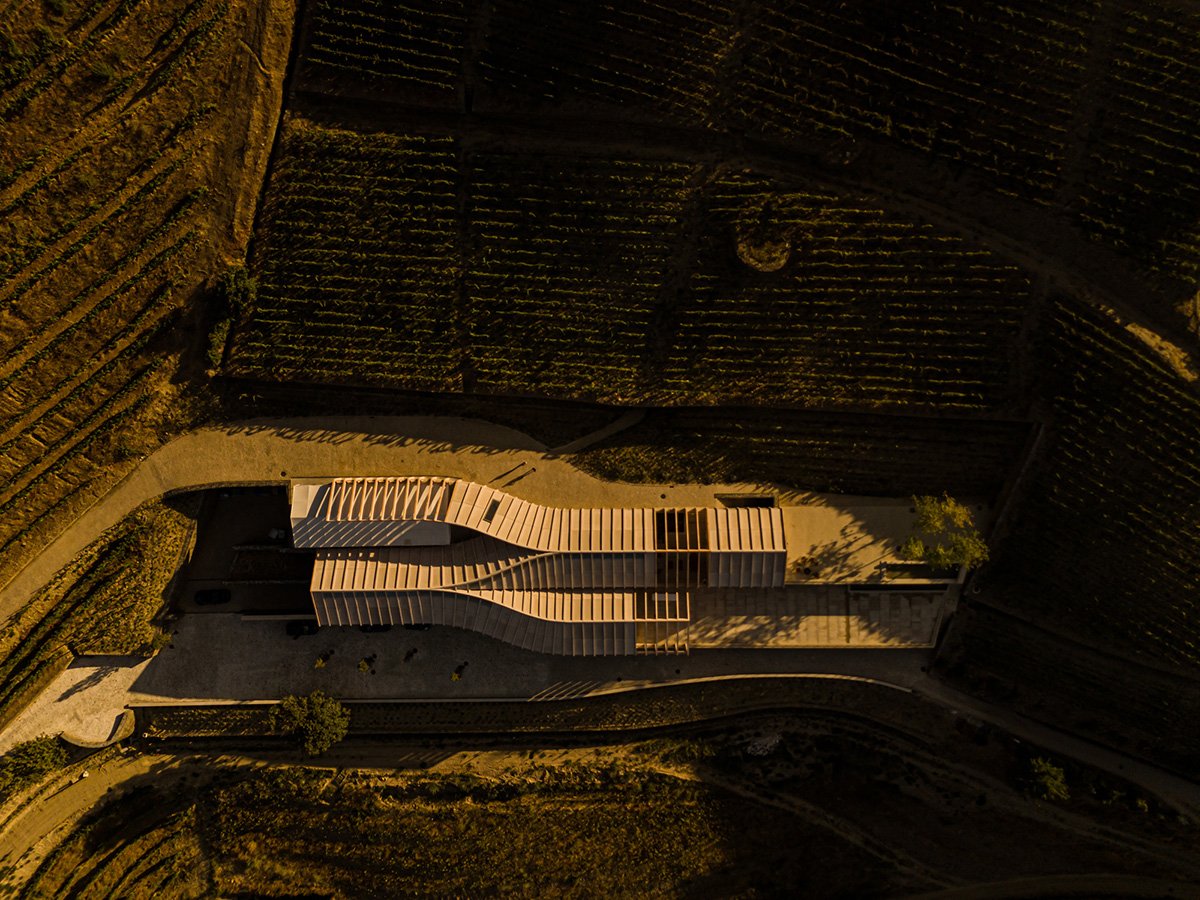
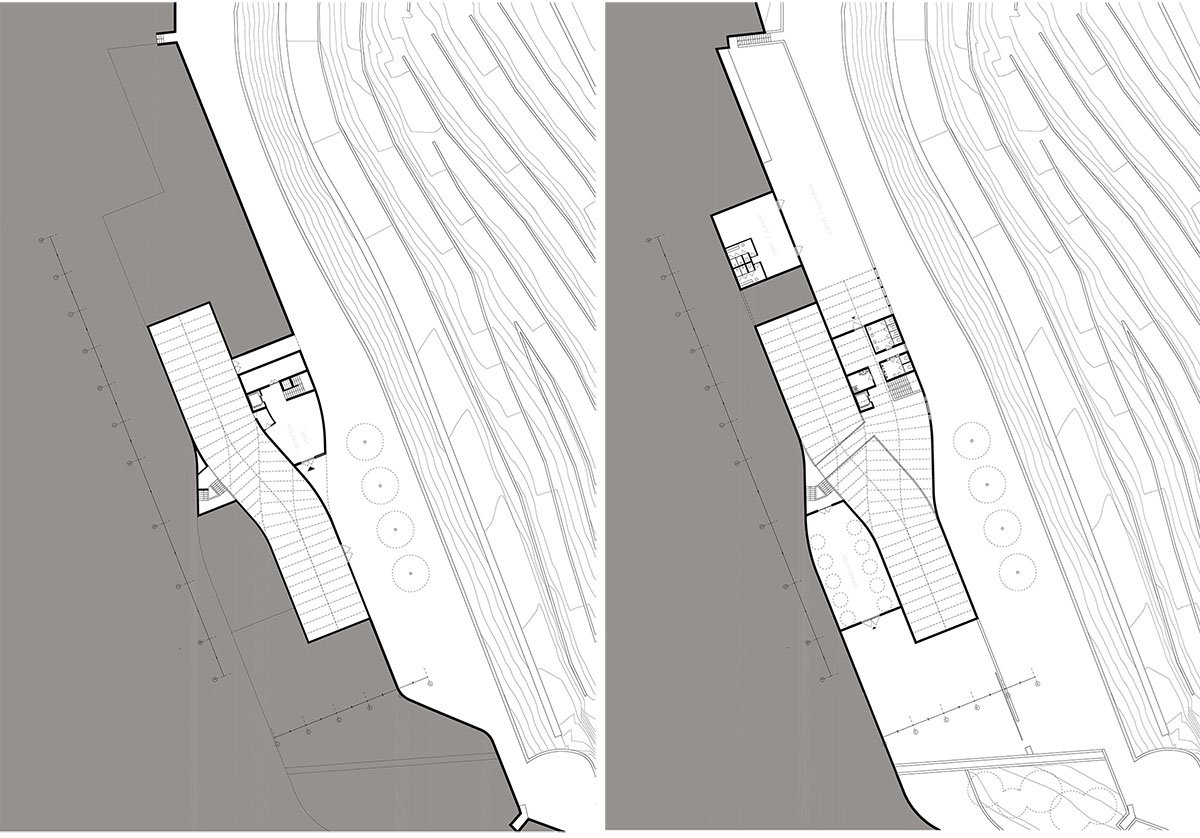

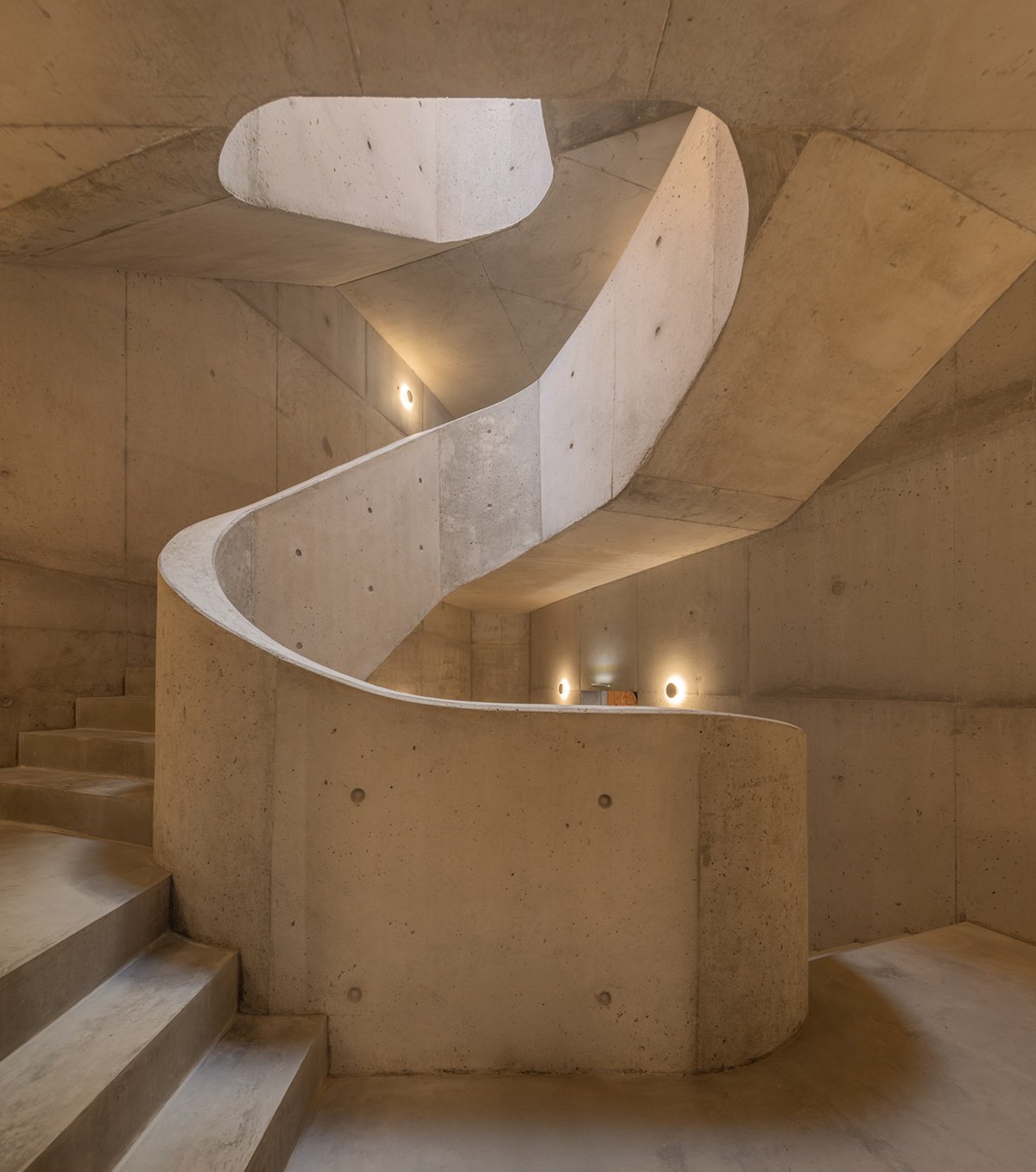
The horizontal curvilinear shapes of the winery and the circuits between areas mirror the zigzags of the vineyards in the surrounding hills and valleys. However, we avoided literally quoting the landscape, compromising daily routines, circulation and communication. On the contrary, the downward movement of the building on the terraces of the land reflects its internal mechanics, where the winemaking process takes place by gravity, a common procedure on the banks of the River Douro. The gravitational wine production system, so characteristic of the region, is demonstrated here with its current operational capabilities. The configuration of the building is therefore a set of interwoven naves that follow the existing topographic slope, replicated on the various interior levels.
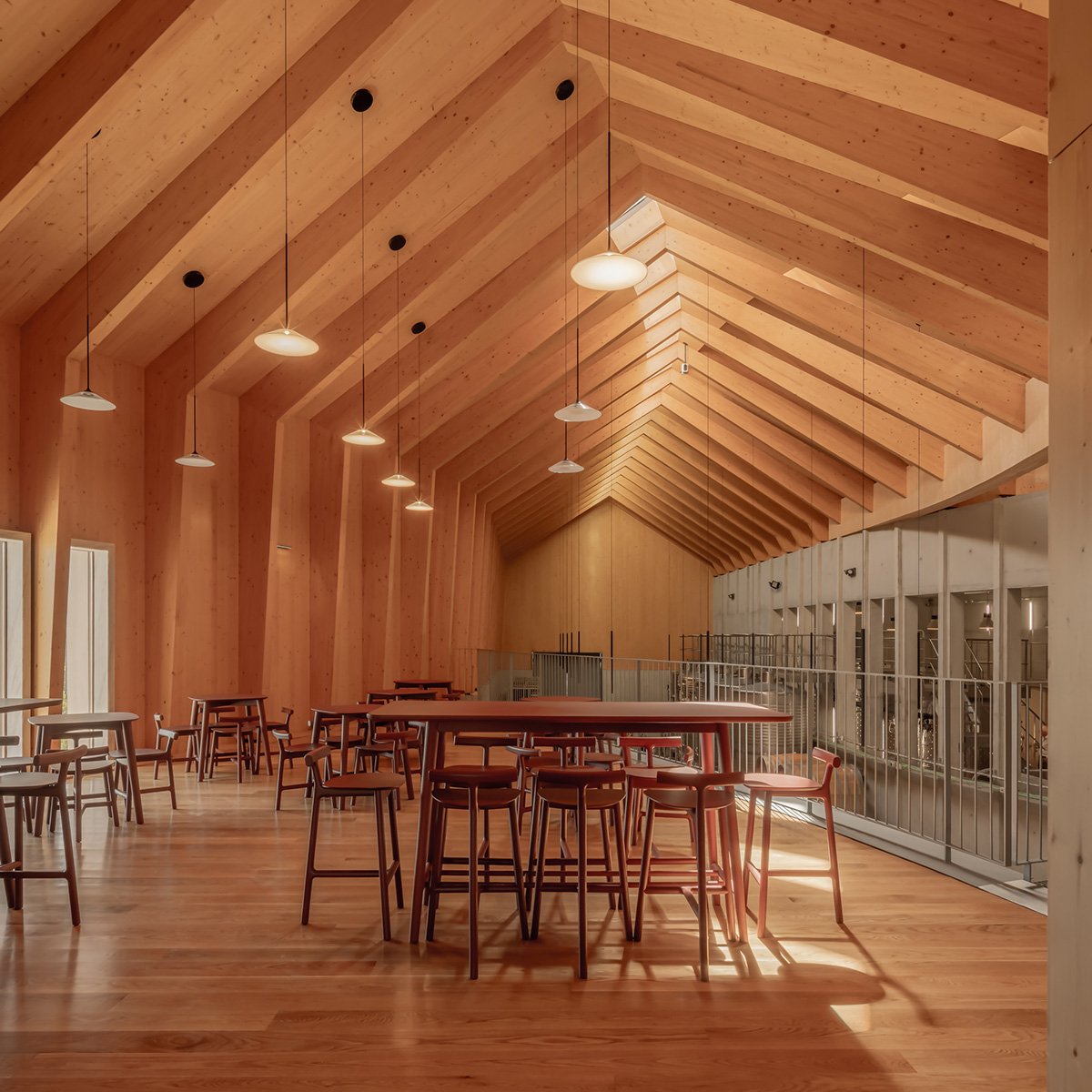
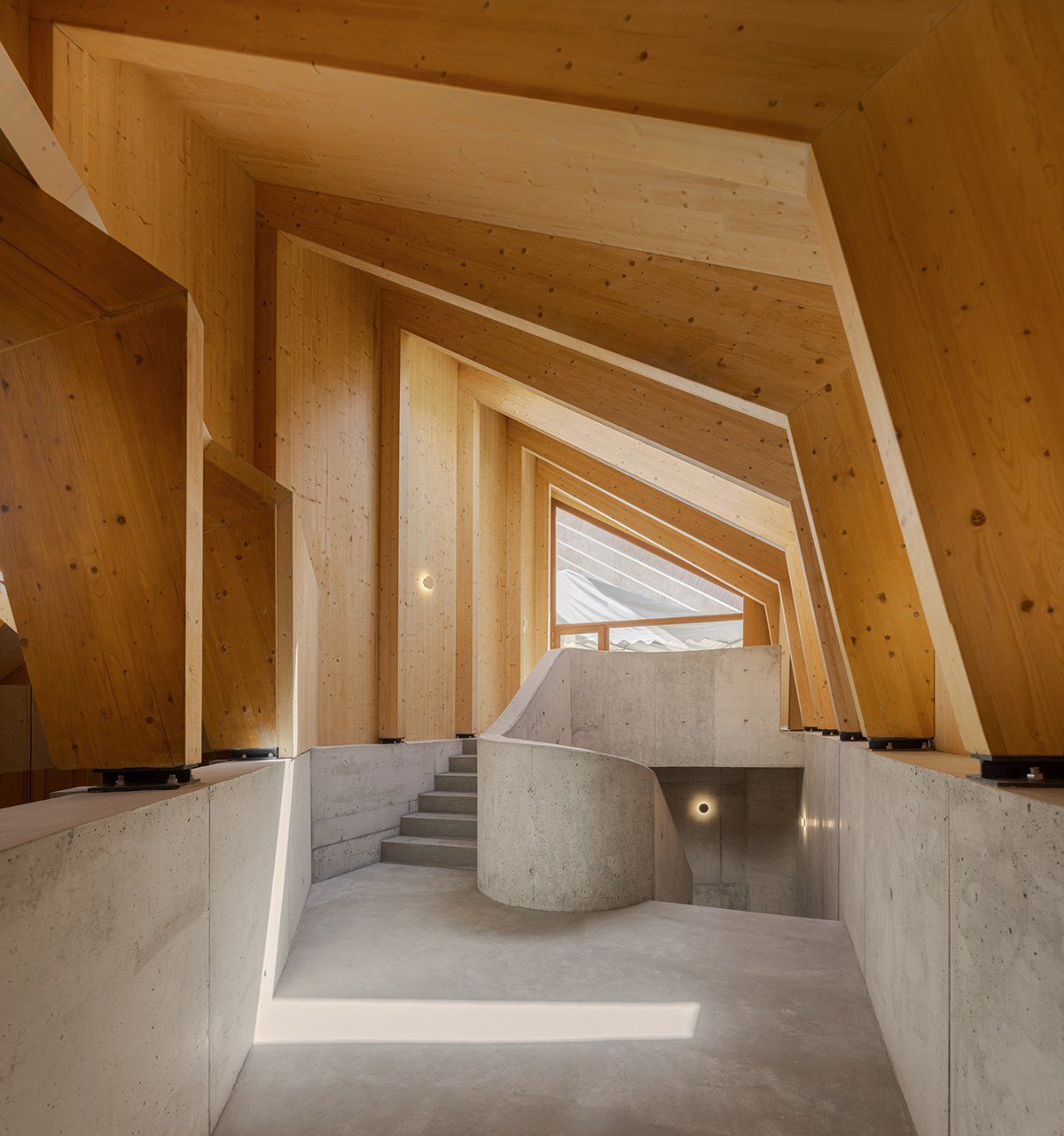
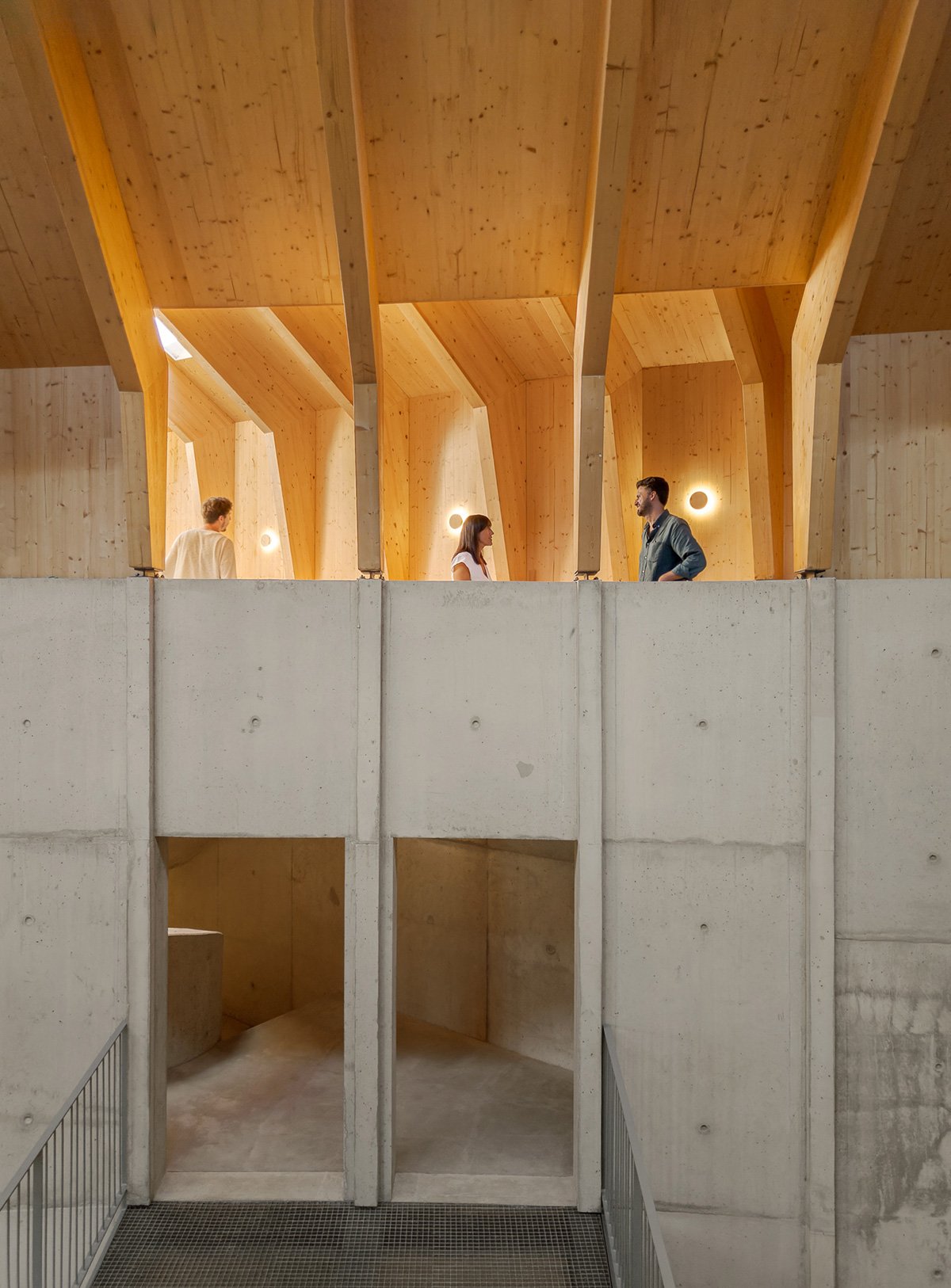
The geometry of the winery’s roof interprets the vernacular gable roof structured in wood. This structure has been taken over and exposed in this winery and has become a sinuous, continuous and organic sculptural element that flows through the tangential curves of the vineyard slopes.

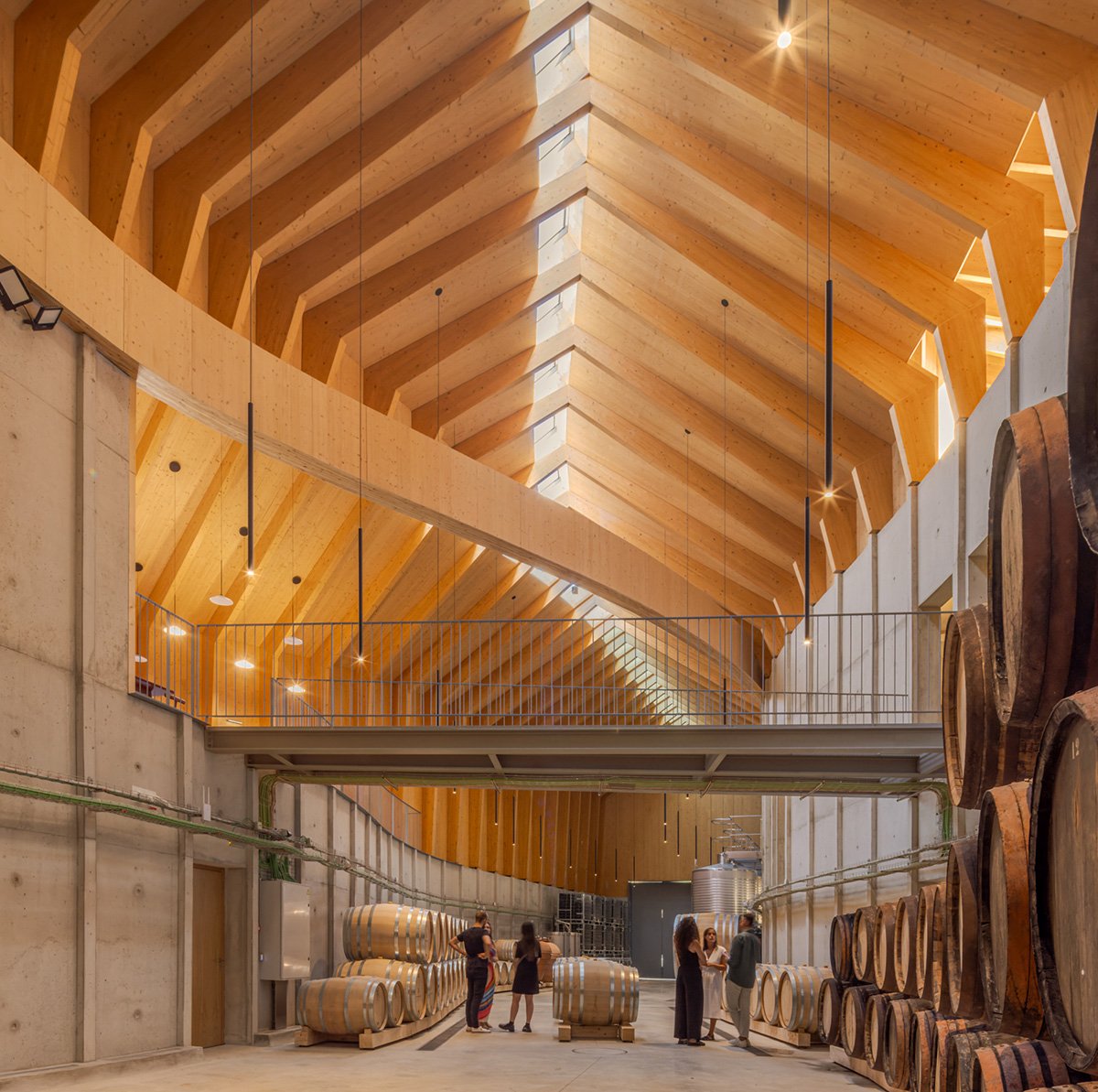
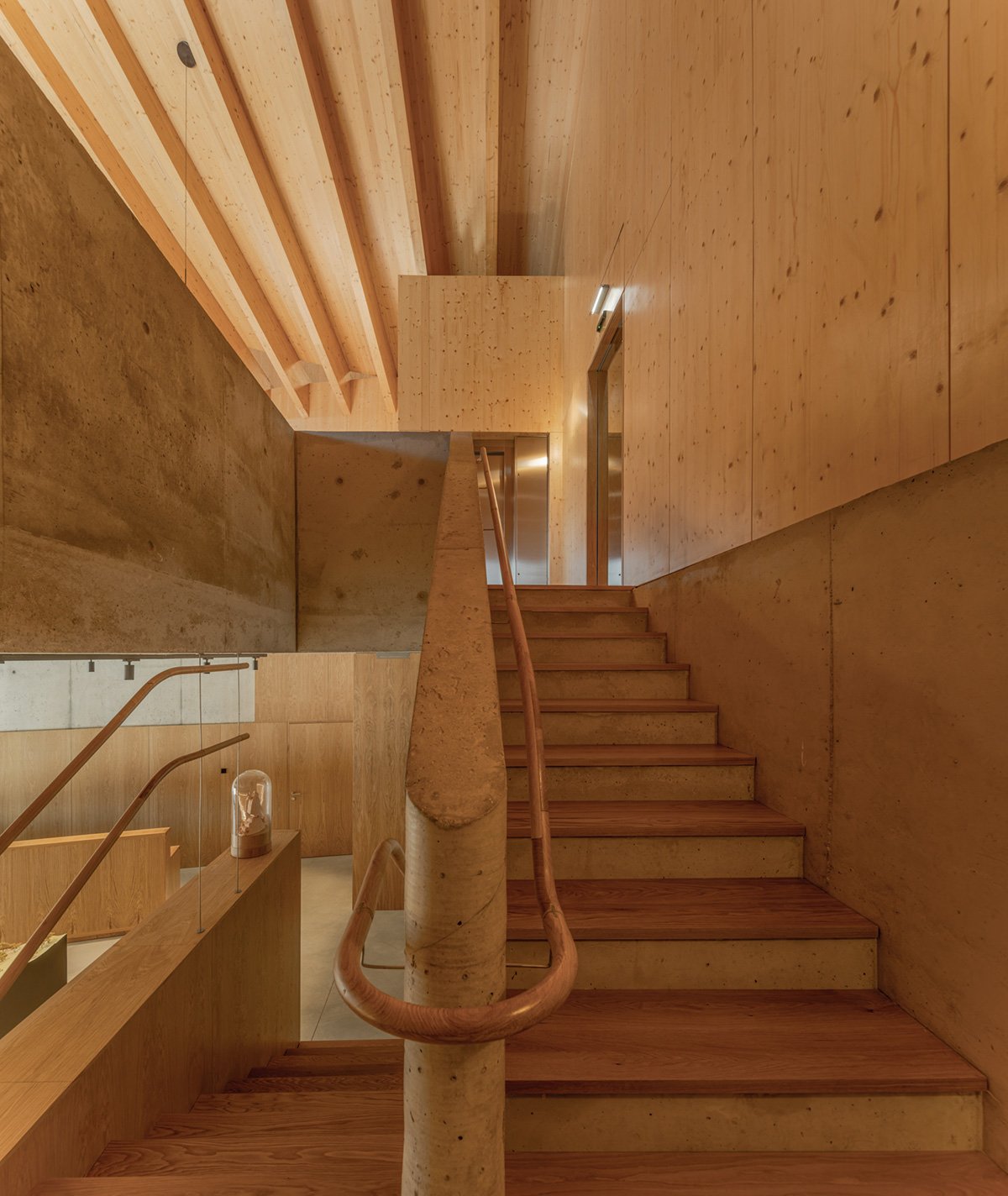
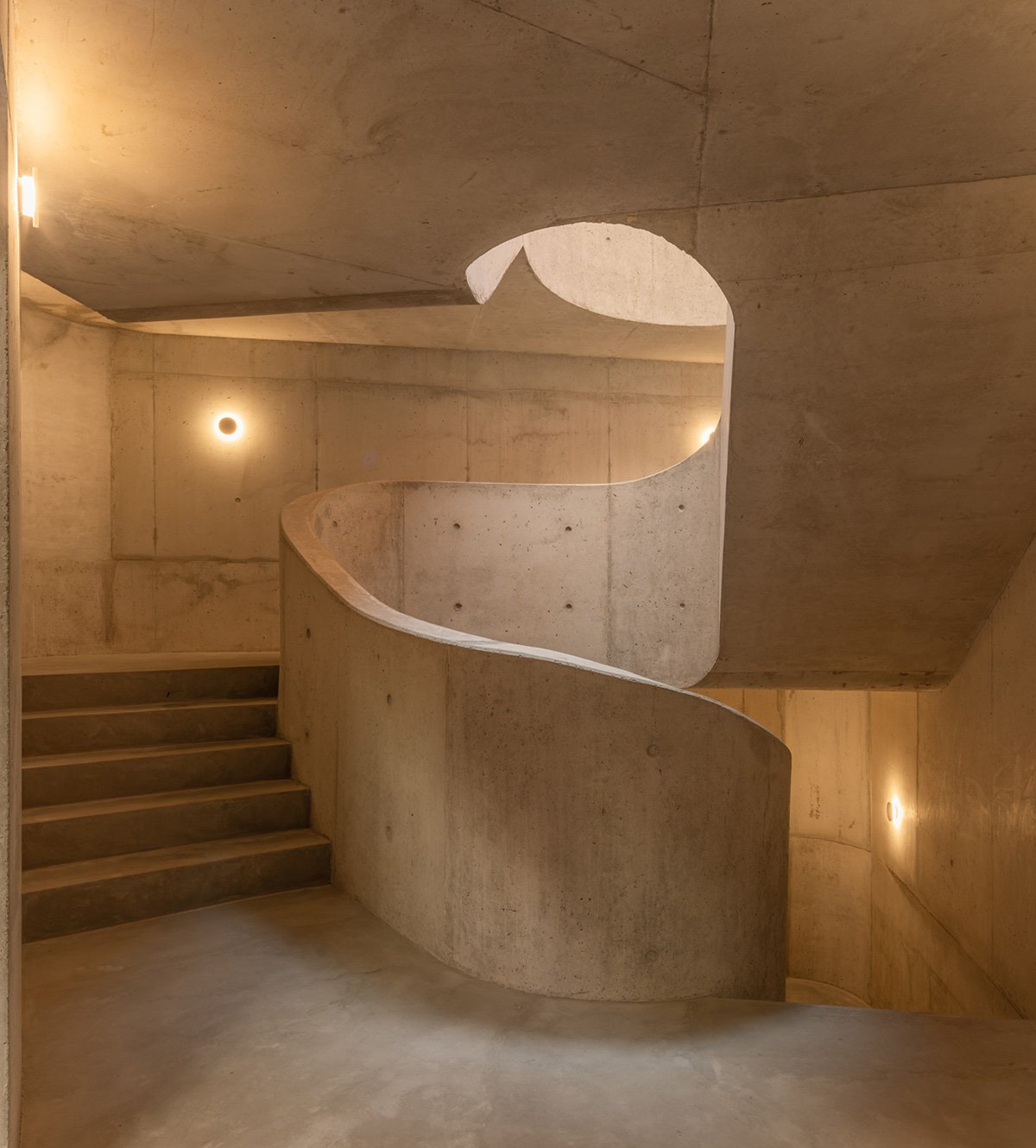
The winery’s materials replicate the natural palette of pinkish browns, greens and greys, underlining traditional skills and crafts, but updated by modern technologies. Schist and granite were used in the exterior elements and in the interior concrete retaining walls. The structure of the building’s naves is made of laminated wood frames and CLT (Cross Laminated Timber) panels, covered with prefabricated GRC (Glass-Fiber Reinforced Concrete) cladding panels, produced in the north, less than 150 km from the winery. This benefits the northern industry and community and reflects the sustainable practice of cutting down on the long-distance transportation of materials. These prefabricated building elements also saved on-site construction and reduced traffic on the property.
Wooden structures have been used at the points where the building does not touch the ground, to also minimize the use of concrete, which has reduced CO2 emissions into the atmosphere by 40%, compared to what a building completely made of concrete would emit.


Exposed to the effects of the climate, all these materials take on beautiful shades of tone and texture, that better integrate the winery into its natural surroundings and allows the building to improve its quality over time, just like a good Port wine. This building encourages an involvement with nature by framing views from inside the winery and, outside, there are trails, nooks and patios that invite introspection, contemplation, meditation, walking and socializing.
The winery’s energy optimization implemented and combined preservation and energy production solutions, selecting the lowest energy consumption and reducing greenhouse gas emissions into the atmosphere.


The energy solutions explore the potential of architecture to take advantage of passive strategies to preserve the interior space of the wine ageing area with a temperature between 14 and 16 degrees, when the outside temperature ranges between -5º and 45º Celsius degrees from winter to summer. We achieved our goal of placing the building with the southern envelope in contact with the earth, taking advantage of its inertia, and turning the main façade to the north where there is little sunlight, even in summer.
Local electricity production solutions managed by a central system were implemented and combined to save energy and better control and monitor the energy modus operandi. The partially buried building takes advantage of the thermal stability of the ground and a low enthalpy geothermal solution produces, recovers and stores electricity. The high initial cost of this energy program is recovered in the short term, as it has high renewable potential, requires little maintenance and ensures ideal hydrothermal levels for the wine industry and human comfort.
This combination of passive and active systems has significantly reduced the thermal power and energy consumption of the mechanical systems installed.

For this winery with no public water supply infrastructure, solutions were created to use rainwater, obtain drinking water from artesian boreholes and treat and recycle water for irrigation, cleaning and firefighting. To avoid wasting water, the exterior sidewalks of sidewalks, paths and parks are permeable, and rainwater is returned to agricultural activities.
The landscape design recovers species of native flora that add color and perfume to the landscape, which serve as a habitat for animals that are beneficial to the vineyards, and which support activities that run parallel to wine production.

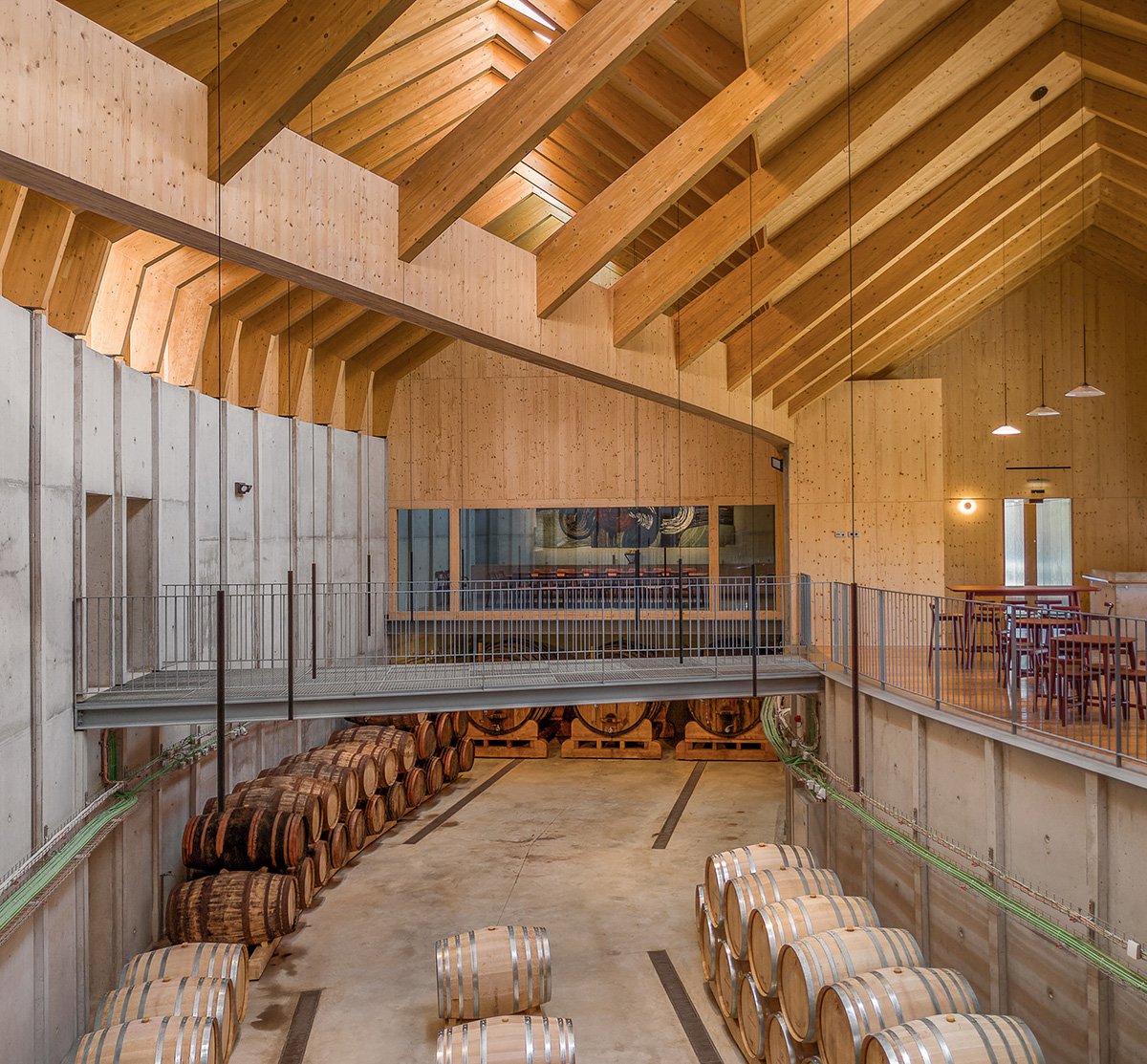
On the main façade of the winery is the entrance to a visitor center with a reception desk and a wine store. From here you go up to a meeting room with an all-glass wall and to the wine tasting area in a spacious balconied gallery, overlooking both the wine aging area in the central nave of the building and the vineyard and river. These rooms have access to the outside, to the vineyards and the chapel, via a large terrace overlooking the Douro. Events are hosted here that promote the winery and the region, celebrating both the landscape and the architecture and promoting prestigious wine tourism.
Drawings


Images