Excerpt: Workplace Tranche by Reasoning Instincts Architecture Studio – RIAS is conceived as a ‘tranche’ within a large industrial premise, reflecting the accomplishments and future growth of an established stainless-steel manufacturing unit. The unified, linear structure emphasizes horizontality, transparency, and openness, fostering workforce autonomy, collaboration, and a light-filled, efficient office with a clear spatial hierarchy.
Project Description
[Text as submitted by architect] In response to the global ambition of an established stainless-steel products manufacturing unit, the workspace is conceptualized as a ‘tranche’ a part of a large industrial premises and even larger diversified business network. The building aspires to represent the industry’s accomplishments and enthusiasm for future growth. The brief of the project was to attain improvised independence and autonomy of the workforce, which could offer a collaborative environment for the team and a personalized work environment for the leaders.
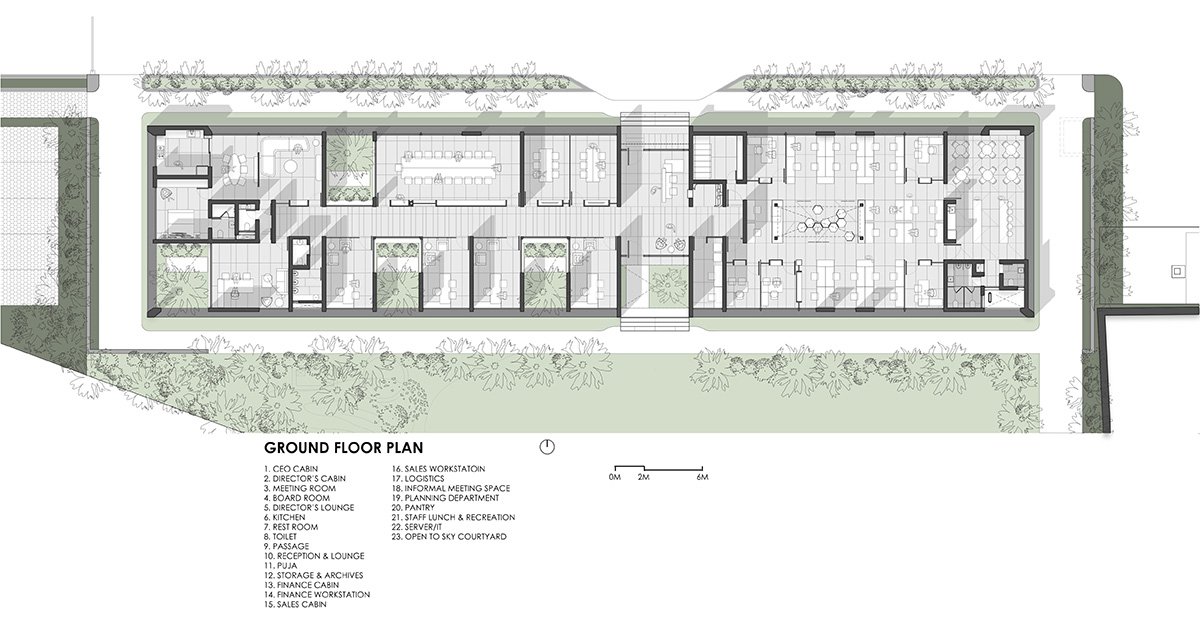
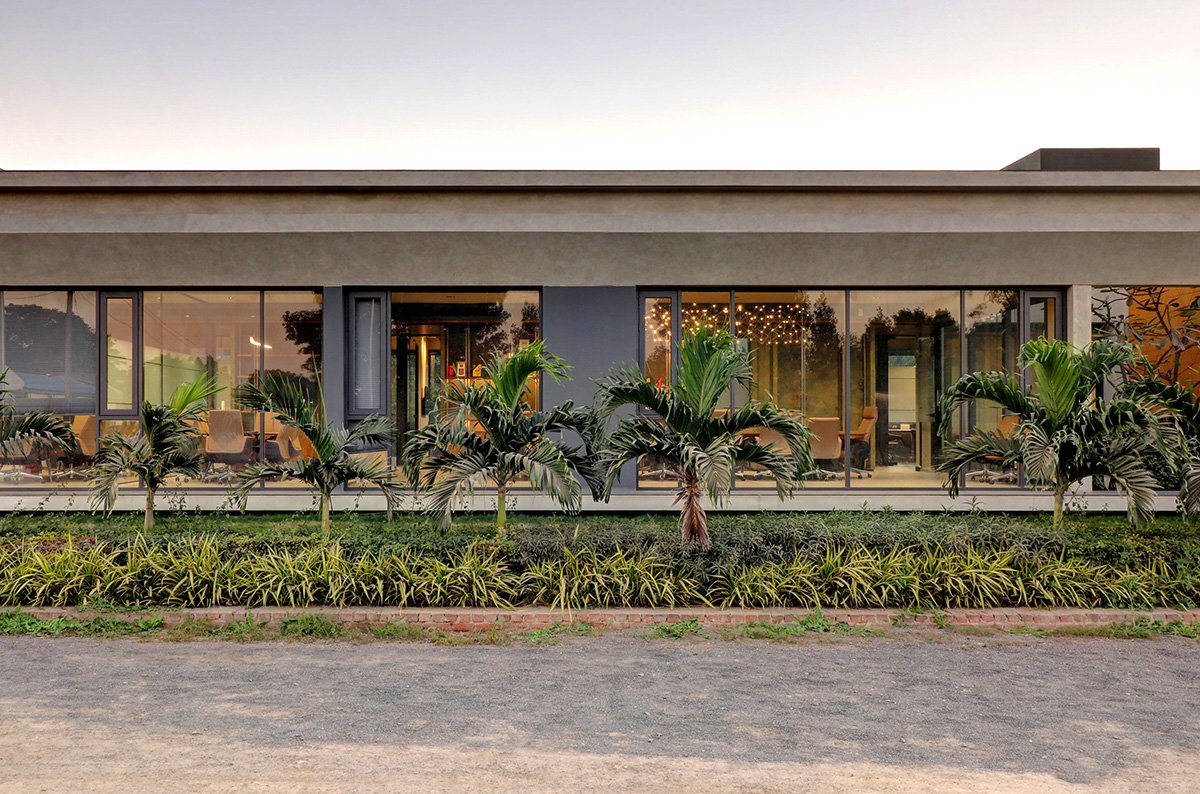
Conceived as a unified, linear, ground structure on the threshold of a large site, it emphasizes horizontality through its rectangular form. The space organization demanded a clear distinction and highly efficient distribution of programmatic requirements. The entrance is positioned carefully along the linear side of the building to establish a hierarchy and segregate the variety of workspaces as required. It determines a clear distinction between the west zone that belongs to the leaders and the east zone for the team. Each of these spaces is connected by a central corridor for efficient day-to-day work.
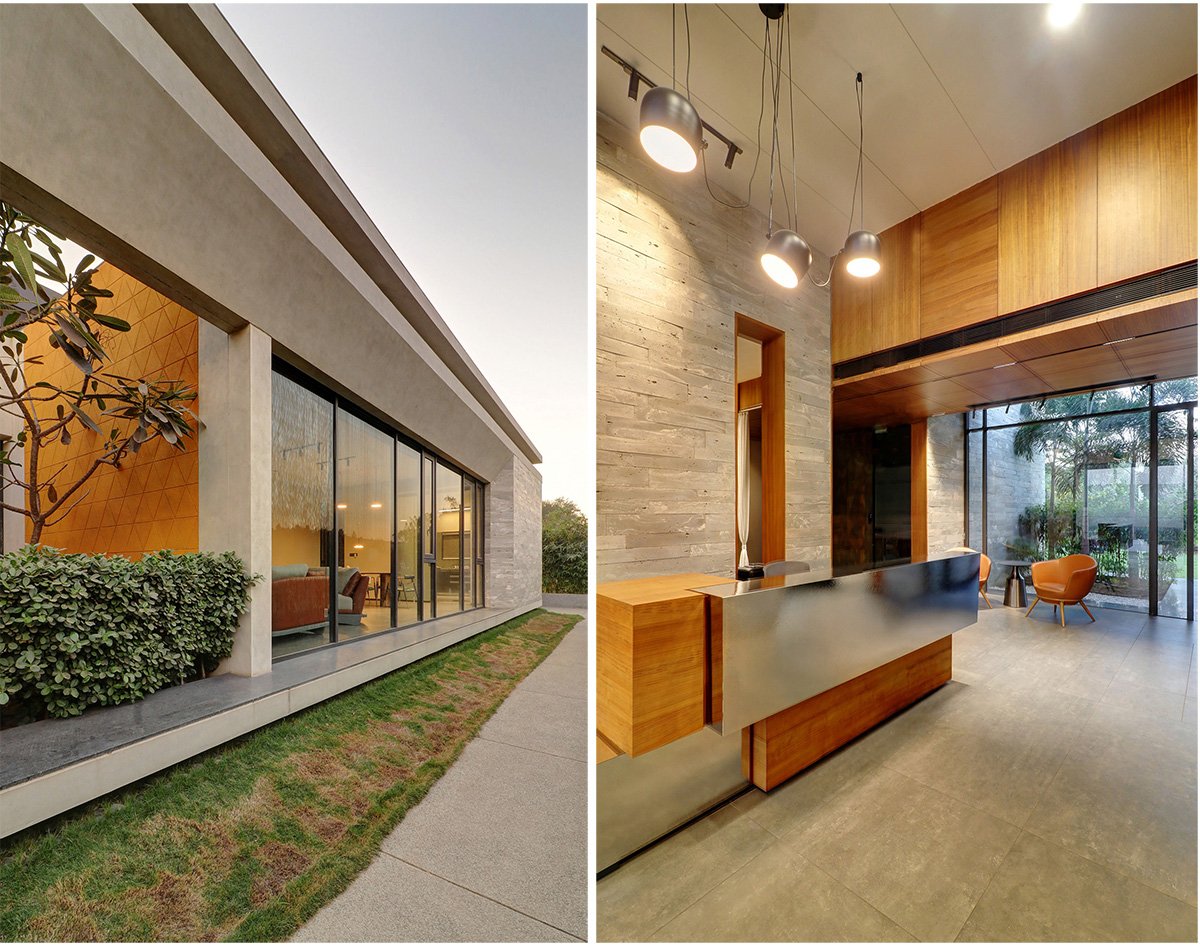
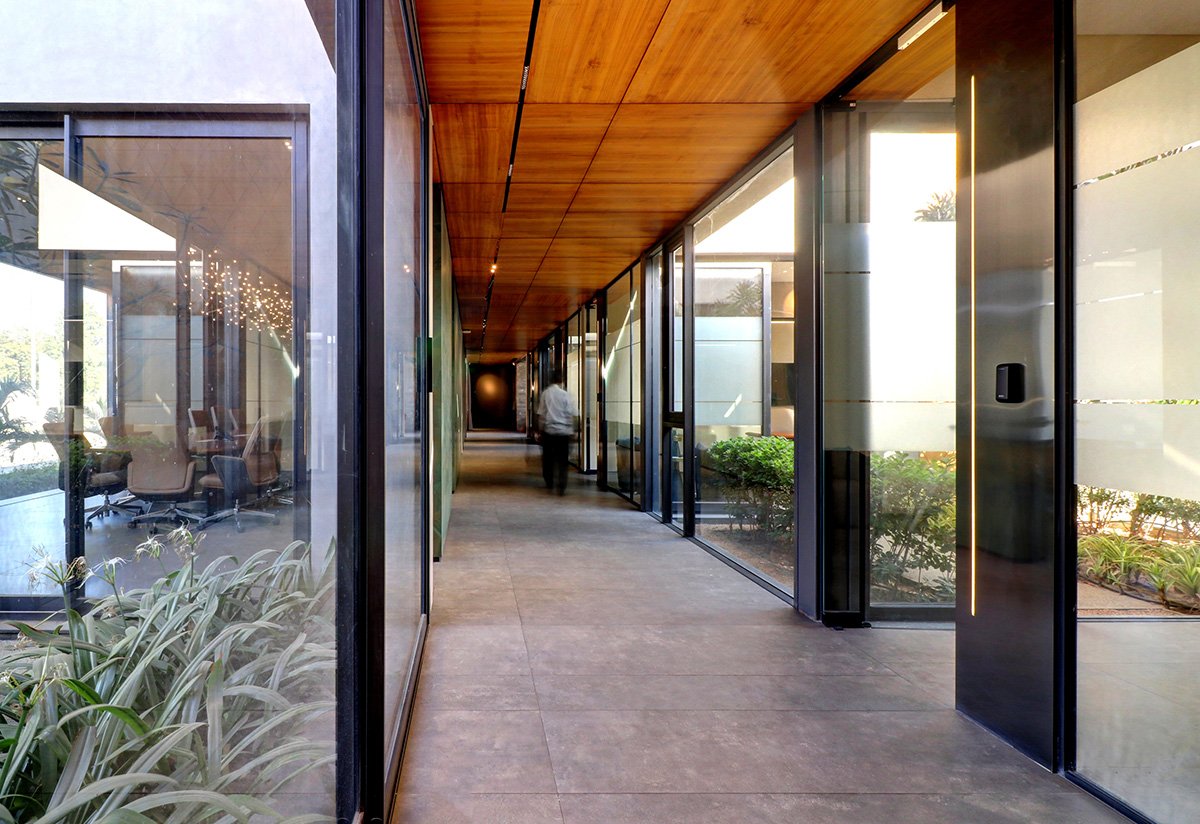
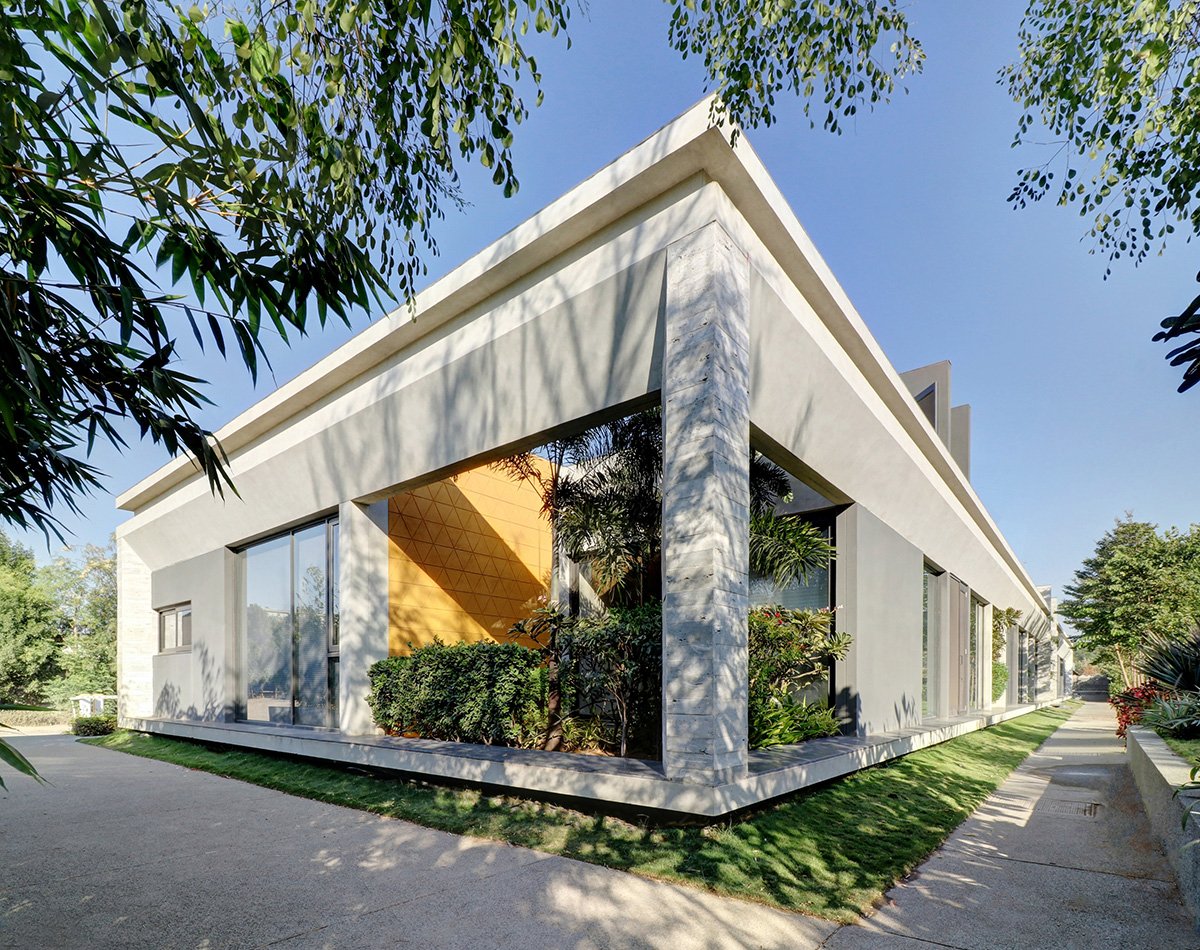
The plan prioritizes transparency and openness, achieved through a linear arrangement of spaces. Natural day light has been thoughtfully crafted to achieve a higher conducive working condition. The strategy to bring in natural light in both zones is different. In the west zone for individual cabins, there are staggered courtyards, while for workstations natural light is taken through the skylight. The courtyards also bring in natural light to the corridor and perform as extended outdoor spaces for the leader’s cabins.
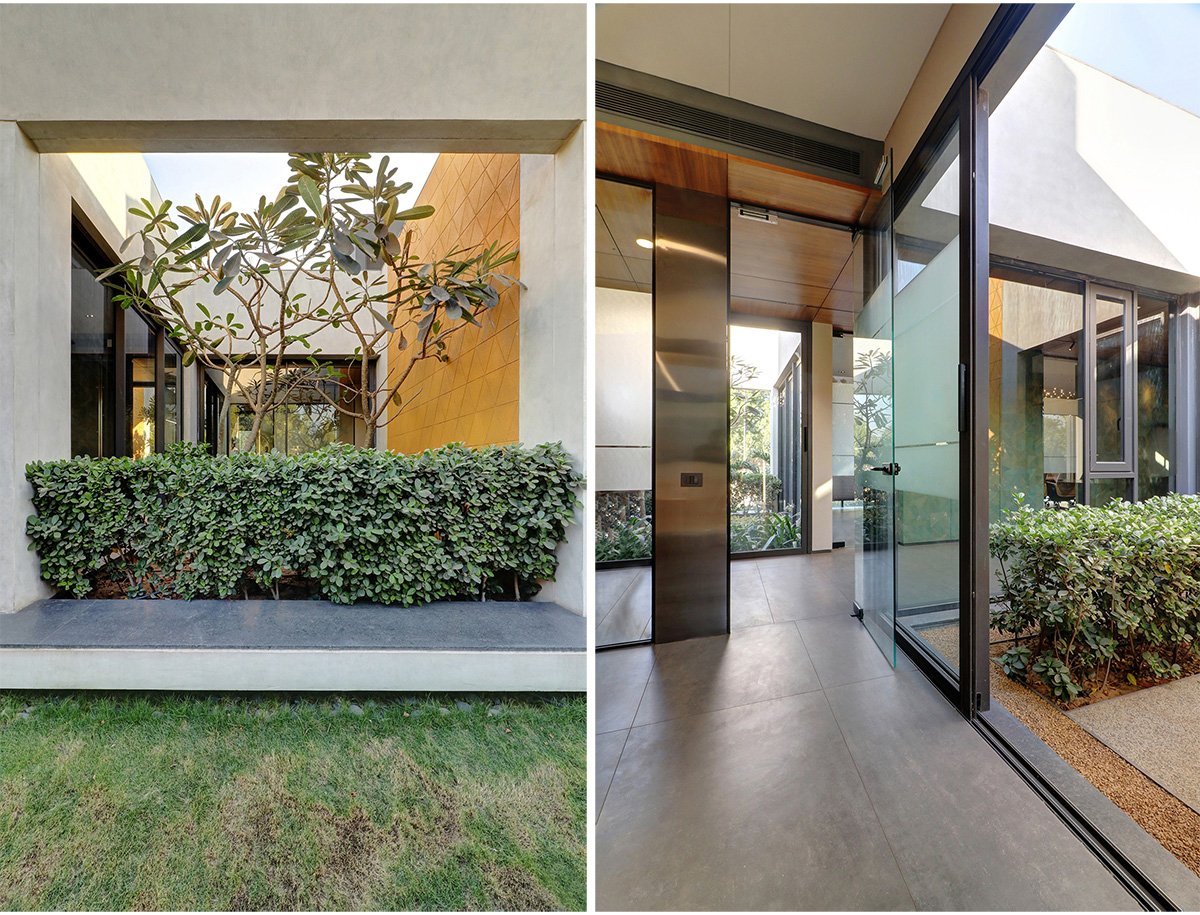
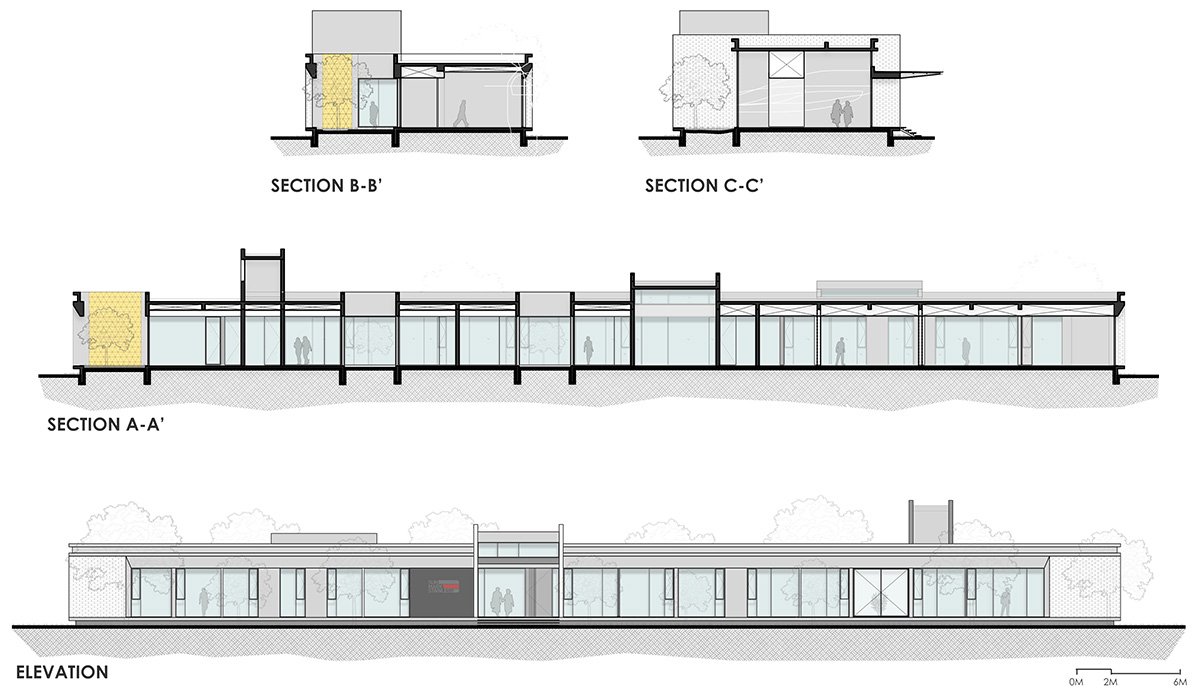

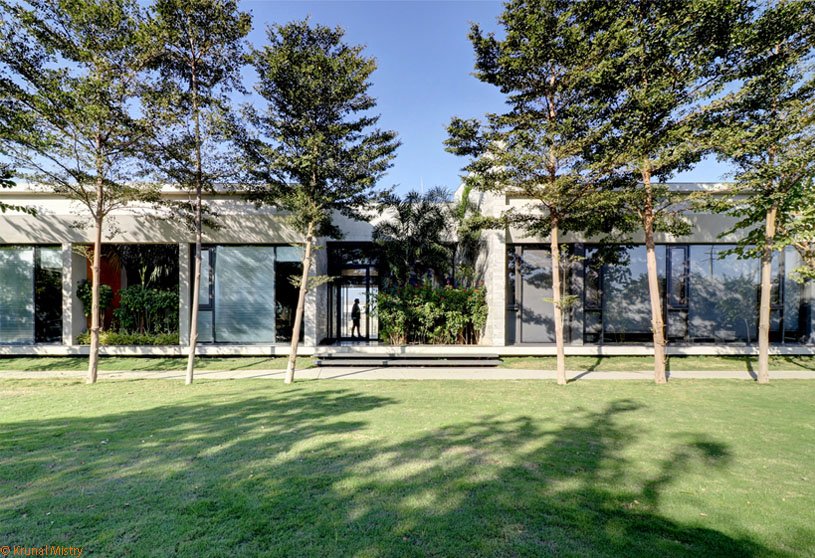
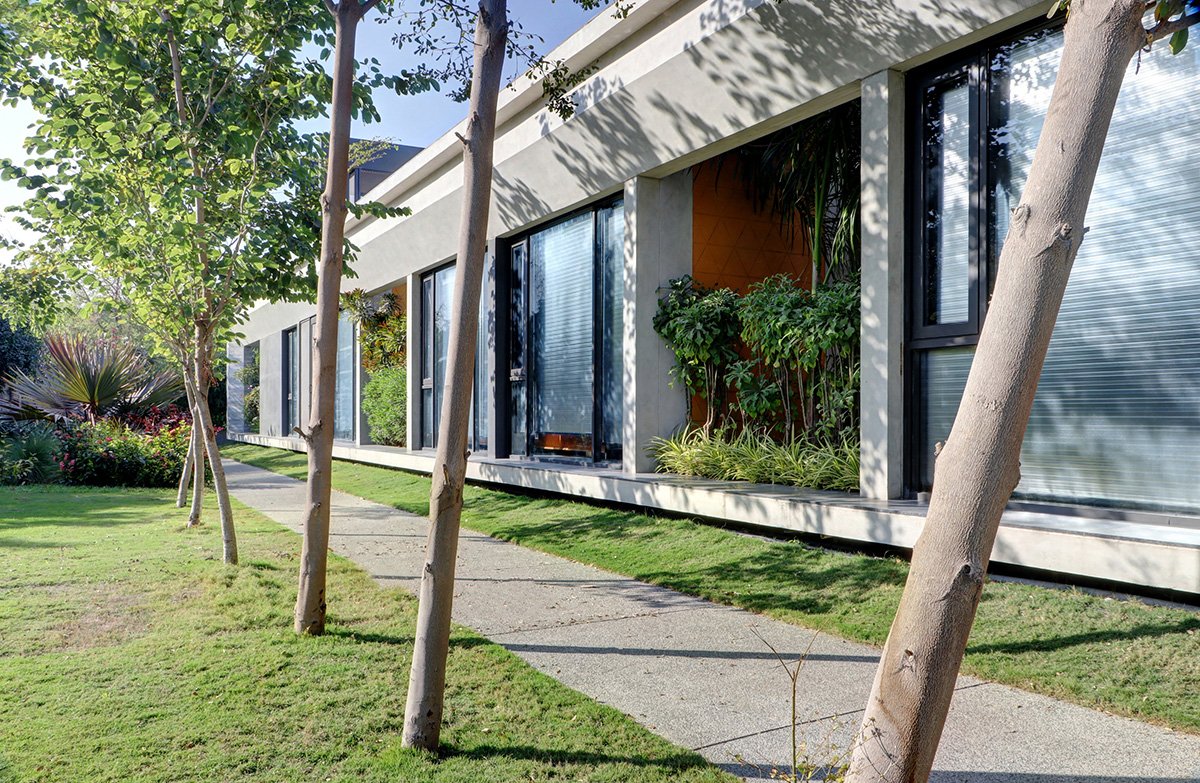
A concrete frame structure, partially cladded with composite stone, defines the overall outlook of the building. The courtyards are celebrated with contrasting and complementing yellow colour groove pattern walls. The roofline is articulated as a thin edge adding a subtle architectural detail. Elements like peripheral beams and columns are articulated creating shadow gaps, tapered surfaces, to accentuate the horizontal and linear architectural form. The regularity of the fenestration contributes to the building’s overall sense of order and simplicity. The extensive glazing and the reflections in the glass panels further enhance the interplay of light and shadow, adding depth and visual interest.
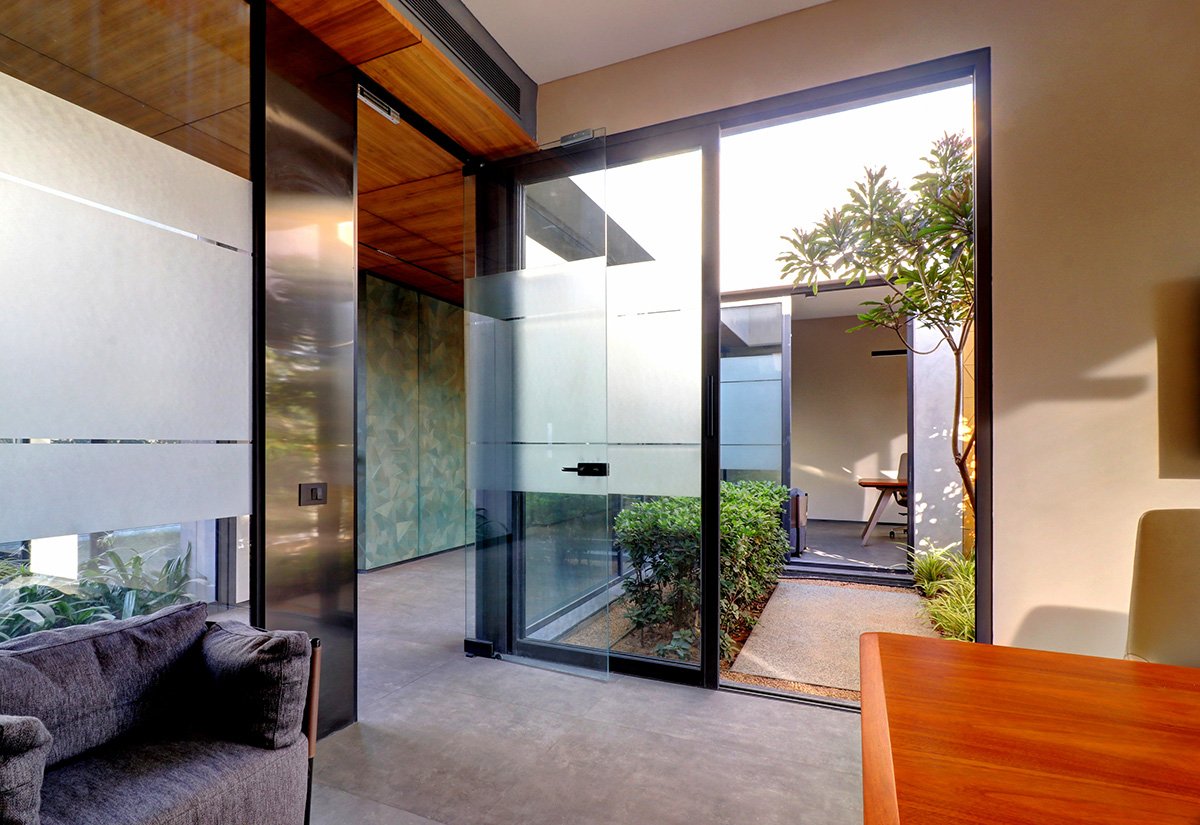
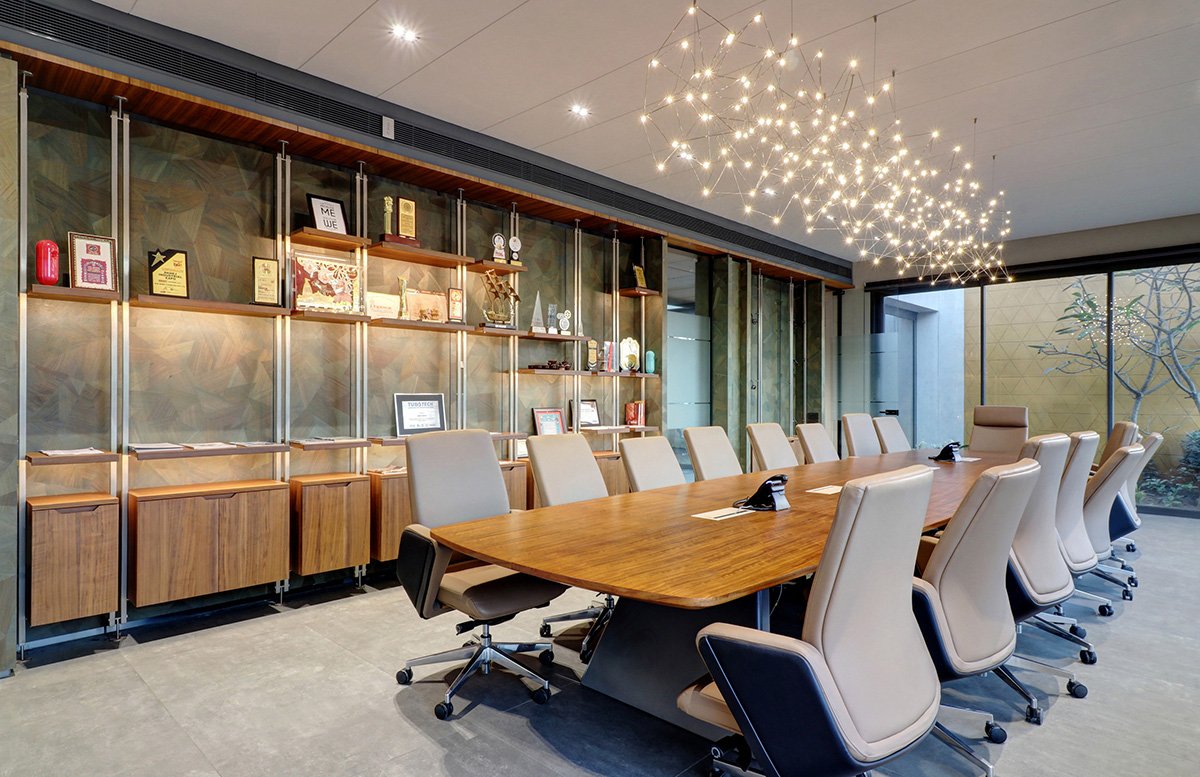
During twilight, the glazed facade showcases the warm, ambient glow emanating from the interior spaces. This soft lighting contrasts with the cool tones of the dusk sky, creates a tranquil and inviting atmosphere.
The lush south lawn and a series of tall, slender trees, play a significant role in defining the character of the architectural language. The trees provide a natural vertical counterpoint to the building’s horizontal emphasis, while also offering shade and visual interest.
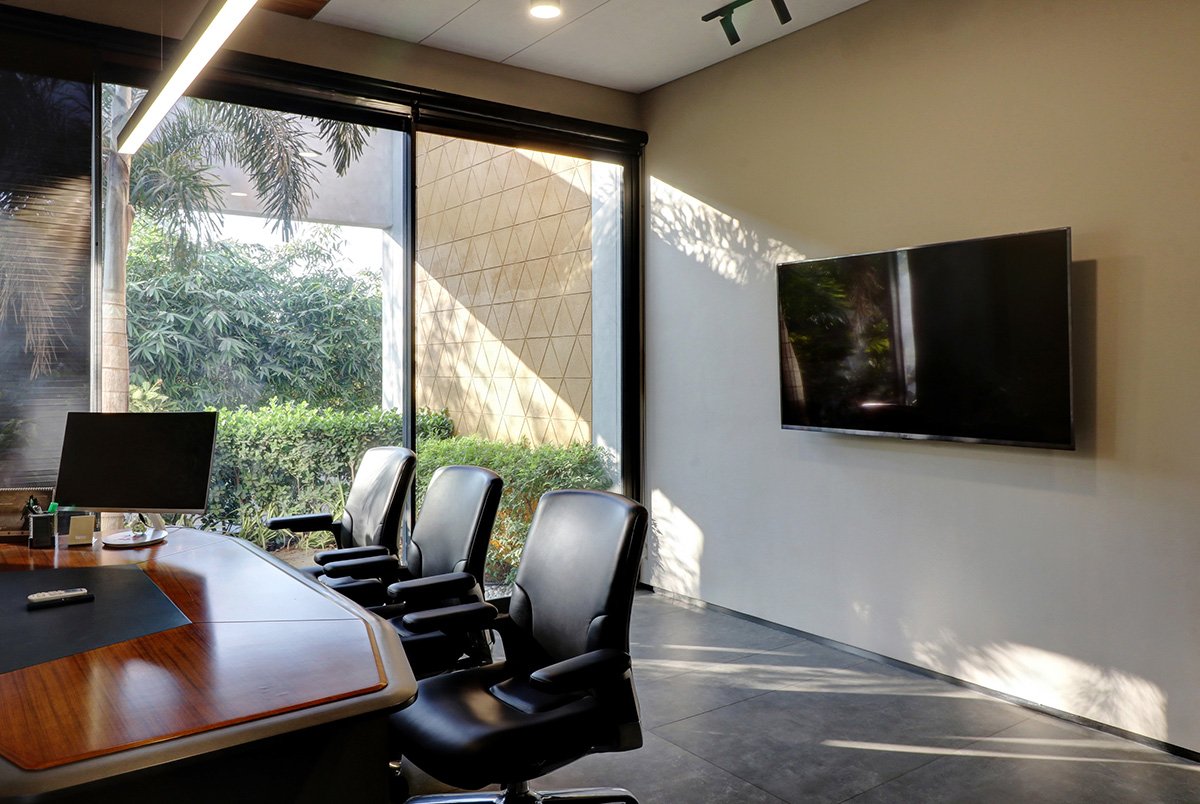
The building conveys a sense of quiet elegance and discreet sophistication. Its minimalist design, coupled with the integration of natural elements, creates a harmonious and serene environment. The building’s transparency and openness suggest a focus on collaboration and connection, making it suitable for the defined use that value both functionality and aesthetic appeal.
Images


