
Excerpt: Yama-Tani by Kengo Kuma and Associates is a small wooden housing project in northeast Paris that reimagines urban living at a human scale. Inspired by village life, it brings nature into the architecture through open, stepped forms, exterior access, and generous outdoor spaces. Its dynamic wooden façade and central garden create a warm, calm atmosphere, blending softness, light, and connection to the surroundings.
Project Description
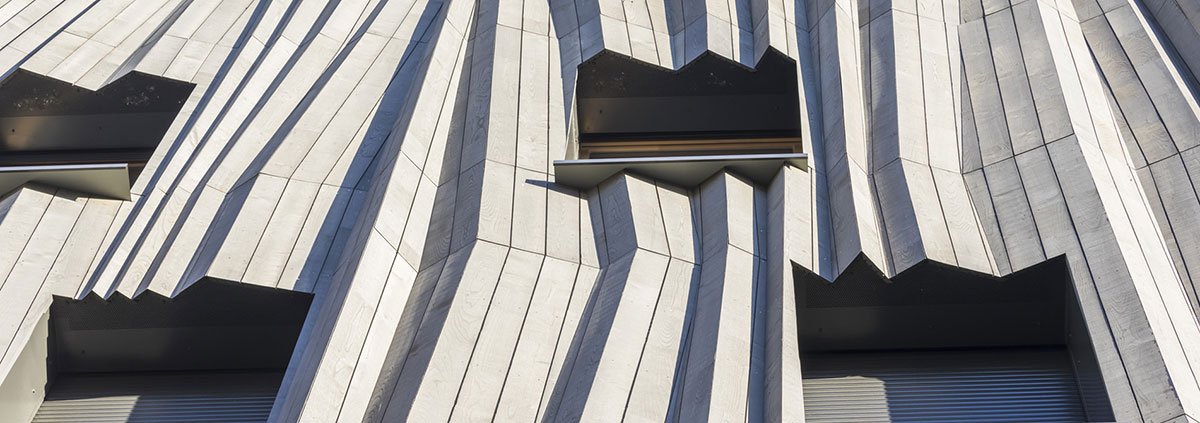
[Text as submitted by architect] Yama Tani is a small wooden housing project located in the northeast of Paris. Unlike the high-rise buildings in the surrounding area, its street is made up of buildings from 2 or 3 floors up to 5. We therefore aspire to recreate a human scale like in a village and to bring nature into the building.
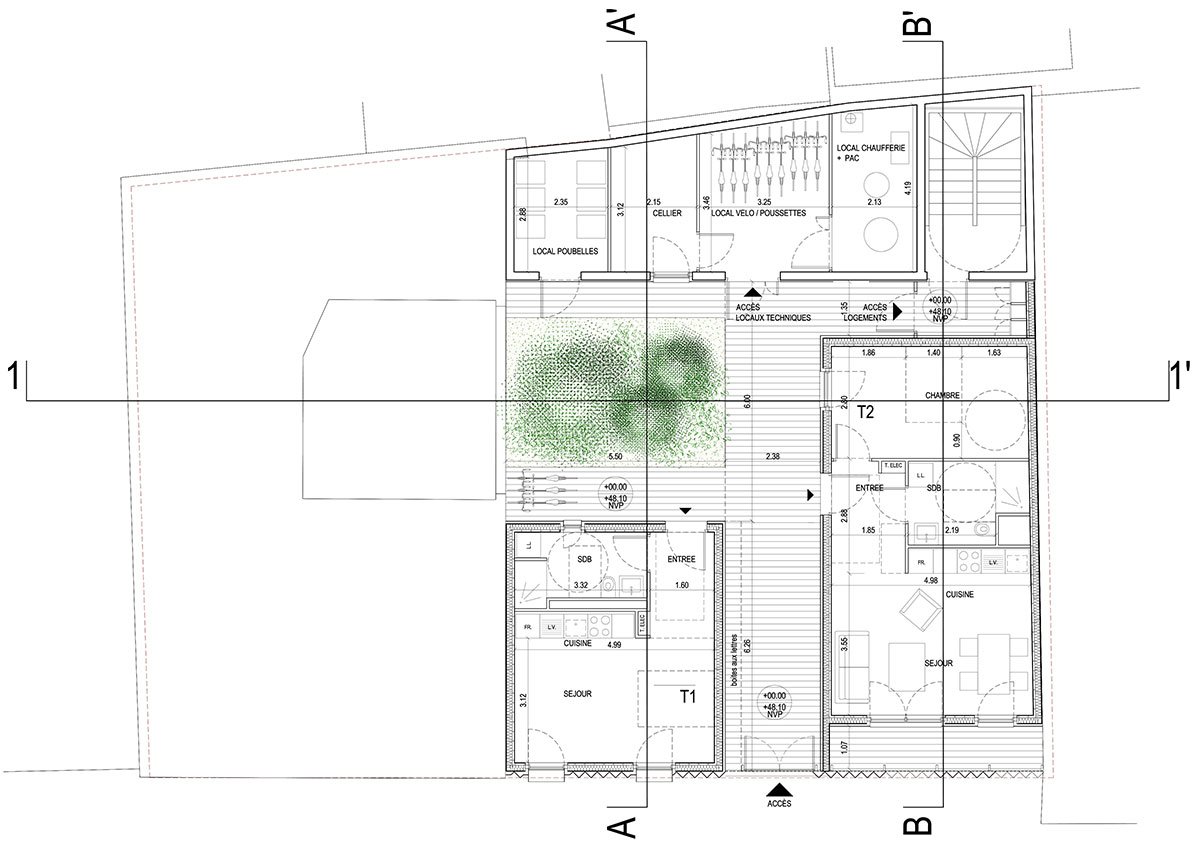
Our strategy consists of revealing the possibility of a wide space in a limited volume: through a stepped composition, the building is open in the south-east corner to bring a maximum of sunlight in its center. Also, most of the apartments are façade to façade, and all benefit from an outdoor space such as balcony, loggia or terraces and rooftop.
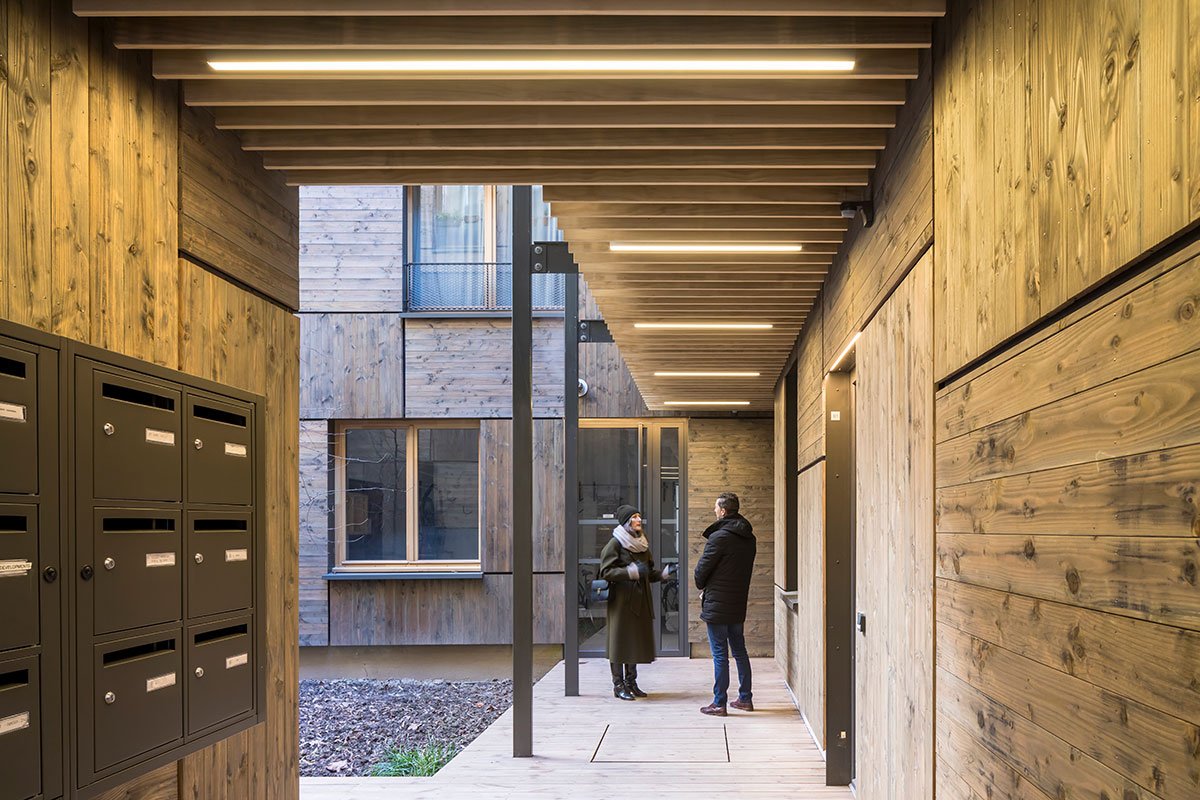
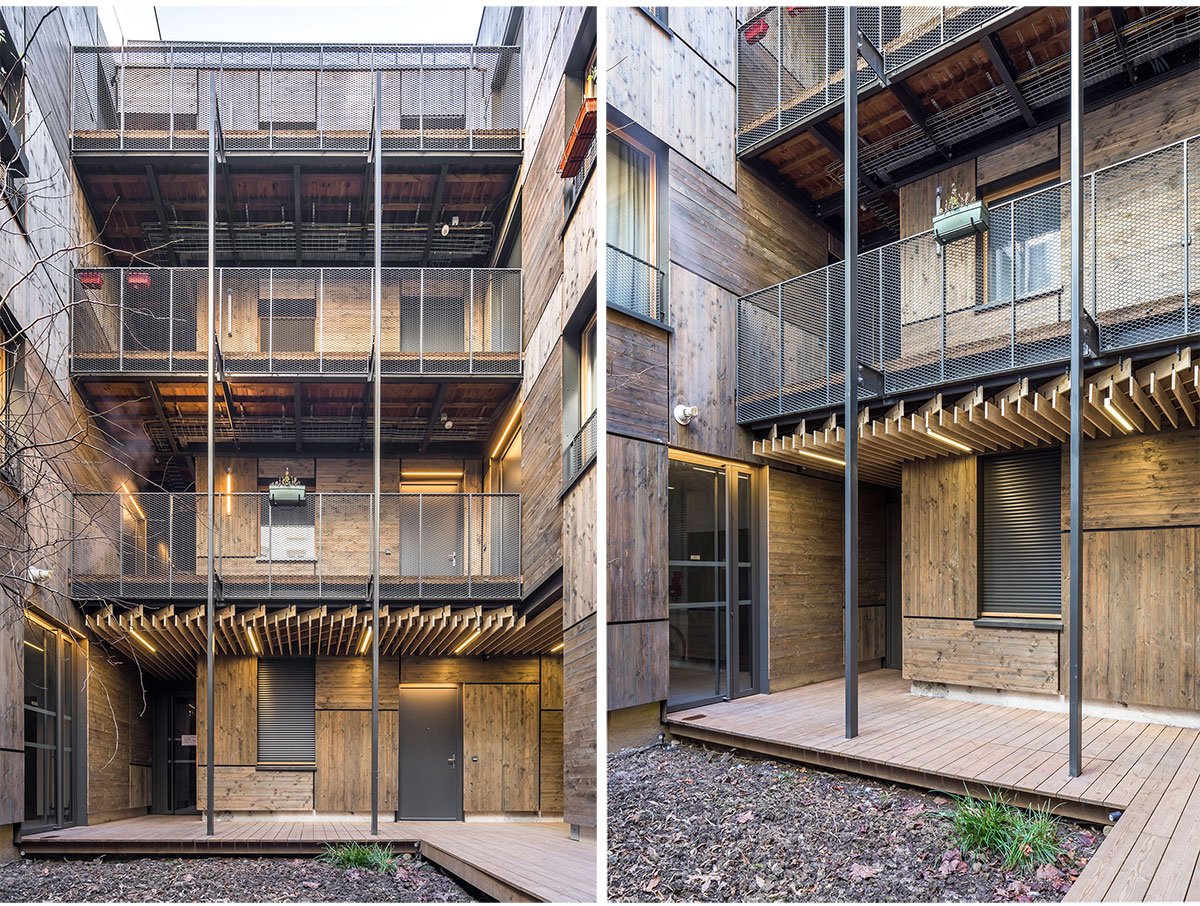
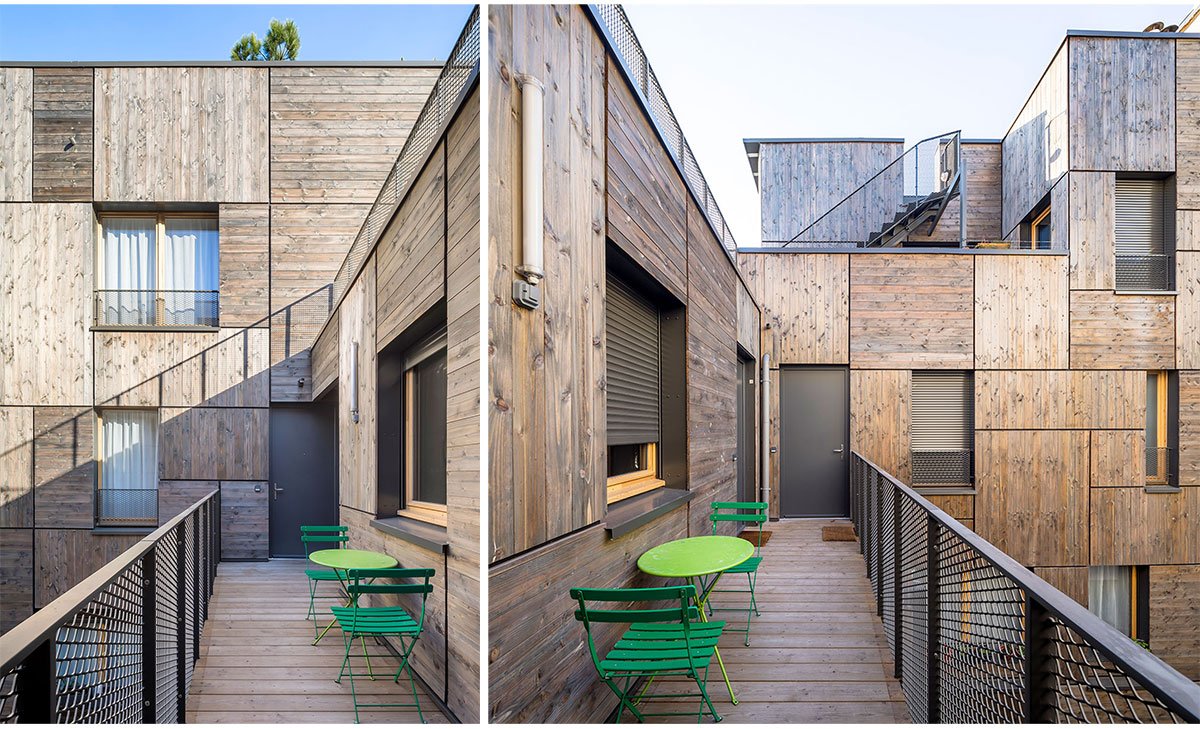
The accommodations are served by exterior distribution corridors, which provide fluidity between the outside and the inside. Porosity and softness to feel quiet and more connected to the season and the weather. Feel comfortable. Thus, each appartement has direct access from the outside. A backyard garden places nature as the central element. This is visible from the street, like a gentle call giving a depth to the view.
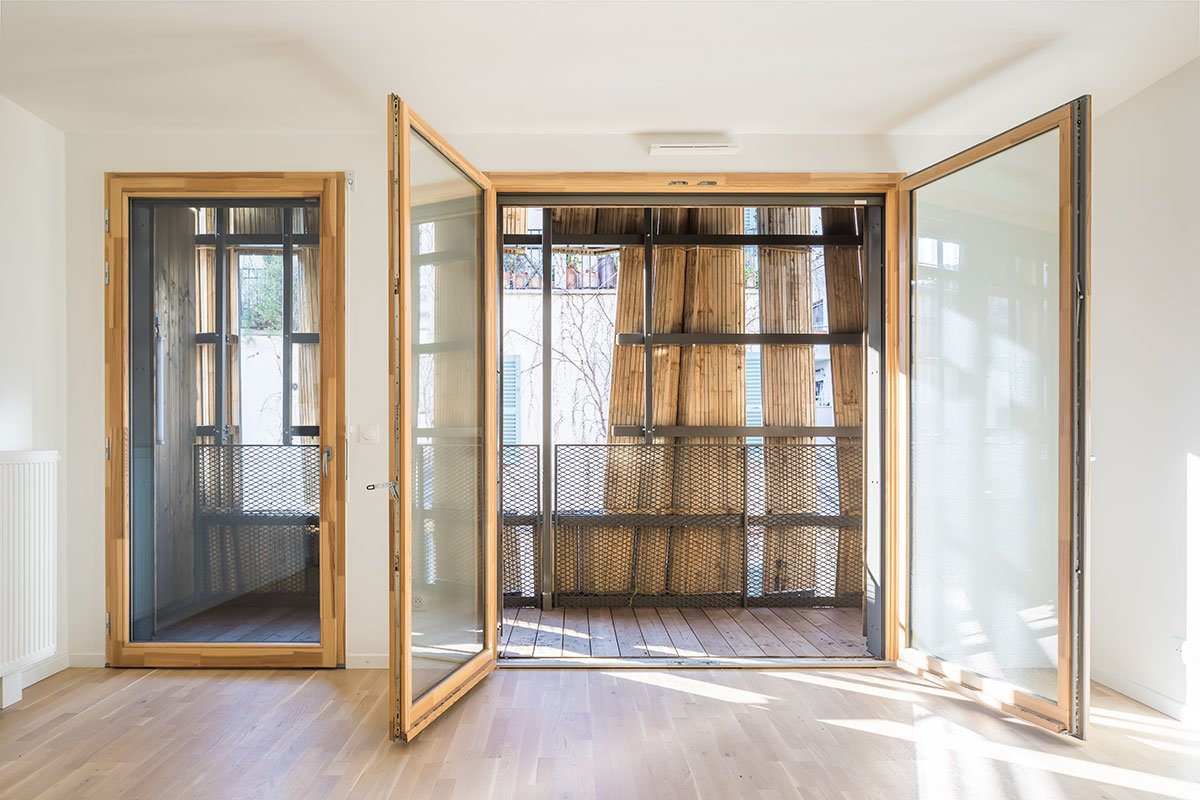
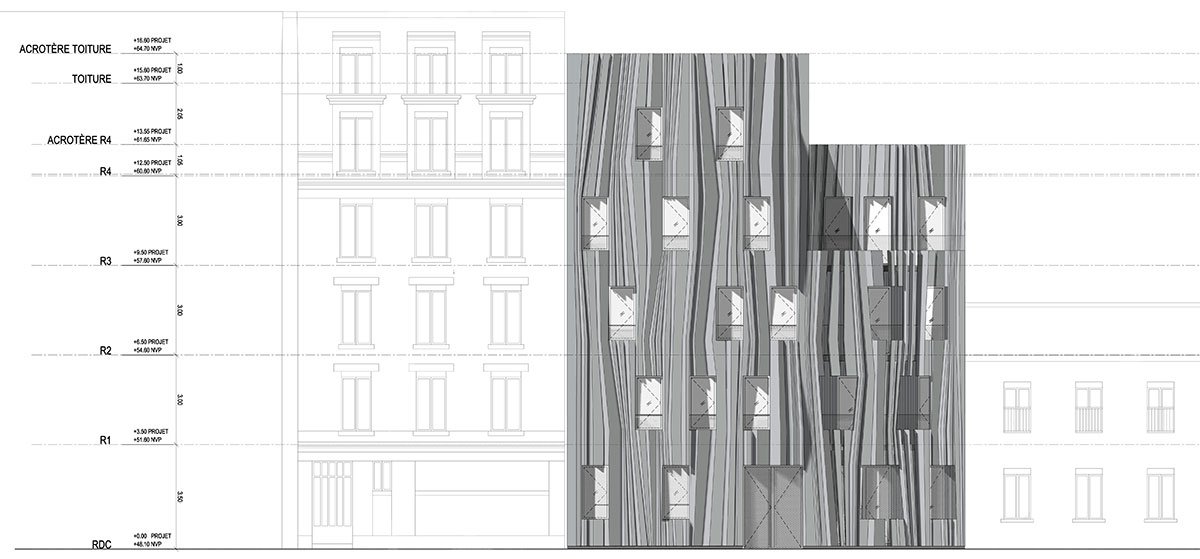
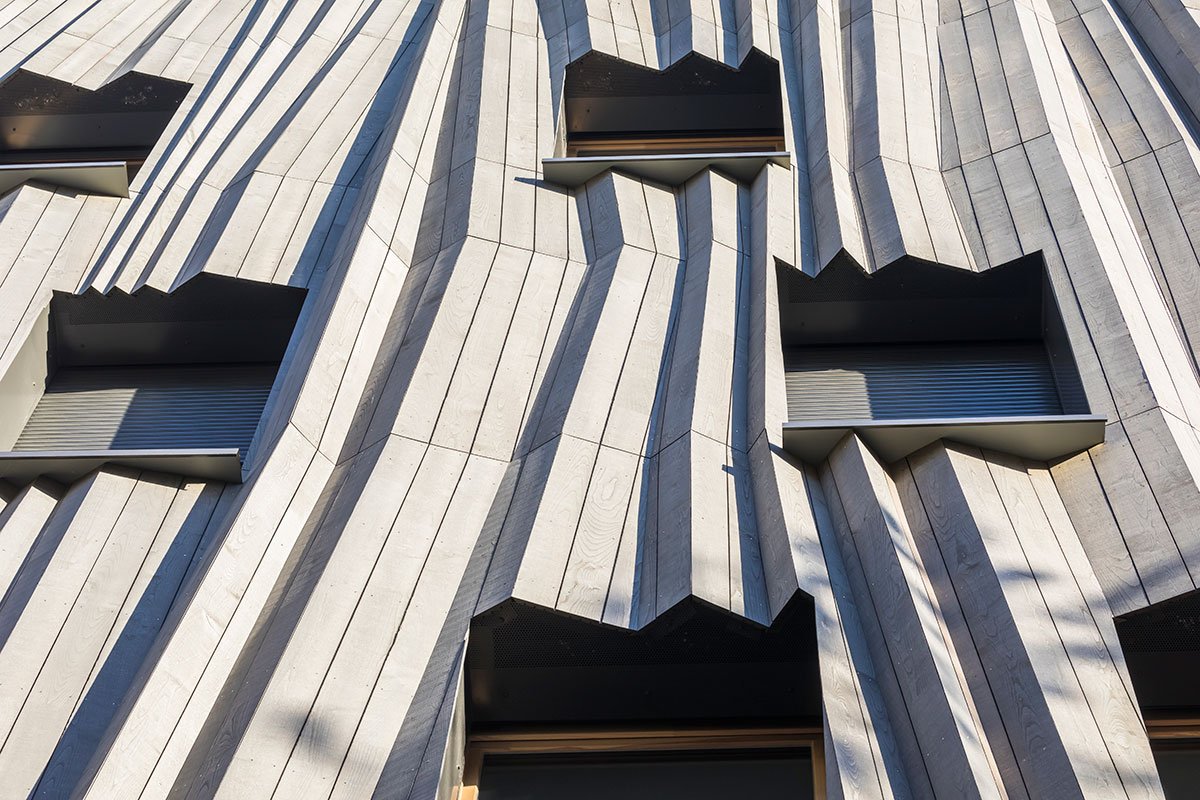
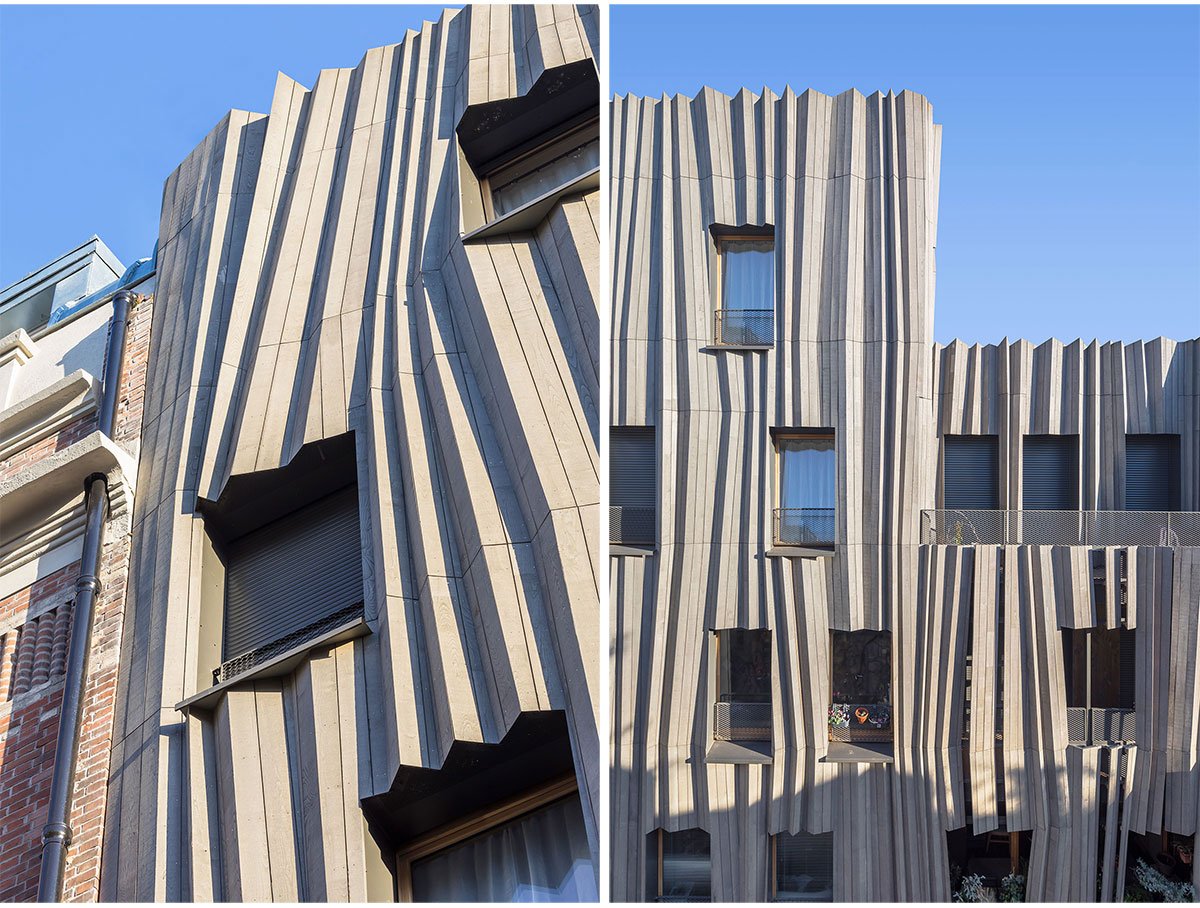
The warmth of wood brings a unique sensation of softness. The inertia of this material provides significant well-being, different acoustics, attractive dry heating, and a qualitative atmosphere in the home. The wood species are chosen according to the expected design: pre-aged chestnut for the main street facade which is hard enough to allow a precise pleated junction, Douglas smoother for the courtyard façade which also becomes naturally silver over time.
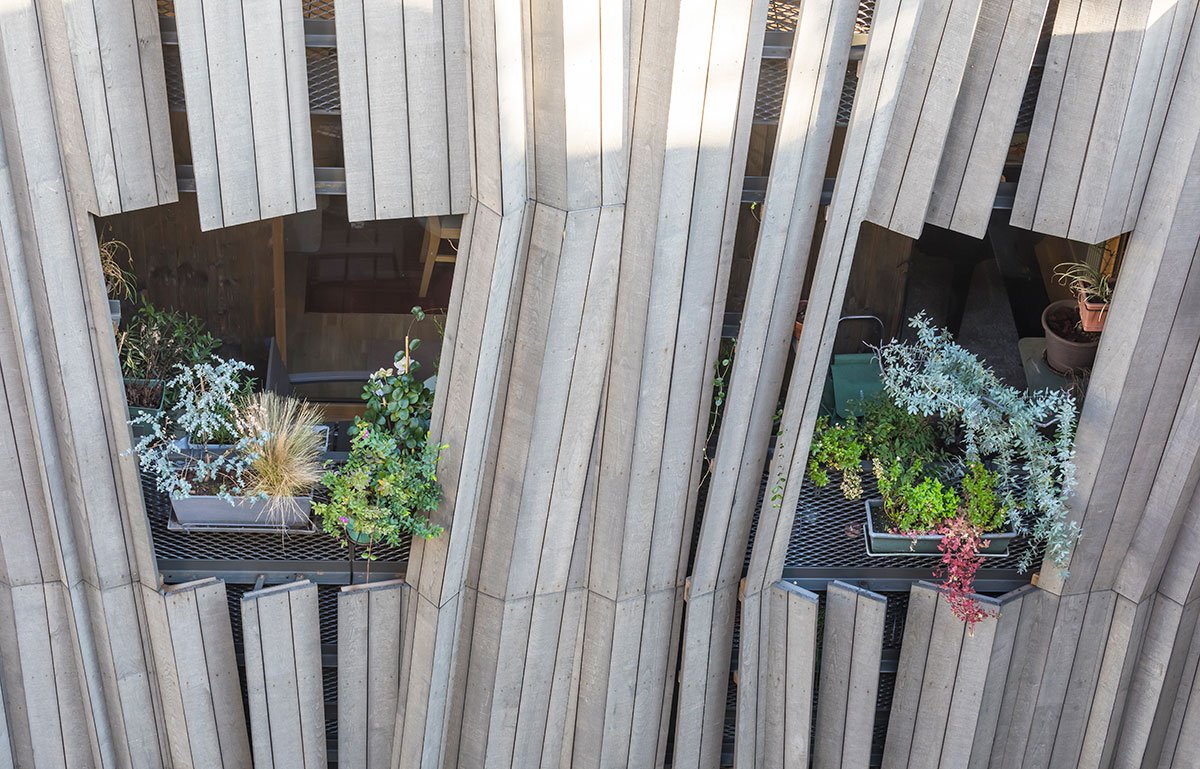
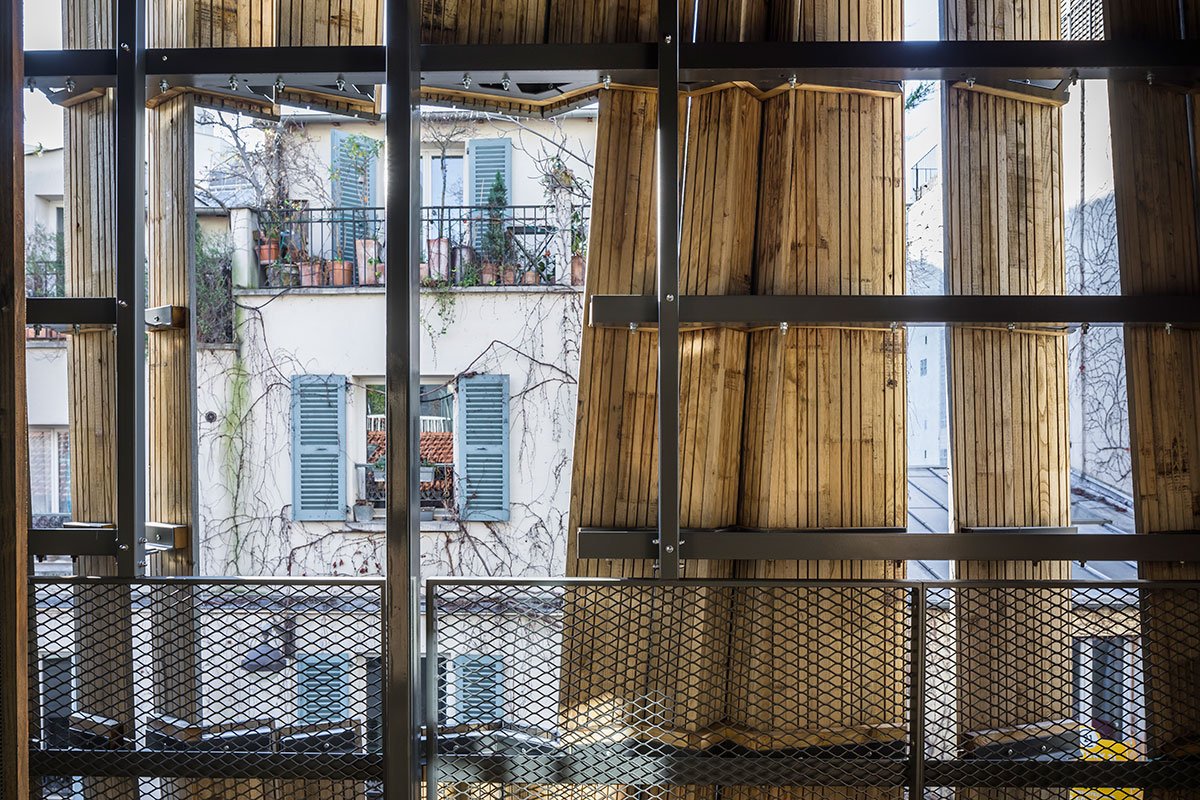
Playing with its fold, the main façade on the street revisits the relief of the peak of the mountain and the valley: each section of wood receives the sun following its course.
This main façade breaks the linearity and livens up the street: a special vibration which makes the building unique.
Images


