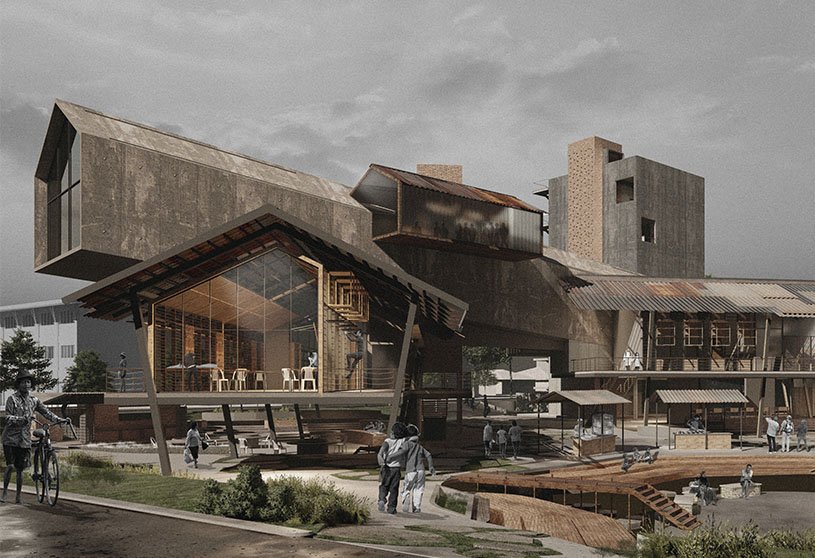
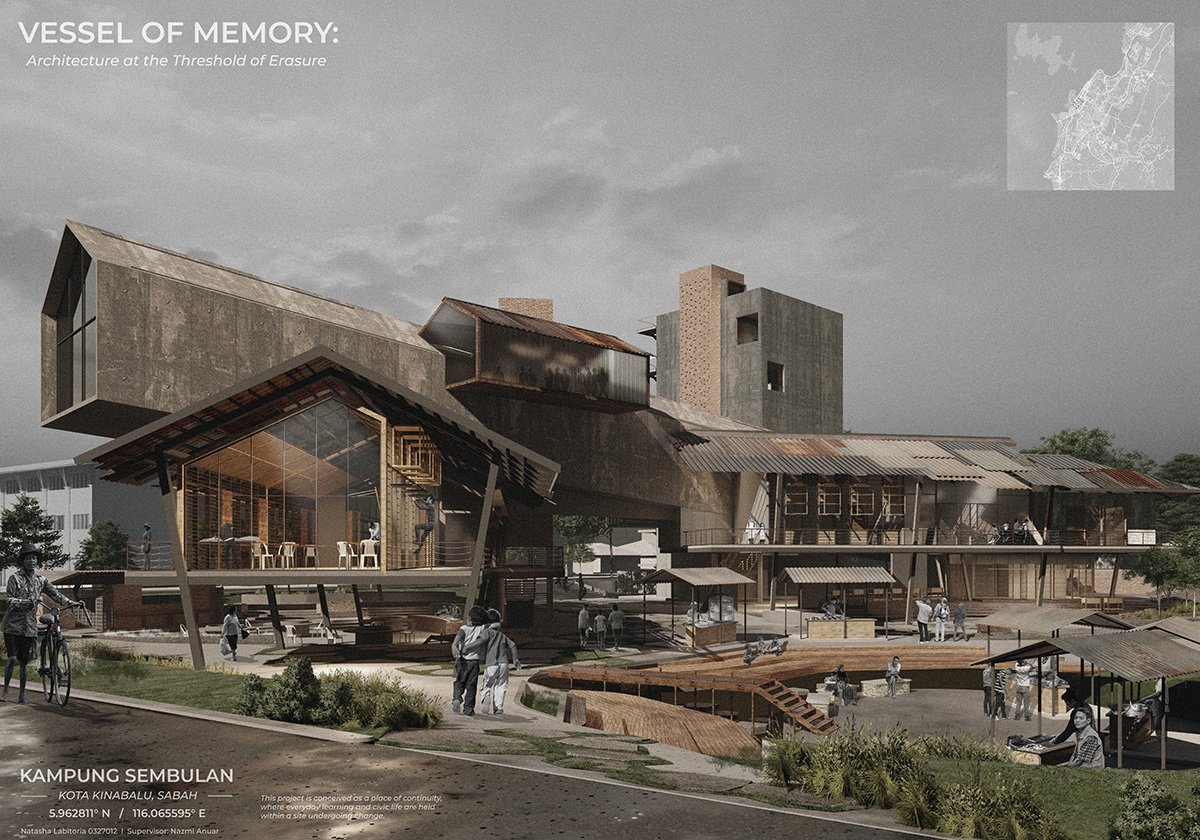
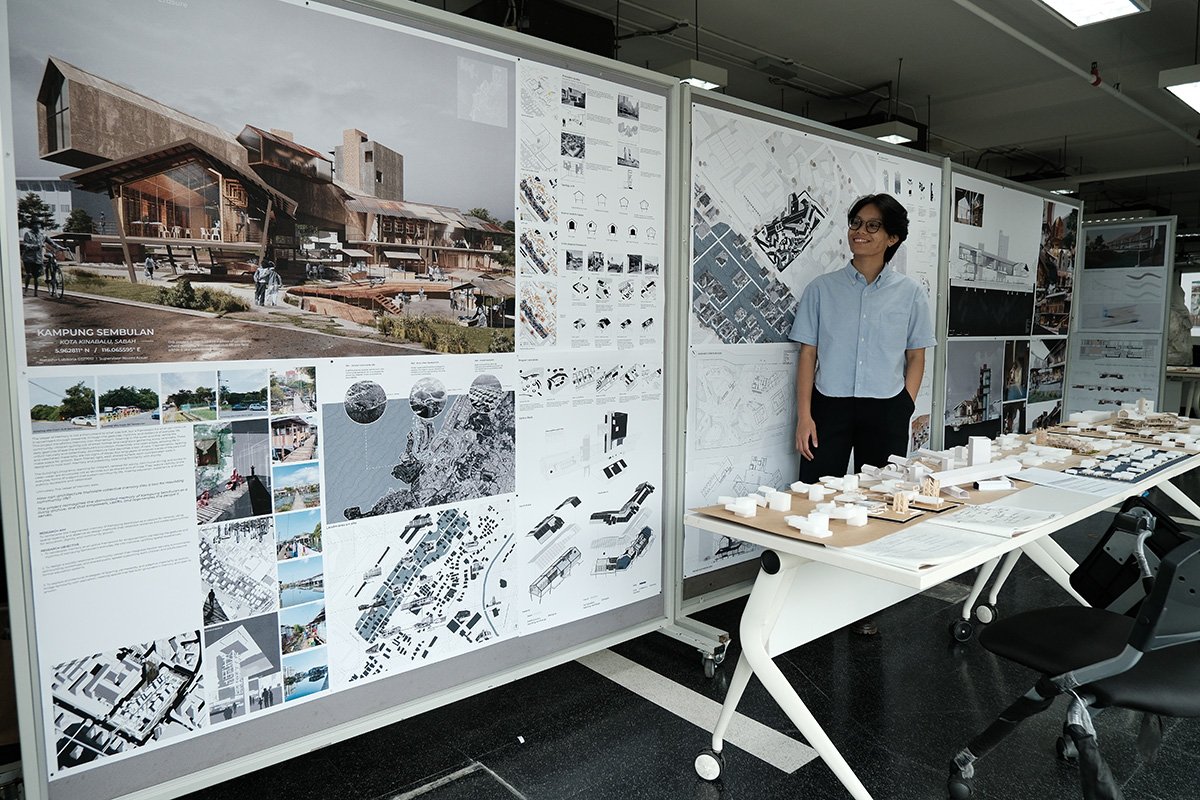
Excerpt: ‘Vessel of Memory’ is an architecture thesis by Natasha Labitoria from the ‘School of Architecture, Building and Design – Taylor’s University.’ The project aims to provide a spatial framework that sustains community life amid displacement. By translating everyday gestures, shared rituals, and informal learning into architecture, it seeks to preserve social and cultural memory while enabling dignity, resilience, and collective growth. The project positions architecture as a tool of care rather than monumentality.
Introduction: The Vessel of Memory is not a monument to what was lost but a framework for what can continue. It remembers through presence, through the gestures, rhythms, and resilience of everyday life.
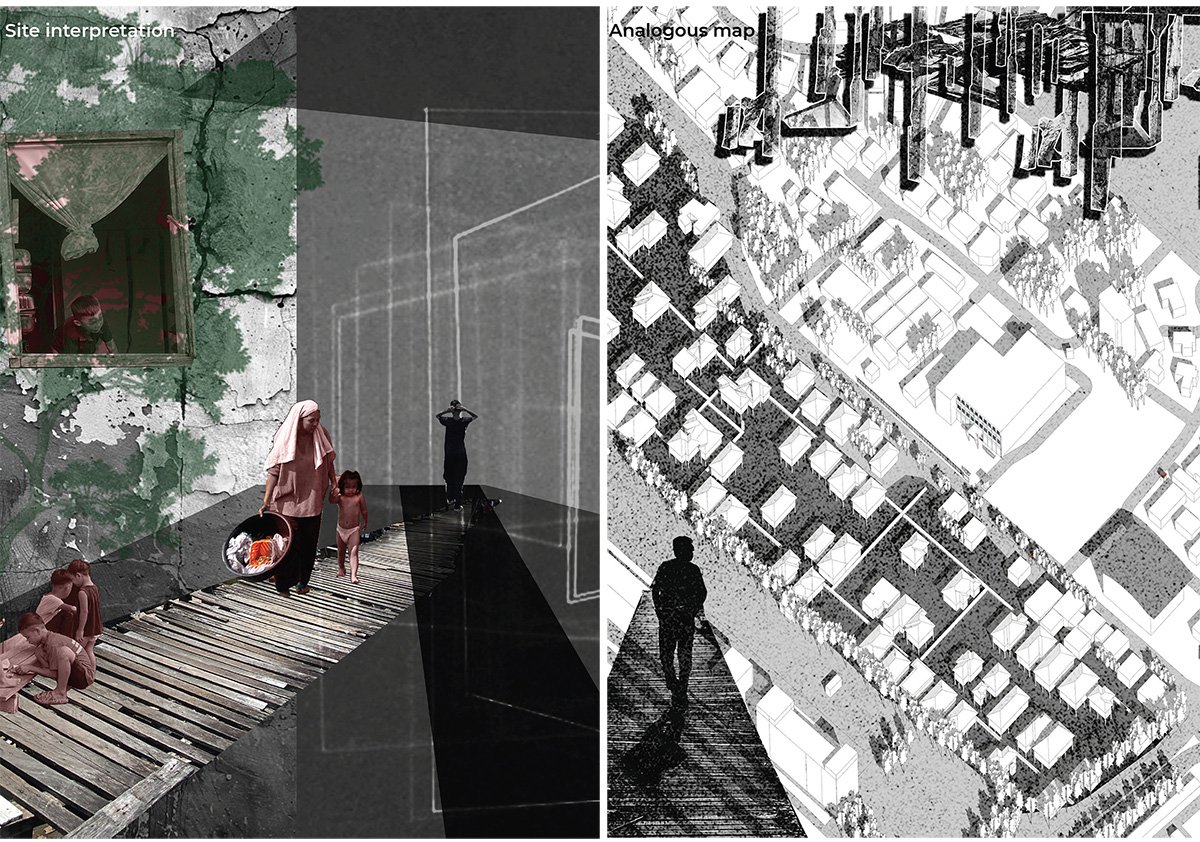
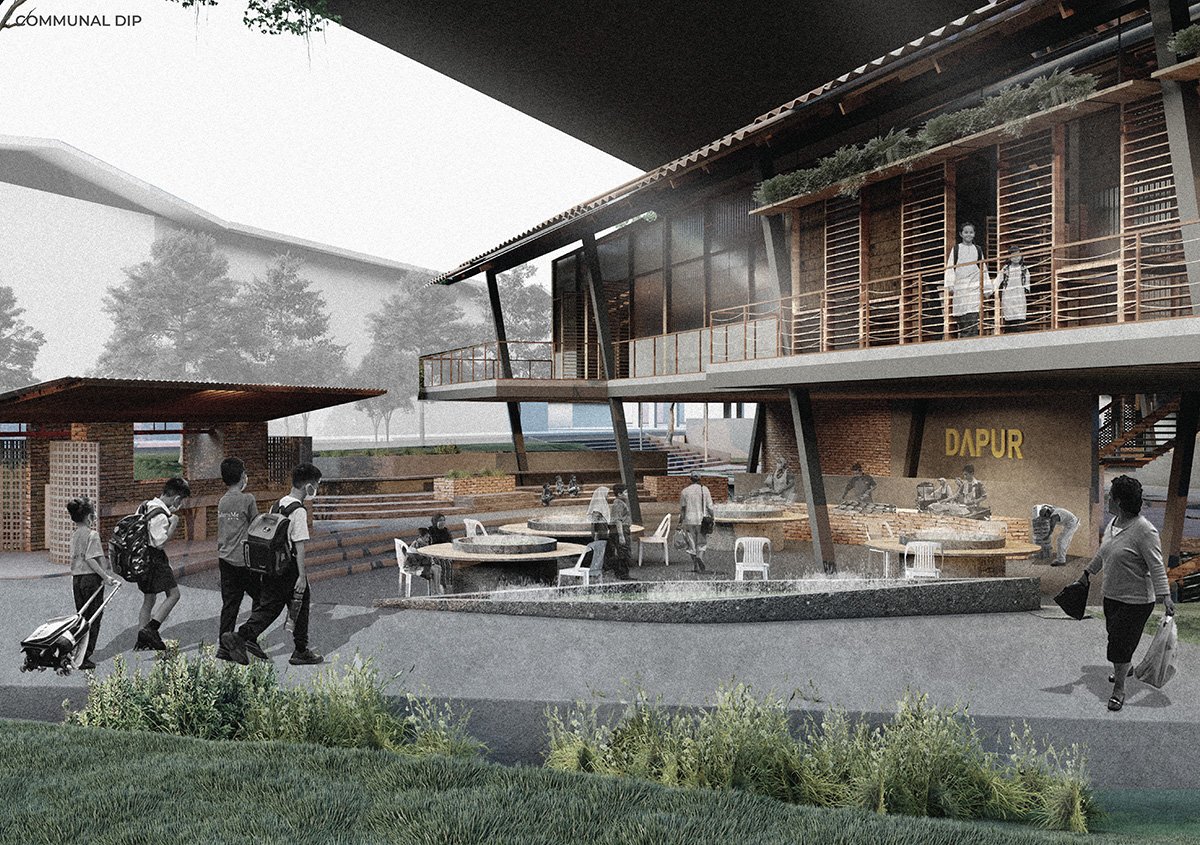
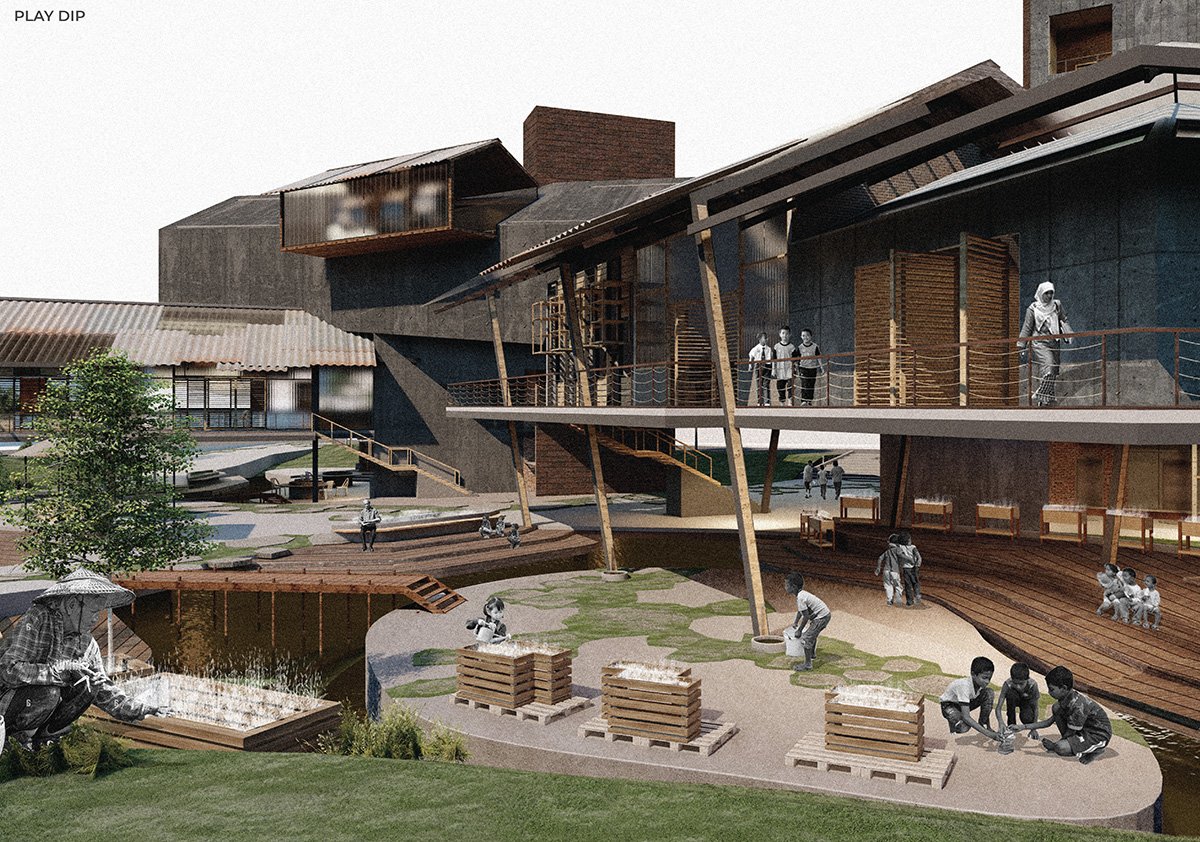
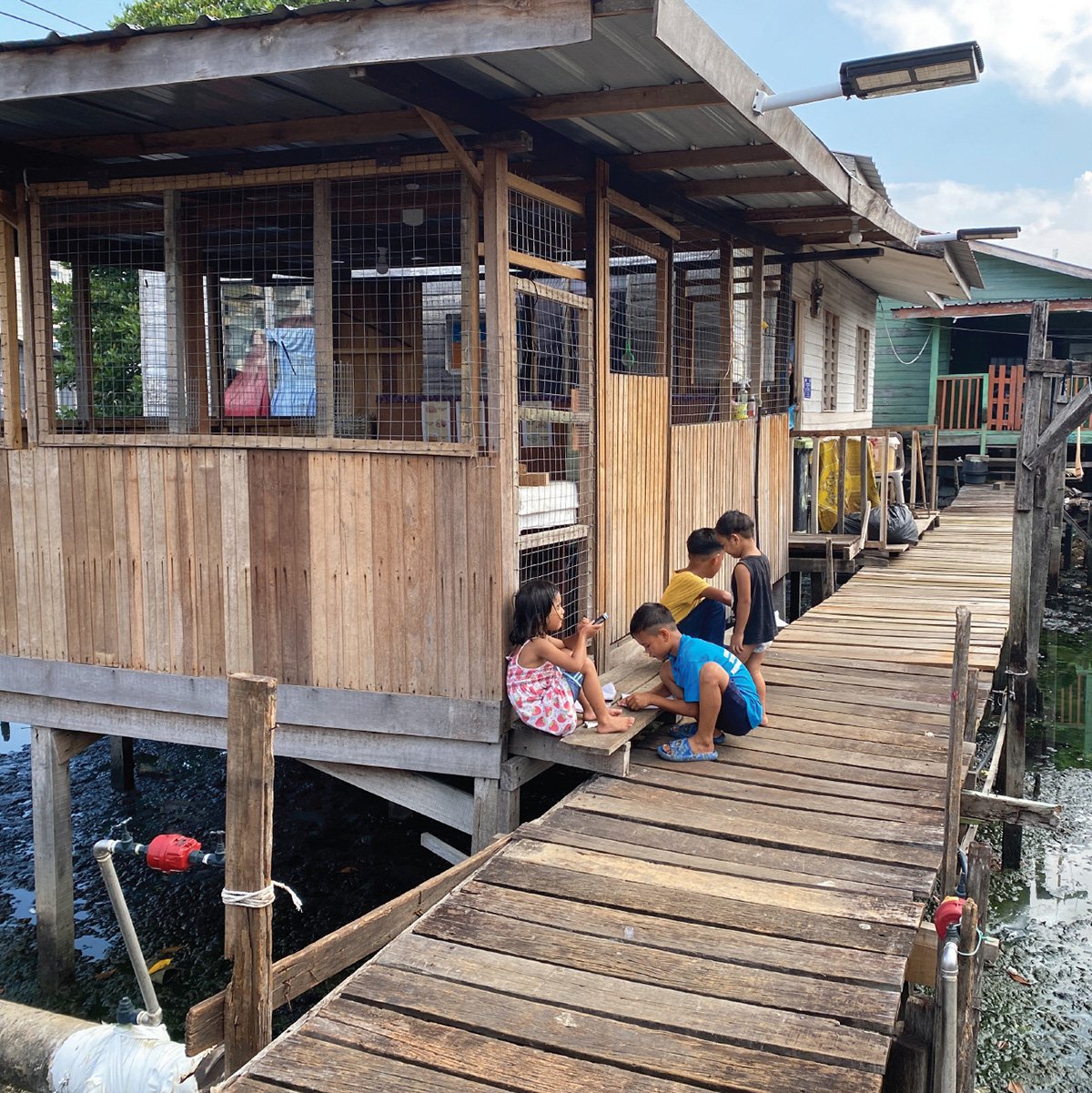
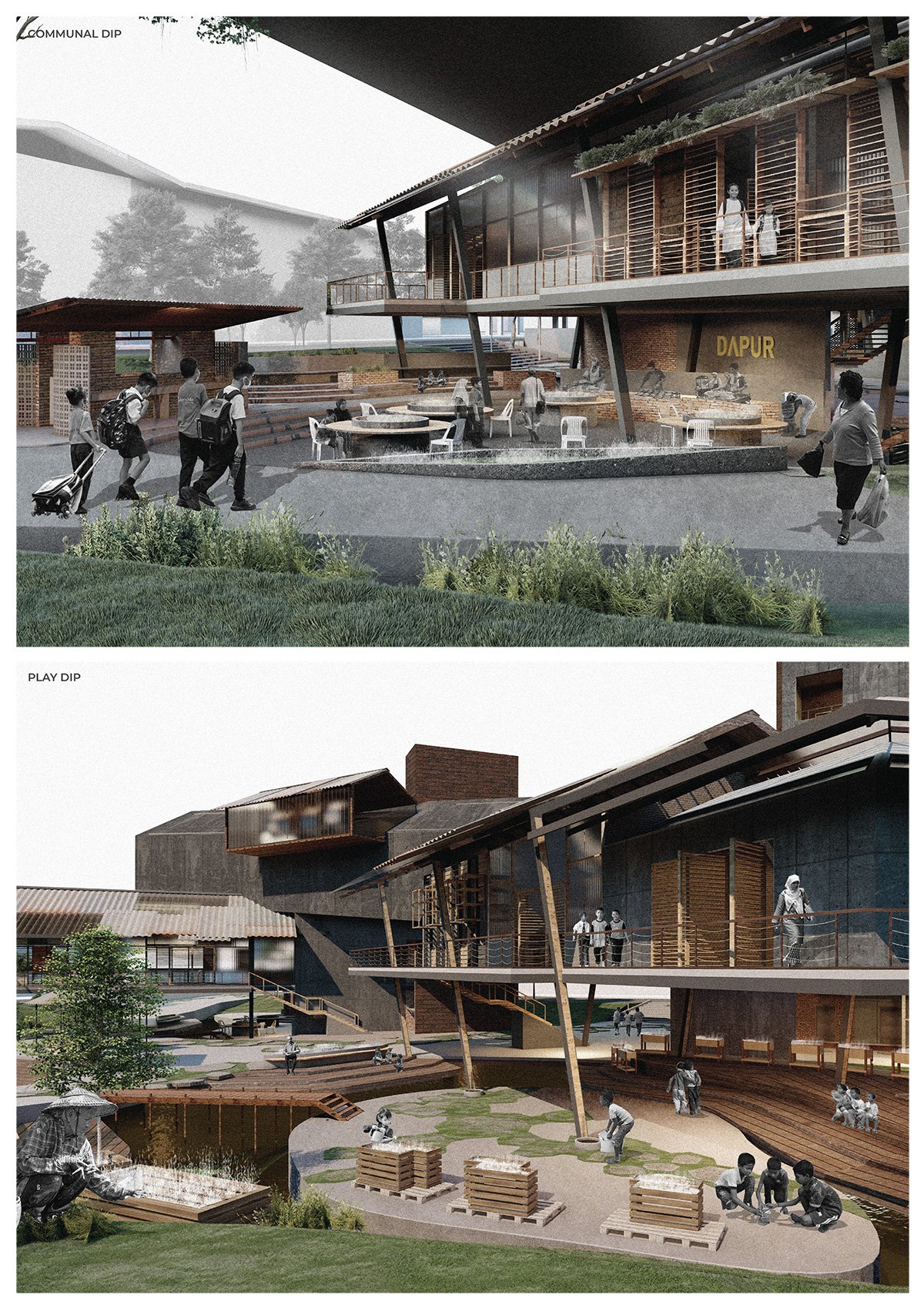
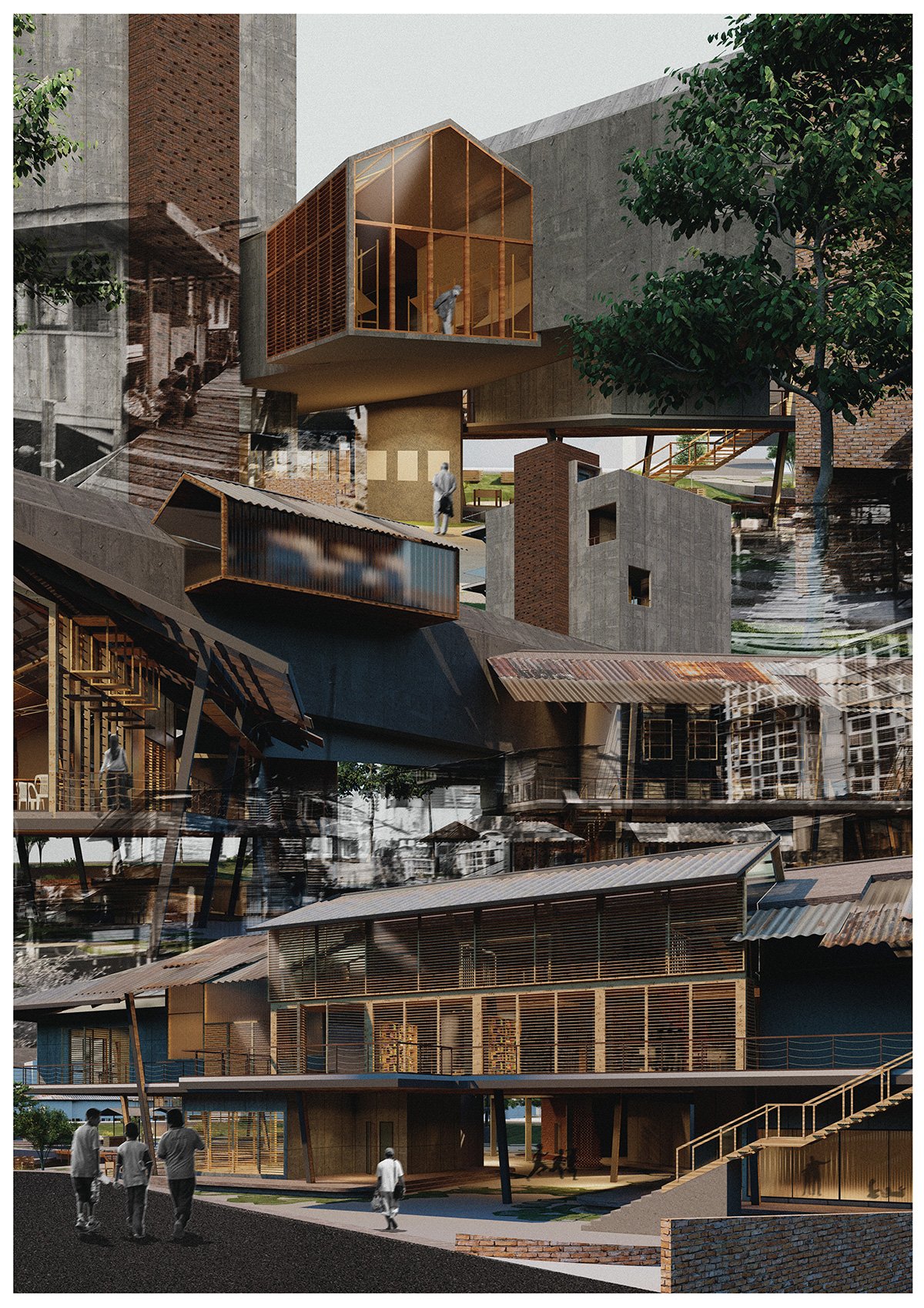
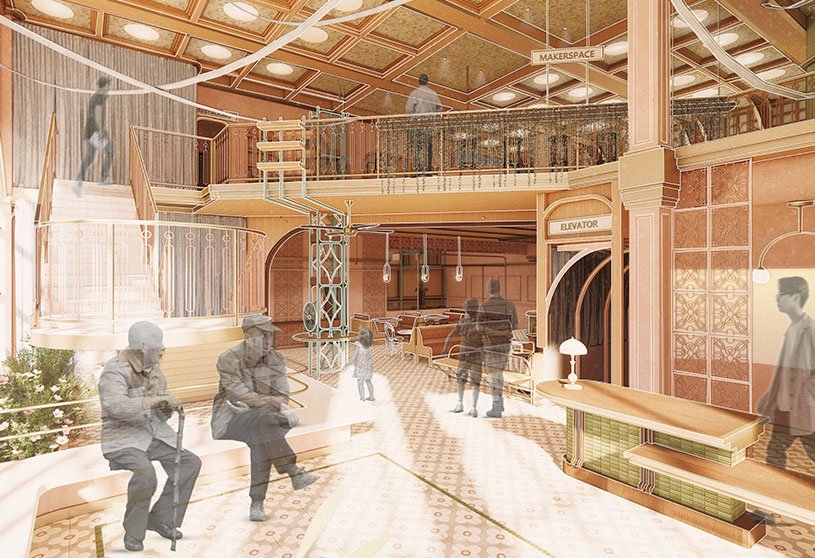
This project transforms memory into momentum, listening to the quiet acts that define the community: children spilling out of small homes and neighbors gathering along verandahs. These daily gestures shape the architecture’s circulation, thresholds, and open edges, allowing life to unfold naturally and collectively. Architecture here becomes a tool of care. Fragmentation, layering, and weathered materiality are not signs of decay but languages of renewal, traces of the past that make space for growth. Each filtered light, each shared surface, and each void between walls is designed to hold both memory and possibility, balancing familiarity with dignity.
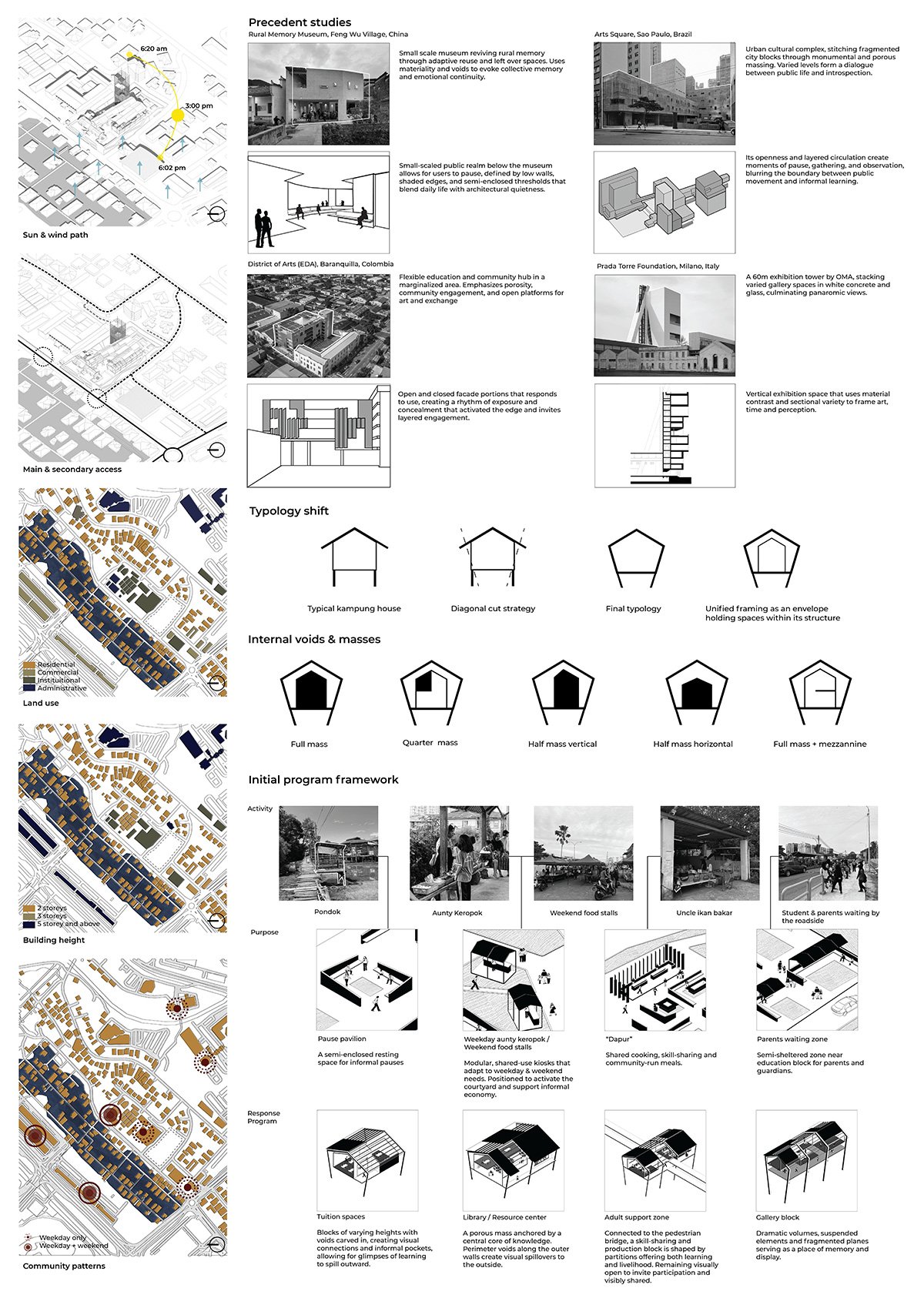
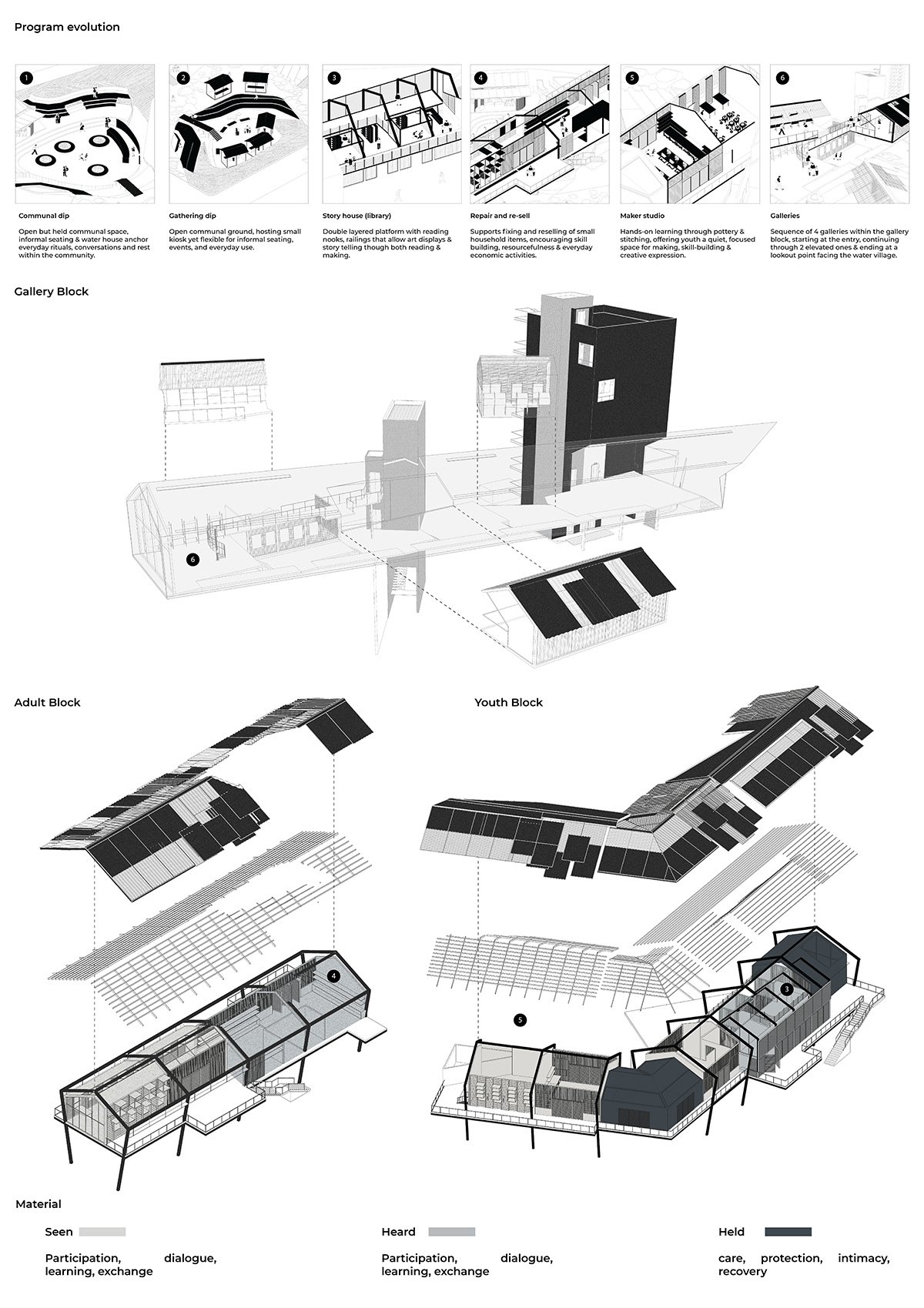
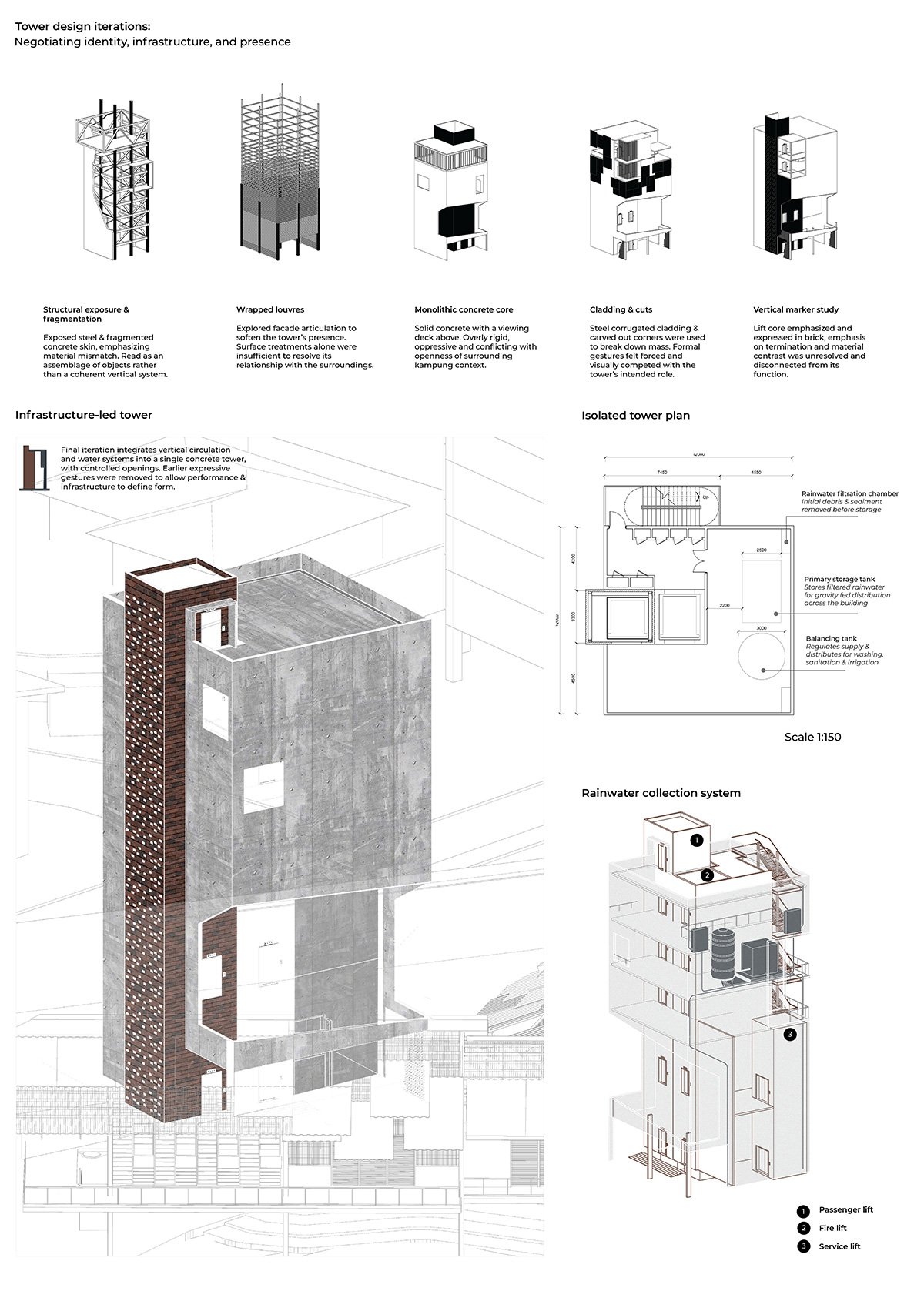
The building’s programs, learning for children, renewal for adults, communal dining, and access to clean water are structured not as services but as shared acts of hope. They restore visibility to the everyday forms of support that sustain community life, making education, sustenance, and care publicly accessible and celebrated.
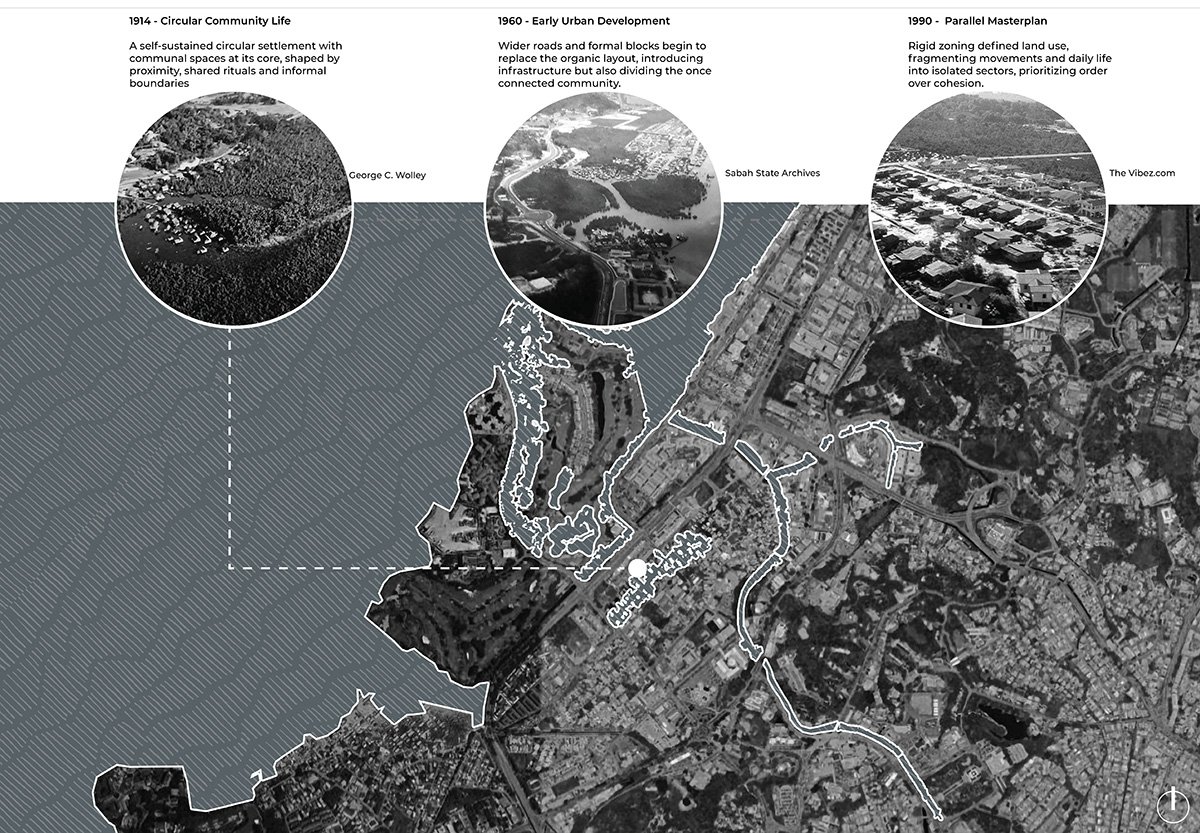
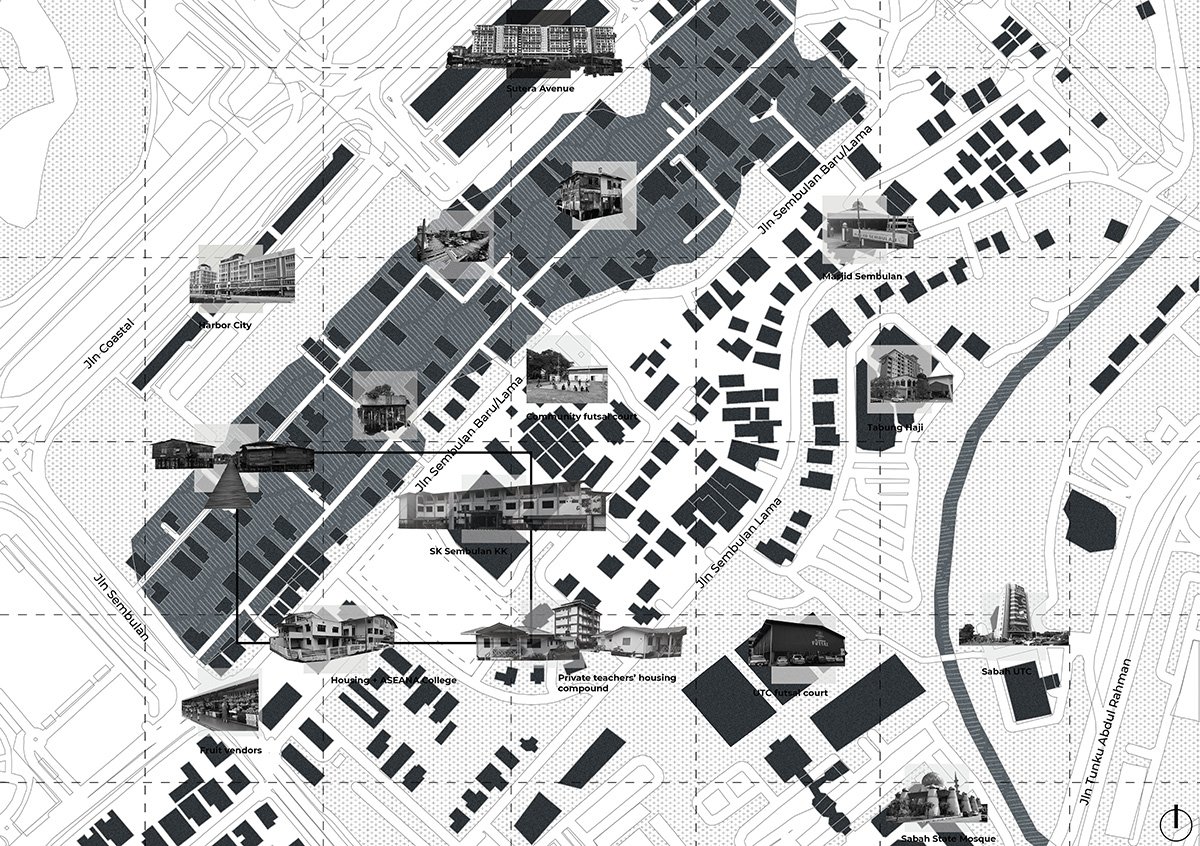
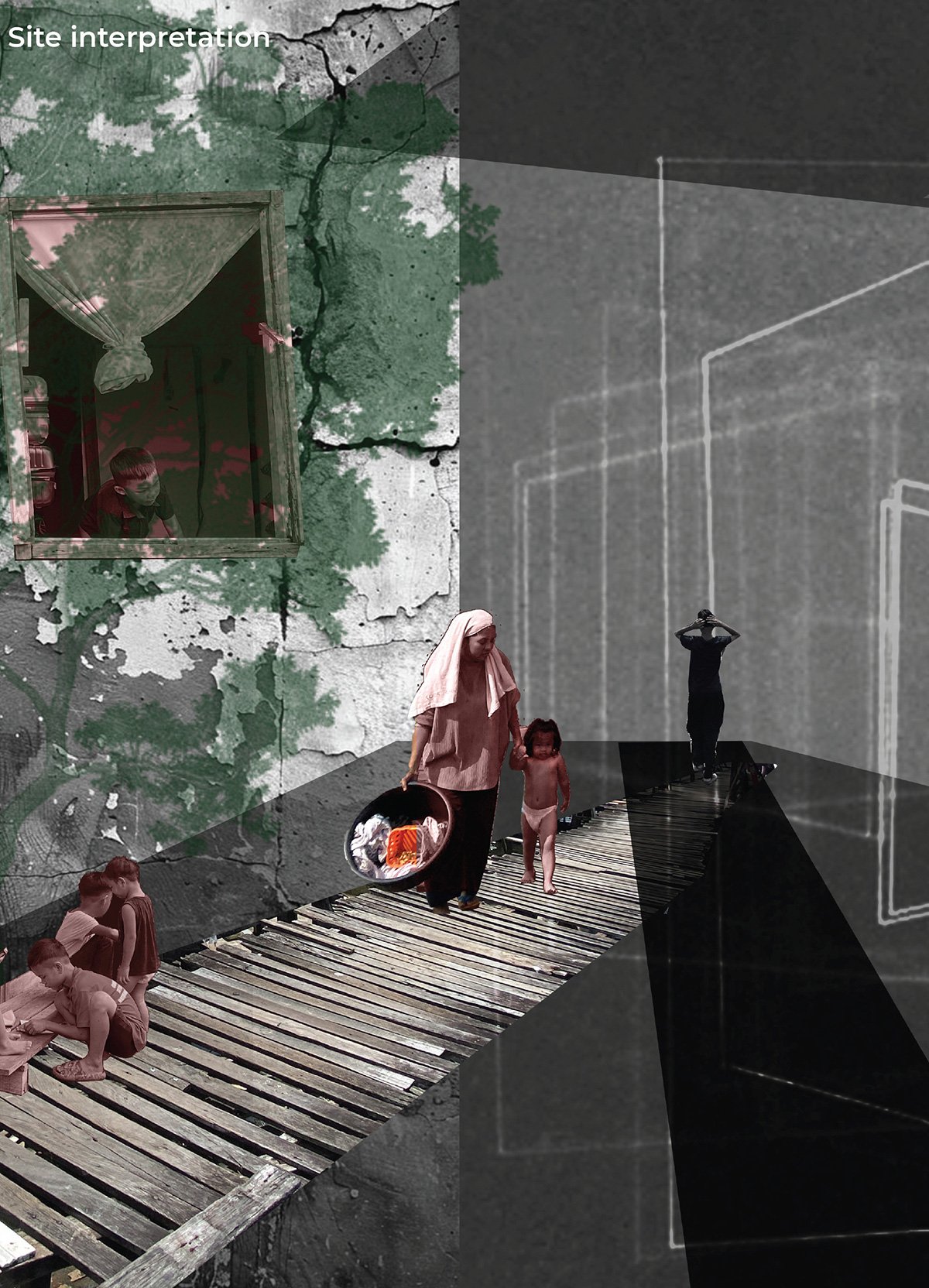
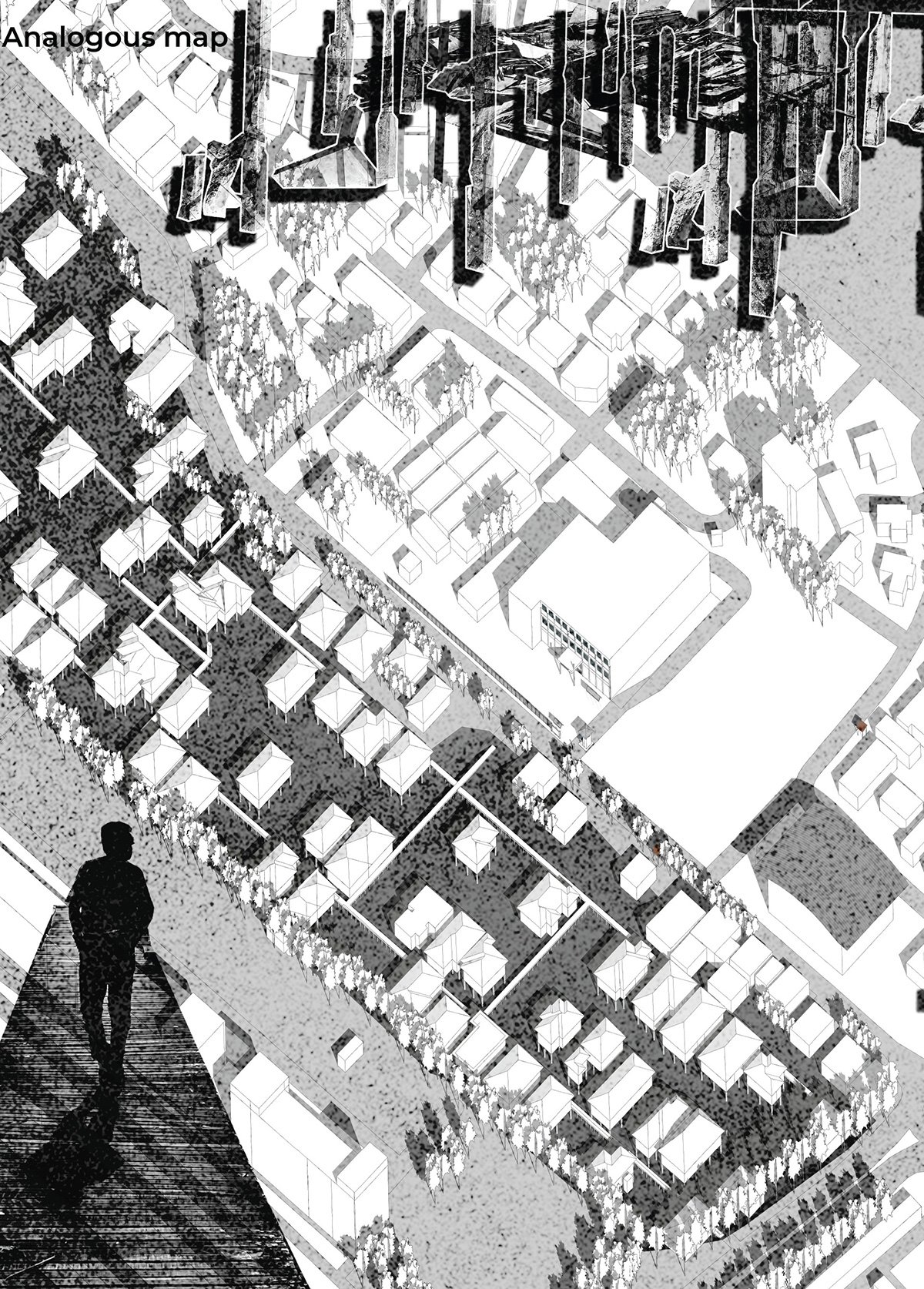
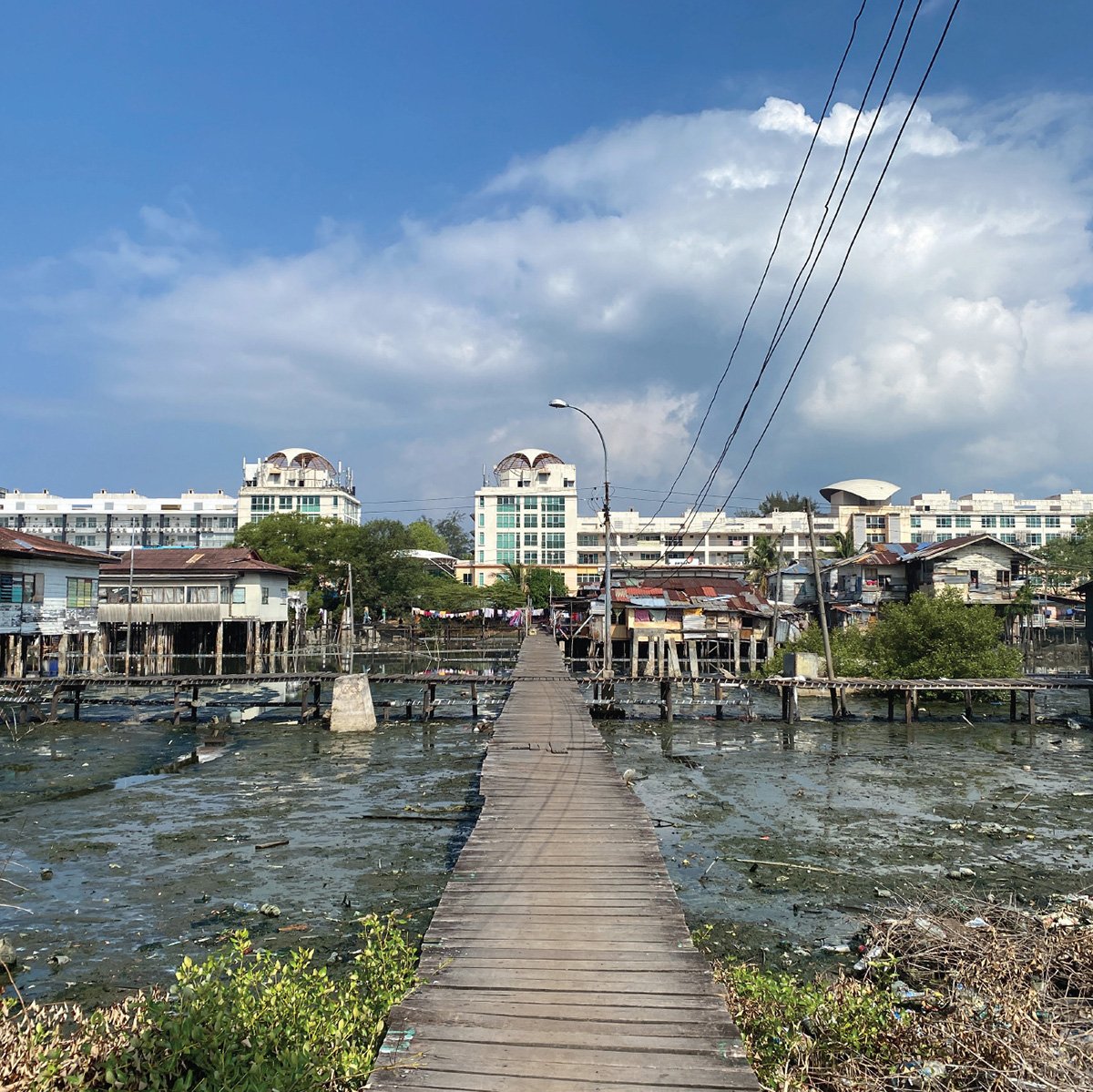
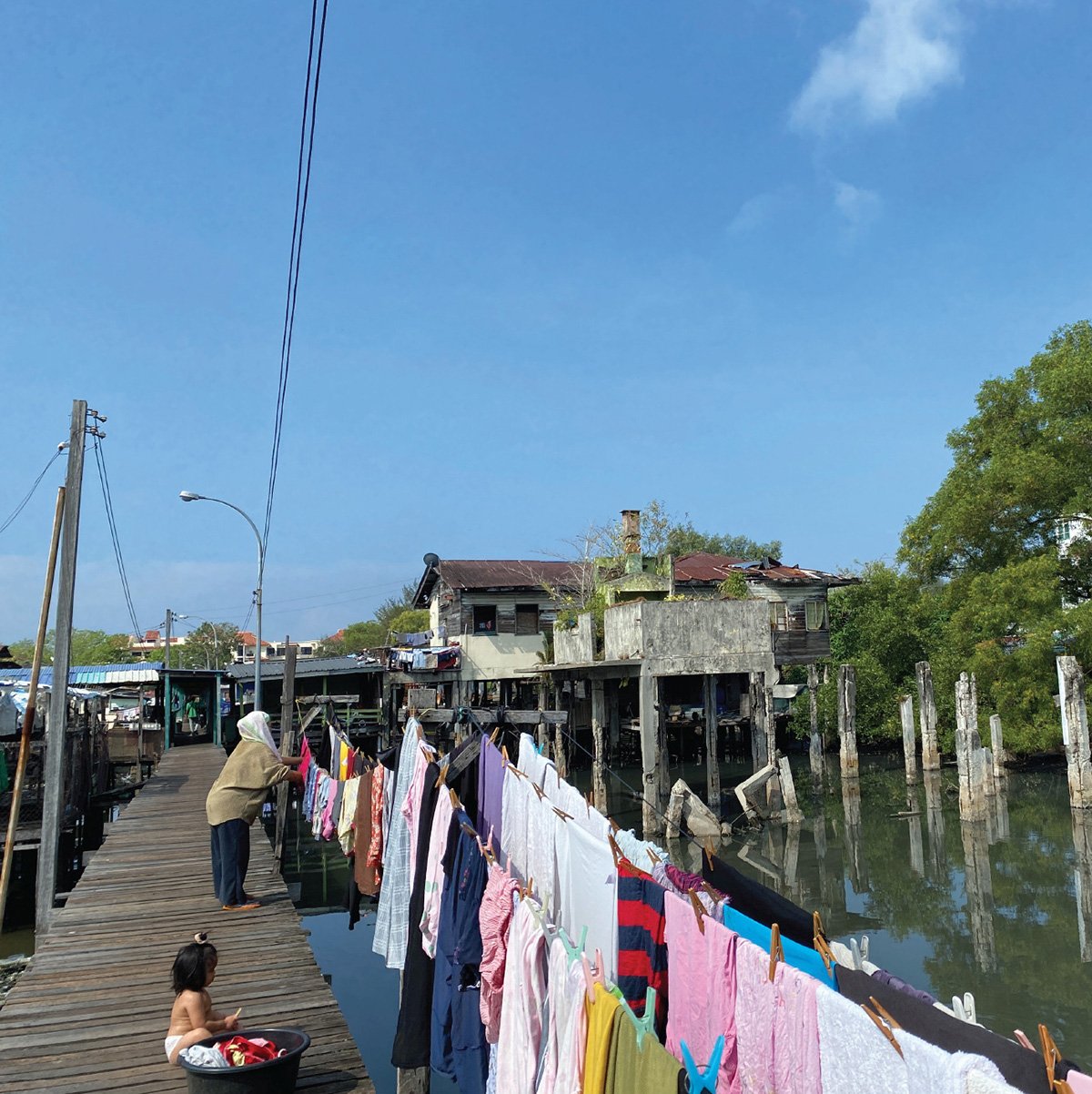
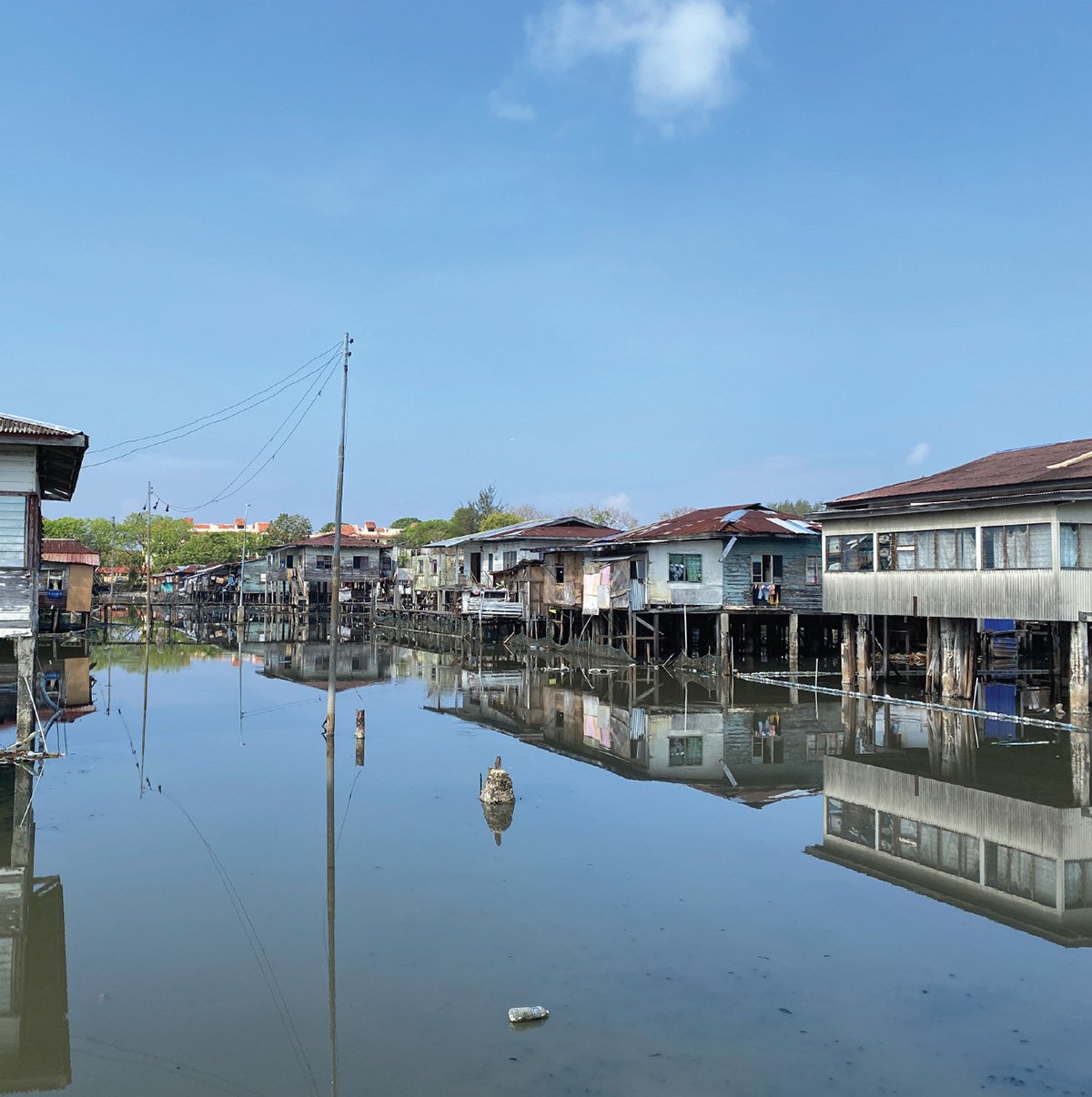
History of SiteLandmarks on the SiteSite Interpretation | Analogous MapExisting Images of Kampung Sembulan
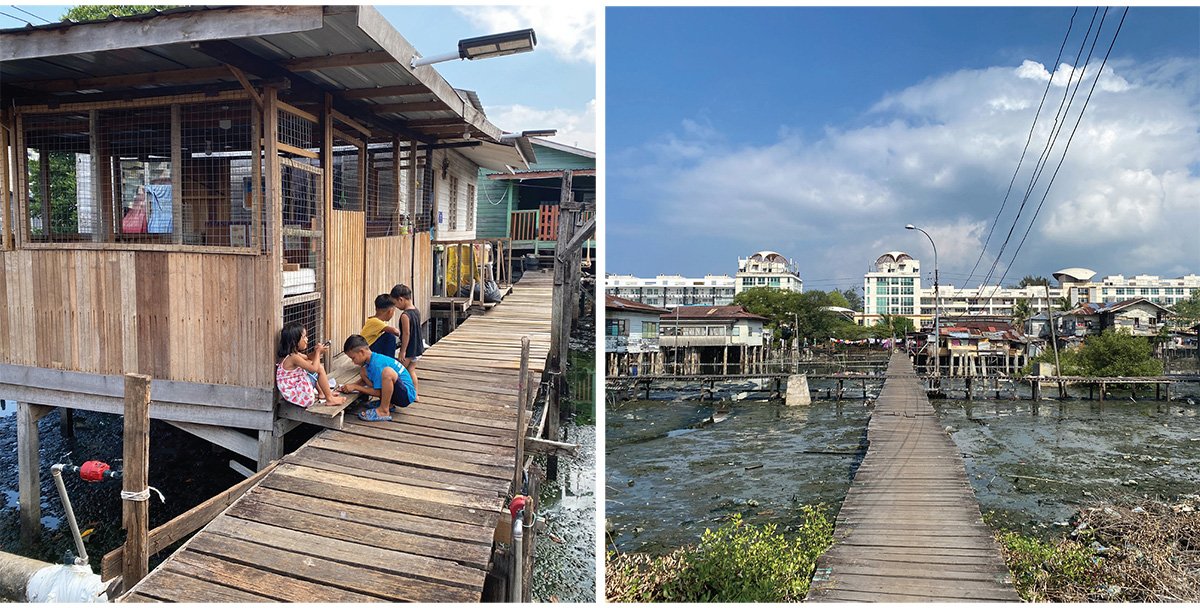
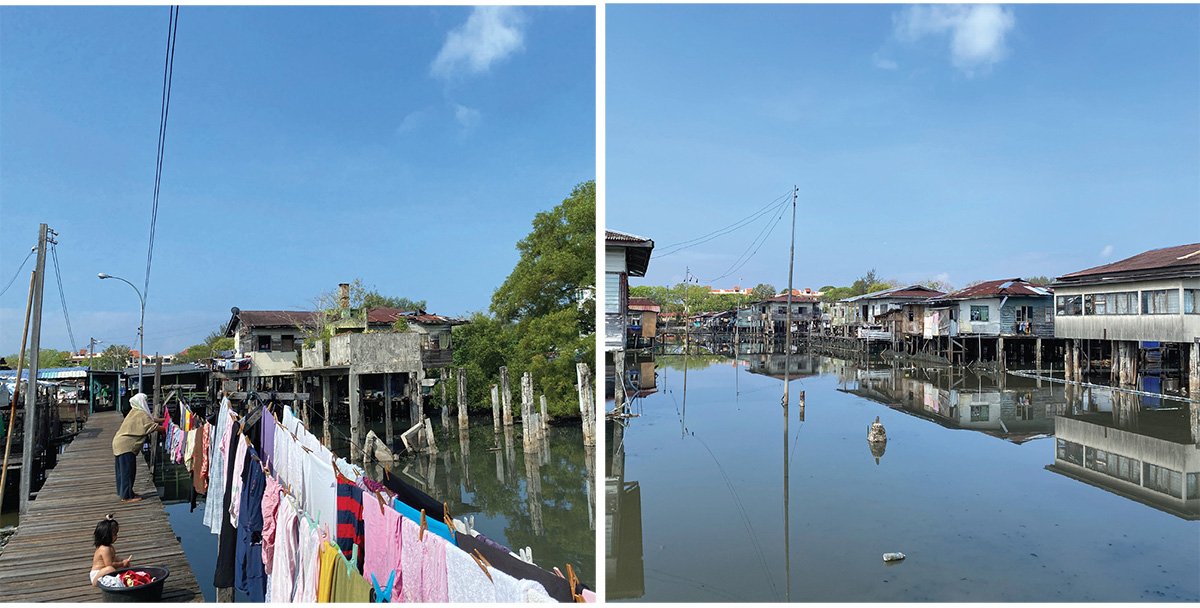
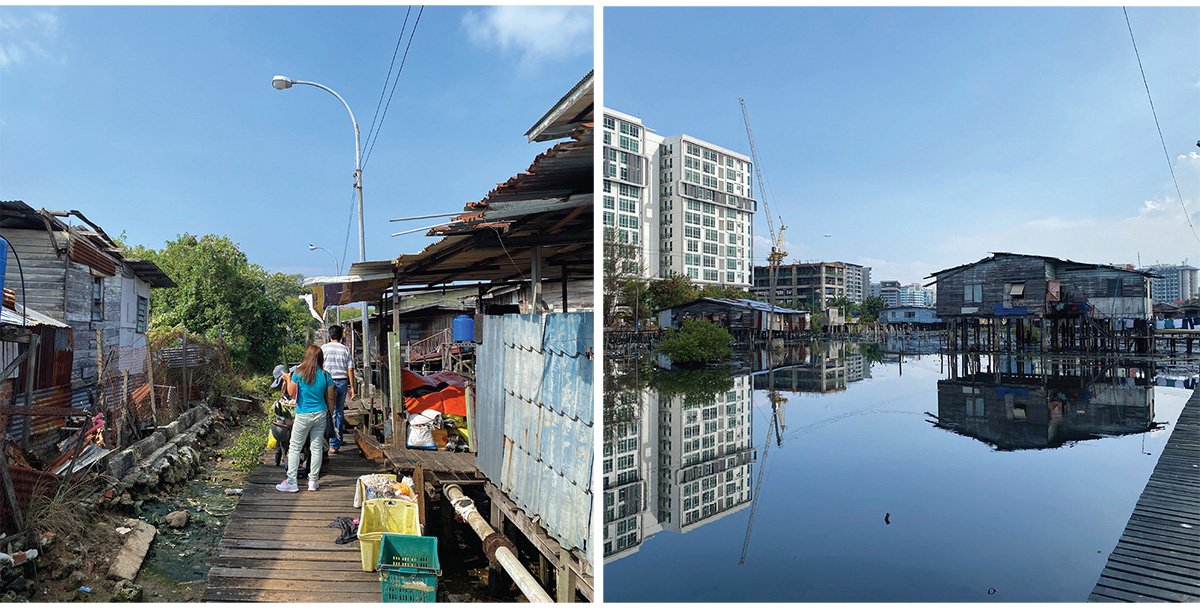
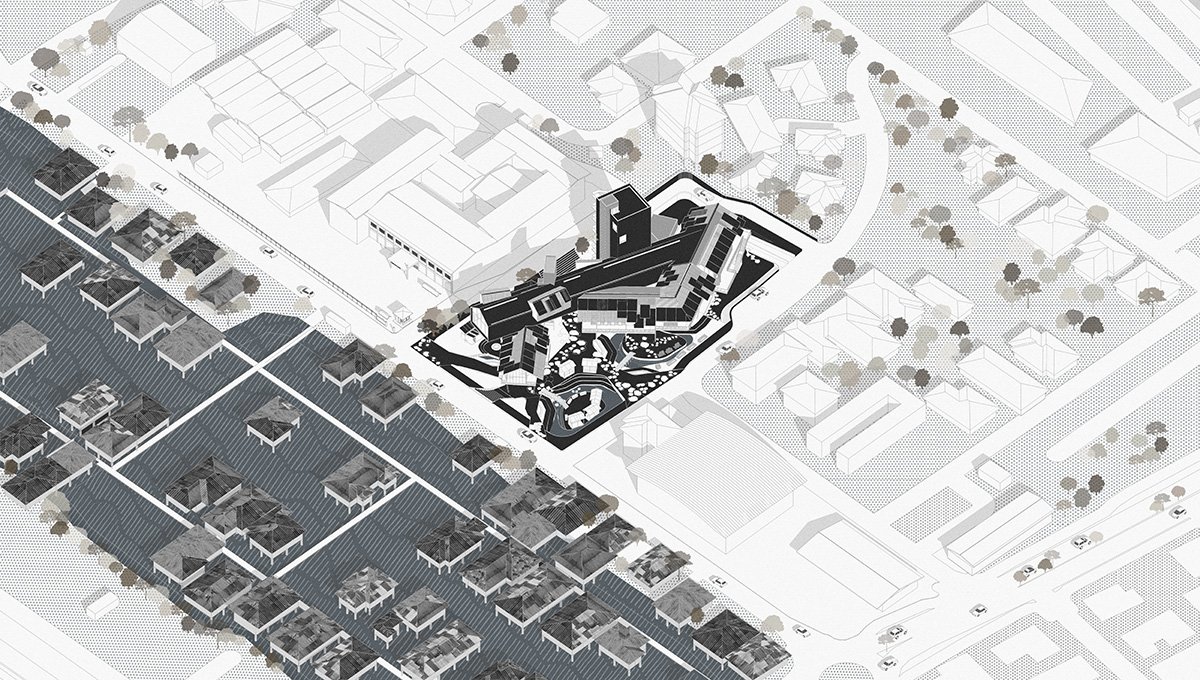
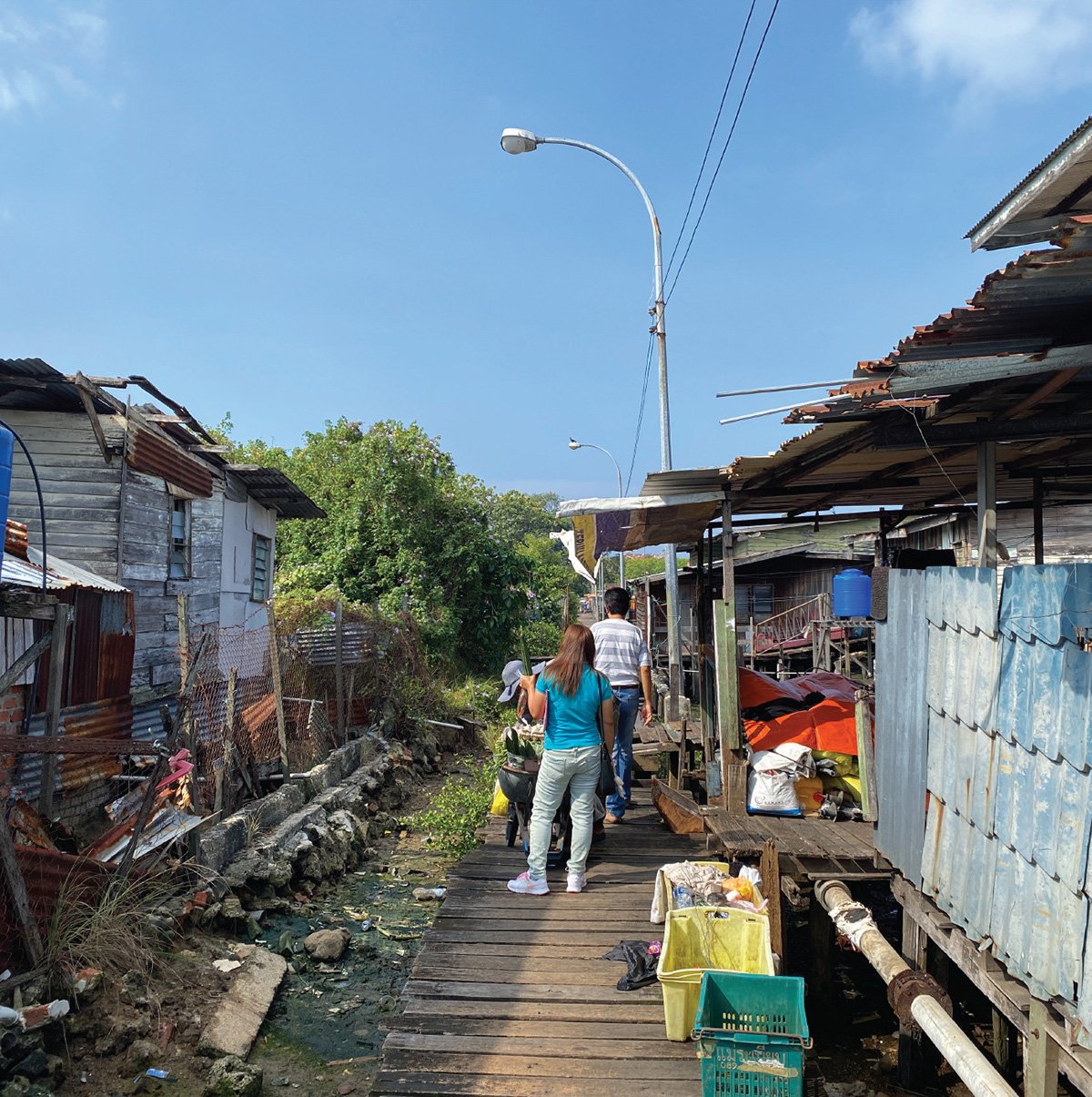
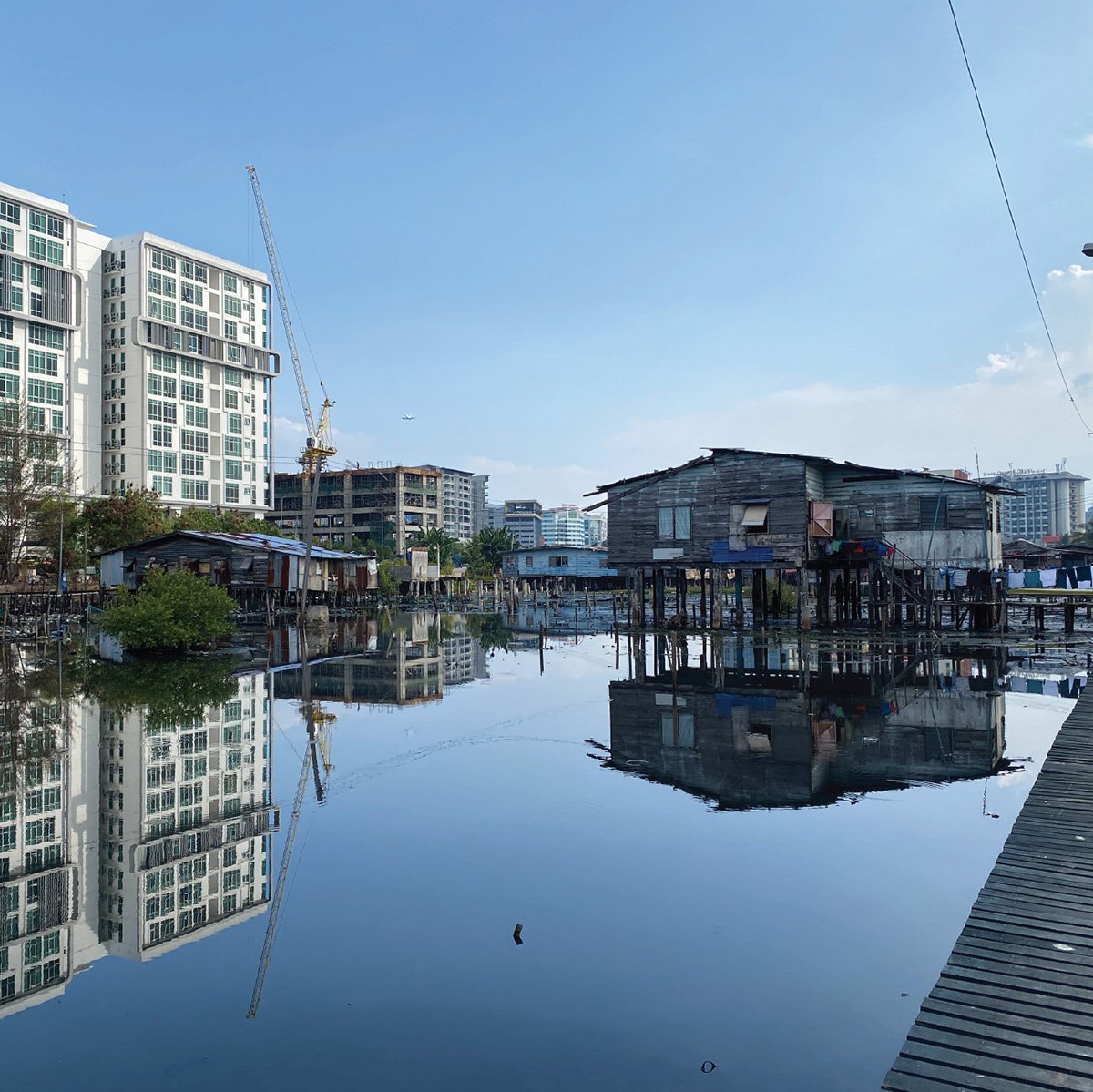
Kampung Sembulan, once a thriving stilt-house settlement along the coast of Kota Kinabalu, now faces ongoing challenges of displacement and transformation. Over the years, the area has undergone significant changes due to urban redevelopment projects, with many traditional wooden houses being demolished to make way for modern infrastructure. Residents, many of whom belong to long-standing communities with deep cultural roots, have been relocated, often losing not only their homes but also their connection to the sea and their way of life. While some parts of Sembulan have been redeveloped into commercial and residential complexes, other pockets remain in a state of transition, reflecting a tension between preserving heritage and pursuing urban growth.
Existing Images of Kampung SembulanExisting Images of Kampung SembulanExisting Images of Kampung Sembulan
In recent years, development pressures in Sembulan Tengah have intensified, with discussions of redevelopment moving from planning stages to active implementation. While the area has long been identified for urban renewal due to its coastal location and proximity to the city center, these plans have increasingly translated into concrete actions. Over the past year, residents have received official notices of demolition and relocation, signaling the imminent removal of remaining stilt houses and informal structures. This ongoing process has disrupted established community networks, severed residents’ connection to their historic environment, and accelerated the loss of everyday spaces that support informal learning, social interaction, and collective memory. The urgency of these changes underscores the need for architectural interventions that can both respond to displacement and provide a framework for preserving the social and cultural memory of the community.
Design Process
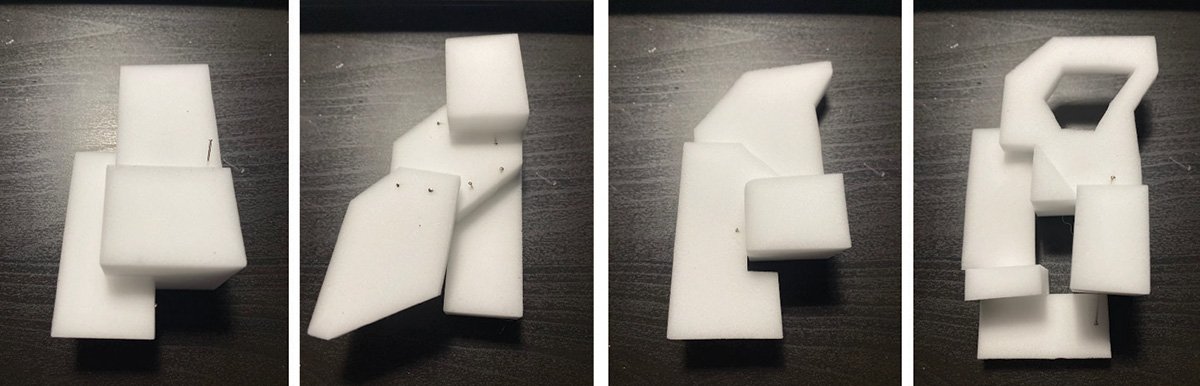
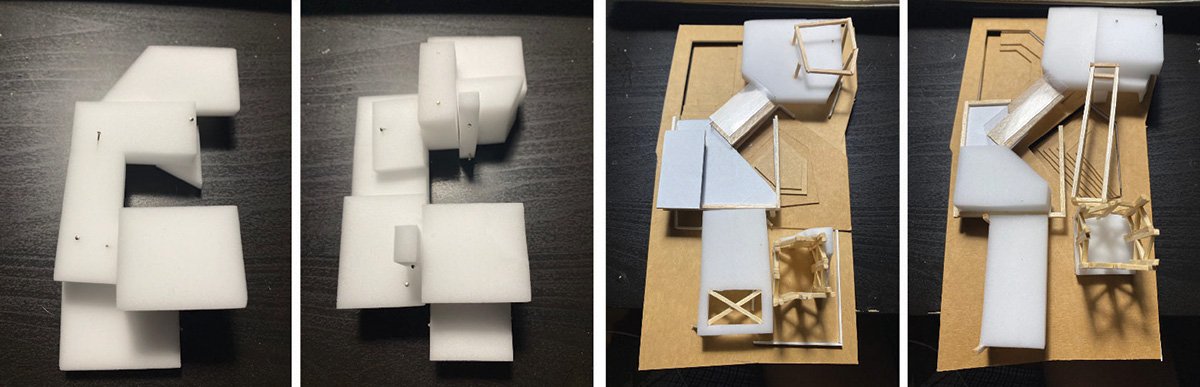
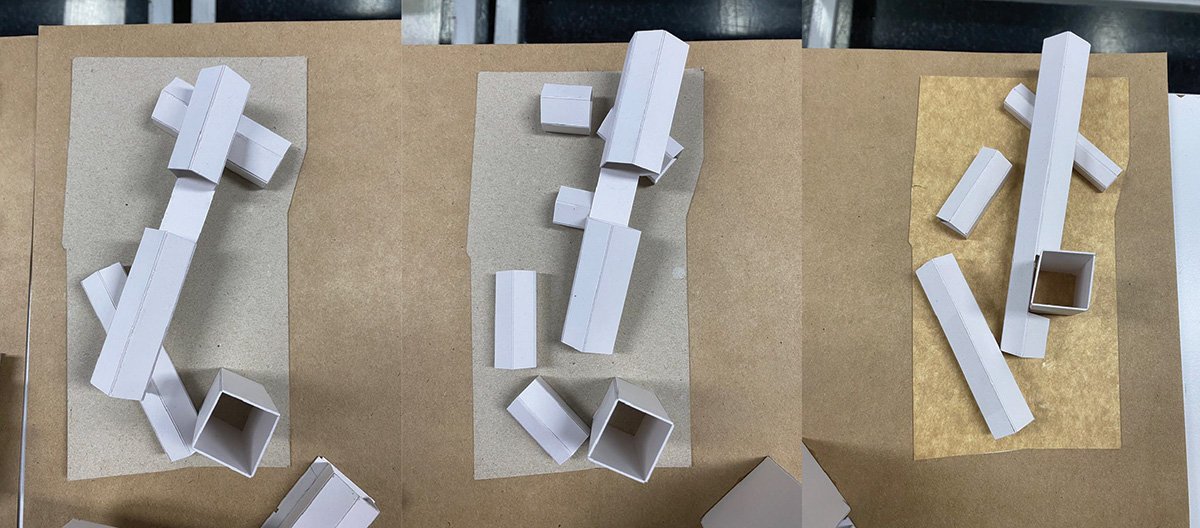
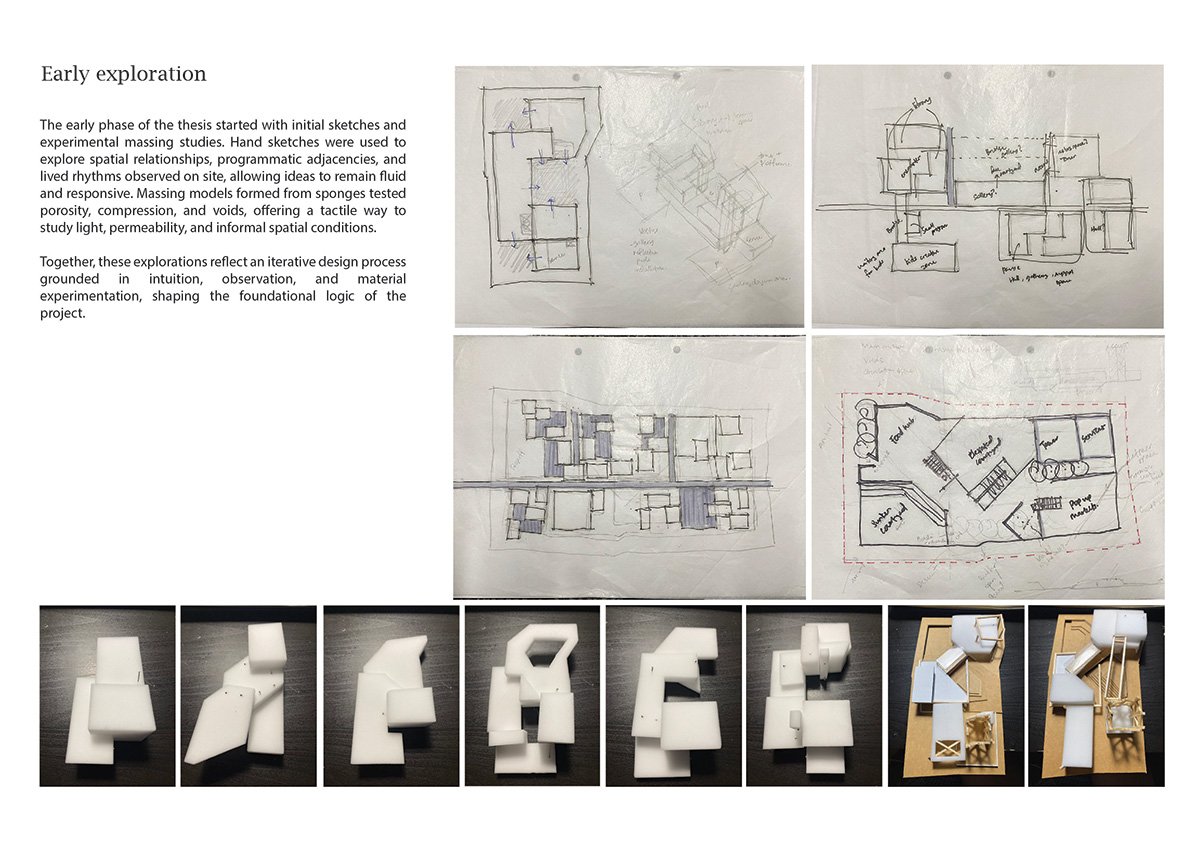
Conceptual SketchesMassing Model StudiesMassing Model StudiesMassing Development
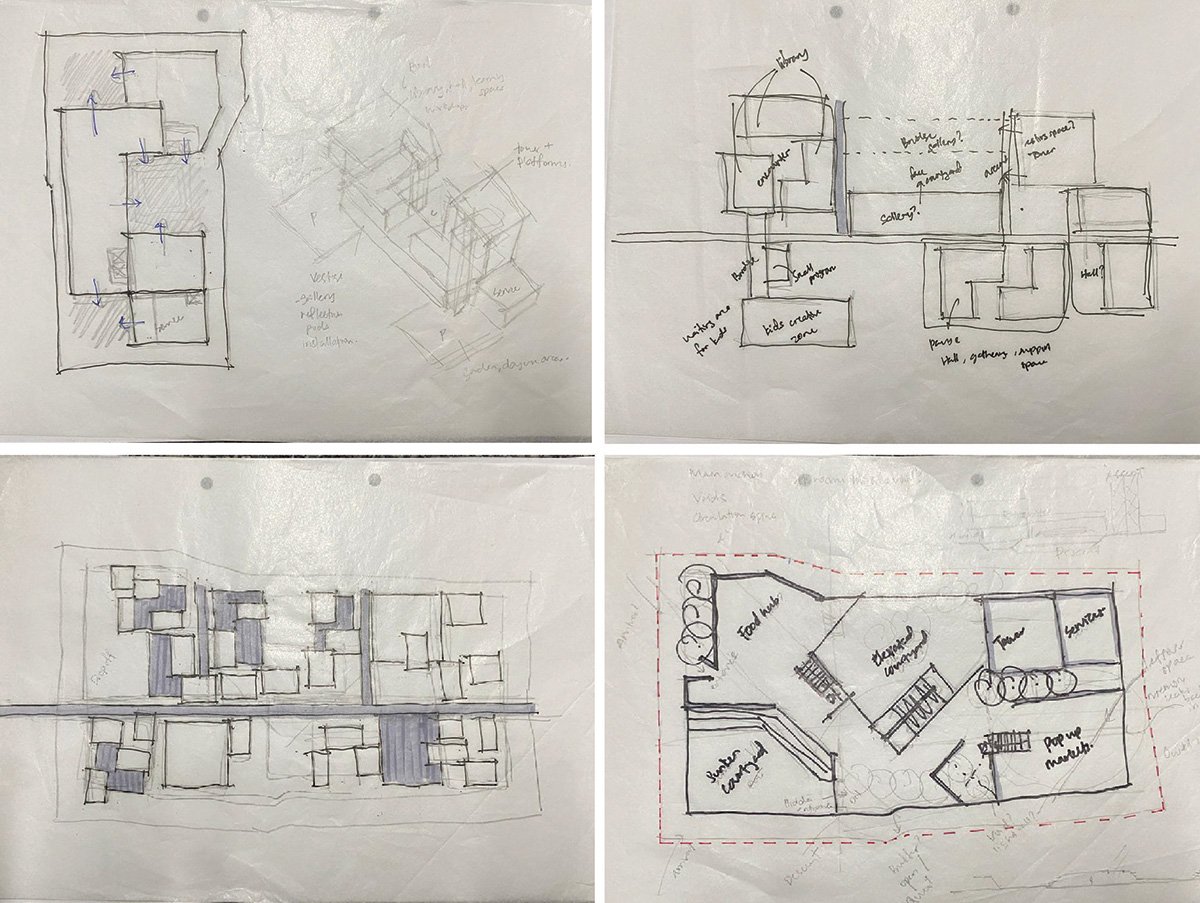
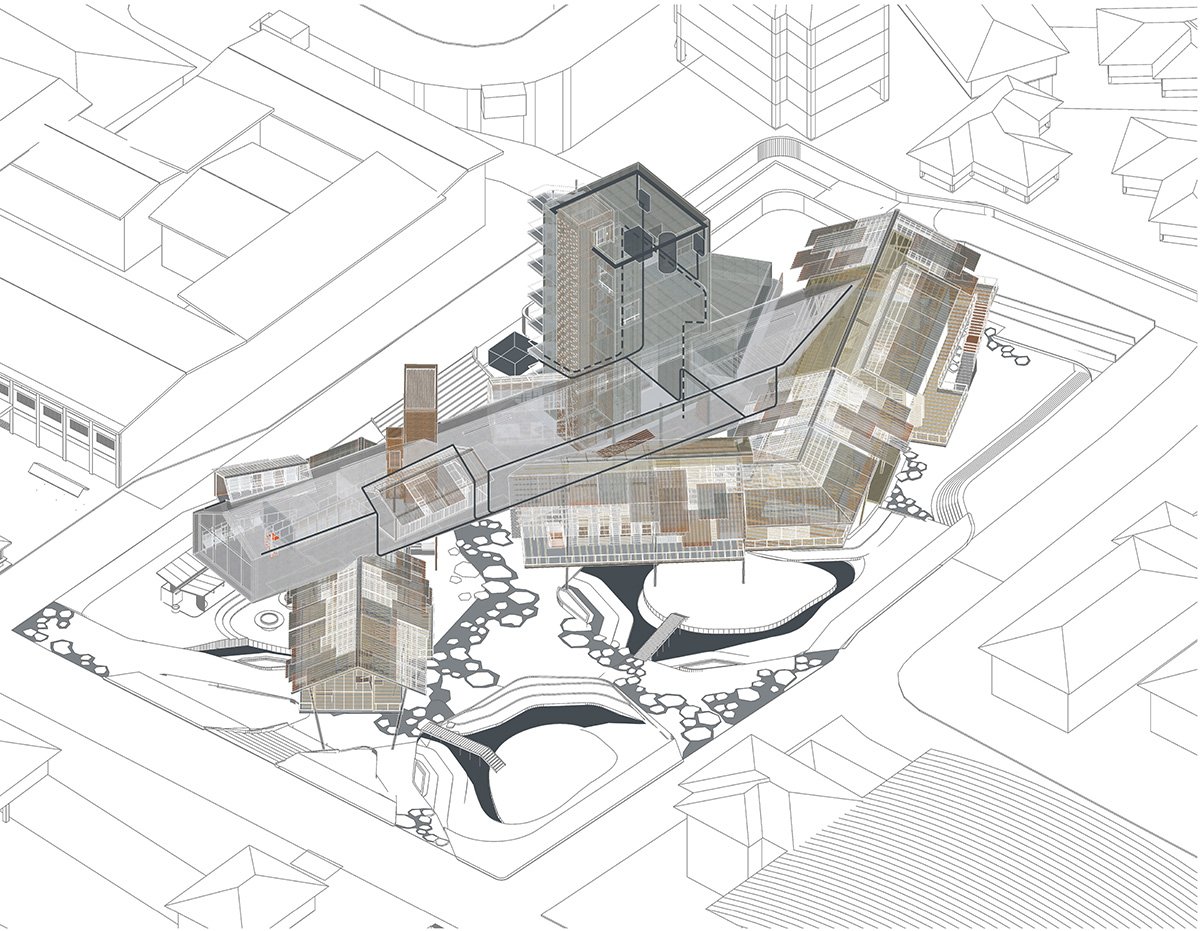
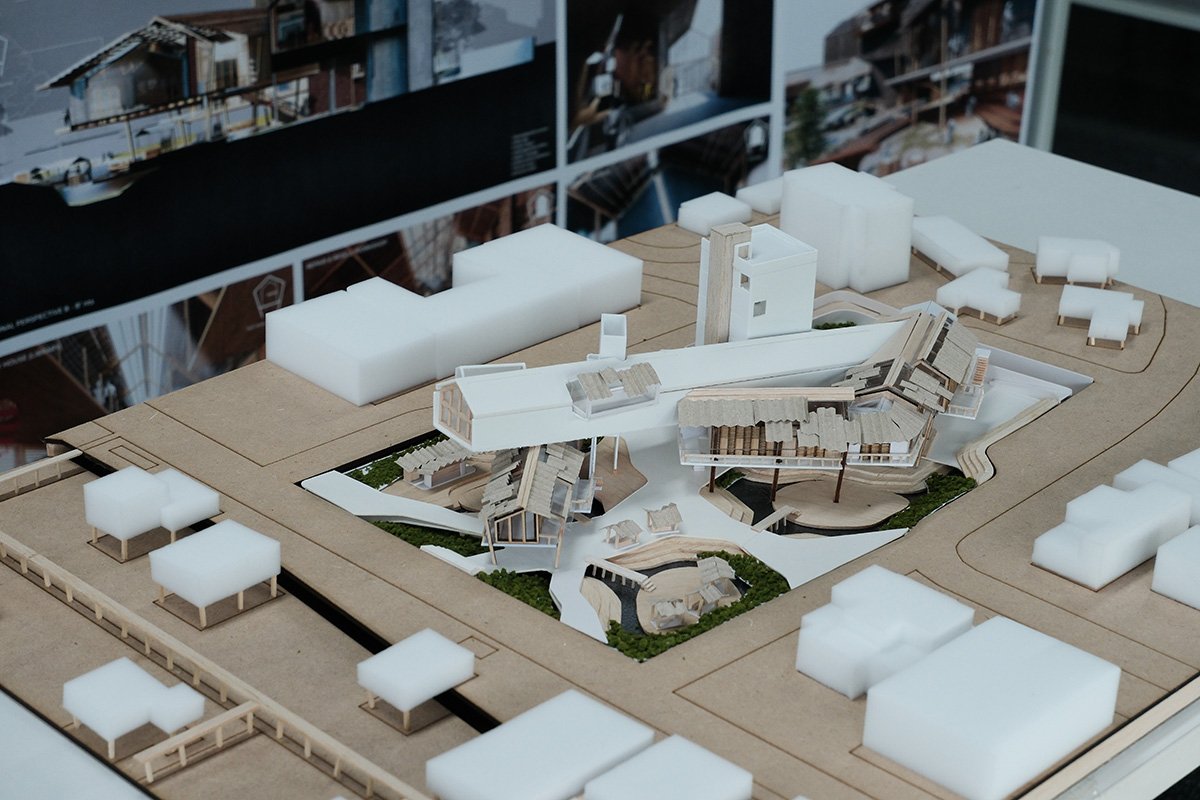
Massing exploration began with identifying the most suitable location for the vertical element within the site. Based on site conditions, the south-eastern corner was determined to be the most appropriate placement for the tower. This position maximizes visual connections toward the water village while avoiding obstruction of the main site entrance and primary circulation routes. As a result, the tower functions as a spatial marker without compromising accessibility or permeability across the site.
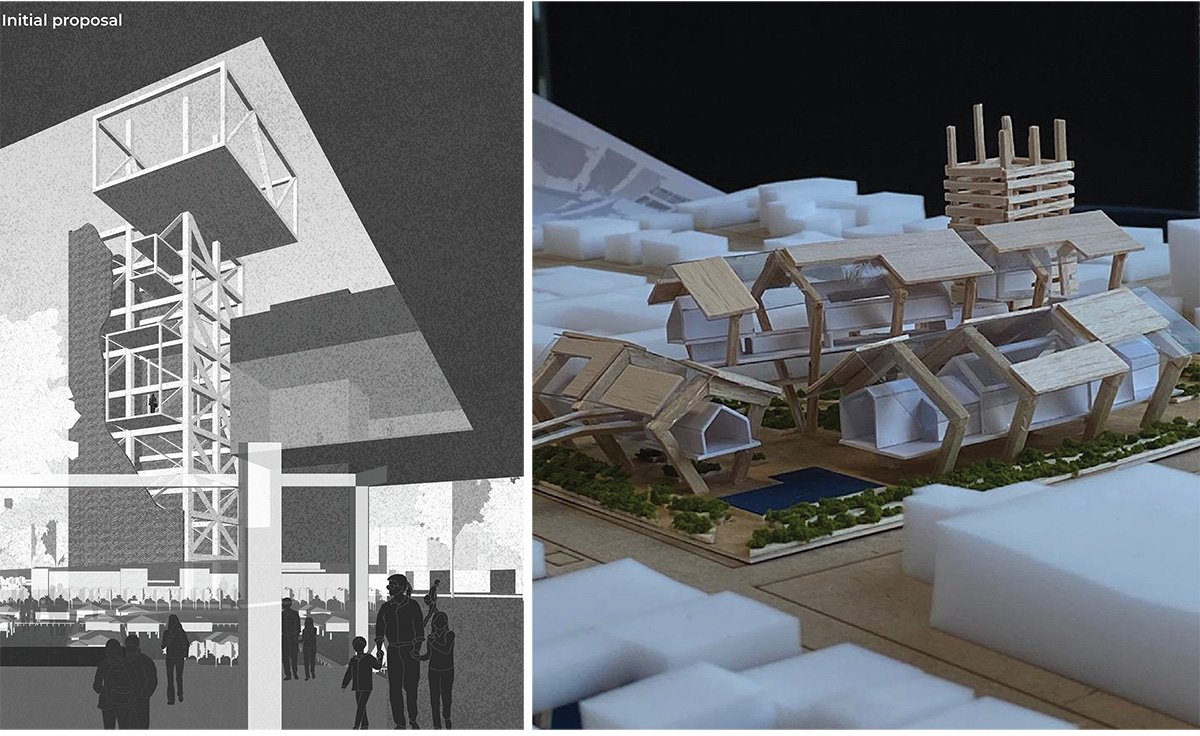
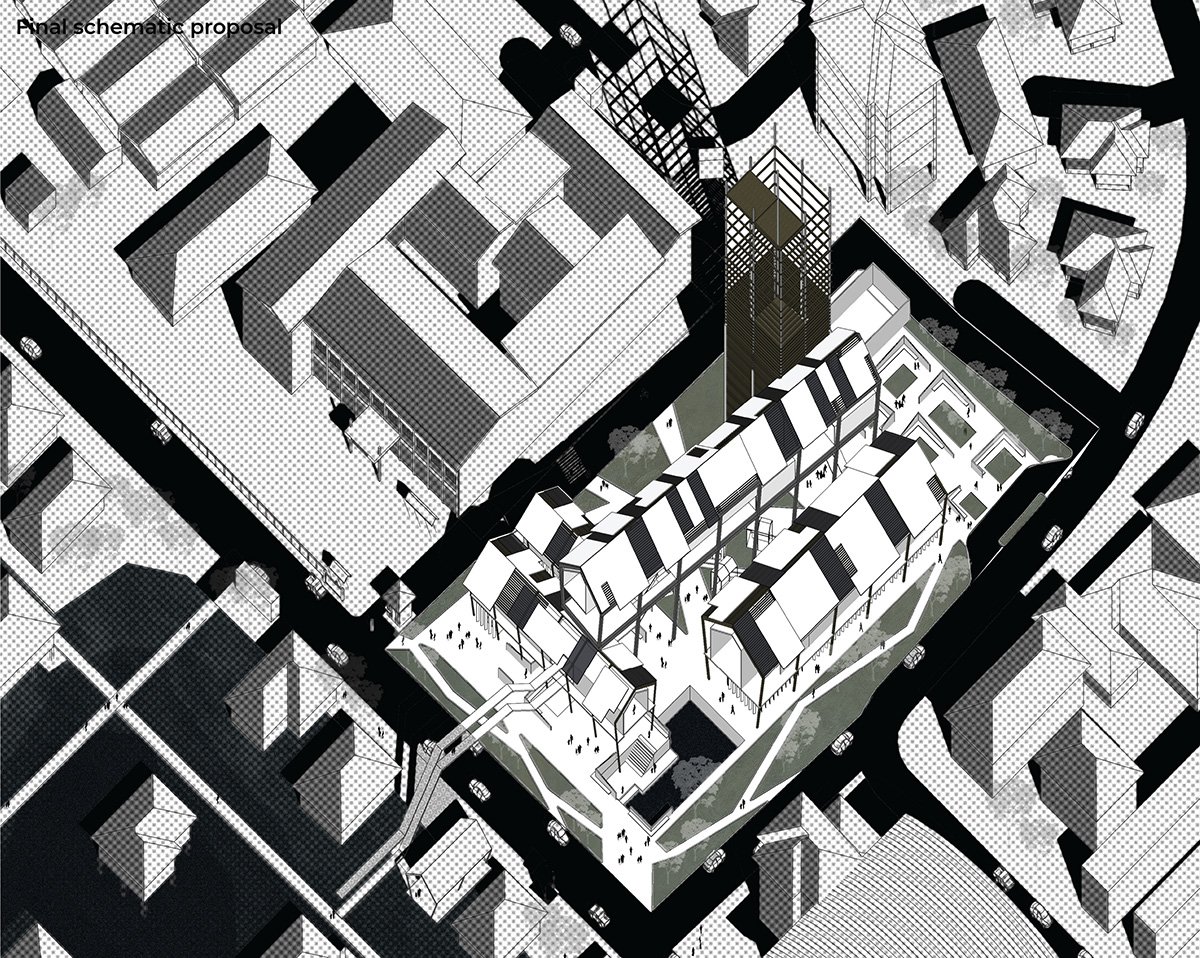
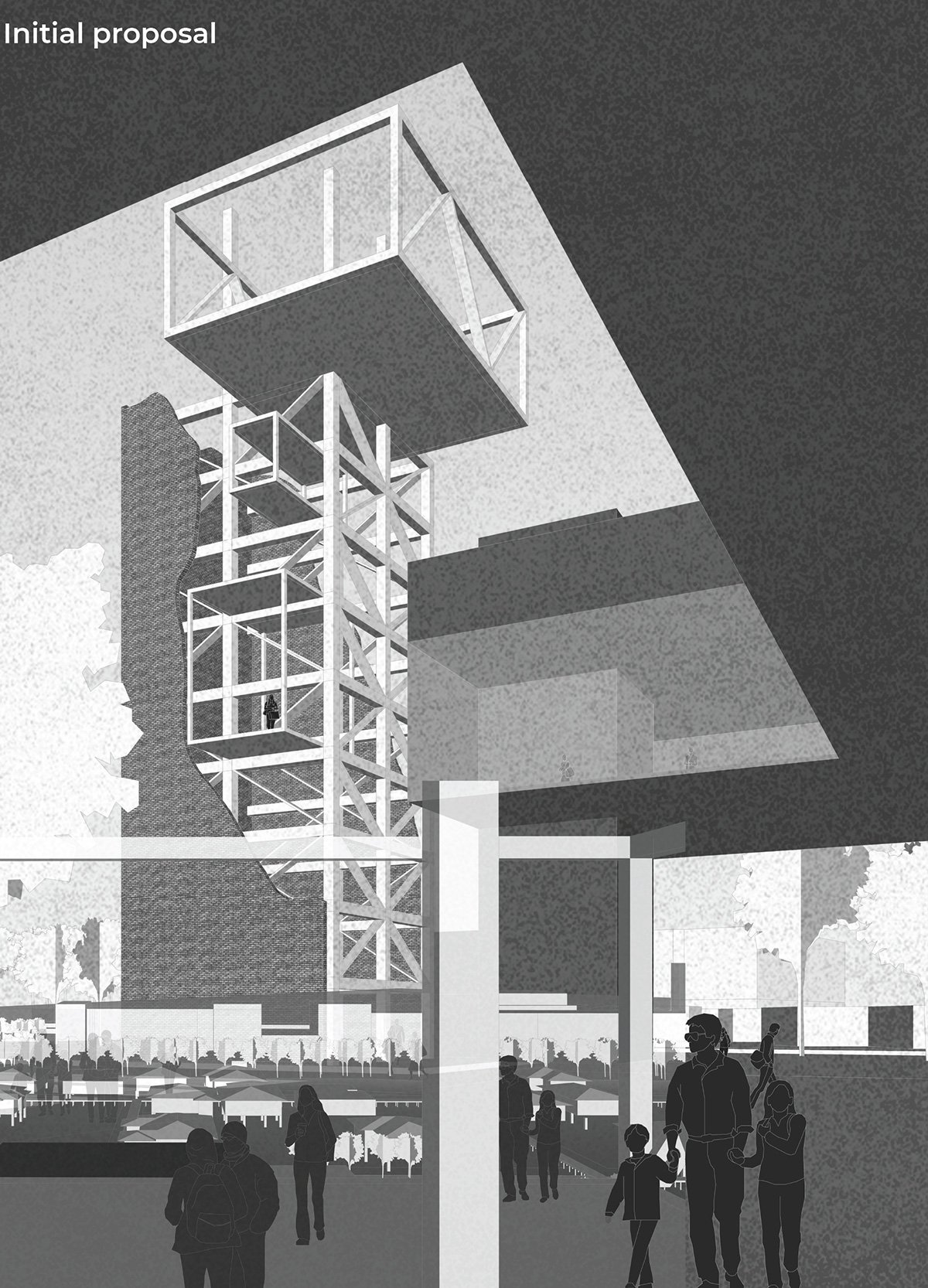
Program DevelopmentProgram DevelopmentInitial Proposal | Product Of The First Half Of The Thesis YearFinal Schematic Proposal
The initial stage of schematic massing development was derived from the massing study shown on the left (refer to image above). From this base form, the blocks were progressively refined, broken down, and articulated in response to the programmatic requirement and spatial planning considerations.
Final Outcome
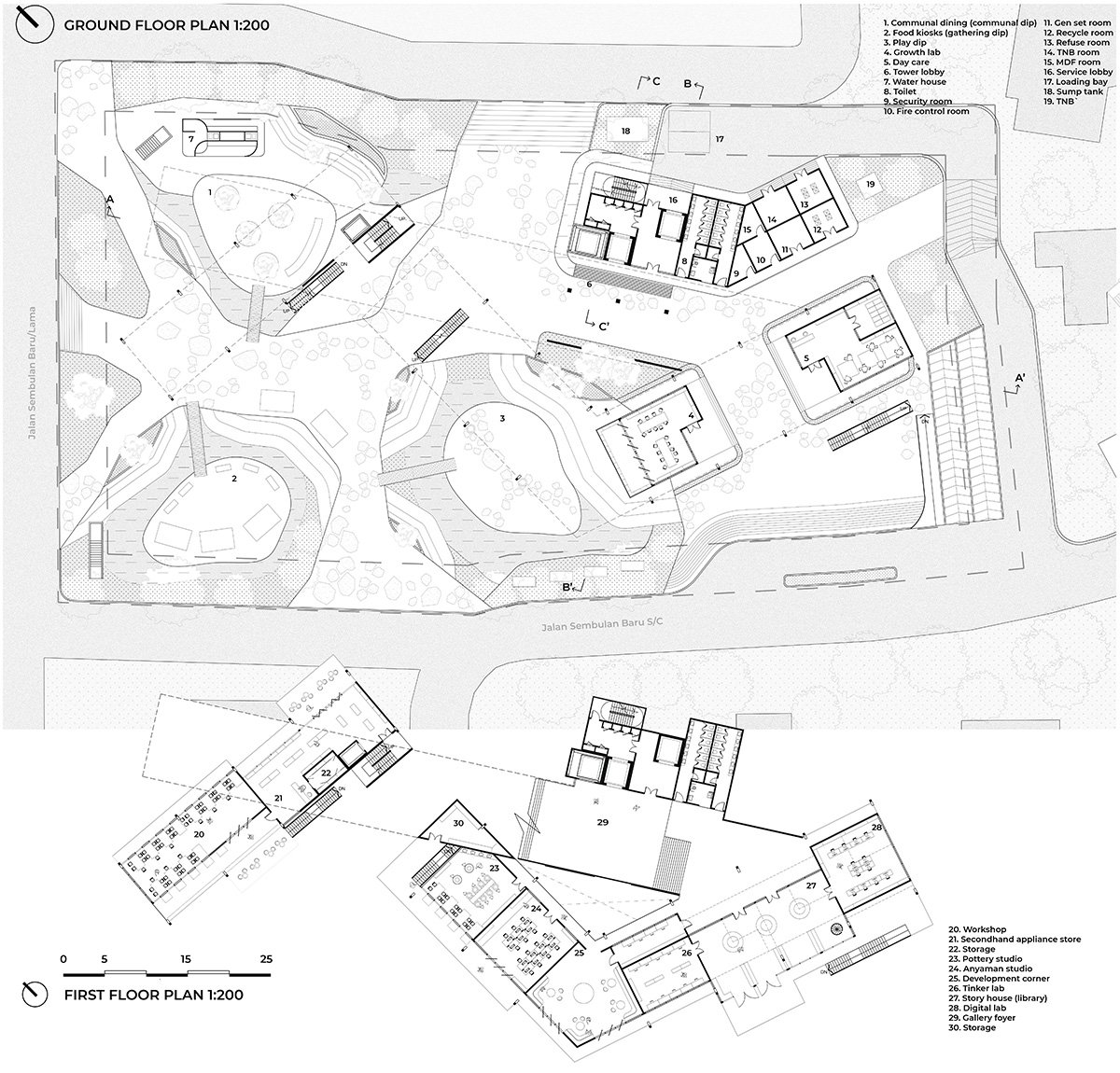
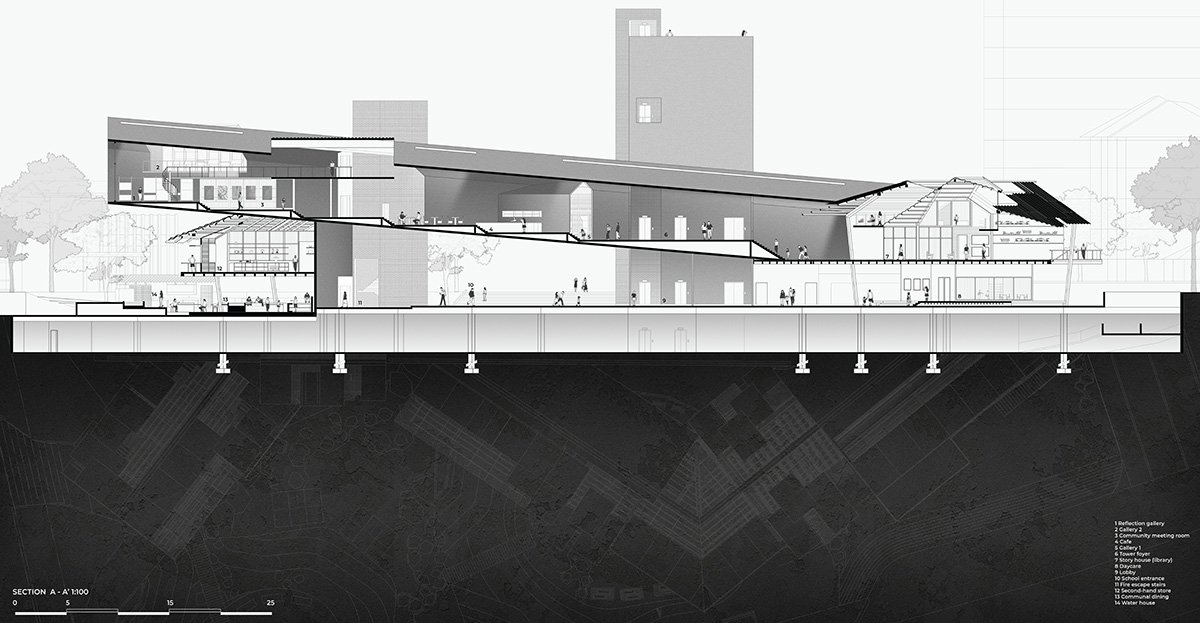
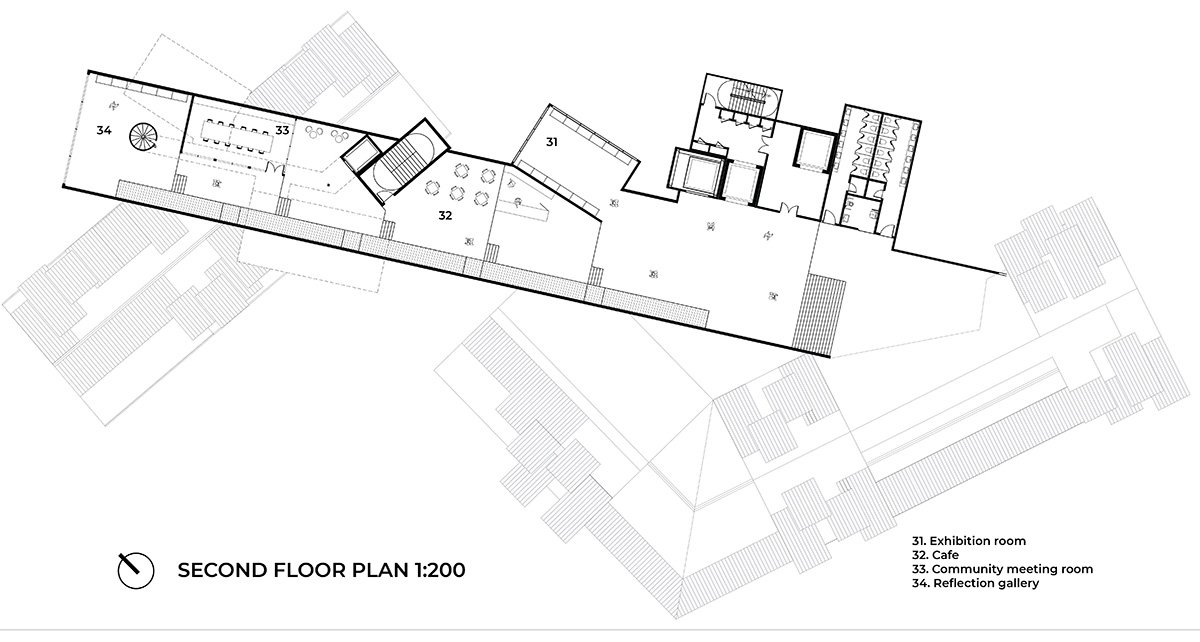
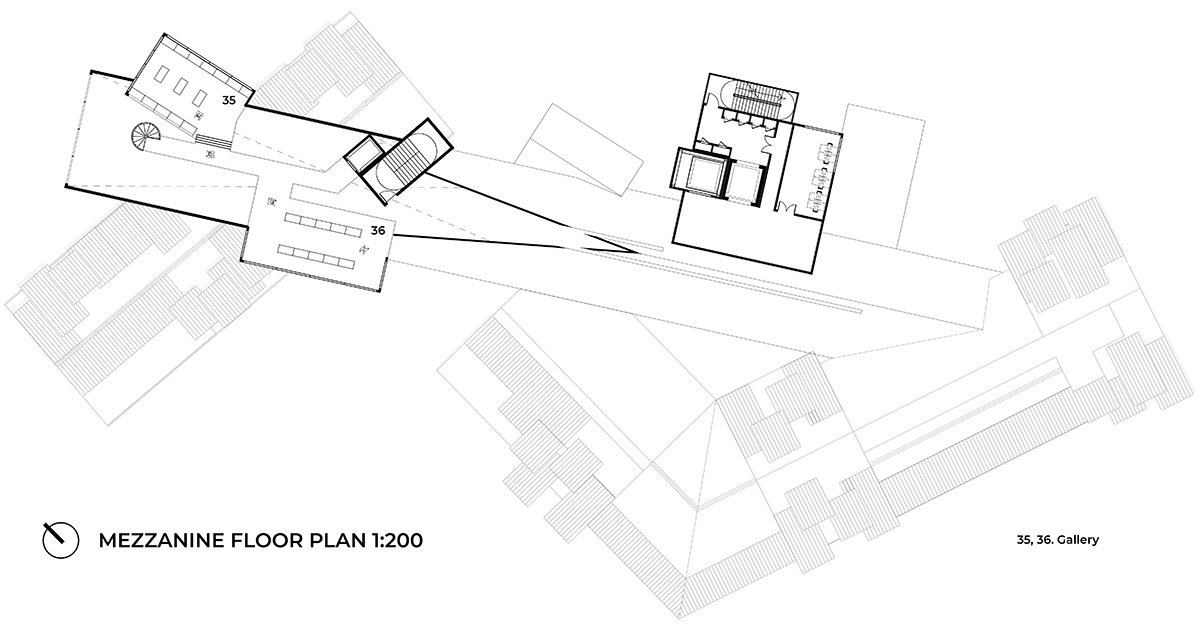
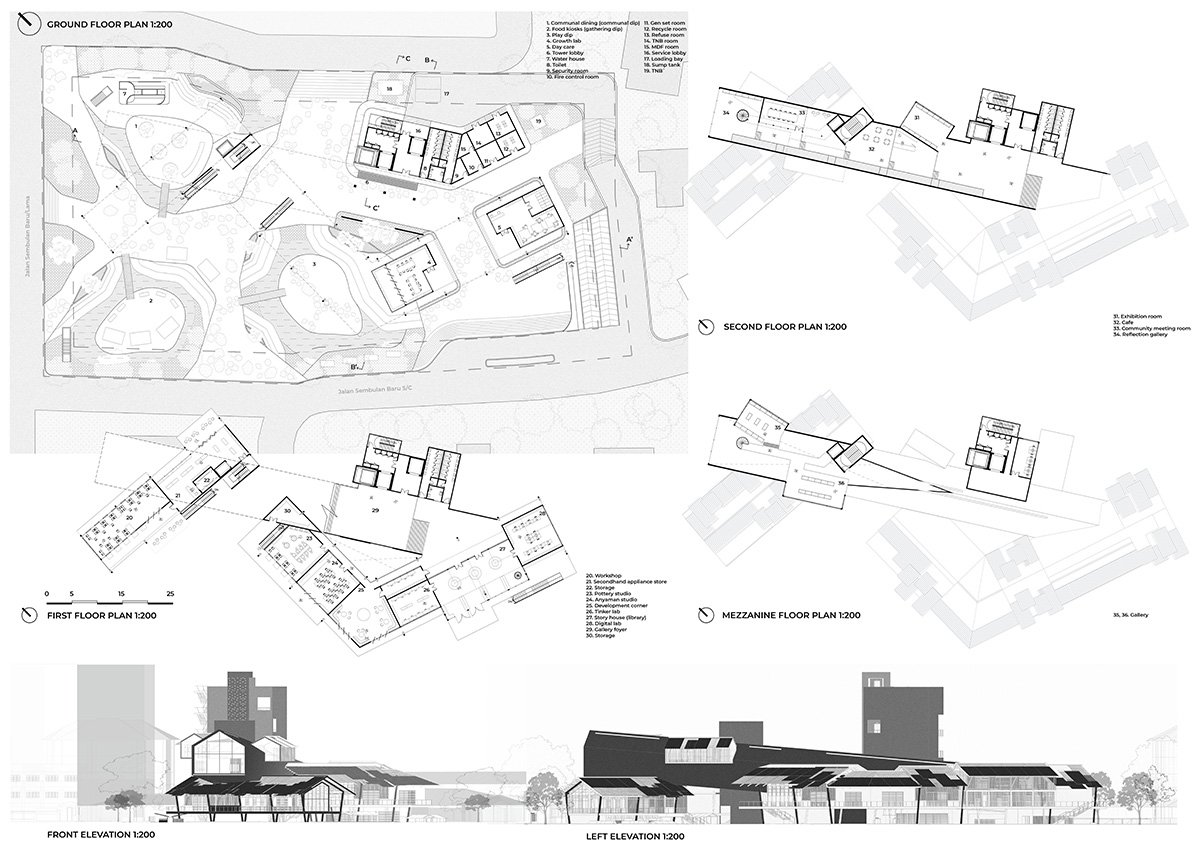
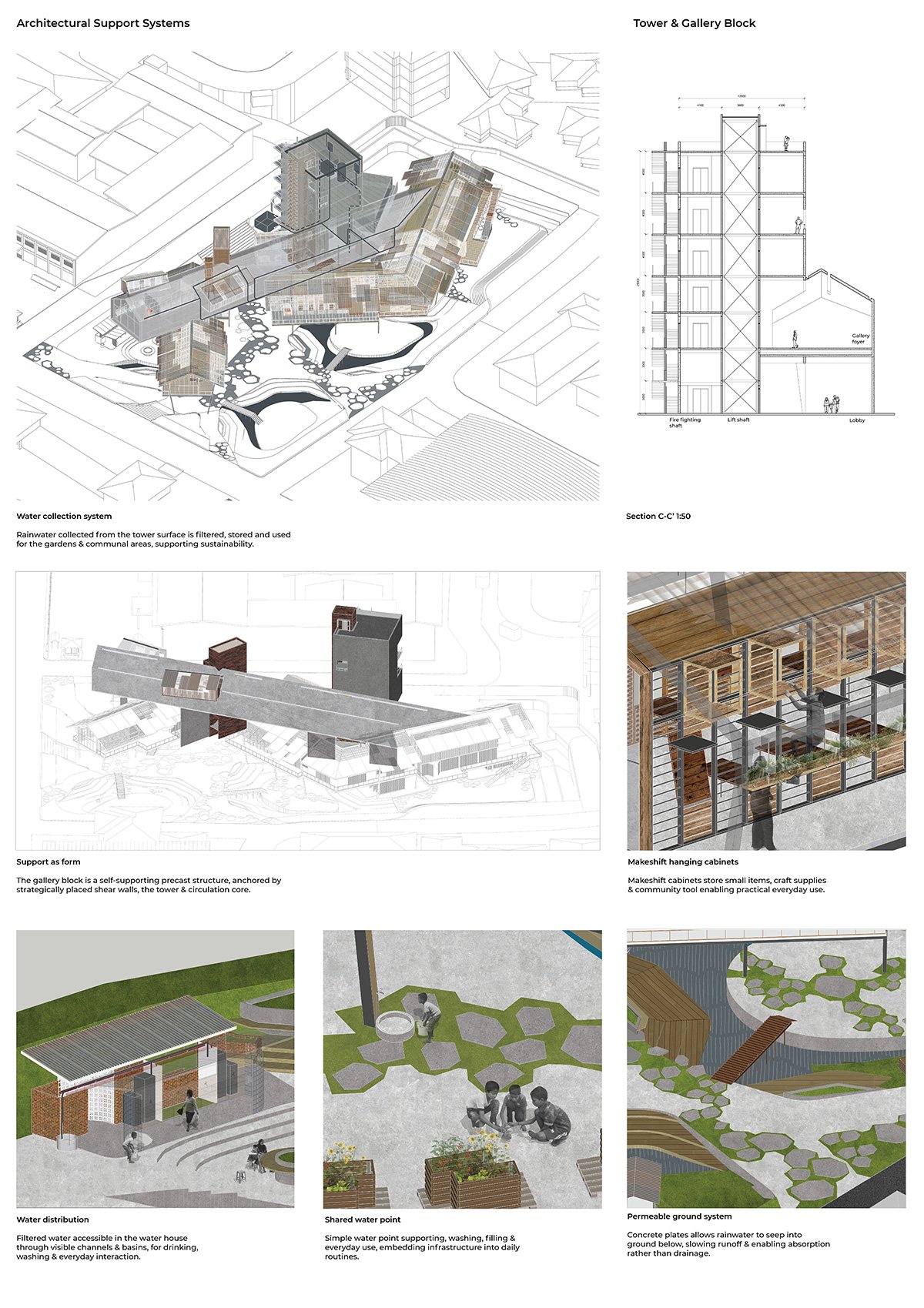
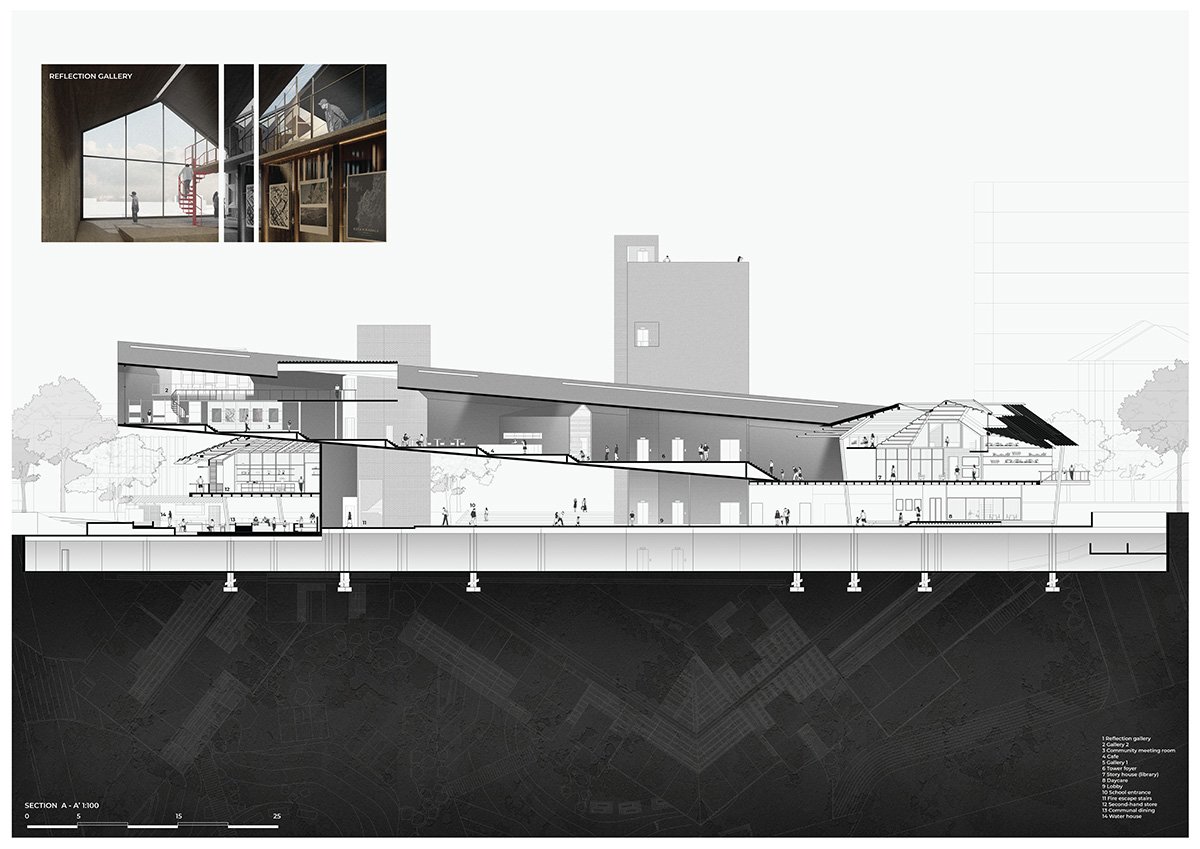
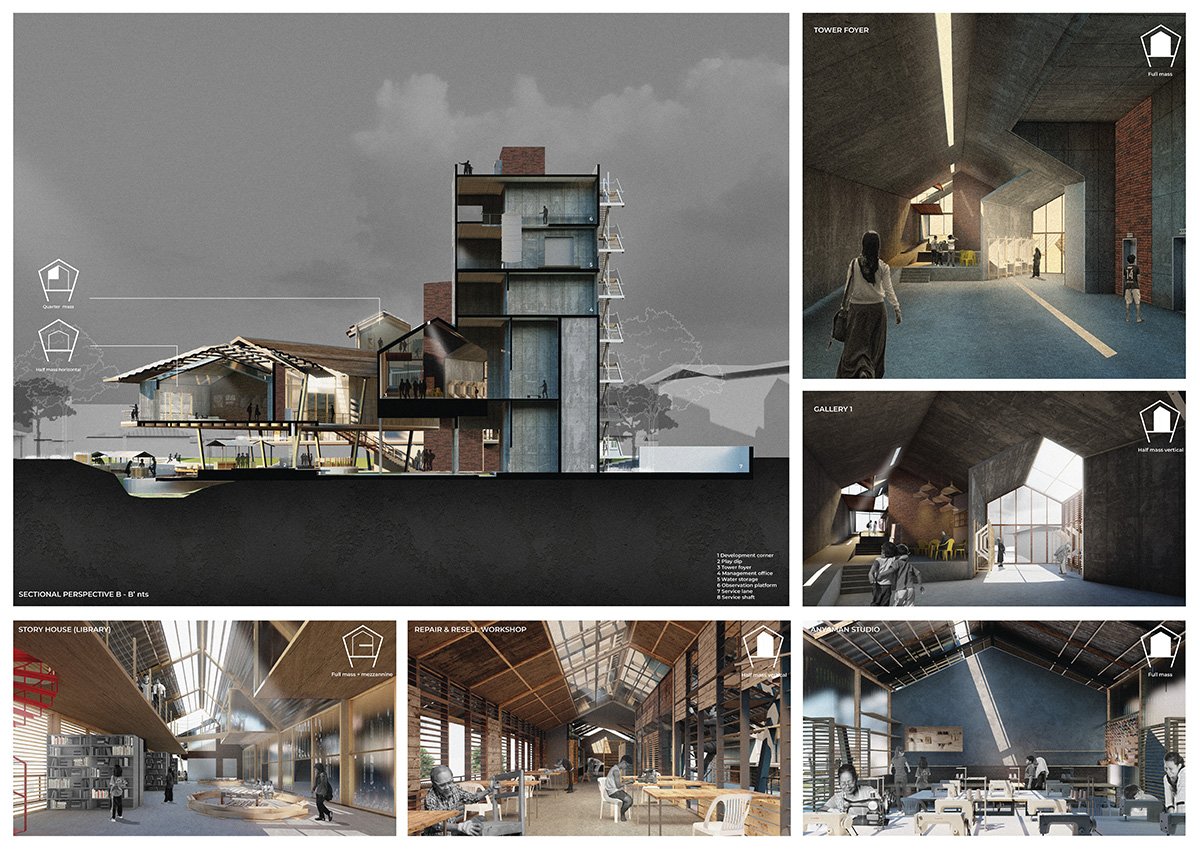
Vessel Of Memory On Chosen Site (Kampung Sembulan Tengah)Floor PlansElevationsSections
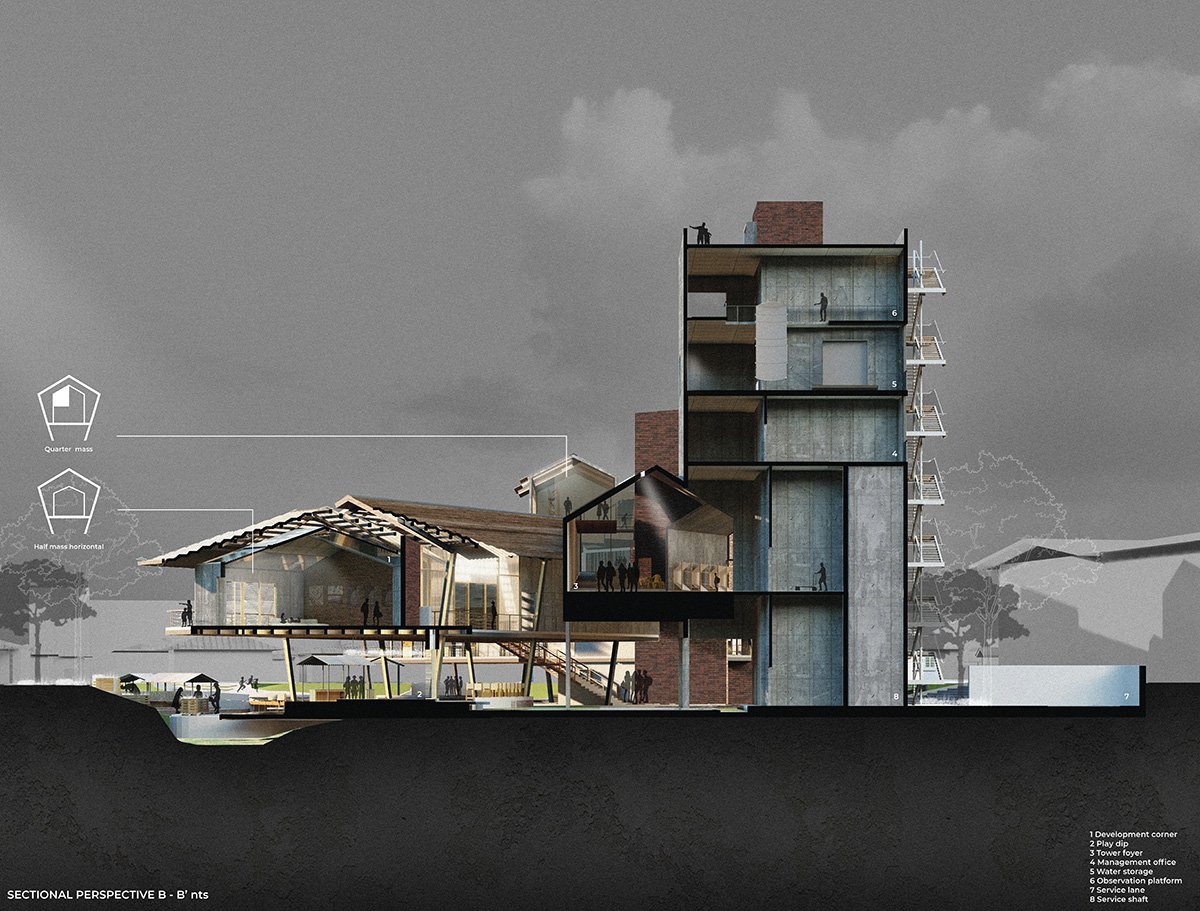
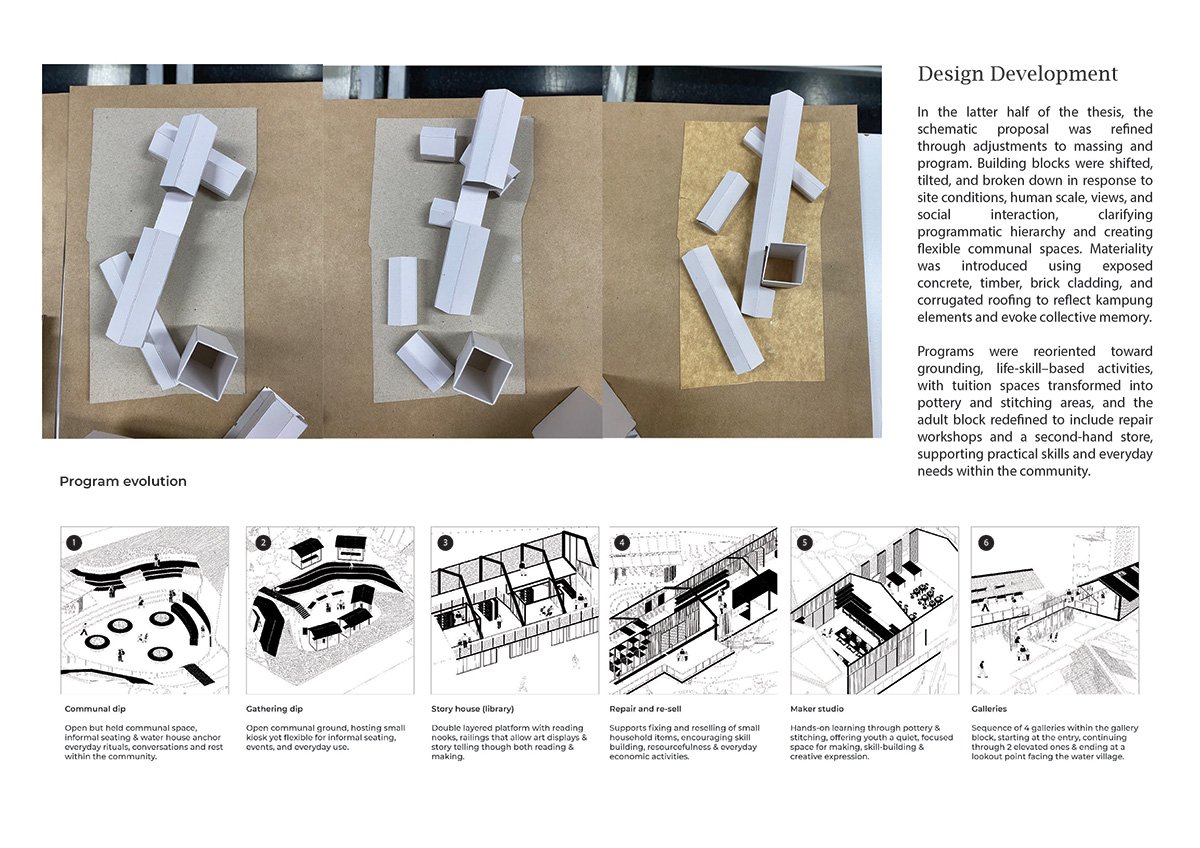
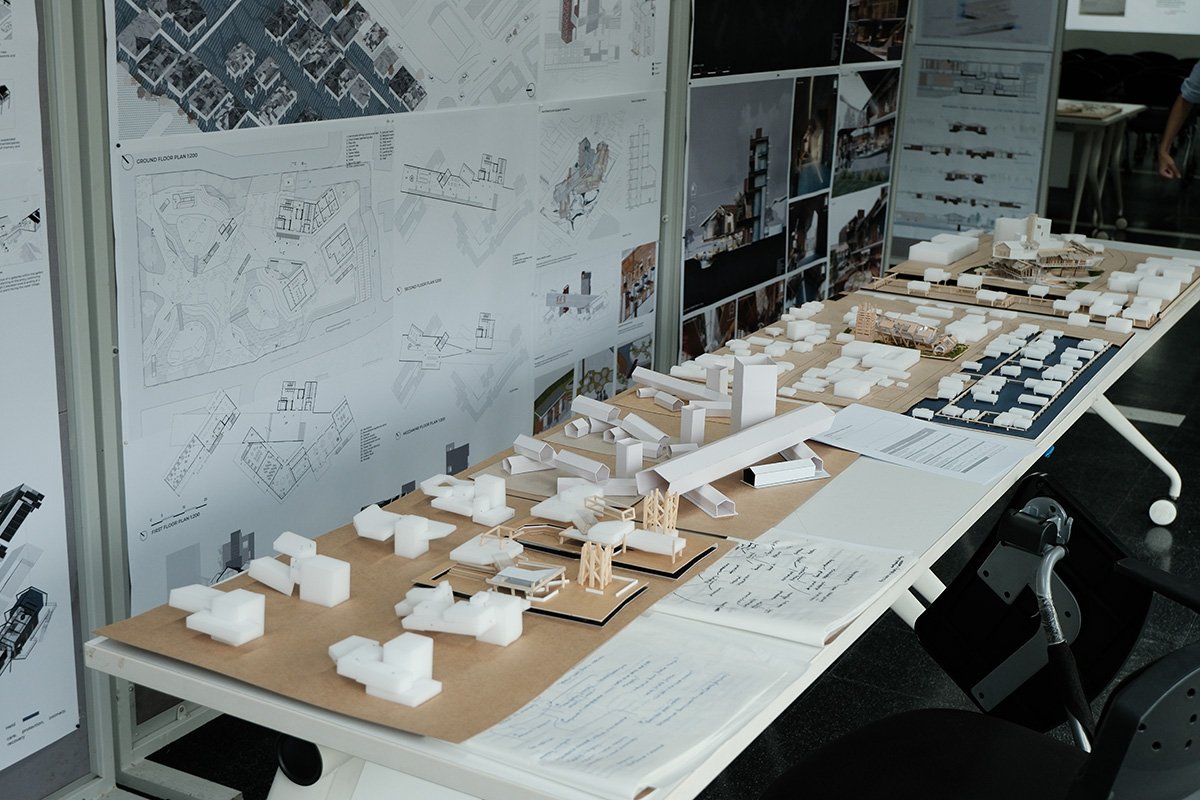
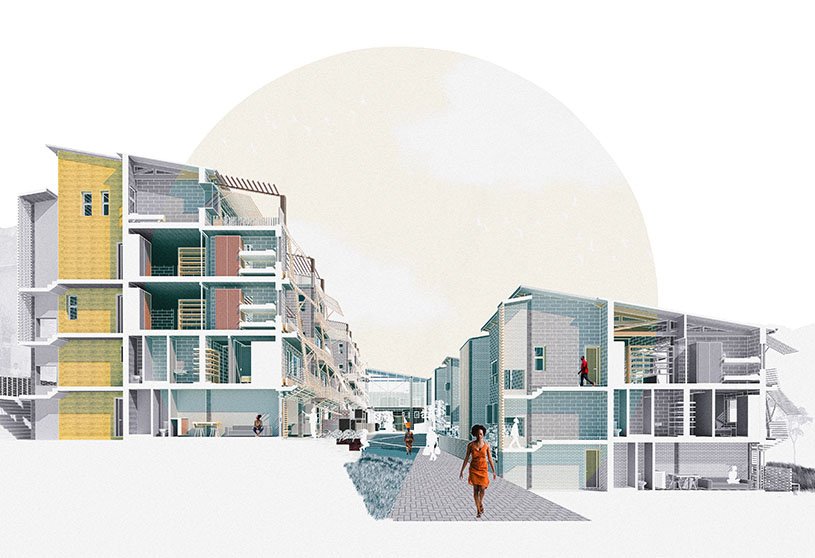
The schematic proposal was then further developed in the final half of the thesis year. The blocks were shifted, tilted, and broken down to be refined to site conditions, human scale, optimized views, and enhanced social and spatial interactions within the community. The final massing was refined to articulate programmatic hierarchy, frame key sightlines, and create flexible communal spaces.
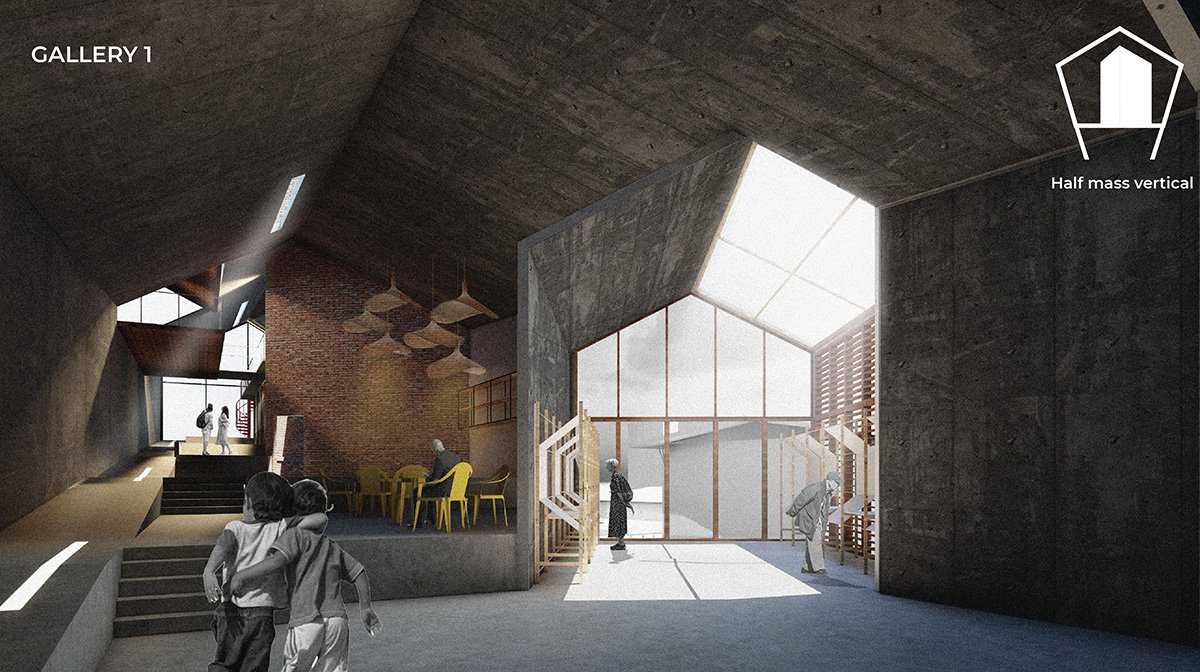
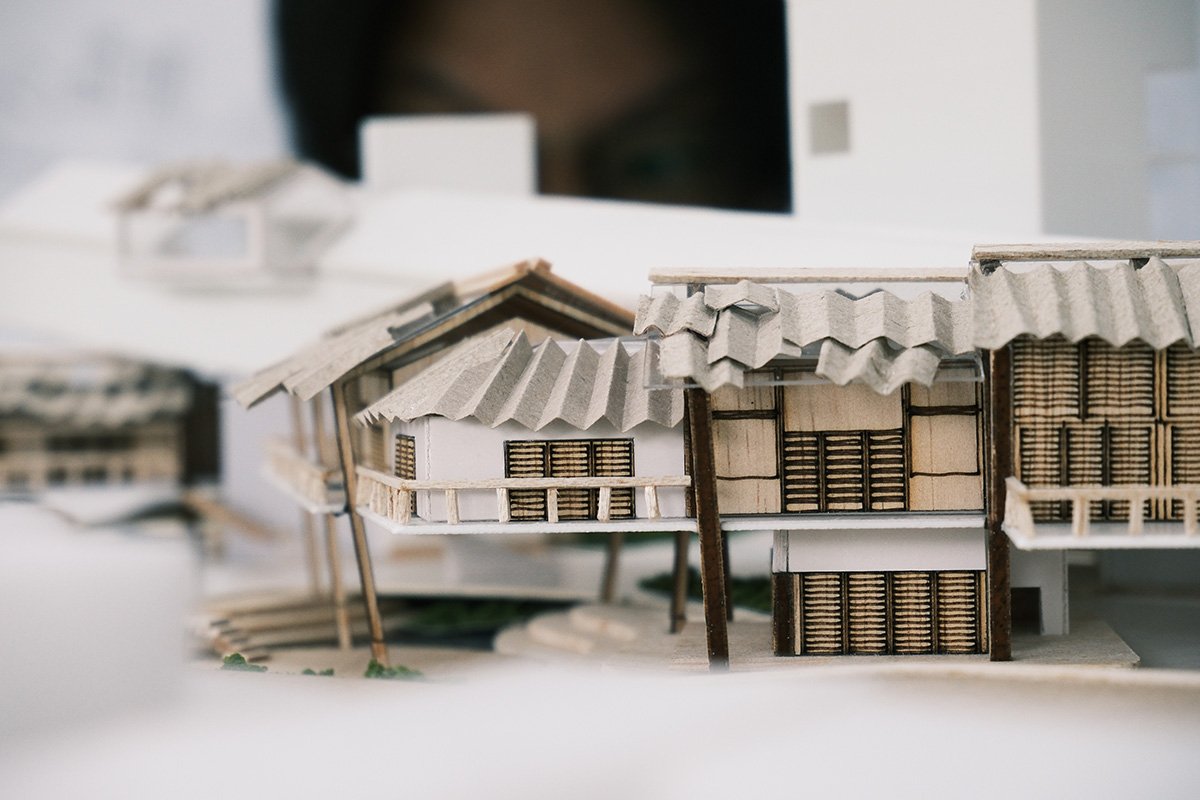
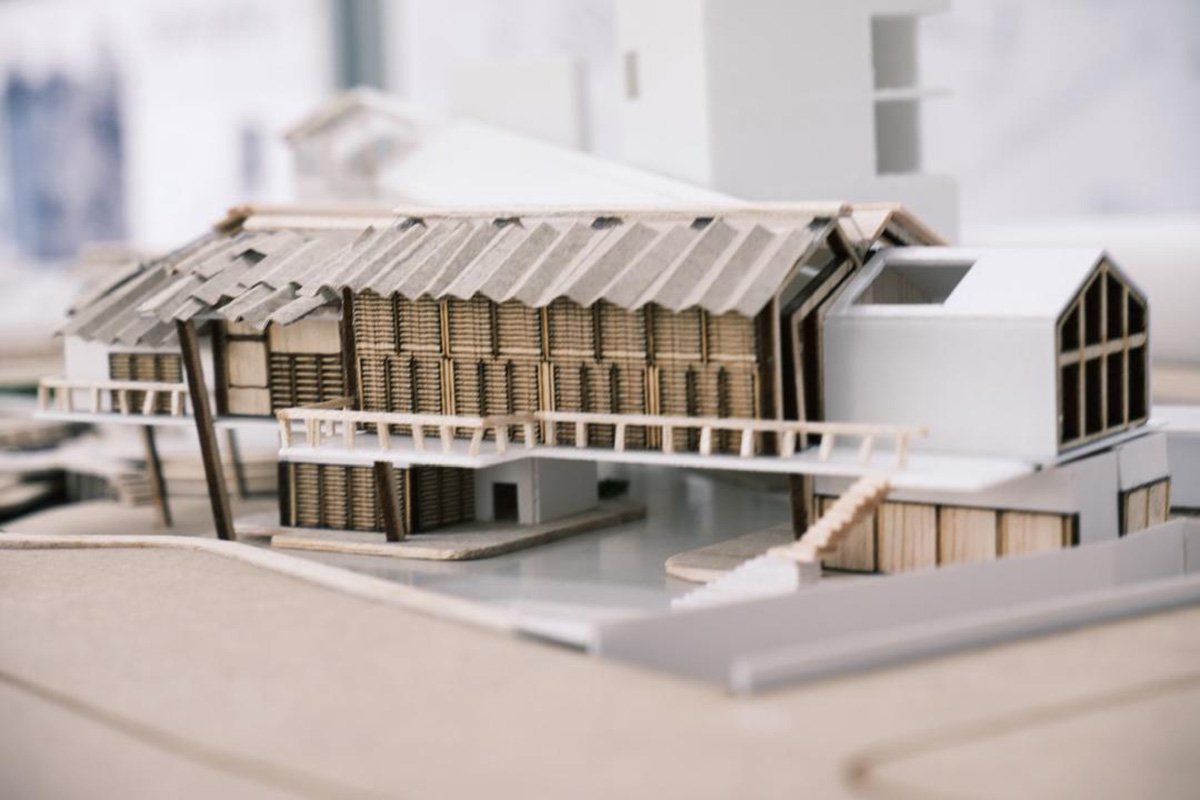
Materiality was introduced at this stage, with exposed concrete, timber, brick cladding, and corrugated roofs carefully selected to reflect kampung elements, evoke memory, and reinforce the character of the architecture.
Interior RendersInterior RendersInterior Renders
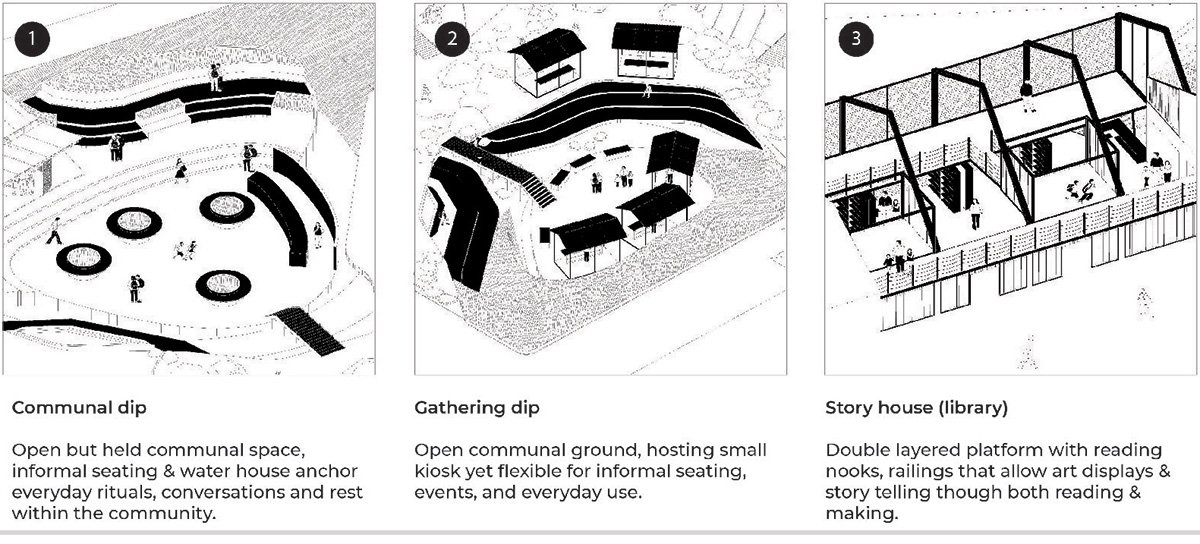
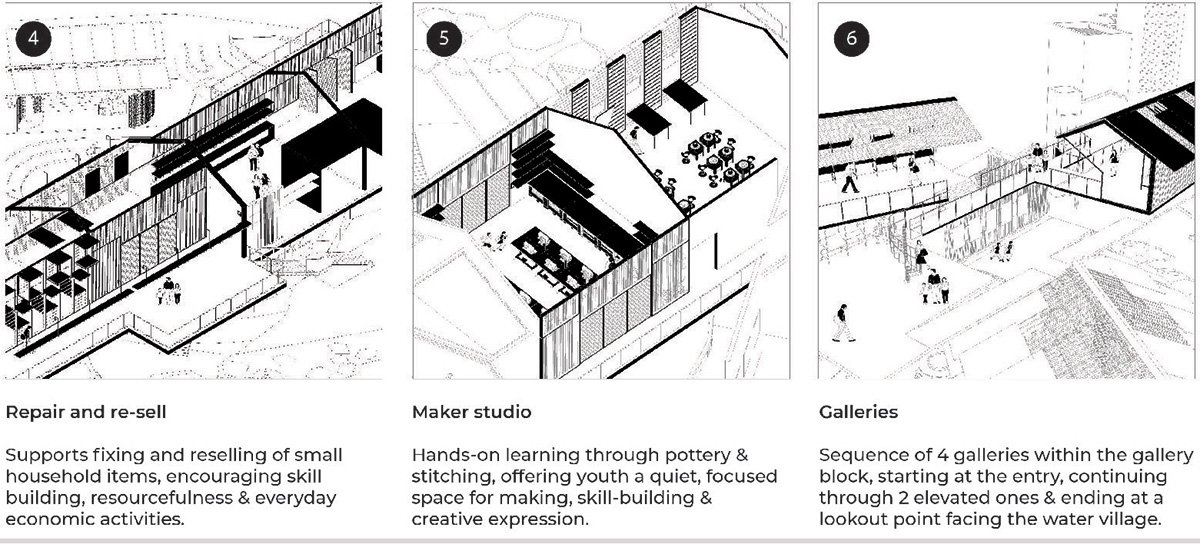
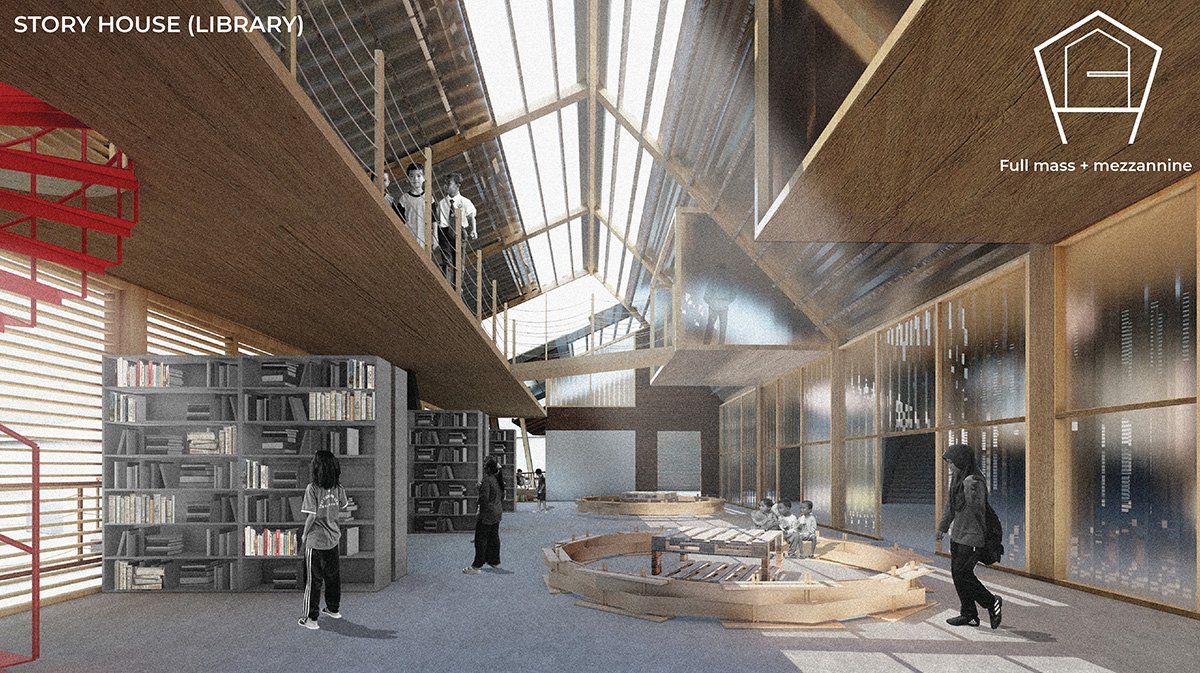
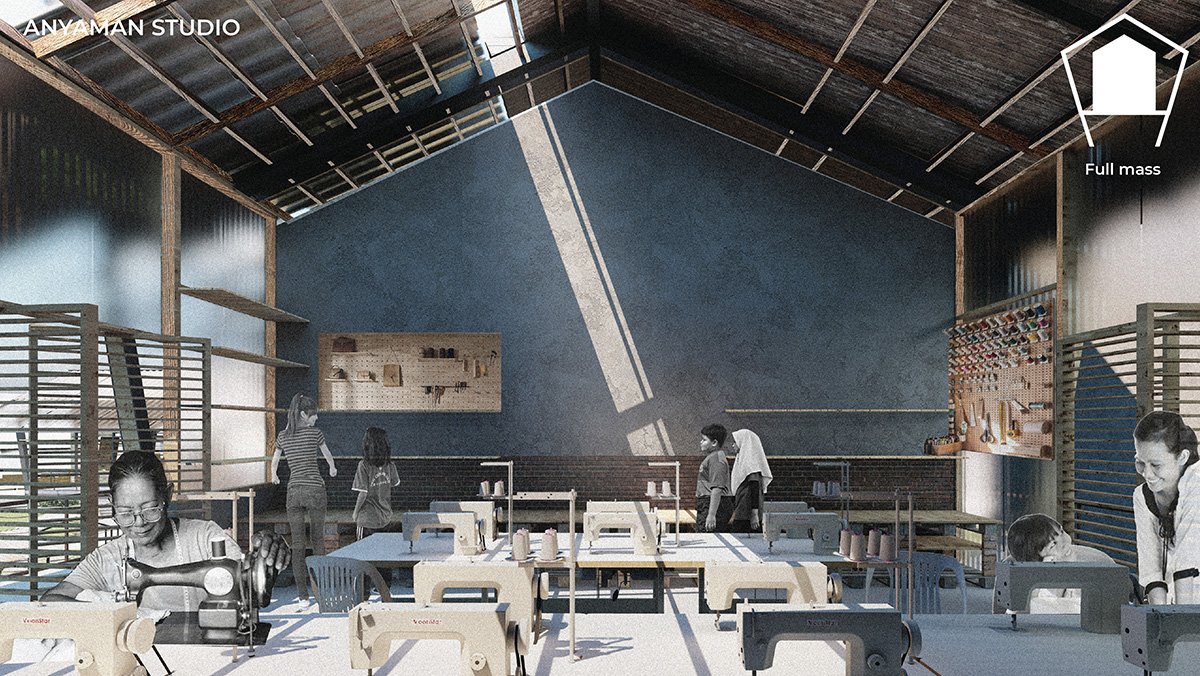
The programs were reoriented to focus on grounding, life-skill-based activities. For example, the tuition spaces were transformed into pottery and stitching areas, targeting skills and creative practices not typically offered in schools.
Interior RendersExterior RendersExterior Renders
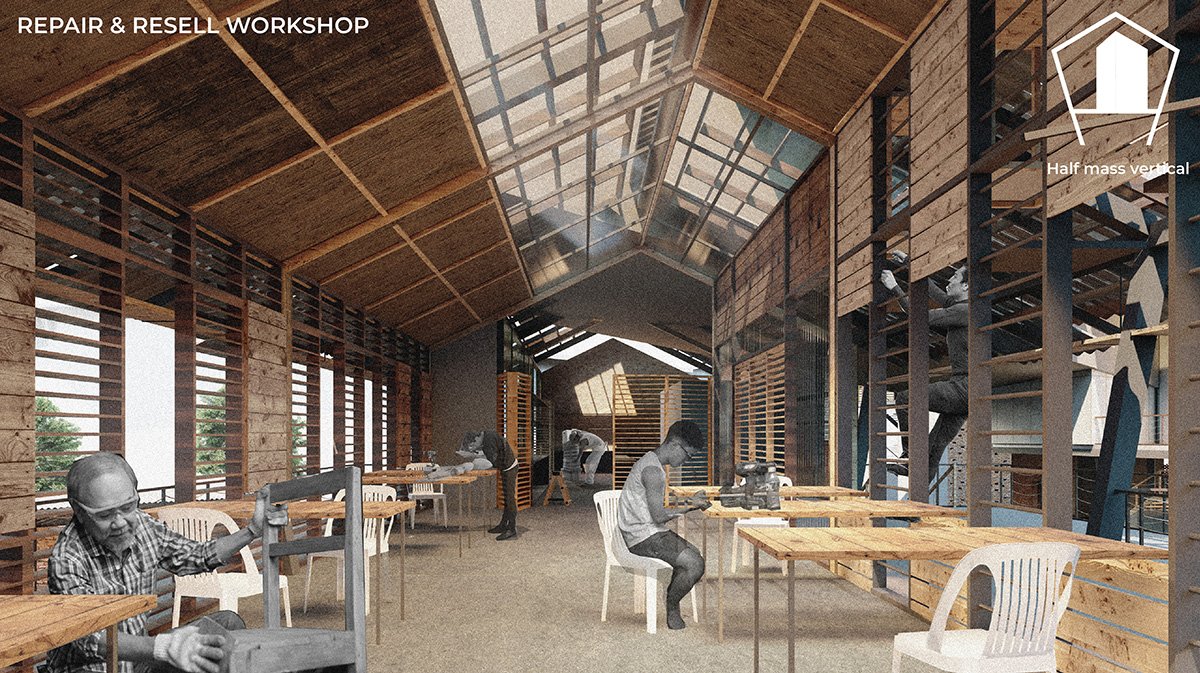
Similarly, the adult block shifted from generic community spaces to more purposeful functions, such as repair workshops and a second-hand store, providing practical skills and access to essential resources for the residents.
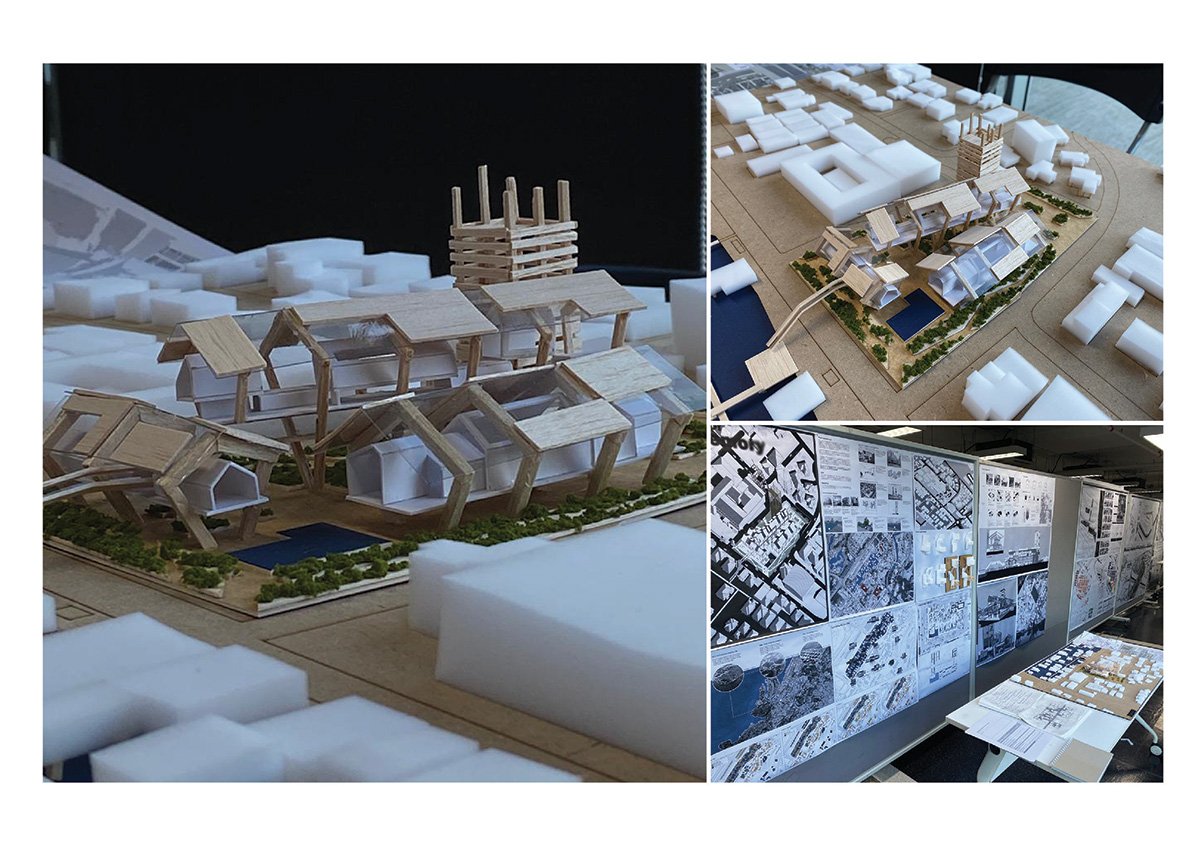
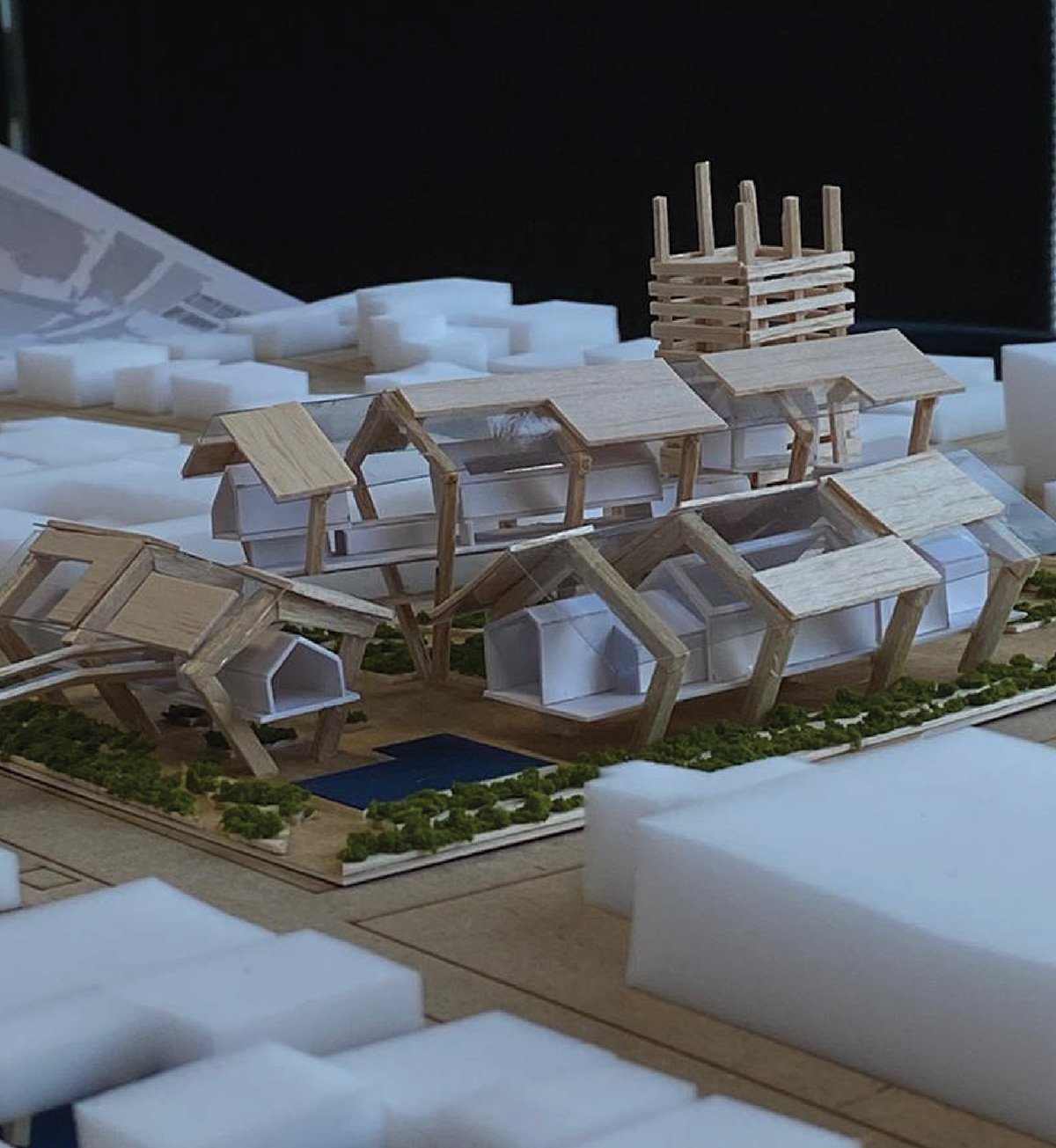
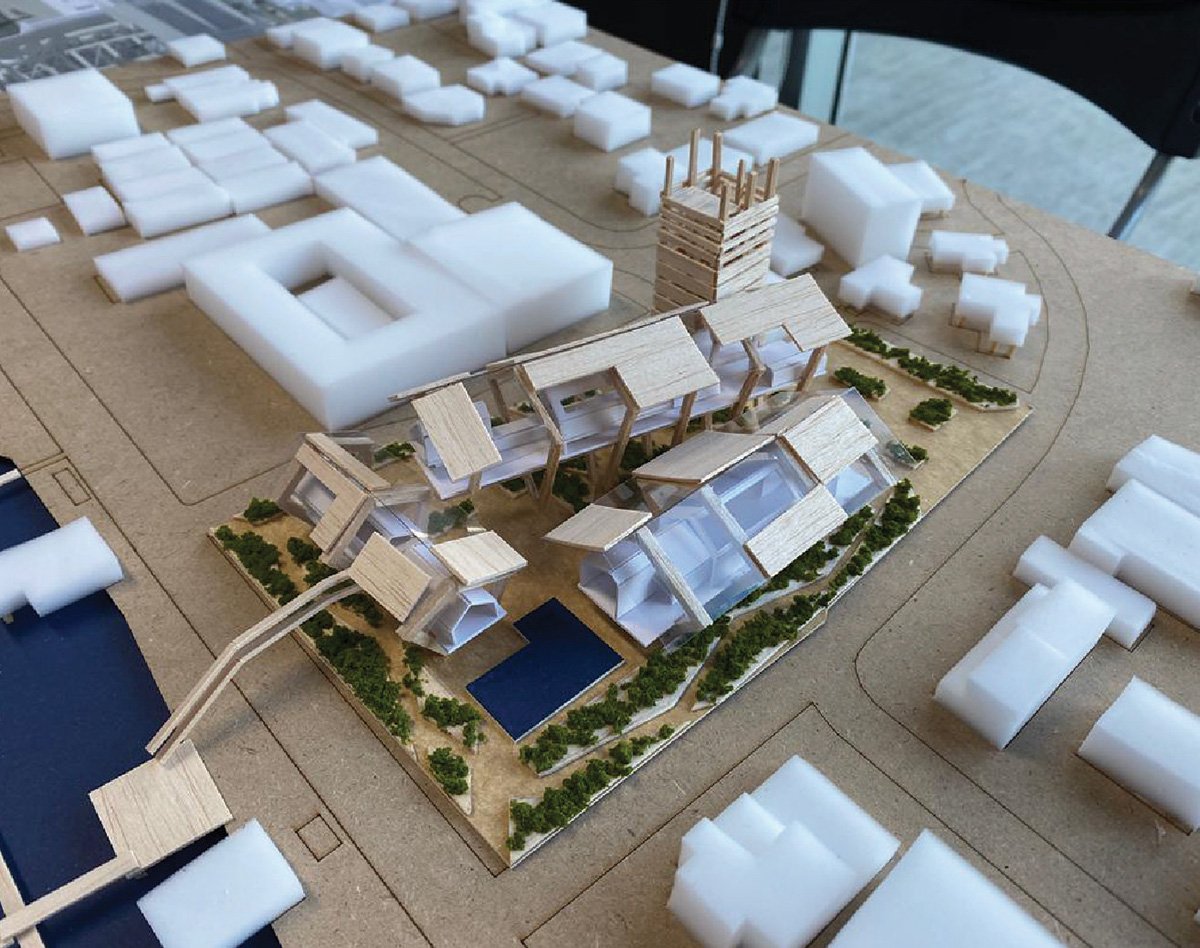
Physical ModelsPhysical Models
Conclusion: Ultimately, The Vessel of Memory frames architecture as continuity rather than preservation. Responding to displacement in Kampung Sembulan, it transforms everyday gestures into shared spaces of learning, care, and resilience.
[This Academic Project has been published with text and images submitted by the student]
Site Context
Design Process
Final Outcome
To submit your academic project for publication at ArchiDiaries, please visit the following link >> Submit
Get the best of ArchiDiaries, directly in your inbox.
We use cookies on our website to give you the most relevant experience by remembering your preferences and repeat visits. By clicking “Accept All”, you consent to the use of ALL the cookies. However, you may visit "Cookie Settings" to provide a controlled consent.
This website uses cookies to improve your experience while you navigate through the website. Out of these, the cookies that are categorized as necessary are stored on your browser as they are essential for the working of basic functionalities of the website. We also use third-party cookies that help us analyze and understand how you use this website. These cookies will be stored in your browser only with your consent. You also have the option to opt-out of these cookies. But opting out of some of these cookies may affect your browsing experience.
Necessary cookies are absolutely essential for the website to function properly. These cookies ensure basic functionalities and security features of the website, anonymously.
Cookie
Duration
Description
cookielawinfo-checkbox-analytics
11 months
This cookie is set by GDPR Cookie Consent plugin. The cookie is used to store the user consent for the cookies in the category "Analytics".
cookielawinfo-checkbox-functional
11 months
The cookie is set by GDPR cookie consent to record the user consent for the cookies in the category "Functional".
cookielawinfo-checkbox-necessary
11 months
This cookie is set by GDPR Cookie Consent plugin. The cookies is used to store the user consent for the cookies in the category "Necessary".
cookielawinfo-checkbox-others
11 months
This cookie is set by GDPR Cookie Consent plugin. The cookie is used to store the user consent for the cookies in the category "Other.
cookielawinfo-checkbox-performance
11 months
This cookie is set by GDPR Cookie Consent plugin. The cookie is used to store the user consent for the cookies in the category "Performance".
viewed_cookie_policy
11 months
The cookie is set by the GDPR Cookie Consent plugin and is used to store whether or not user has consented to the use of cookies. It does not store any personal data.
Functional cookies help to perform certain functionalities like sharing the content of the website on social media platforms, collect feedbacks, and other third-party features.
Performance cookies are used to understand and analyze the key performance indexes of the website which helps in delivering a better user experience for the visitors.
Analytical cookies are used to understand how visitors interact with the website. These cookies help provide information on metrics the number of visitors, bounce rate, traffic source, etc.
Advertisement cookies are used to provide visitors with relevant ads and marketing campaigns. These cookies track visitors across websites and collect information to provide customized ads.