Excerpt: ‘Amphibious Housing for Flood Affected Communities’ is an architecture thesis by Anand Saji Thoppil from the ‘Department of Architecture and Planning – NIT Calicut.’ The project aims to develop a flood-resilient architectural model for Vechoor, Kuttanad, by integrating amphibious and floating housing with essential community infrastructure. It focuses on enhancing safety, supporting water-dependent livelihoods, and improving quality of life through affordable, sustainable design that responds to seasonal flooding and socio-cultural conditions.
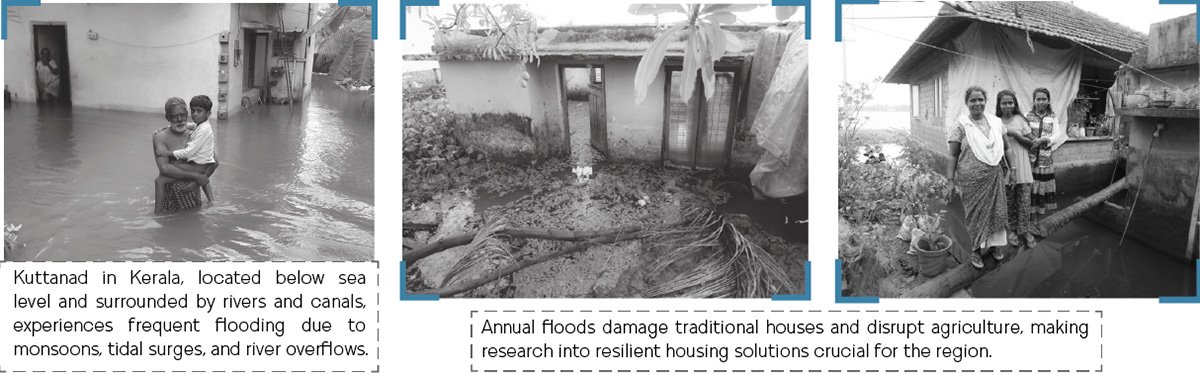
Introduction: Flooding is a recurring challenge in low-lying regions, severely disrupting communities and their livelihoods. Kuttanad, known as the “Rice Bowl of India,” is one of the most flood-prone landscapes in India due to its unique geography of lakes, canals, and land lying below sea level. Vechoor village, located within this region, faces frequent seasonal flooding that submerges houses, interrupts daily life, and disproportionately affects the fishing community, whose dependence on water makes them both resilient to and vulnerable from floods.
This thesis explores amphibious housing and a community center as a sustainable response to flooding in Vechoor. The study begins by examining floating and amphibious architecture, focusing on design principles, construction techniques, and materials that allow buildings to adapt to fluctuating water levels. Emphasis is placed on affordable, practical solutions suitable for the socio-economic and climatic conditions of Kuttanad. Through site analysis and relevant case studies, the thesis proposes a resilient, community-oriented model that enhances safety, supports livelihoods, and improves quality of life in flood-prone regions like Vechoor.
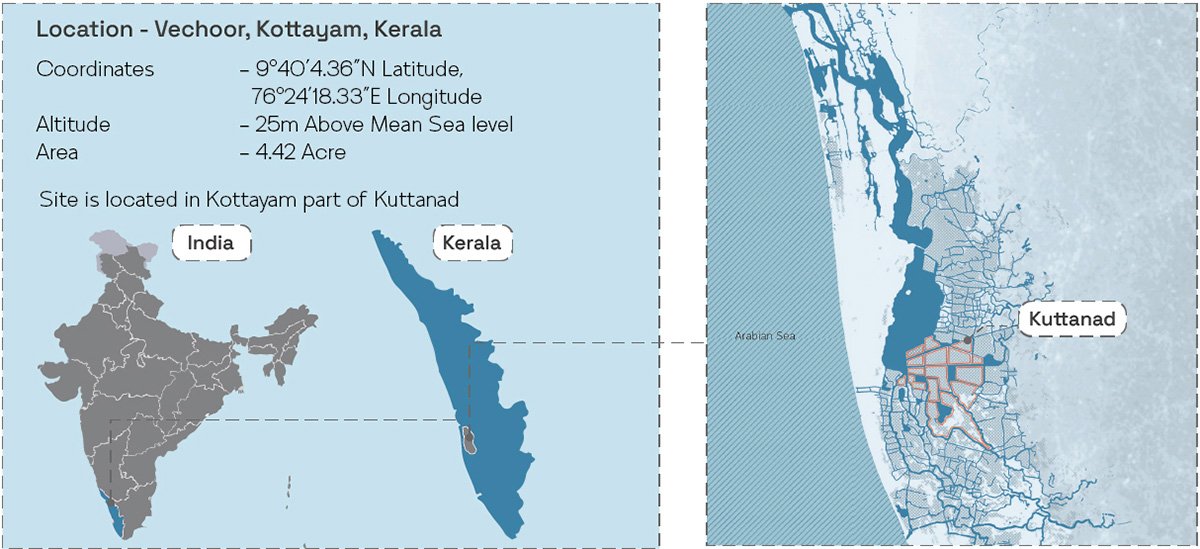
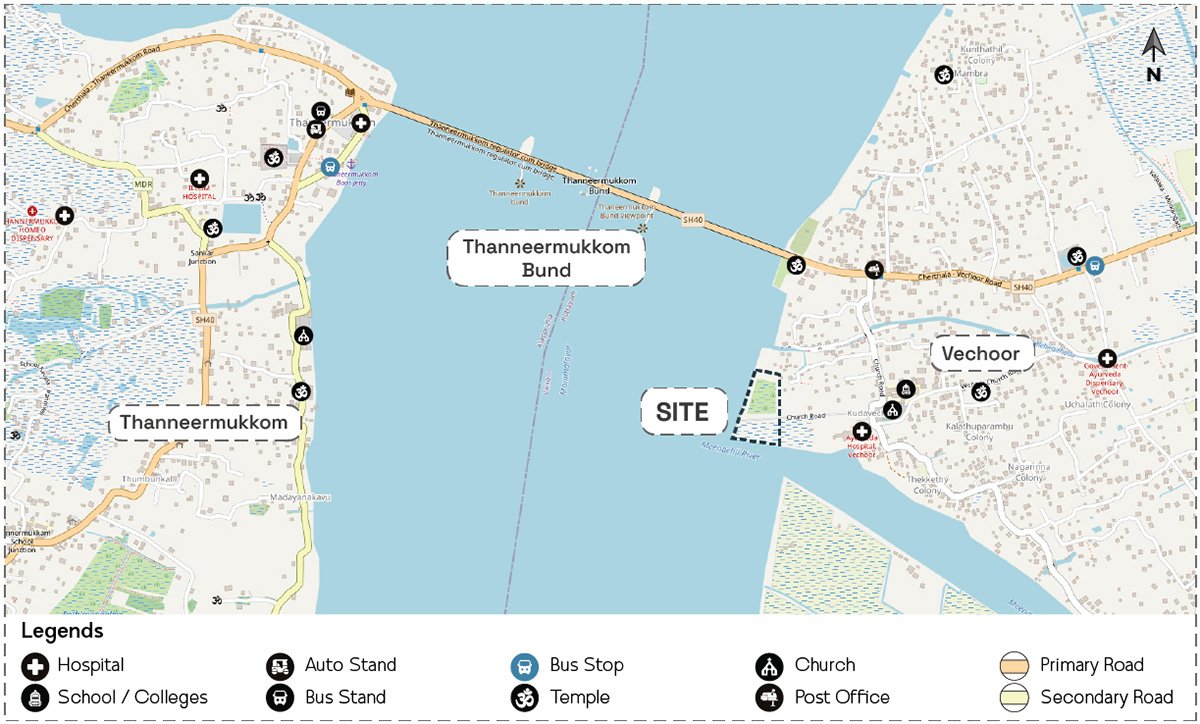
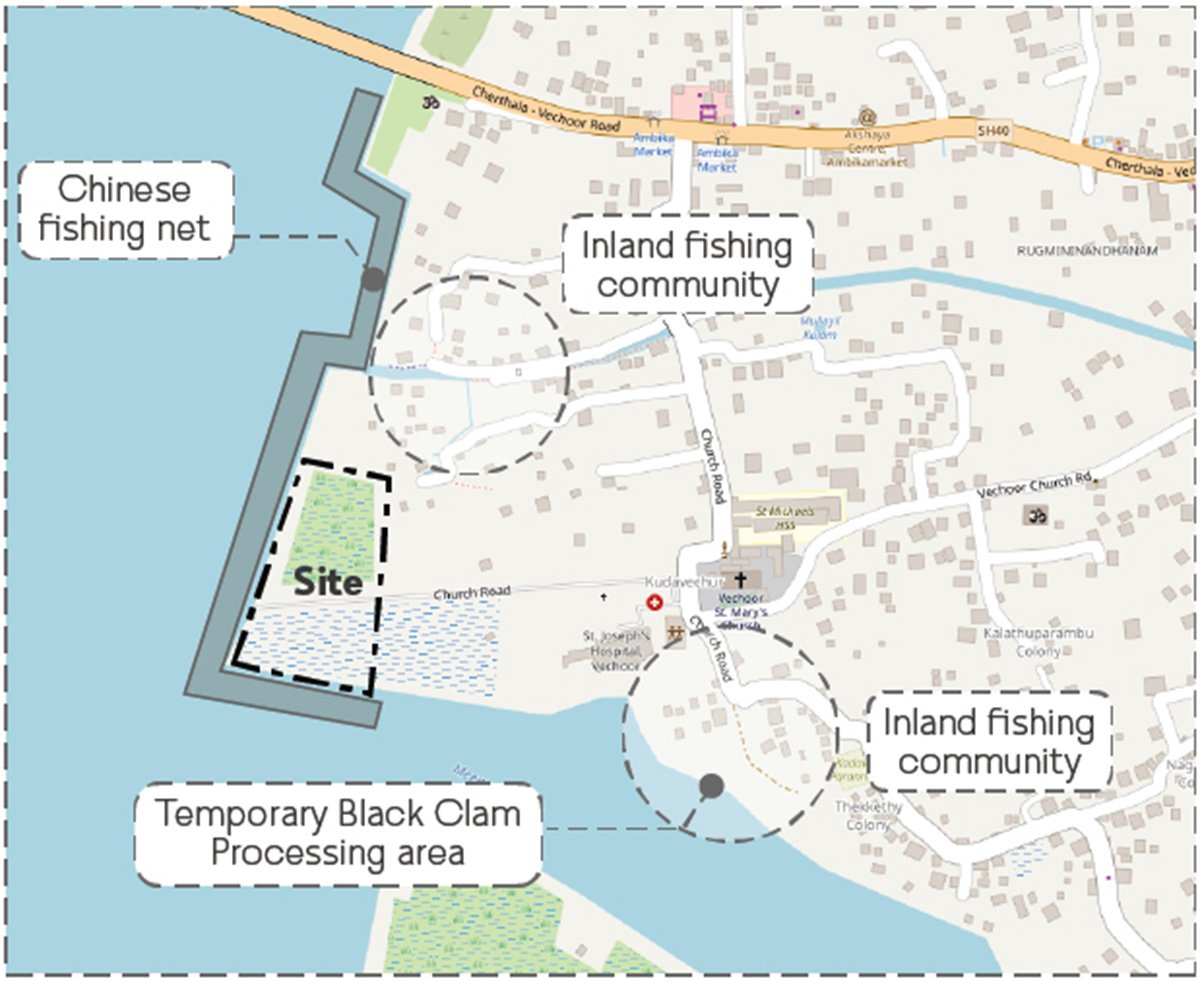
LocationNeighborhood ContextFisherman Community in Site
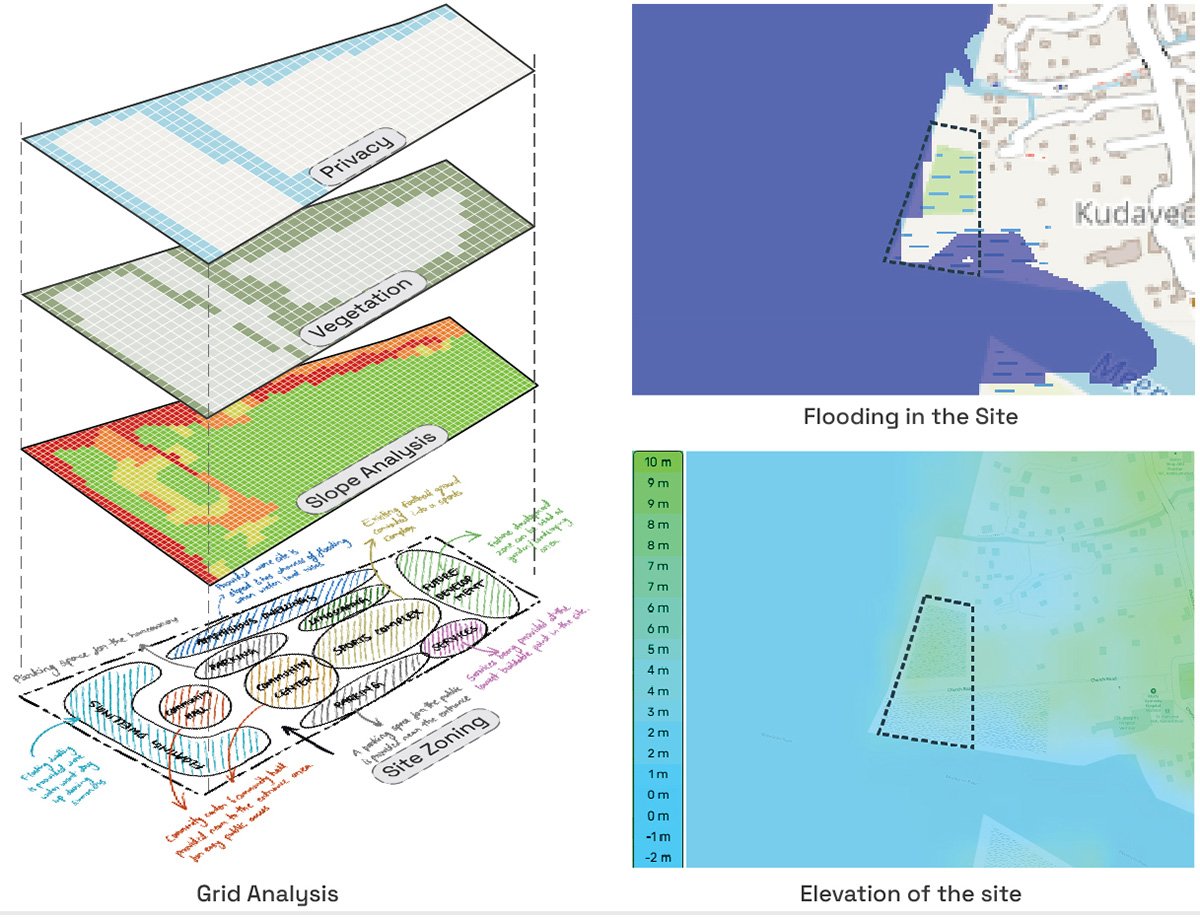
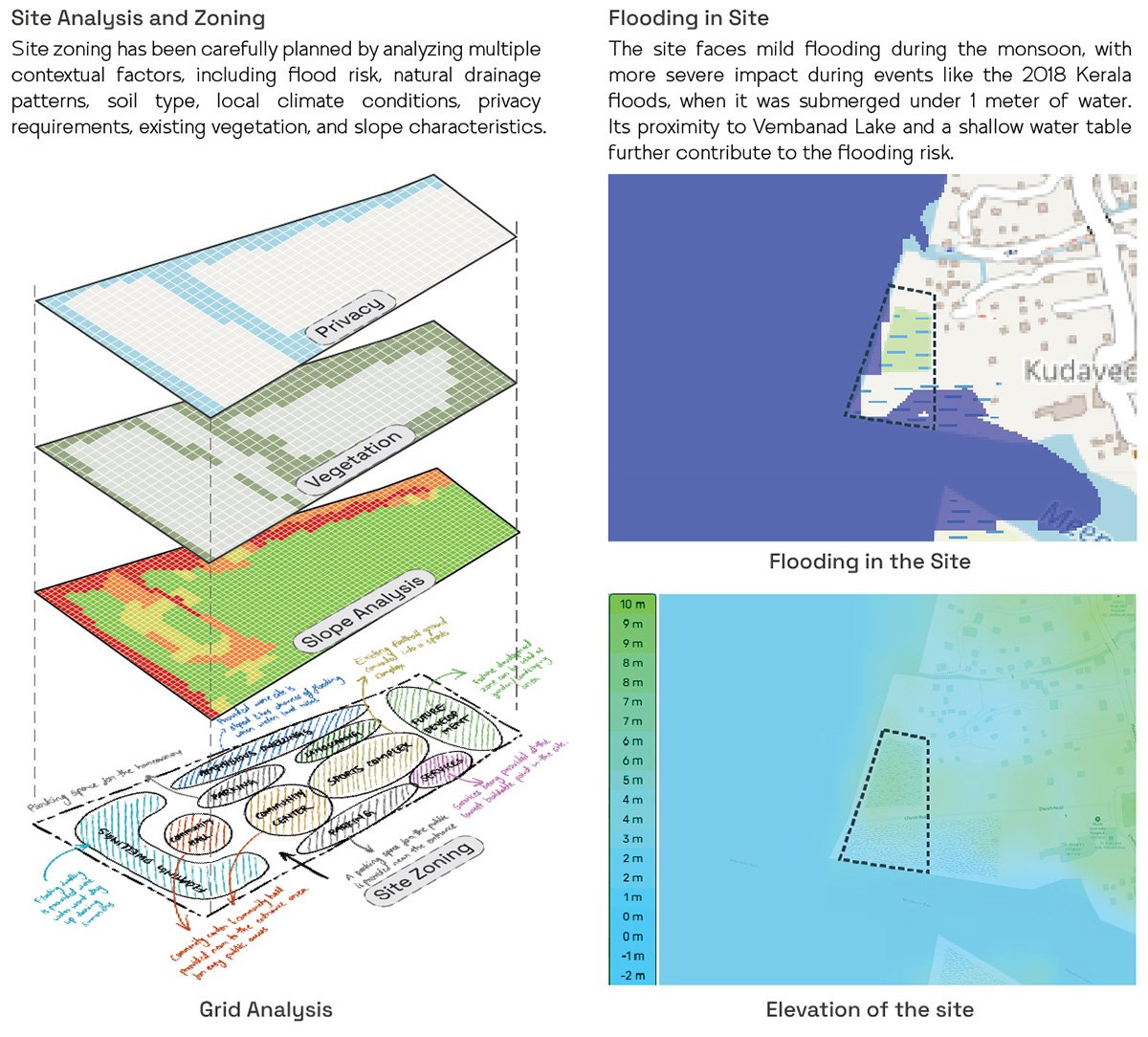
Located in Vechoor within the Kuttanad region, the site is defined by its deep sandy soil and a shallow water table. While the soil is naturally permeable, the site’s low elevation and proximity to the lake make it highly susceptible to seasonal waterlogging and extreme events, such as the 1-meter-deep flooding experienced in 2018.
Site Zoning and Flooding in SiteFlooding in KuttanadSite Photos
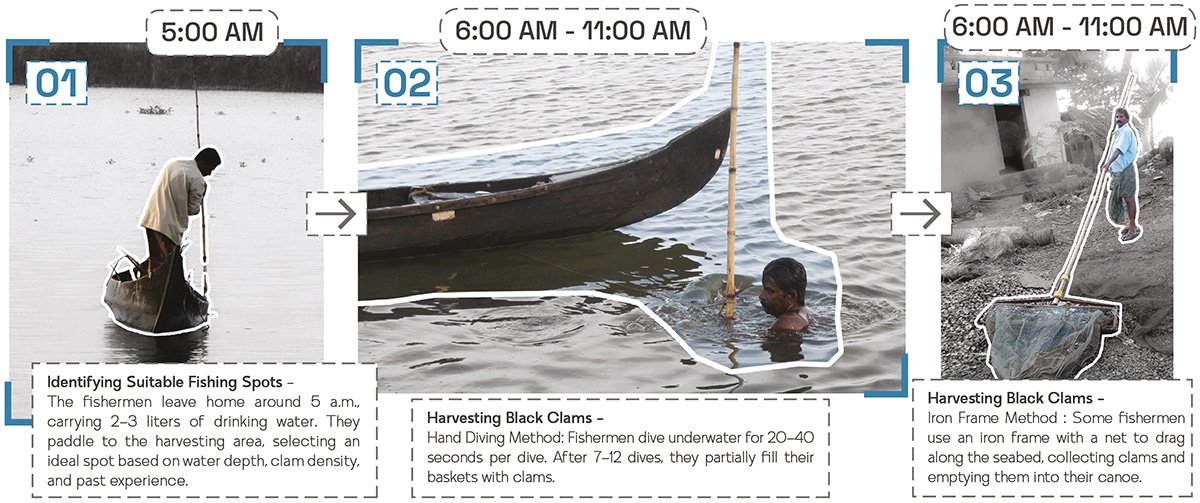
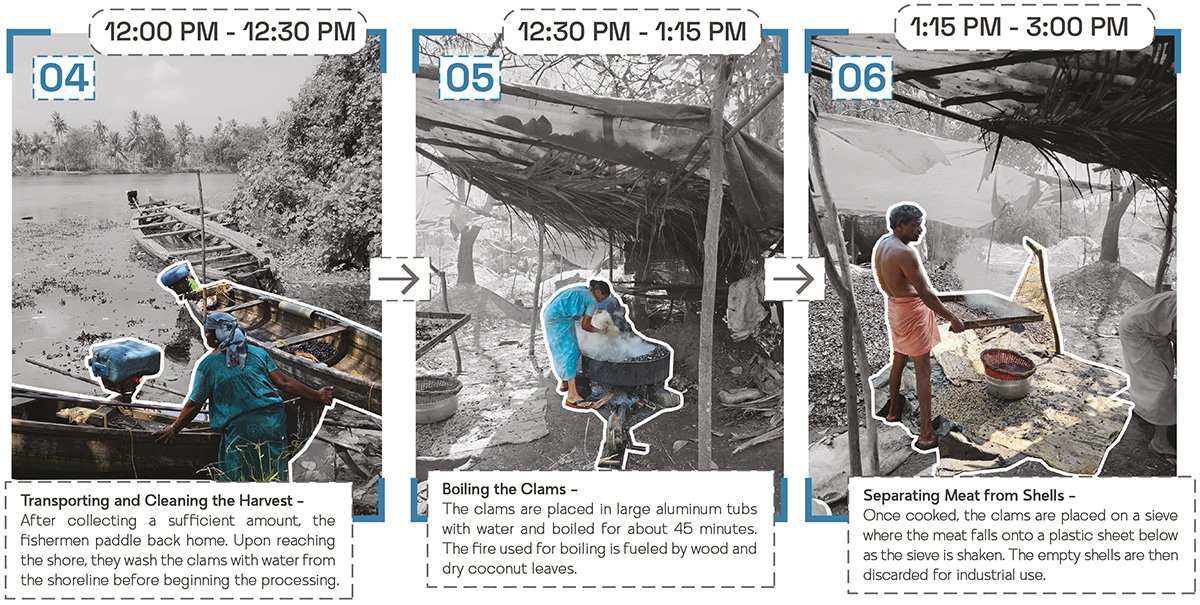
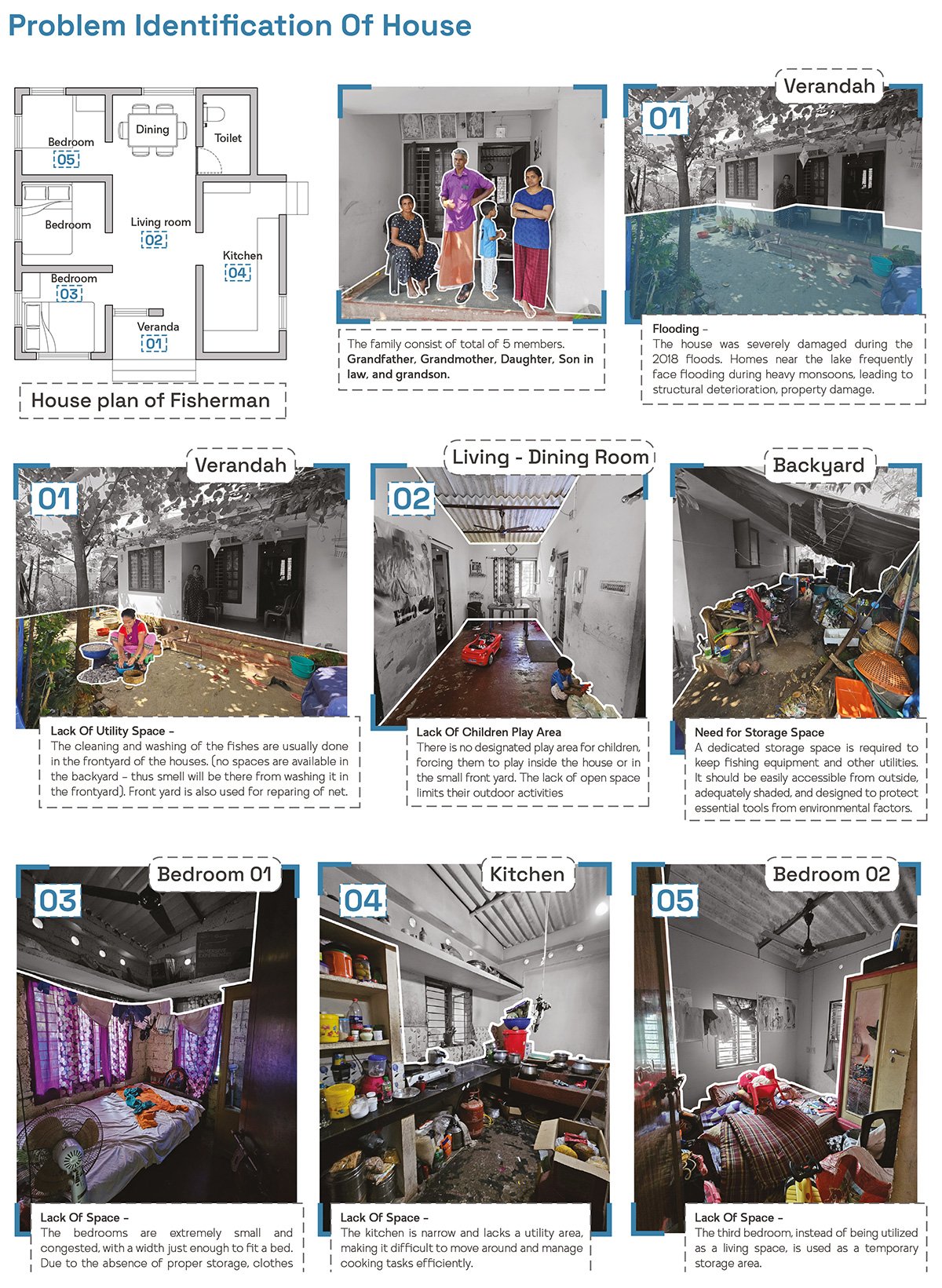
Socially, the area is a vital hub for a local fishing community that relies on traditional Chinese fishing nets (cheena vala). Despite its importance, the current infrastructure for boat docking and fish processing is informal and unprotected from the elements. The design strategy bridges these environmental and social needs through flood-resilient architecture.
Design Process
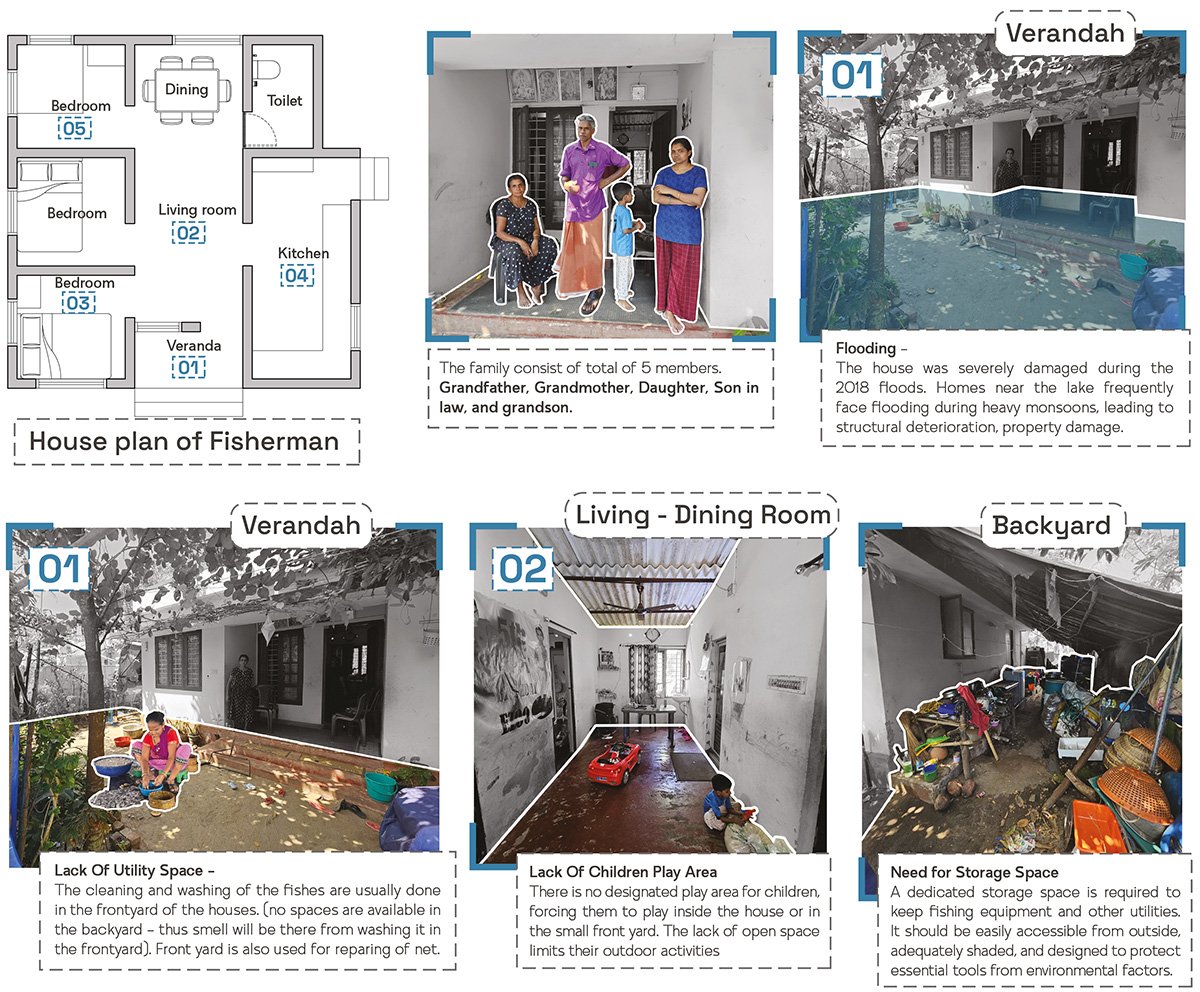
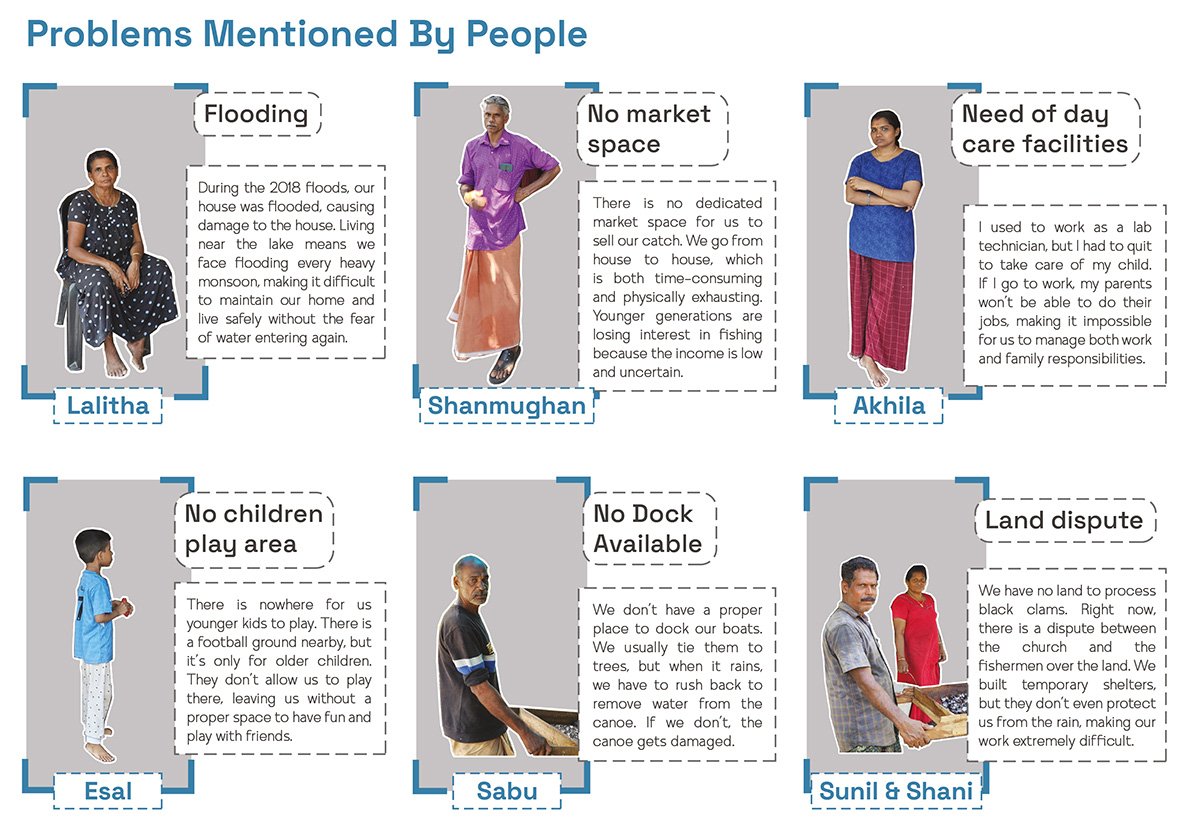
Activity Mapping – Black Clam FishermanActivity Mapping – Black Clam FishermanActivity Mapping – Black Clam FishermanProblem Identification of House
The design process follows a clear path from research to practical application, focusing on creating a resilient environment for the Vechoor community. It began with an in-depth study of amphibious construction, exploring how specialized buoyancy systems and water-resistant materials can allow buildings to float during floods. By analyzing global case studies, successful strategies were adapted to fit the specific climate and budget of the Kuttanad region.
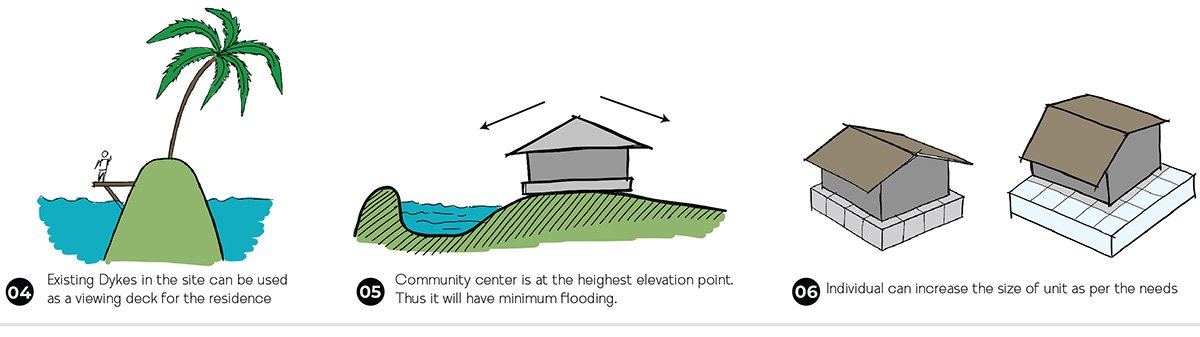
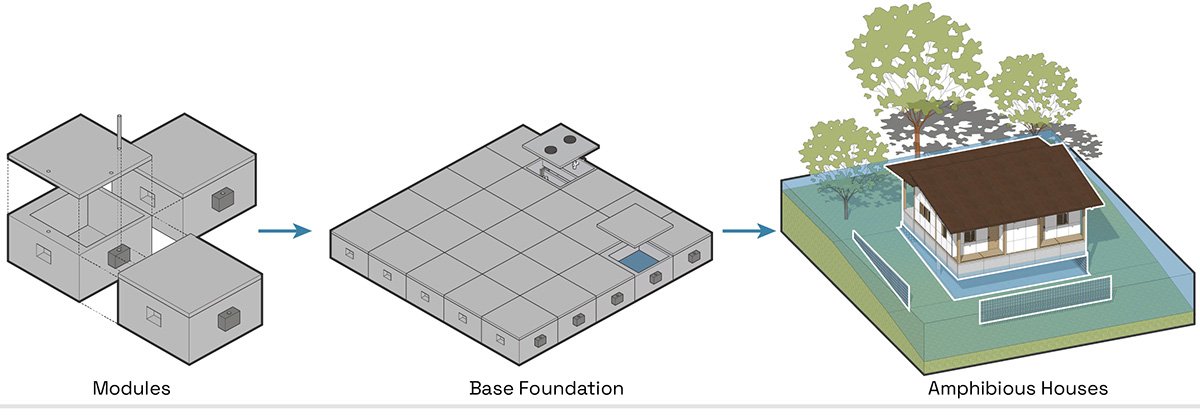
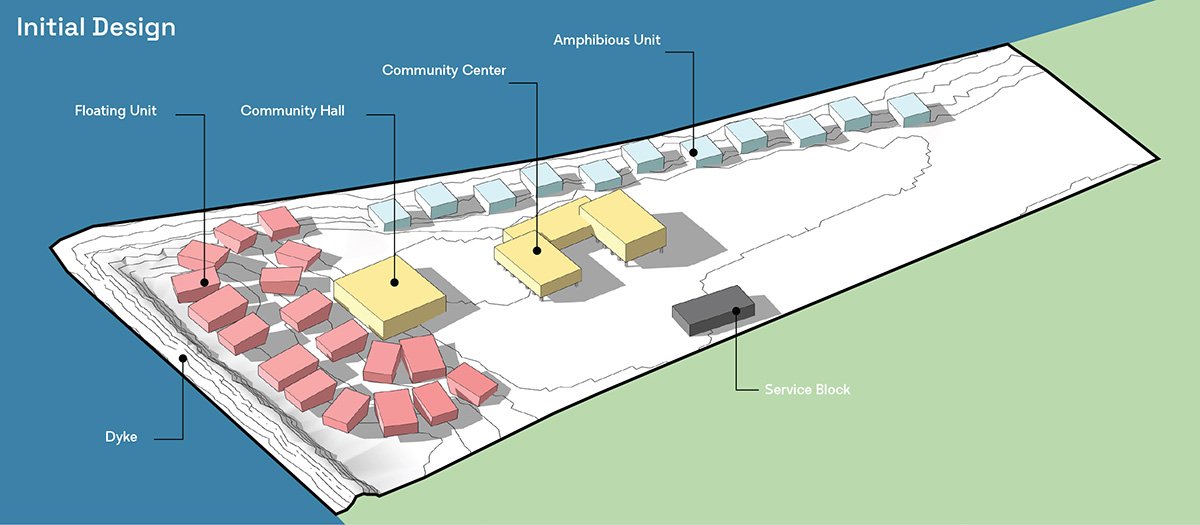
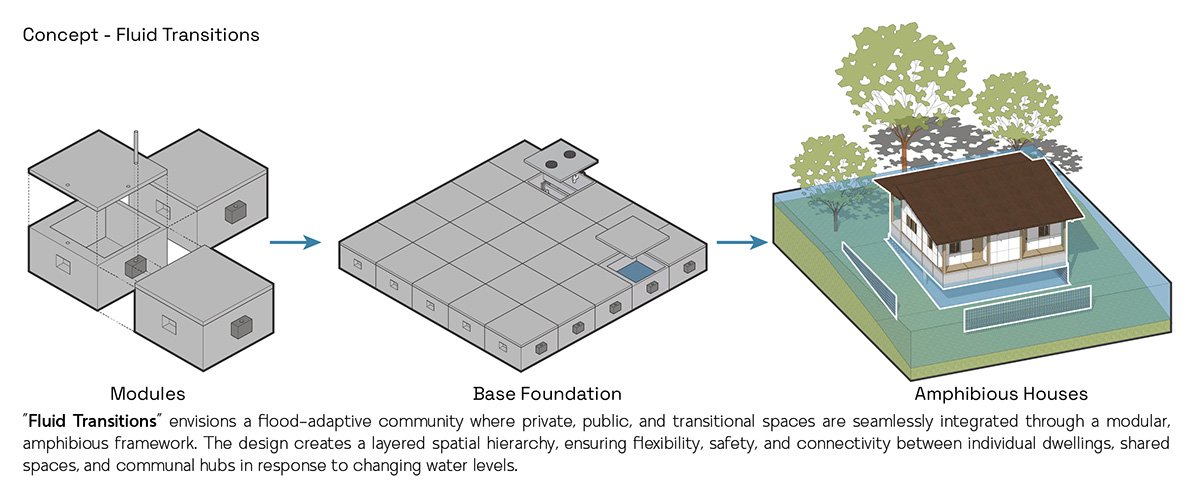
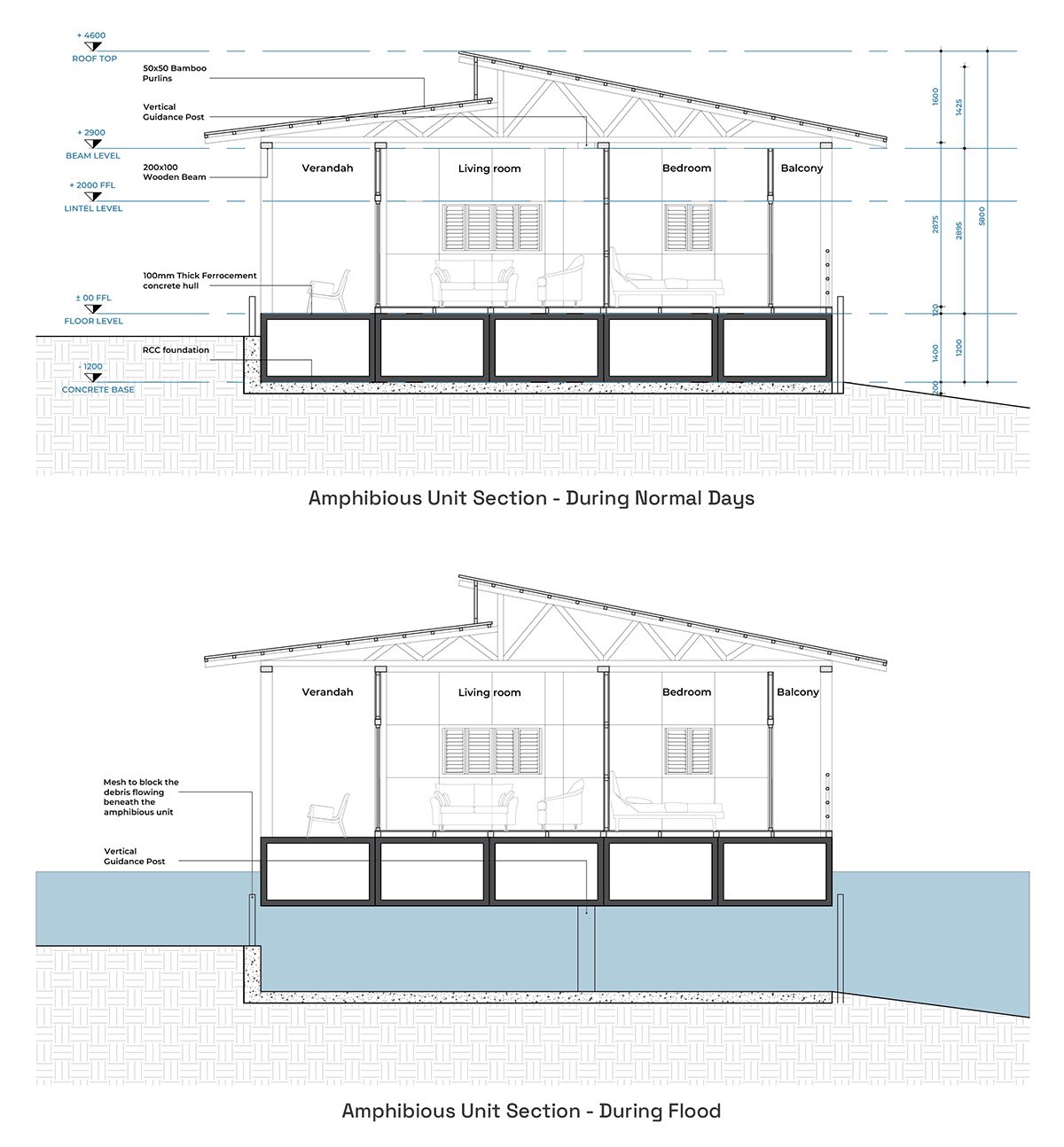
Design StrategiesDesign StrategiesConcept – Fluid TransitionsAmphibious House – FunctioningDesign Development
The next phase involved a contextual site analysis, mapping the water levels and terrain of Vechoor. This data was combined with a study of the local fishing community’s daily routines. The final design integrates these findings, focusing on affordable, modular solutions that provide safety during seasonal flooding while supporting the residents’ water-dependent livelihoods.
Final Outcome
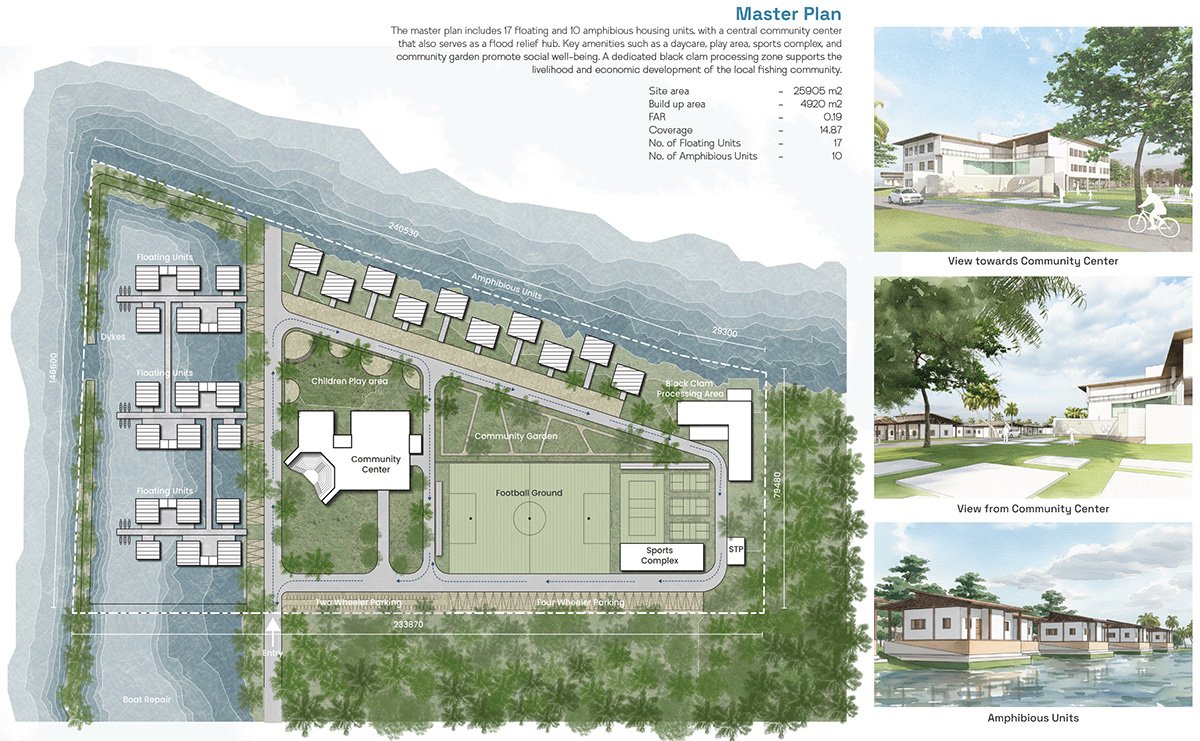
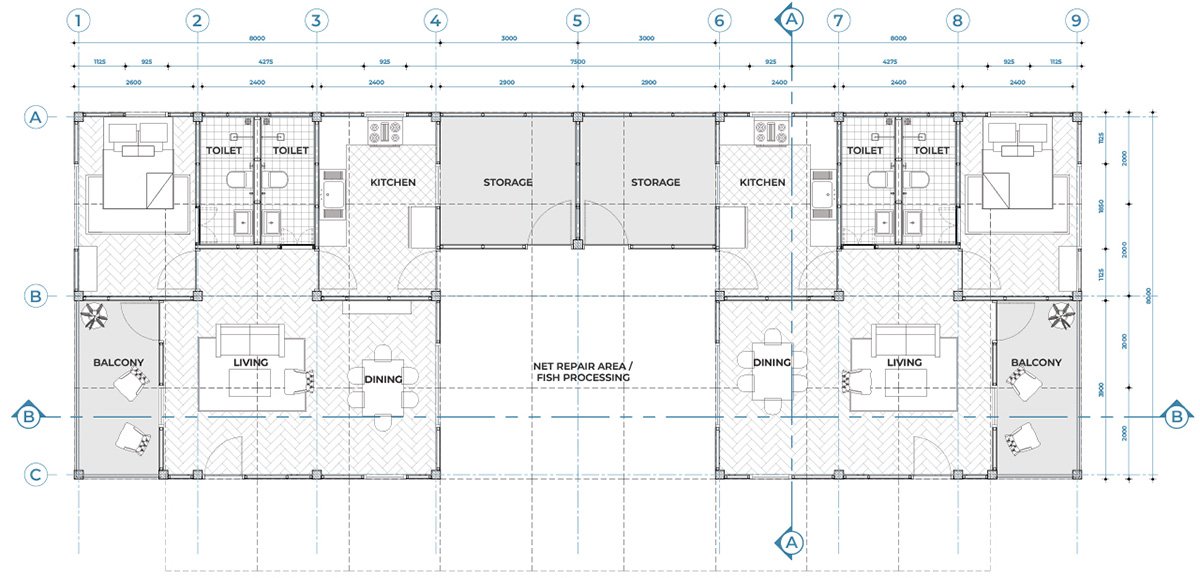
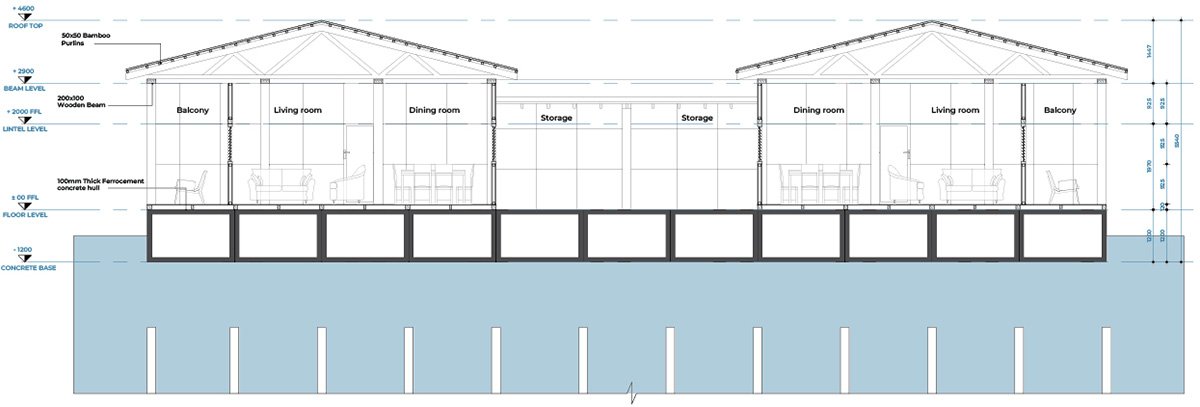
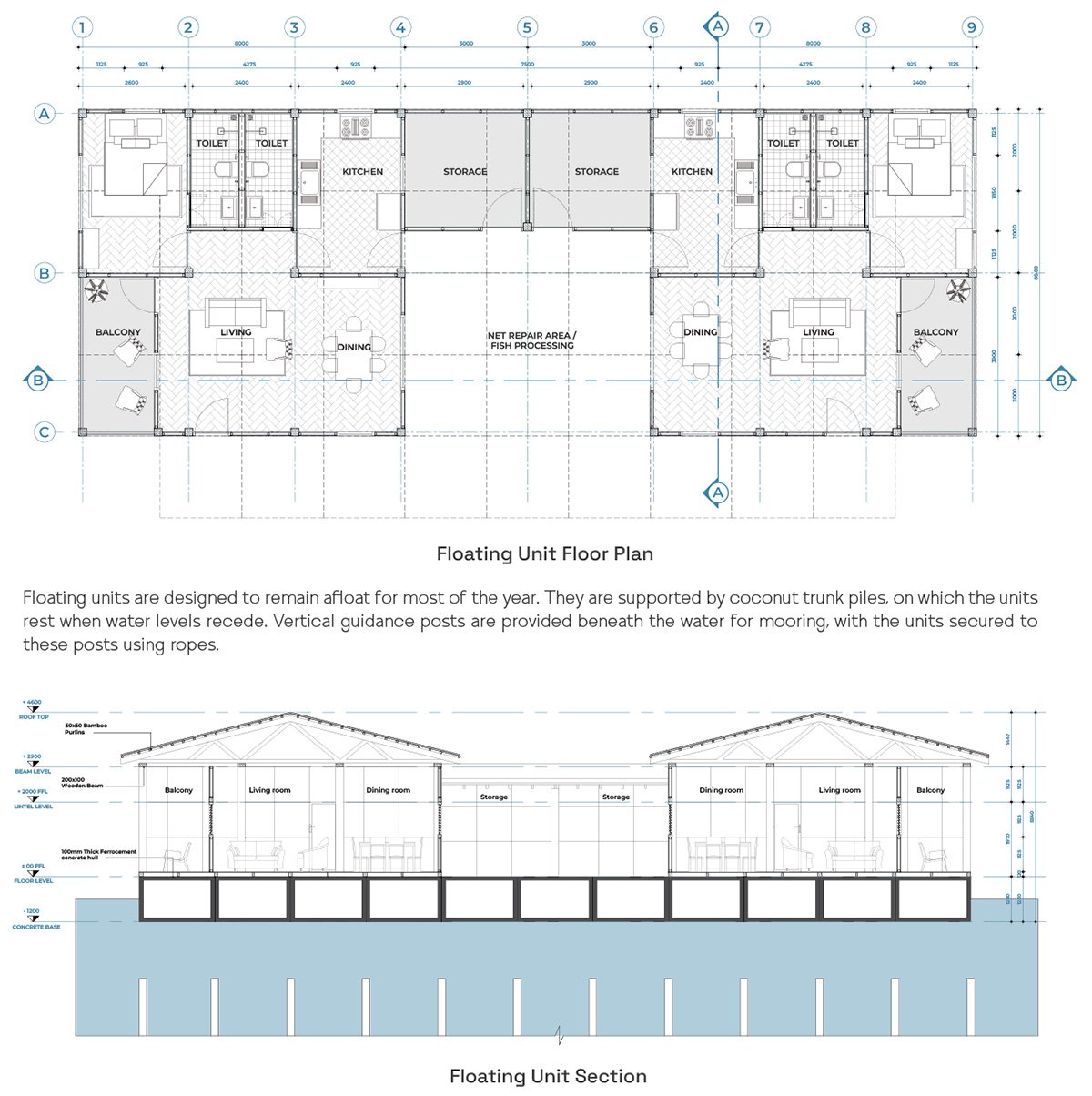
Master Plan with ViewsFloating Unit – Floor PlanFloating Unit – Section
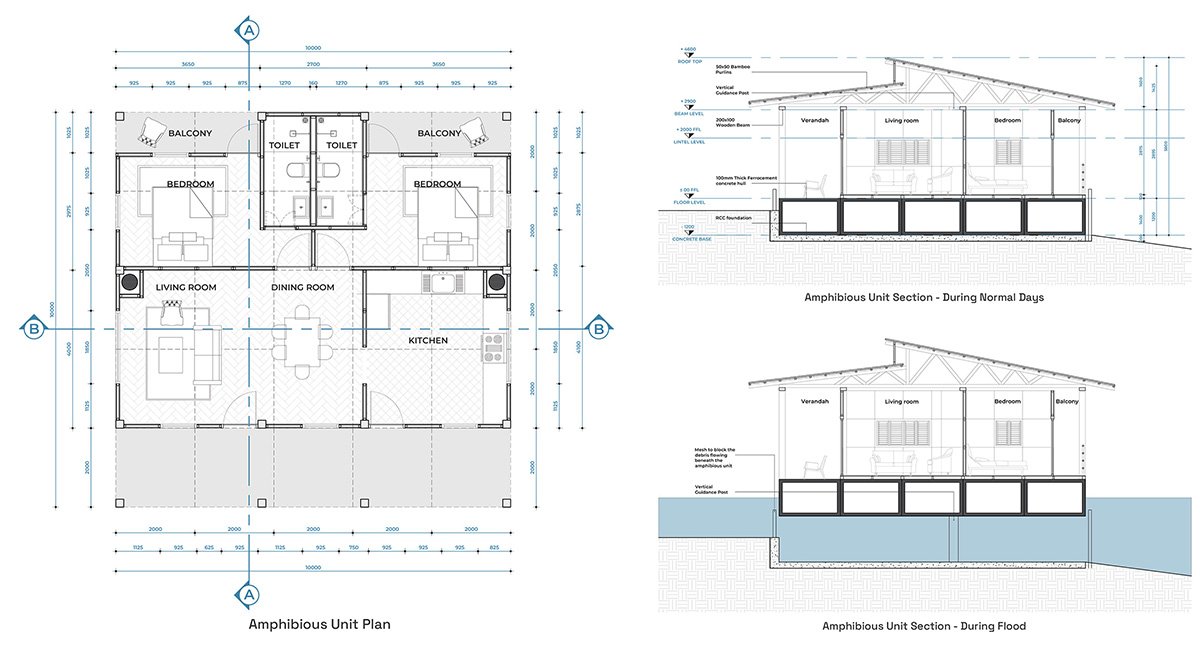
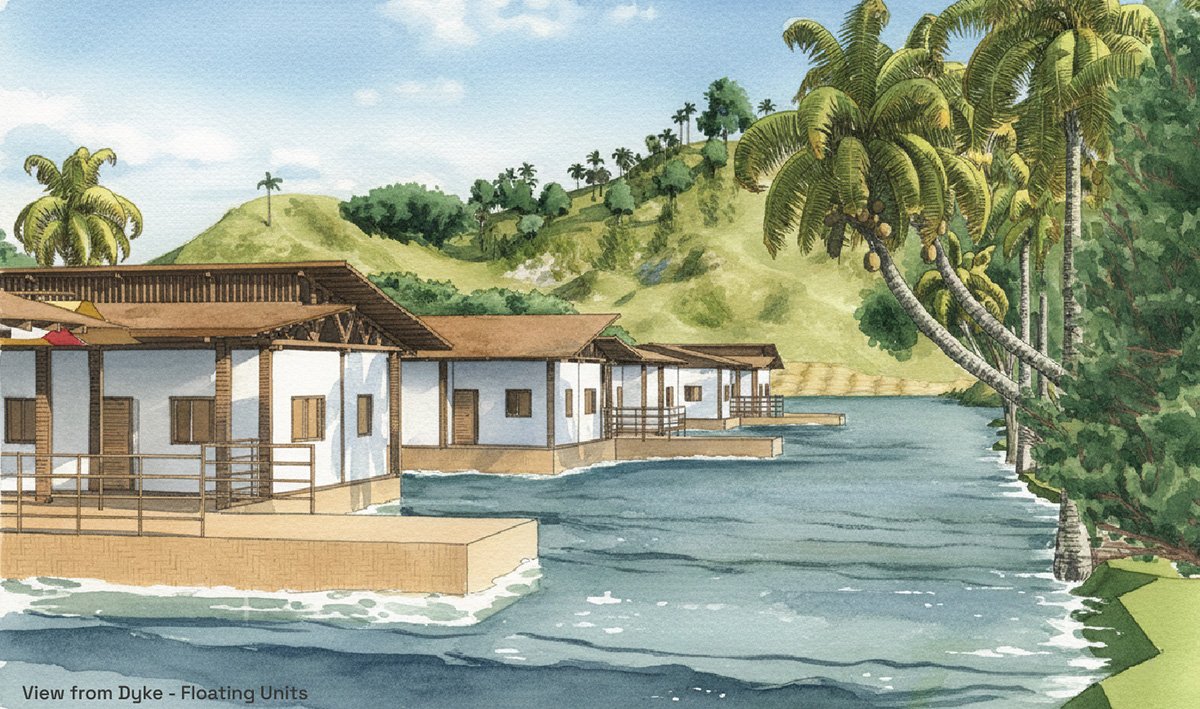
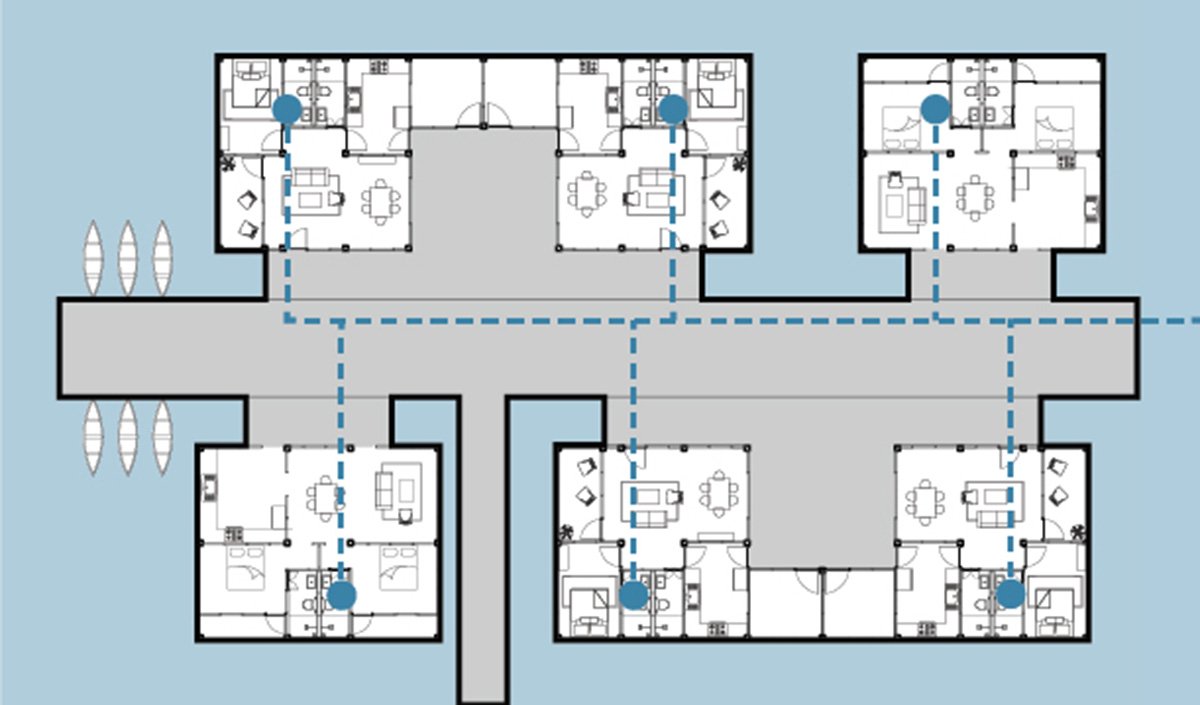
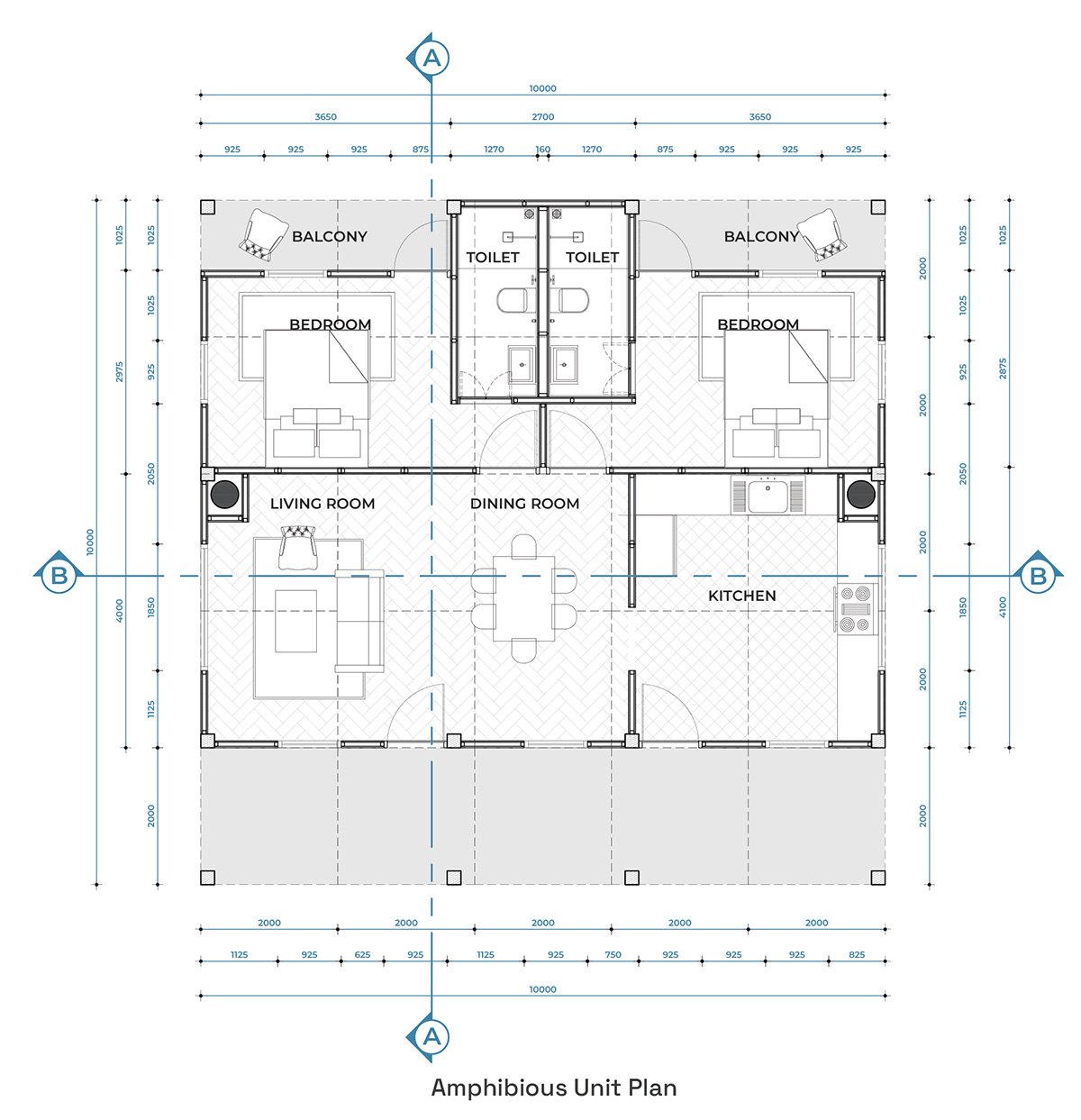
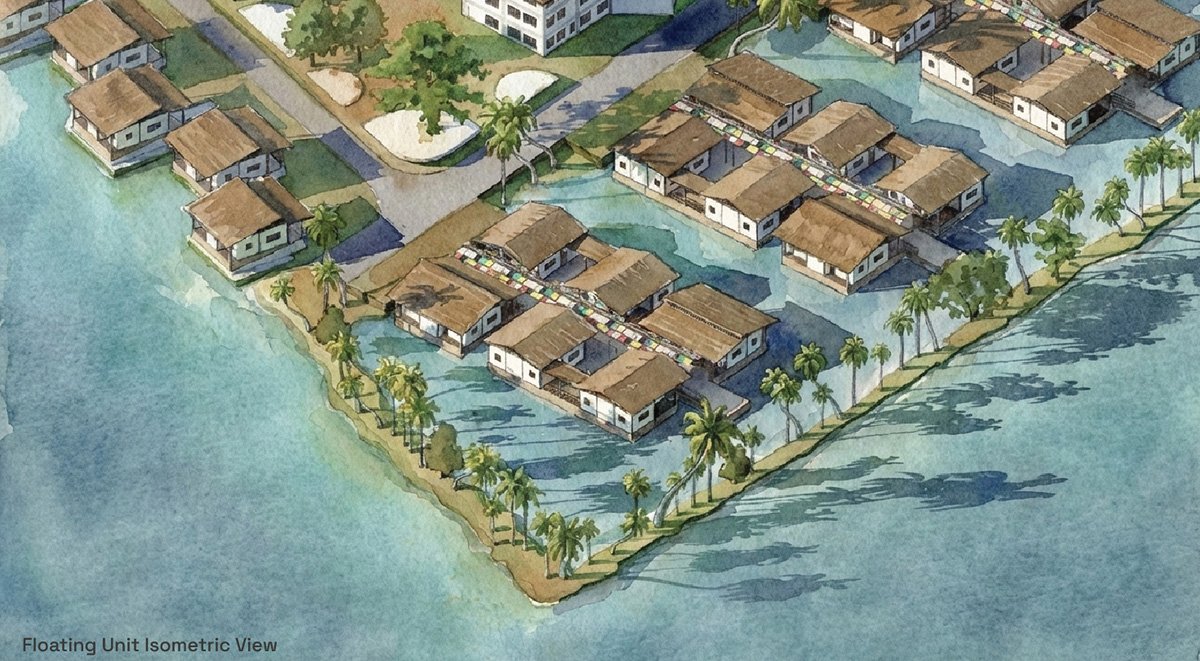
The final design presents a resilient living model tailored for the flood-prone Vechoor community, integrating adaptive housing with essential social and economic infrastructure. The proposal includes a combination of amphibious houses that remain grounded under normal conditions and rise safely during floods, along with floating houses designed to function on water throughout the year.
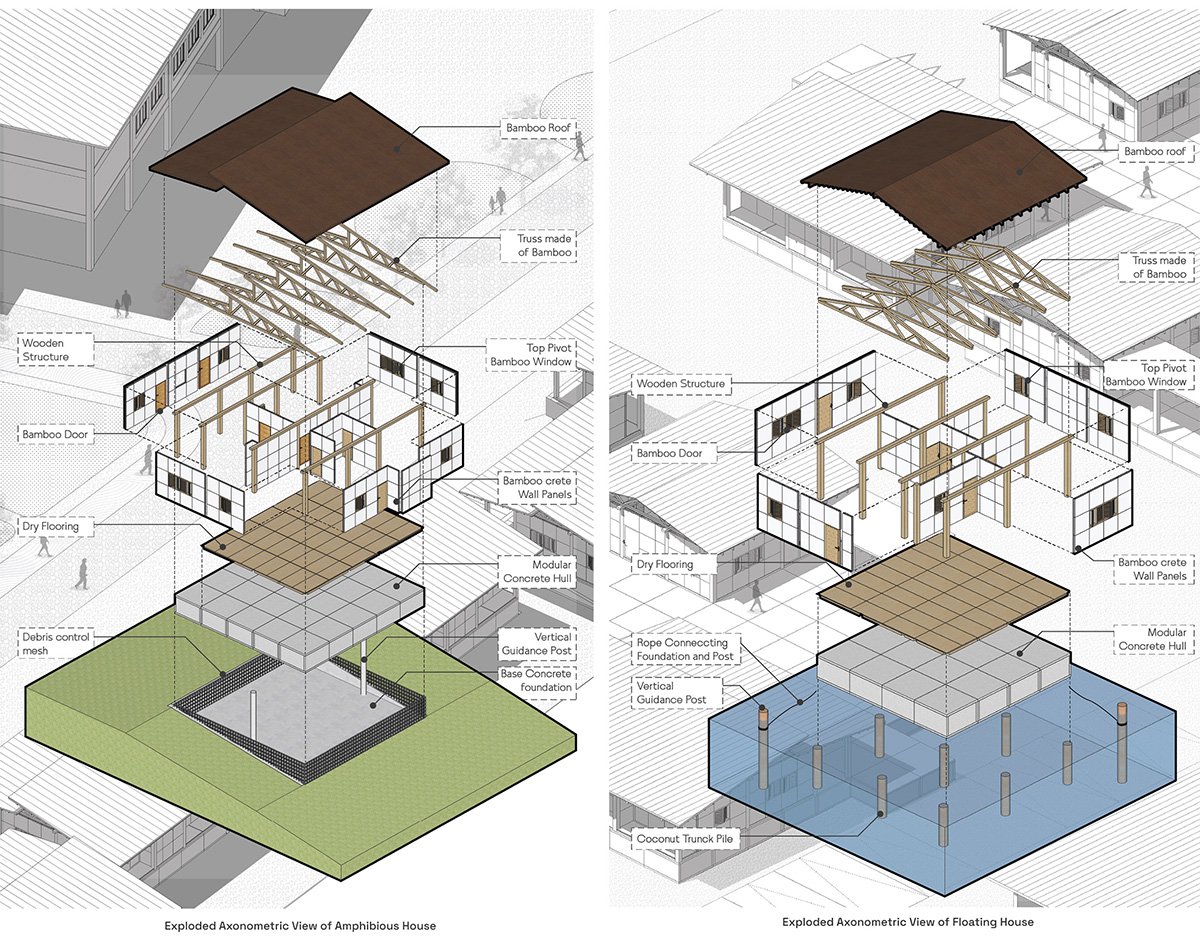
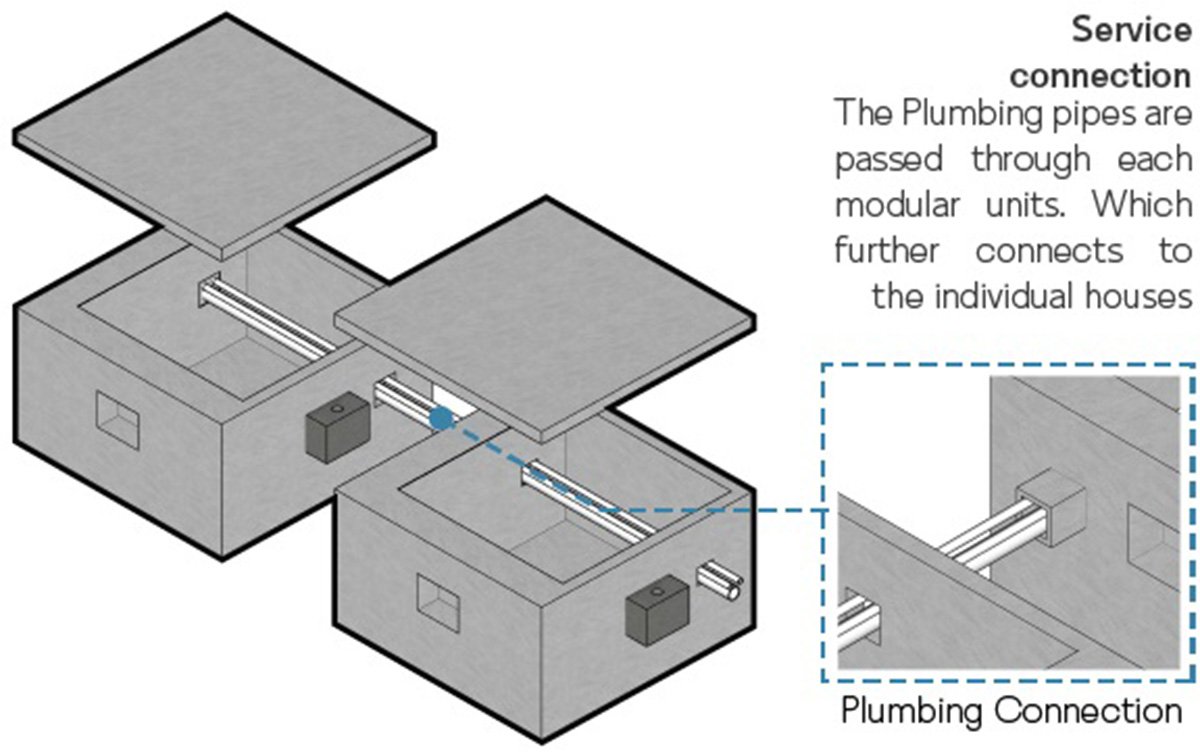
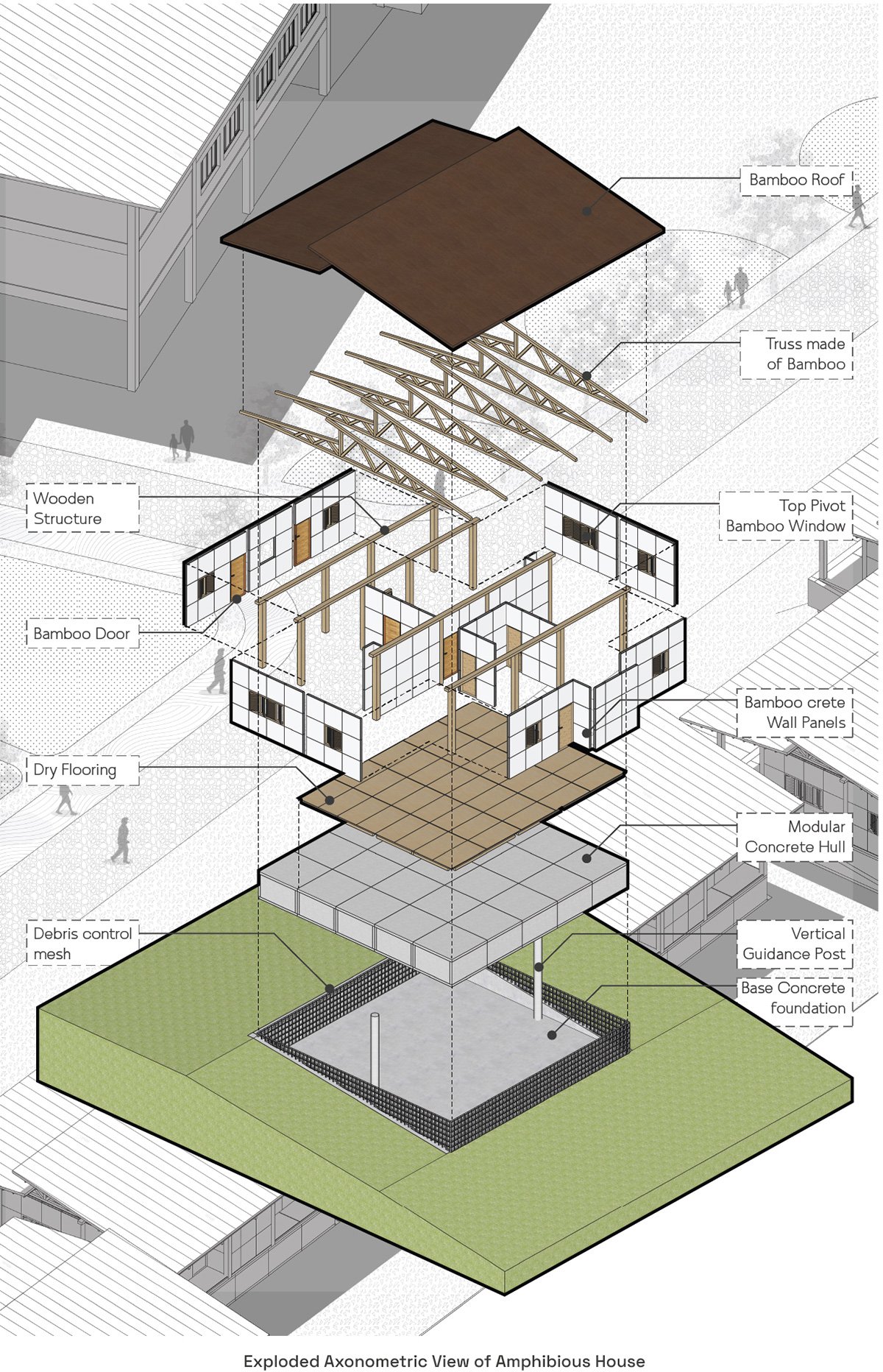
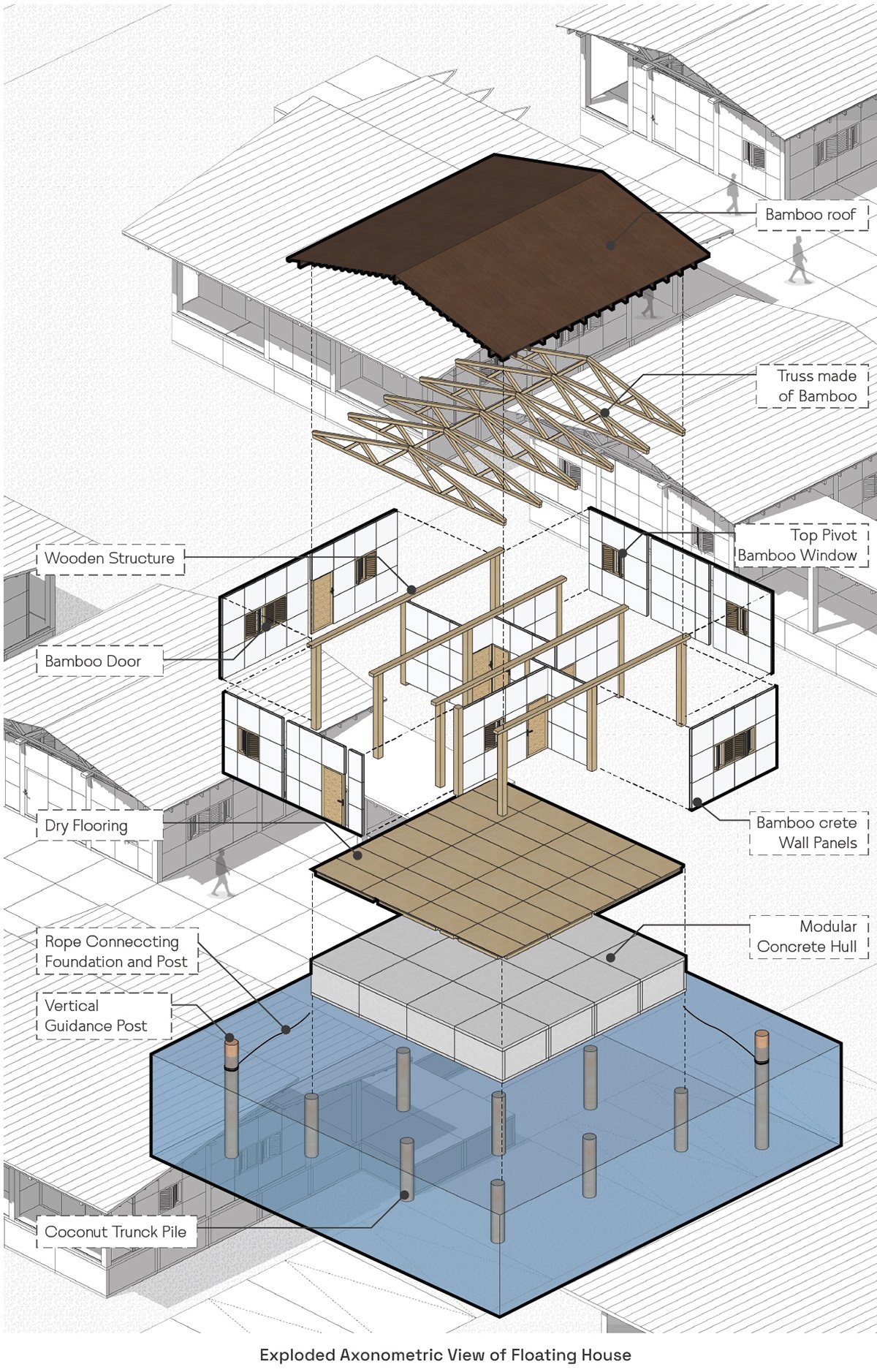
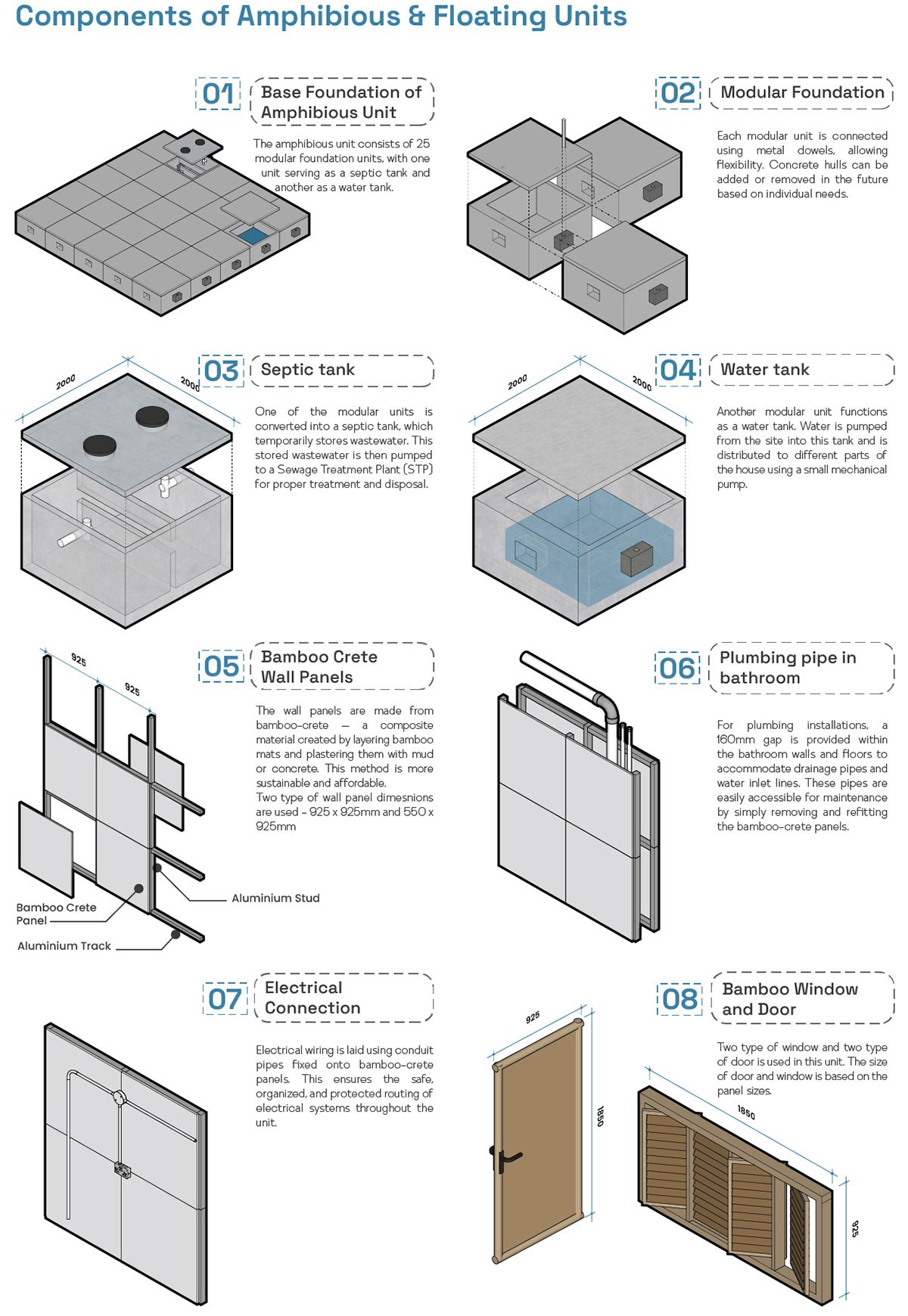
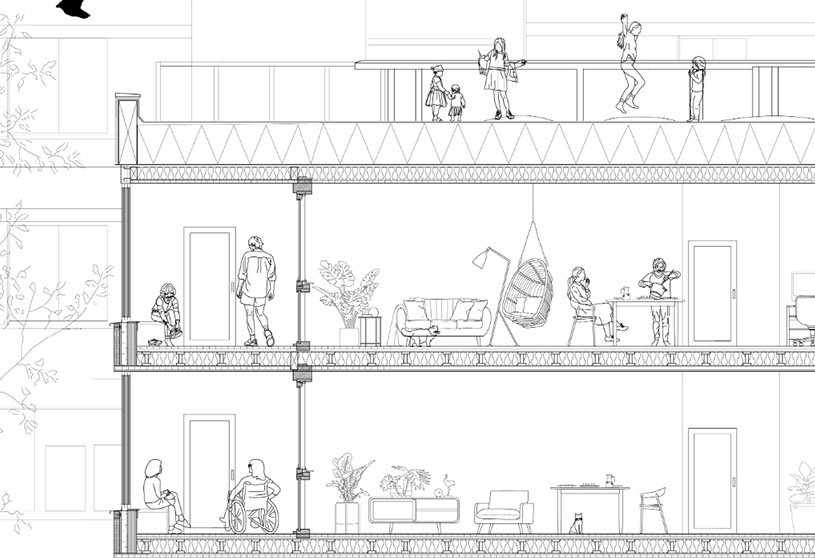
Amphibious House – Plan | Amphibious House – SectionsAmphibious Unit Axonometric View | Floating Unit Axonometric View
The housing system adopts a hybrid construction approach, where the substructure consists of modular concrete hull blocks, allowing flexibility and future expansion, while the superstructure is built using bamboo-crete and bamboo, ensuring sustainability, lightness, and local relevance.
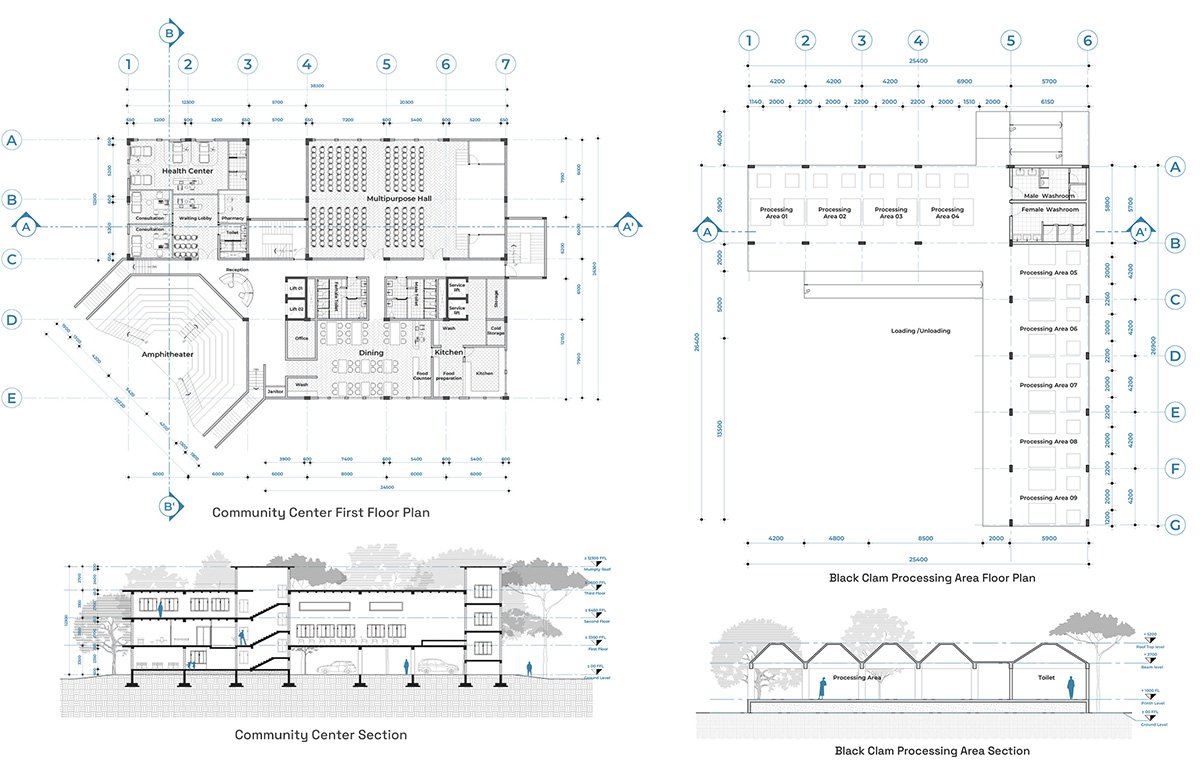
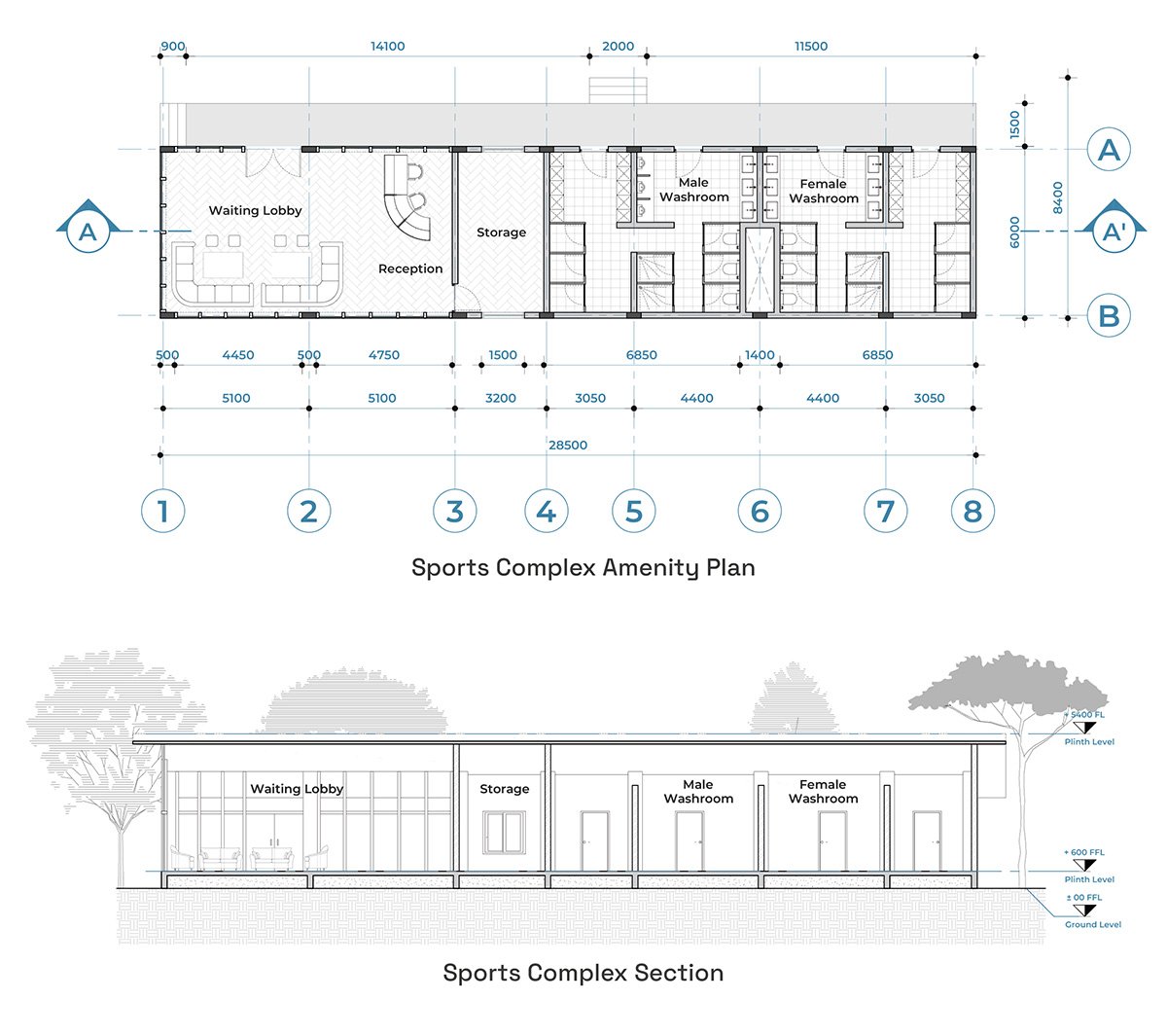
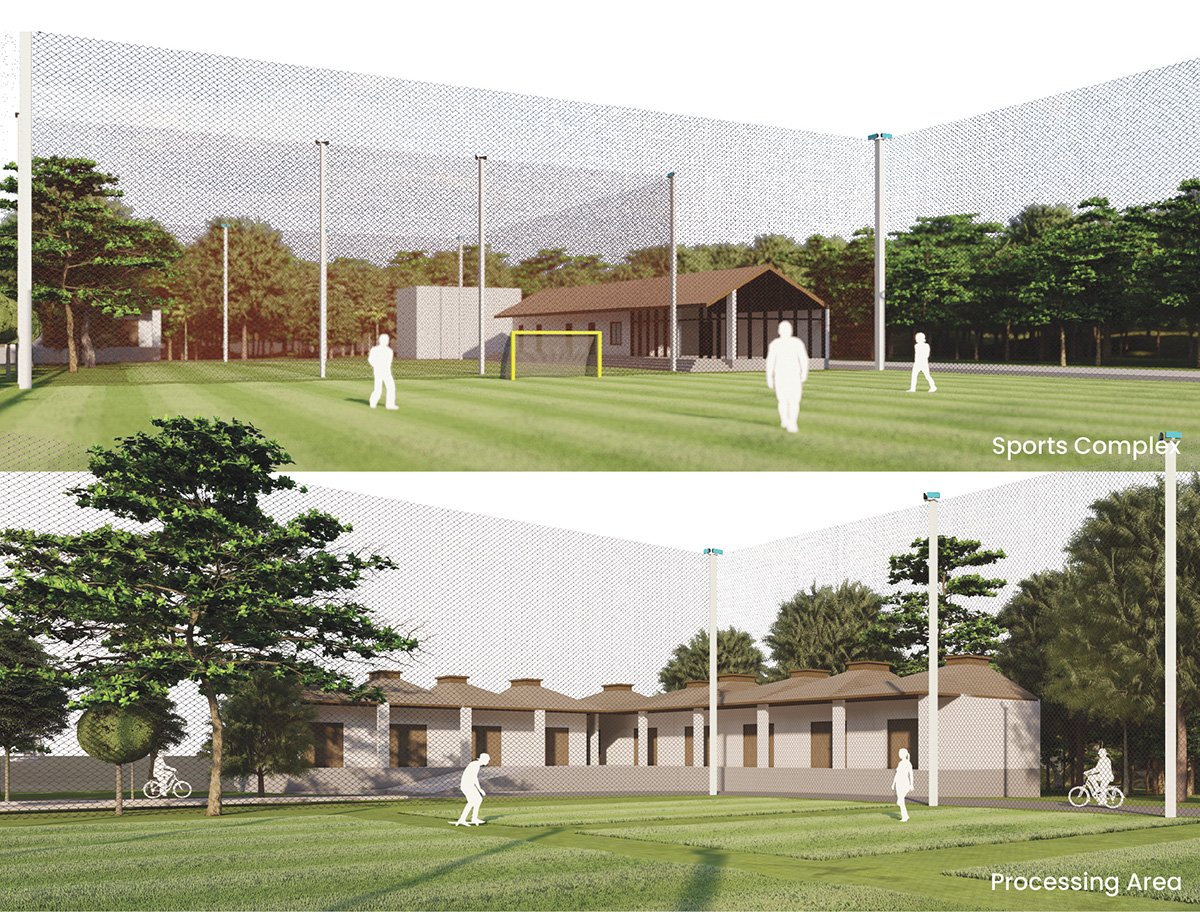
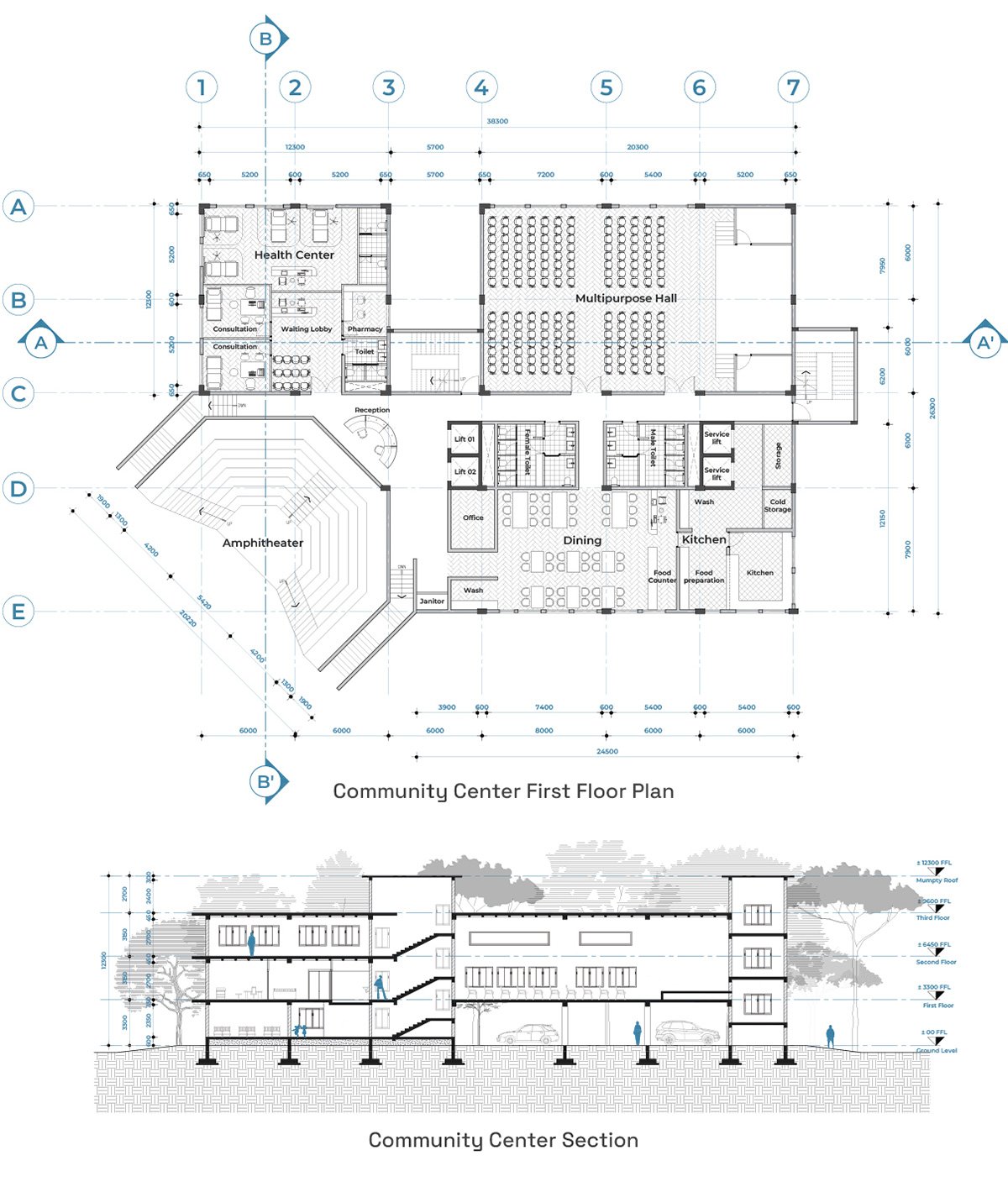
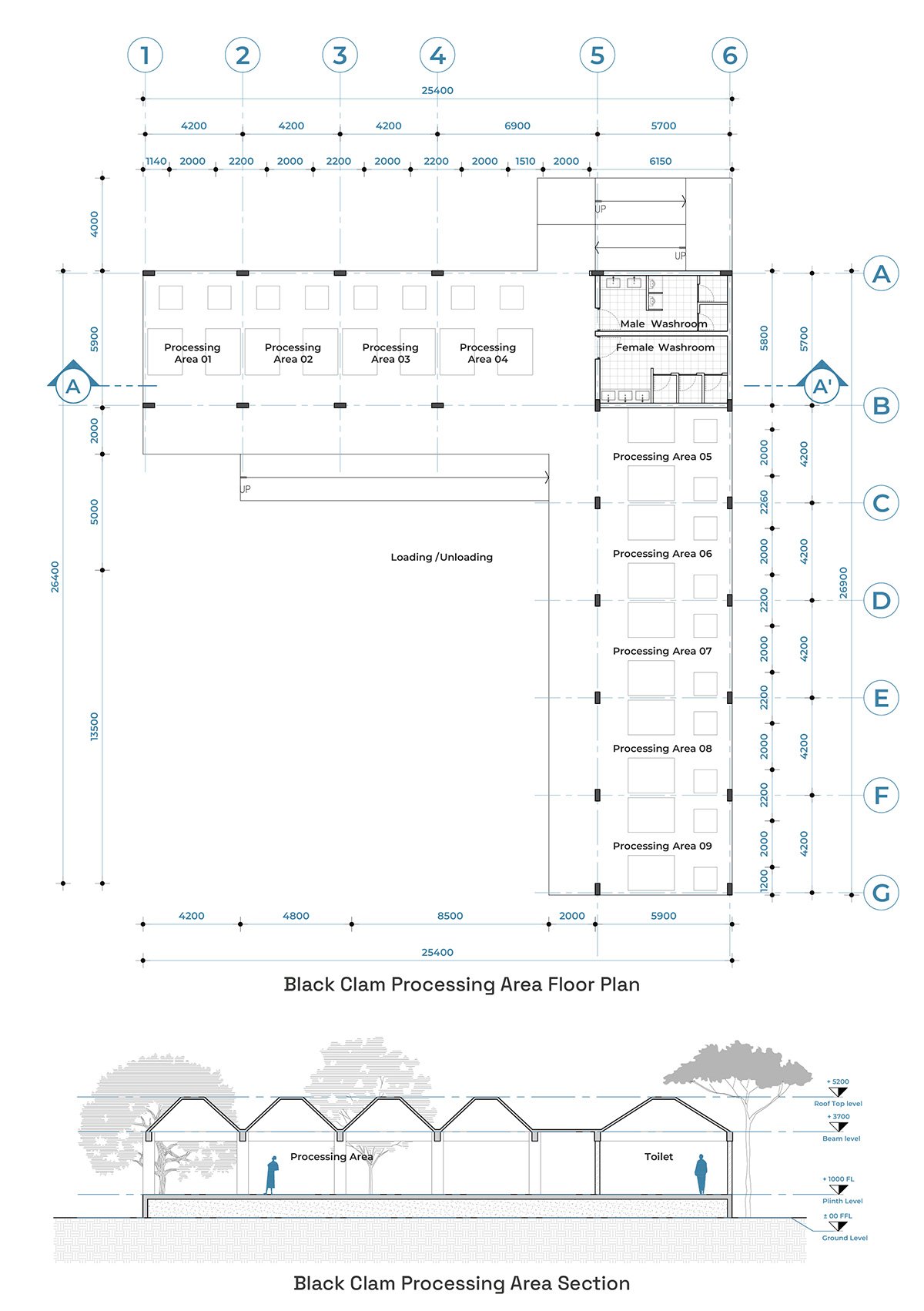
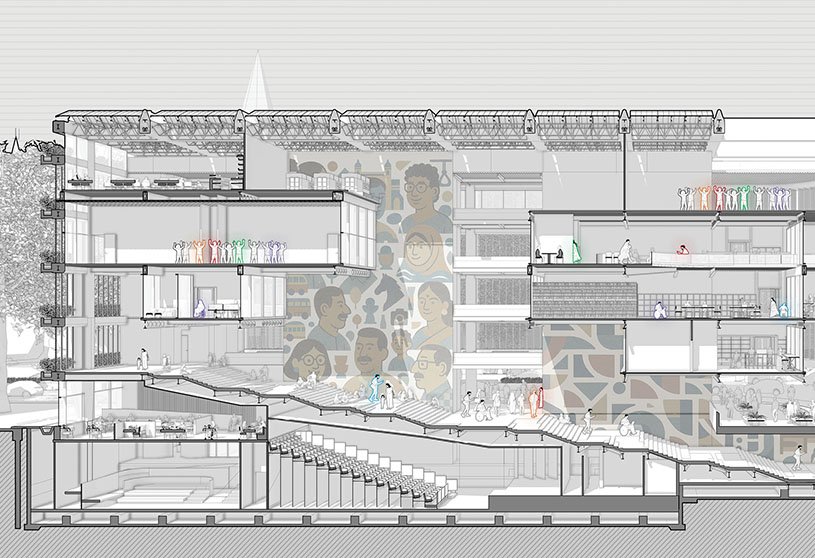
Community Center – Plan and Section | Processing area – Plan and SectionSports Complex – Plan and SectionProcessing Area and Sports Complex View
At the community scale, a centrally located multipurpose community centre functions as a vibrant social hub during non-flood periods and transforms into a secure emergency shelter during extreme flood events. To strengthen livelihoods and everyday life, the project incorporates supporting infrastructure such as a fish processing area, a sports complex, a day-care facility, and a health centre. These facilities were carefully incorporated in response to the specific needs and priorities expressed by the local community, ensuring that the design remains people-centric and grounded in everyday realities.
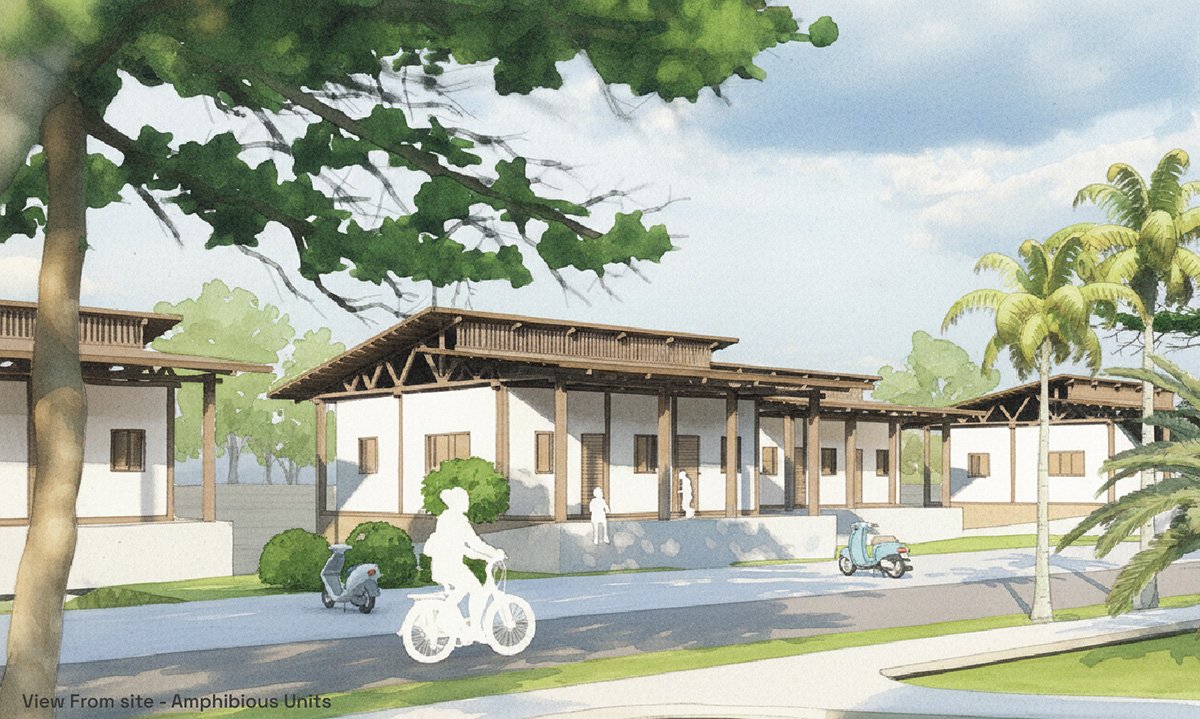
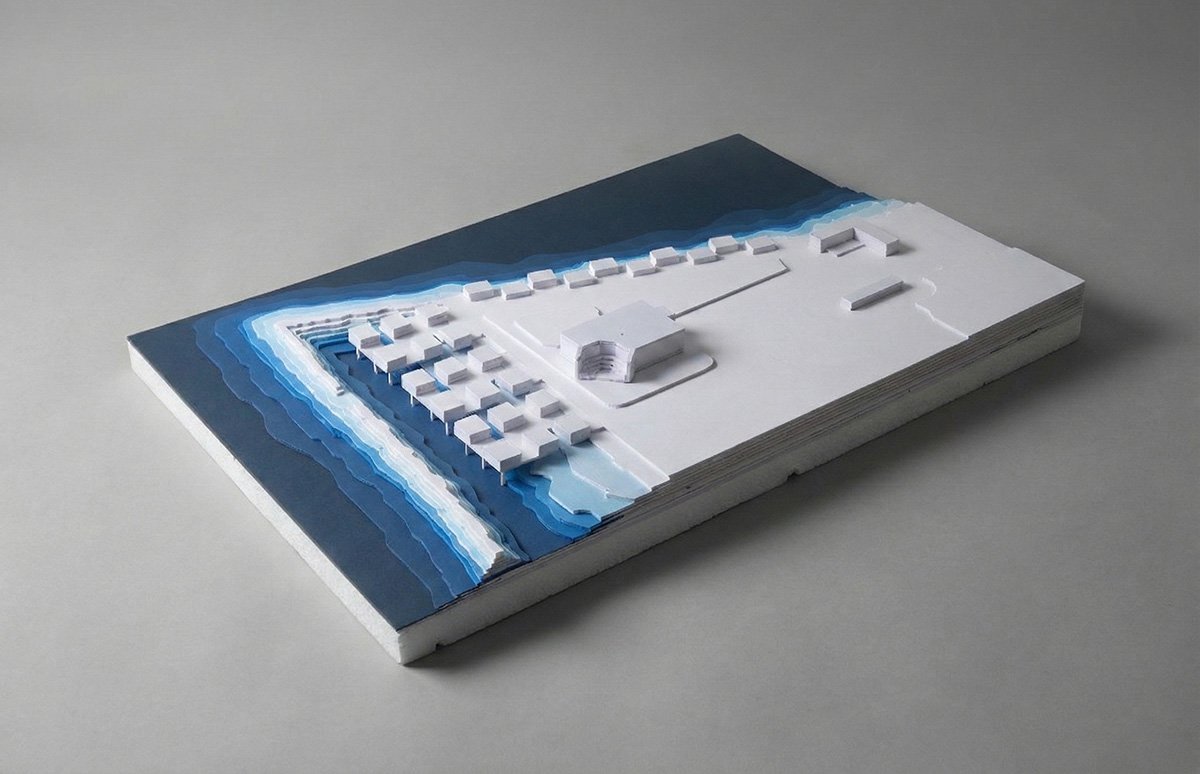
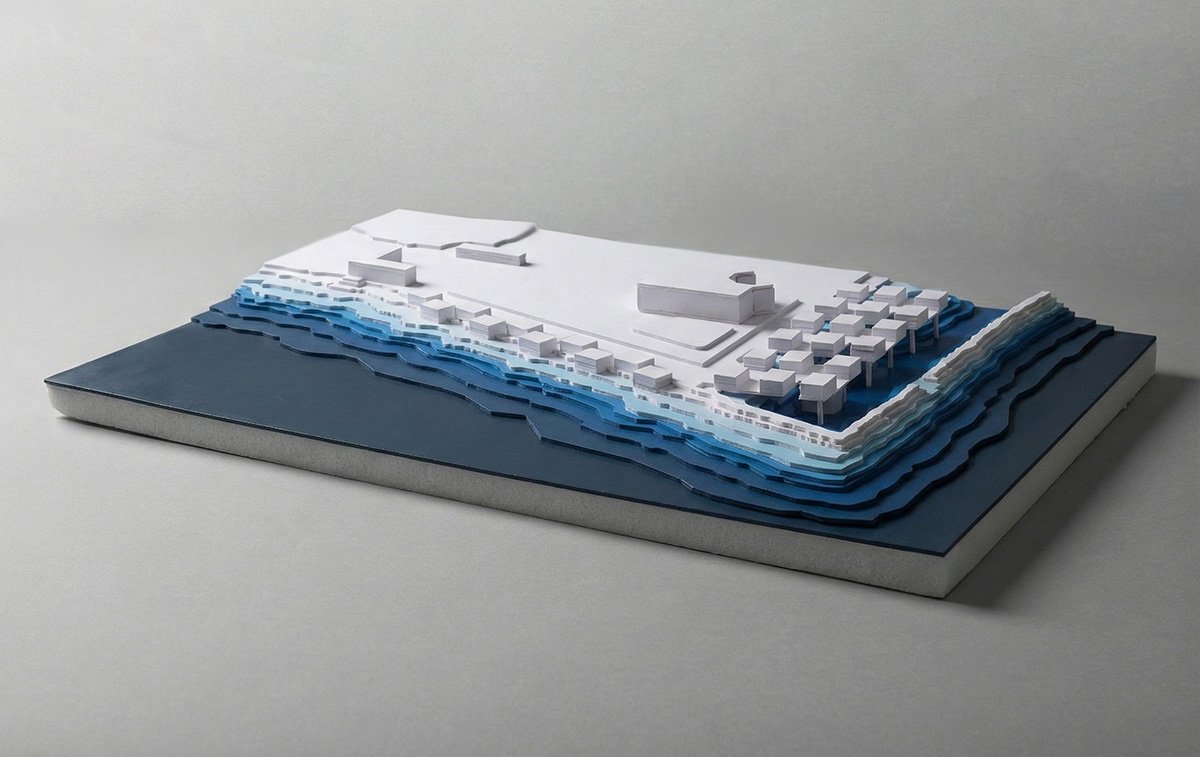
View from Dykes – Floating UnitsView of Amphibious UnitsSite Model
Conclusion: Ultimately, this project demonstrates how amphibious and floating architecture can provide a sustainable and people-centric response to flooding in Vechoor. By combining adaptive housing with essential community infrastructure and locally appropriate materials, the design enhances resilience, supports livelihoods, and improves quality of life while working in harmony with the region’s water-driven landscape.
[This Academic Project has been published with text and images submitted by the student]
Site Context
Design Process
Final Outcome
To submit your academic project for publication at ArchiDiaries, please visit the following link >> Submit
Get the best of ArchiDiaries, directly in your inbox.
We use cookies on our website to give you the most relevant experience by remembering your preferences and repeat visits. By clicking “Accept All”, you consent to the use of ALL the cookies. However, you may visit "Cookie Settings" to provide a controlled consent.
This website uses cookies to improve your experience while you navigate through the website. Out of these, the cookies that are categorized as necessary are stored on your browser as they are essential for the working of basic functionalities of the website. We also use third-party cookies that help us analyze and understand how you use this website. These cookies will be stored in your browser only with your consent. You also have the option to opt-out of these cookies. But opting out of some of these cookies may affect your browsing experience.
Necessary cookies are absolutely essential for the website to function properly. These cookies ensure basic functionalities and security features of the website, anonymously.
Cookie
Duration
Description
cookielawinfo-checkbox-analytics
11 months
This cookie is set by GDPR Cookie Consent plugin. The cookie is used to store the user consent for the cookies in the category "Analytics".
cookielawinfo-checkbox-functional
11 months
The cookie is set by GDPR cookie consent to record the user consent for the cookies in the category "Functional".
cookielawinfo-checkbox-necessary
11 months
This cookie is set by GDPR Cookie Consent plugin. The cookies is used to store the user consent for the cookies in the category "Necessary".
cookielawinfo-checkbox-others
11 months
This cookie is set by GDPR Cookie Consent plugin. The cookie is used to store the user consent for the cookies in the category "Other.
cookielawinfo-checkbox-performance
11 months
This cookie is set by GDPR Cookie Consent plugin. The cookie is used to store the user consent for the cookies in the category "Performance".
viewed_cookie_policy
11 months
The cookie is set by the GDPR Cookie Consent plugin and is used to store whether or not user has consented to the use of cookies. It does not store any personal data.
Functional cookies help to perform certain functionalities like sharing the content of the website on social media platforms, collect feedbacks, and other third-party features.
Performance cookies are used to understand and analyze the key performance indexes of the website which helps in delivering a better user experience for the visitors.
Analytical cookies are used to understand how visitors interact with the website. These cookies help provide information on metrics the number of visitors, bounce rate, traffic source, etc.
Advertisement cookies are used to provide visitors with relevant ads and marketing campaigns. These cookies track visitors across websites and collect information to provide customized ads.