Home » Academic projects » Evaluating Cross-Cultural Courtyard Housing For Social Well-Being In Manhattan, New York, USA | Architecture Thesis On Urban Housing
Evaluating Cross-Cultural Courtyard Housing For Social Well-Being In Manhattan, New York, USA | Architecture Thesis On Urban Housing
Excerpt: ‘Evaluating Cross-Cultural Courtyard Housing For Social Well-Being In Manhattan, New York, USA’ is an architecture thesis by Soniha Nuzrat from the ‘Department of Architecture and Interior Design – Miami University.’ The project seeks to enhance social well-being and interaction in urban housing by integrating cross-cultural courtyard principles with sustainable design. Through multi-level communal spaces, thoughtful retrofitting, and enhanced connectivity, the proposal redefines NYCHA housing as an inclusive, resilient, and future-ready model for urban living.
Introduction: This academic project, “Evaluating Cross-Cultural Courtyard Housing for Social Well-Being in Manhattan, New York,” explores how courtyard-based housing can enhance social interaction and mental well-being. Drawing inspiration from the communal courtyard living common in Bangladesh—where small shared spaces strengthen neighborhood bonds—the study explores how similar concepts could transform public housing in New York City.
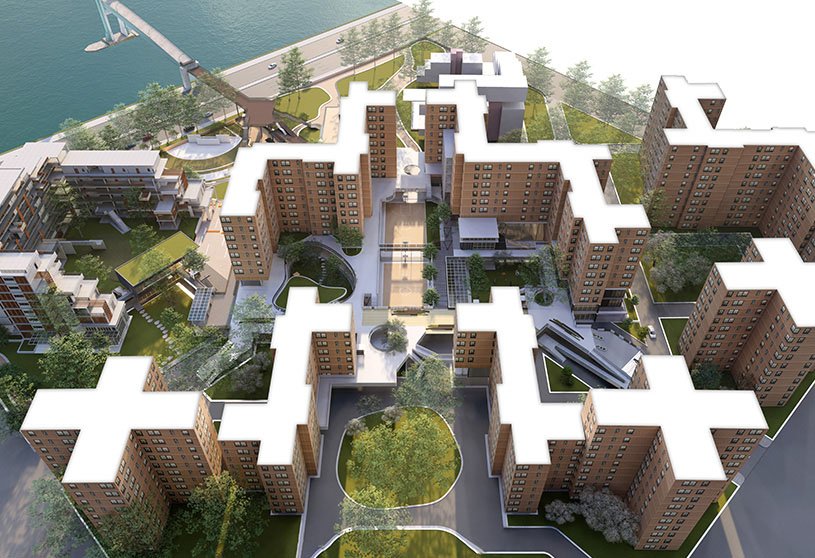
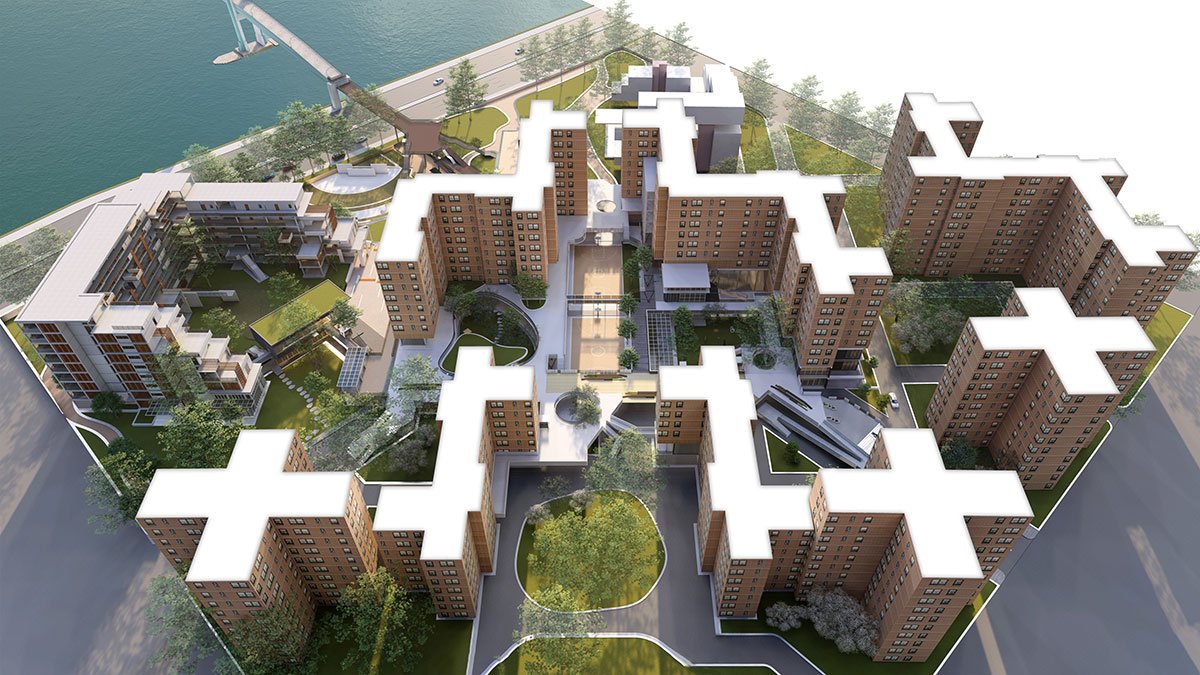
Focusing on the East Harlem River Houses (NYCHA), the proposal introduces multi-level courtyards, urban platforms, and sustainable retrofitting to encourage community engagement while minimizing disruption to residents. Key interventions include:
1- Social Integration: Courtyards supporting informal gatherings, cultural events and shared dining spaces.
2- Community Amenities: The inclusion of public libraries, art galleries, fitness zones, and recreational areas to support learning and social engagement.
3- Sustainability & Housing Innovation: Modernization through green roofs, expanded balconies, and energy-efficient retrofits.
4- Urban Connectivity: Improved pedestrian pathways that connect residences to public spaces and the Harlem River.By merging cross-cultural insights with modern urban design, this project envisions a sustainable and socially connected housing model for Manhattan and beyond, fostering community, well-being and inclusivity.
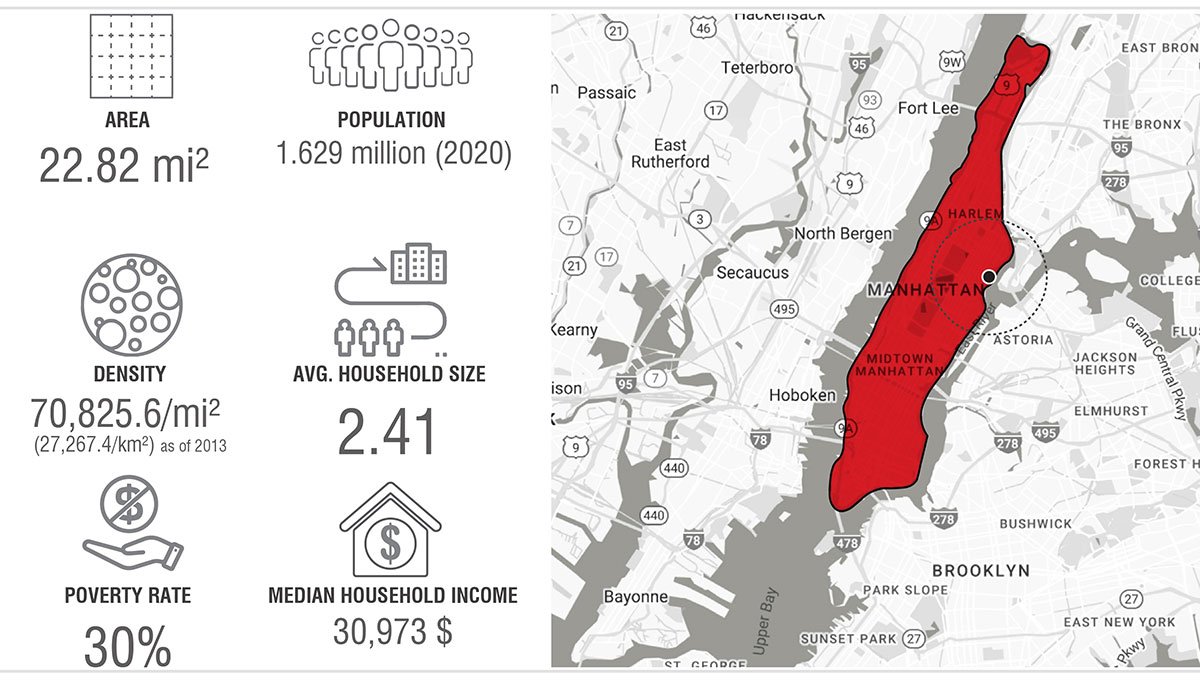
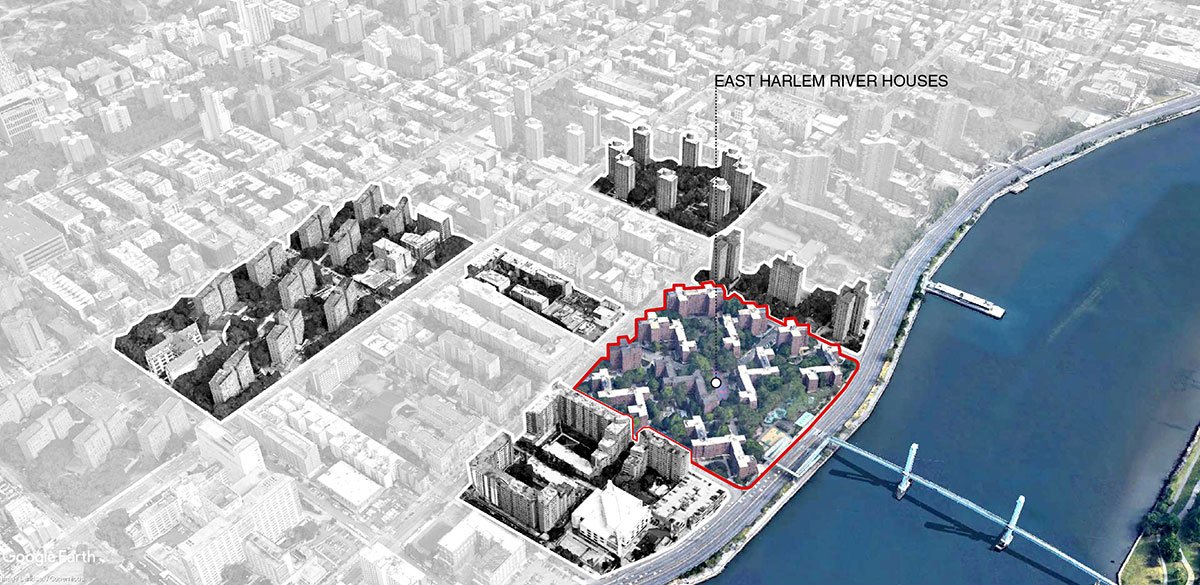
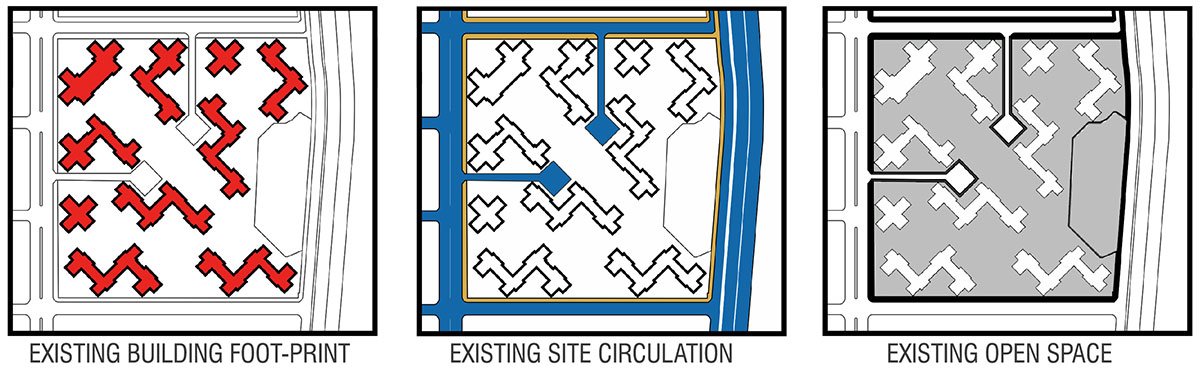
Context: The East Harlem River Houses, located in Manhattan’s East Harlem, serve as the project site. This densely populated neighborhood, with its strong cultural identity, faces challenges such as social isolation, aging infrastructure, and limited public spaces. Traditional U.S. housing designs often discourage interaction among residents, which contrasts with communal living models seen in cultures like Bangladesh. This project seeks to address these issues by exploring courtyard-based housing as a solution to enhance community ties and improve overall well-being.
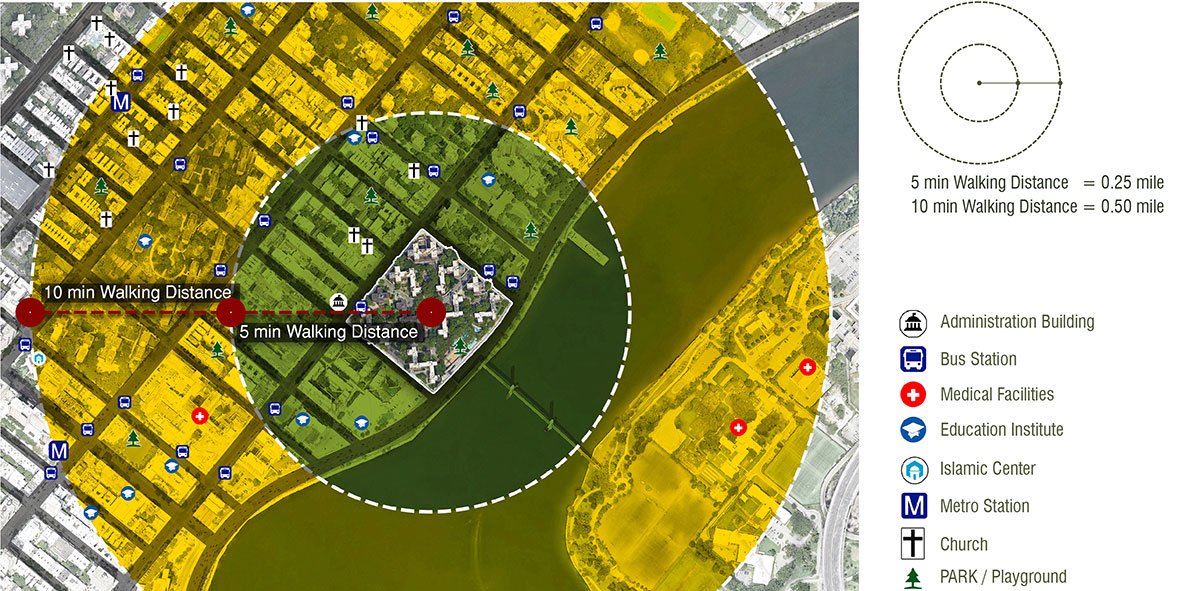
Facilities Available AroundSite Analysis
Program: The proposal introduces several key elements to enhance the living environment:
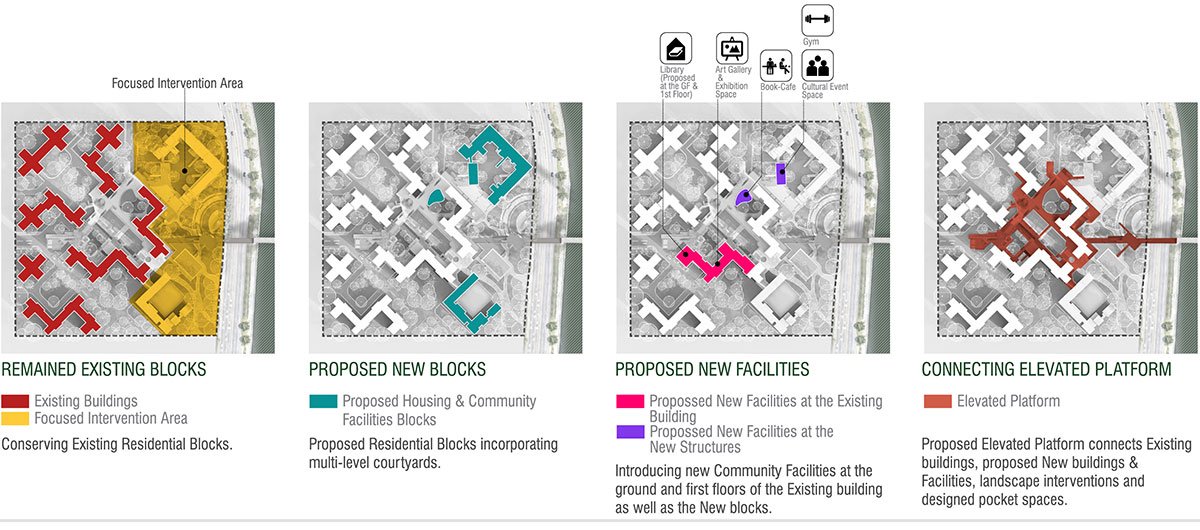
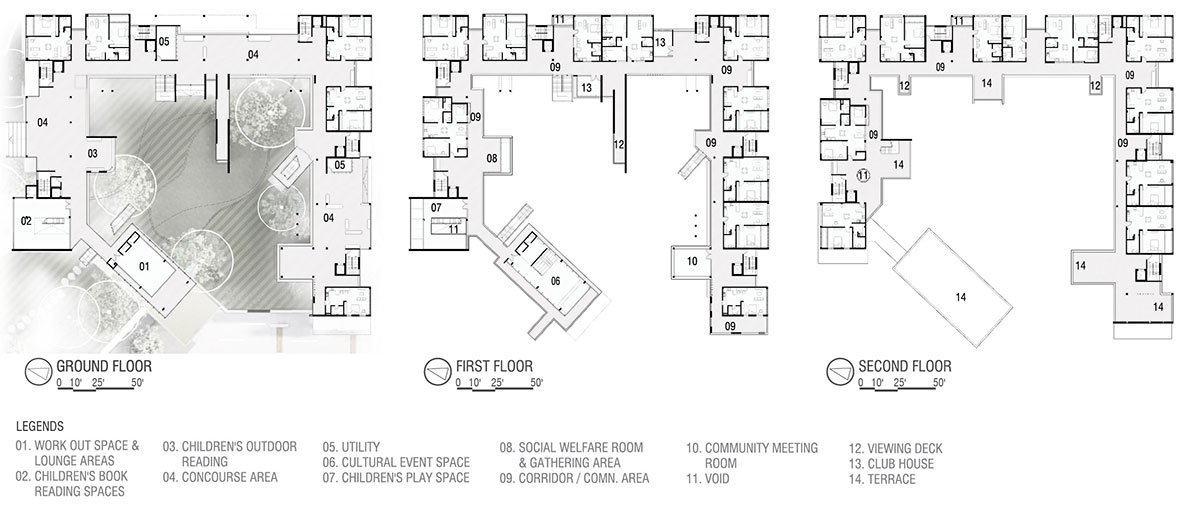
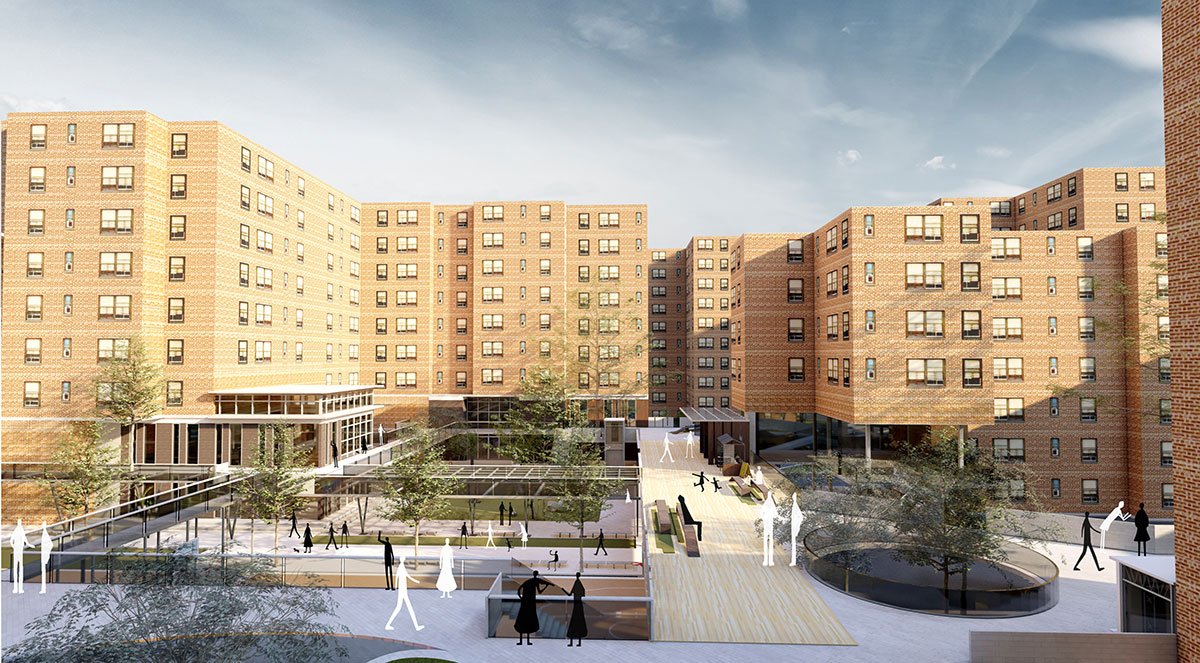
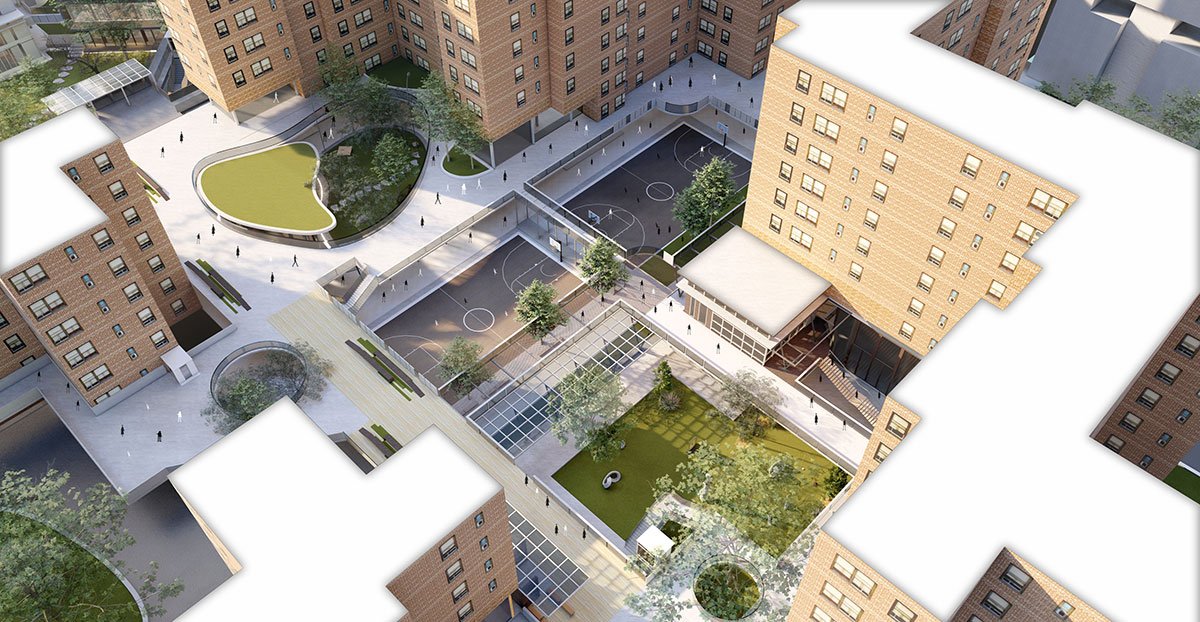
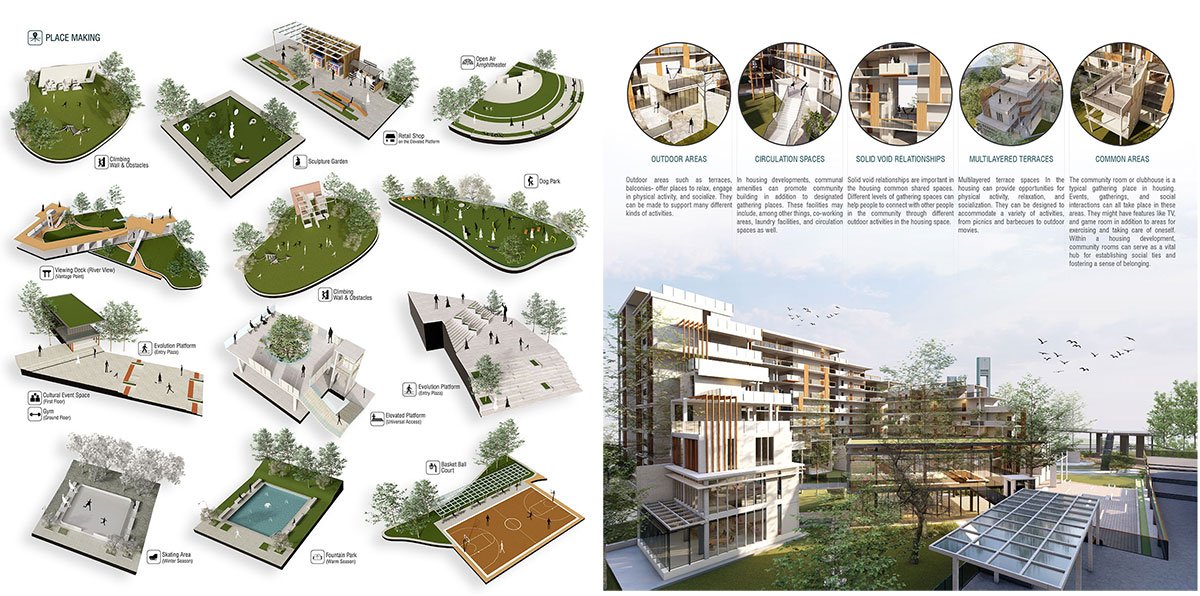
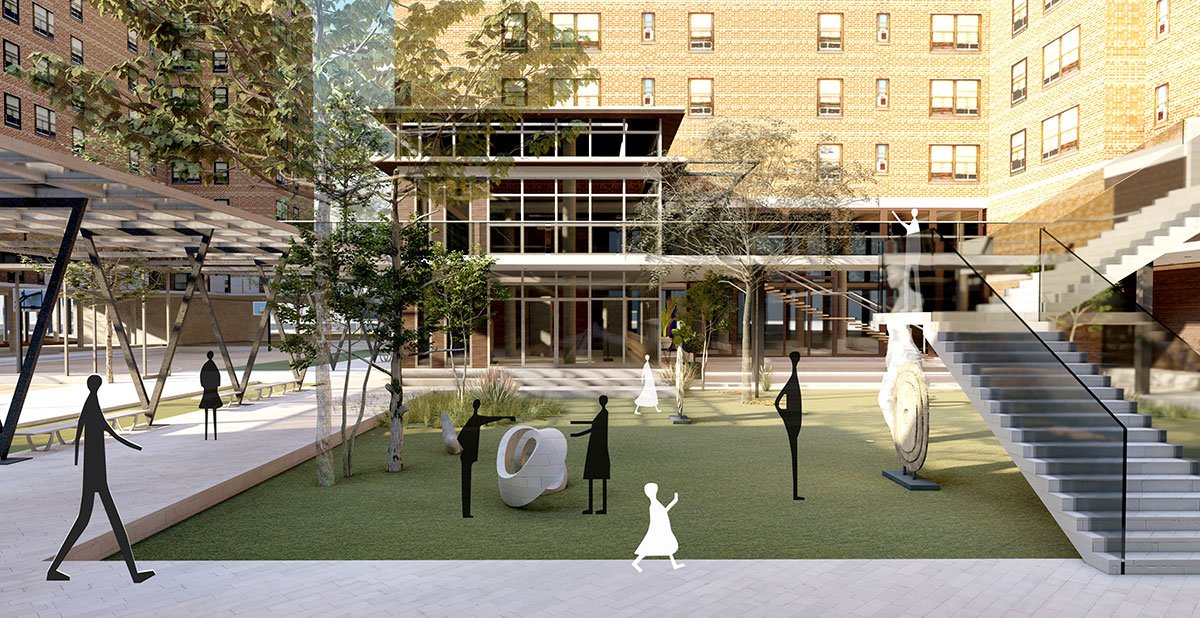
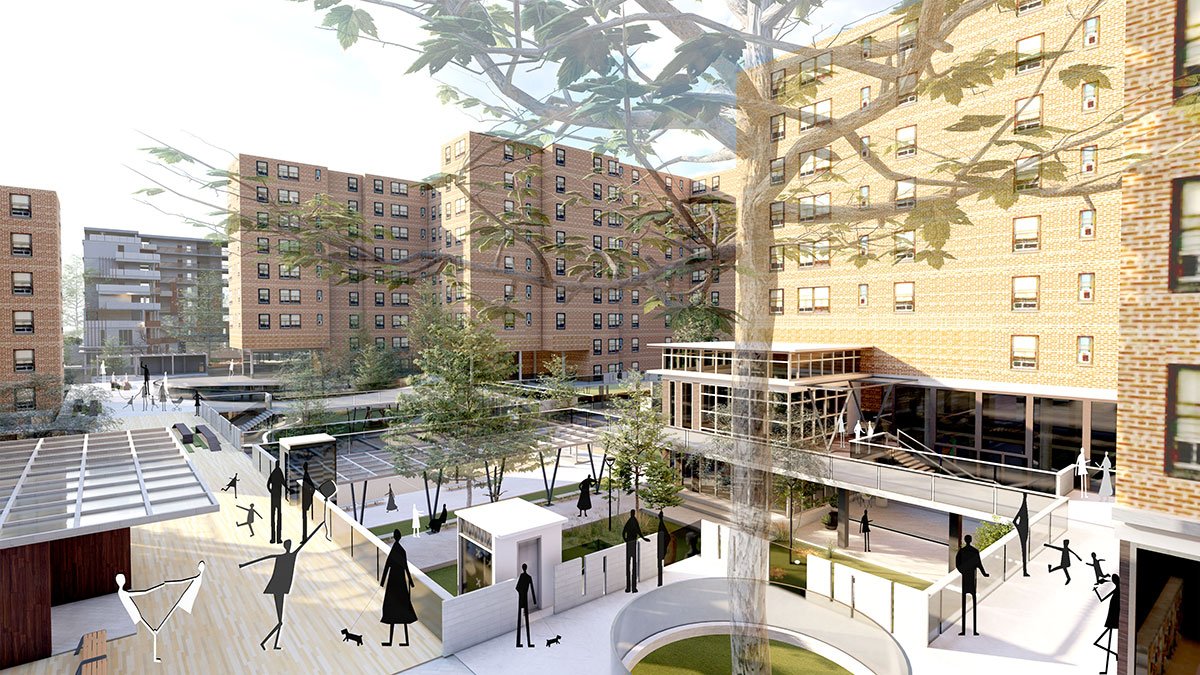
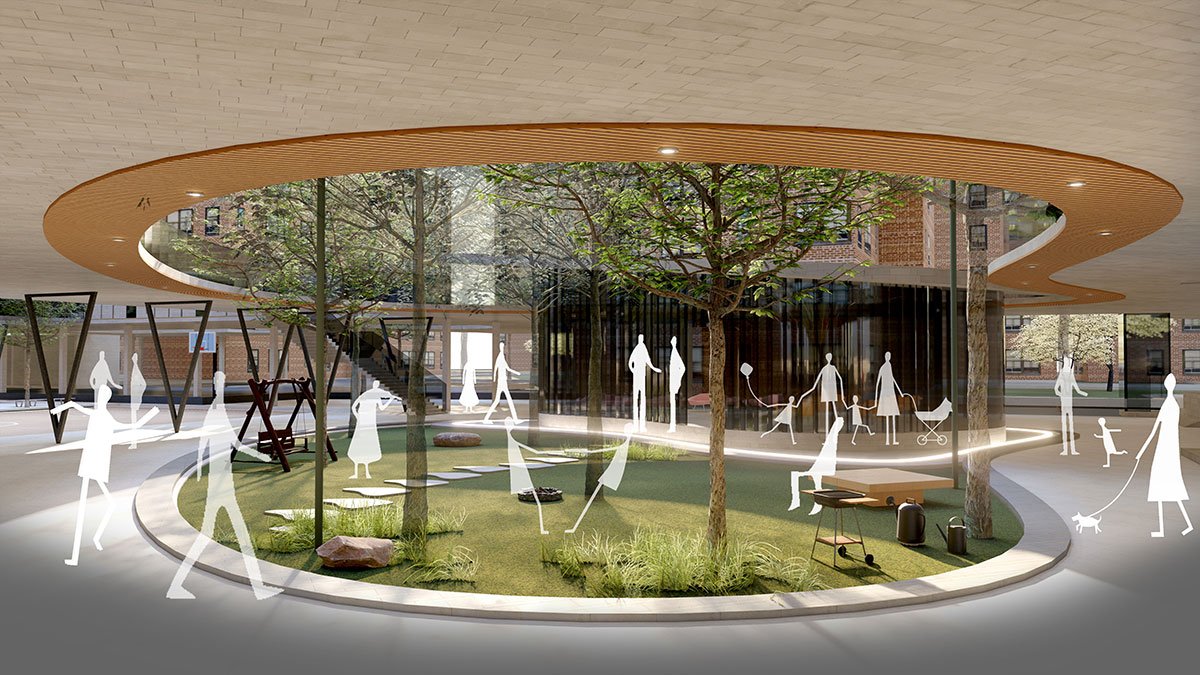
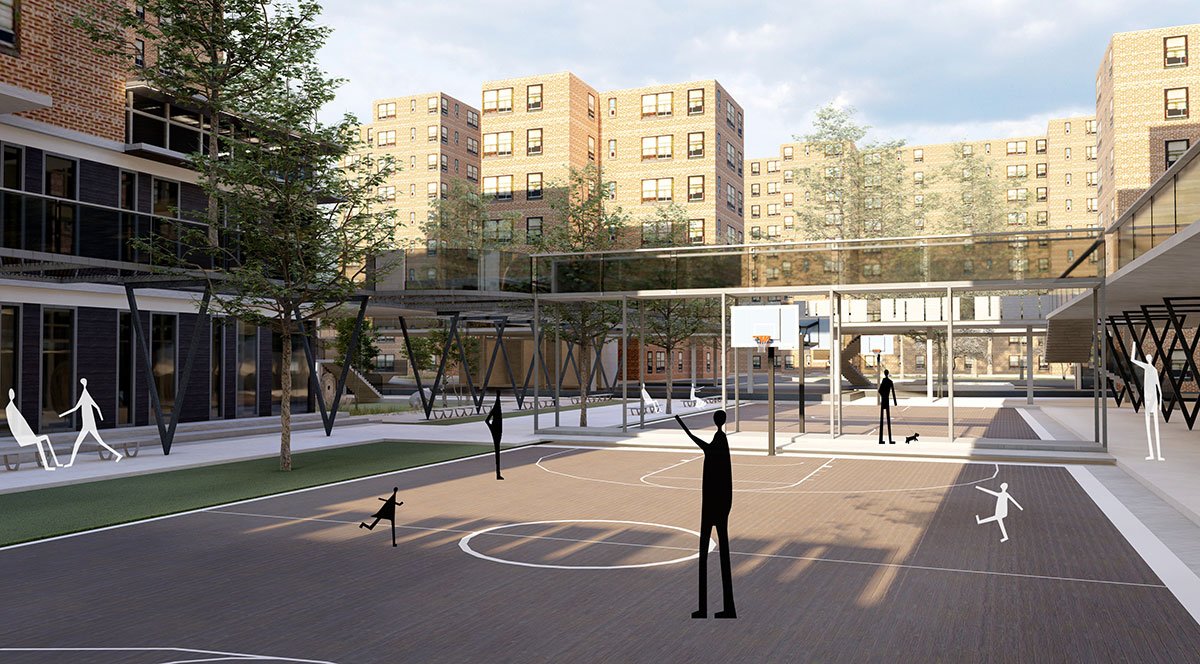
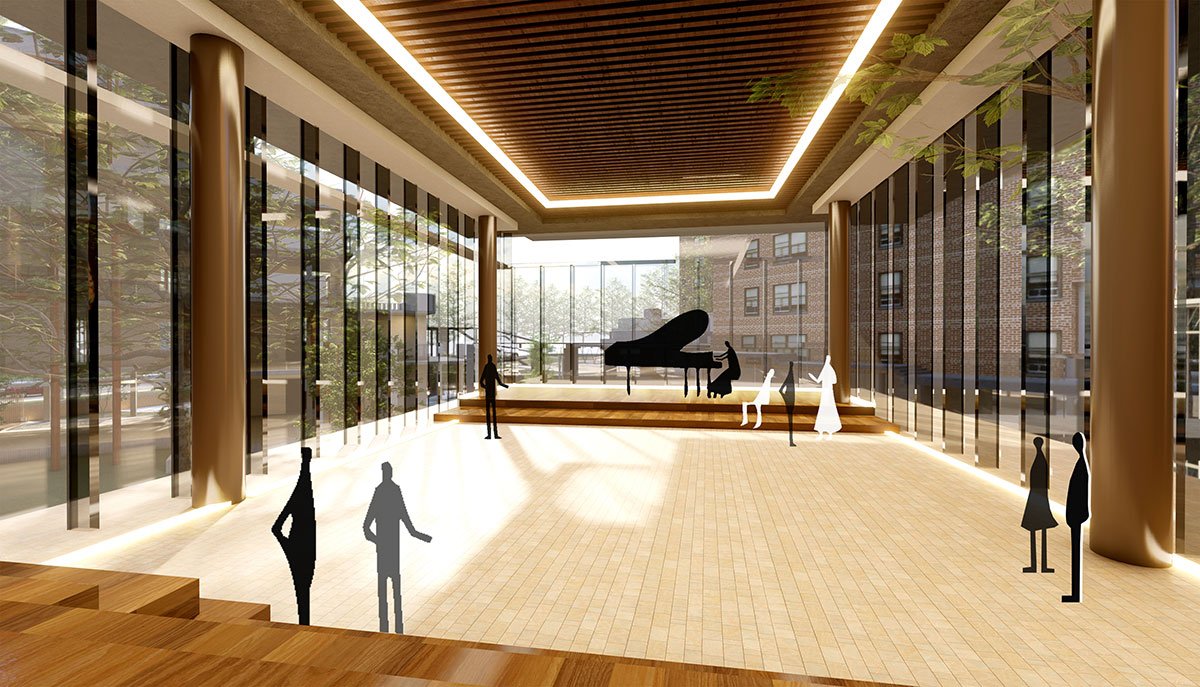
1- Multi-Level Courtyards: These hierarchical outdoor spaces are designed for social, recreational, and cultural activities.
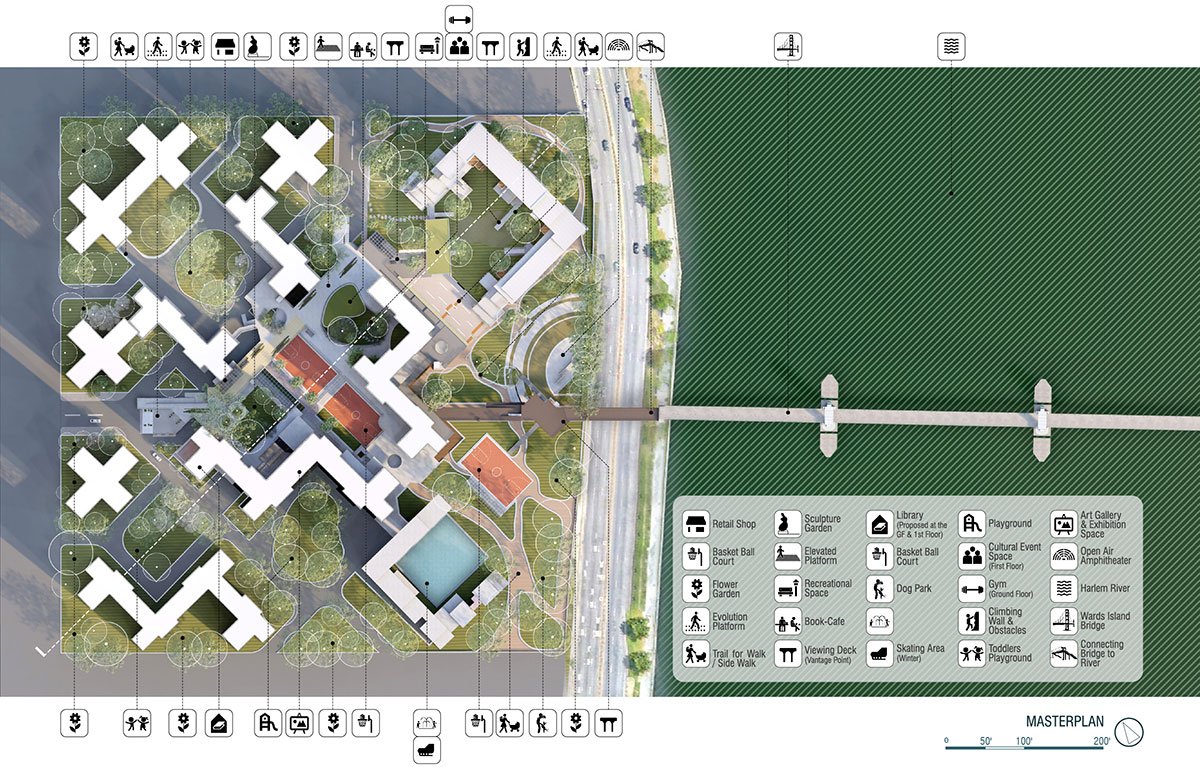
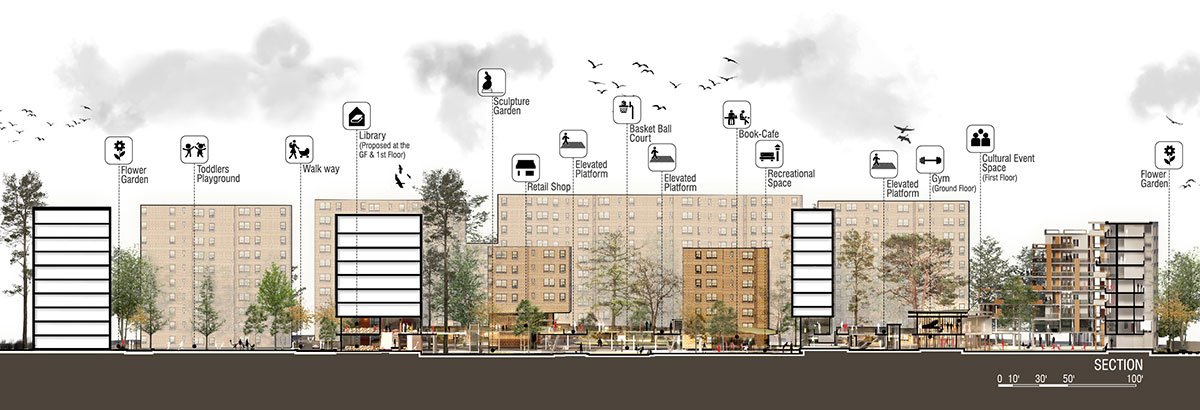
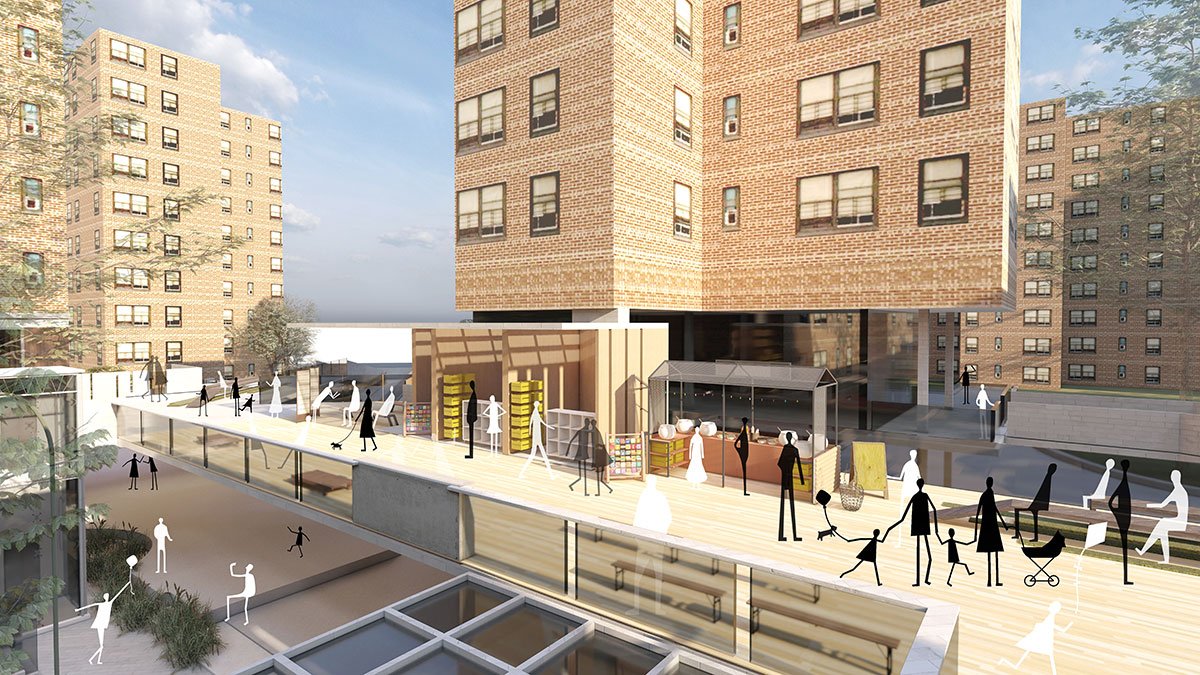
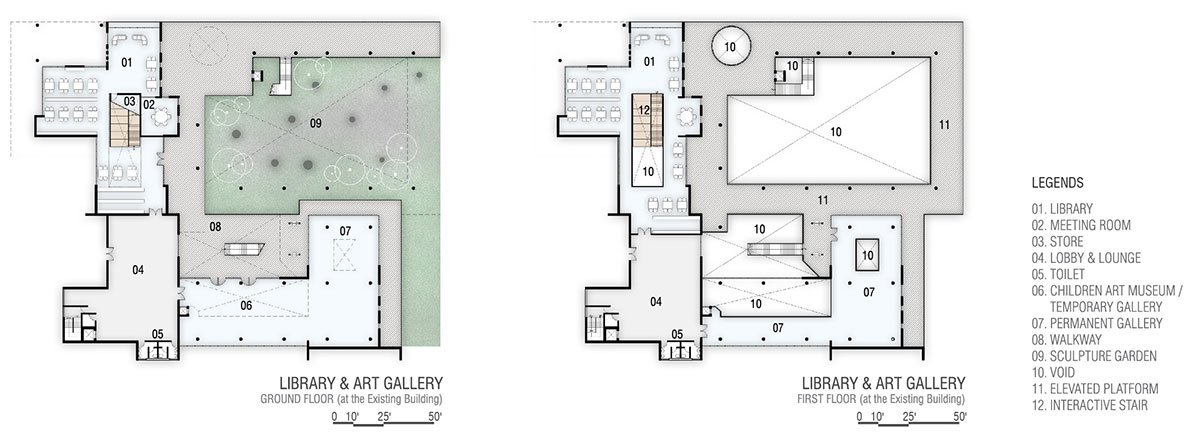
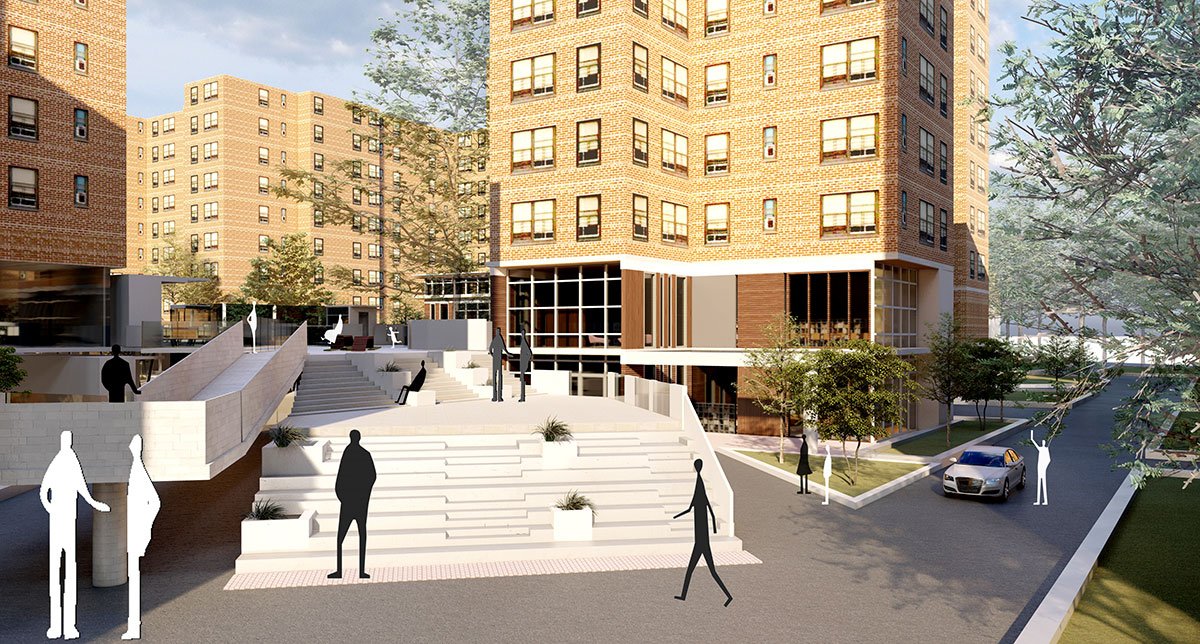
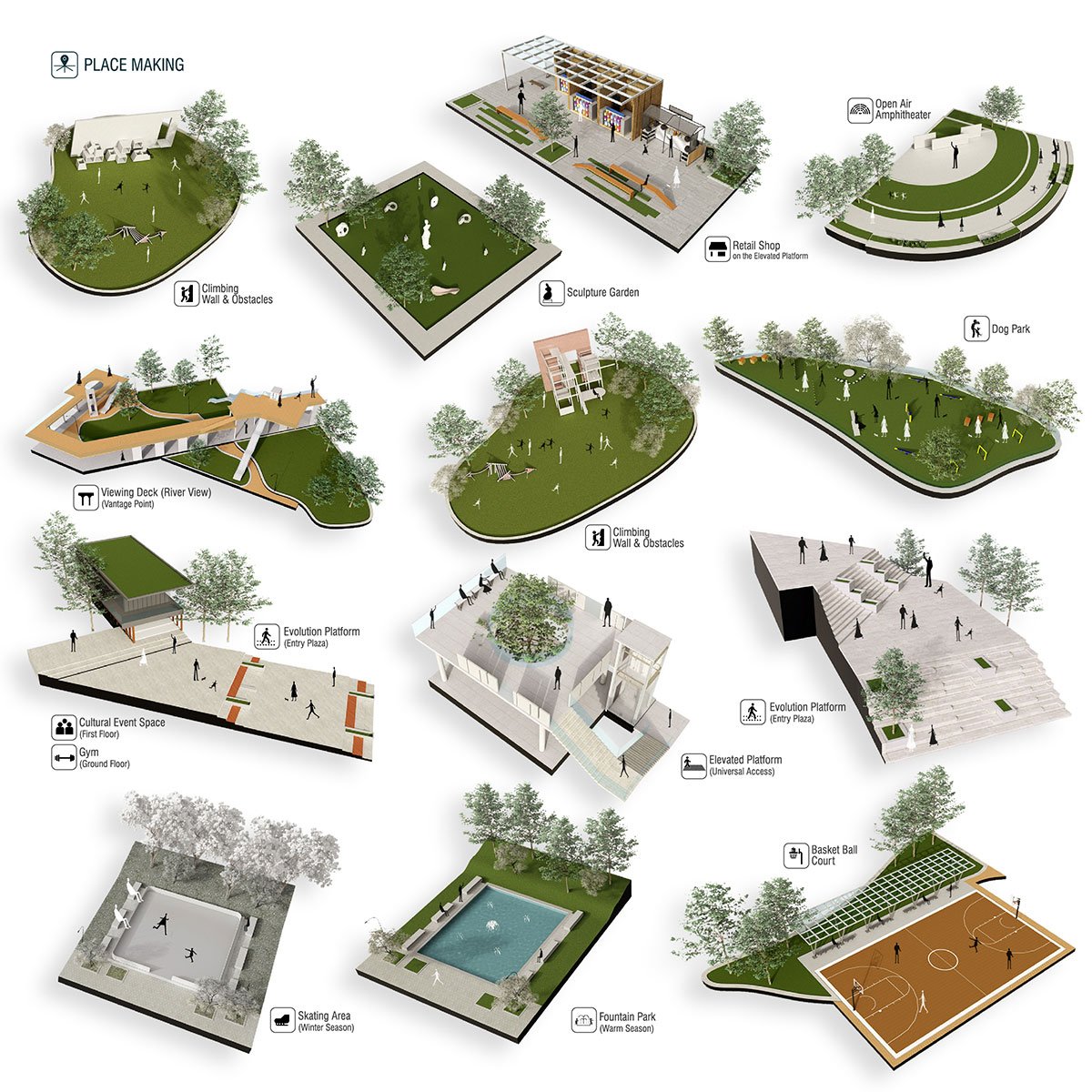
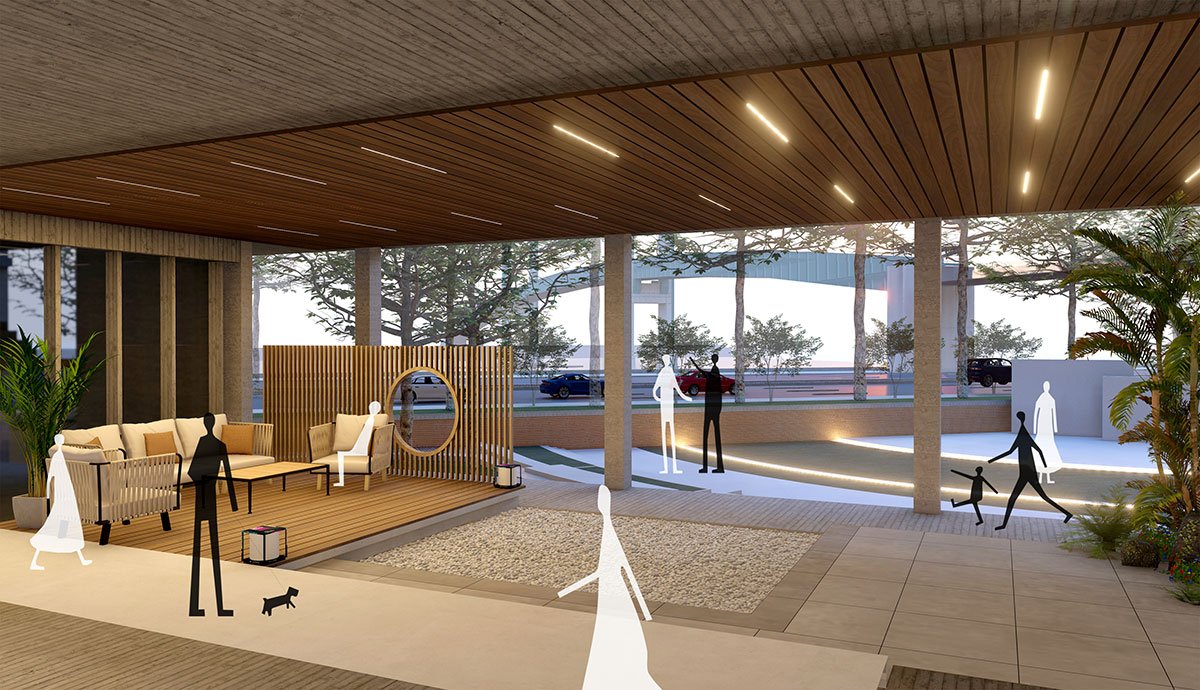
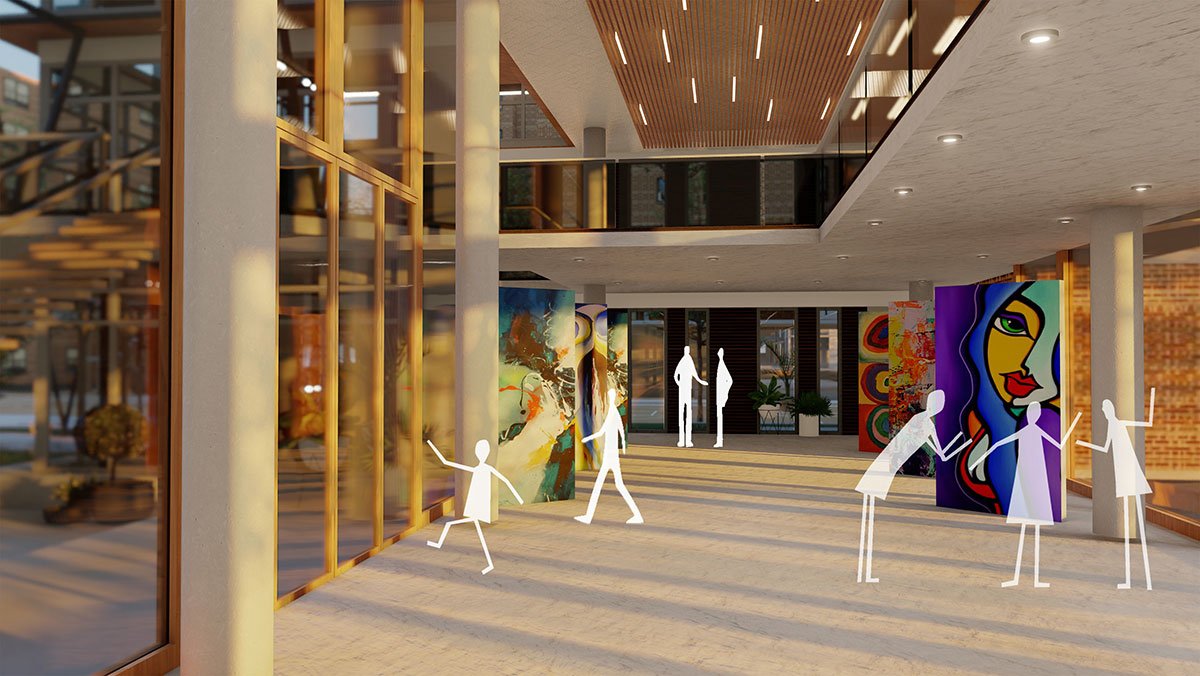
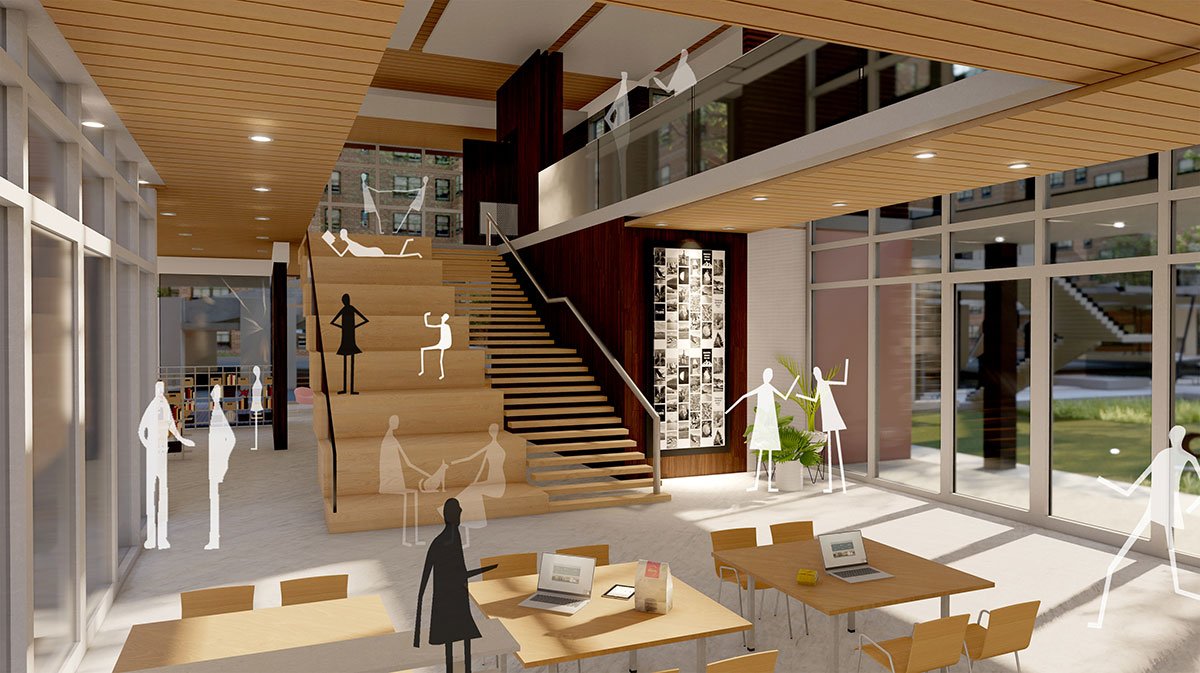
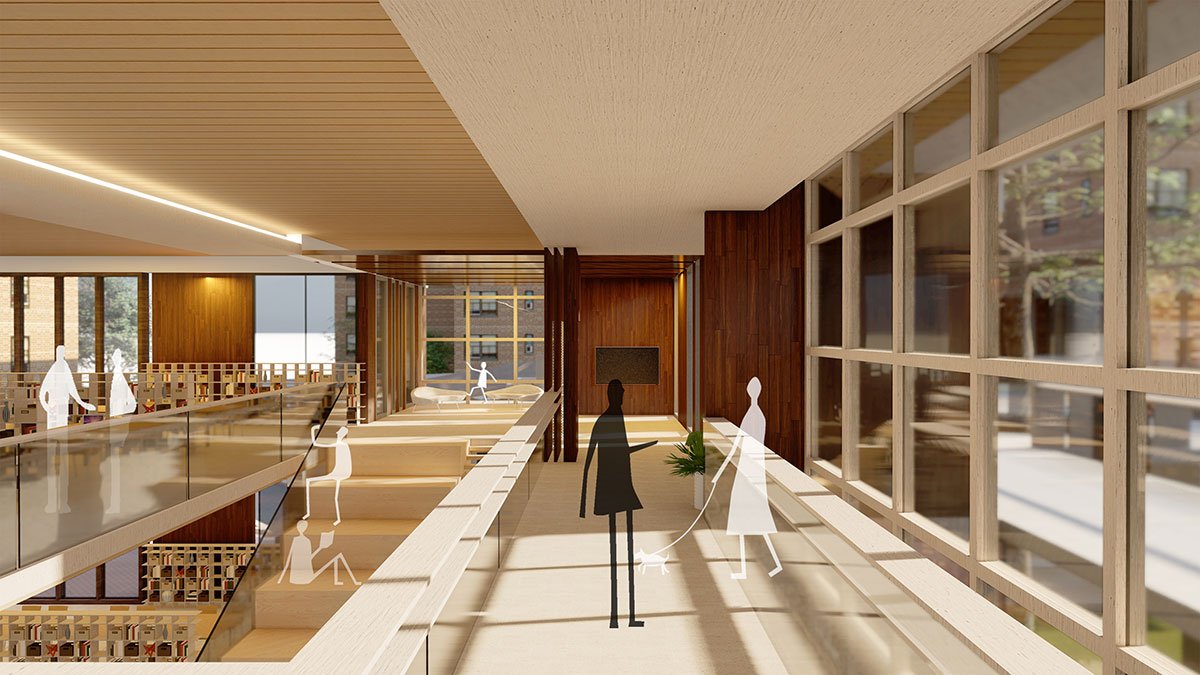
2- Urban Platform: A multifunctional public zone located beneath existing housing structures, featuring amenities such as a library, art gallery, children’s play areas, retail shops, and food stalls—all intended to activate street life and community engagement.
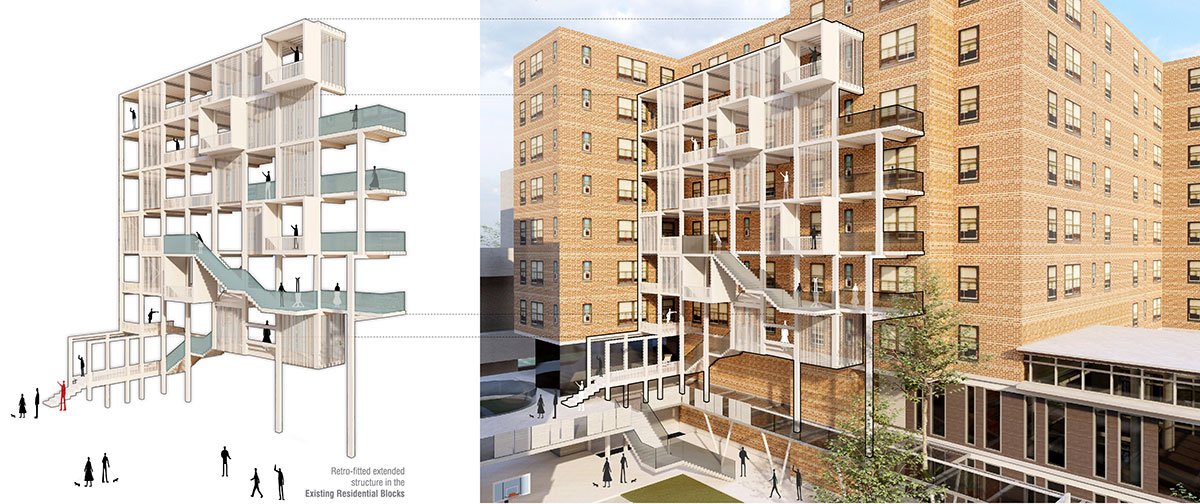
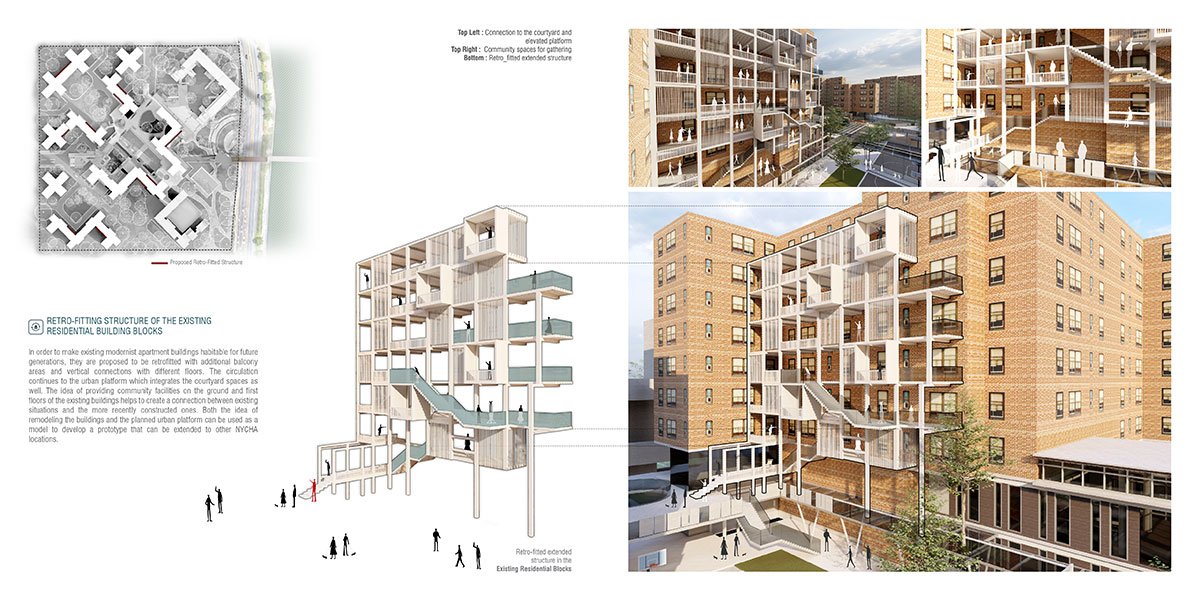
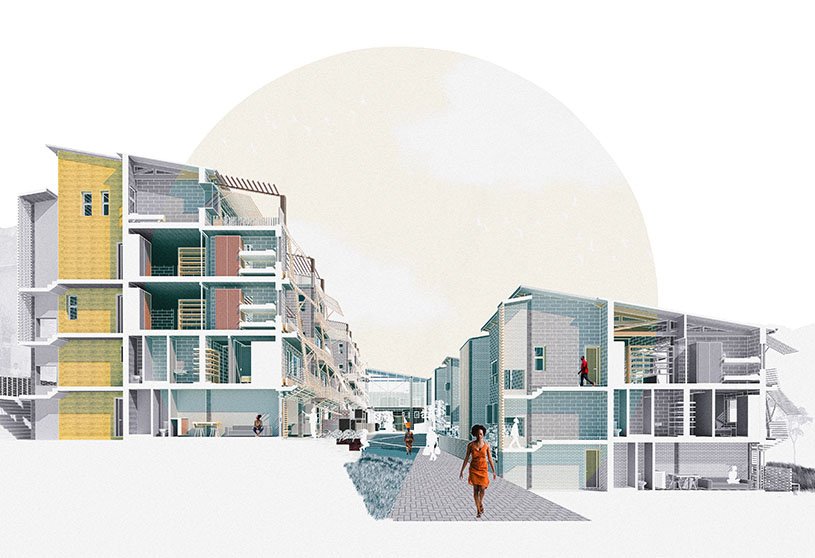
3- Retrofitting Existing Blocks: The old housing blocks will be retrofitted with layered corridors and balconies, enhancing access to courtyards and creating dynamic, multi-level spaces for interaction.
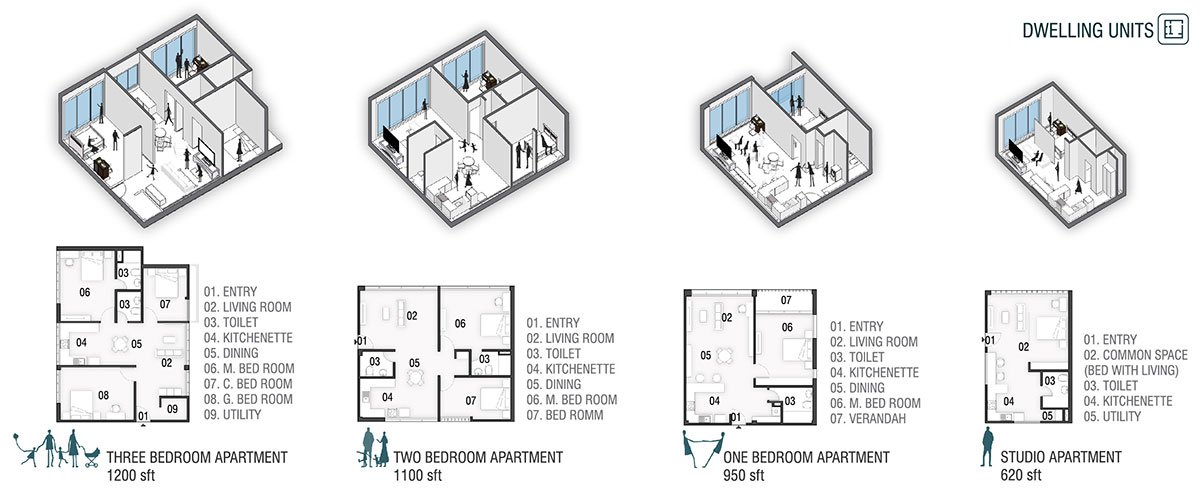
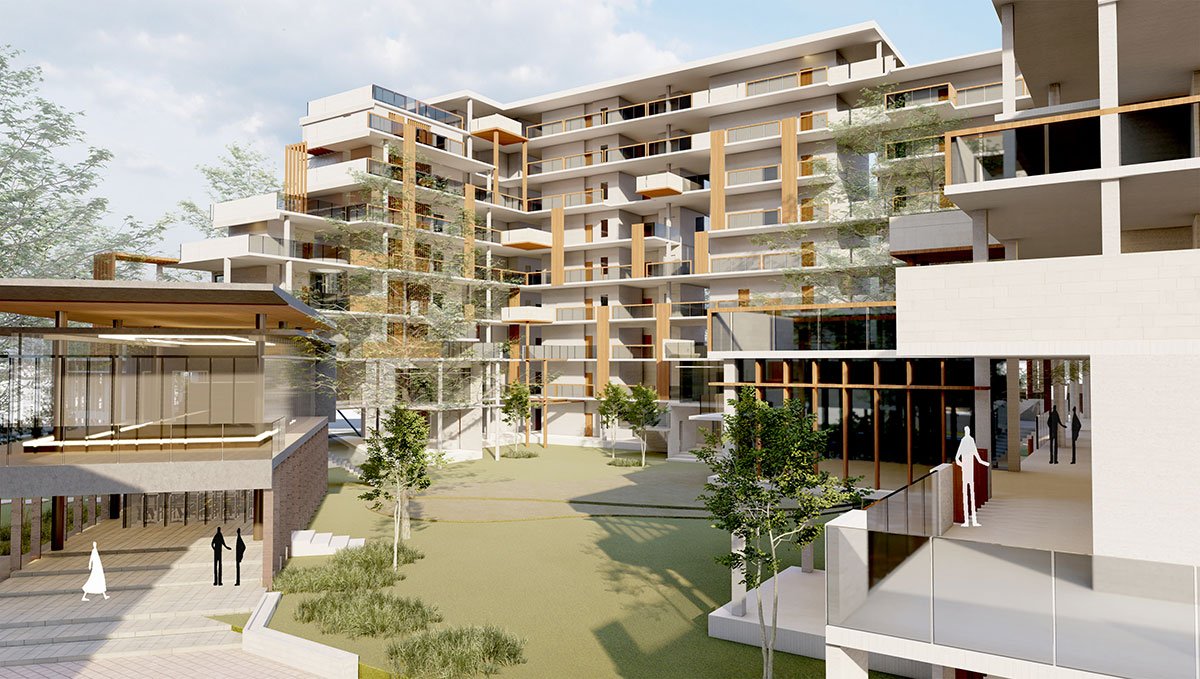
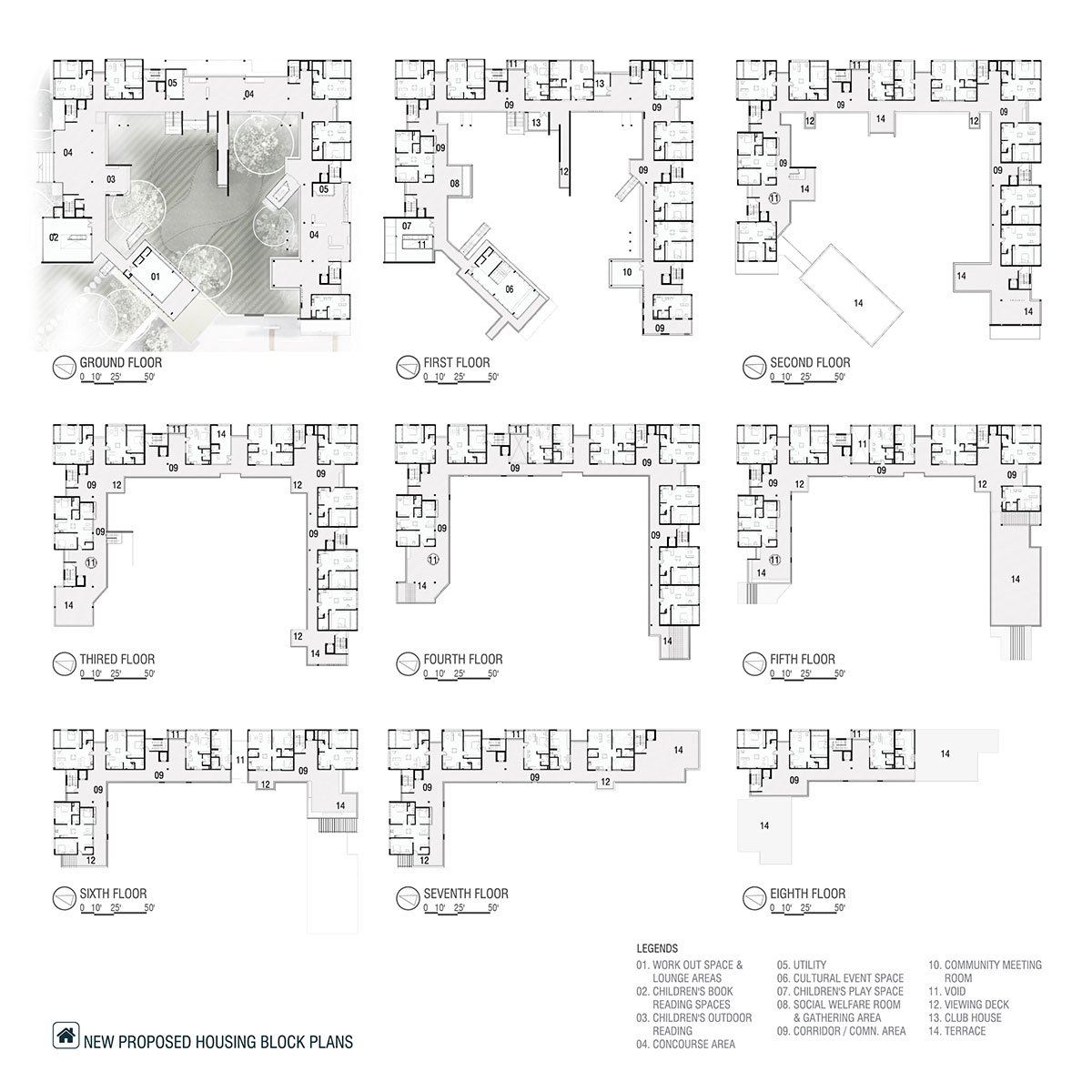
4- New Housing Block: A newly proposed building will offer diverse housing types and shared facilities such as lounges, fitness areas, and cultural hubs.
Through this integrated design approach, the project reimagines NYCHA housing as a lively, inclusive, and environmentally responsible urban model.
Design Process
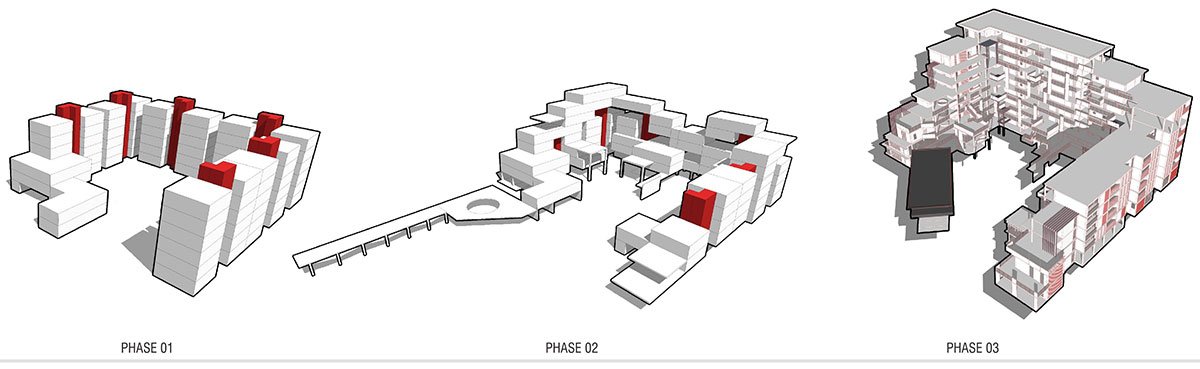
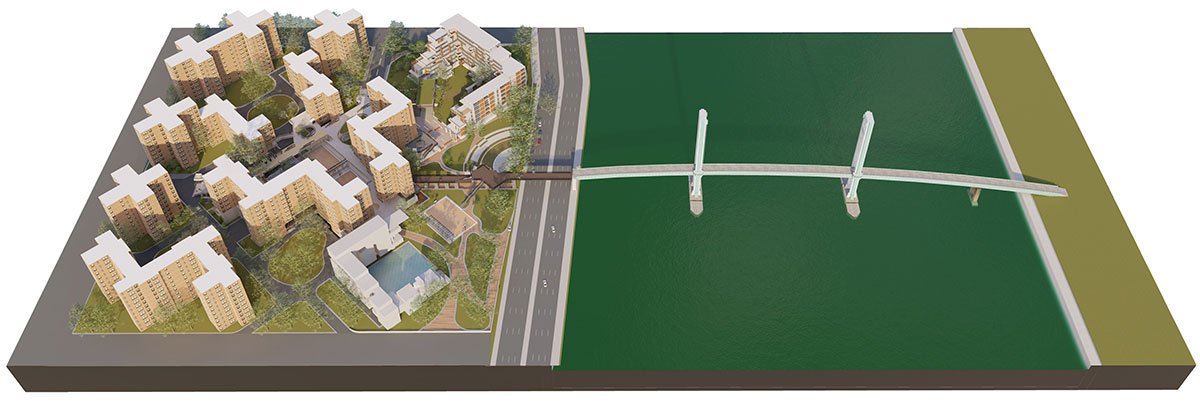
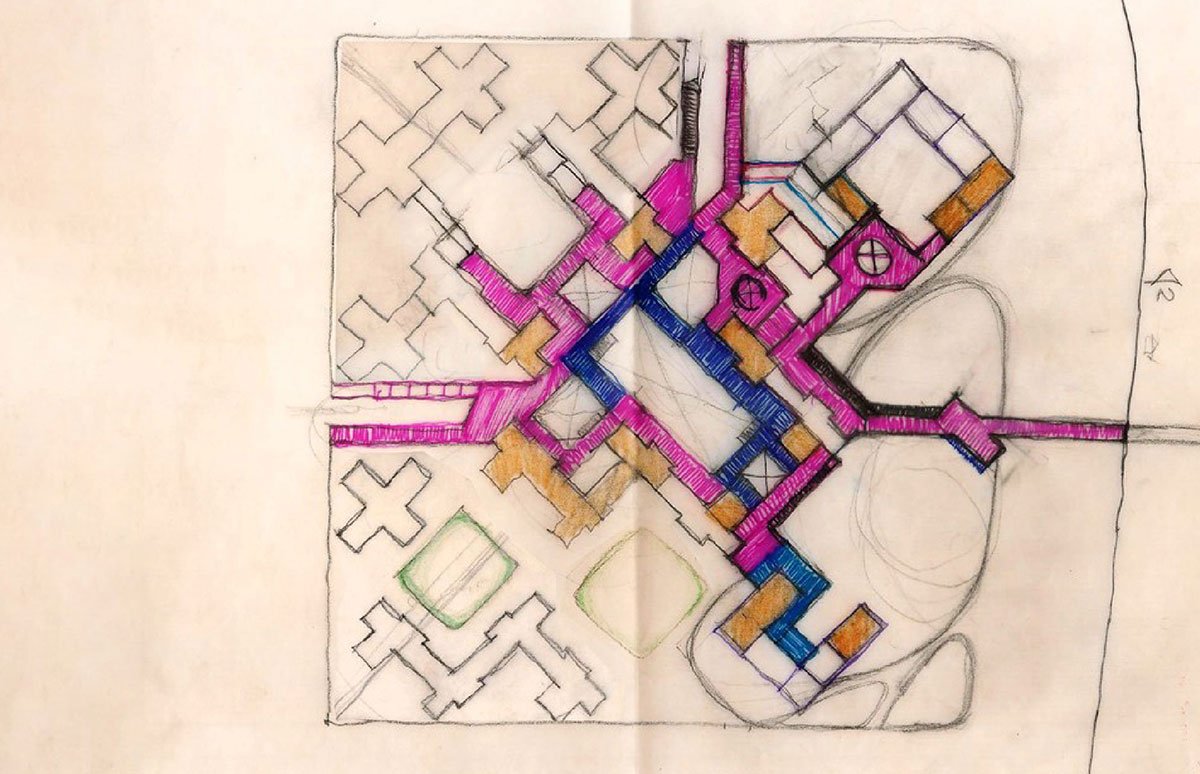
Design ConsiderationsDifferent Phases Of Master Plan: The primary axis was established along the x and y directions to connect the river and housing park area, enhancing accessibility and visual connection for residents. Subsequent diagrams focused on defining internal courtyard spaces to strengthen connections between residential units and shared community areas.
The design development focused on creating a master plan that thoughtfully integrates with the existing housing context. The process began by analyzing key site aspects, such as river connectivity, public access, and visibility, with the goal of enhancing, rather than replacing, the existing fabric of the area. Multiple master plan options were explored to address the neighborhood’s challenges while preserving its identity.
Design Interventions
A core strategy was the creation of an elevated urban platform at the first-floor level. This platform serves as the heart of the site, generating multi-layered community spaces that connect residents from the ground to upper floors. It anchors new community facilities, offering a responsive solution to the evolving needs of the neighborhood.
New Housing Block Development On The South East Side Of The Housing SiteNew Housing Block Form DevelopmentConceptual Idea Of The Housing In Staggered Way To Maximize View Towards River
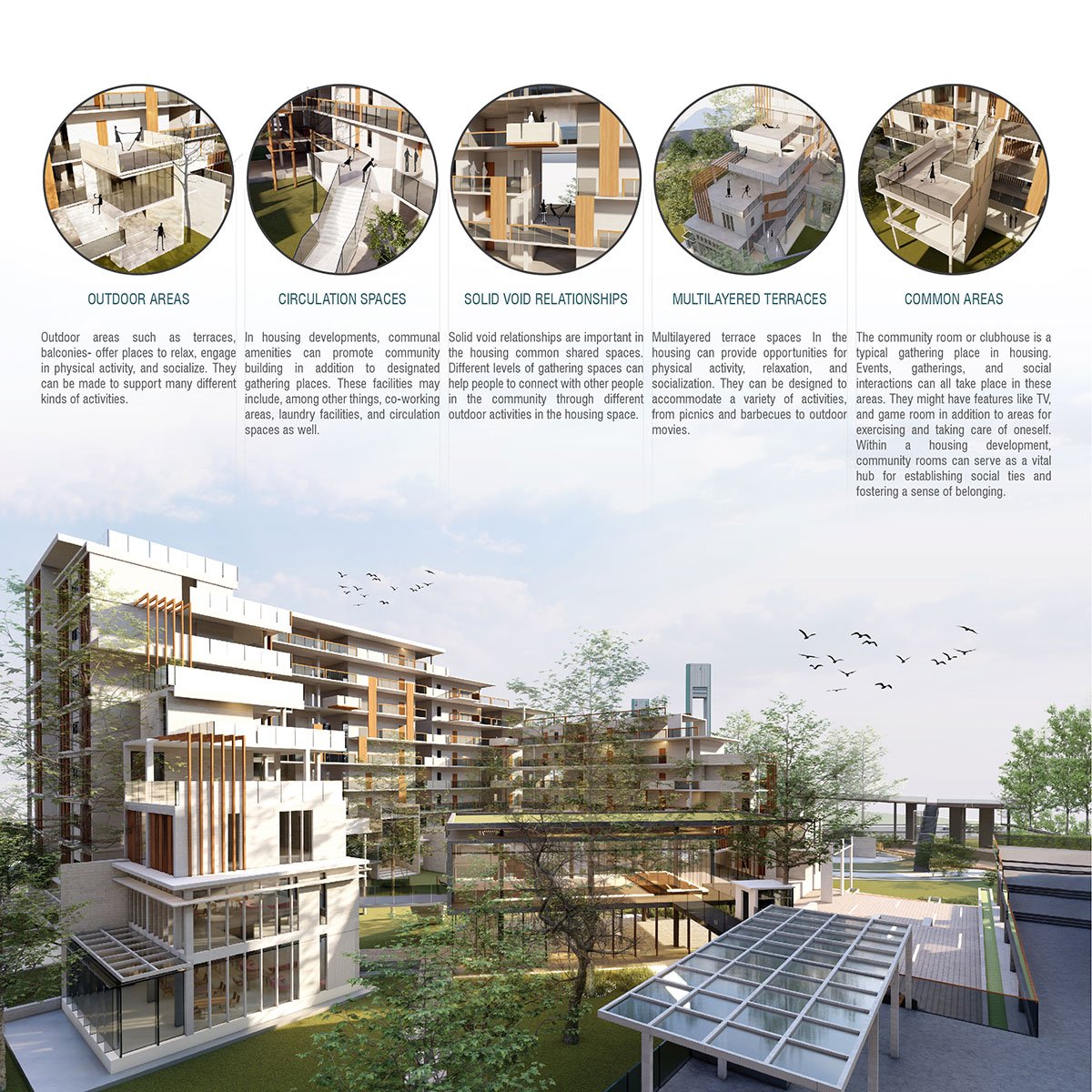
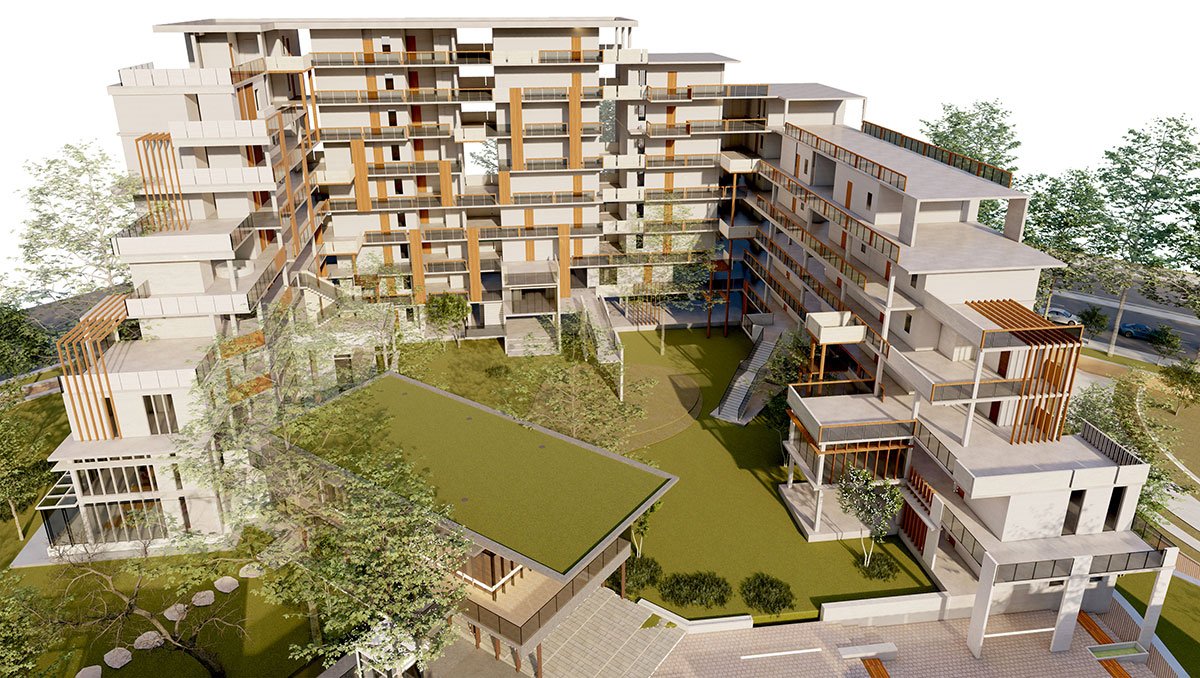
Additionally, two new housing blocks were proposed near the river, with careful consideration of communal living needs. These blocks are designed around multi-layered courtyard spaces that maintain appropriate light, ventilation, and privacy through a solid-void relationship. The design process involved iterative sketching, solid-void diagrams, and 3D modeling in SketchUp. Emphasizing modular cube-based compositions, these explorations refined both the architectural language and spatial strategies, ensuring a vibrant, community-centered residential environment that supports both interaction and privacy.
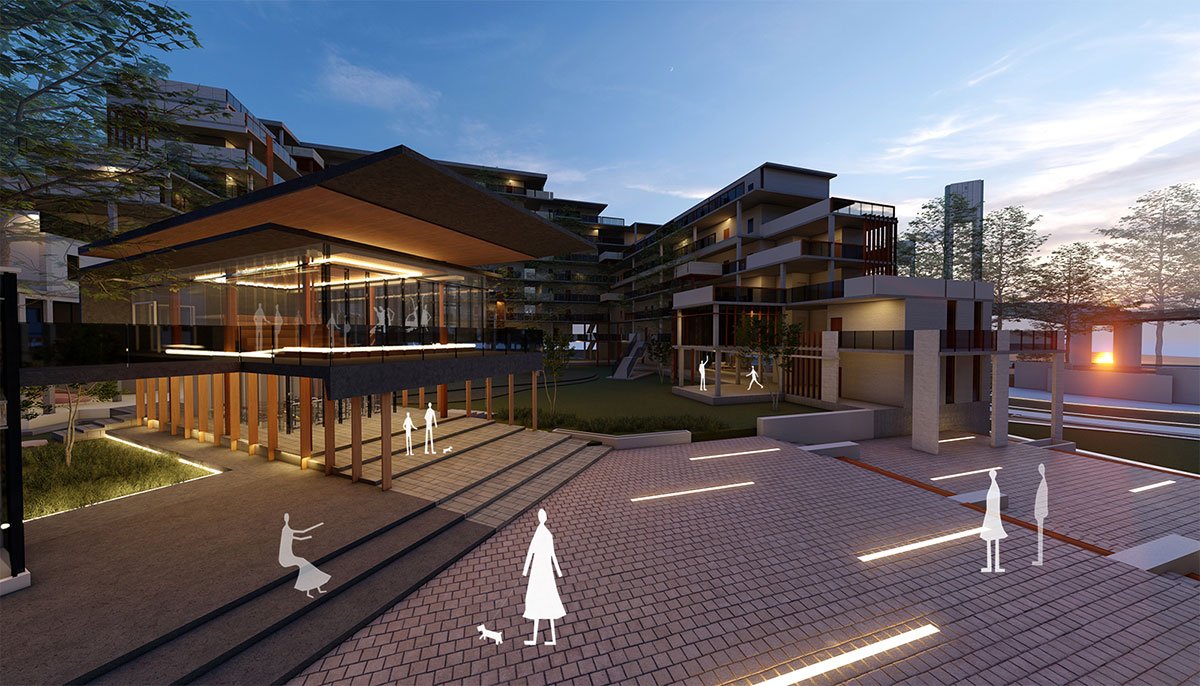
The proposed design culminates in a comprehensive transformation of public housing into a vibrant, inclusive, and future-ready urban model. Central to this vision are multi-level courtyards that create well-defined outdoor spaces, encouraging social interaction, recreation, and cultural engagement.
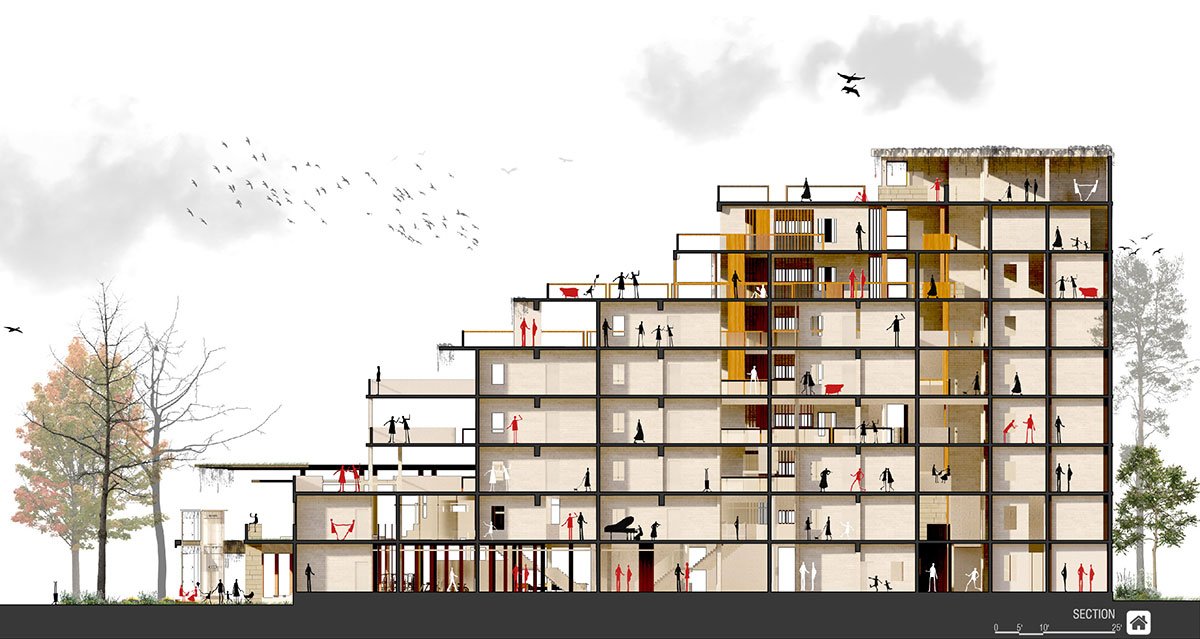
SectionDwelling UnitsConnection Between Ground Level And Elevated PlatformElevated Platform (Evolution Plaza)
An integrated urban platform enriches daily life through accessible amenities such as libraries, art galleries, fitness areas, and communal kitchens—spaces that collectively support education, wellness, and cross-cultural dialogue. The sustainable retrofitting of existing residential blocks introduces features like extended balconies, green roofs, and co-working areas, significantly enhancing environmental performance, functionality, and residents’ quality of life.
Retro-Fitting Structure Of The Existing Residential Building BlocksCollective Spaces: Stimulate Group Activities By Different Users | New Proposed Housing BlockInternal Court Of Proposed Housing BlockConnection Between Collective Spaces And Proposed Housing Block
Further strengthening the proposal is the focus on urban connectivity, with improved pedestrian pathways and public access points that seamlessly link the housing complex to the Harlem River waterfront and neighboring communities. Together, these strategies redefine public housing as a dynamic civic asset that prioritizes community, sustainability, and urban integration.
Sculpture GardenRetail Facilities At The Evolution PlazaRelation Between Elevated Platform And Library & Art Gallery Facilities
Conclusion: Ultimately, this project envisions a transformative approach to public housing by integrating cross-cultural courtyard principles with sustainable urban design. Through multi-level communal spaces, thoughtful retrofitting, and enhanced connectivity, the proposal fosters a sense of community, improves residents’ well-being, and redefines NYCHA housing as an inclusive, resilient, and future-ready model for urban living.
[This Academic Project has been published with text and images submitted by the student]
Site Context
Design Process
Final Outcome
To submit your academic project for publication at ArchiDiaries, please visit the following link >> Submit
Get the best of ArchiDiaries, directly in your inbox.
We use cookies on our website to give you the most relevant experience by remembering your preferences and repeat visits. By clicking “Accept All”, you consent to the use of ALL the cookies. However, you may visit "Cookie Settings" to provide a controlled consent.
This website uses cookies to improve your experience while you navigate through the website. Out of these, the cookies that are categorized as necessary are stored on your browser as they are essential for the working of basic functionalities of the website. We also use third-party cookies that help us analyze and understand how you use this website. These cookies will be stored in your browser only with your consent. You also have the option to opt-out of these cookies. But opting out of some of these cookies may affect your browsing experience.
Necessary cookies are absolutely essential for the website to function properly. These cookies ensure basic functionalities and security features of the website, anonymously.
Cookie
Duration
Description
cookielawinfo-checkbox-analytics
11 months
This cookie is set by GDPR Cookie Consent plugin. The cookie is used to store the user consent for the cookies in the category "Analytics".
cookielawinfo-checkbox-functional
11 months
The cookie is set by GDPR cookie consent to record the user consent for the cookies in the category "Functional".
cookielawinfo-checkbox-necessary
11 months
This cookie is set by GDPR Cookie Consent plugin. The cookies is used to store the user consent for the cookies in the category "Necessary".
cookielawinfo-checkbox-others
11 months
This cookie is set by GDPR Cookie Consent plugin. The cookie is used to store the user consent for the cookies in the category "Other.
cookielawinfo-checkbox-performance
11 months
This cookie is set by GDPR Cookie Consent plugin. The cookie is used to store the user consent for the cookies in the category "Performance".
viewed_cookie_policy
11 months
The cookie is set by the GDPR Cookie Consent plugin and is used to store whether or not user has consented to the use of cookies. It does not store any personal data.
Functional cookies help to perform certain functionalities like sharing the content of the website on social media platforms, collect feedbacks, and other third-party features.
Performance cookies are used to understand and analyze the key performance indexes of the website which helps in delivering a better user experience for the visitors.
Analytical cookies are used to understand how visitors interact with the website. These cookies help provide information on metrics the number of visitors, bounce rate, traffic source, etc.
Advertisement cookies are used to provide visitors with relevant ads and marketing campaigns. These cookies track visitors across websites and collect information to provide customized ads.