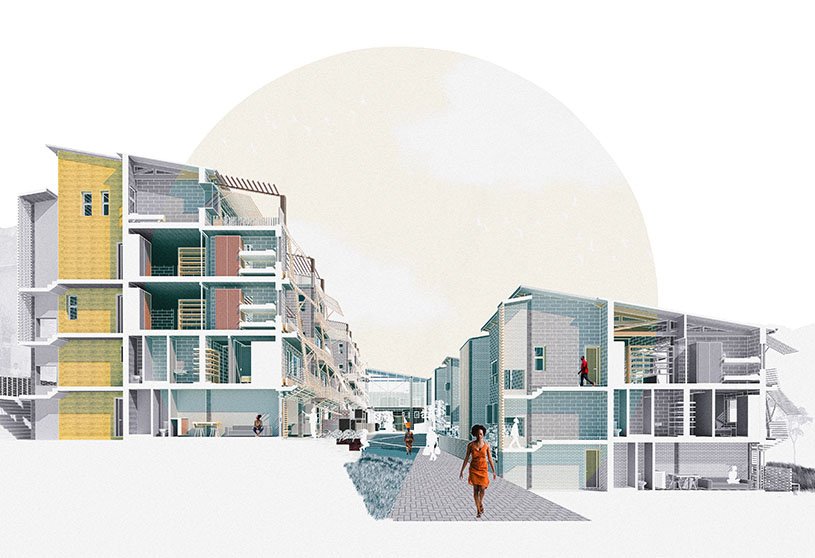
Excerpt: ‘MAHJONG’ is a Bachelors Design Project by Siow Qian Yin from the ‘School of Architecture, Building and Design – Taylor’s University.’ The project aims to revive the communal spirit and cultural heritage of Petaling Street by transforming mahjong into an experiential activity that encourages connection, memory, and belonging. It seeks to create a space where heritage is actively shared, promoting intergenerational interaction and reawakening the street’s vibrancy through immersive design, communal activities, and cultural storytelling.
Introduction: MAHJONG is a cultural, communal living museum to revive the spirit of Petaling Street. This space is designed to breathe new life into Petaling Street, a district once alive with the hum of conversations, clattering teacups, and the rhythmic shuffle of mahjong tiles. Inspired by the traditions of early Chinese immigrants, this project reimagines mahjong not merely as a game, but as a vessel of memory, connection, and belonging.
Once, mahjong tables were the heart of community life—where neighbors laughed, families bonded, and stories unfolded tile by tile. Today, in a landscape overshadowed by commerce and tourism, that intimate spirit risks fading. MAHJONG seeks to revive it by creating a space where heritage is not locked behind glass but lived, shared, and reinterpreted for a new generation.
The design blends vintage character with contemporary expression, drawing upon textures, colors, and spatial rhythms inspired by mahjong tiles themselves. Walls, floors, and furnishings echo the game’s symbolic motifs, while open layouts encourage encounters between strangers who might sit, play, or simply observe. It is both a museum and marketplace of memory—inviting visitors to experience culture through touch, play, and conversation rather than passive observation.
Here, elders teach the rules to the young, tourists discover the roots of Petaling Street’s vibrancy, and locals rediscover the joy of gathering. It is a place where nostalgia meets renewal, where the everyday rituals of tea, laughter, and play become bridges across generations.
More than preserving the heritage of mahjong, this project celebrates its power to spark dialogue, foster community, and reignite the authentic warmth that once defined Petaling Street. MAHJONG is both homage and invitation: a reminder that heritage lives not in objects, but in the people who carry it forward—together.
Once filled with herbal shops, tea houses, and fortune tellers, Petaling Street is now dominated by modern stalls and tourist retail, reflecting a shift from heritage to commercialization. | In the past, shophouses bustled by day and echoed with mahjong games by night, while today the street caters mainly to tourists, losing much of its communal rhythm.
Petaling Street, once the beating heart of Kuala Lumpur’s Chinatown, carries deep historical and cultural significance. In the early 1960s, Chinese immigrants began to settle here, forming close-knit groups that grew into a vibrant community. Life in Petaling Street revolved around both work and social interaction—by day, the shophouses bustled with traders, herbal shops, and food stalls, while by night, the upper floors transformed into intimate domestic spaces. It was here that mahjong found its role: families, friends, and neighbors gathered around tables, the rhythmic sound of shuffling tiles echoing above the street, symbolizing unity, leisure, and resilience.
The local Chinese community that once built this place is fading, their homes and traditions slowly replaced by migrant workers—leaving behind traces of a culture that once defined the street. | Petaling Street evolved from a warm, communal environment shaped by shophouse living into a transactional, tourist-driven space with fewer lasting human connections.At the heart of Petaling Street stands Bangunan Tunas Utama, a witness to Chinatown’s layered history—where the past whispers through old walls even as modern life rushes by.
The unique shophouse architecture, with its narrow facades and deep interiors, not only shaped the business environment but also fostered the culture of living and working under one roof. However, in recent decades, the character of Petaling Street has changed drastically. Many locals moved out in search of better living environments, leaving behind fragmented communities. Traditional businesses have dwindled, giving way to modern retail, tourism-driven enterprises, and transient populations. The once-lively, warm atmosphere rooted in communal living and cultural rituals has diminished, leaving Petaling Street struggling with an identity crisis.
Design Process
Mahjong becomes a lens of time: where warmth of the past, challenges of the present, and hopes for the future unfold. | Original Bangunan Tunas Utama documented for adaptive reuse.Precinct Study
The project takes mahjong as the central narrative, using it to explore cultural memory, community life, and heritage continuity. The design begins with the concept of three timelines—past, present, and future. The past represents the vibrant social life of Petaling Street, where mahjong was accompanied by tea, dim sum, and spectators, shaping a sense of warmth and belonging. The present reflects the decline of this cultural identity, as modern distractions like gadgets disrupt interaction. The future, though uncertain, envisions the revival of tradition, where older generations guide the young, ensuring transmission of skills, stories, and values.
Precinct StudyMaterial palette and technical drawings translating timber, marble, and aluminum into circular spatial forms inspired by dou gong structure. | Bespoke construction details showcasing lighting, ceiling, flooring, and pedestal systems — merging traditional joinery with modern exhibition needs.
Cultural studies informed the design language. Heritage colors, symbolic Chinese patterns, and feng shui principles were embedded into the space to create a culturally rooted atmosphere. Inspiration was also drawn from the adaptability of shophouse structures in Petaling Street, where extendable and flexible layouts supported community living.
The six-storey site introduced challenges of vertical circulation. A central void was introduced to connect levels visually and socially, creating an engaging spatial flow that encourages visitors to move upwards while maintaining interaction between floors. Zoning was carefully planned to balance open communal areas with private spaces, allowing multiple layers of experience while preserving intimacy where needed.
Final Outcome
Ground Floor Plan | This section reveals red structural veins rising from ground to roof, rooting heritage and street spirit while voids and columns invite upward exploration.Mezzanine Floor Plan | First Floor PlanCeoi Seoi: A softer pause from the buzz outside. This cozy dining corner invites you to slow down, share a meal, and enjoy simple conversations that warm the heart.Daap Toi-Dining: This Dynamic Space shifts from a Mahjong Parlor to a Dining Hall Serving Traditional Chinese Dishes, Where shared stories And Laughter Become Part of Its Living Memory.
The design of MAHJONG reflects both the past vibrancy and present challenges of Petaling Street, reinterpreting its cultural essence through space, material, and form. Red, a color symbolizing prosperity, joy, and community in Chinese culture, is celebrated across the building through bold beams and columns. These red structures extend vertically, visible in sections as veins rooting the building from ground to top, symbolizing heritage, continuity, and extension of the lively street spirit once found here.
Third Floor Plan | Forth Floor PlanDaap Toi-Usual: A Mahjong Parlor Serving Dim Sum and Tea, inviting people to connect and build relationships.Haang Gai serves as an exhibition corridor, a bridge connecting the ground floor to the mezzanine. Suspended birdcages, pendant light, fans, and historical hang from the ceiling and walls, guiding visitors upward. A glass block wall on the mezzanine teases those below with silhouetted figures, enticing them to explore the next level.
The blending of vintage and modern elements forms a dialogue between eras: traditional Dou Gong structures decorate column heads, while glass and LED lights inject contemporary energy. Together, they bridge the old warmth of Chinatown with modern expression. Voids punctuate different levels, inviting direct connections between spaces, while column and ceiling designs guide the eye upward, encouraging visitors to explore. Neon-like LED signage restores the bustling chaos and vibrancy that once defined the street.
Sixth Floor Plan |Hoi Toi: Tiles clicking, laughter rising, this is where mahjong lives. A space that invites both the curious and the experienced to gather, learn, and keep the game alive across generations.
Each program—Daai Paai Dong, Ceoi Seoi, Daap Toi, Pou Tou, Uk Kei, and Haang Gai—translates analysis into space, from food culture to casual gathering, from heritage preservation to communal living. Collectively, they revive Petaling Street’s human warmth, re-rooting its identity through mahjong as both tradition and future.
Pou Tou: Whispers of the past linger here, with herbal scents and fortune telling stalls. A place that rekindles the spirit of old trades, reminding us of wisdom passed down through time.MAHJONG space model, Hoi Toi’s front view | MAHJONG space model, Hoi Toi’s Isometric view
Conclusion: Ultimately, MAHJONG reimagines Petaling Street by weaving heritage with modernity, restoring its vibrancy through space, material, and form. Bold red structures, traditional motifs, and contemporary elements converge to symbolize continuity and renewal. Through diverse programs, the design revives community warmth, reconnecting Chinatown’s past spirit with its future identity.
[This Academic Project has been published with text and images submitted by the student]
Site Context
Design Process
Final Outcome
To submit your academic project for publication at ArchiDiaries, please visit the following link >> Submit
Get the best of ArchiDiaries, directly in your inbox.
We use cookies on our website to give you the most relevant experience by remembering your preferences and repeat visits. By clicking “Accept All”, you consent to the use of ALL the cookies. However, you may visit "Cookie Settings" to provide a controlled consent.
This website uses cookies to improve your experience while you navigate through the website. Out of these, the cookies that are categorized as necessary are stored on your browser as they are essential for the working of basic functionalities of the website. We also use third-party cookies that help us analyze and understand how you use this website. These cookies will be stored in your browser only with your consent. You also have the option to opt-out of these cookies. But opting out of some of these cookies may affect your browsing experience.
Necessary cookies are absolutely essential for the website to function properly. These cookies ensure basic functionalities and security features of the website, anonymously.
Cookie
Duration
Description
cookielawinfo-checkbox-analytics
11 months
This cookie is set by GDPR Cookie Consent plugin. The cookie is used to store the user consent for the cookies in the category "Analytics".
cookielawinfo-checkbox-functional
11 months
The cookie is set by GDPR cookie consent to record the user consent for the cookies in the category "Functional".
cookielawinfo-checkbox-necessary
11 months
This cookie is set by GDPR Cookie Consent plugin. The cookies is used to store the user consent for the cookies in the category "Necessary".
cookielawinfo-checkbox-others
11 months
This cookie is set by GDPR Cookie Consent plugin. The cookie is used to store the user consent for the cookies in the category "Other.
cookielawinfo-checkbox-performance
11 months
This cookie is set by GDPR Cookie Consent plugin. The cookie is used to store the user consent for the cookies in the category "Performance".
viewed_cookie_policy
11 months
The cookie is set by the GDPR Cookie Consent plugin and is used to store whether or not user has consented to the use of cookies. It does not store any personal data.
Functional cookies help to perform certain functionalities like sharing the content of the website on social media platforms, collect feedbacks, and other third-party features.
Performance cookies are used to understand and analyze the key performance indexes of the website which helps in delivering a better user experience for the visitors.
Analytical cookies are used to understand how visitors interact with the website. These cookies help provide information on metrics the number of visitors, bounce rate, traffic source, etc.
Advertisement cookies are used to provide visitors with relevant ads and marketing campaigns. These cookies track visitors across websites and collect information to provide customized ads.