Home » Academic projects » Veteran’s Center: An Index Of Healing Spaces Geared At Veterans’ Trauma Healing | Bachelors Design Project On Healthcare Architecture
Veteran’s Center: An Index Of Healing Spaces Geared At Veterans’ Trauma Healing | Bachelors Design Project On Healthcare Architecture
Excerpt: ‘Veteran’s Center’ is a Bachelors Design Project by Nicholas Mazen from the ‘School of Architecture – Montana State University’ that explores healthcare architecture aiming to create a supportive, healing environment for veterans by thoughtfully integrating public, semi-private, and private spaces. It seeks to reduce the stigma surrounding mental health, provide safe and dignified spaces for recovery, and foster community through sensitive spatial design.
Introduction: The Veterans Center proposes creating an index of healing spaces specifically designed to support veterans dealing with trauma. This index ranges from public to private programs, aiming to reduce the stigma surrounding veterans’ mental health while ensuring secure, private spaces during their stages of healing. Each experience is carefully designed to strike a balance between privacy and open line-of-sight wayfinding, fostering spaces that are as mentally and emotionally unburdening as possible for occupants.
The rural farming town of Kopychyntsi in western Ukraine has become a place of refuge for both veterans and internally displaced individuals. Amid an ongoing war with no end in sight and gradual urban expansion from nearby cities, the veterans center serves as a vital support hub for local and visiting veterans coping with trauma.
Design Process
Form DevelopmentMonitor Skylight Concrete Frame
The design process involved exploring different forms through a series of model iterations. The model was built entirely without the use of computer-aided fabrication tools such as laser cutters, 3D printers, or CNC machines. All components—including aluminum, plexiglass, and wood—were manually cut by hand. Cast elements like Rockite and resin were formed using foam molds shaped with a hot wire foam cutter.
Final Outcome
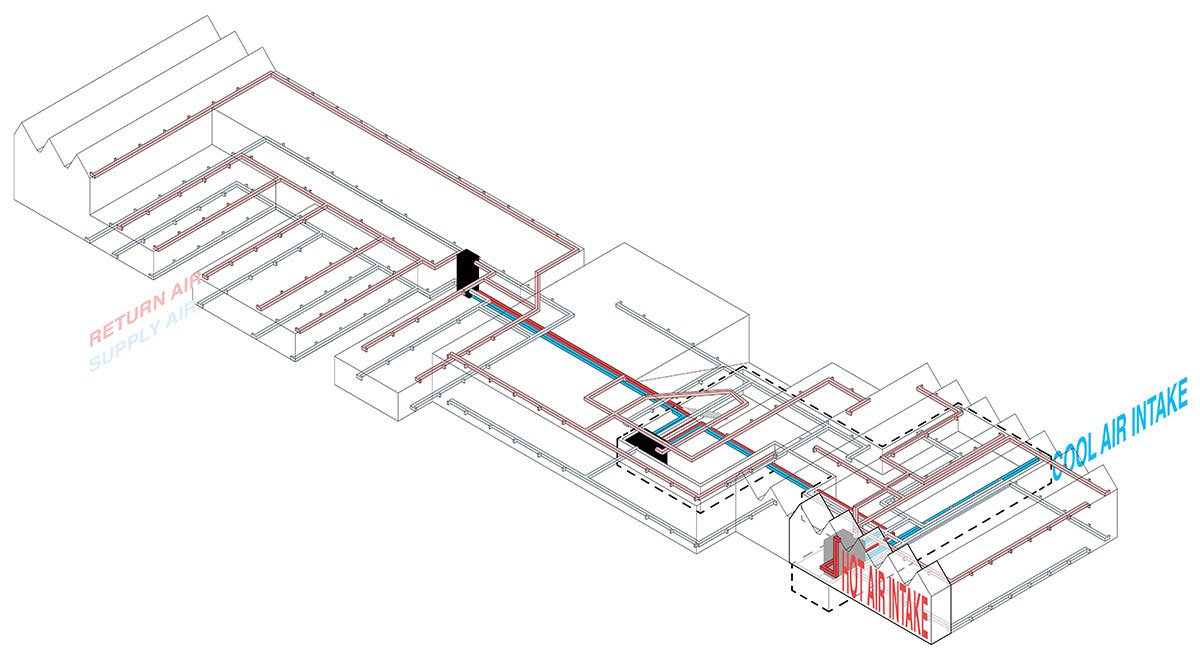
Ground Floor Plan | First Floor PlanLongitudinal SectionAxonometric
The project aims to create a supportive, healing environment for veterans by thoughtfully integrating public, semi-private, and private spaces. It seeks to reduce the stigma surrounding mental health, provide safe spaces for recovery, and foster community through careful spatial design.
Short SectionShort SectionExploded Axonometric
The design focuses on the combination of public, semi-public/private, and private spaces—creating a seamless connection between interior and exterior. These zones are carefully layered to support different levels of access and privacy. The careful balance between these levels is expressed through the use of repeated architectural elements.
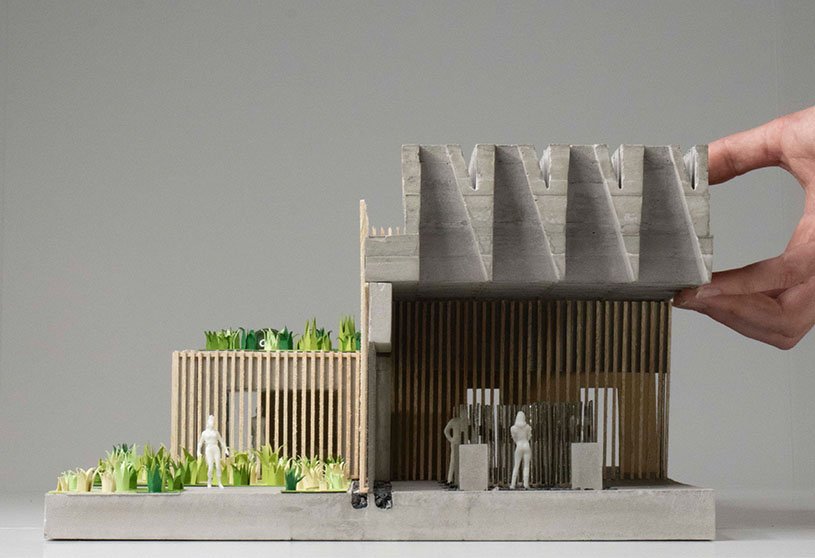
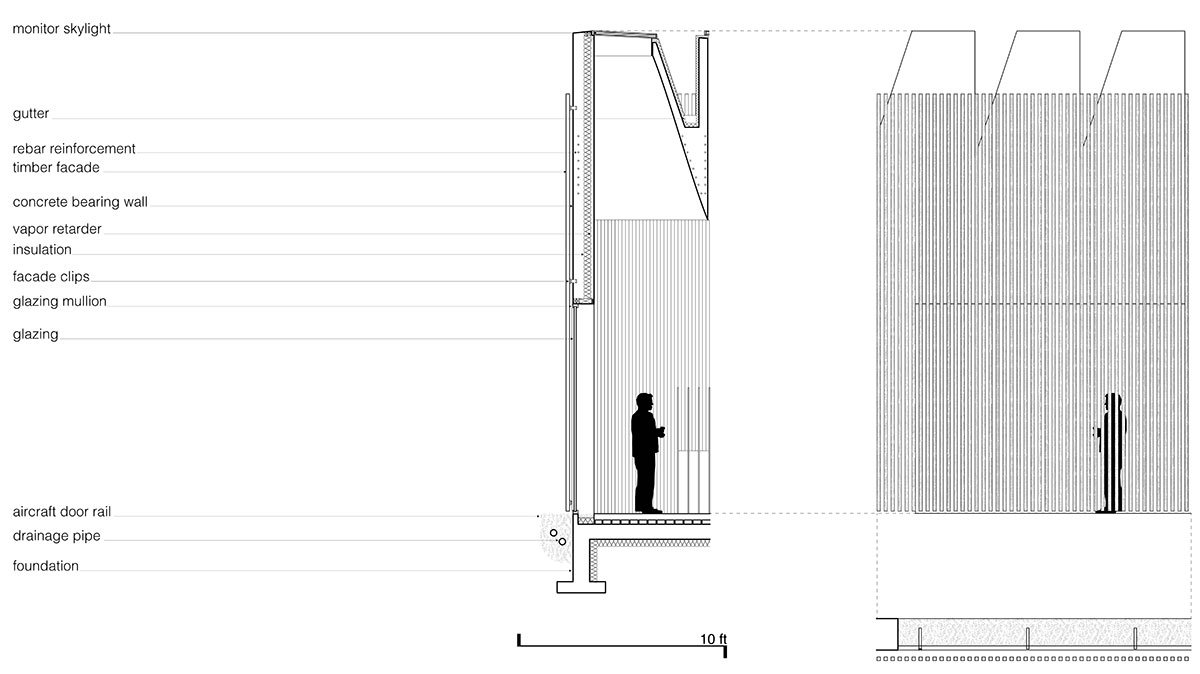
Section DetailInterior RenderPhysical Model
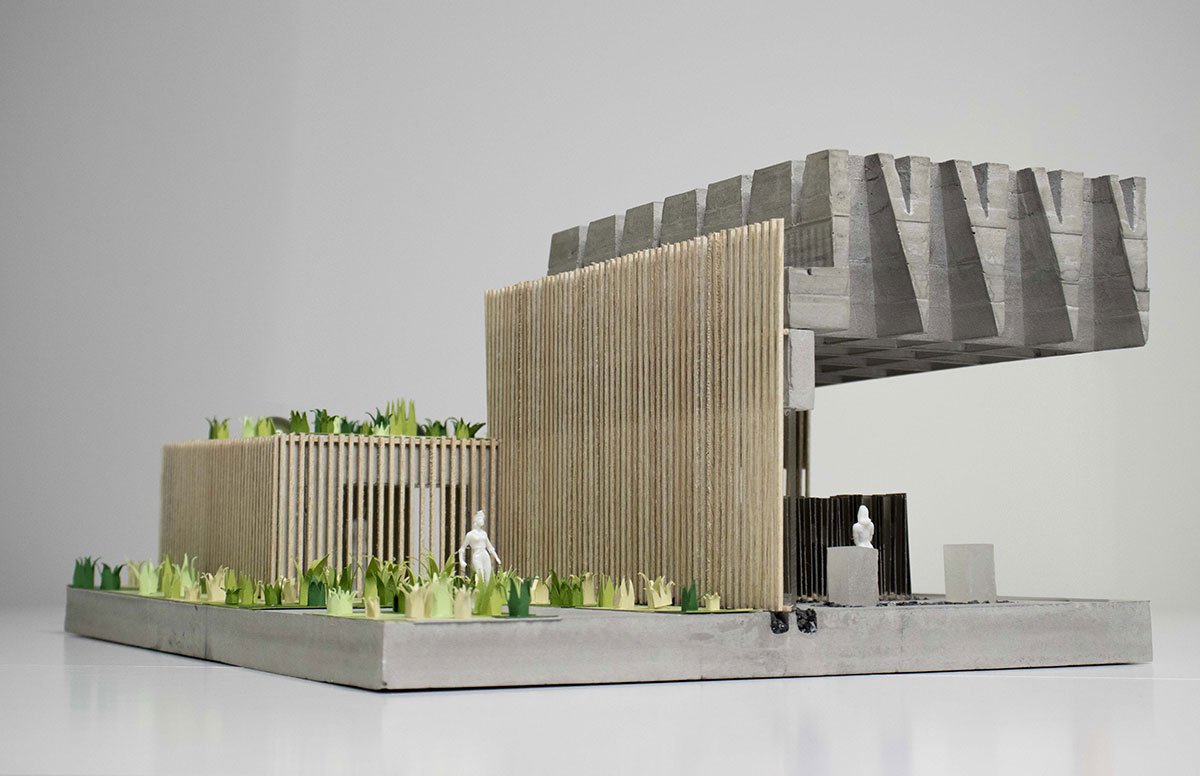
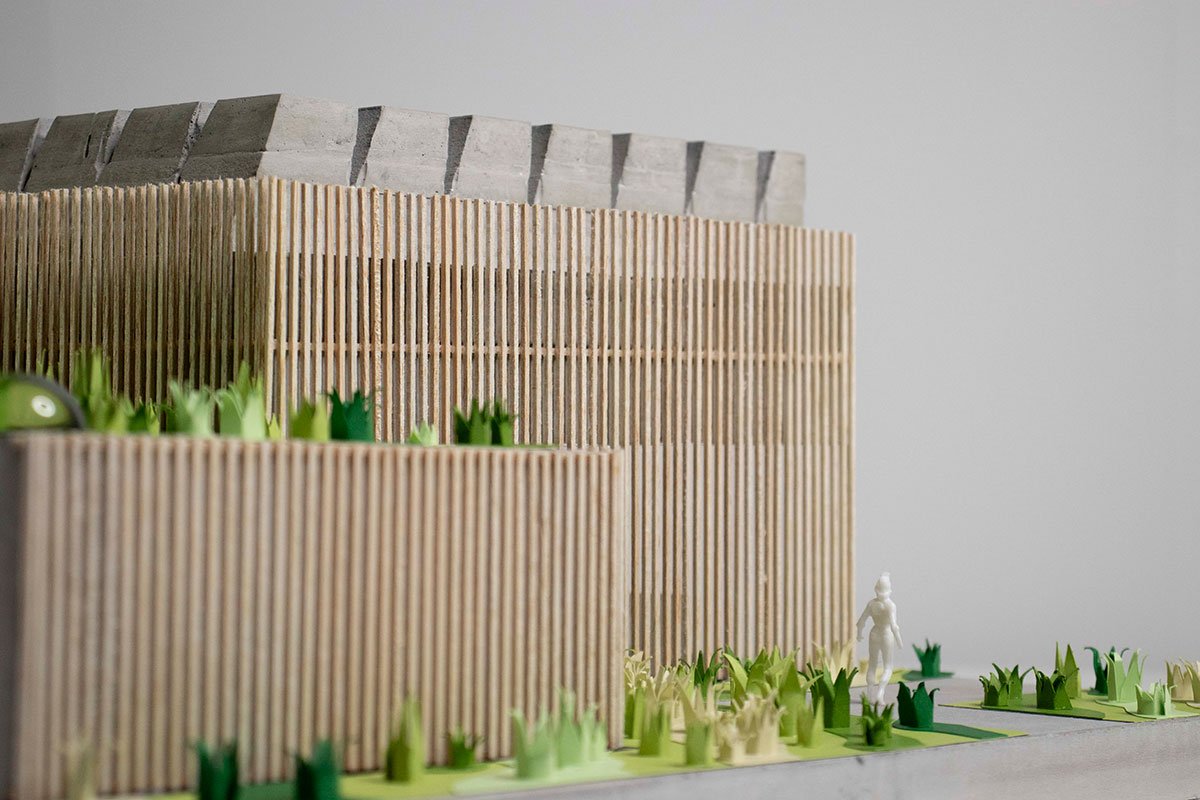
The model showcases a section of the project where public (exterior landscape and walkway), semi-public/private (veteran art therapy gallery), and private (veteran therapy rooms) spaces intersect. These repetitive structural elements obscure views from oblique angles while allowing visibility when approached directly, creating a dynamic experience of openness and seclusion depending on one’s position.
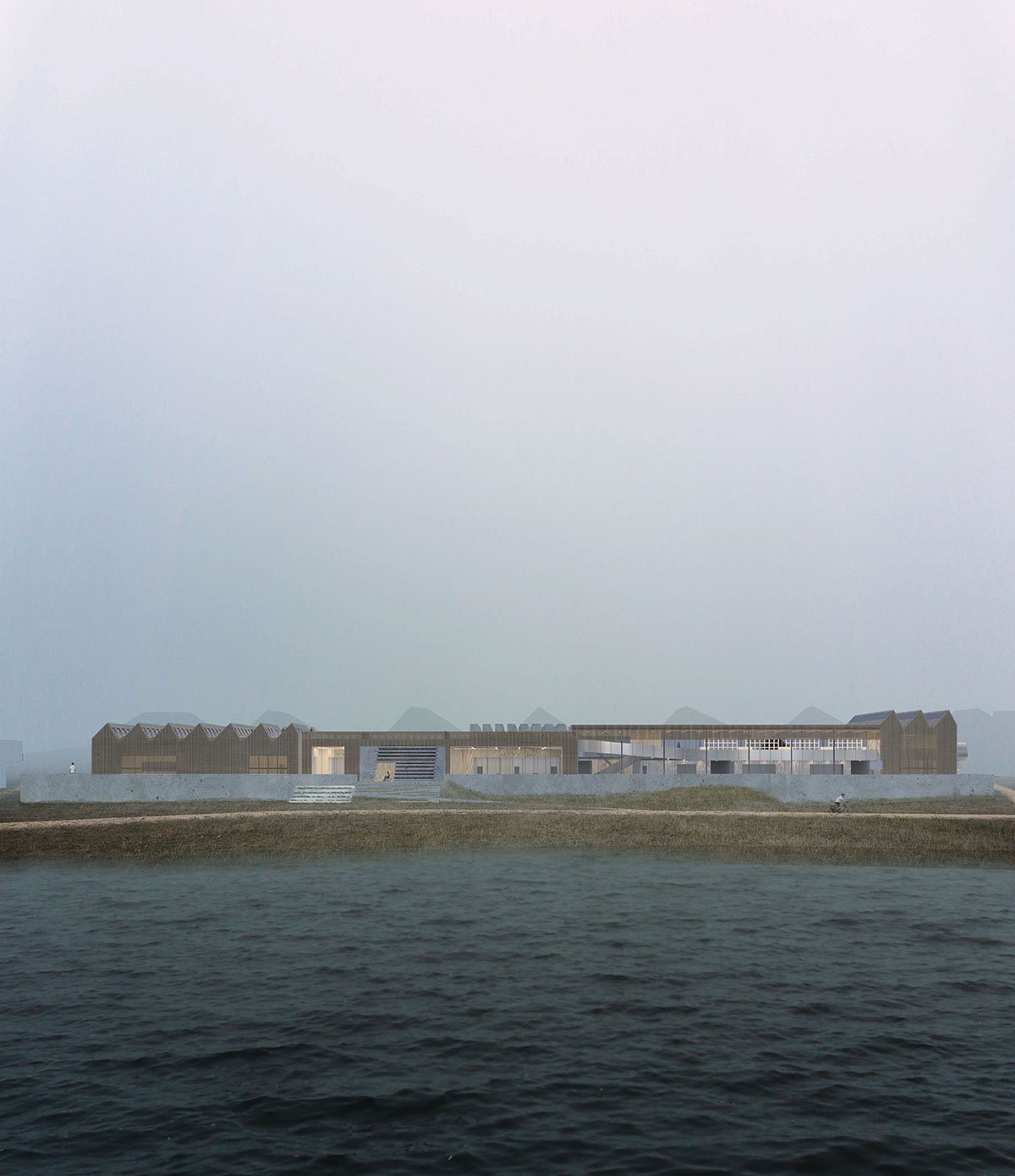
Physical ModelPhysical ModelExterior Render
Conclusion: Ultimately, the project provides a physical and emotional refuge for veterans, integrating public, semi-private, and private spaces that support healing and mental health. Through thoughtful spatial sensitivity it creates a restorative environment that promotes a sense of belonging and care.
[This Academic Project has been published with text and images submitted by the student]
Site Context
Design Process
Final Outcome
To submit your academic project for publication at ArchiDiaries, please visit the following link >> Submit
Get the best of ArchiDiaries, directly in your inbox.
We use cookies on our website to give you the most relevant experience by remembering your preferences and repeat visits. By clicking “Accept All”, you consent to the use of ALL the cookies. However, you may visit "Cookie Settings" to provide a controlled consent.
This website uses cookies to improve your experience while you navigate through the website. Out of these, the cookies that are categorized as necessary are stored on your browser as they are essential for the working of basic functionalities of the website. We also use third-party cookies that help us analyze and understand how you use this website. These cookies will be stored in your browser only with your consent. You also have the option to opt-out of these cookies. But opting out of some of these cookies may affect your browsing experience.
Necessary cookies are absolutely essential for the website to function properly. These cookies ensure basic functionalities and security features of the website, anonymously.
Cookie
Duration
Description
cookielawinfo-checkbox-analytics
11 months
This cookie is set by GDPR Cookie Consent plugin. The cookie is used to store the user consent for the cookies in the category "Analytics".
cookielawinfo-checkbox-functional
11 months
The cookie is set by GDPR cookie consent to record the user consent for the cookies in the category "Functional".
cookielawinfo-checkbox-necessary
11 months
This cookie is set by GDPR Cookie Consent plugin. The cookies is used to store the user consent for the cookies in the category "Necessary".
cookielawinfo-checkbox-others
11 months
This cookie is set by GDPR Cookie Consent plugin. The cookie is used to store the user consent for the cookies in the category "Other.
cookielawinfo-checkbox-performance
11 months
This cookie is set by GDPR Cookie Consent plugin. The cookie is used to store the user consent for the cookies in the category "Performance".
viewed_cookie_policy
11 months
The cookie is set by the GDPR Cookie Consent plugin and is used to store whether or not user has consented to the use of cookies. It does not store any personal data.
Functional cookies help to perform certain functionalities like sharing the content of the website on social media platforms, collect feedbacks, and other third-party features.
Performance cookies are used to understand and analyze the key performance indexes of the website which helps in delivering a better user experience for the visitors.
Analytical cookies are used to understand how visitors interact with the website. These cookies help provide information on metrics the number of visitors, bounce rate, traffic source, etc.
Advertisement cookies are used to provide visitors with relevant ads and marketing campaigns. These cookies track visitors across websites and collect information to provide customized ads.