(“Text as submitted by architect”)
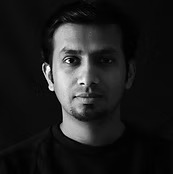 Vinay Shekar
Born and based in Bengaluru, India, Vinay Shekar S. is the Founder and Principal Architect of Alae Architects. His architectural journey began in 2007, shaped by an early education in art and a continuing interest in the relationship between geometry, technology, material and human experience.
He graduated in Architecture from Siddaganga Institute of Technology, India, and later pursued his Master of Arts in Architecture at the Städelschule Architecture Class (SAC), Frankfurt, where exposure to experimental and contemporary architectural practices further strengthened his research-driven approach.
Today, Vinay leads Alae as a founder-led, independent practice, remaining closely involved in the entire process—from conceptual design and digital exploration to physical making, construction and site execution.
Vinay’s work is characterized by sculptural massing, fluid geometries and an exploration of tectonic possibilities, while remaining grounded in the practical realities of construction.
He approaches each project as a process of questioning understanding its context, people, constraints and opportunities before arriving at a design response.
At Alae, he continues to explore how digital tools, physical making and architectural reasoning can come together to create spaces that are not merely visual objects, but environments that can be experienced, inhabited and remembered.
Practice Ideology
Alae Architects is a Bengaluru-based design practice exploring architecture through the intersection of performance, technology, material and human experience. The name Alae, meaning “waves” in Kannada, reflects the practice’s interest in movement, continuity and transformation ideas that influence both its architectural language and its approach to design.
We believe architecture is undergoing a fundamental cultural shift through digital technology. Computational design, advanced fabrication and new methods of representation are transforming how buildings are conceived, documented, constructed and experienced. For us, this is not simply a change in tools; it is an opportunity to rethink the way architecture is imagined and made.
Our approach begins with questioning rather than assuming. Every project is treated as a unique set of people, place, climate, culture, aspirations, constraints and possibilities. We investigate the brief, challenge its assumptions and search for opportunities hidden within its limitations. The resulting architecture is therefore not a predetermined style, but an outcome of research, reasoning and experimentation.
At Alae, form follows performance. Geometry is explored not merely for visual expression, but for what it can do—responding to light, climate, movement, views, privacy, structure, material and the way people inhabit space. Digital tools and parametric methods become instruments for exploring possibilities, while physical models, materials and construction processes continually test those ideas against reality.
We are interested in architecture that creates a sensory relationship with its occupants. Architecture should not only be seen; it should be felt, experienced and remembered. Light, shadow, texture, proportion, movement and materiality become active participants in shaping that experience.
Our practice brings together interrogation, invention and collaboration. We move between the digital and physical, the conceptual and constructible, the ancient and the contemporary. We look at architecture’s origins and cultural memory while embracing emerging technologies and new ways of making.
Ultimately, Alae seeks to create architecture that is distinctive yet purposeful, experimental yet buildable, and expressive yet deeply connected to its context—spaces where performance and poetry coexist.