(“Text as submitted by architect”)
 Jeanne Gang
Architect Jeanne Gang, FAIA, is the founding partner of Studio Gang, an international architecture and urban design practice with offices in Chicago, New York, San Francisco, and Paris. Her inquisitive, forward-looking approach to design—unique in its pursuit of new technical and material possibilities as well as in its expansion of the active role of designers in society—has distinguished her as a leading architect of her generation.
Drawing insight from ecological systems, she creates striking places that connect people with each other, their communities, and the environment. Her diverse, award-winning portfolio includes cultural centers that convene diverse audiences, public spaces that generate positive social and ecological impact, installations that challenge traditional material properties, and high-rise towers that foster community. Notable among these is the celebrated Richard Gilder Center for Science, Education, and Innovation at the American Museum of Natural History in New York, which the New York Times called “a poetic, joyful, theatrical work of public architecture and a highly sophisticated flight of sculptural fantasy.”
Practice Ideology
Studio Gang is an internationally recognized architecture and urban design practice founded and led by MacArthur Fellow Jeanne Gang. Based in Chicago with offices in New York, San Francisco, and Paris, the Studio works as a collective of over 100 architects, designers, and planners that use an iterative, research -based design process to create places that strengthen relationships between people, communities, and the natural world.
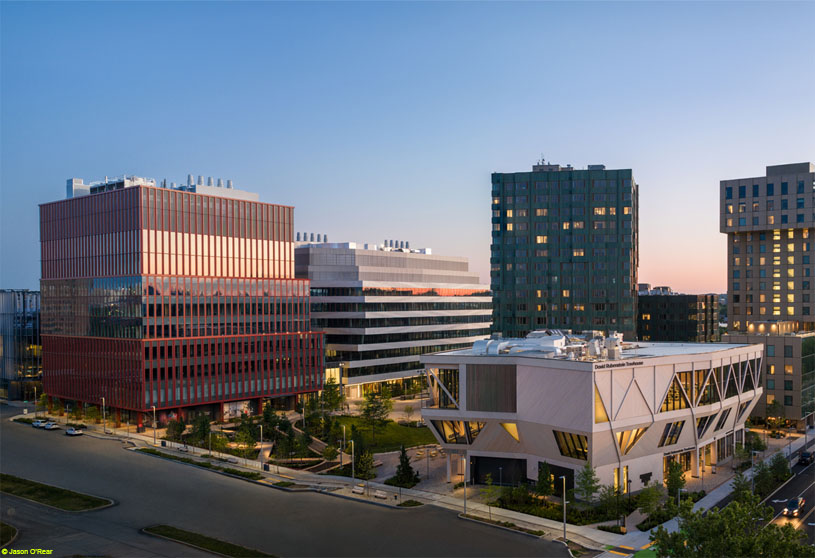
Studio Gang’s diverse, award -winning portfolio includes cultural centers, public spaces, high -rise towers, and strategic framework plans. Notable among these are the Richard Gilder Center for Science, Education, and Innovation at the American Museum of Nat ural History in New York; the reimagined Arkansas Museum of Fine Arts in Little Rock; the University of Chicago John W. Boyer Center in Paris; and the David Rubenstein Treehouse, Harvard University’s first mass timber building.
In addition, Studio Gang is currently designing cultural, civic, and educational projects across Europe and the Americas, including the new United States Embassy in Brasília and an expansion of the Clinton Presidential Center in Little Rock.
Studio Gang also develops research, publications, and exhibitions that push design’s ability to create public awareness and give rise to change — a practice the Studio calls “actionable idealism.” Jeanne Gang’s most recent book, The Art of Architectural Grafting , which provides a new framework for bringing new life to older structures, was released in 2024 in both English and French editions.
The Studio has been honored with numerous awards, including AIA California’s 2025 Firm of the Year, Dezeen Jobs’ Top Companies, and Fast Company’s Most Innovative Company in Architecture.