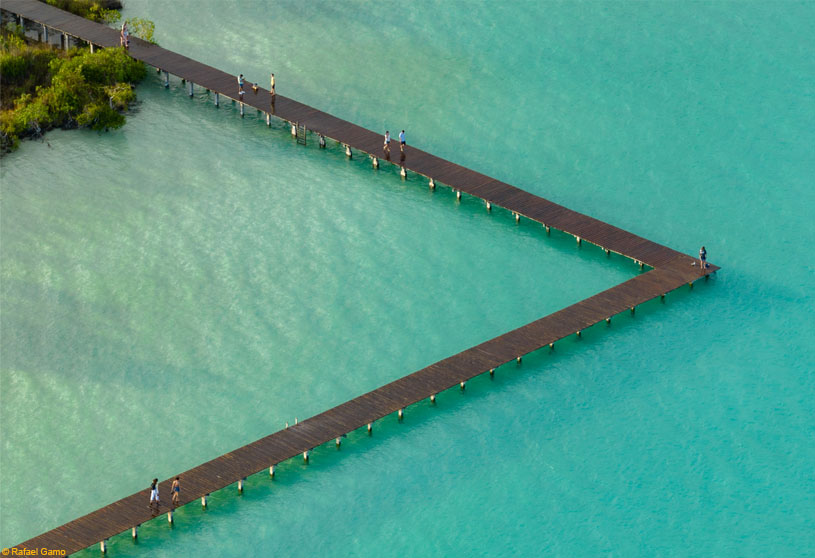
Excerpt: Bacalar Eco-Park by Colectivo C733 is conceived as a light intervention that reduces program, acts with precision, and treads lightly on the site’s rich flora and fauna. Centered on an elevated pier that glides over the lagoon to avoid disturbing mangroves, the landscape project balances access and conservation, integrating minimal structures and natural systems to protect and reveal the site’s unique biodiversity.
Project Description

[Text as submitted by architect] Bacalar Lagoon is the world’s largest freshwater bacterial reef and a site of invaluable evolutionary treasure with living stromatolites. However, the area is also home to the last remaining mangrove on the shores of Bacalar, which is exposed to urban sprawl and other threats. To minimize the impact of human activity, the project’s main strategy was to reduce the requested program, act with precision, and tread lightly on the site’s rich flora and fauna.


The centerpiece of the project is a 800-meter long pier, a public and open pathway with varying heights to avoid disturbing the mangroves while providing a platform for visitors to glide over the lagoon.


The solid parts of the pier house facilities such as a research laboratory and services area, while the shade of tall trees covers an open plain. The project also includes an efficient structural system built with certified local wood, finding the right balance to act as a column, beam, and foundation at the same time.
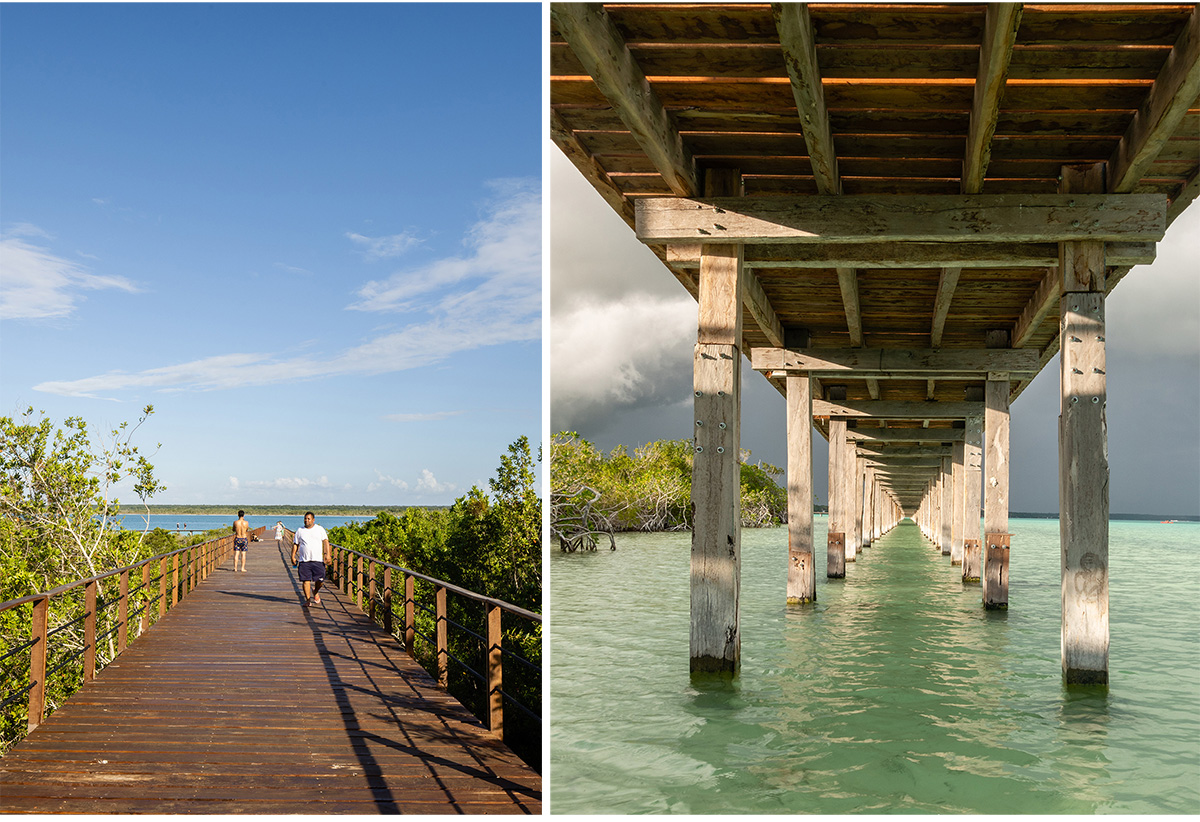
The landscape strategy is designed to mitigate water pollution through natural filters, depressions, rain gardens, and the rehabilitation of degraded mangroves. The project reduces the amount of built space, reinforcing the strategy and the site’s natural systems.

Additionally, the project features a museum exhibit in the form of a timeline of the unique biodiversity of the area, recorded on the wood, inviting visitors to become more aware of their environment and to conserve the site.
Drawings & Diagrams


Images


