Excerpt: Dr. M.S. Swaminathan Wetland Eco Sponge Park by Sponge Collaborative reimagines the conventional public park as integrated blue, green, and social infrastructure. Conceived as a sponge park and constructed wetland system, the design restores hydro-ecological linkages while weaving ecological systems, biodiversity habitats, and inclusive public spaces into a resilient socio-ecological landscape.
Project Description
[Text as submitted by architect] Like many Indian cities, Chennai has rapidly expanded at the expense of its natural landscapes, resulting in the degradation of nearly 85% of its wetlands over the past three decades. This has significantly reduced the city’s natural sponge systems, increasing vulnerability to floods, droughts, aquifer depletion, & urban heat island effects. Conventional concrete stormwater drains are proving inadequate against climate change-induced extreme rainfall, often failing to mitigate flooding or support groundwater recharge. Shrinking green cover has further constrained the city’s capacity to absorb heat, sequester carbon, and provide accessible public open spaces. These challenges reflect a broader global condition, demanding a transition from conventional grey infrastructure to resilient blue-green systems rooted in nature-based solutions.
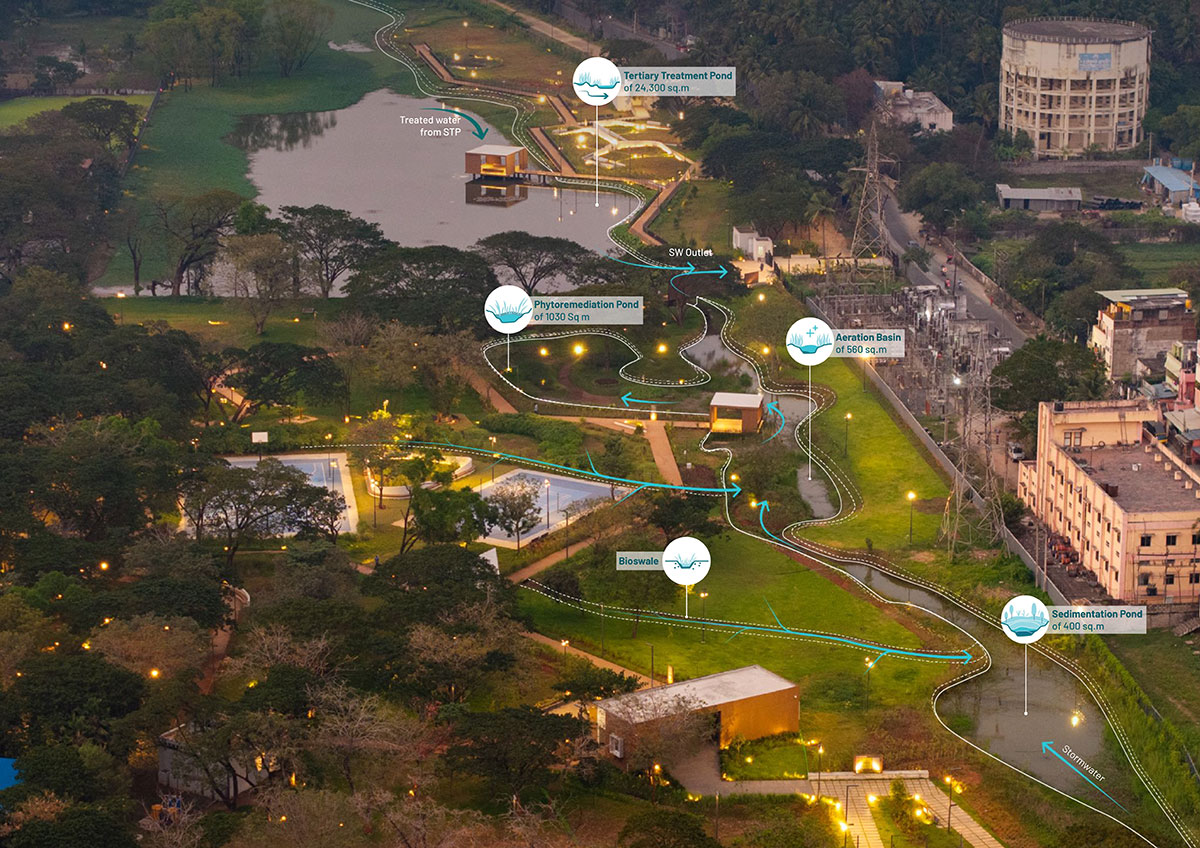
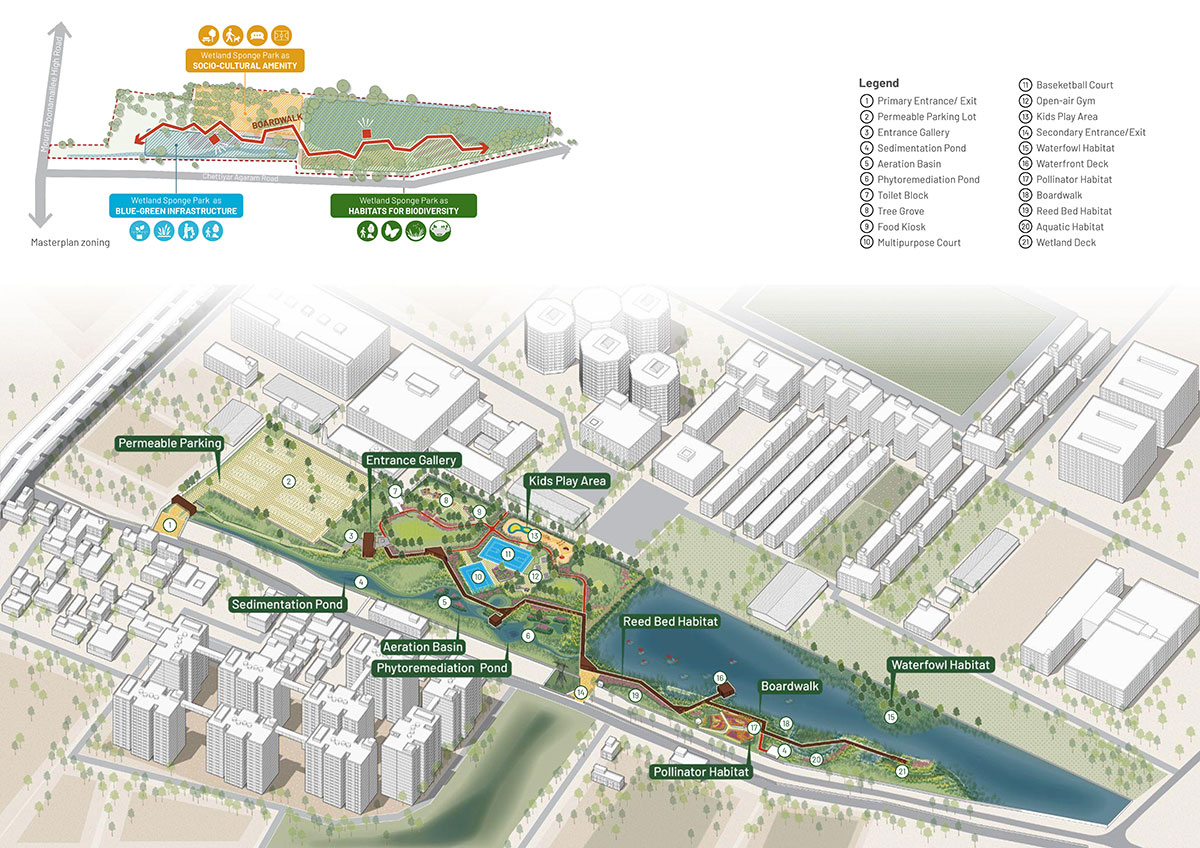
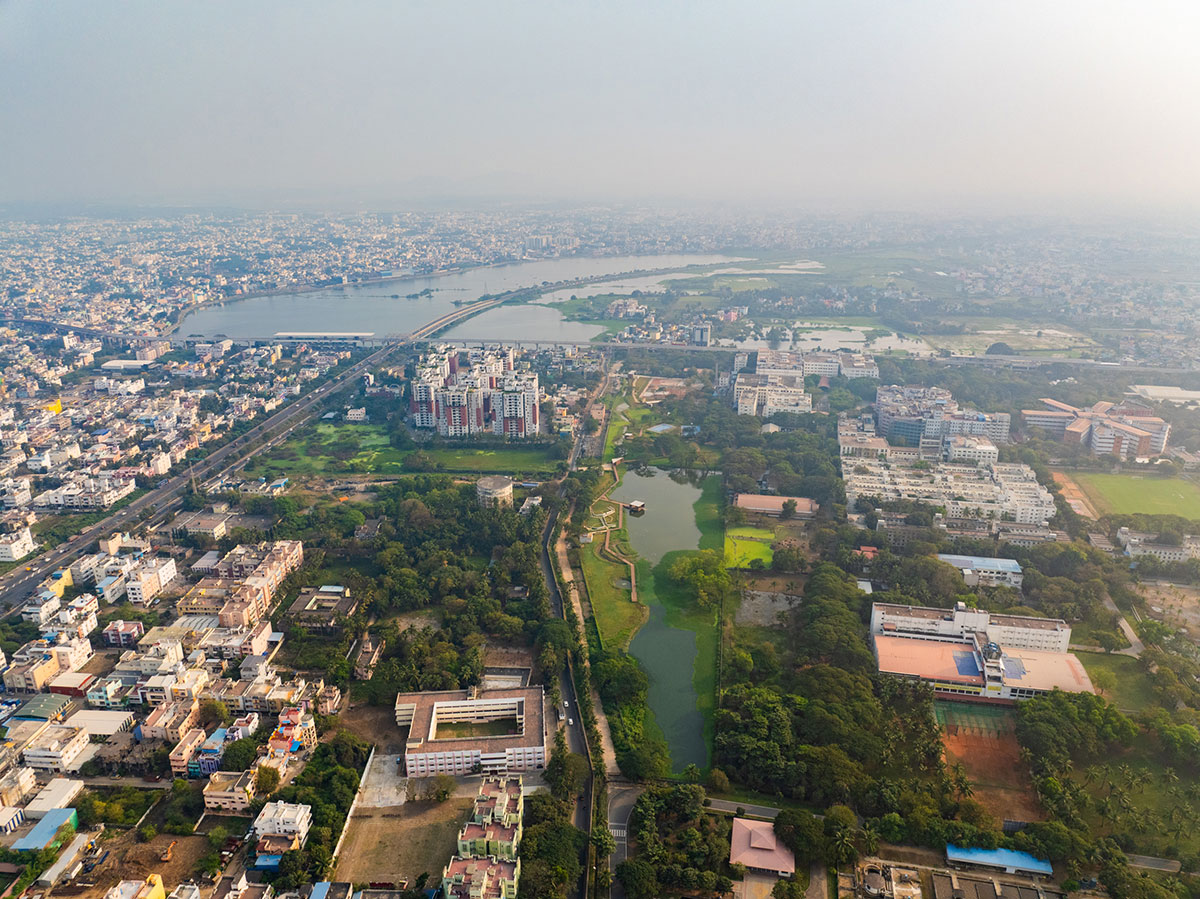
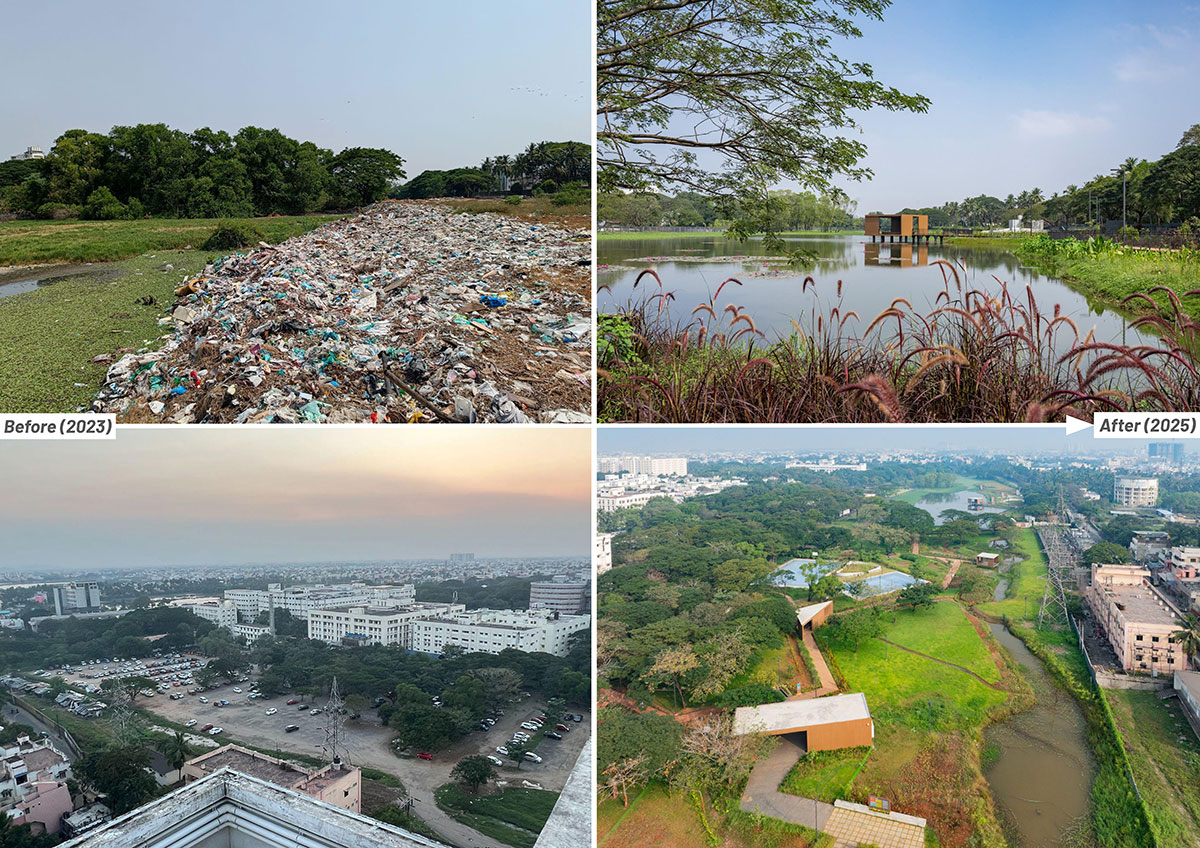
The 16.63-acre open space reserve in Porur reflected many of these macro-level challenges. Once part of a historically connected wetland system associated with Porur Lake, the site had been degraded through asphalting, garbage dumping, hydrological fragmentation, and the loss of ecological function. This compromised landscape presented a critical opportunity for intervention. Developed by the Chennai Metropolitan Development Authority, the Wetland Eco Sponge Park was conceived to transform the site into a thriving socio-ecological landscape that restores hydro-ecological linkages while providing accessible, climate-resilient public space. The intervention addresses water security by capturing stormwater runoff from the surrounding urban fabric, improving water quality, supporting groundwater recharge, reducing flood risk, and reconnecting communities with Chennai’s disappearing wetland systems.
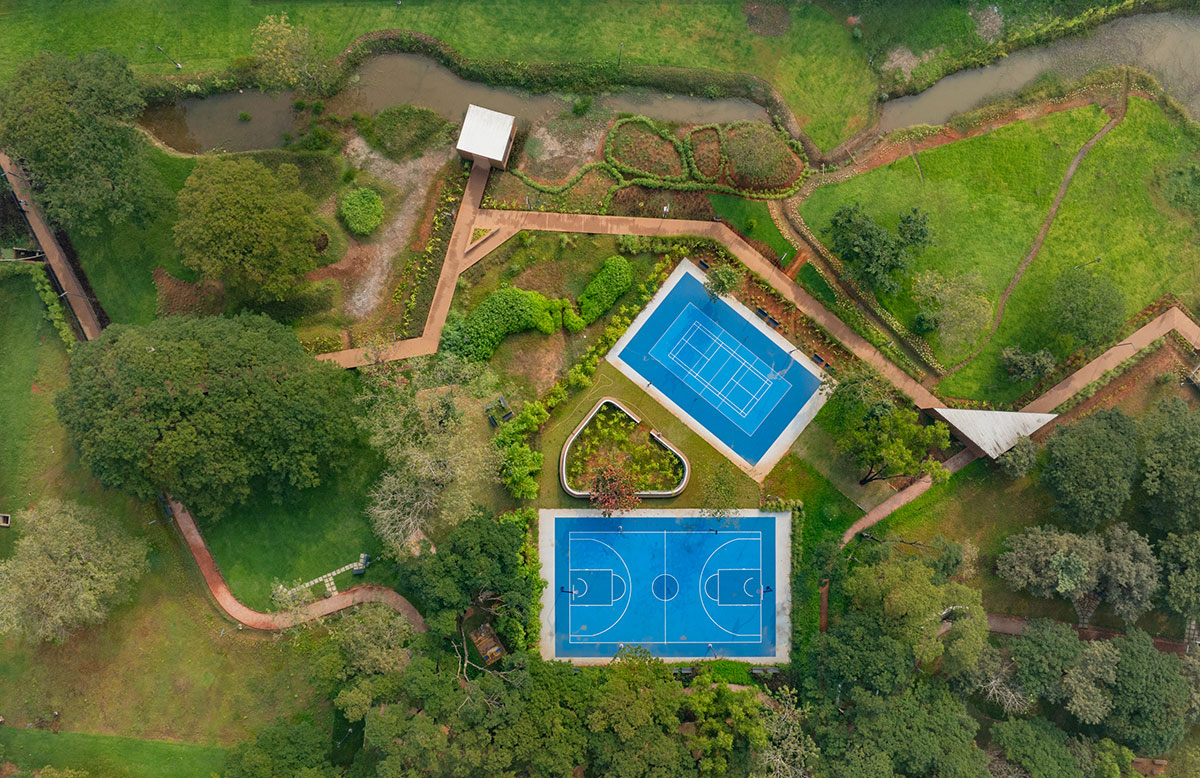
The design framework evolved through an evidence-based assessment of existing site systems, including hydrology, drainage patterns, degraded wetland zones, vegetation, access, and surrounding urban conditions. The resulting site-sensitive masterplan spatially and metrically balances blue-green infrastructure, habitat zones, and community amenities.
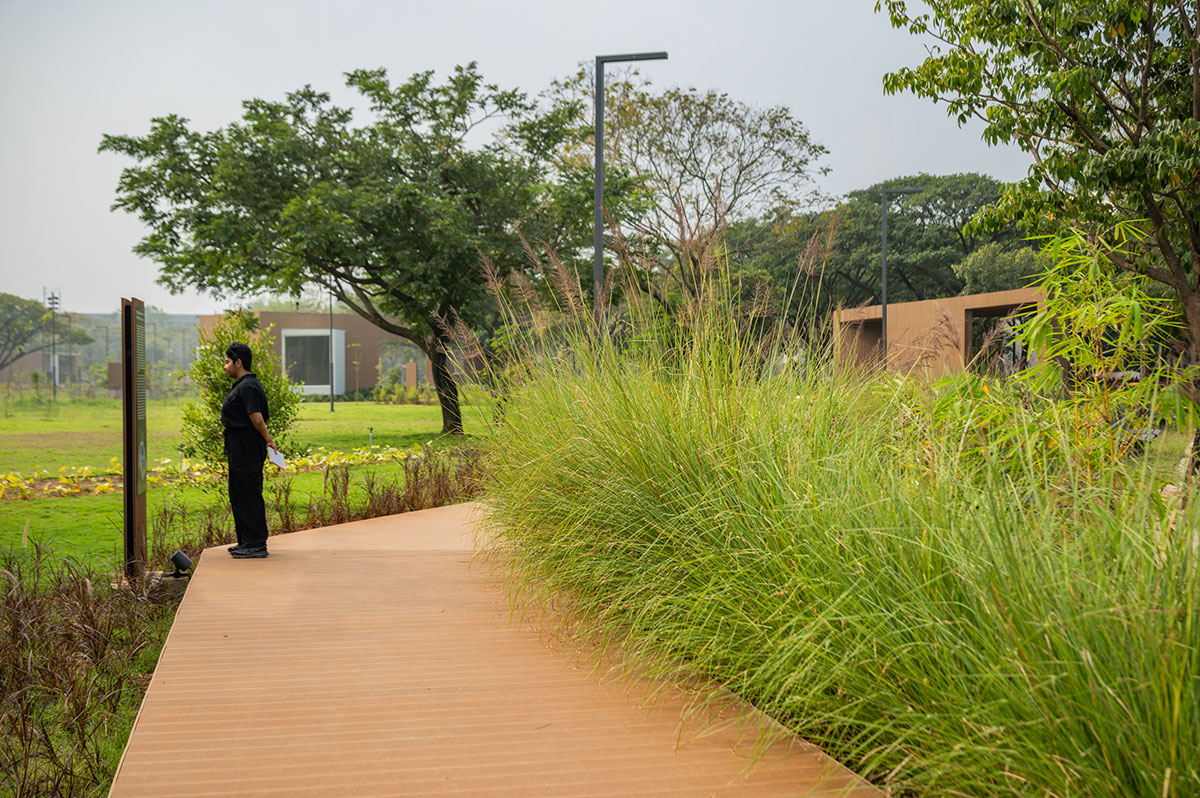
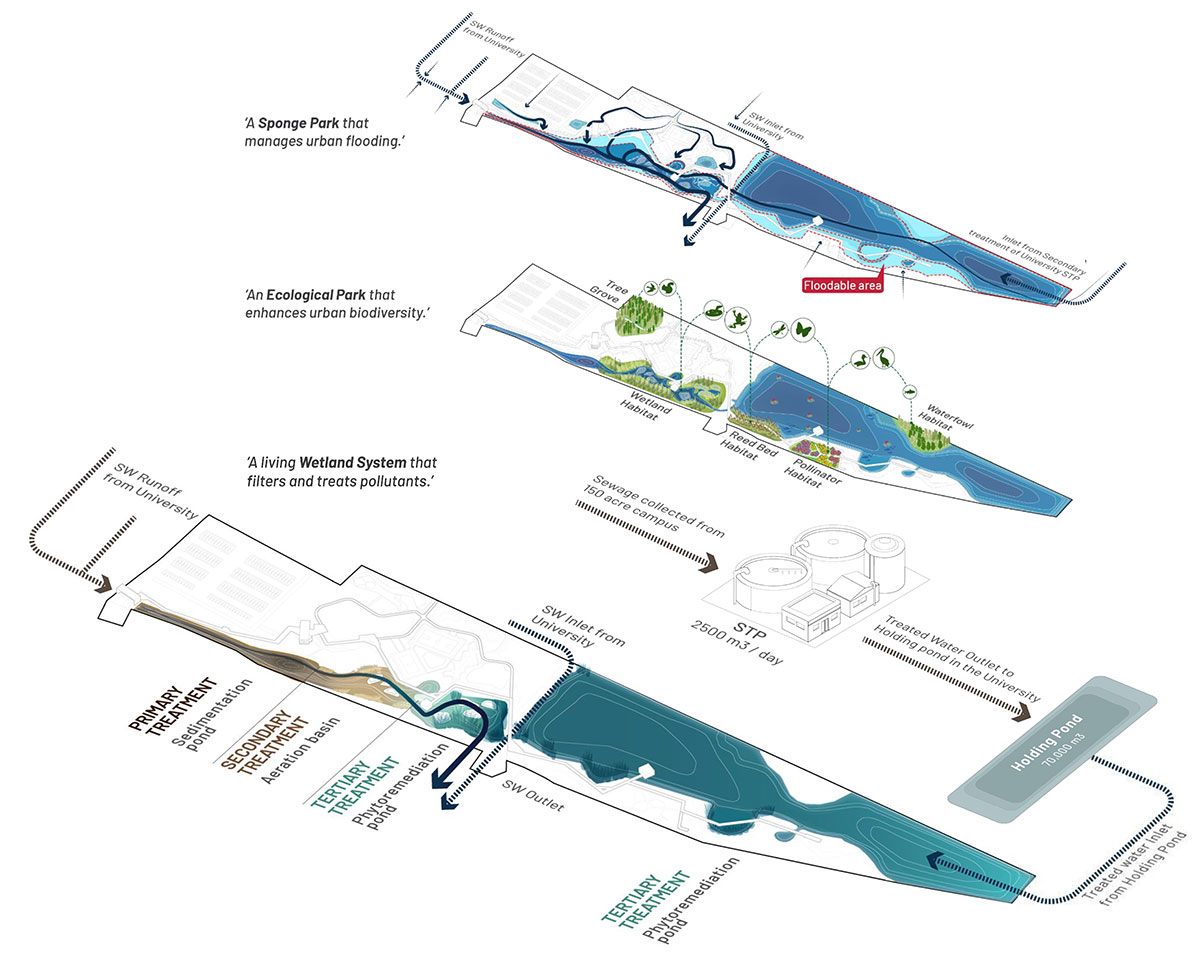
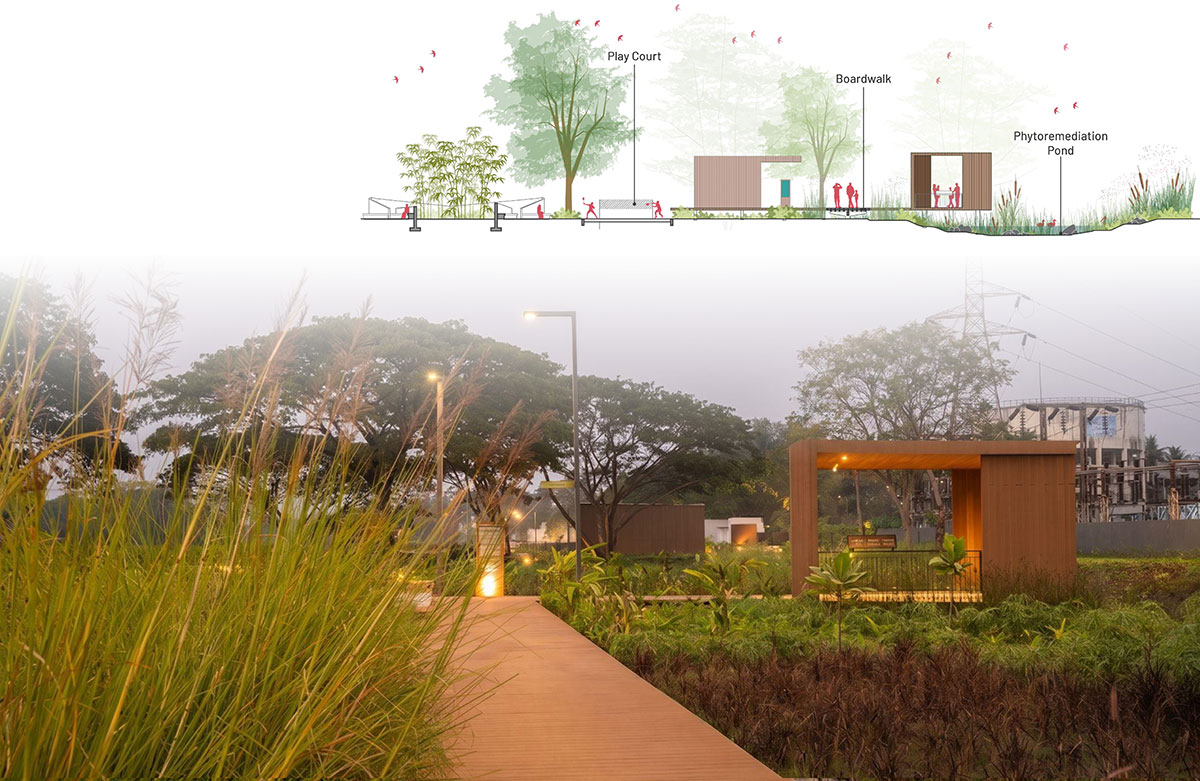
Envisioned not as a conventional public space but as integrated blue-green social infrastructure, the park is designed as a ‘sponge park’ that mitigates flooding by managing stormwater runoff from the surrounding urban fabric through bioswales, infiltration basins & storage ponds. It is designed as a ‘constructed wetland system’ that directs stormwater runoff and treated wastewater through sedimentation, aeration, and phytoremediation ponds, allowing water to be naturally filtered, treated, stored & gradually infiltrated or released into the larger hydrological system. It is also designed as a ‘biodiversity hotspot’ comprising constructed habitats such as reed beds, pollinator zones & waterfowl habitats supporting over 85 species of native flora and fauna, including migratory birds.
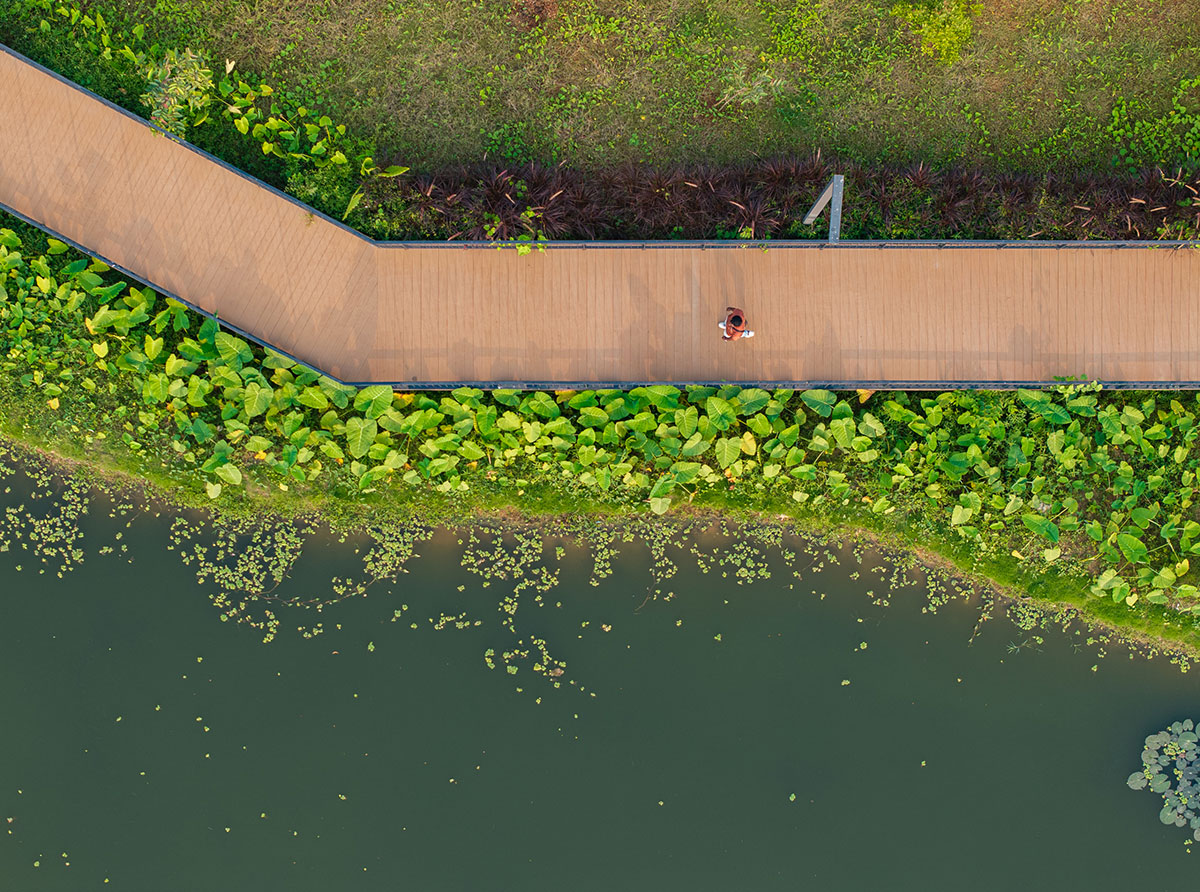
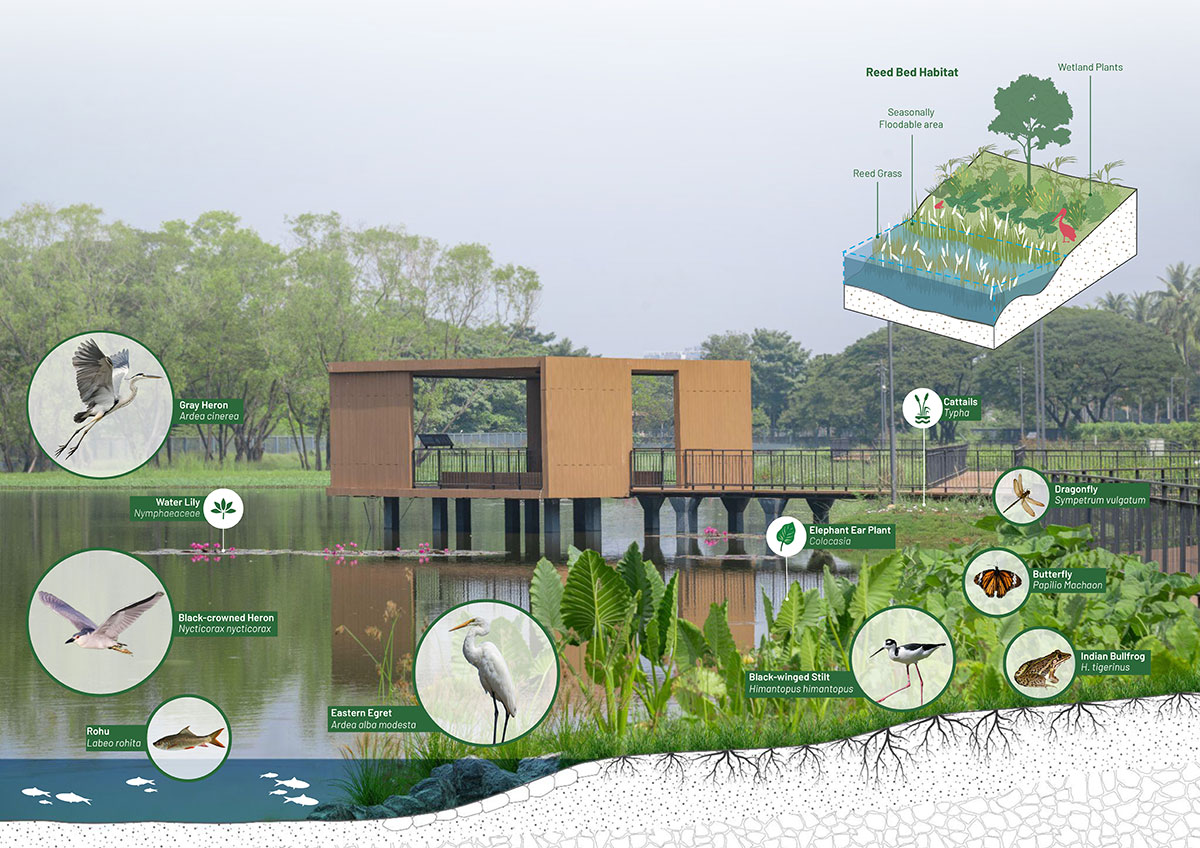
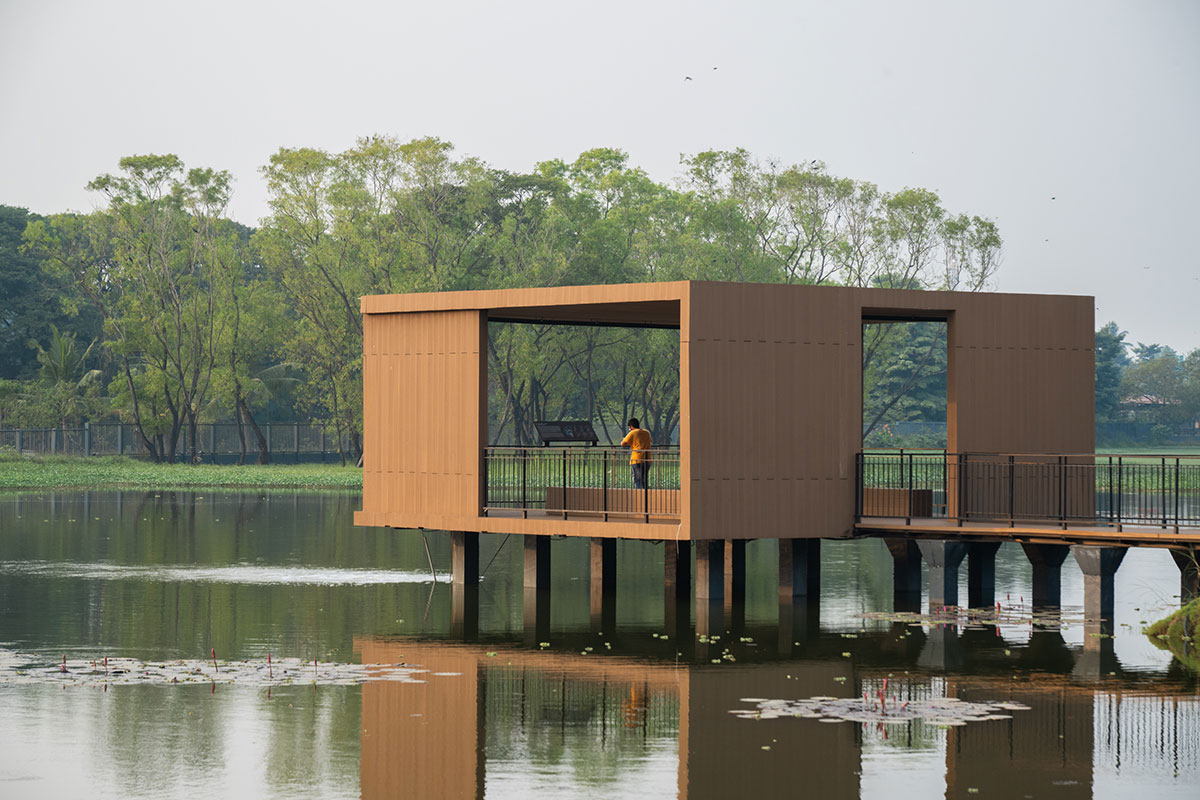
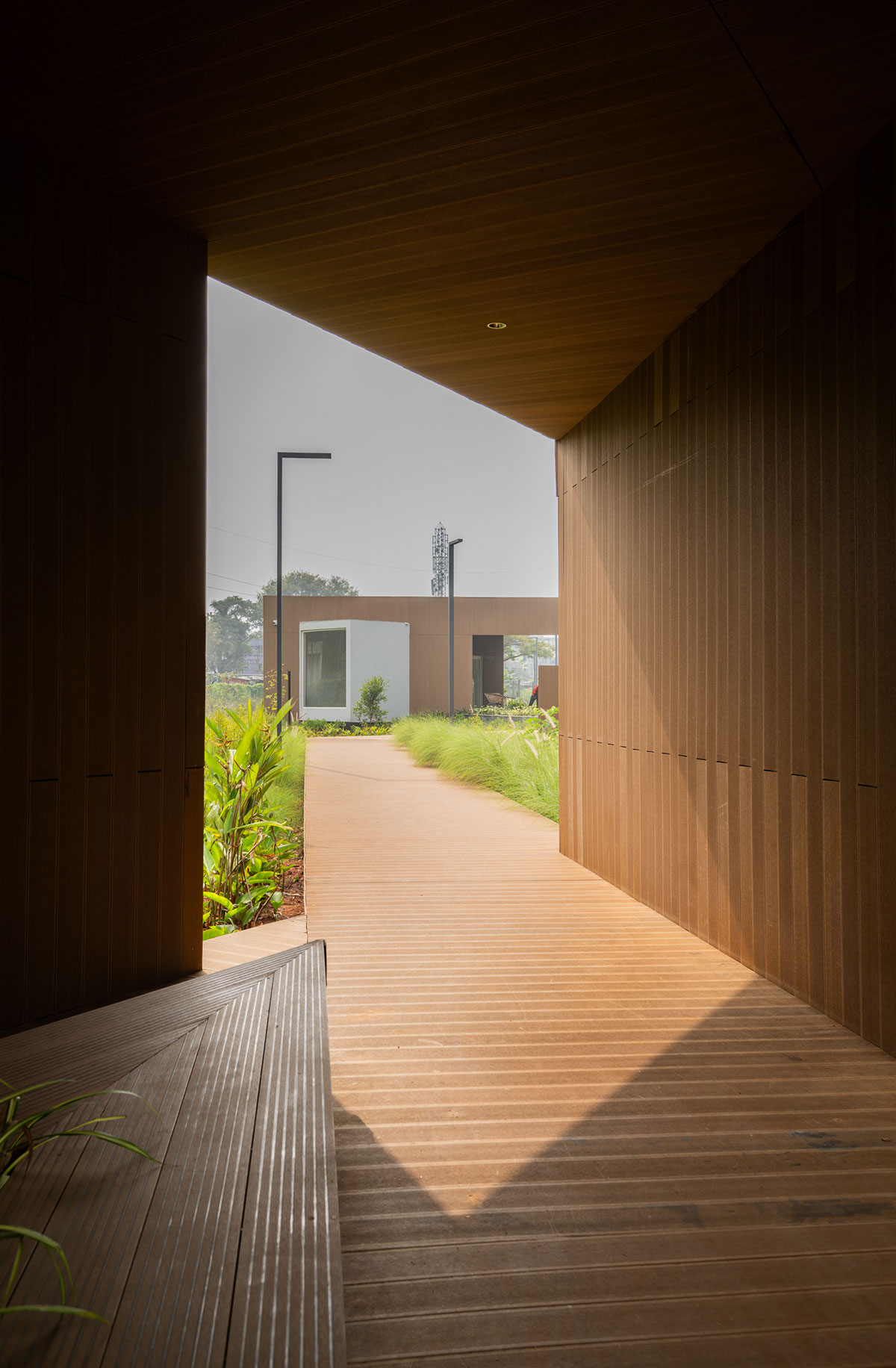
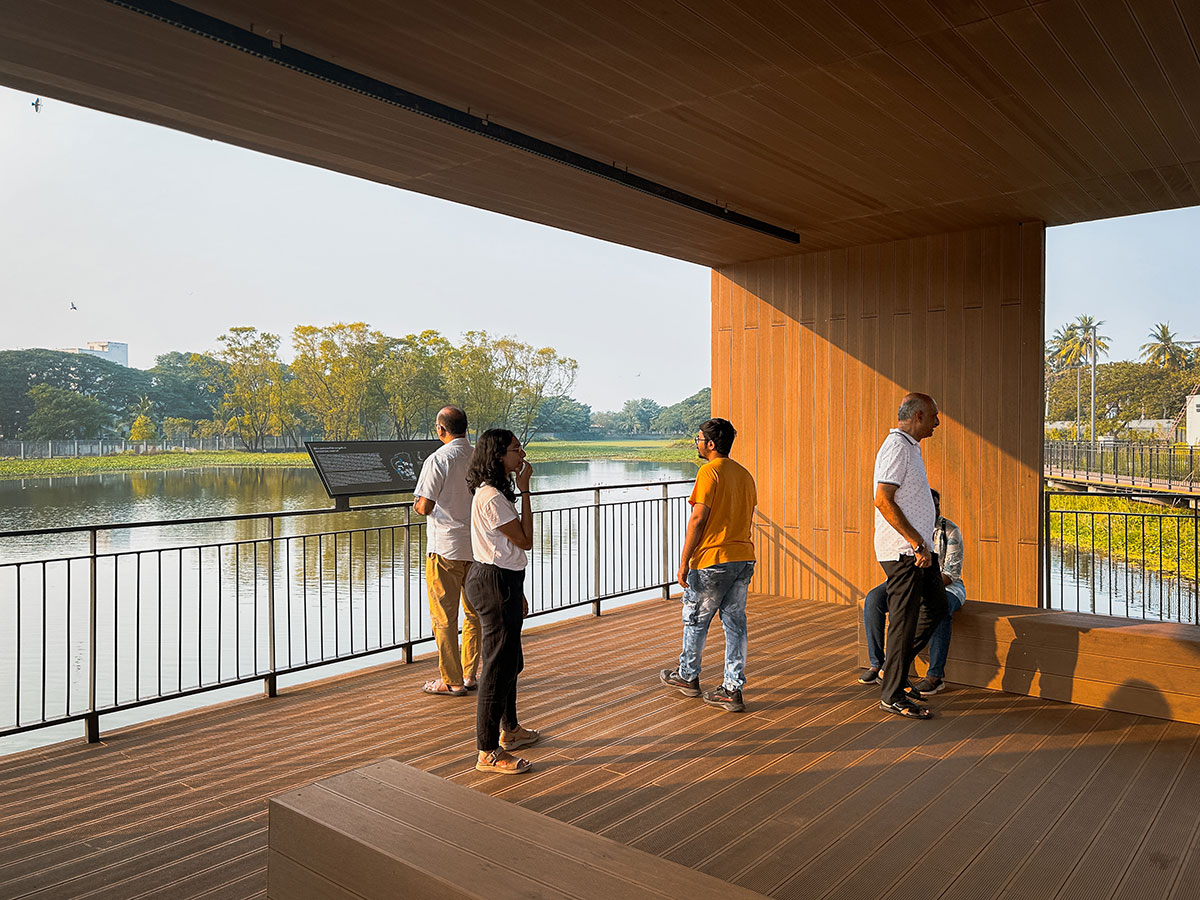
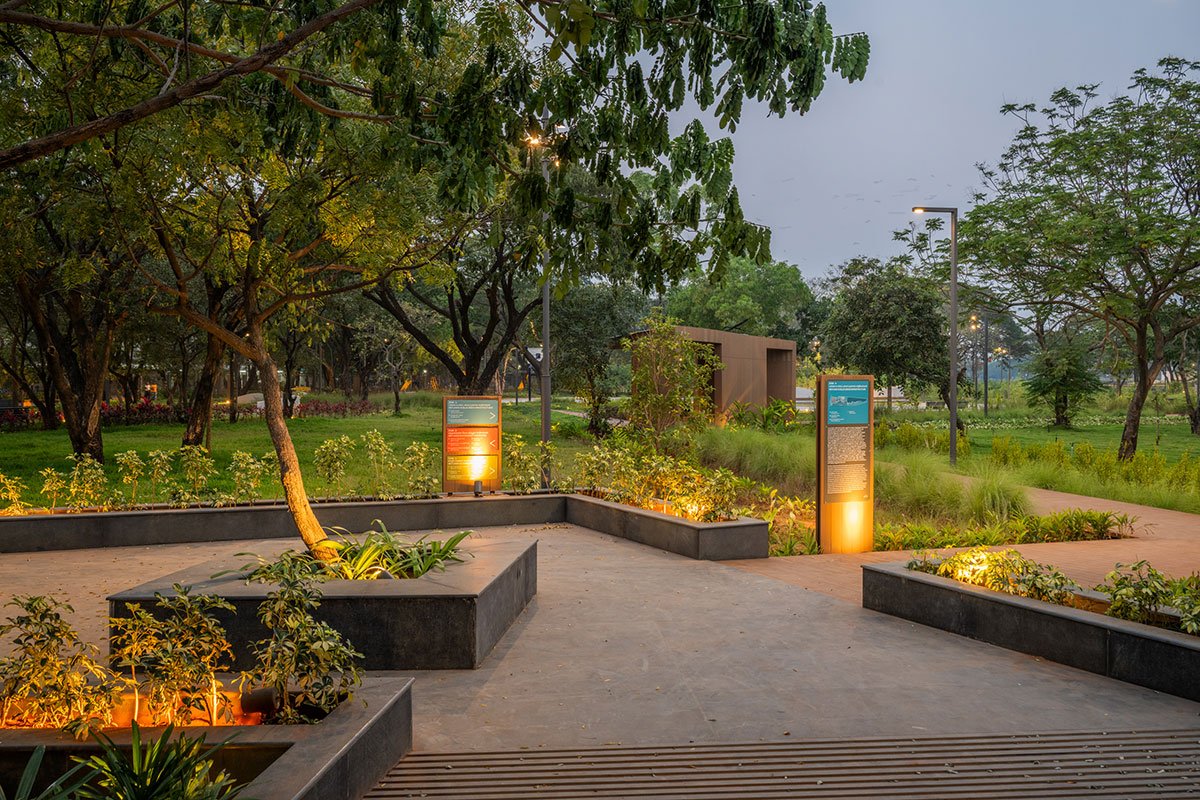
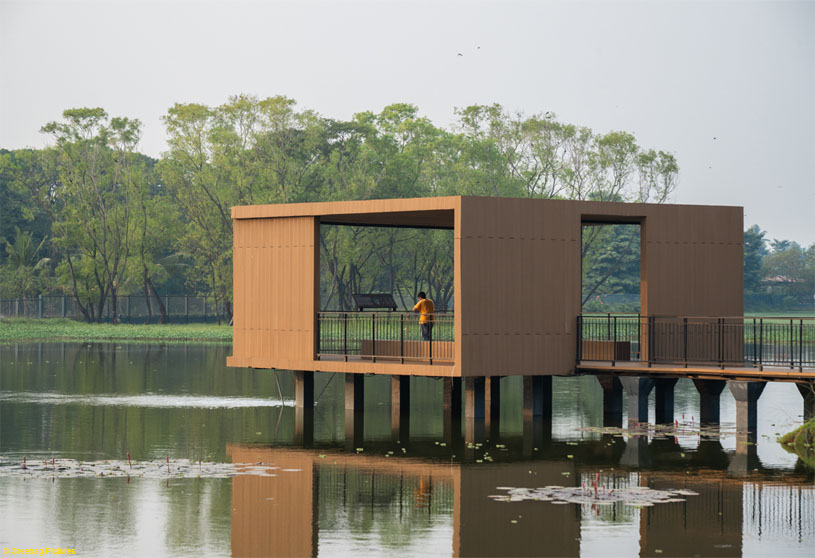
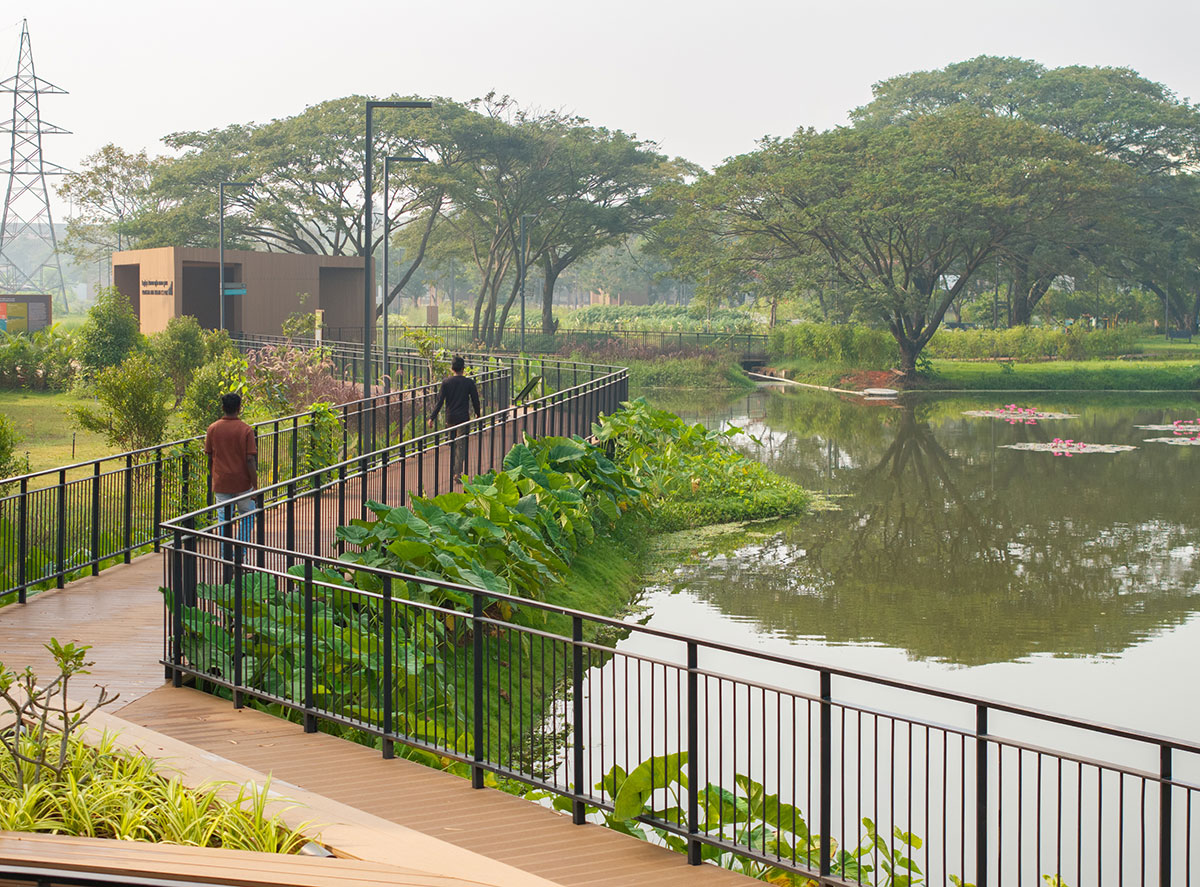
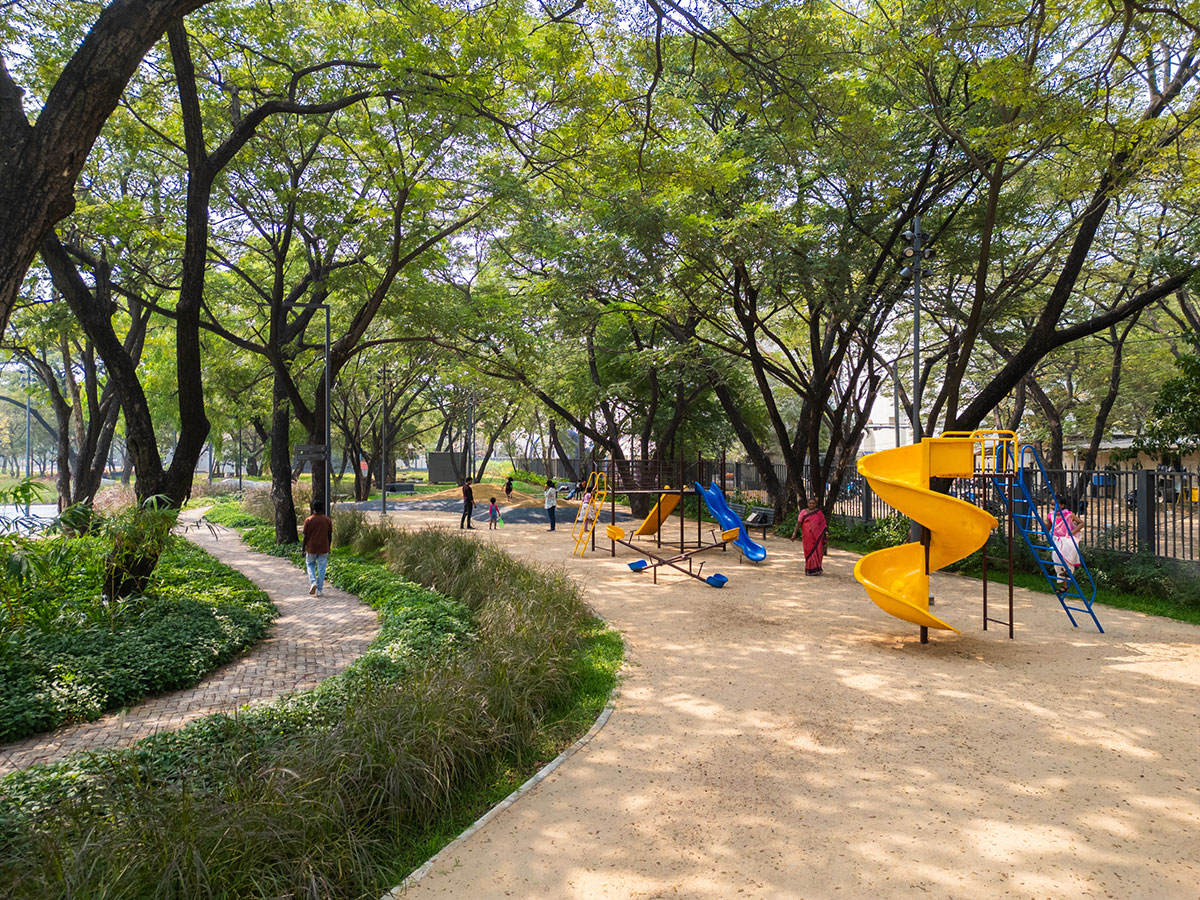
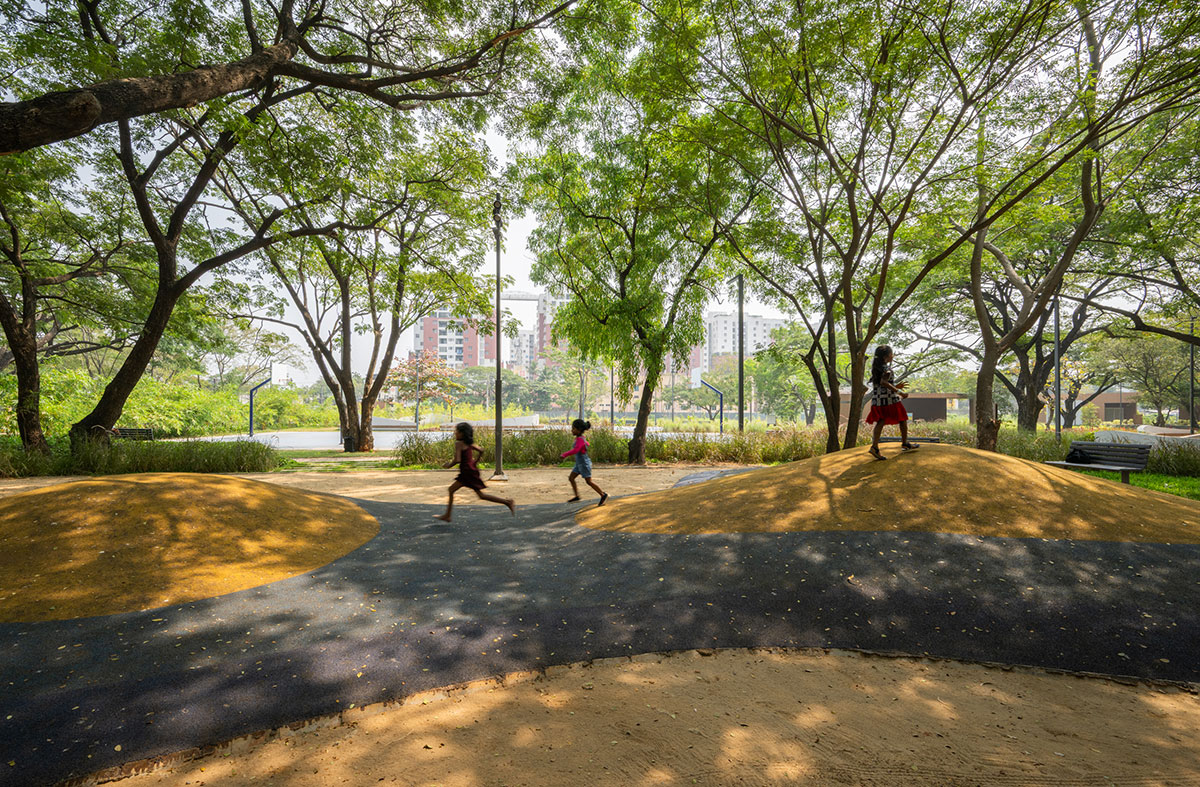
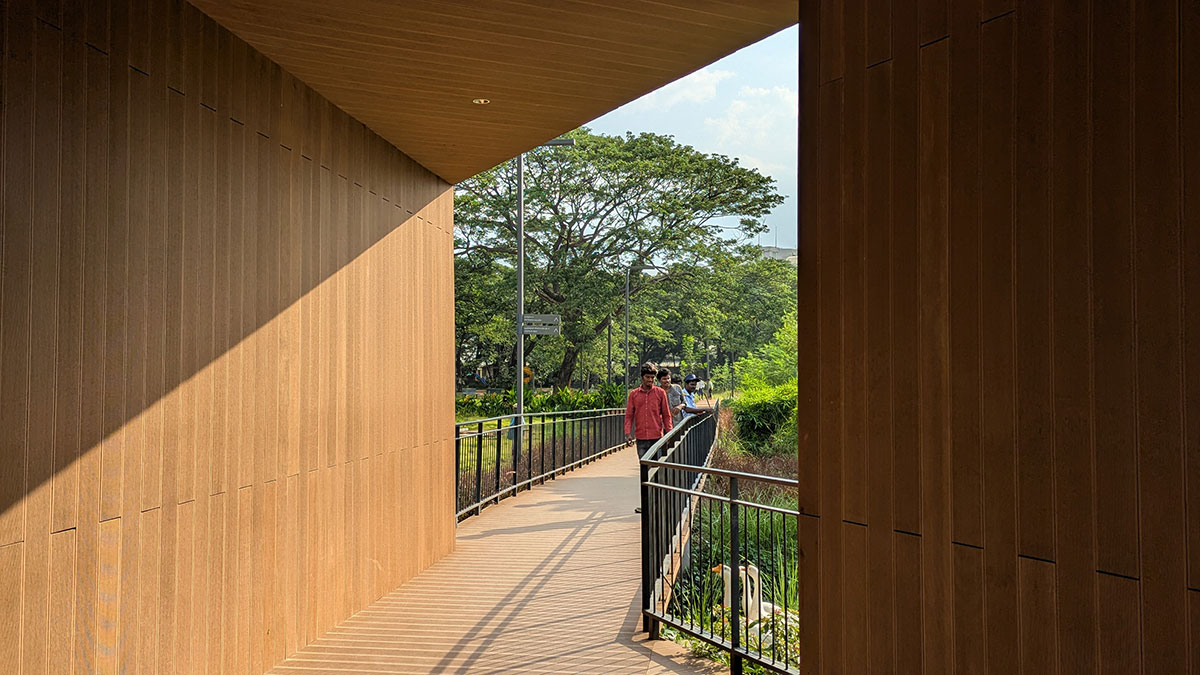
The architecture integrates low-impact elevated boardwalks and follies, including viewing decks and shaded portals, that weave through the wetland landscape, frame key views, and allow fragile wetland systems to be experienced without ecological disturbance. Public engagement is embedded through interpretive trails, signage, and wayfinding that promote community education, alongside recreational amenities such as play courts, children’s play areas, and an open-air gym that make the park accessible to diverse users.
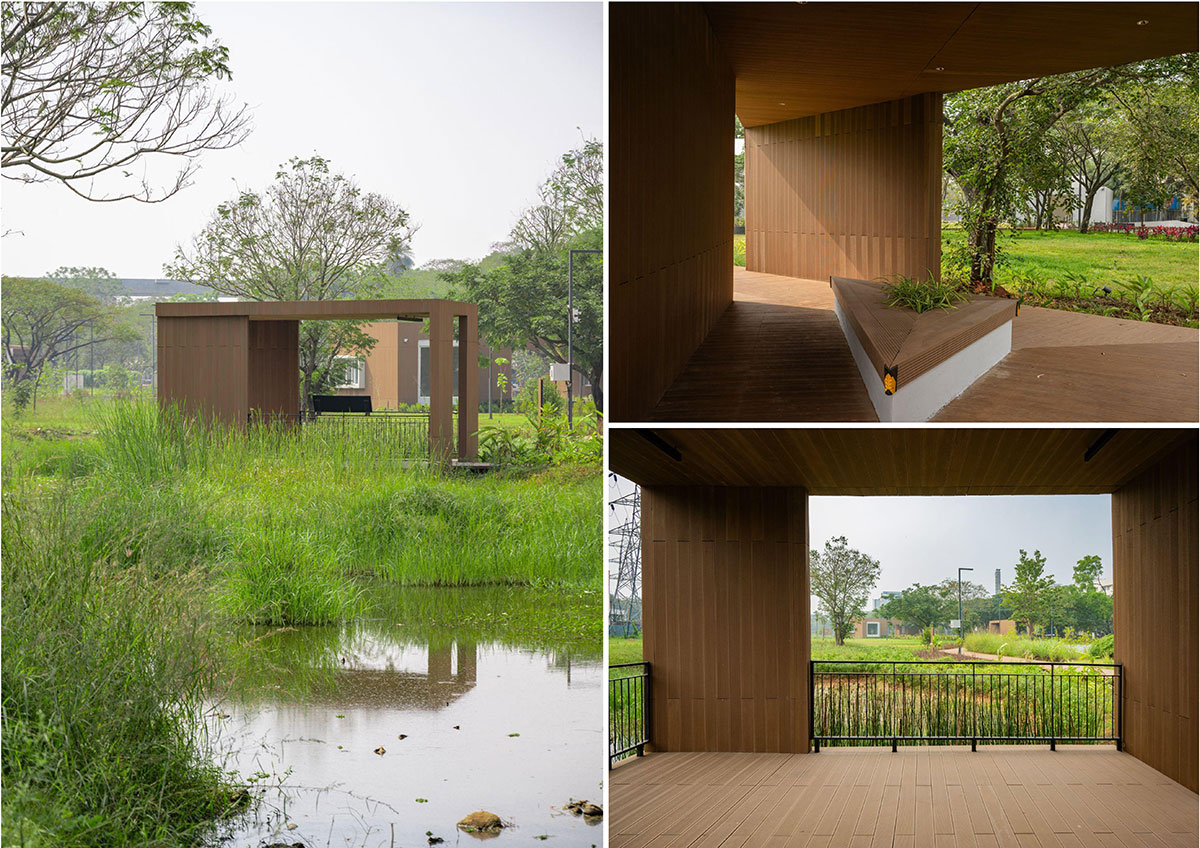
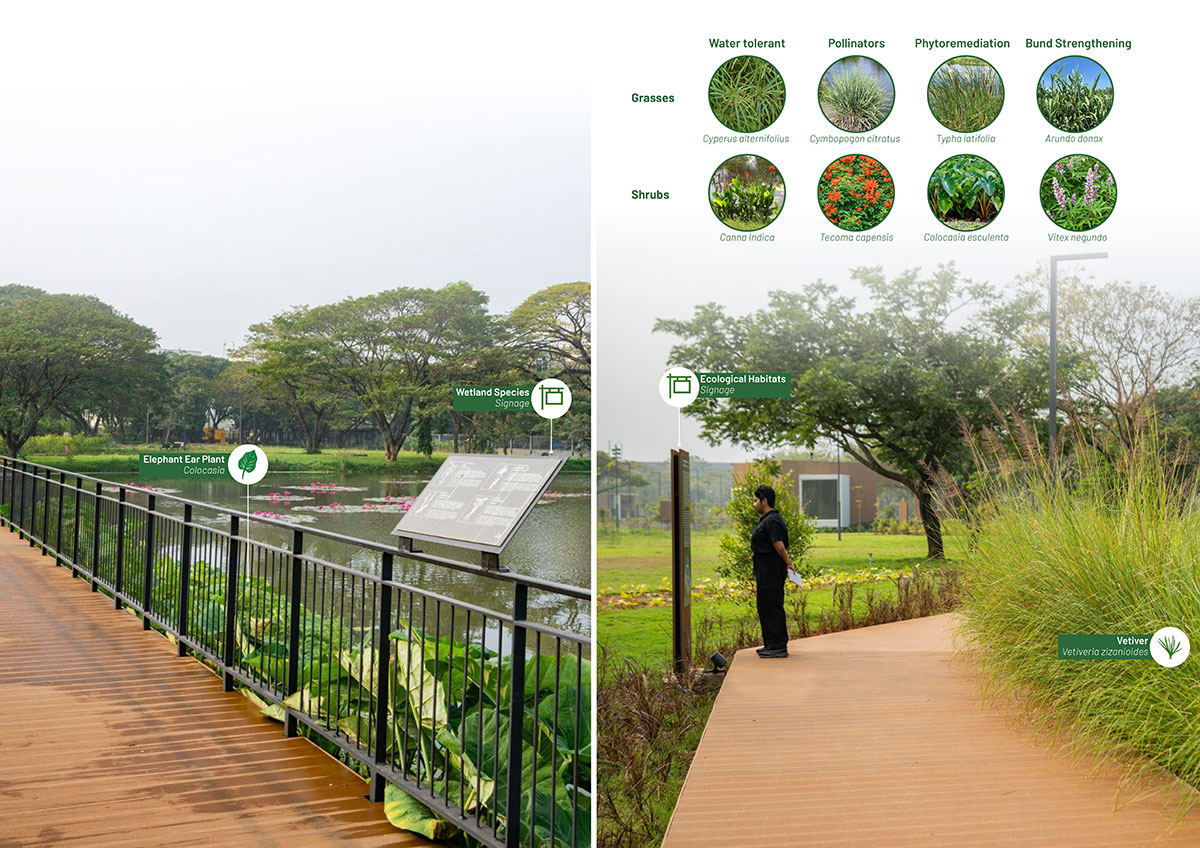
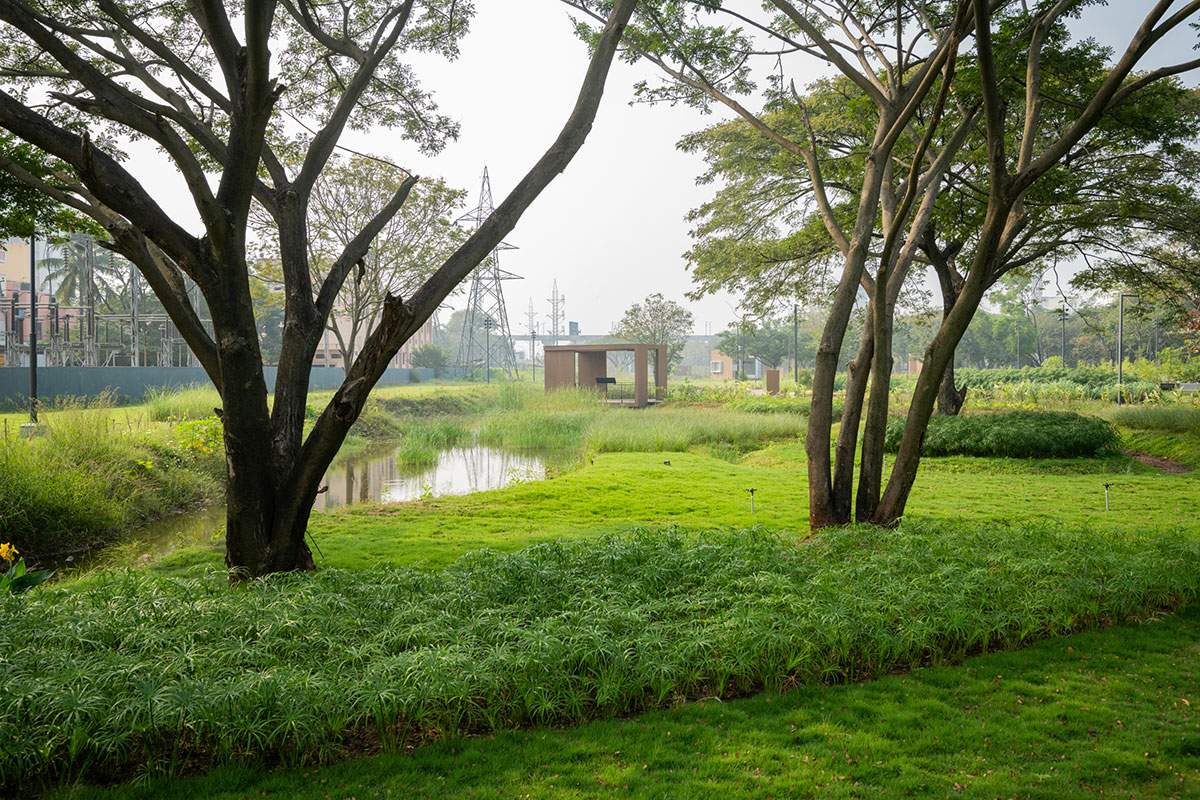
Today, Chennai’s Wetland Eco Sponge Park stands as India’s first sponge park and one of the country’s largest blue-green infrastructure projects, demonstrating how restored urban wetlands can deliver significant socio-ecological and climate resilience benefits:
- Flood and Drought Resilience: The integrated blue-green infrastructure network captures, stores, filters, treats, & infiltrates stormwater runoff from the surrounding urban fabric through bioswales, infiltration basins, & storage ponds. The system enables 30 million litres of storage, reducing flood risk while enhancing recharge & drought resilience.
- Wastewater Treatment and Water Quality: Sequential sedimentation, aeration, and phytoremediation ponds naturally treat runoff pollutants, improving water quality while reducing dependence on energy-intensive grey infrastructure.
- Heat Mitigation and Climate Resilience: Wetlands and native vegetation make the park 10–12°C cooler than surrounding concretized areas, mitigating urban heat while acting as a carbon and heat sink.
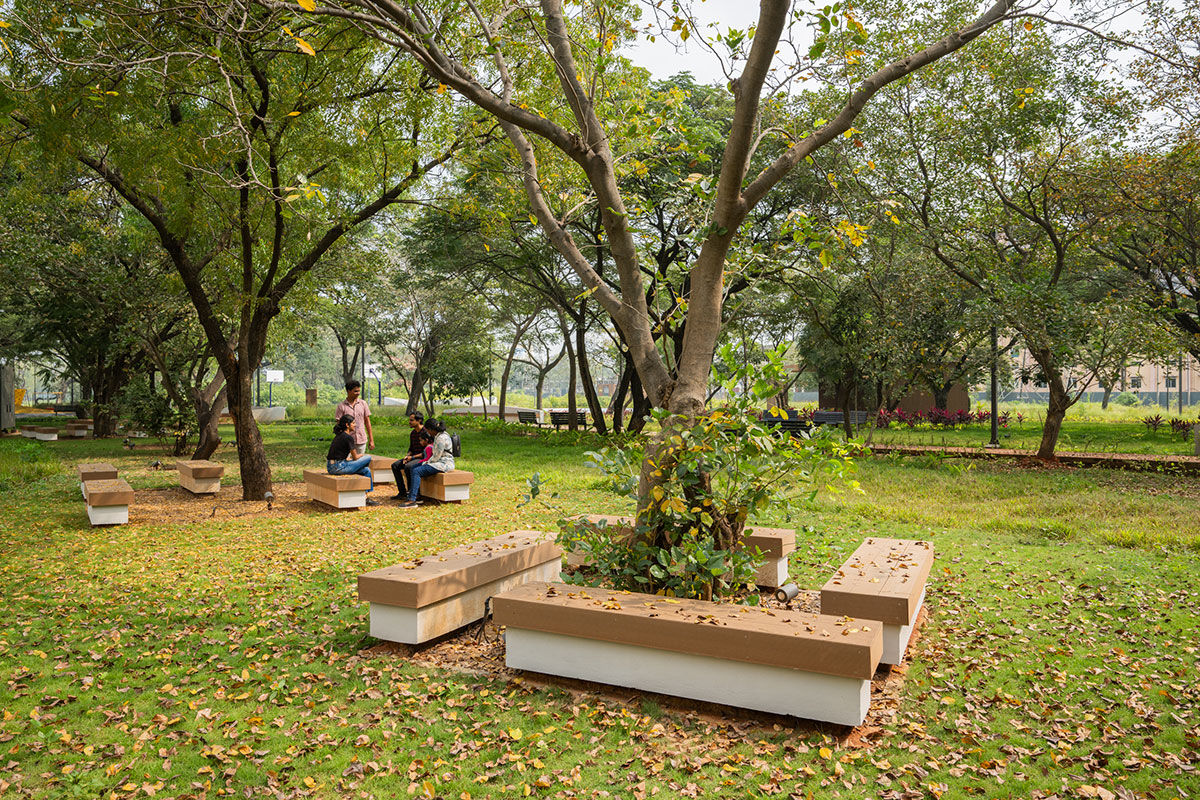
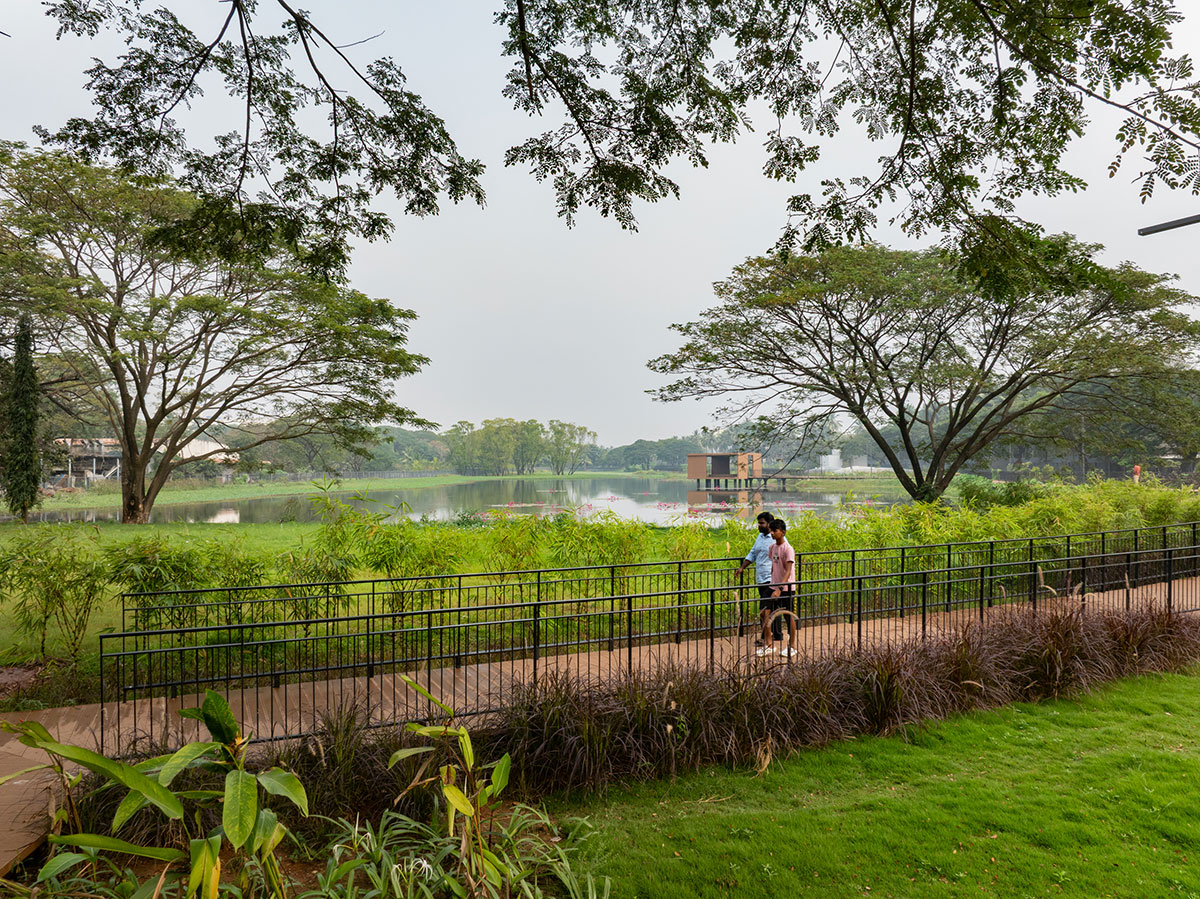
- Biodiversity Enhancement: The project recreates diverse wetland habitats, including reed beds, pollinator zones, & waterfowl habitats, supporting over 85 species of native flora & fauna, including migratory birds along the Central Asian Flyway.
- Inclusive Social Infrastructure: Serving over 300,000 annual visitors, the park functions as an inclusive commons & living laboratory for climate awareness, environmental education, & recreation.
- National Case Study: The project has emerged as a national case study and capacity-building platform for resilient urban infrastructure, training over 100 municipal engineers across India.
Drawings
Images