
Excerpt: Ekaya Ahmedabad by Studio Lotus and Studio GreyMatter pays an immersive tribute to Banarasi weaving, blending tradition with modern elegance. The interior design features a striking brass installation, inspired by the weaving process, that forms the central design element. Surrounding it, thoughtfully arranged sections balance heritage with modern retail, creating a dynamic and flexible visitor experience.
Project Description
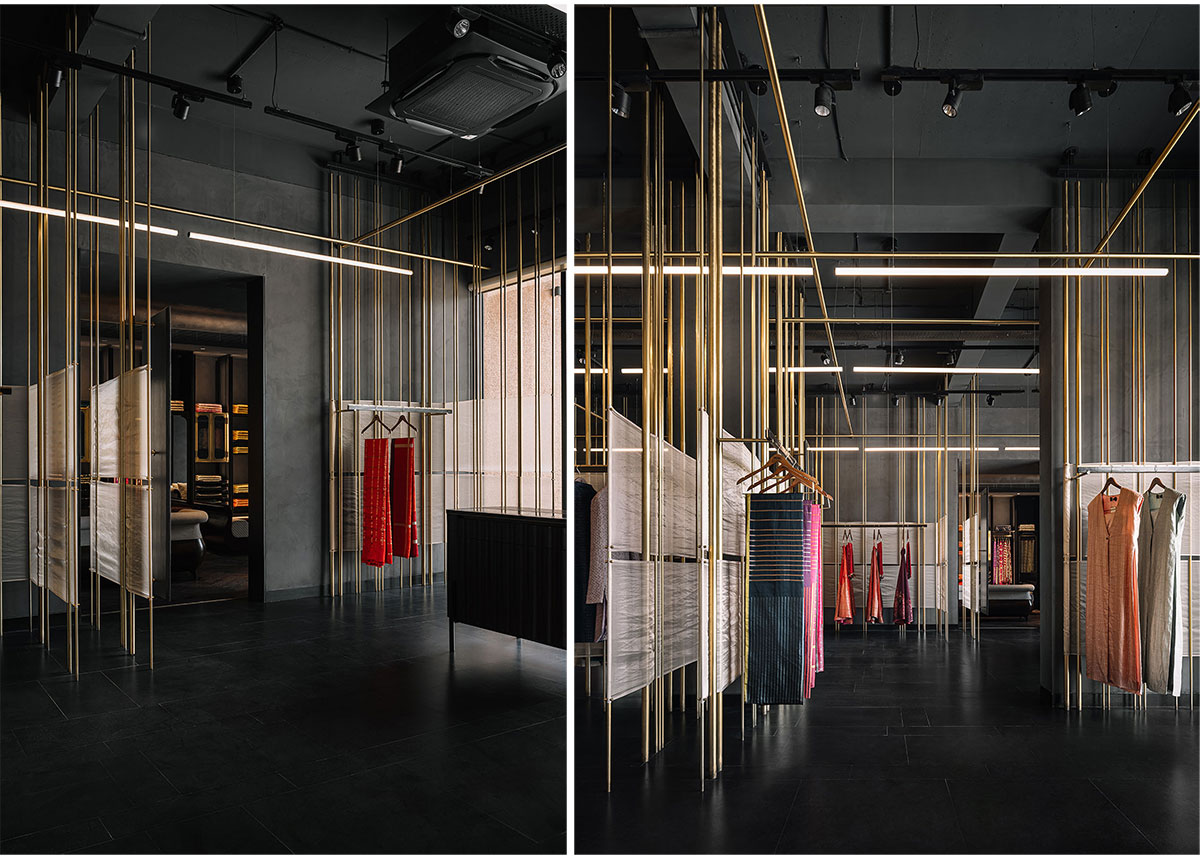
[Text as submitted by architect] Ekaya’s latest retail experience in Ahmedabad is an immersive celebration of Banarasi textile traditions. Bringing together a 120-year-old legacy of traditional craftsmanship with contemporary design sensibilities, Ekaya Banaras celebrates the delicate artistry of Banarasi textile weaves. For its new retail experience store in Ahmedabad, the brand looked to define a space that exemplifies its vision of promoting luxury handloom textiles to a new generation of buyers.


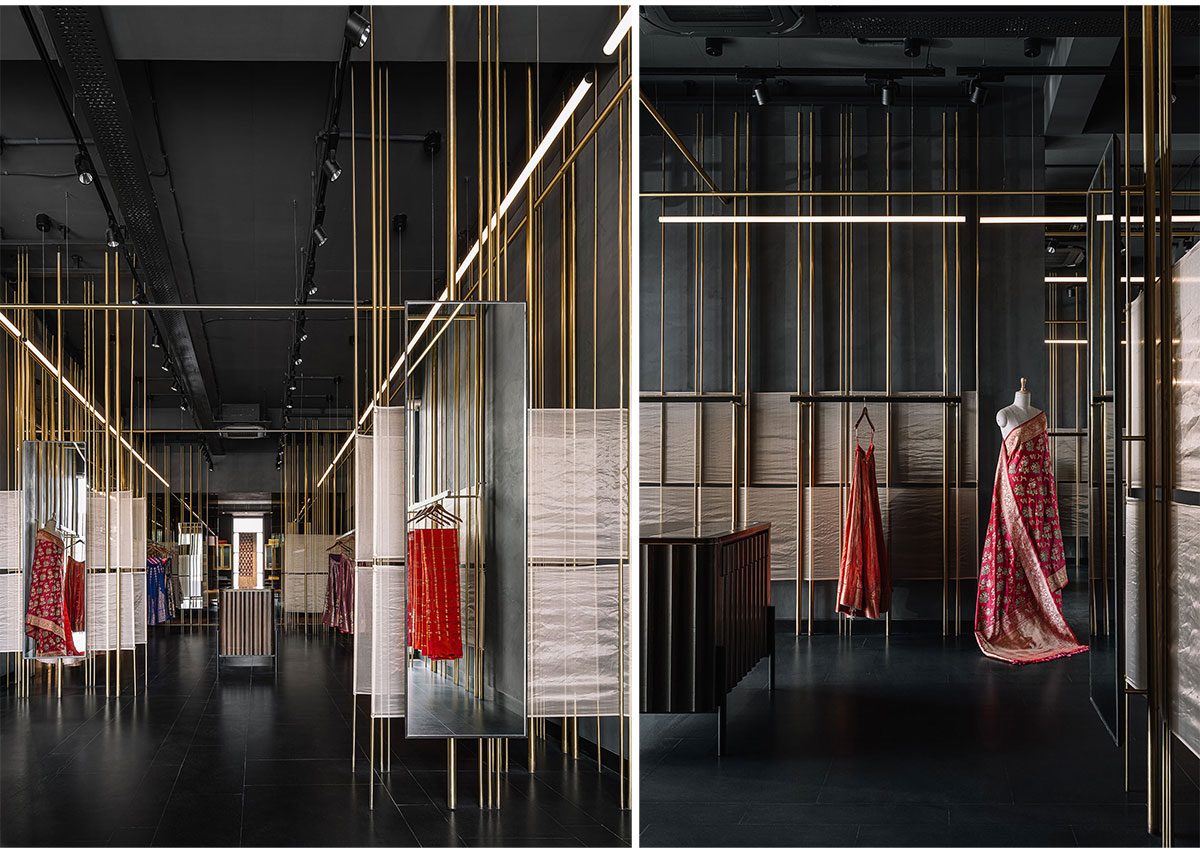
Weaving is central to the brand’s identity. The store’s design has been built around a central installation that strongly represents this idea. A modular collection of brass pipes visually intersects to create the sense of an immersive, three-dimensional weave. This is where visitors are first introduced to Ekaya’s latest collections, collaborations, and ready-to-wear ranges. Functionally a display device which also has in-built lighting, the design allows for flexibility in how one meanders through the space—a crucial feature, given Ekaya’s expanding product base that varies widely in scale. Given the constraints of inheriting a site with a staggered column grid, the concept lends itself well to the nature of the existing physical space.

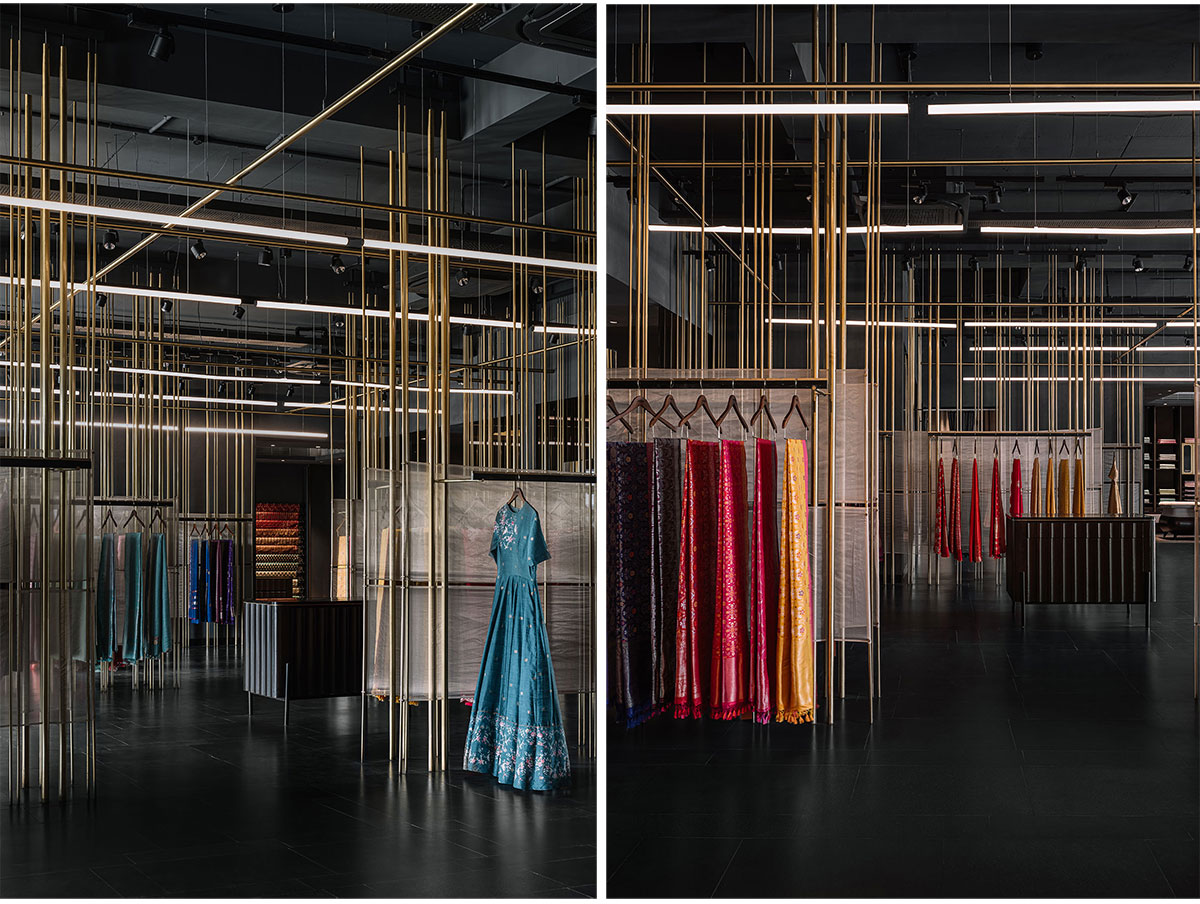
The interwoven rods create an ever-changing tapestry that lends the space a visual dynamism, and allows for the experience zones beyond it to be layered and subtly revealed. Surrounding this central zone lie pockets of the traditional retail experience that one expects from Ekaya. To the left, on entry, is the Thaan section with its reams of brightly-coloured fabric; to the right, by the façade, are the ready-to-wear sections.
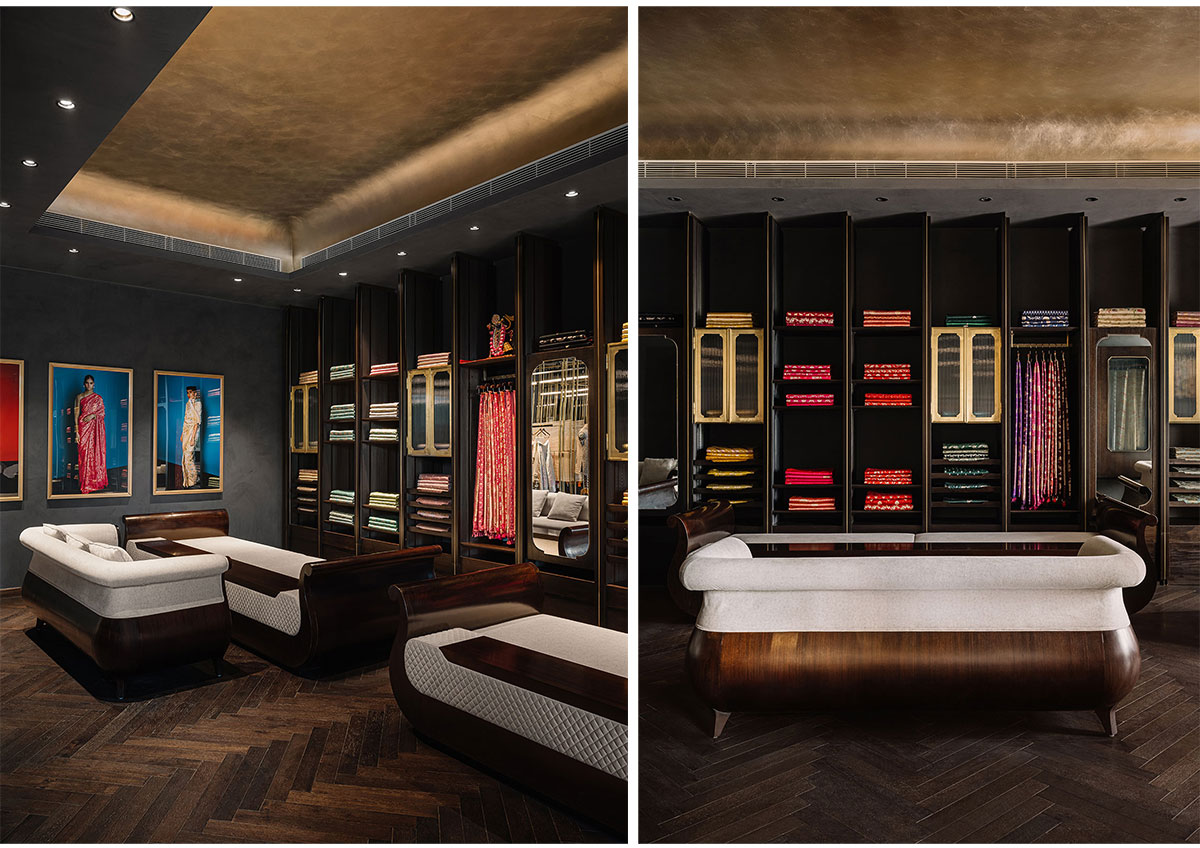
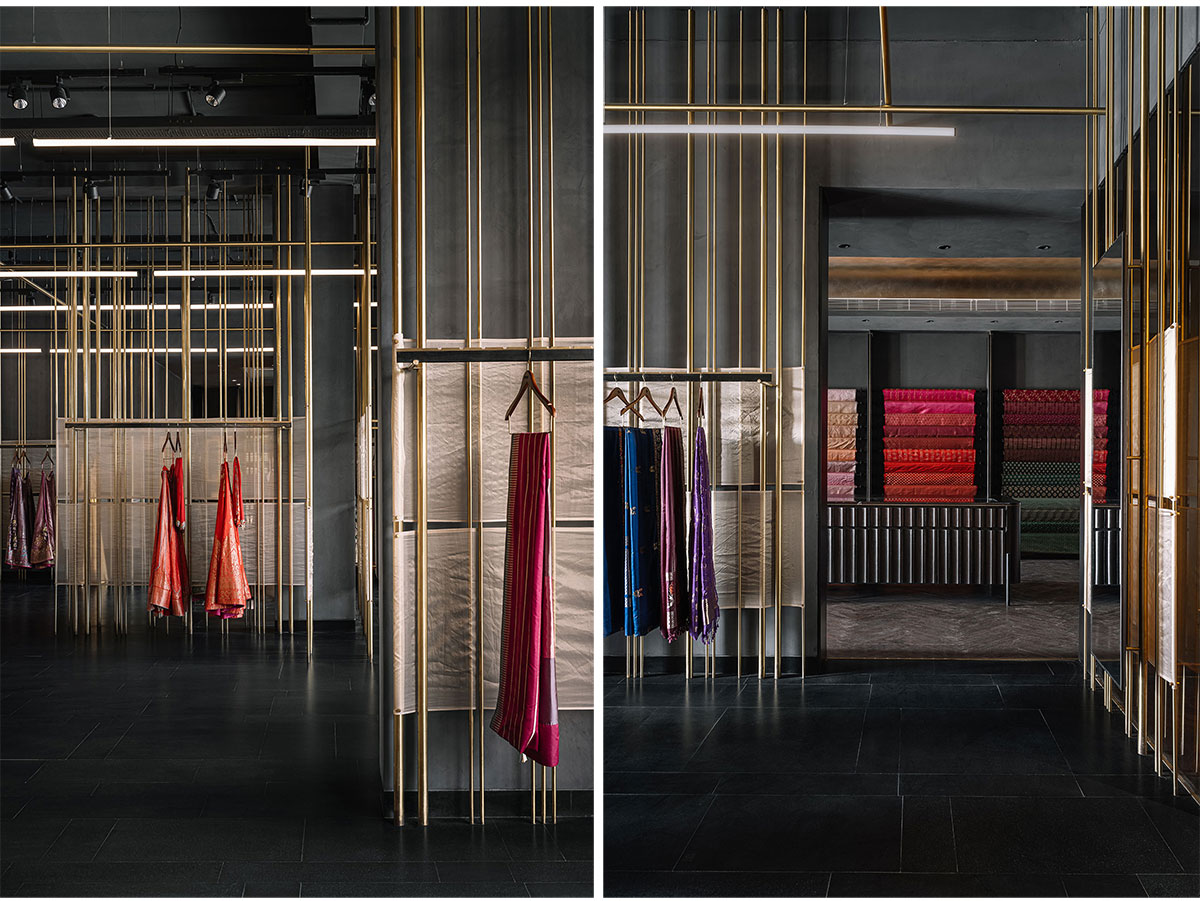
Intimate pockets for bridal wear lie deeper in, towards the rear of the store. Designed for a highly personalised experience for bridal parties, they feature traditional takkhat-style seating where sarees can be opened out for viewing, as is customary. Slit windows in these spaces admit slivers of daylight, lending a soft beauty to the silken weaves while also serving as a backdrop for visual merchandising elements.
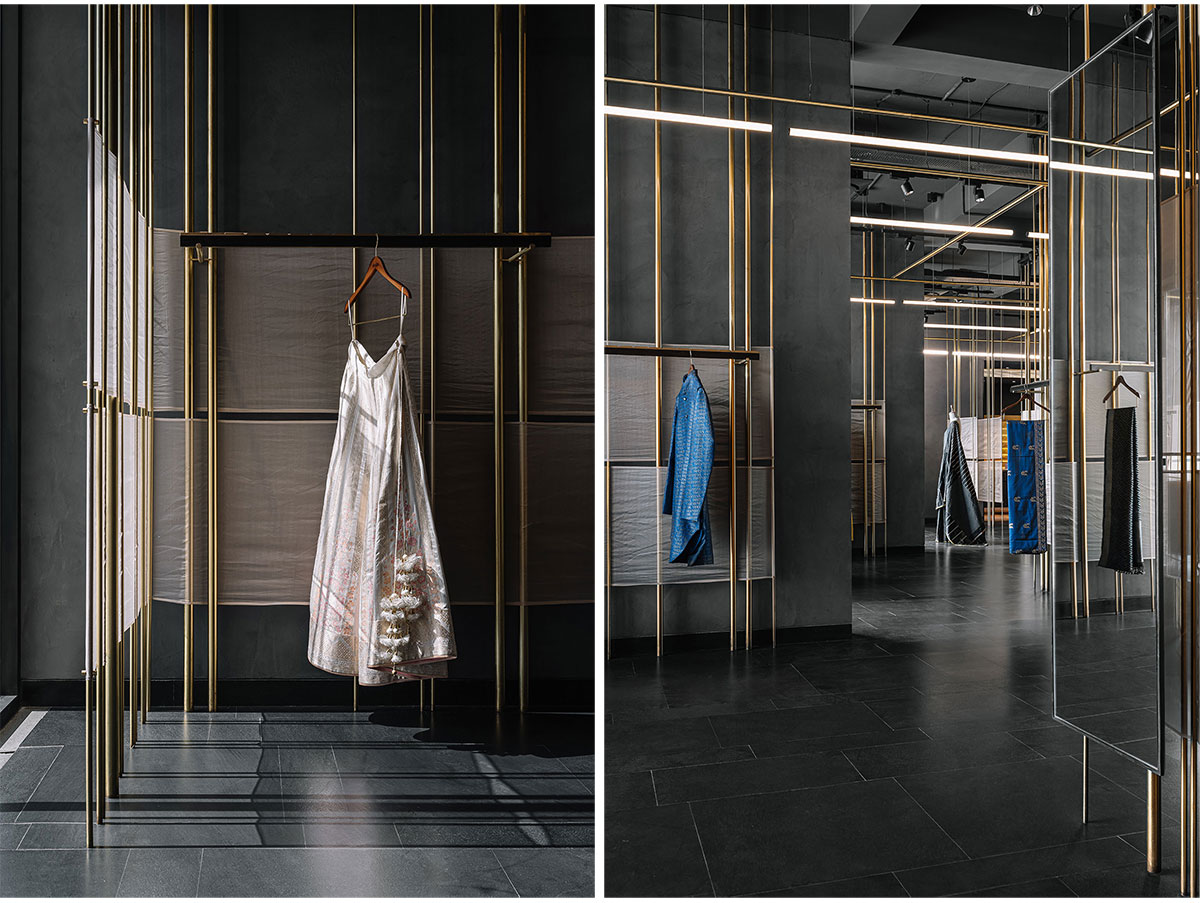
The design for Ekaya engages intimately with the notion of weaving—be it through the 3D brass installation or through the subtle nuances of its layout—immersing shoppers into the craft, and allowing them to incidentally discover new collections and products. The intervention deftly bridges the traditional and the modern, reflecting the evolving palettes of a new India, authentic to its roots, but distinctly contemporary.
Images


