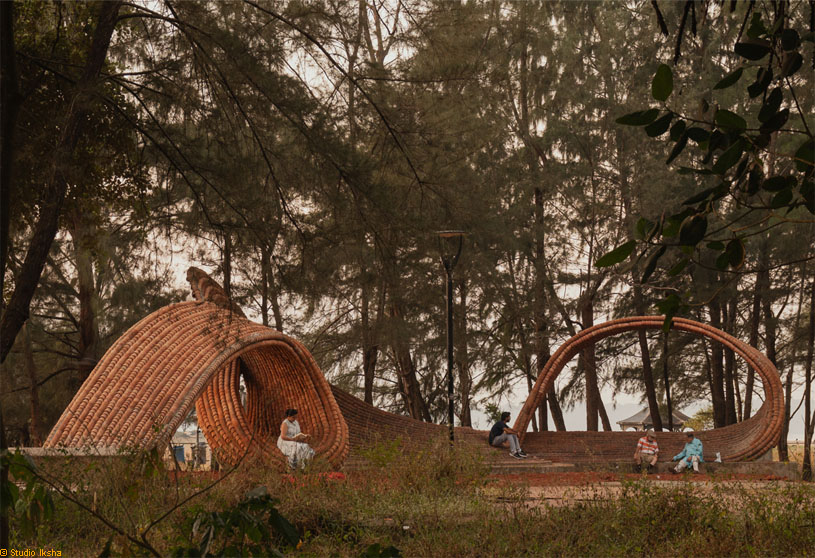
Excerpt: Kulhad Pavilion by Wallmakers reimagines ‘kulhads’ or mud cups once common at railway stations and later thrown away across beaches and tracks, transforming them into a pavilion at Miramar beach for the Serendipity Arts Festival 2025. Made from 18,000 kulhads collected from Dharavi, the design highlights waste reuse while creating shaded seating and spaces for both humans and animals.
Project Description
[Text as submitted by architect] ‘Kulhads’ or ‘mud cups’ (terracotta cups) used to be a familiar sight at railway stations, used to sip hot tea or cool buttermilk (lassi) and eventually thrown away across beaches and train tracks in India.


So when the opportunity arose to make a pavilion at the Miramar beach in Goa, as a part of the Serendipity Arts Festival 2025, it seemed apt to make a ‘Kulhad’ Pavilion made entirely of 18,000 ‘kulhad’s’ or terracotta cups collected from the local communities of Dharavi, Mumbai.


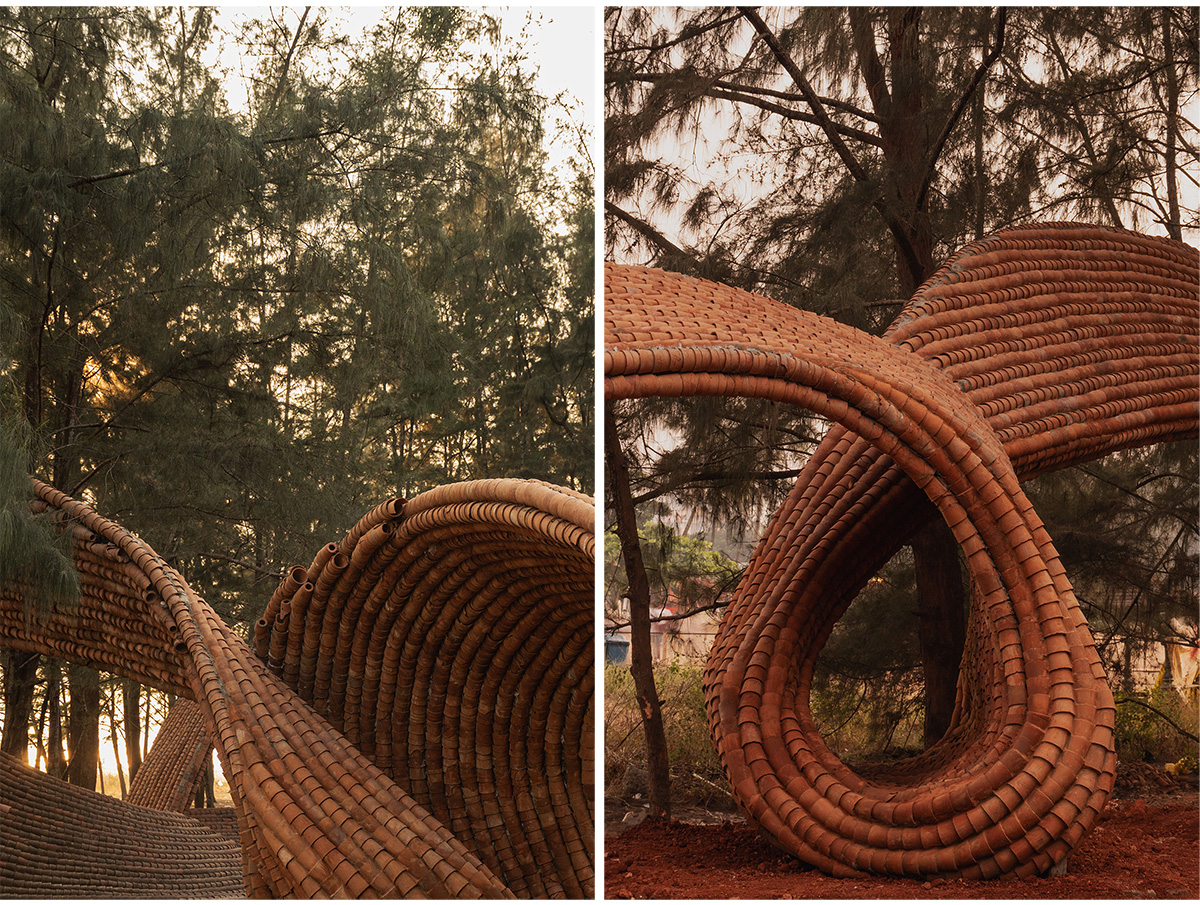
Made entirely with ‘kulhads’ the pavilion is not only a reminder of the sheer amount of waste, but also how it can be used positively to become a shade to the many who travel to the beach.


Consisting majorly of 3 compressive catenary vaults that transfer the weight of the entire superstructure to the ground, the pavilion was designed as a series of unreinforced vaults that meander across the side of the beach between the trees as seatings and stages, aiming to provide a shade to both humans and animals alike.
Images


