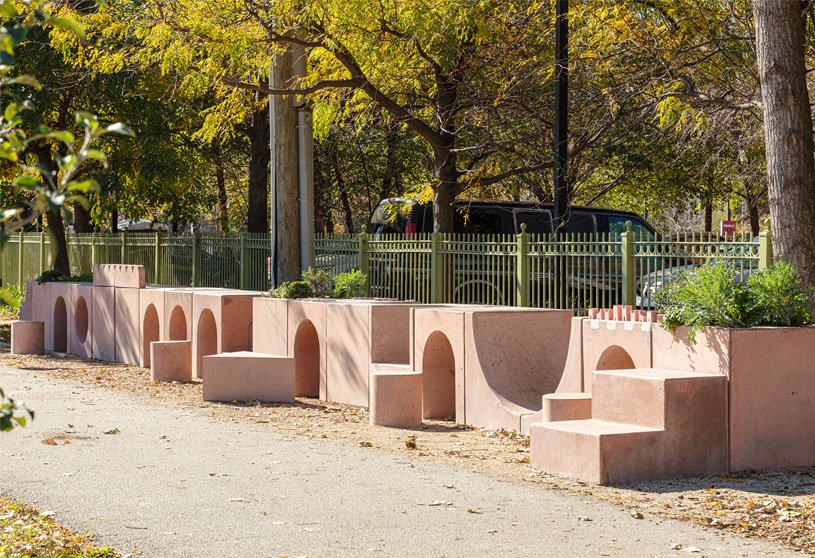
Excerpt: The Garden Table by Studio Ossidiana is a modular cast object designed to be touched, played upon, and cultivated. It is a multi-purpose surface where cooking, eating, resting, or playing become collective performances. Designed as a permanent installation, it grows over time, transforming domestic actions into civic rituals and expanding the possibilities of public space.
Project Description

[Text as submitted by architect] Part kitchen, part game, part stage, the Garden Table is a modular cast object designed to be touched, played upon, and cultivated. It is designed as a multi-purpose surface, where the simple actions of cooking, eating, resting or playing can become collective performances. It is a place for collective barbecues, cooking classes, conversations and dinners, board game tournaments and friendly matches, bead games and gardening, open to visitors and neighbours day and night.


It is designed as a permanent installation, made to withstand weather and use, and potentially, grow over time. The modularity of the blocks allows water basins or drinking fountains, pizza ovens or sitting areas, bird feeders or smokers to be added over time, while the cast elements are easy to wash, polish, or upgrade with new features.


Supporting and complementing the activities of El Paseo, neighbouring its vegetable gardens, the Garden Table embeds in its very matter elements of its context, from stones of the Michigan lake to the earth of the garden, found objects and cultivated as well as spontaneous plants. Informed by various practices of cooking in open air, fire pits, barbecue grills, niches for spices and built in vases for herbs are scattered along its surface, while terrazzo game-surfaces, from chess to backgammon, Go and checkers, suggest and allow other uses.

As affordances unfold along its surface, different actions can complement or subvert each other, allowing for both curation and cultivation to play out over time. With the garden table, the ambition is to imagine and materialise a fragment of a collective city where domestic activities can become civic rituals, and the range of activities imaginable within the public realm can expand towards new forms of engagement with the city.
Images


