
Excerpt: The UCCA Clay Museum by Kengo Kuma and Associates draws inspiration from the surrounding Shushan Mountain and traditional dragon kilns, taking the form of a pottery-like mountain. It integrates with the existing factory landscape, combining modern architecture with historical elements. The structure and materials reflect the tactile warmth and timeless spirit of Yixing’s ceramic heritage, serving as a cultural landmark.
Project Description

[Text as submitted by architect] The studio designed an art museum to showcase the ceramic culture in Yixing, known as the “ceramic capital” and renowned for its production of pottery using purple clay. The site was once the center of Yixing’s ceramic culture, with its numerous pottery factories and ateliers. This project aligns with the masterplan to redevelop the area and envisions a cultural center for ceramics, incorporating ateliers and workshops while preserving the remnants of decommissioned factories.


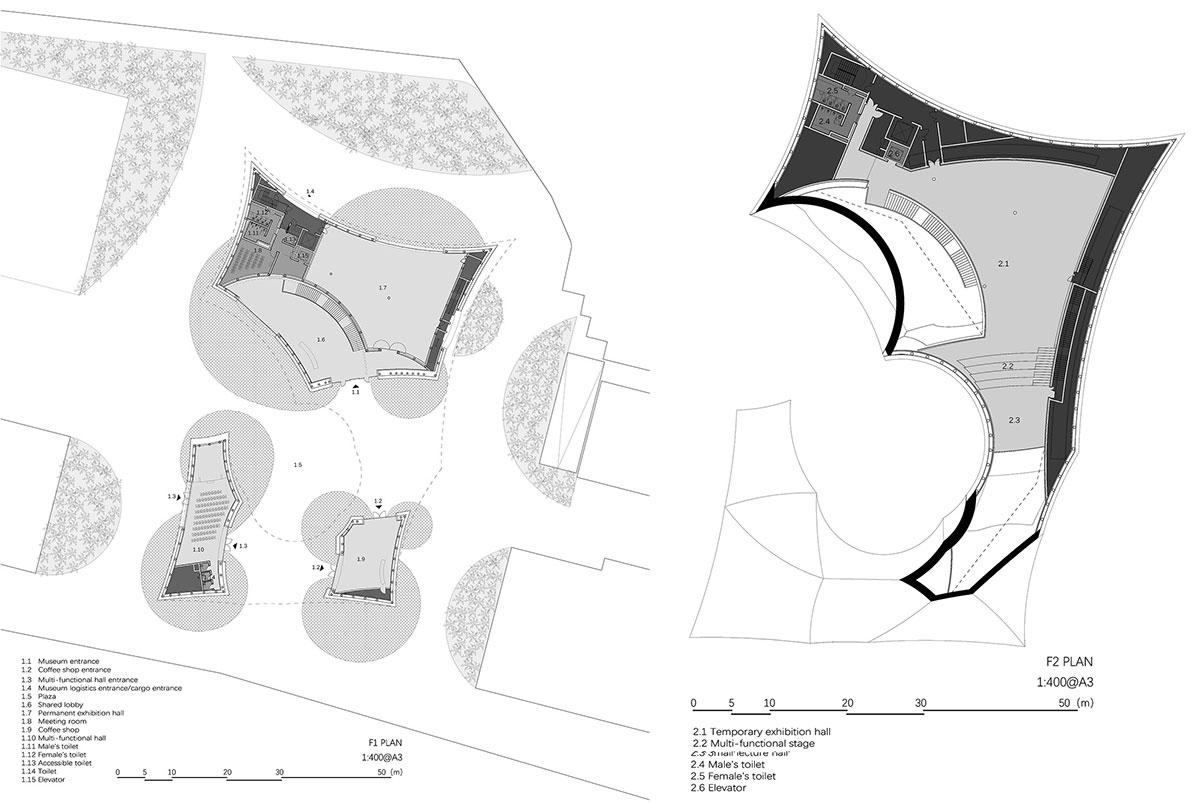

The volume resembling a mountain of pottery is inspired by Shushan Mountain, located near the project site and cherished by the Northern Song dynasty writer Su Dongpo, as well as by the dragon kiln, a climbing kiln that has been in continuous use for 600 years. The mountain-shaped volume was punctured to connect with the pottery factory and the canal, seamlessly integrating the building with the site’s axis and the surrounding factory complex.


The roof, an inverted shell structure carved by virtual spheres, is supported by four layers of wooden lattice beams. This light yet strong wooden structure brings dynamic changes to the interior space and draws the line of sight and circulation flow deeper into the building.


The facade, which evokes the “temperature” of pottery in the manufactory, was developed in collaboration with local artisans. Its uneven surface is glazed with varying color gradations, creating different expressions depending on the time of day and season. Warm and slightly coarse to the touch like Chinese tea-ware, these ceramic panels embody the history and culture of the ceramic city, which has been passed down through the generations for more than 1,000 years.
Drawings


Images


