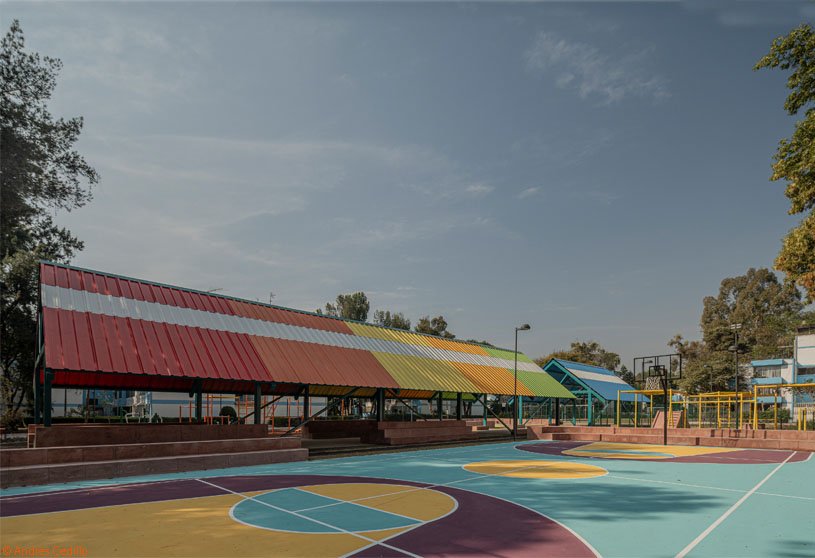
Excerpt: UH INFONAVIT CTM Culhuacán by AMASA Estudio features the transformation of a deteriorated plaza into a new social hub, featuring a colorful gabled structure that adds scale, spatial definition, and character. Organized around this central spine are sports courts, a playground, and gathering spaces, integrated with landscape improvements and universal accessibility to restore the social value of public space and foster community care.
Project Description
[Text as submitted by architect] Of all the housing complexes built by Infonavit in Mexico City during the second half of the 20th century, the largest is Culhuacán. Located in the southeast of the city, within the borough of Coyoacán and near the border with Iztapalapa, this development comprises approximately 15,000 housing units. Its full name—Confederation of Mexican Workers Culhuacán (Confederación de Trabajadores de México, or CTM, in Spanish)—reflects both a reference to Culhuacán, one of the area’s original settlements, and a direct nod to the social welfare policies of the time, which championed the working class. Construction of CTM Culhuacán began in 1974, with the aim of providing housing for over 100,000 people, primarily from the growing working and middle classes.
Today, the complex faces a challenge common to many large-scale housing developments in Mexico City: a lack of maintenance in shared public areas. This issue stems largely from administrative and legal ambiguity regarding the jurisdiction and responsibilities associated with these communal spaces. The collective organization necessary to manage and care for these areas is difficult to coordinate, making it hard to reach decisions in favor of the common good.


Amid a web of shared responsibilities between the Social Attorney’s Office (PROSOC) and the local borough administration, the question of “who takes care of what” directly impacts both the functionality and appearance of community spaces. This lack of clarity has led to a range of outcomes—from informal appropriation of common areas to their neglect and decay—tangible signs of a fractured social fabric.
One such critical point was located near the tenth and final section of CTM Culhuacán: a deteriorated plaza in urgent need of attention. On June 22, 2023, Infonavit issued a design-build tender under a “turnkey” scheme, commissioning the design, management, and execution of four intervention projects across various housing complexes in Mexico City: Iztacalco, Culhuacán, Santa Fe e Ignacio Chávez.
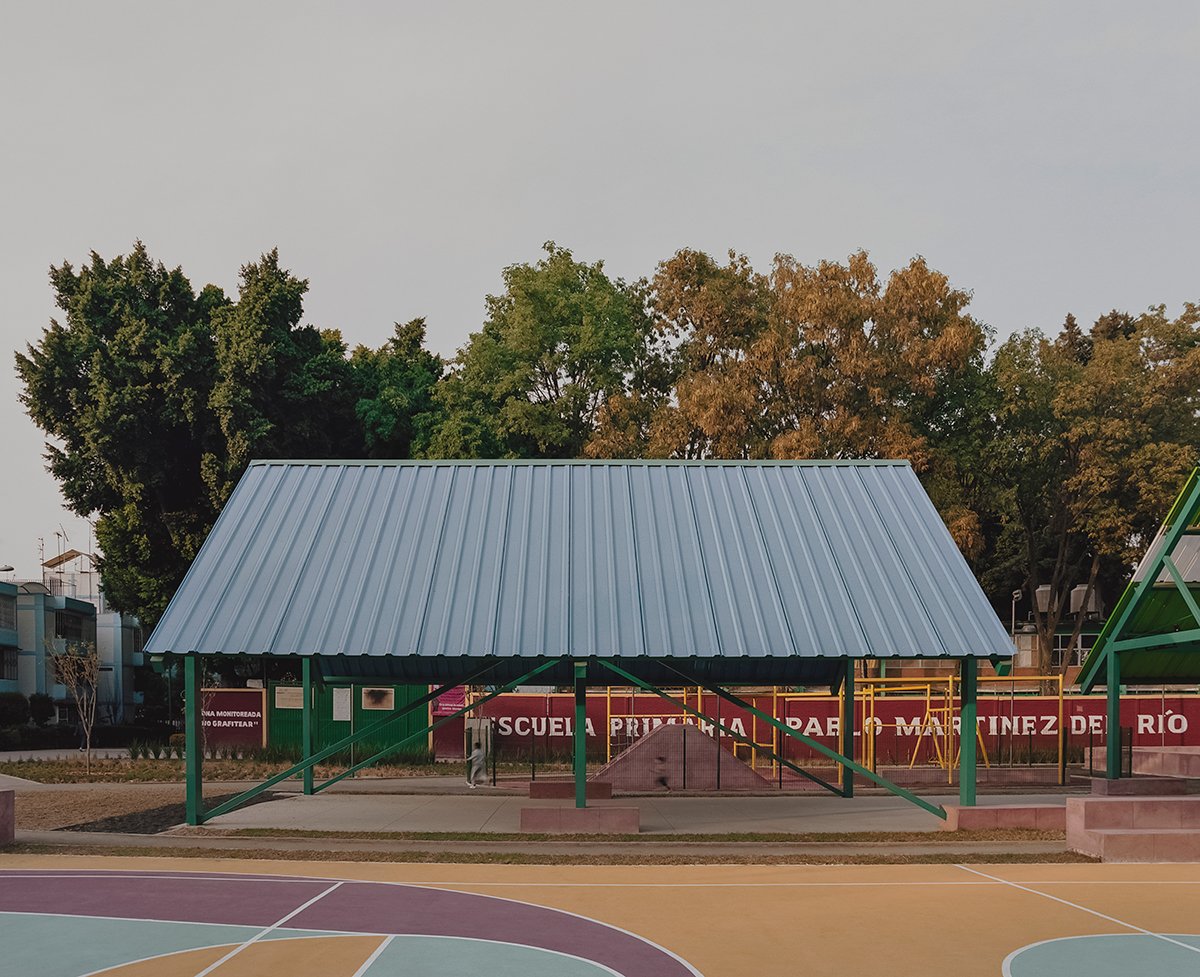
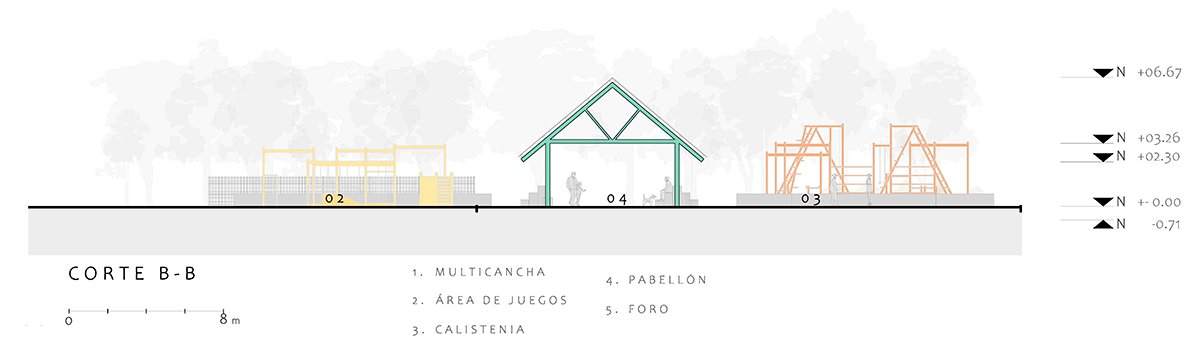


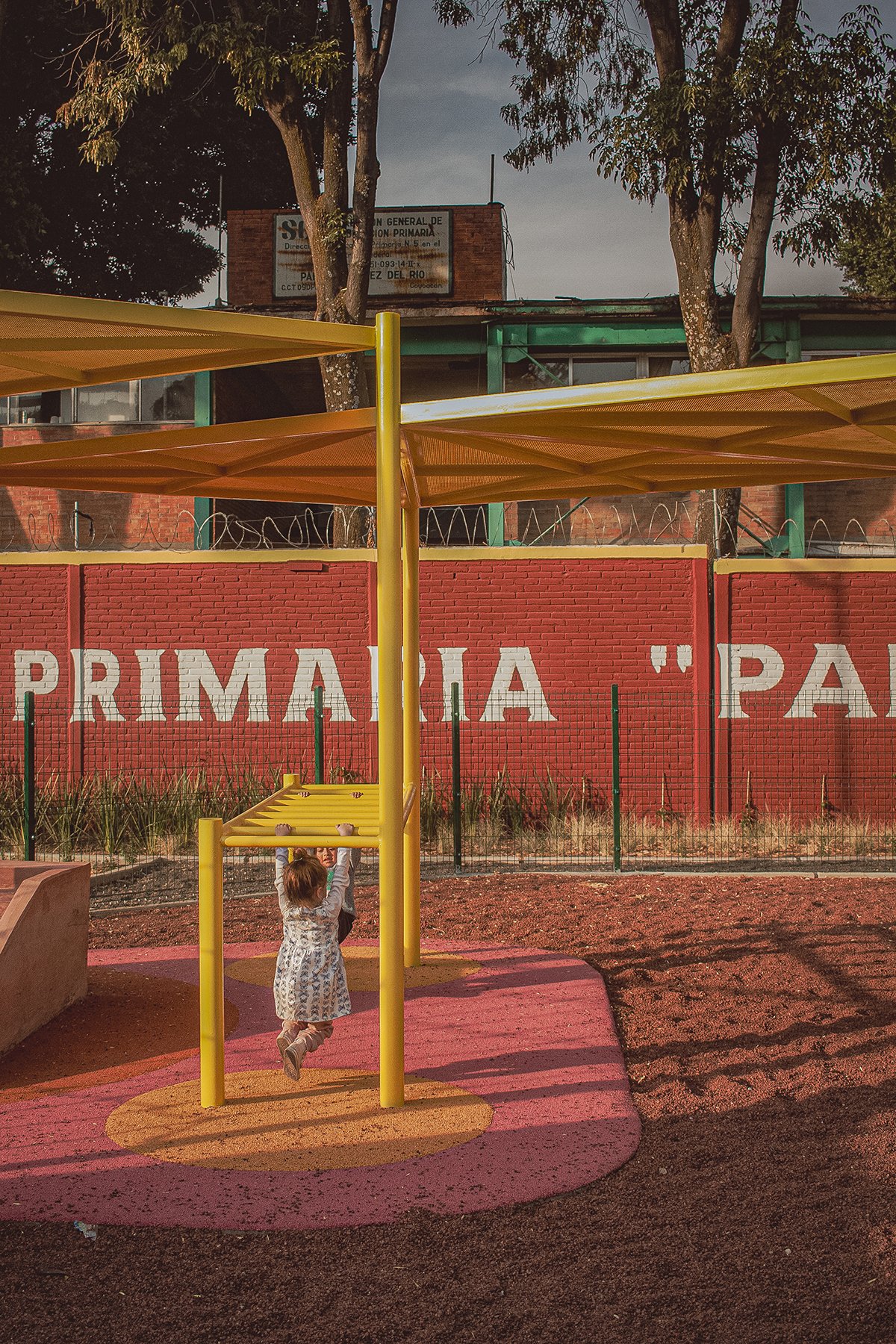
It was in this context that Andrea López and Agustín Pereyra, of AMASA Estudio, developed a conceptual proposal to rehabilitate the plaza—ultimately winning the tender. Before the intervention, the site contained worn-out sports courts, aging playground equipment, outdoor gym apparatus, and several underutilized residual spaces. The area was enclosed by the perimeter walls of two neighboring schools: the “Pablo Martínez del Río” primary school and the “Héroes de 1810” kindergarten. This condition created residual corners prone to informal use, waste accumulation, and antisocial behavior, including substance use.
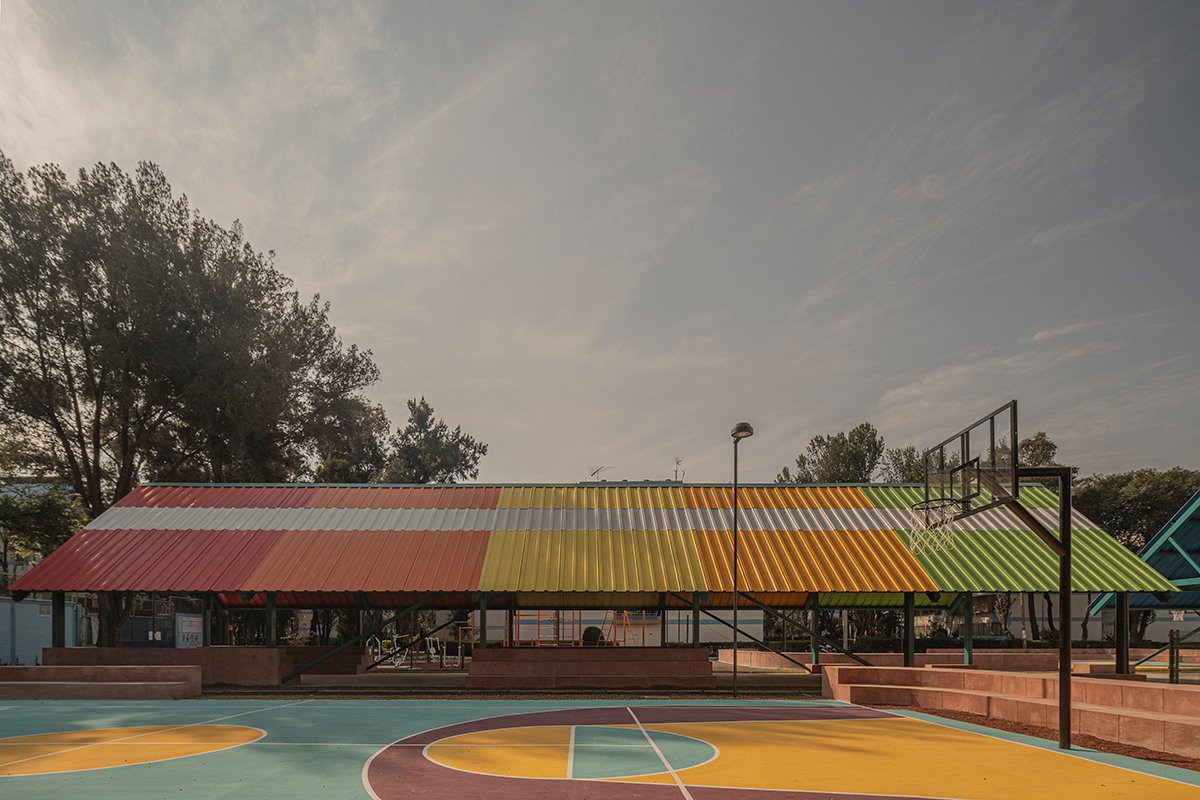
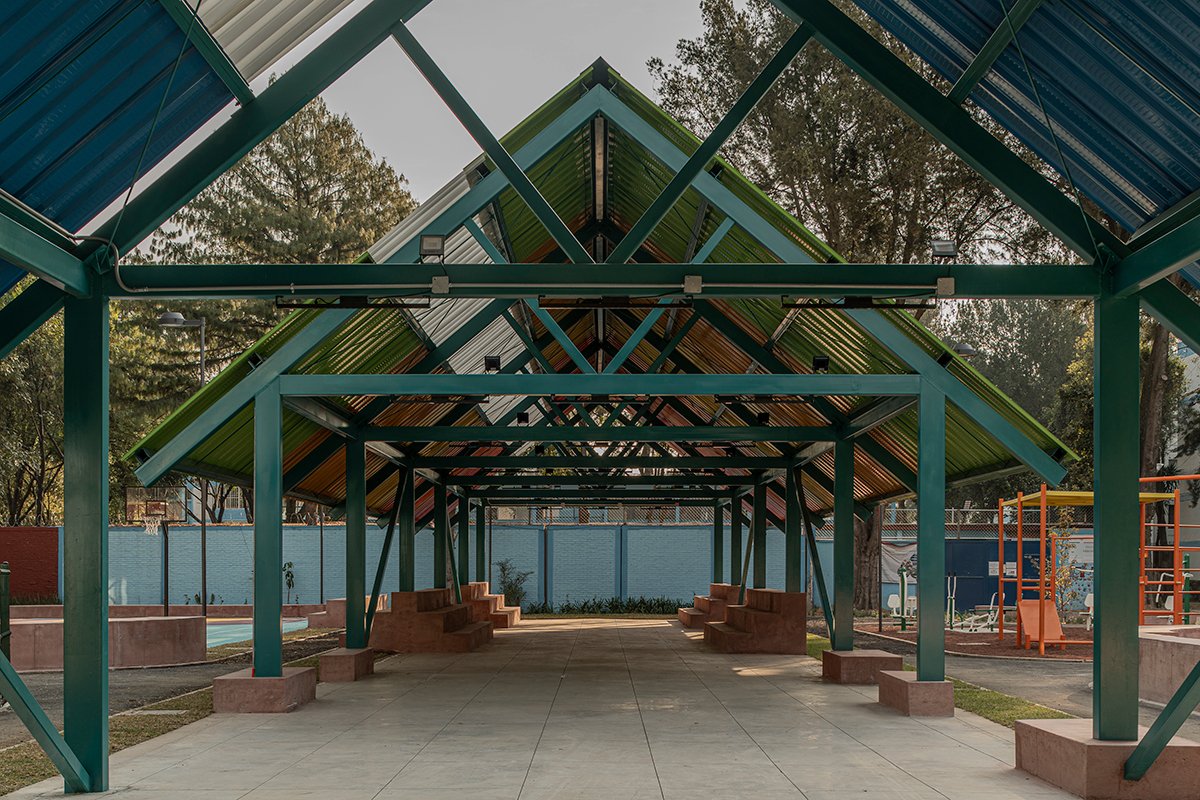
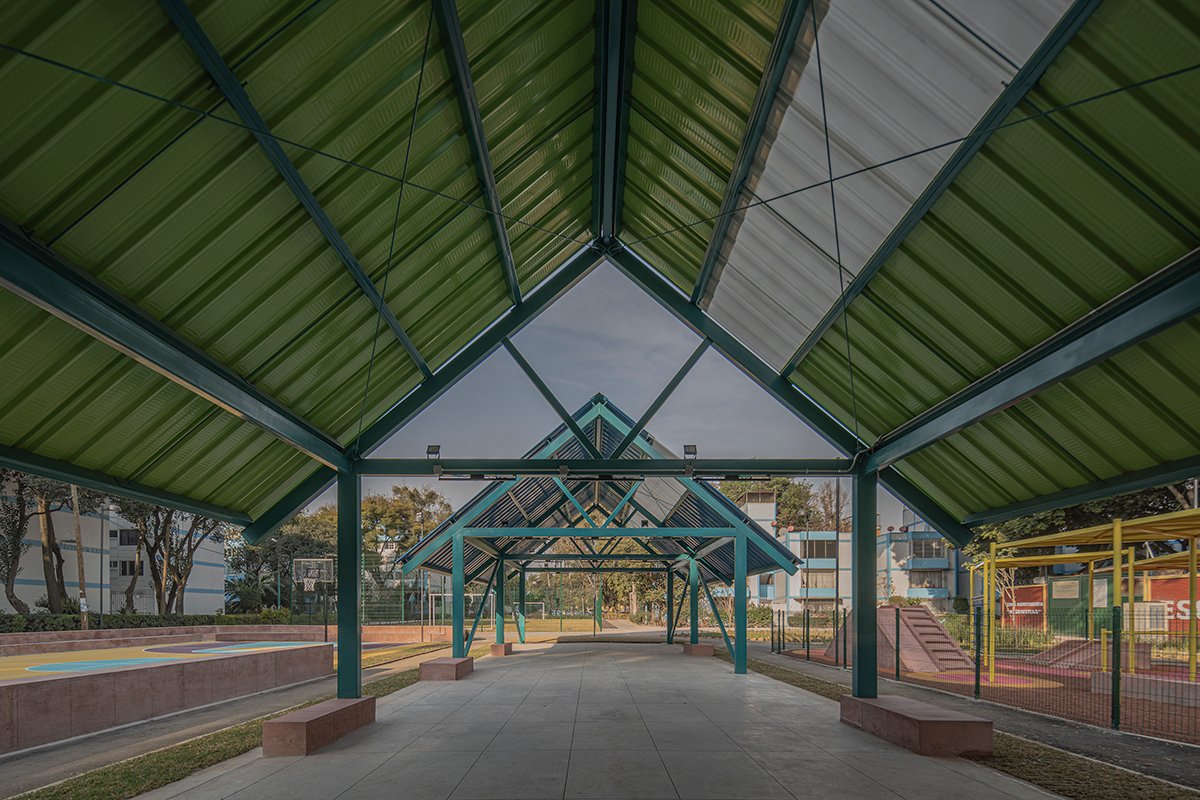
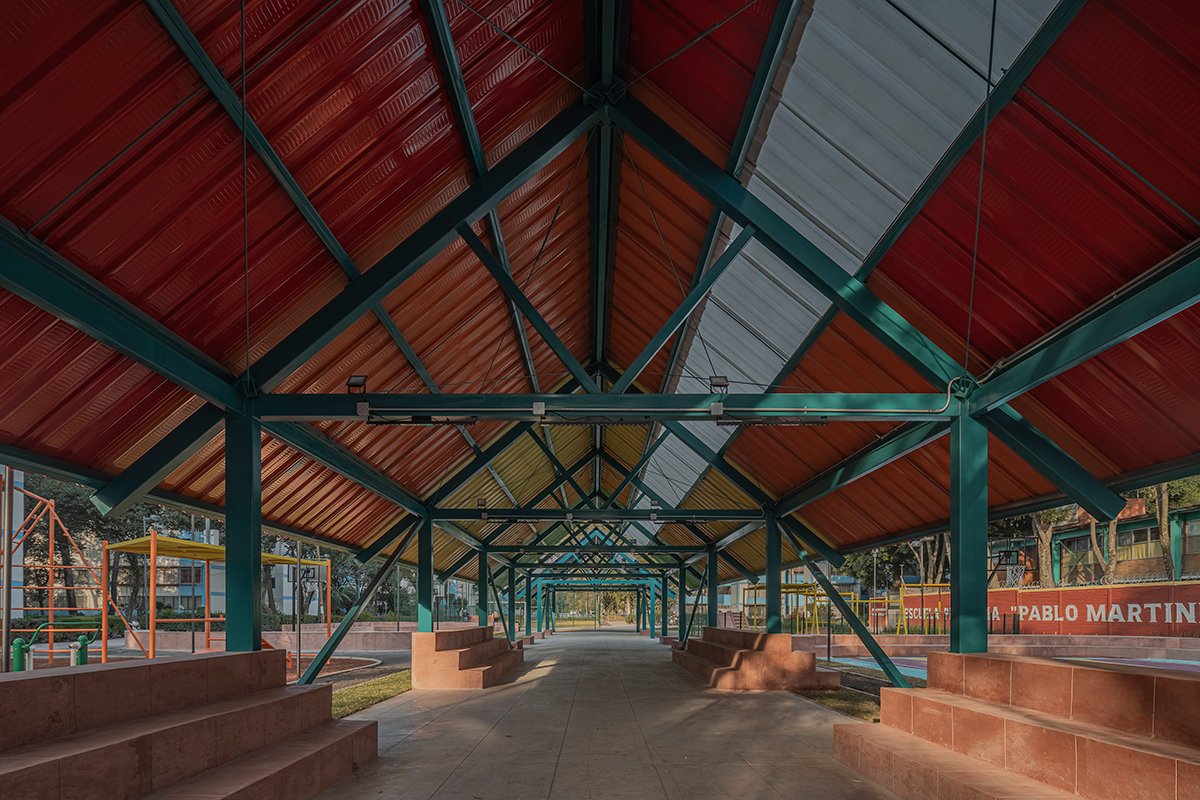
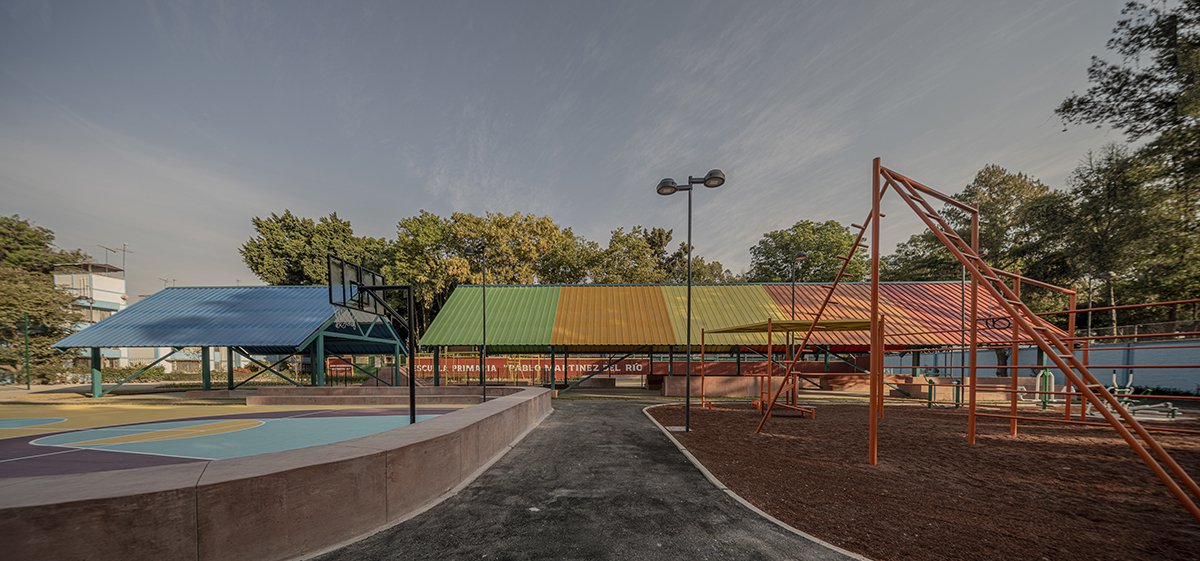
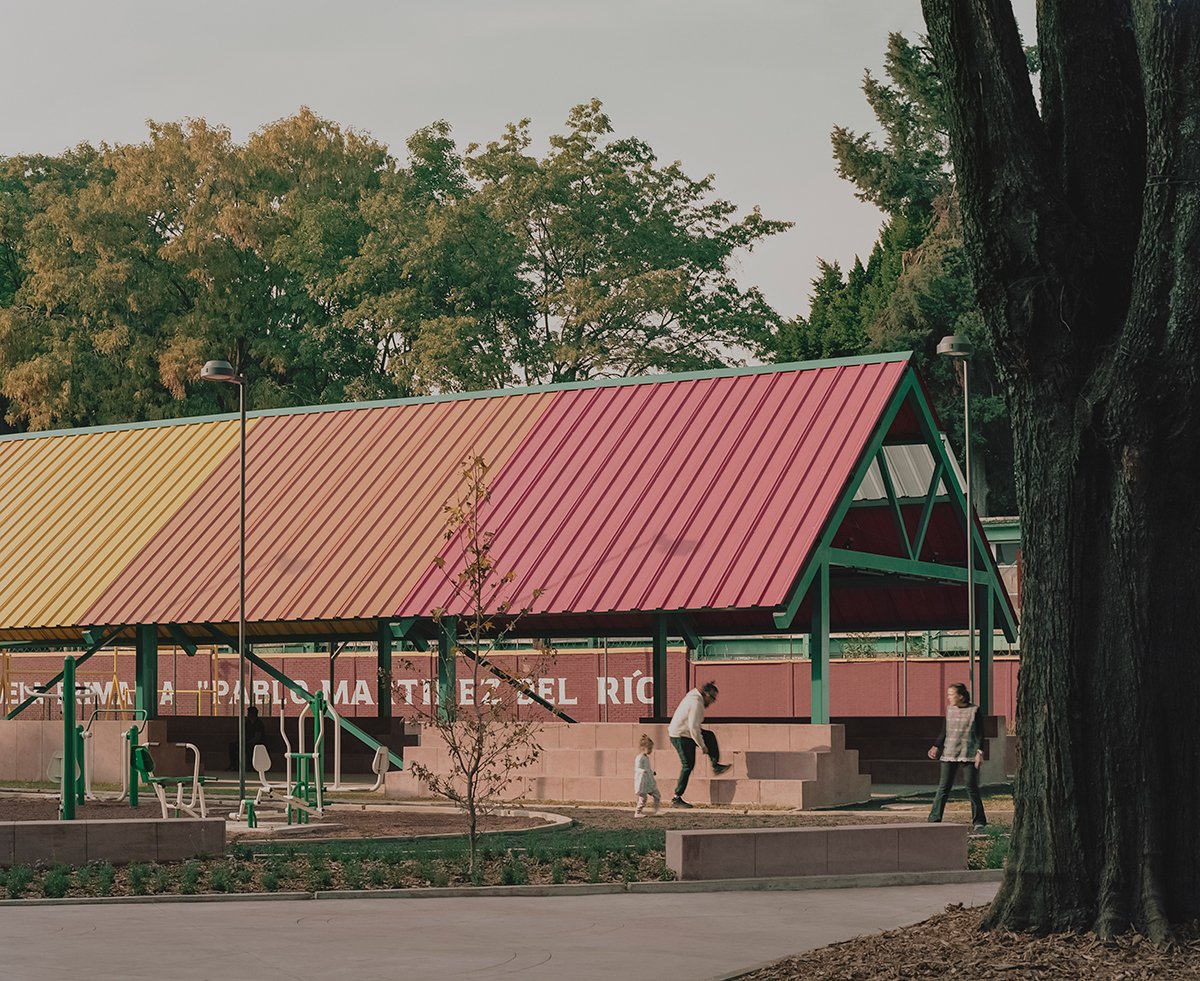
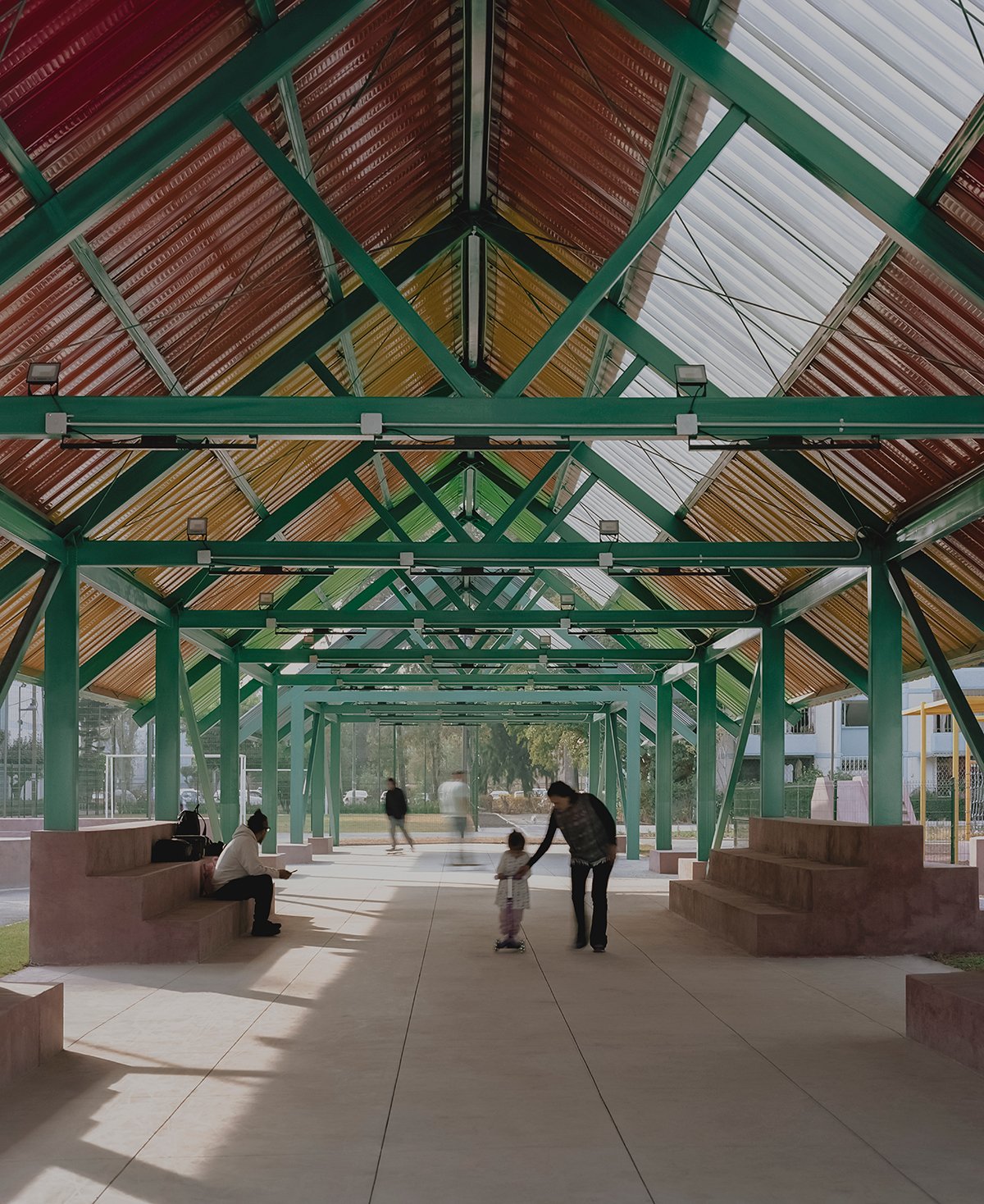
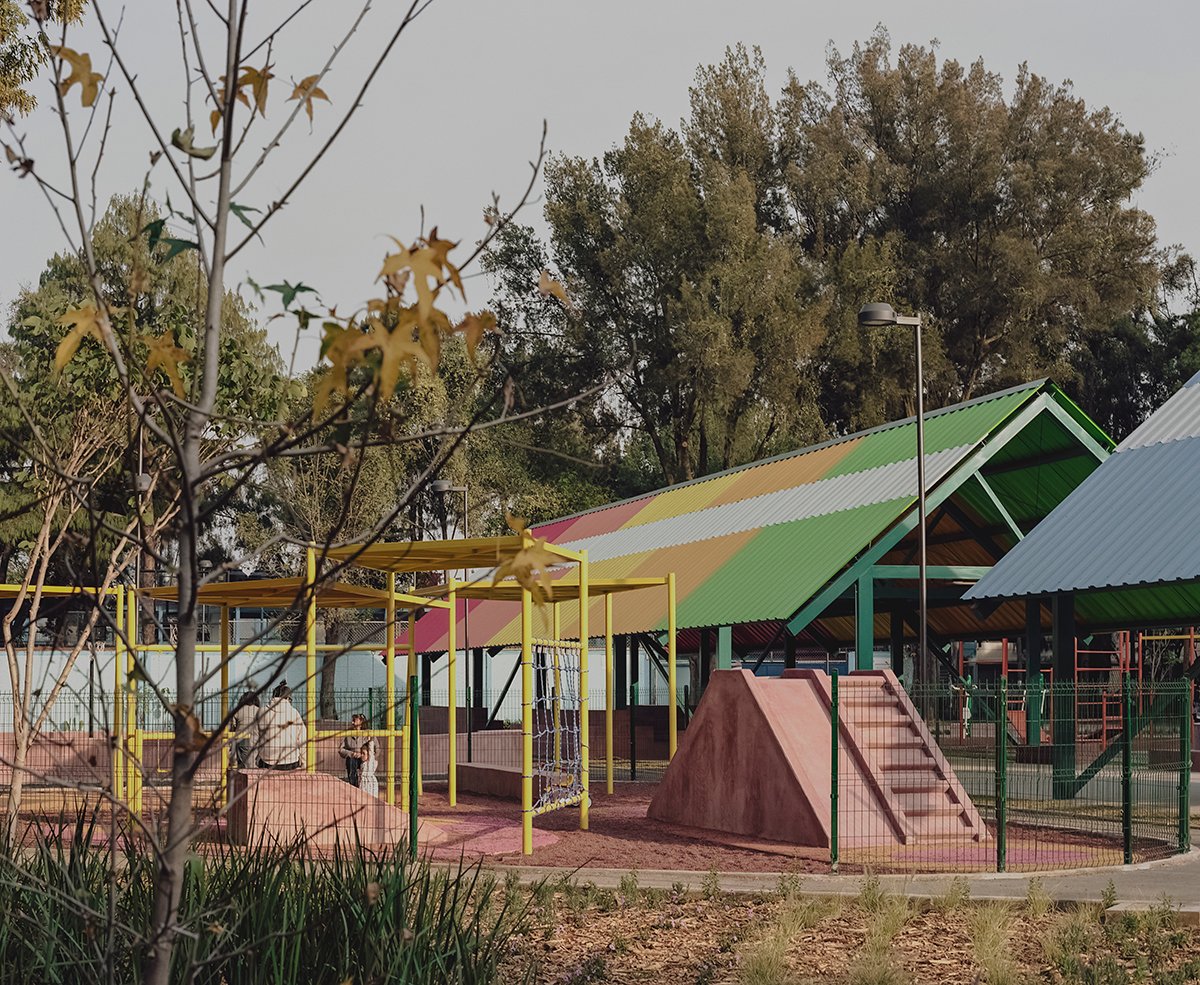
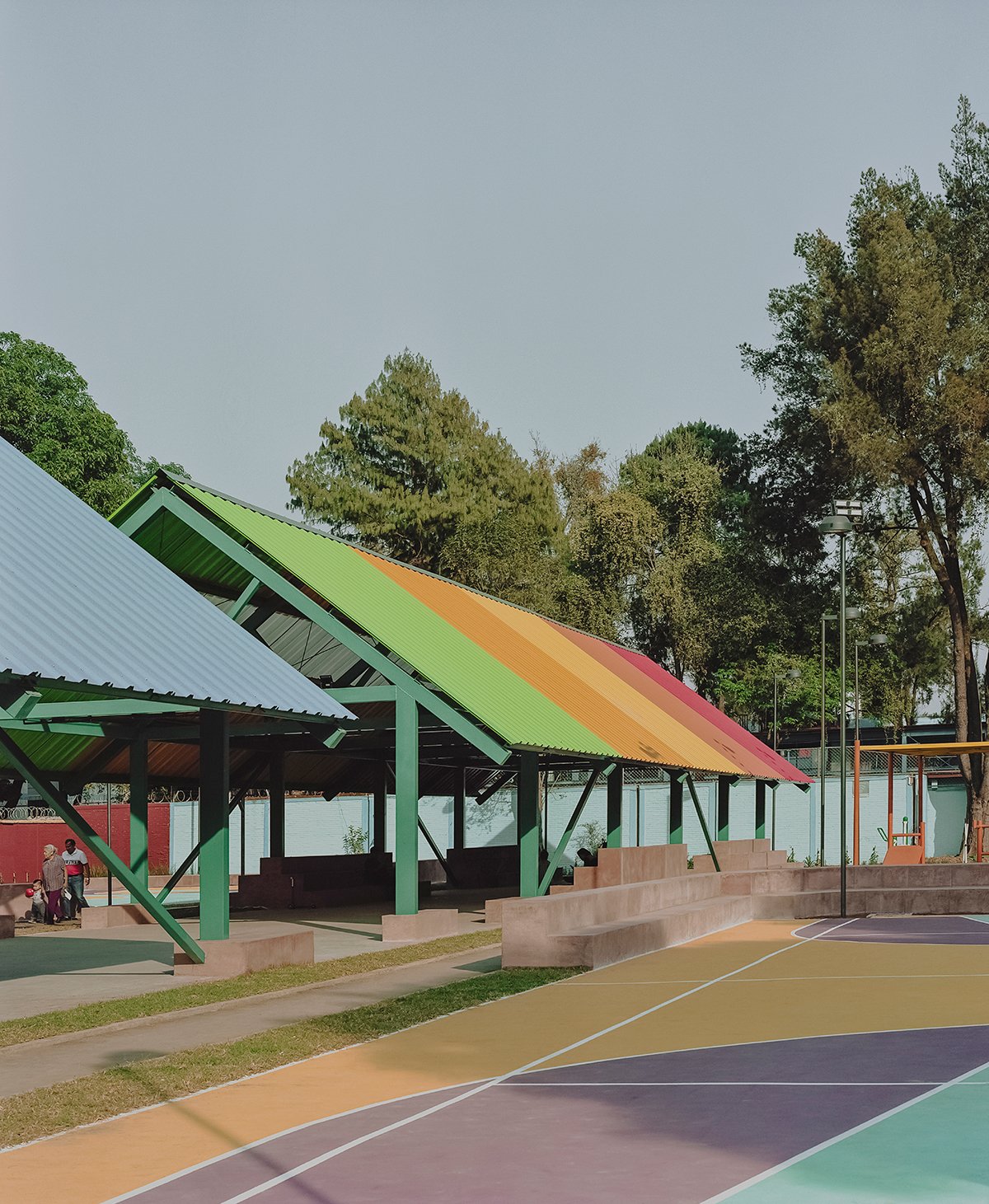
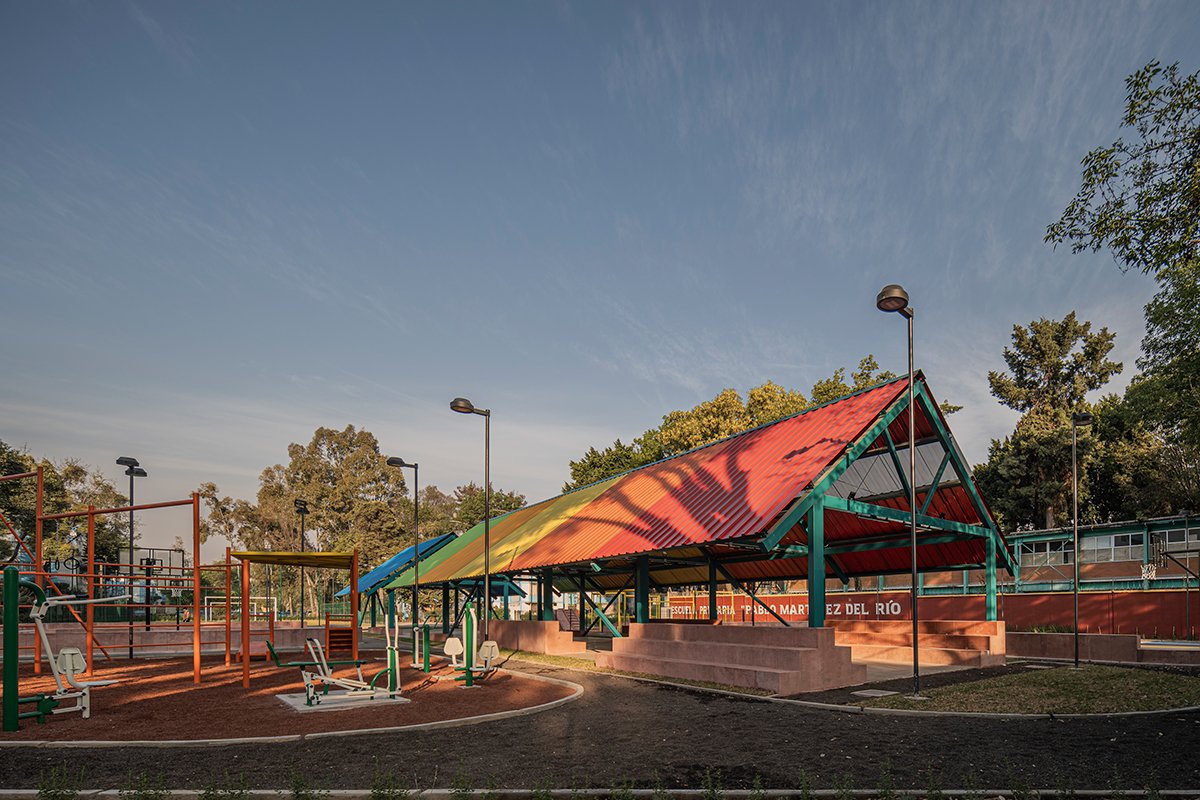
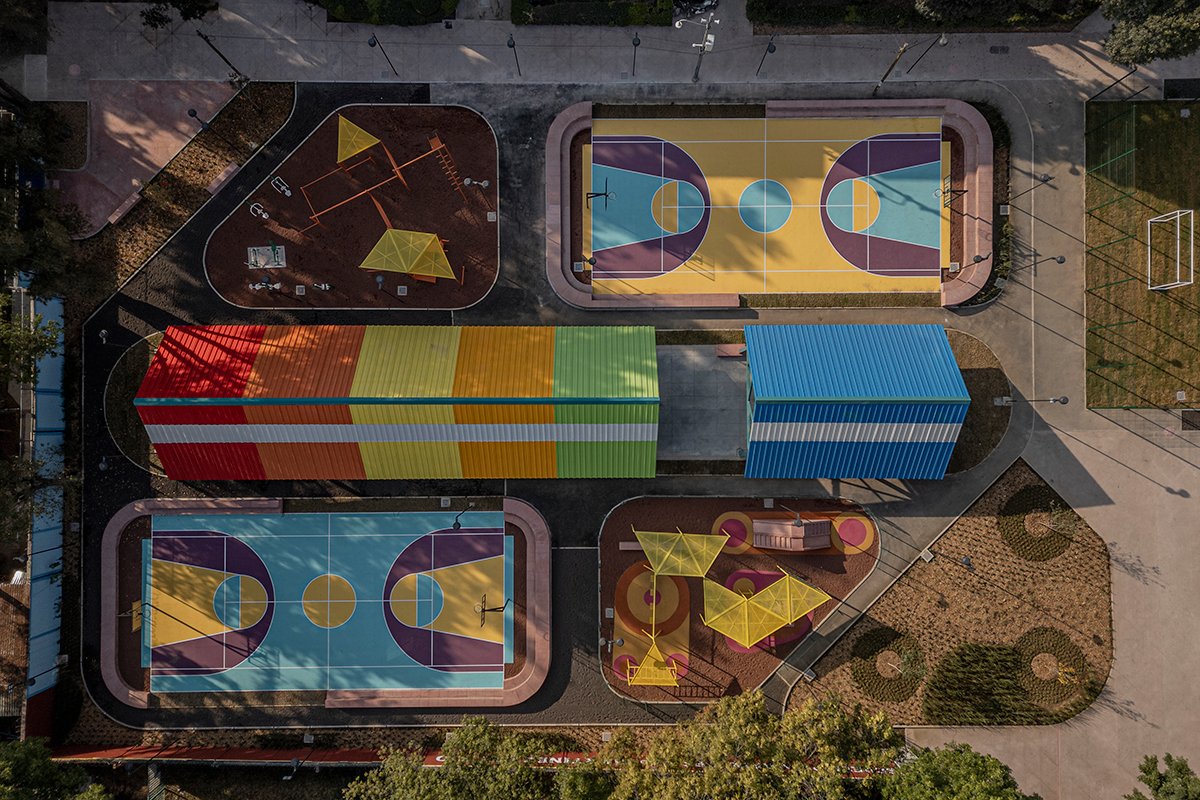
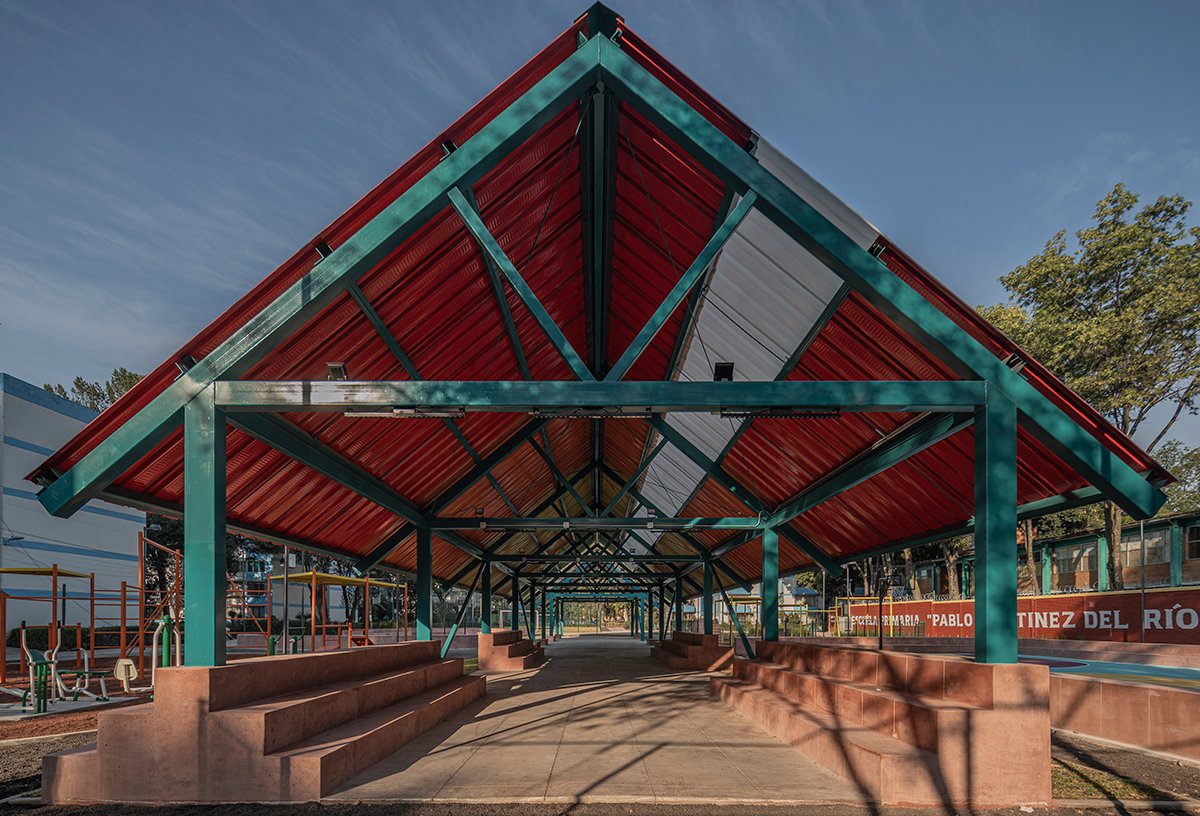
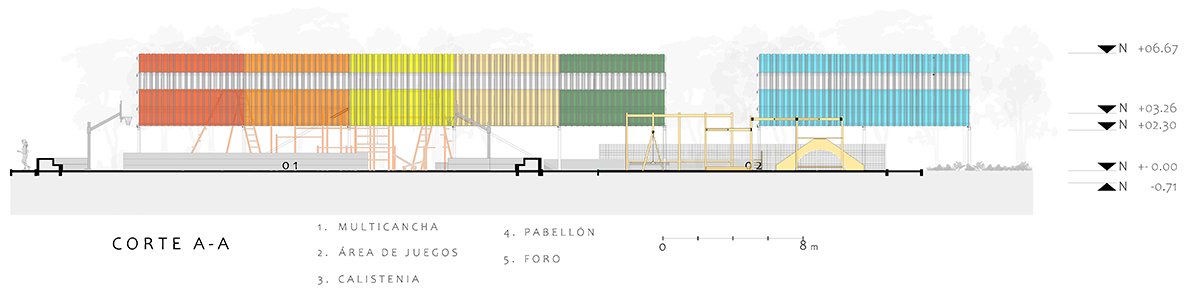
Today, with the intervention complete, the space has been transformed into a new social hub. At school dismissal, children gather around the central architectural element of the intervention: a colorful gabled structure that introduces scale, spatial definition, and character to what was once a bleak sun-exposed court. The decision to place this structure at the heart of the site was strategic—discouraging future encroachments, preserving open perimeters, and ensuring continuous visibility and natural surveillance.


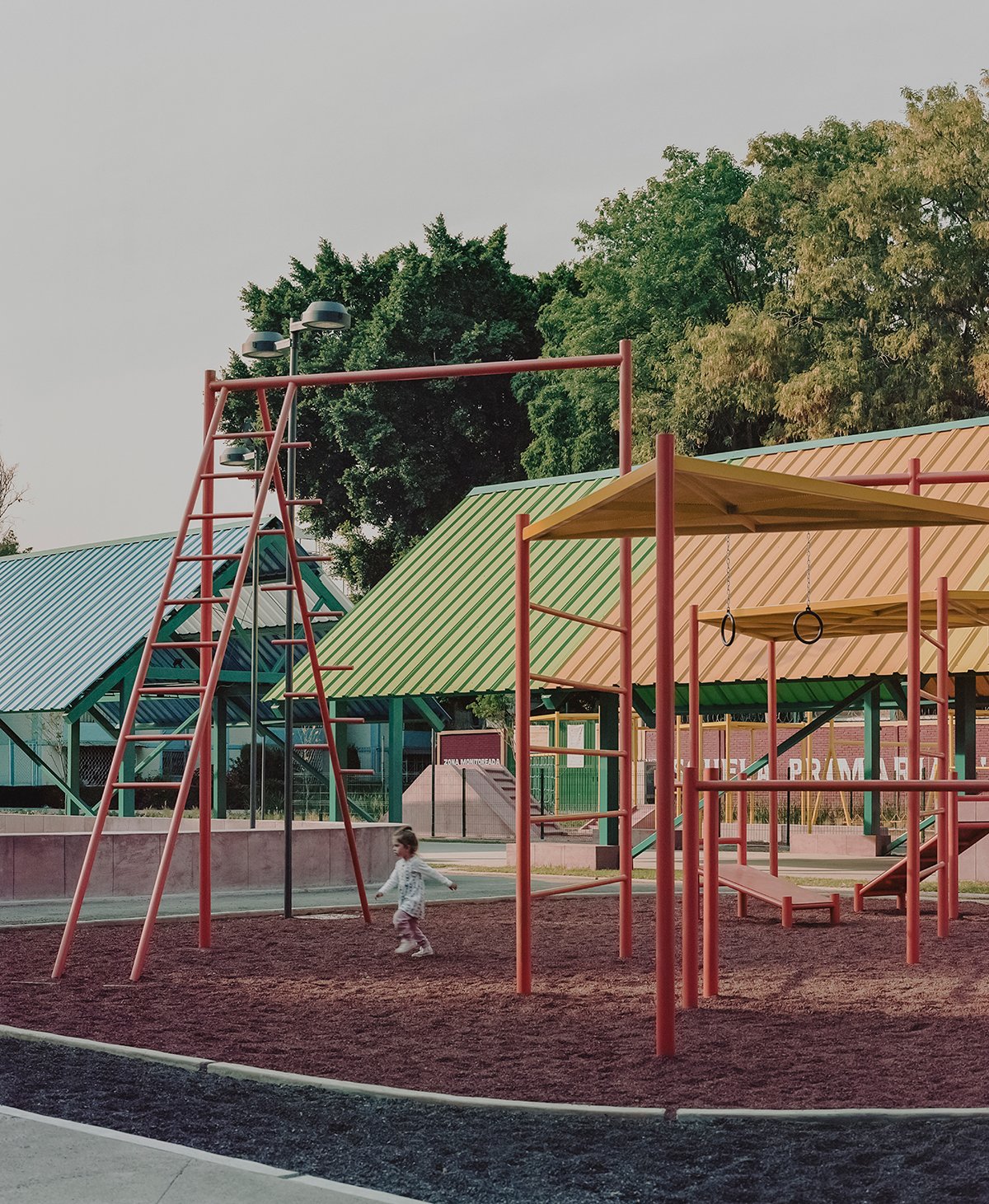
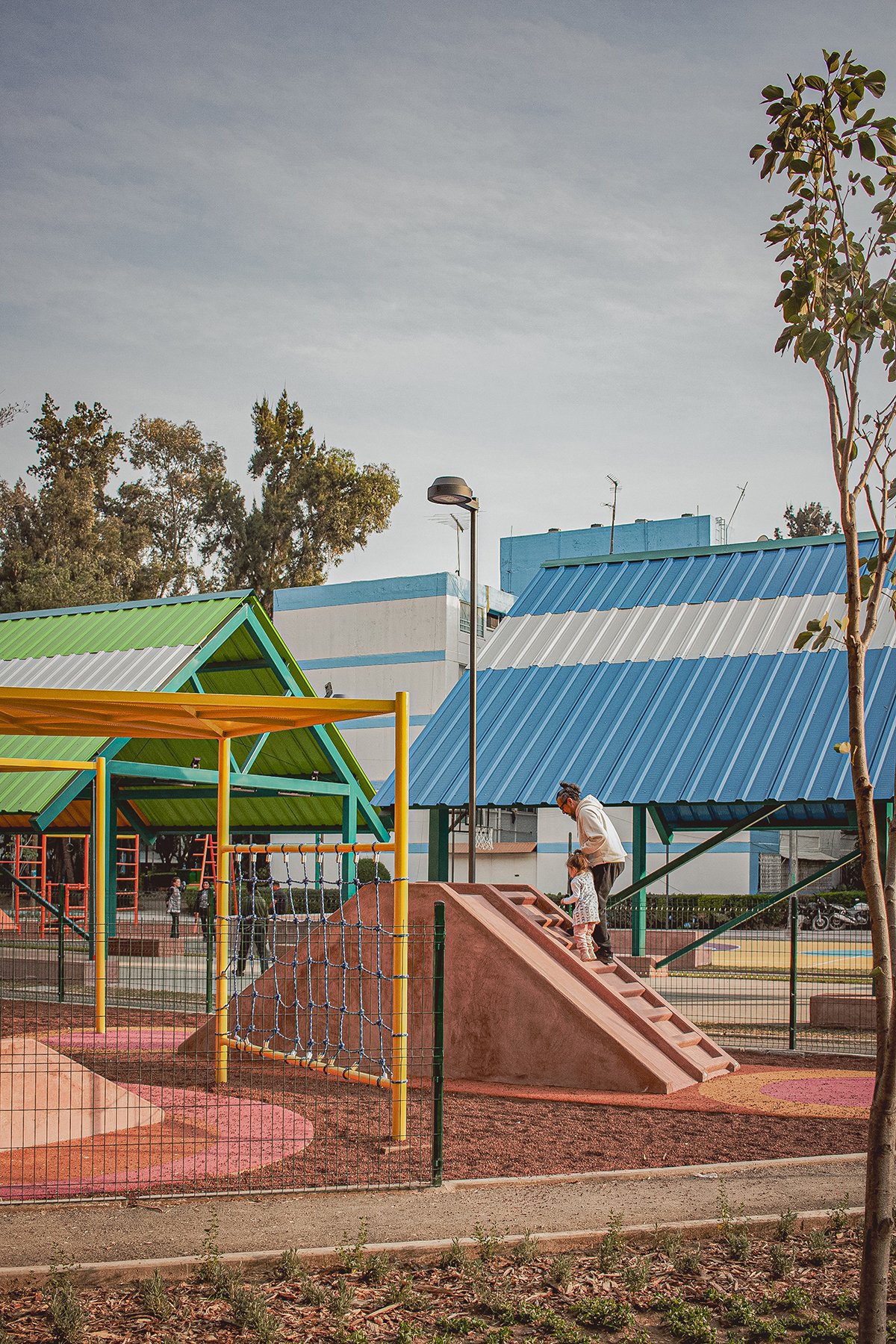
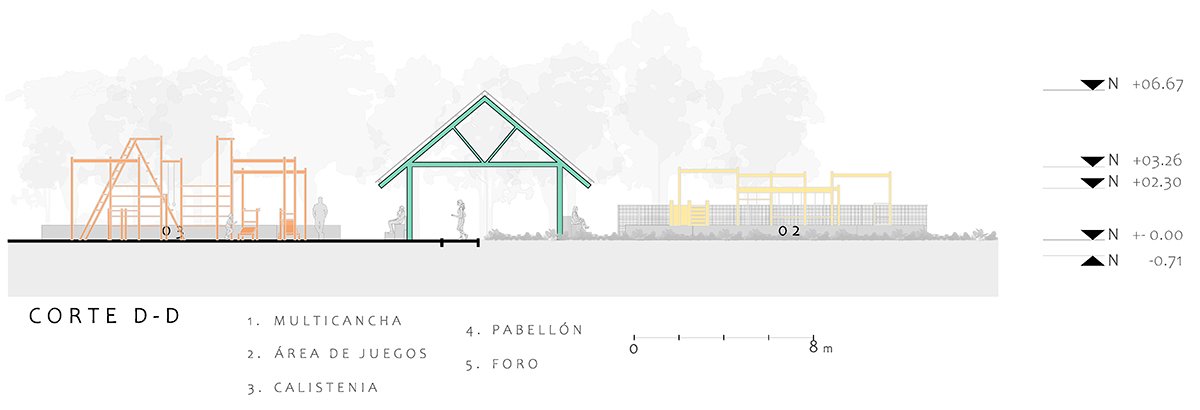
Organized around this central spine—now the backbone of a democratized public space—are the various program components, defined initially by the tender brief and refined through participatory sessions with local residents: two basketball courts, a calisthenics area, a covered forum with lateral seating, a children’s playground, and a 600-meter running track, creatively integrated into pedestrian pathways to maximize space, budget efficiency, and technical compliance.
This achievement was made possible through close collaboration with Desarrolladora de Ideas y Espacios (led by Alberto Cejudo), who partnered with AMASA Estudio from the conceptual phase to deliver an integrated solution that maintained quality despite the budget adjustments imposed by the tender. It was also crucial to identify the shared characteristics among the four commissioned projects, enabling the strategic reuse of materials and construction methods across both public space interventions and more architecturally complex proposals.
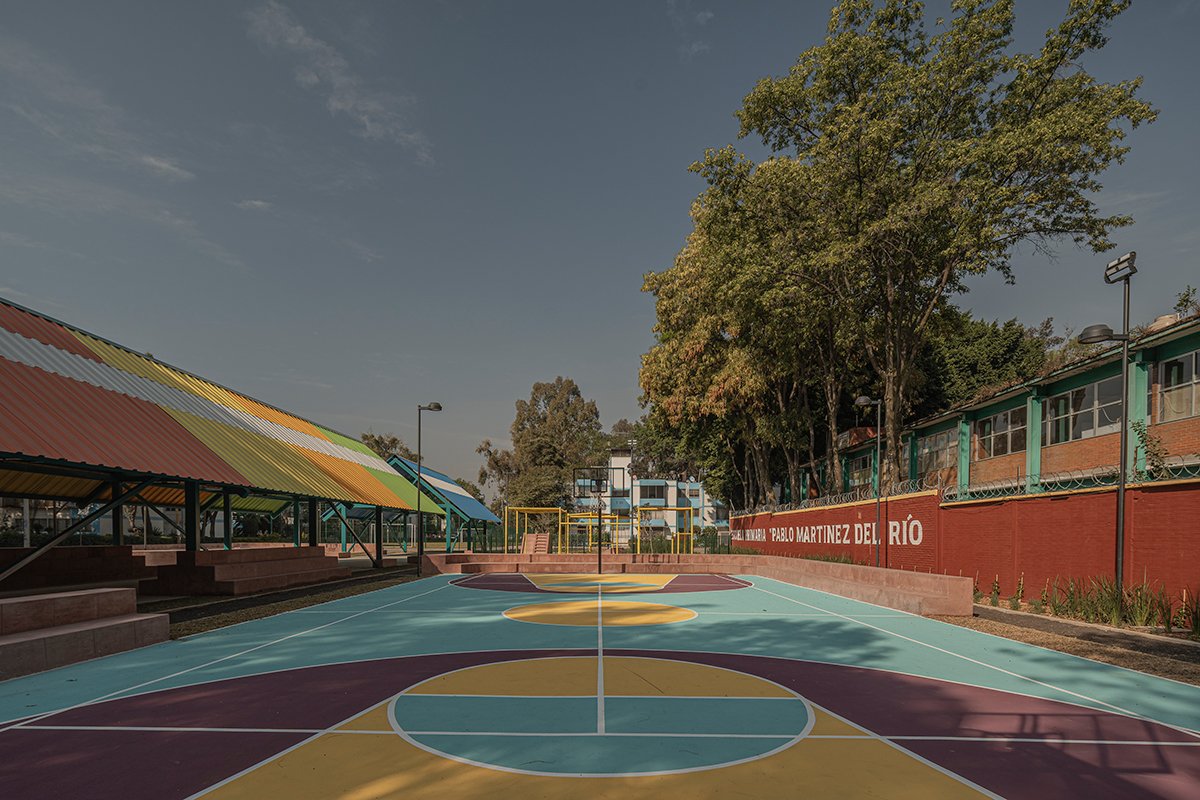
The project included a landscape improvement strategy with rainwater infiltration areas and a design that prioritizes universal accessibility by responding to existing pedestrian flows—formerly paths of passage, now routes of gathering. Elements such as color, curb modulation, paving design, and texture variation articulate the different components into a coherent, legible, and harmonious composition.
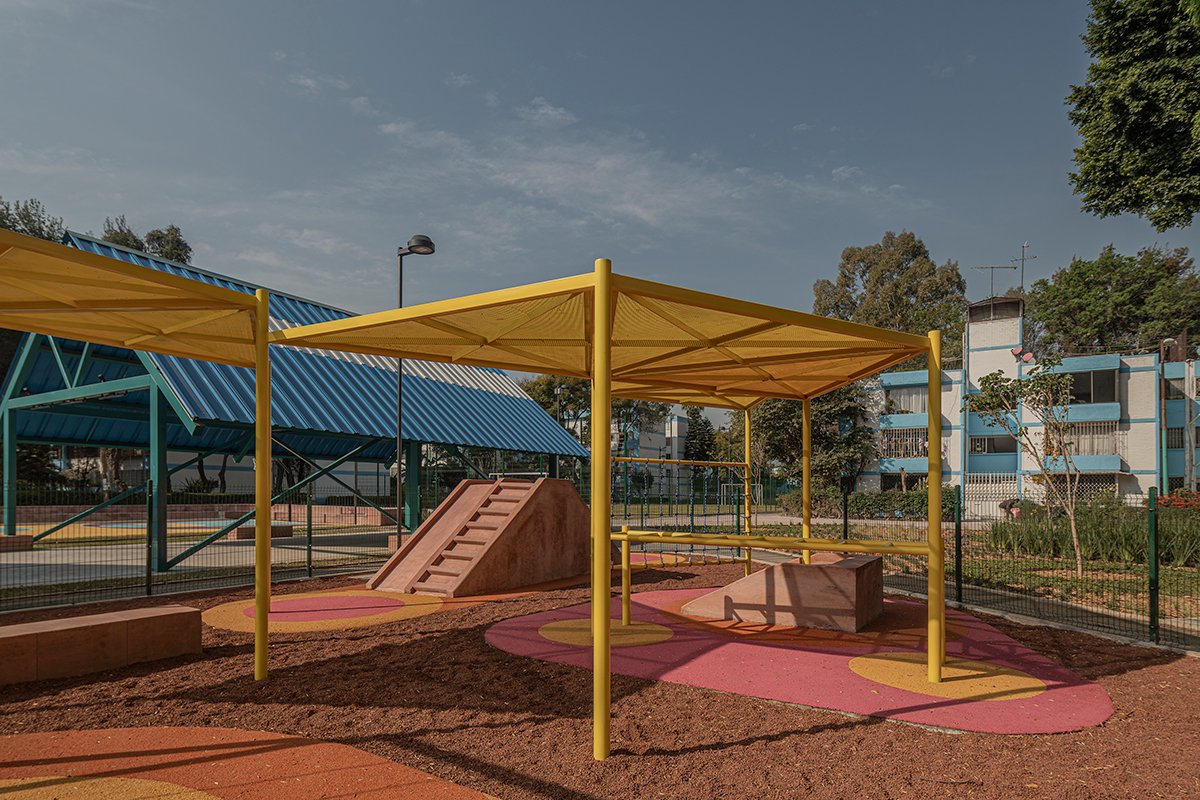
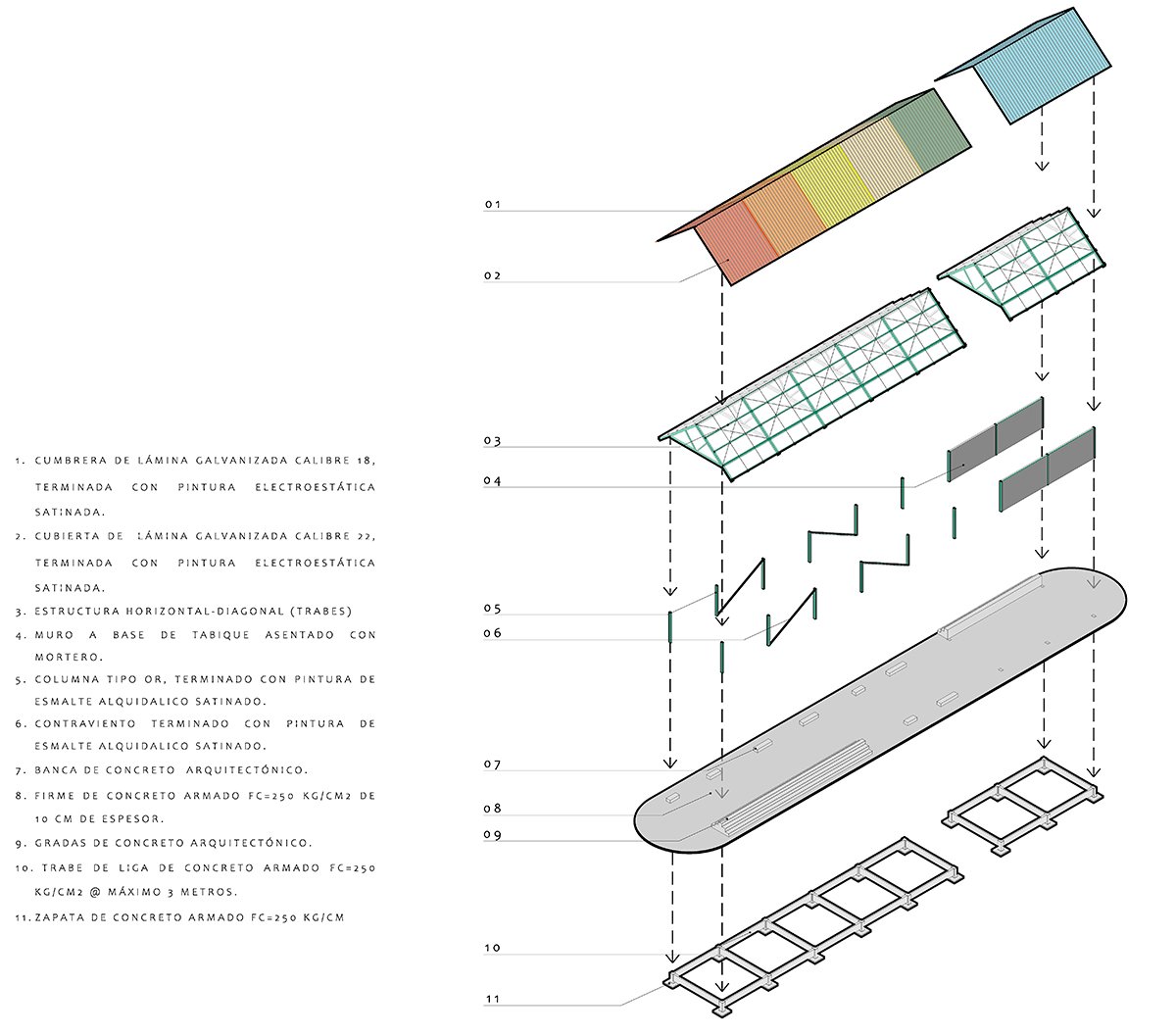
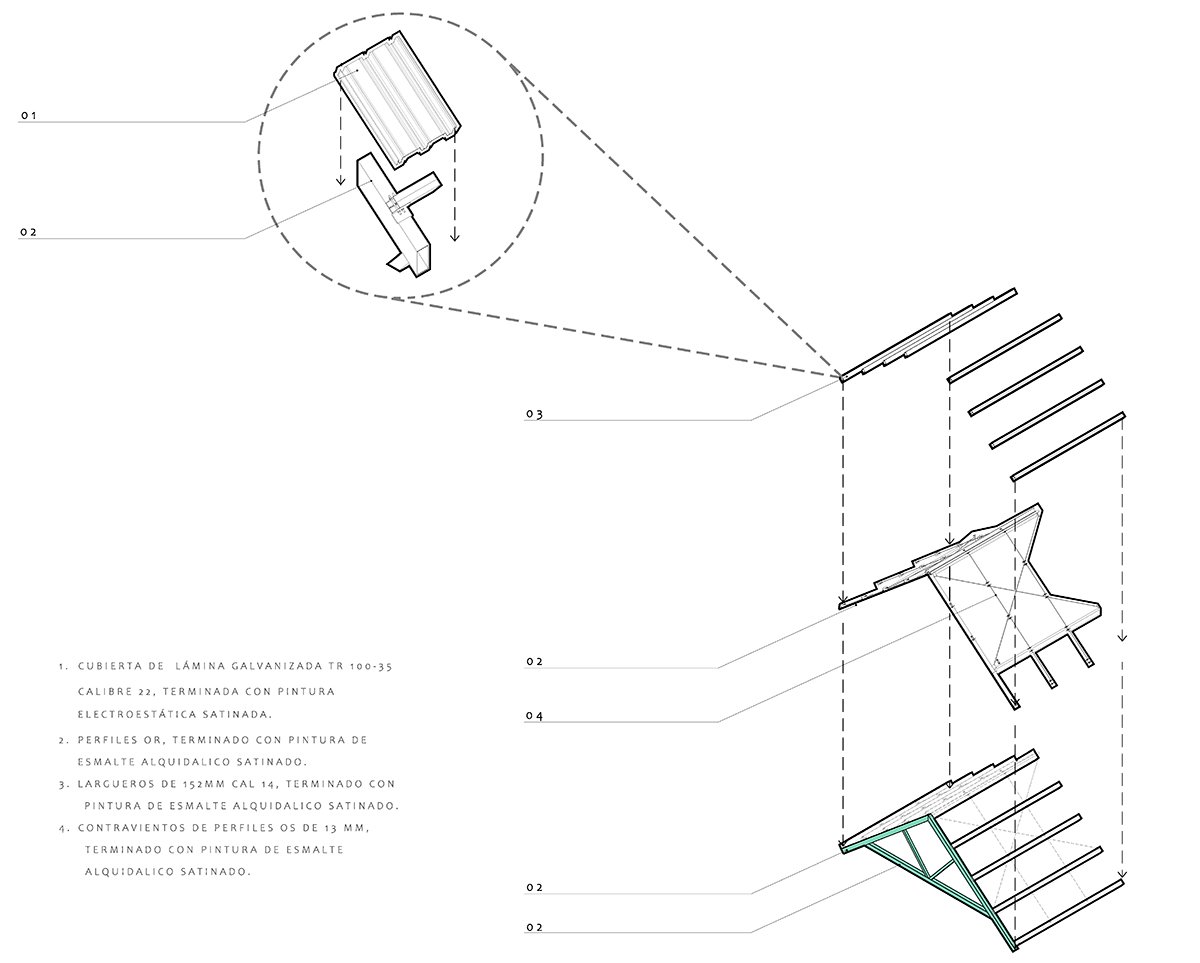
Almost fifty years after the construction of Mexico City’s largest housing complex, this intervention stands as an exemplary collaboration between the residents of Culhuacán, Infonavit, and the design team at AMASA Estudio. Through a series of seemingly simple architectural elements—structural steel profiles, pigmented concrete, and corrugated metal sheets—they have restored the social value of public space. A once-forgotten site has become a shared courtyard, now proudly cared for by its community.
Drawings


Images