Home » Academic projects » Adaptive Urbanism: Reconfigurable And Sustainable Urban Spaces For A City In Transformation | Architecture Thesis On Urban Regeneration
Adaptive Urbanism: Reconfigurable And Sustainable Urban Spaces For A City In Transformation | Architecture Thesis On Urban Regeneration
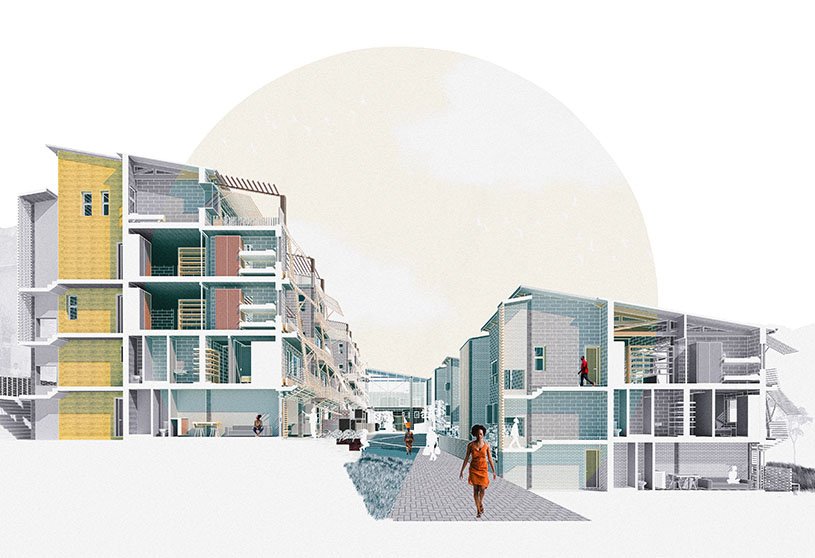
Excerpt: ‘Adaptive Urbanism’ is an architecture thesis by Isabela Rico Arenas and Maria Isabel Quintero from the ‘Facultad de Artes Integradas – Universidad de San Buenaventura Medellín.’ The project explores urban regeneration to transform Carrera 65 into a green, adaptive corridor in Medellín, focusing on the Naranjal sector. It promotes sustainable mobility, ecological restoration, and social integration through flexible public spaces, addressing urban fragmentation and climate challenges while fostering a more inclusive, resilient, and livable city.
Introduction: Traditional urbanism offers stability and permanent solutions, but its rigidity makes it difficult to adapt to social and environmental changes. In contrast, adaptive urbanism proposes reconfigurable and sustainable spaces capable of responding to transformations driven by climate change.
In Medellín, public spaces face multiple challenges. To address these, this approach seeks to apply principles of flexibility and adaptability—commonly used in interior architecture—to the urban exterior. The goal is to create dynamic public spaces through modular structures, flexible furniture, and the recovery of existing infrastructure, promoting sustainability, social integration, and resilience to the impacts of climate change.
Collage of Urban LifeUrban Growth Timeline of MedellínMacro-scale Analysis (Medellin city) of the Environmental Dimension and the Dimension of Land Use and DynamicsMeso-scale Analysis (Medellín City Center) of the Environmental Dimension and the Dimension of Land Use and Dynamics
The project is located in the Naranjal neighborhood, in the center of Medellín, Colombia. Despite its strategic importance, this area has long been overlooked in urban planning, leading to its disconnection from major metropolitan hubs. In this context, the proposal involves the design of a corridor along Carrera 65 that connects the city’s landmark hills, El Volador and Nutibara, while integrating major urban sites such as Parques del Río, La Alpujarra, and La Macarena.
Timeline and Collage of the Growth of the Naranjal NeighborhoodMultidimensional Micro-scale Analysis (Naranjal Neighborhood)3D View of the Study Areas and the Landmarks that Connect Them
The intervention proposes the partial burial of road sections and the consolidation of an adaptive public space system composed of linear parks, bike paths, rain gardens, and modular urban furniture. This approach seeks to reestablish Naranjal’s connectivity with the broader city, reduce climate change impacts, and transform the area into a green, efficient, and resilient urban node. The overarching goal is to improve quality of life through a flexible, sustainable, and human-centered approach to urban development.
Design Process
General Strategies of the ProposalsSite Study Model with Opportunity Areas | Site Study Model with Intervention Proposals
This project is based on a multiscalar and multidimensional analysis of Medellín, focusing on the Naranjal sector as a strategic site for urban renewal.
At the macro scale, the study examines the city’s ecological and mobility structures—such as the Medellín River, green corridors, and risk zones—highlighting the urgent need for climate adaptation. At this level, issues such as the disconnection of natural structuring elements (hills and streams), the loss of ecological value in La Hueso stream, and weak stormwater management leading to flood risks are identified.
Intervention Proposal: La 65 Urban BeltPlan View of the Intervention Proposal: La 65 Urban BeltSchematic Sections of the Intervention Proposals
The heavy vehicular traffic on key avenues targeted for intervention, ornamental landscaping lacking an ecological approach, and fragmentation of the urban fabric all exacerbate the disconnection between cultural, social, and natural nodes. Additionally, there is an unplanned mix of residential, industrial, commercial, and logistical uses, along with a lack of functional parks or well-equipped gathering spaces. Naranjal, with its limited integration into current strategic plans such as the Río Centro project, embodies these tensions in a distinct way.
Schematic Sections of the Intervention ProposalsPlan View of the second Intervention Proposal: 70–65 Urban Corridor
Finally, at the micro scale, Naranjal emerges as a dynamic yet deeply fragmented district, with physical barriers created by major roads, high ecological vulnerability, and significant potential for sustainable densification, urban restructuring, and comprehensive public space recovery. Several intervention and articulation zones were proposed within the same sector, addressing a variety of spaces and needs through diverse types of public space. These include strategies such as the revitalization and adaptation of existing spaces, the creation of an elevated park over roadways, the transformation of road infrastructure for urban use, the introduction of mid-block parks, and the implementation of underground roads to free up urban public space.
Schematic Sections of the Intervention ProposalsSchematic Sections of the Intervention Proposals
These proposals reflect a comprehensive vision for environmental recovery and urban enhancement, integrating the interventions with the existing urban fabric while fostering new dynamics of use, mobility, and civic interaction.
Final Outcome
Plan View of the final Intervention Proposal: La 65 Articulated CorridorInitial Action Unit Plan: La 65 Undergrounded Corridor – La Hueso Creek Linear ParkSections of the Initial Action Unit: La 65 Undergrounded Corridor – La Hueso Creek Linear Park
The Articulated Corridor 65 is a proposal aimed at transforming Carrera 65, between El Volador and Nutibara hills, into a green urban corridor integrated with major roads and the La Hueso and La Iguana creeks. The project envisions an adaptive public space system featuring active sidewalks, bike lanes, native tree planting, rain gardens, and both linear and elevated parks.
Sections of the Initial Action Unit: La 65 Undergrounded Corridor – La Hueso Creek Linear ParkSections of the Initial Action Unit: La 65 Undergrounded Corridor – La Hueso Creek Linear ParkLocation and Typology of ParksKey Elements of the Initial Action Unit
In the Naranjal sector, the proposal seeks to establish an urban, environmental, and social node through the partial burial of Carrera 65 and the creation of a large urban park. This intervention is connected to La Macarena, Parques del Río, and La Alpujarra, promoting sustainable mobility, ecological restoration, and citizen integration.
Isometrics of the ParksIsometrics of the Parks
The proposal includes key components such as rain gardens, water buffering areas, green corridors, permeable surfaces, solar trees, solar lighting, water-collecting pergolas, and modular furniture. It also incorporates major strategies like the use of solar energy as a renewable source, a passive rainwater collection and management system, low-impact construction materials, and the integration of micro-ecosystems composed of native vegetation and wildlife.
Proposed microecosystemsComfort and environmental quality
Together, these strategies not only address environmental issues, mobility challenges, and urban fragmentation, but also open opportunities to build a more resilient, participatory, and ecologically regenerated city.
Linear Park Render
Conclusion: Ultimately, the project reimagines Carrera 65 as a green, connected corridor that restores ecology, enhances mobility, and strengthens community life—positioning Medellín as a more resilient and inclusive city.
[This Academic Project has been published with text and images submitted by the student]
Site Context
Design Process
Final Outcome
To submit your academic project for publication at ArchiDiaries, please visit the following link >> Submit
Get the best of ArchiDiaries, directly in your inbox.
We use cookies on our website to give you the most relevant experience by remembering your preferences and repeat visits. By clicking “Accept All”, you consent to the use of ALL the cookies. However, you may visit "Cookie Settings" to provide a controlled consent.
This website uses cookies to improve your experience while you navigate through the website. Out of these, the cookies that are categorized as necessary are stored on your browser as they are essential for the working of basic functionalities of the website. We also use third-party cookies that help us analyze and understand how you use this website. These cookies will be stored in your browser only with your consent. You also have the option to opt-out of these cookies. But opting out of some of these cookies may affect your browsing experience.
Necessary cookies are absolutely essential for the website to function properly. These cookies ensure basic functionalities and security features of the website, anonymously.
Cookie
Duration
Description
cookielawinfo-checkbox-analytics
11 months
This cookie is set by GDPR Cookie Consent plugin. The cookie is used to store the user consent for the cookies in the category "Analytics".
cookielawinfo-checkbox-functional
11 months
The cookie is set by GDPR cookie consent to record the user consent for the cookies in the category "Functional".
cookielawinfo-checkbox-necessary
11 months
This cookie is set by GDPR Cookie Consent plugin. The cookies is used to store the user consent for the cookies in the category "Necessary".
cookielawinfo-checkbox-others
11 months
This cookie is set by GDPR Cookie Consent plugin. The cookie is used to store the user consent for the cookies in the category "Other.
cookielawinfo-checkbox-performance
11 months
This cookie is set by GDPR Cookie Consent plugin. The cookie is used to store the user consent for the cookies in the category "Performance".
viewed_cookie_policy
11 months
The cookie is set by the GDPR Cookie Consent plugin and is used to store whether or not user has consented to the use of cookies. It does not store any personal data.
Functional cookies help to perform certain functionalities like sharing the content of the website on social media platforms, collect feedbacks, and other third-party features.
Performance cookies are used to understand and analyze the key performance indexes of the website which helps in delivering a better user experience for the visitors.
Analytical cookies are used to understand how visitors interact with the website. These cookies help provide information on metrics the number of visitors, bounce rate, traffic source, etc.
Advertisement cookies are used to provide visitors with relevant ads and marketing campaigns. These cookies track visitors across websites and collect information to provide customized ads.