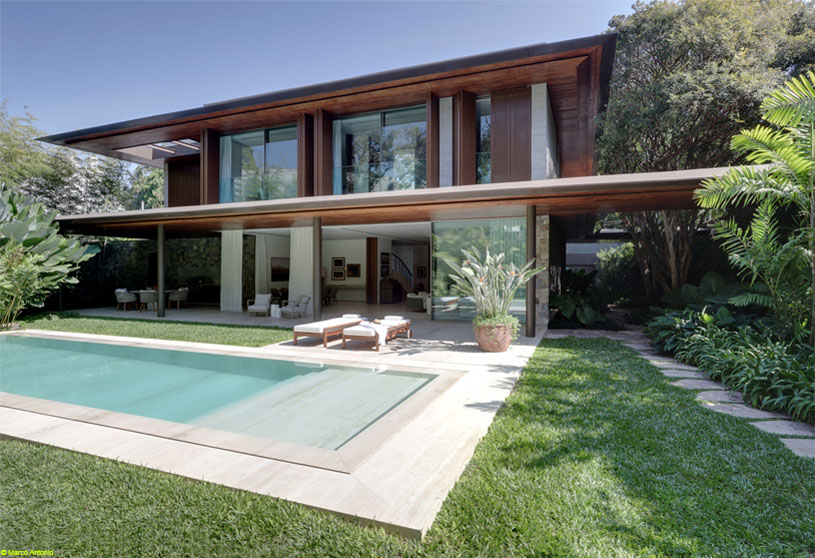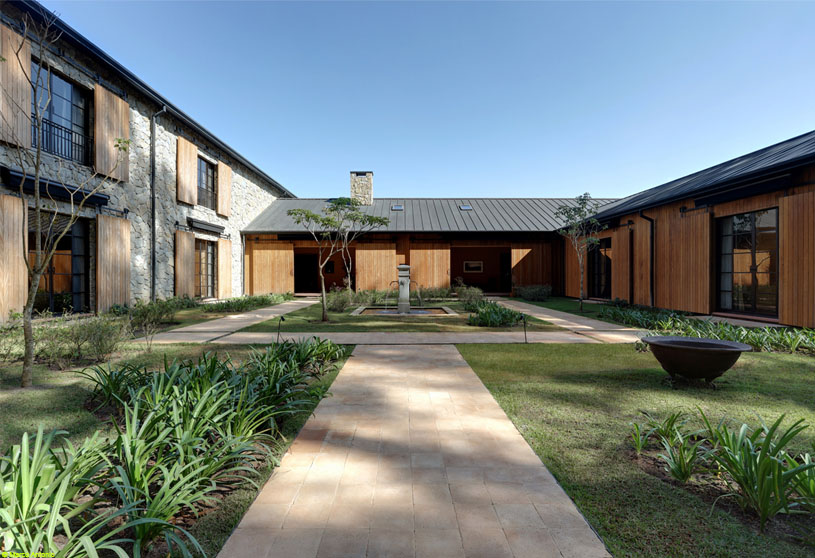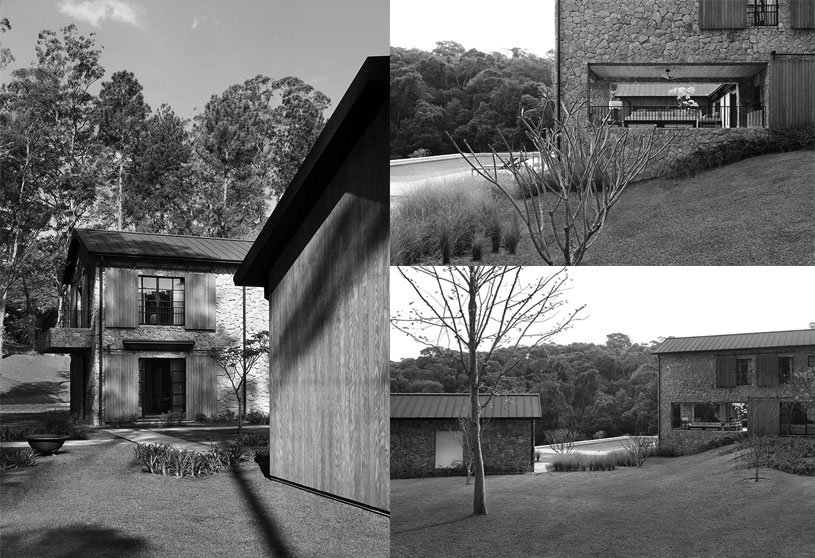
(“Text as submitted by architect”)
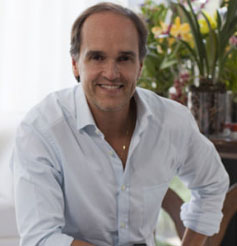 Dado Castello Branco
Dado Castello Branco is an architect based in São Paulo, where he has developed most of his career over the past three decades. He graduated from Belas Artes in São Paulo and later specialized at the École Spéciale d’Architecture in Paris.
His work focuses mainly on high-end residential and corporate projects, always guided by a careful and detailed approach. He is particularly interested in how people live — their routines, their relationships — and how architecture can translate that into space.
Today, he leads a studio that operates both in Brazil and internationally, working closely with his son, Guilherme Castello Branco, who is the general director of the office. Together, they are involved in all stages of the process, from concept to final detailing, maintaining a practice where architecture and interiors are conceived as one.
In 2025, Dado also launched a book with Rizzoli about his practice. “Dado Castello Branco: Brazilian Timeless Architecture & Interiors” reflects on more than 30 years of work through key themes such as light, materials, horizon, and art.
Guilherme Castello Branco
Guilherme Castello Branco, an architect who graduated from the Faculty of Fine Arts, takes the lead alongside his father at the Dado Castello Branco office, bringing a fresh and contemporary perspective. His artistic background influences every project, resulting in spaces that uniquely combine functionality and beauty. Together, they challenge established paradigms, introducing new concepts and innovative approaches in the field of architecture.
This dynamic collaboration between generations inspires a culture of creativity and excellence, shaping the future of the office and leaving a lasting mark on the architectural landscape.
Practice Ideology
Architecture and decoration are inseparable. They are one and the same thing. Over three decades of practice, a clear ideology has emerged: architecture must begin with a deep understanding of how people actually live. Before a single line is drawn, the studio decodes each client’s desires, habits, and relationships, because spaces don’t just shelter people, they change them. They alter lifestyles, schedules, even the way people dress.
The guiding ambition is deceptively simple: to make clients want to come home and stay there. This requires the sensitivity of a psychologist, an ability to read intimate worlds and translate them into form.
Aesthetically, the studio occupies a liminal space between two giants of Modernism: Oscar Niemeyer’s volumetric precision and Le Corbusier’s organic spatial flow. Dado’s trajectory mirrors, in many ways, the very exchanges between these architects that shaped Brazilian Modernism. The result is a contemporary Neo-Modernism: warm, humanized, never cold, that balances the rigor of German Bauhaus minimalism with the richness of European classical traditions. Philip Johnson, the first Pritzker Prize laureate, is a key reference.
Four foundational elements act as a compass across every project: light, materials, the horizon, and art. Light is the guiding thread of design and the first pulse of architecture. Spaces are conceived to capture as much natural luminosity as possible, without barriers or obstacles. Materials are selected with restraint and authenticity, favoring natural substances: stone, wood, concrete, glass, ceramics, combined through an organic logic that prioritizes tactile and thermal comfort. The horizon is treated philosophically, echoing Tadao Ando’s belief that architecture should rise from the earth rather than be imposed upon it; the studio frames landscape and brings the surroundings indoors, minimizing compartmentalization and maximizing spatial integration. Art, finally, is not decoration, it is curation. Each artwork is placed as a new window onto the world, shaping not only the physical environment but the infinite possibilities visible to those who inhabit it.
The studio’s approach is often likened to haute couture: comprehensive, 360-degree, extending from structural conception to custom furniture, bespoke cabinetry, exclusive fabrics, and curated rugs. Every handle, every stitch on a sofa, is considered.
The goal is always the same: compositions deeply imbued with the owner’s personality, yet adaptable anywhere in the world.