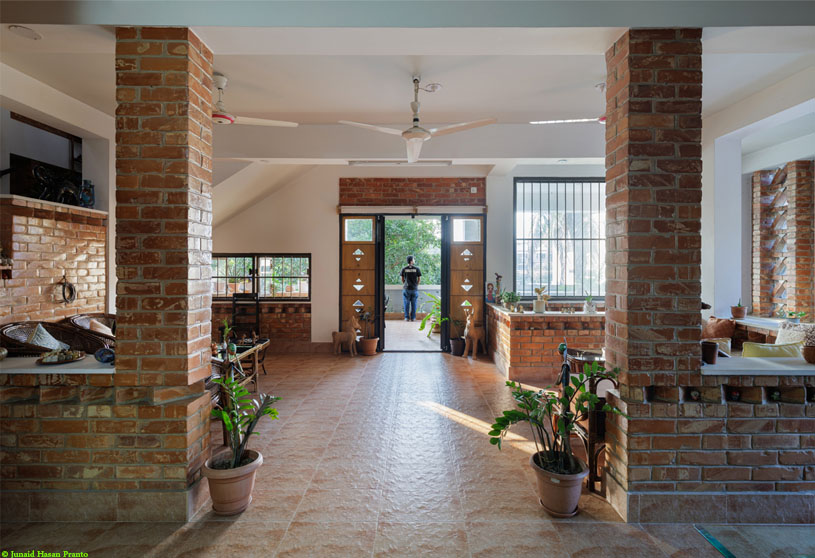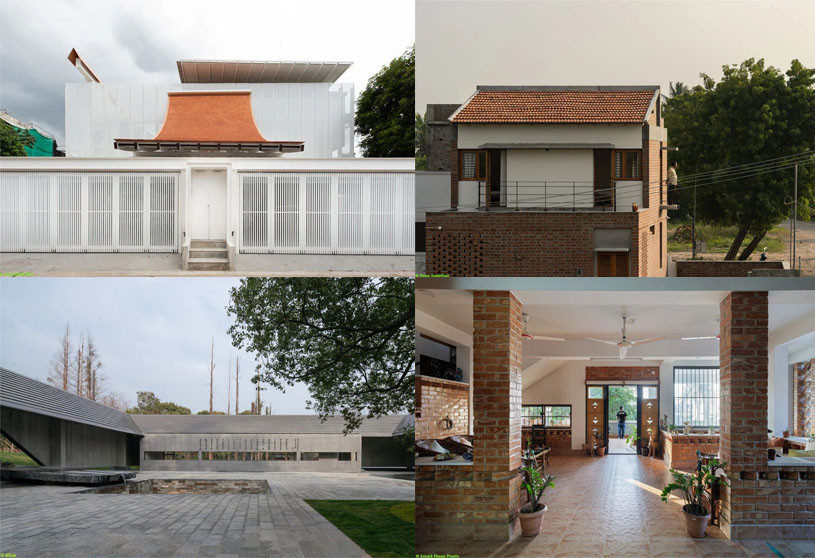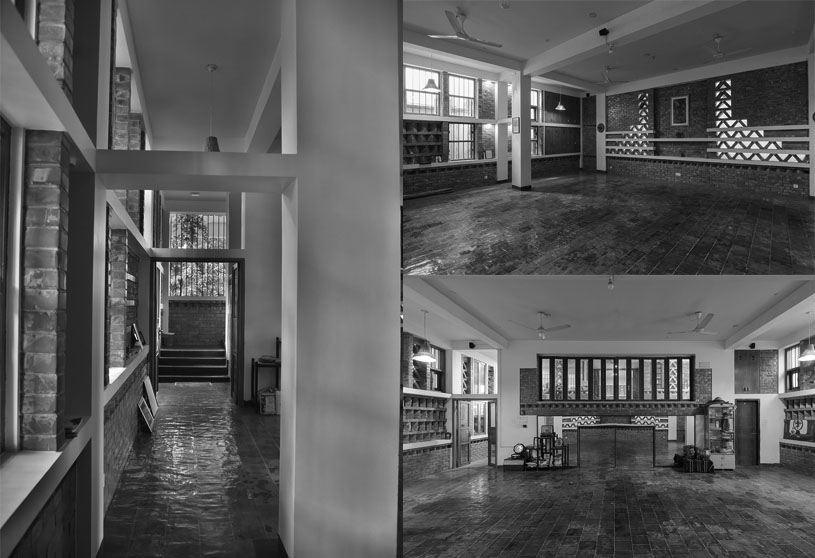
(“Text as submitted by architect”)
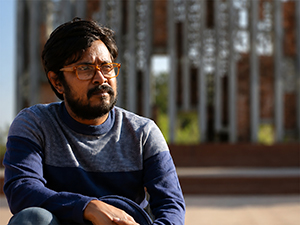 Ar. Rajon Das
Rajon Das graduated from Bangladesh University of Engineering and Technology in 2006 and founded his architectural practice, Kshiti Sthapati, in Sylhet in 2008. His architectural approach centers on reviving vernacular design elements and reflecting the socio-cultural identity of the Sylhet region in northeastern Bangladesh. Guided by the local microclimate and an emphasis on affordability, he often incorporates pitched roofs as a defining structural and climatic feature in residential architecture.
Over the course of his career, he has designed nine monuments dedicated to the martyrs of the 1971 Liberation War and the 1952 Language Movement. These works deepened his connection with history and strengthened the nationalistic and vernacular values that shaped his design philosophy. In one Liberation War memorial project, he notably combined traditional thatching materials with concrete construction, expressing his commitment to indigenous building traditions and regional craftsmanship.
Rajon Das is particularly interested in working with middle- and lower-middle-class communities, whose everyday realities, hopes, and resilience inspire his creative process. He believes these communities offer both authenticity and freedom in architectural exploration. His long-term vision is to reconnect with the rural landscapes of Sylhet and rediscover the region’s forgotten architectural, cultural, and environmental heritage through context-driven design.
 Ar. Amitava Debnath
Contributing to projects that emphasize vernacular architecture, contextual sensitivity, and the socio-cultural identity of the Sylhet region. Participates in design development, site analysis, drawing preparation, and project coordination while maintaining the firm’s commitment to climate-responsive and cost-effective architecture.
The position requires an understanding of local materials, traditional building techniques, and contemporary architectural practices. From residential projects to memorial and cultural works. He supports the integration of regional heritage with modern design approaches.
Attention to detail, creative problem-solving, and sensitivity to community needs are central to the role. He also engages with research and documentation related to architectural traditions and evolving urban context, contributing to the firm’s broader vision of reconnecting architecture with culture, history, and local identity.
Practice Ideology
Kshiti Sthapati is an architectural practice grounded in the vernacular traditions, climatic realities, and cultural landscape of northeastern Bangladesh. The studio’s ideology is deeply rooted in the belief that architecture is not an isolated object, but a continuous dialogue between place, people, and memory. Rather than imposing predetermined formal expressions, the practice seeks to evolve design solutions that emerge from the specificities of site, climate, and everyday life. In this sense, architecture is understood as a sensitive response to context rather than a universal aesthetic language.
Heavily inspired by the unique geography of Sylhet and its surrounding haor landscape, Kshiti Sthapati integrates environmental conditions as fundamental design drivers. The region’s humid subtropical climate, seasonal flooding, and lush terrain inform a design approach that prioritizes adaptability and resilience.
Architectural elements such as pitched roofs, raised plinths, shaded verandas, and layered transitional spaces are not treated as stylistic gestures but as essential responses to climate and lived experience. The studio also emphasizes the use of local and readily available materials, ensuring that construction remains both environmentally grounded and economically viable. Brick, timber, bamboo, and other regional resources are often employed in ways that highlight material honesty and tactile expression.
Beyond environmental responsiveness, the practice positions architecture as a cultural and social process. Kshiti Sthapati engages deeply with themes of identity, memory, and collective history, often drawing inspiration from the historical narratives of Bangladesh. Projects include not only residential and civic works but also memorials that commemorate significant national events such as the Liberation War of 1971 and the Language Movement of 1952. These works reflect a commitment to embedding architecture within the broader cultural consciousness, transforming built form into a medium of remembrance and reflection.
A defining aspect of the practice is its engagement with communities, particularly middle- and lower-income groups. The studio seeks to challenge the notion that meaningful architecture is limited to high-budget or elite contexts. Instead, it advocates for context-responsive and cost-conscious design strategies that prioritize dignity, usability, and human experience. By working closely with users and understanding their daily routines, aspirations, and constraints, Kshiti Sthapati develops spaces that are both functional and emotionally resonant.
Ultimately, the practice envisions architecture as an act of care—one that is deeply connected to landscape, tradition, and lived reality. Through its integration of climate awareness, cultural sensitivity, and social responsibility, Kshiti Sthapati continues to explore how architecture can meaningfully contribute to the evolving narrative of Bengal.