A Path Towards Resilience Through Community-Driven Activities at Gora-Digha, Kishoreganj | Bachelors Design Thesis on Wetland Architecture

Save
A Path Towards Resilience Through Community-Driven Activities at Gora-Digha, Kishoreganj | Bachelors Design Thesis on Wetland Architecture

Information

  • Project Name: A Path Towards Resilience Through Community-Driven Activities at Gora-Digha, Kishoreganj
  • Student Name: Faria Tabassum Sujan
  • Softwares/Plugins: AutoCAD , SketchUp , Adobe Photoshop , Enscape
More Info Less Info

Excerpt: A Path Towards Resilience Through Community-Driven Activities at Gora-Digha, Kishoreganj’ is an architecture thesis by Faria Tabassum Sujan from the ‘Department of Architecture – American International University-Bangladesh (AIUB).’ The project aims to develop a resilient, multifunctional community hub for Bangladesh’s flood-prone Haor region, ensuring year-round access to education, healthcare, livelihoods, and social life. By embracing seasonal flooding rather than resisting it, the project seeks to sustain dignity, connectivity, and community resilience through adaptable architecture.

Introduction: Located in the flood-prone ‘Haor’ region of Bangladesh, the project explores how architecture can support communities living with recurring inundation and seasonal isolation. A ‘Haor’ is a unique wetland ecosystem in northeastern Bangladesh where vast floodplains transform into an inland sea during the monsoon and fertile agricultural land during the dry season.

The project began with a critical question—”How can architecture ensure access, dignity, and resilience in a place where even basic rights become seasonal?”

Rather than resisting water, it embraces seasonal transformation as a defining condition of place. Through community engagement, site investigations, and vernacular learning, the proposal develops a multifunctional civic framework that integrates education, healthcare, livelihoods, and cultural life. The project redefines resilience not merely as protection from climate impacts, but as the ability to sustain connection, dignity, and everyday life amidst environmental uncertainty.

Save

Site Context

A Path Towards Resilience Through Community-Driven Activities at Gora-Digha, Kishoreganj | Bachelors Design Thesis on Wetland Architecture
Site Location & Context
A Path Towards Resilience Through Community-Driven Activities at Gora-Digha, Kishoreganj | Bachelors Design Thesis on Wetland Architecture
Aerial View of the Site During Wet Season
A Path Towards Resilience Through Community-Driven Activities at Gora-Digha, Kishoreganj | Bachelors Design Thesis on Wetland Architecture
Historical Growth Map

The project is located in Gora-Digha, Kishoreganj, within the ‘Haor’ basin at the confluence of the ‘Dhanu’ and ‘Ghorautra’ rivers. During every monsoon, rising water levels submerge approximately 400-500 sq.km of Kishoreganj, leaving more than 100,000 people marooned and disconnected from essential services, transportation, education, and healthcare.

A Path Towards Resilience Through Community-Driven Activities at Gora-Digha, Kishoreganj | Bachelors Design Thesis on Wetland Architecture
Reading the ‘Haor’ Landscape
A Path Towards Resilience Through Community-Driven Activities at Gora-Digha, Kishoreganj | Bachelors Design Thesis on Wetland Architecture
Reading the ‘Haor’ Landscape
A Path Towards Resilience Through Community-Driven Activities at Gora-Digha, Kishoreganj | Bachelors Design Thesis on Wetland Architecture
Story of The Local People: A photographic and narrative collage documenting the everyday lives, challenges and aspirations of the ‘Gora-Digha’ community. By capturing local stories and lived experiences, the image establishes the social foundation of the project and highlights the resilience of people living within a constantly changing environment.

Community surveys identified the need for a school, healthcare center, and marketplace. In response, the proposal establishes a multifunctional community hub comprising educational, healthcare, commercial, and cultural spaces. Designed as interconnected social infrastructure rather than isolated buildings, the project supports everyday life while remaining capable of functioning during floods and post-disaster recovery.

Design Process

A Path Towards Resilience Through Community-Driven Activities at Gora-Digha, Kishoreganj | Bachelors Design Thesis on Wetland Architecture
Appropriate Space for Architectural Intervention and Statistical Information
A Path Towards Resilience Through Community-Driven Activities at Gora-Digha, Kishoreganj | Bachelors Design Thesis on Wetland Architecture
Design Consideration

The design process began with an investigation into the environmental and social realities of the ‘Haor’ region through site visits, participatory mapping and household surveys. These studies revealed that recurring flooding, seasonal isolation and the absence of civic infrastructure significantly affected everyday life and long-term development opportunities.

A Path Towards Resilience Through Community-Driven Activities at Gora-Digha, Kishoreganj | Bachelors Design Thesis on Wetland Architecture
Design Strategies
A Path Towards Resilience Through Community-Driven Activities at Gora-Digha, Kishoreganj | Bachelors Design Thesis on Wetland Architecture
Local Artisan: Window and Door Detail

A thorough examination of circulation networks, settlement patterns, water systems, and land ownership determined that the project site was the best place for community intervention. The designer then studied the vernacular intelligence of the ‘Haor’, including raised plinths, lightweight structures, pitched roofs and settlement orientations organized around water bodies.

A Path Towards Resilience Through Community-Driven Activities at Gora-Digha, Kishoreganj | Bachelors Design Thesis on Wetland Architecture
Material and Roof Detail
A Path Towards Resilience Through Community-Driven Activities at Gora-Digha, Kishoreganj | Bachelors Design Thesis on Wetland Architecture
Walls and Doors

Rather than replicating traditional forms, the proposal reinterprets these environmental strategies into a contemporary architectural response. Flexible and elevated spaces were developed to support changing social and climatic conditions throughout the year. The masterplan further integrates peripheral circulation routes, organized ghats, shoreline protection, and floating cultivation strategies to strengthen the relationship between architecture, water, and livelihood.

Final Outcome

A Path Towards Resilience Through Community-Driven Activities at Gora-Digha, Kishoreganj | Bachelors Design Thesis on Wetland Architecture
Masterplan
A Path Towards Resilience Through Community-Driven Activities at Gora-Digha, Kishoreganj | Bachelors Design Thesis on Wetland Architecture
Plan and Detail Programs
A Path Towards Resilience Through Community-Driven Activities at Gora-Digha, Kishoreganj | Bachelors Design Thesis on Wetland Architecture
Sections
A Path Towards Resilience Through Community-Driven Activities at Gora-Digha, Kishoreganj | Bachelors Design Thesis on Wetland Architecture
Landscape as a System of Resilience

The final proposal envisions architecture as an evolving framework for resilience rather than a static object. The community hub operates across three temporal conditions: everyday life, flood response, and post-disaster recovery.

A Path Towards Resilience Through Community-Driven Activities at Gora-Digha, Kishoreganj | Bachelors Design Thesis on Wetland Architecture
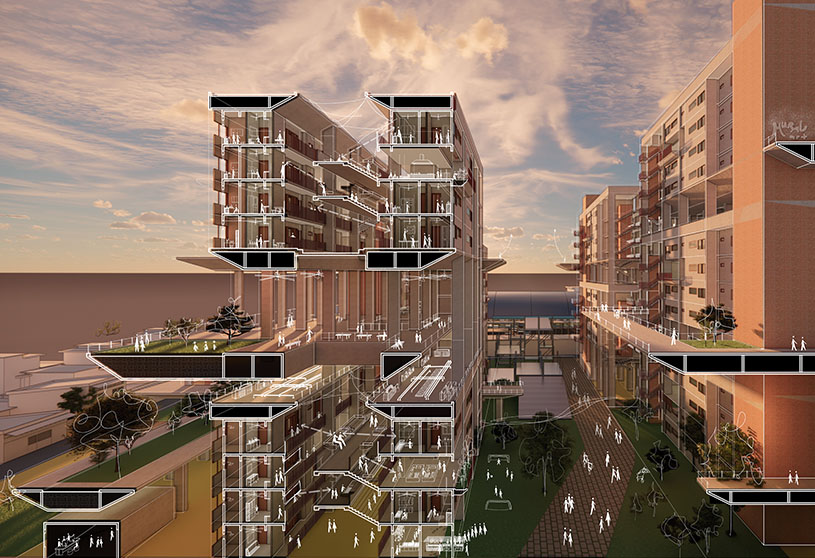
Perspective & Longitudinal Section: This drawing combines a bird’s-eye perspective with a longitudinal section to illustrate the relationship between architecture, community life and the seasonal landscape of ‘Haor’ region.
A Path Towards Resilience Through Community-Driven Activities at Gora-Digha, Kishoreganj | Bachelors Design Thesis on Wetland Architecture
Dry Season vs Wet Season
A Path Towards Resilience Through Community-Driven Activities at Gora-Digha, Kishoreganj | Bachelors Design Thesis on Wetland Architecture
Dry Season vs Wet Season
A Path Towards Resilience Through Community-Driven Activities at Gora-Digha, Kishoreganj | Bachelors Design Thesis on Wetland Architecture
Blow-up Model (Top view)

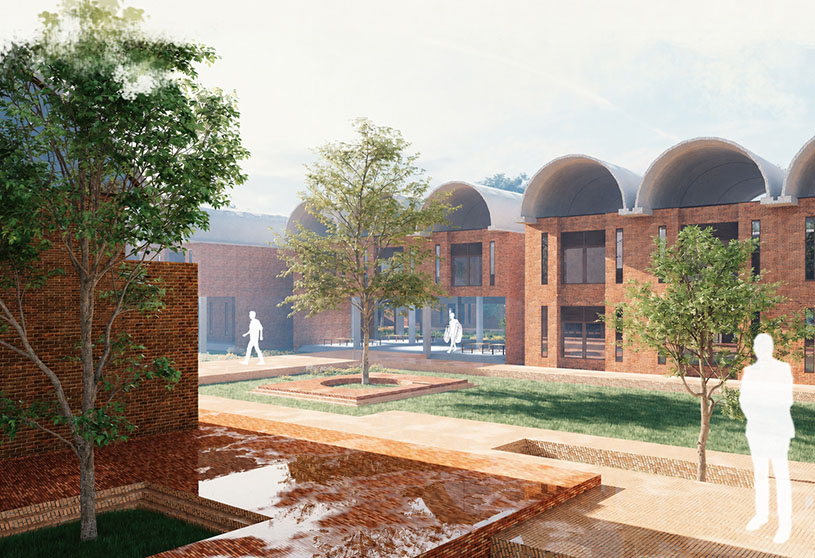
During normal periods, the same spaces function as schools, healthcare facilities, marketplaces, and community centers. During and after floods, they can be transformed into emergency healthcare and support centers, relief spaces, training facilities, and recovery workshops. Elevated structures, flexible interiors, and locally sourced materials enable the architecture to adapt to changing conditions while fostering long-term community participation.

A Path Towards Resilience Through Community-Driven Activities at Gora-Digha, Kishoreganj | Bachelors Design Thesis on Wetland Architecture
Sectional Model
A Path Towards Resilience Through Community-Driven Activities at Gora-Digha, Kishoreganj | Bachelors Design Thesis on Wetland Architecture
Blow-up Model (Top view)
A Path Towards Resilience Through Community-Driven Activities at Gora-Digha, Kishoreganj | Bachelors Design Thesis on Wetland Architecture
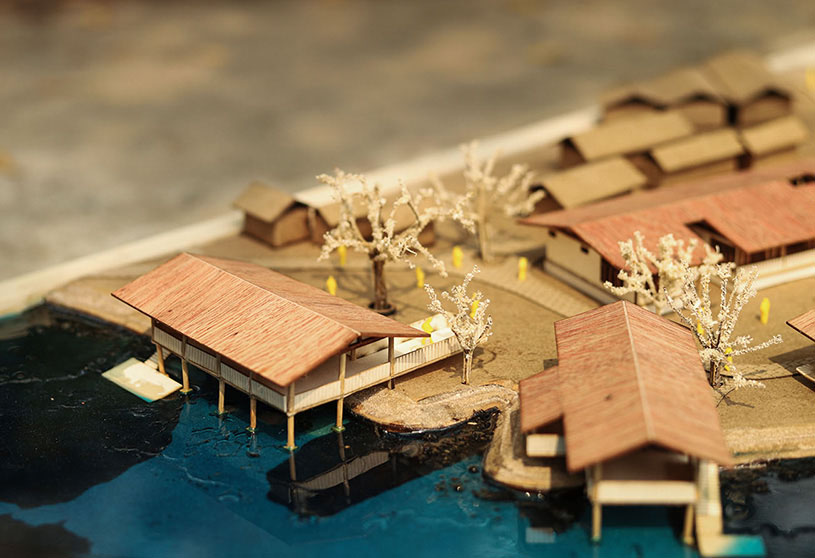
Site Model

Conclusion: By embracing seasonal transformation, the project demonstrates how architecture can sustain identity, social connection, and everyday life within a constantly changing landscape. It proposes resilience not as a fixed response to disaster, but as an ongoing process of adaptation, continuity, and community engagement.

[This Academic Project has been published with text and images submitted by the student]

​​To submit your academic project for publication at ArchiDiaries, please visit the following link >> Submit

Leave a Reply