Home » Academic projects » Beyond Rediscovery: Reclaiming Alijan Jute Mill as a Living Productive Landscape | Architecture Thesis On Post-Industrial Regeneration
Beyond Rediscovery: Reclaiming Alijan Jute Mill as a Living Productive Landscape | Architecture Thesis On Post-Industrial Regeneration
Excerpt: ‘Beyond Rediscovery’ is an architecture thesis by Fatiha Tanjim Oni from the ‘Department of Architecture – BRAC University.’ The project aims to transform the abandoned Alijan Jute Mill into a resilient, worker-centered heritage district that integrates production, housing, culture, and ecology. Through adaptive reuse and New Contextualism, the project seeks to revive the jute-based economy, protect industrial heritage, strengthen riverfront ecology, and reconnect the site with the urban fabric and community life of Narsingdi.
Introduction: Abandoned industrial heritage sites in Bangladesh face two extremes: erasure through redevelopment or preservation as static monuments. The Alijan Jute Mill along the Meghna River reflects both risks amid ecological vulnerability, economic decline, and social displacement. This project reimagines it as a worker-centered, river-resilient, and economically productive heritage district, where industry, housing, culture, and landscape are reintegrated through New Contextualism—viewing context as a layered network of relationships shaping design.
Through New Contextual analysis, each layer informs a design response—transforming the colonial factory into a handicraft market; integrating worker housing, modern jute production, cooperative governance, heritage reuse, river buffers, technological upgrades, regional connectivity, cultural revival, adaptive architecture, and urban reintegration. Organized into Production, Culture & Exchange, and Living zones, the plan reclaims the Meghna as resilient infrastructure, retaining 95% of structures as a worker-led model for post-industrial regeneration.
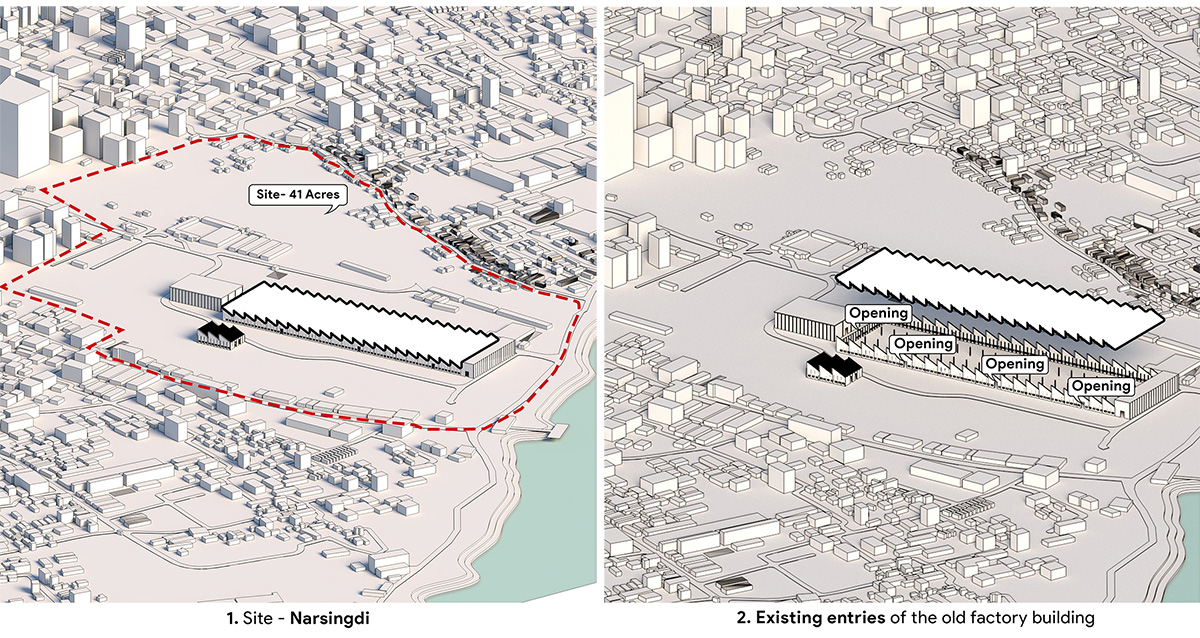
Post-industrial cities in Narsingdi often treat abandoned industrial heritage as isolated monuments or disposable real estate rather than as active components of urban infrastructure. The historic Alijan Jute Mill, once a major driver of the regional jute economy during the colonial and post-colonial periods, now exists as a neglected enclave disconnected from surrounding neighborhoods, markets, and mobility networks. Located along the banks of the Meghna River and near the Narsingdi Launch Terminal, the 41-acre site occupies a strategic urban edge where river transport, local commerce, and settlement historically converged. However, decades of industrial decline have left the colonial mill structure abandoned, the surrounding land underutilized, and the riverfront fragmented from public life.
Historical TimelineDecline Of The Industry
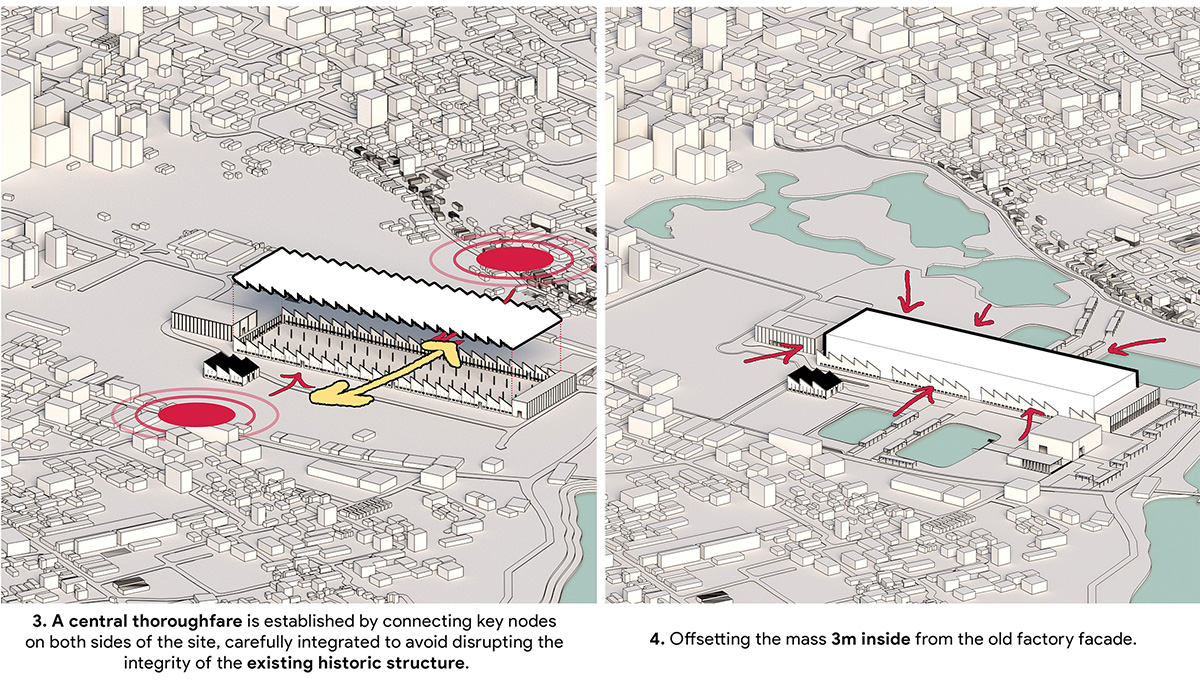
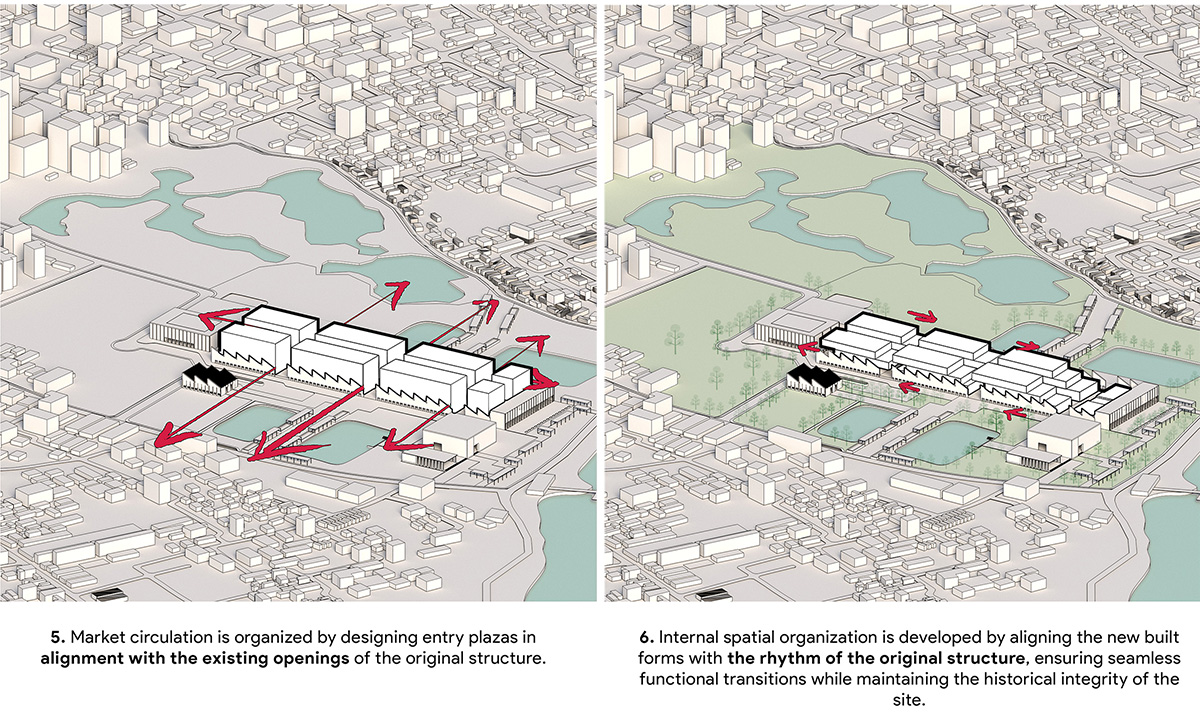
The absence of an urban-scale reuse strategy has resulted in economic stagnation, erosion of collective memory, and the loss of meaningful public spaces. This thesis investigates how adaptive reuse of industrial heritage can operate not merely as preservation but as a catalyst for urban regeneration. The proposal transforms the historic mill complex into a mixed-use commercial and cultural hub, incorporating a handicraft market, museum, public riverfront spaces, and pedestrian networks that reconnect the site to the city. By integrating local crafts, commerce, and public programs, the project reactivates the abandoned industrial landscape while reinserting historical identity into everyday urban life.
Design Process
Design Decisions
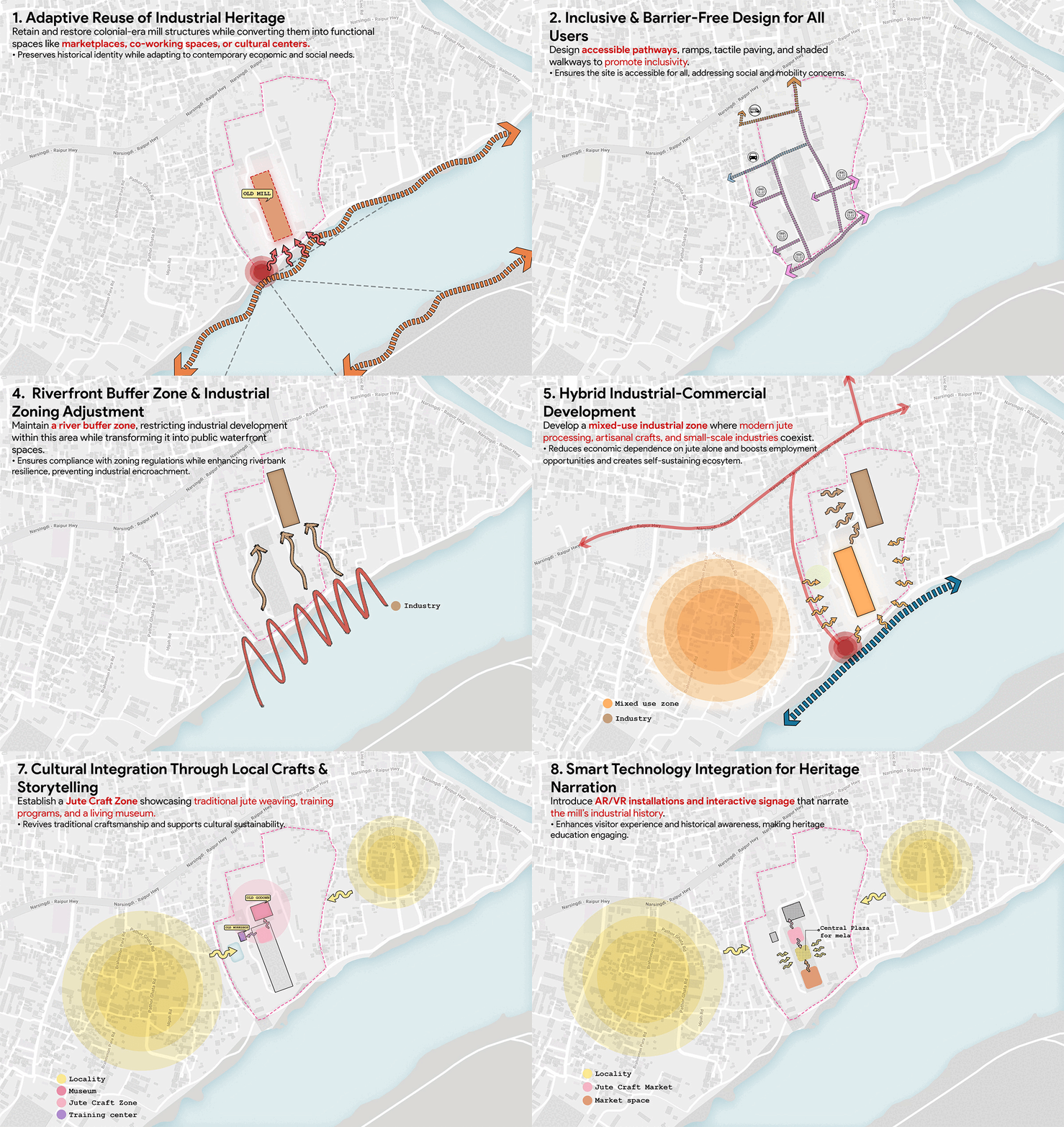
The design methodology is grounded in New Contextualism in Architecture, a framework that interprets architecture as a response to layered contextual forces rather than a purely formal exercise. Instead of treating the site as an isolated object, the approach reads the place through multiple overlapping conditions—social, economic, political, historical, ecological, scientific, geographical, cultural, architectural, and urban—and translates each issue into a spatial or programmatic intervention. In this thesis, ten contextual layers were analyzed to generate design decisions that collectively shape the project.
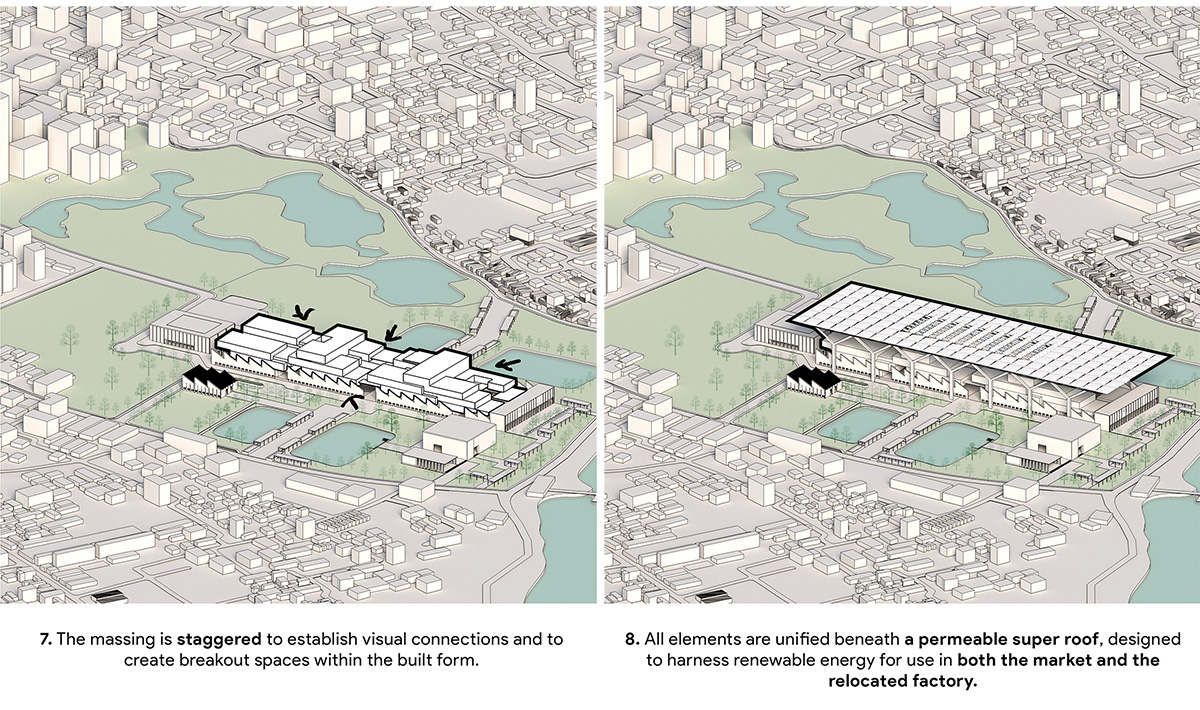
Form GenerationForm Generation
Social marginalization of jute workers is addressed through on-site housing, shared amenities, and walkable access to workplaces and markets. Economic collapse caused by outdated production systems and exploitative middlemen is countered by introducing a modern jute factory and direct producer-to-consumer market infrastructure.
Form GenerationForm Generation
Political dependency that shaped the jute industry after the Bangladesh Liberation War is challenged through locally governed cooperative production systems. Colonial industrial heritage, particularly the historic structures of Alijan Jute Mill in Narsingdi, is preserved through adaptive reuse. Ecological vulnerability along the Meghna River is mitigated through a 150-foot green river buffer. Together, these contextual responses transform fragmented industrial land into a resilient, heritage-led urban landscape.
Final Outcome
Master Plan & Ground Floor PlanFloor PlansSection AA’ & West Elevation
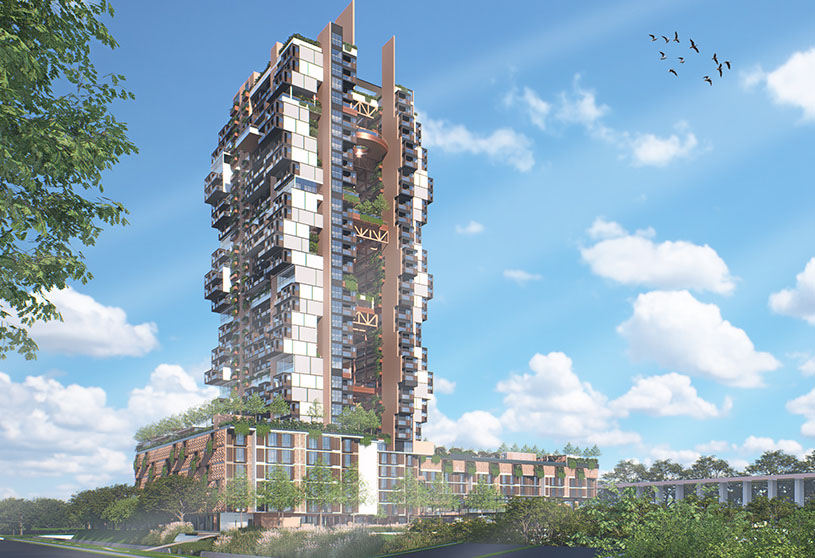
The project concludes by reframing the abandoned Alijan Jute Mill as an active urban engine rather than a relic of industrial decline. Situated in Narsingdi along the edge of the Meghna River, the intervention transforms a neglected industrial enclave into a layered civic landscape where production, commerce, public space, and cultural memory coexist. Instead of isolating heritage as a preserved artifact, the design embeds it within everyday urban life, allowing historical structures to support contemporary economic and social activity.
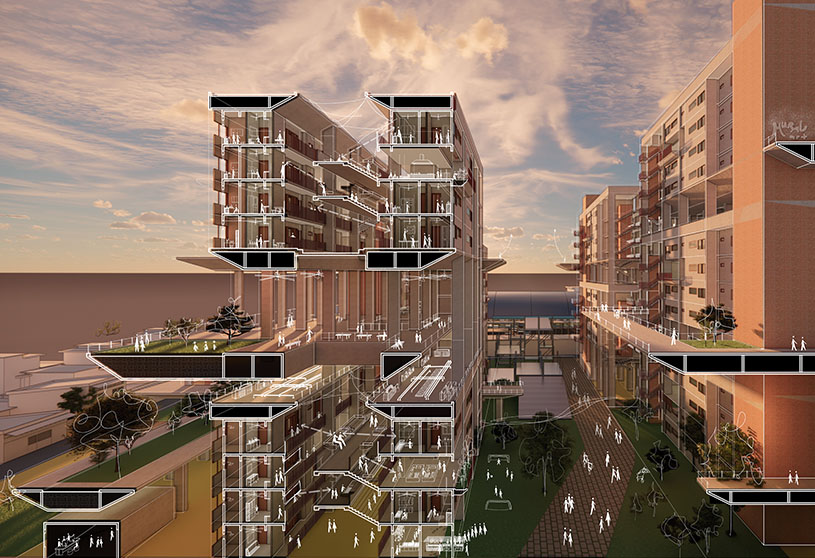
Section BBExploded AxonometricBlow-Up Details
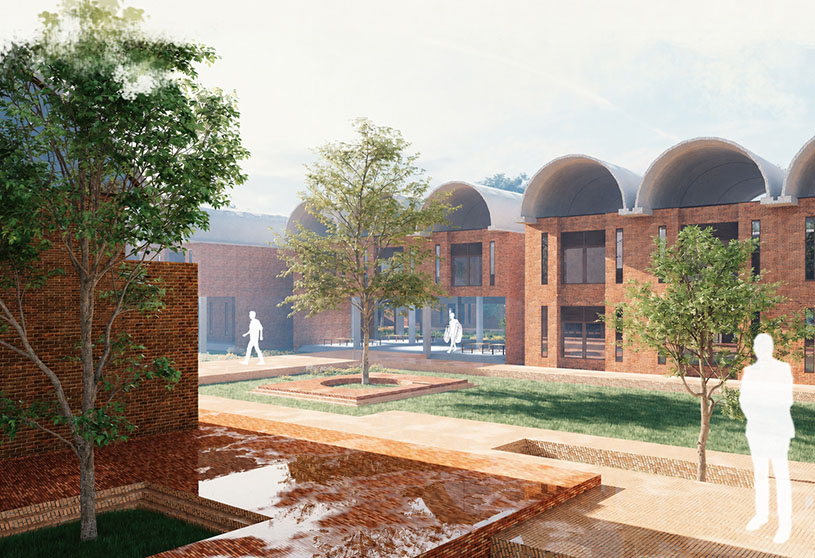
The final outcome establishes a resilient urban system where river ecology, craft economies, and community spaces operate together as an integrated framework. Public riverfront landscapes strengthen environmental stewardship, while pedestrian networks reconnect previously fragmented urban edges. Artisan markets and cooperative production environments nurture local livelihoods and revive Narsingdi’s identity as a center of craft and trade. Architecturally, new interventions reinterpret the industrial language of the mill, ensuring continuity between past and present.
Urban Entry To The SiteMain Atrium View Inside The MarketBefore & After Comparison
Conclusion: Ultimately, the thesis positions adaptive reuse not simply as conservation, but as a strategic urban tool. Through the lens of New Contextualism in Architecture, it proposes a scalable model for revitalizing post-industrial riverfront landscapes across Bangladesh.
[This Academic Project has been published with text and images submitted by the student]
Site Context
Design Process
Final Outcome
To submit your academic project for publication at ArchiDiaries, please visit the following link >> Submit
Get the best of ArchiDiaries, directly in your inbox.
We use cookies on our website to give you the most relevant experience by remembering your preferences and repeat visits. By clicking “Accept All”, you consent to the use of ALL the cookies. However, you may visit "Cookie Settings" to provide a controlled consent.
This website uses cookies to improve your experience while you navigate through the website. Out of these, the cookies that are categorized as necessary are stored on your browser as they are essential for the working of basic functionalities of the website. We also use third-party cookies that help us analyze and understand how you use this website. These cookies will be stored in your browser only with your consent. You also have the option to opt-out of these cookies. But opting out of some of these cookies may affect your browsing experience.
Necessary cookies are absolutely essential for the website to function properly. These cookies ensure basic functionalities and security features of the website, anonymously.
Cookie
Duration
Description
cookielawinfo-checkbox-analytics
11 months
This cookie is set by GDPR Cookie Consent plugin. The cookie is used to store the user consent for the cookies in the category "Analytics".
cookielawinfo-checkbox-functional
11 months
The cookie is set by GDPR cookie consent to record the user consent for the cookies in the category "Functional".
cookielawinfo-checkbox-necessary
11 months
This cookie is set by GDPR Cookie Consent plugin. The cookies is used to store the user consent for the cookies in the category "Necessary".
cookielawinfo-checkbox-others
11 months
This cookie is set by GDPR Cookie Consent plugin. The cookie is used to store the user consent for the cookies in the category "Other.
cookielawinfo-checkbox-performance
11 months
This cookie is set by GDPR Cookie Consent plugin. The cookie is used to store the user consent for the cookies in the category "Performance".
viewed_cookie_policy
11 months
The cookie is set by the GDPR Cookie Consent plugin and is used to store whether or not user has consented to the use of cookies. It does not store any personal data.
Functional cookies help to perform certain functionalities like sharing the content of the website on social media platforms, collect feedbacks, and other third-party features.
Performance cookies are used to understand and analyze the key performance indexes of the website which helps in delivering a better user experience for the visitors.
Analytical cookies are used to understand how visitors interact with the website. These cookies help provide information on metrics the number of visitors, bounce rate, traffic source, etc.
Advertisement cookies are used to provide visitors with relevant ads and marketing campaigns. These cookies track visitors across websites and collect information to provide customized ads.