Excerpt: ‘Caelum’ is an architecture thesis by Aric Neo Yong Yea from the ‘Faculty of Built Environment and Surveying – UTM.’ This project explores how Spatium Title can redefine urban regeneration in Malaysia by recognizing airspace as a developable asset. Using Sea Park Apartment as a case study, it investigates alternative legal and architectural strategies that address land ownership conflicts, support ageing housing renewal, and enable development without displacement, preserving existing communities while creating new urban opportunities.
Introduction: Do we ever question whether the building by-laws and land regulations we rely on are truly complete, or whether they simply reflect the limitations of the era in which they were created? In Malaysia, our planning and land administration systems are largely founded on a two-dimensional understanding of land. While these frameworks have been effective in regulating conventional development, they often struggle to address contemporary urban challenges such as increasing density, ageing buildings, fragmented ownership, and the need to preserve existing communities.
These limitations become particularly evident in the case of Sea Park Apartment, where unresolved land ownership disputes have persisted for decades. The conflict exposes a critical gap within the current legal framework, which offers few solutions beyond land sale, demolition, and redevelopment. As a result, the dispute remains unresolved, placing the long-term security of residents at risk. Responding to this condition, this thesis explores the possibility of a new legal framework—known as the Spatium Title—that recognises airspace as a developable asset. By enabling development above existing buildings, the proposal seeks to create new opportunities for urban regeneration while protecting existing communities, demonstrating an alternative approach to redevelopment that does not rely on displacement.
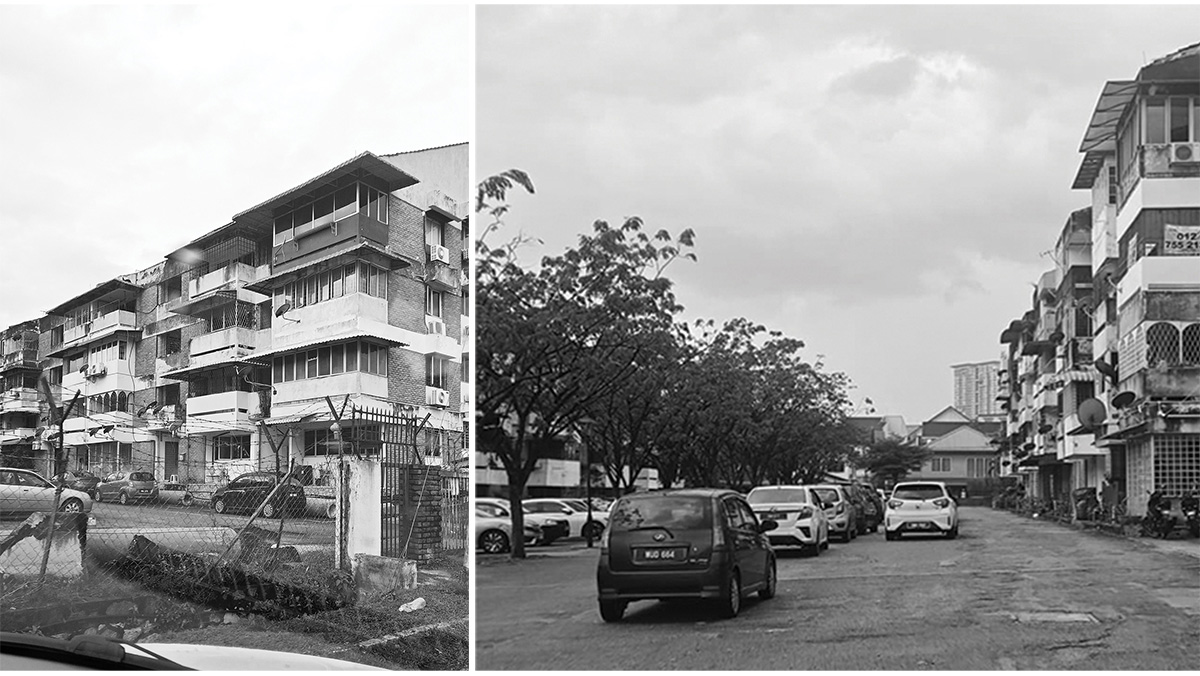
There is an old, hidden apartment complex in Sea Park, Petaling Jaya. It is nestled at the bottom of a dip, enclosed from view by surrounding bungalows and terrace houses, so that only the roofs of its highest floors peek out. Many PJ residents are surprised to hear it exists.
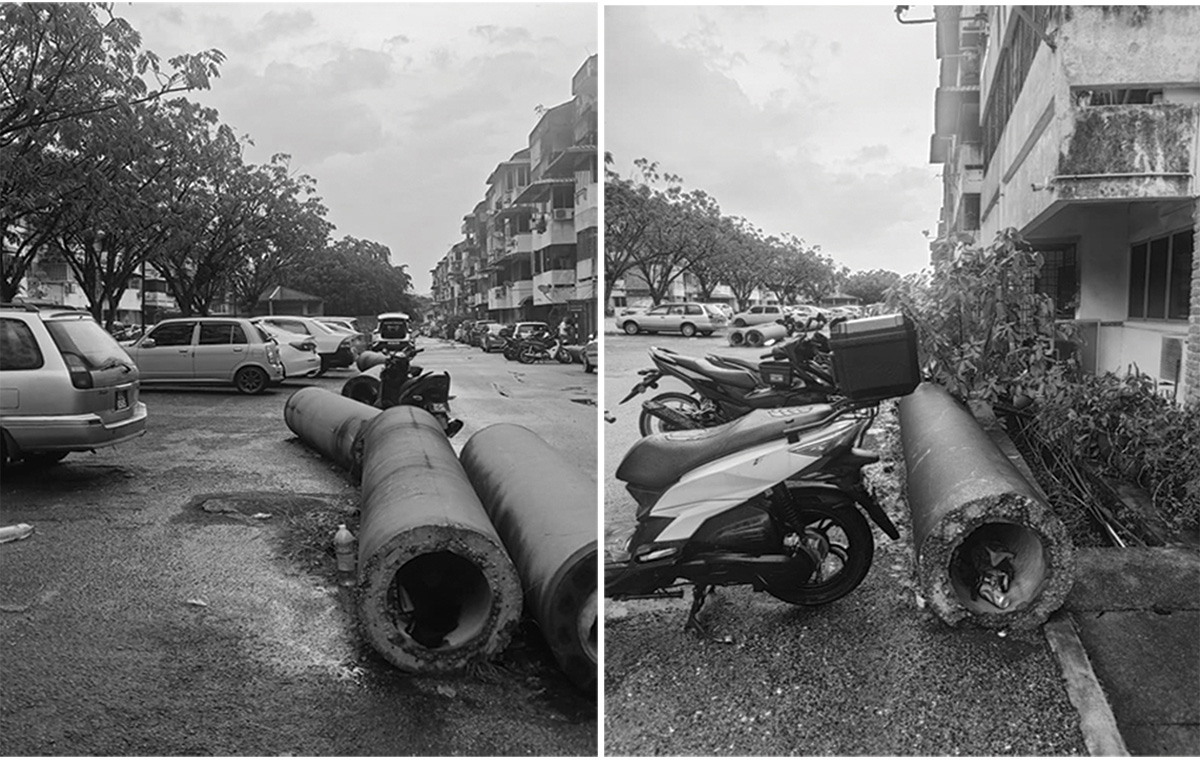
But these apartments are “enclosed” in more ways than one: The original developer of the apartments sold the apartments’ car park and common areas—which surround the apartment blocks—to an individual, leaving residents in the unusual position of having their homes completely encircled by someone else’s private land. To go home, residents first need to trespass.
Seapark Apartment | Site ImagesSite Images
Summary of the Seapark apartment dispute: The land where Sea Park Apartment is located was subdivided into 10 lots, where six lots were for the six apartment blocks, while the other four lots comprised the common areas surrounding the six blocks. Six applications for a strata title were made for each of the apartment blocks. In 2008, the developer sold the land to a business associate for the price of RM 400,000. The consequences were immediate and severe. Residents had to trespass just to reach their homes.
Sea Park Apartment stands as one of Petaling Jaya’s earliest high-rise housing developments, built during a time before clear housing laws and strata regulations were fully established. Today, it stands as a critical signifier of the flaw of Malaysia’s current land and housing laws, revealing how outdated legal frameworks struggle to address aging buildings, collective ownership, and the complexities of vertical development in contemporary urban contexts.
Site Images
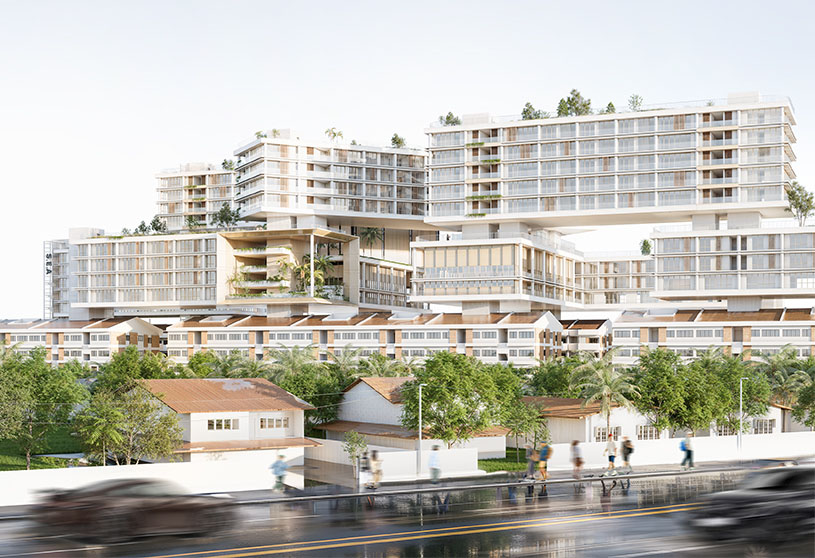
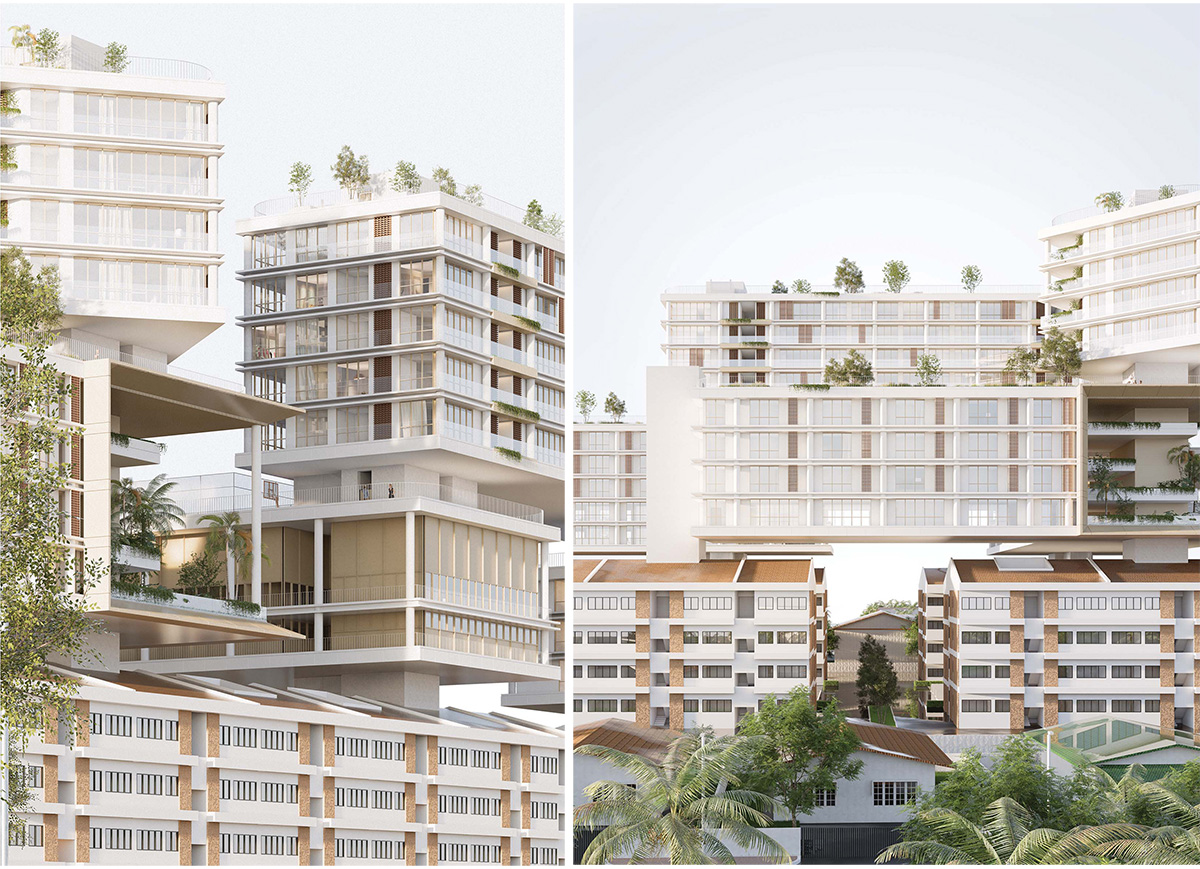
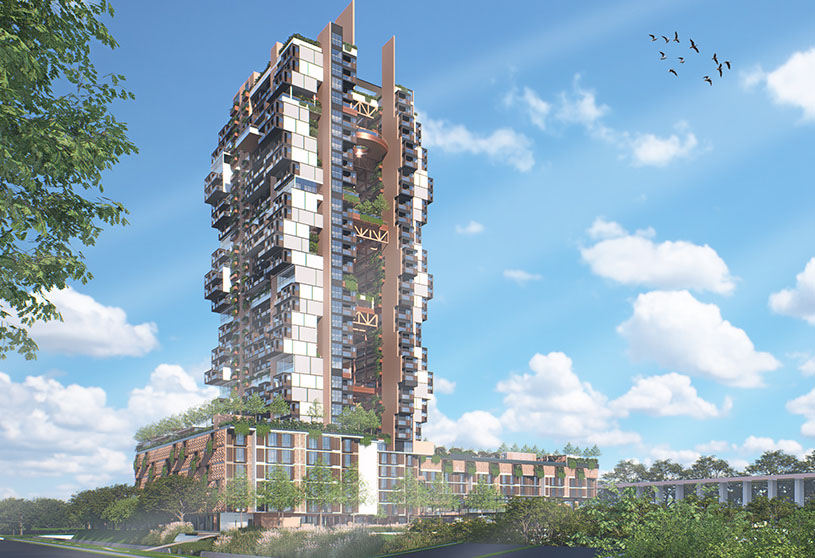
Through this approach, the project demonstrates how new laws and legal instruments are urgently needed to address vertical ownership and layered development. Spatium Title is not about building higher for profit alone. It is about enabling regeneration without displacement, allowing new development to coexist with the old, and transforming rooftops and airspace into opportunities for collective benefit. It demands new architectural strategies.
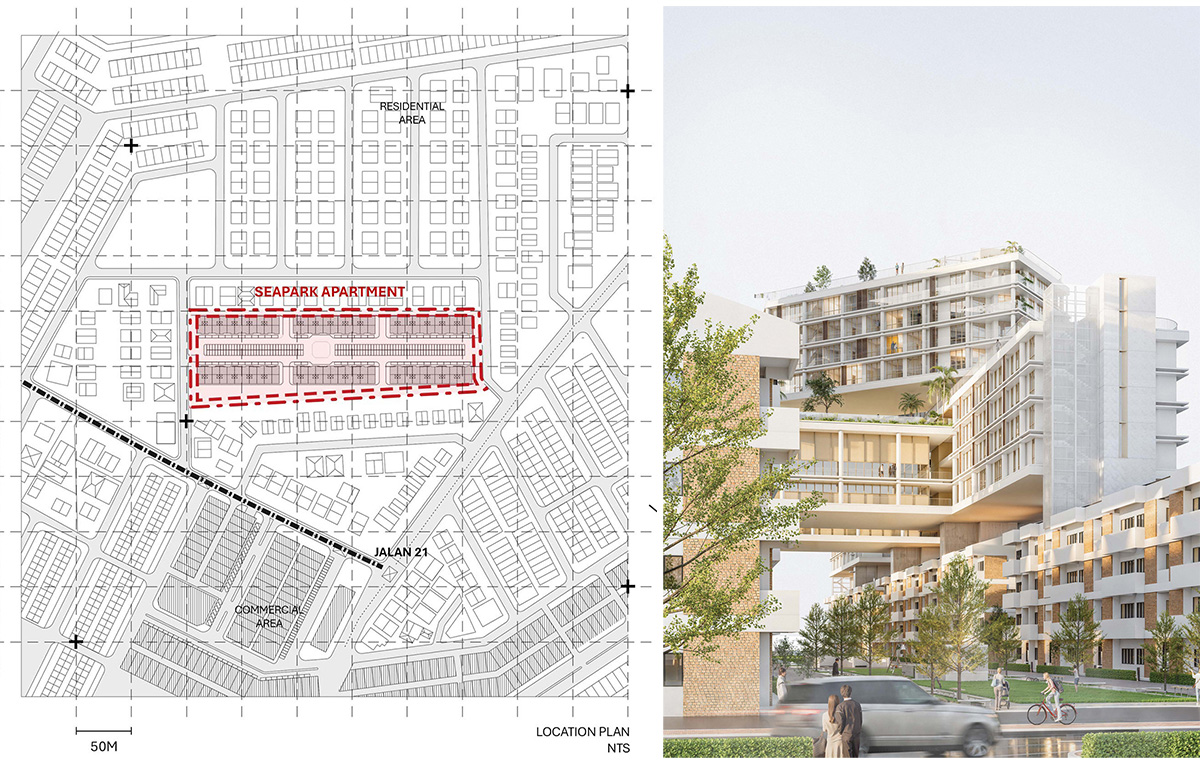
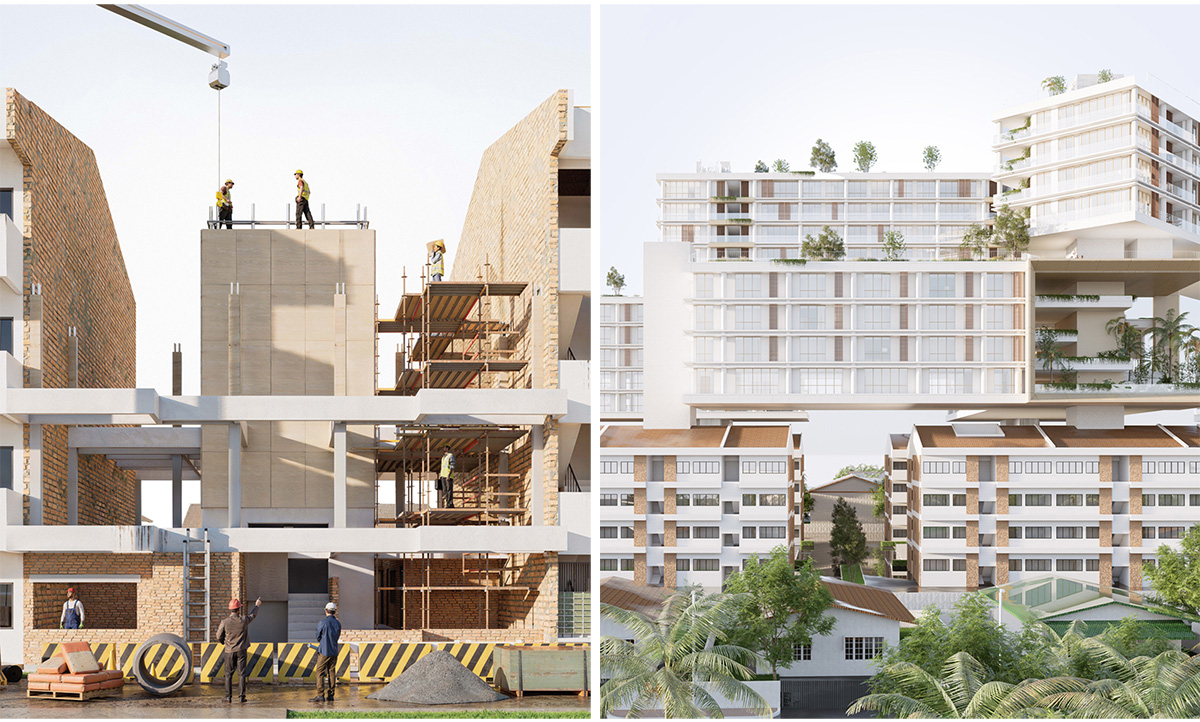
The concept of the design is spatium development where new buildings were insert above the building without demolishing the existing.
A series of architectural and regulatory guidelines regarding spatium development have been developed to support layered and inclusive urban growth. This thesis focuses on testing and applying the proposed guidelines, with Sea Park Apartment selected as the case study site. The established guidelines are adapted and contextualized to address the specific local conditions and challenges of the research area. Rather than being adopted directly, the guidelines are refined and implemented within the legal, construction, and spatial frameworks of the case study, ensuring their relevance and applicability to the Malaysian context.
Final Outcome
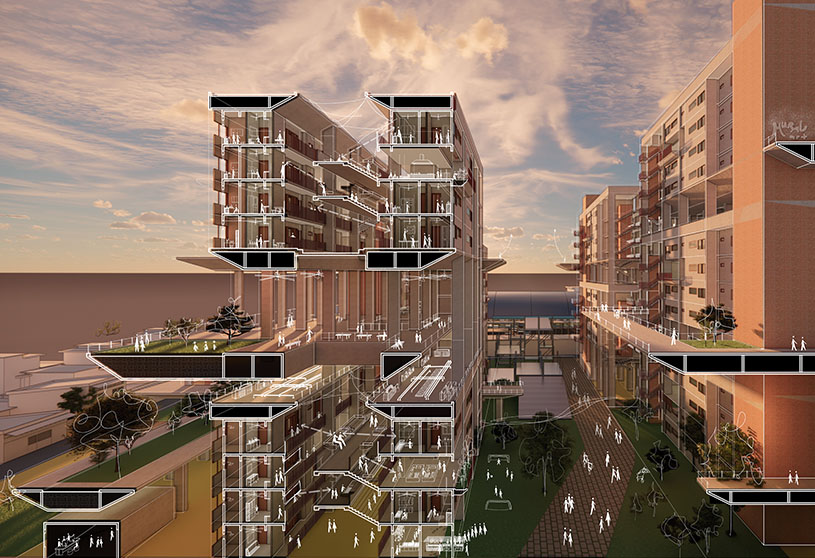
Site Plan | RenderSectionAxonometric
Spatium Title is not about building higher for profit alone. It is about enabling regeneration without displacement, allowing new development to coexist with the old, and transforming rooftops and airspace into opportunities for collective benefit.
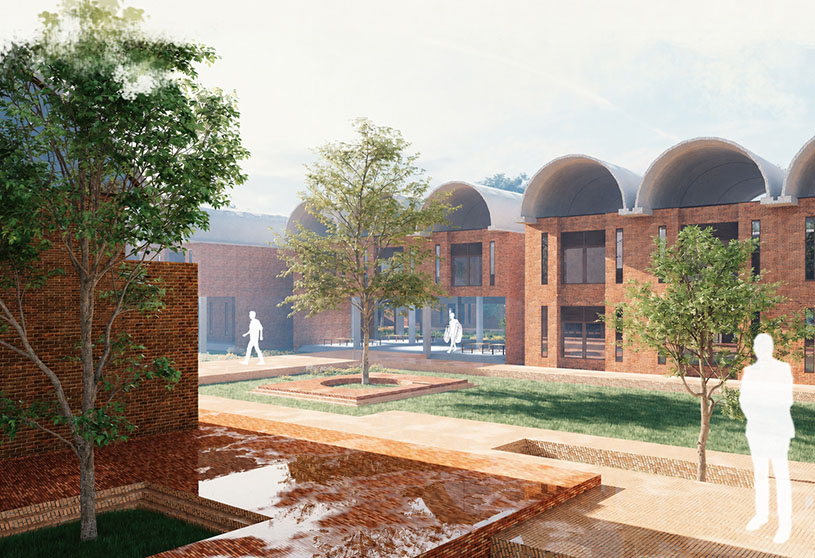
RenderRender
Although such an approach seems to be challenging the law, which we are told not to do since the first day of our thesis briefing. But from the case of Sea Park Apartment, we have seen a fundamental limitation in Malaysia’s current land and building law, where the legal framework is unable to resolve such conflicts. In this context, spatium development emerges not as a provocation, but as a necessary alternative.
RenderRender
Conclusion: Ultimately, this thesis demonstrates how Spatium Title can offer an alternative model for urban regeneration by unlocking airspace as a shared resource. Through the Sea Park Apartment case, it proposes a framework that enables renewal without displacement while addressing limitations within existing land and ownership systems.
[This Academic Project has been published with text and images submitted by the student]
Site Context
Design Process
Final Outcome
To submit your academic project for publication at ArchiDiaries, please visit the following link >> Submit
Get the best of ArchiDiaries, directly in your inbox.
We use cookies on our website to give you the most relevant experience by remembering your preferences and repeat visits. By clicking “Accept All”, you consent to the use of ALL the cookies. However, you may visit "Cookie Settings" to provide a controlled consent.
This website uses cookies to improve your experience while you navigate through the website. Out of these, the cookies that are categorized as necessary are stored on your browser as they are essential for the working of basic functionalities of the website. We also use third-party cookies that help us analyze and understand how you use this website. These cookies will be stored in your browser only with your consent. You also have the option to opt-out of these cookies. But opting out of some of these cookies may affect your browsing experience.
Necessary cookies are absolutely essential for the website to function properly. These cookies ensure basic functionalities and security features of the website, anonymously.
Cookie
Duration
Description
cookielawinfo-checkbox-analytics
11 months
This cookie is set by GDPR Cookie Consent plugin. The cookie is used to store the user consent for the cookies in the category "Analytics".
cookielawinfo-checkbox-functional
11 months
The cookie is set by GDPR cookie consent to record the user consent for the cookies in the category "Functional".
cookielawinfo-checkbox-necessary
11 months
This cookie is set by GDPR Cookie Consent plugin. The cookies is used to store the user consent for the cookies in the category "Necessary".
cookielawinfo-checkbox-others
11 months
This cookie is set by GDPR Cookie Consent plugin. The cookie is used to store the user consent for the cookies in the category "Other.
cookielawinfo-checkbox-performance
11 months
This cookie is set by GDPR Cookie Consent plugin. The cookie is used to store the user consent for the cookies in the category "Performance".
viewed_cookie_policy
11 months
The cookie is set by the GDPR Cookie Consent plugin and is used to store whether or not user has consented to the use of cookies. It does not store any personal data.
Functional cookies help to perform certain functionalities like sharing the content of the website on social media platforms, collect feedbacks, and other third-party features.
Performance cookies are used to understand and analyze the key performance indexes of the website which helps in delivering a better user experience for the visitors.
Analytical cookies are used to understand how visitors interact with the website. These cookies help provide information on metrics the number of visitors, bounce rate, traffic source, etc.
Advertisement cookies are used to provide visitors with relevant ads and marketing campaigns. These cookies track visitors across websites and collect information to provide customized ads.