Home » Academic projects » Living Data Center: Transforming Data Infrastructure into Energy-Positive Living Environments | Masters Design Project on Speculative Architecture
Living Data Center: Transforming Data Infrastructure into Energy-Positive Living Environments | Masters Design Project on Speculative Architecture
Excerpt: ‘Living Data Center’ is a Masters Design Project by Noah Spivak from the ‘Pratt Institute School of Architecture.’ This project aims to redefine the data center as a living, integrated part of urban life by transforming its waste heat into a shared resource. Framed through speculative architecture, it hybridizes infrastructure with housing, public, and commercial programs, while exploring how nostalgic spatial qualities can coexist with advanced energy systems to create a more sustainable and socially engaged typology.
Introduction: Within today’s cultural landscape, shaped by social media, artificial intelligence, and DIY trends, we are experiencing a shift in what is considered relevant. Rather than creating purely for novelty, there is a growing tendency to draw from familiar references. These trends operate across scales, from TikTok videos to Hollywood remakes, reflecting a collective desire for comfort, recognition, and nostalgia.
This project engages that condition by questioning the relationship between nostalgic references and technological advancement. It explores how architecture might blur the boundary between the unfamiliar future and the reassuring past.
A parallel can be found in the automotive industry. Around 2013, manufacturers like Porsche, McLaren, and Ferrari produced high-performance hybrid vehicles that combined sustainability with speed. These cars did not treat environmental systems as constraints, but as enhancements, using them to improve performance.
Similarly, this project adopts sustainability and energy systems not as passive solutions, but as active drivers of architectural innovation. It proposes a hybrid approach that merges nostalgic spatial qualities with forward-thinking energy strategies, using familiar urban conditions as a way to introduce new, high-performance environmental systems.
The project is situated within the growing urban presence of data centers, an often invisible yet increasingly influential infrastructure. As digital consumption expands, data centers are becoming critical components of urban life, though they typically operate as isolated, energy-intensive facilities.
This proposal reconsiders their role by introducing a new typology: the living data center. Rather than existing as a closed system, the data center is integrated into the public and residential fabric of the city. The project responds to both the environmental and social implications of this infrastructure, particularly its significant waste heat output. By repositioning this byproduct as a shared resource, the building transforms an otherwise hidden system into an active participant in everyday urban life.
Design Process
Hybrid Model StudiesHybrid Model Studies
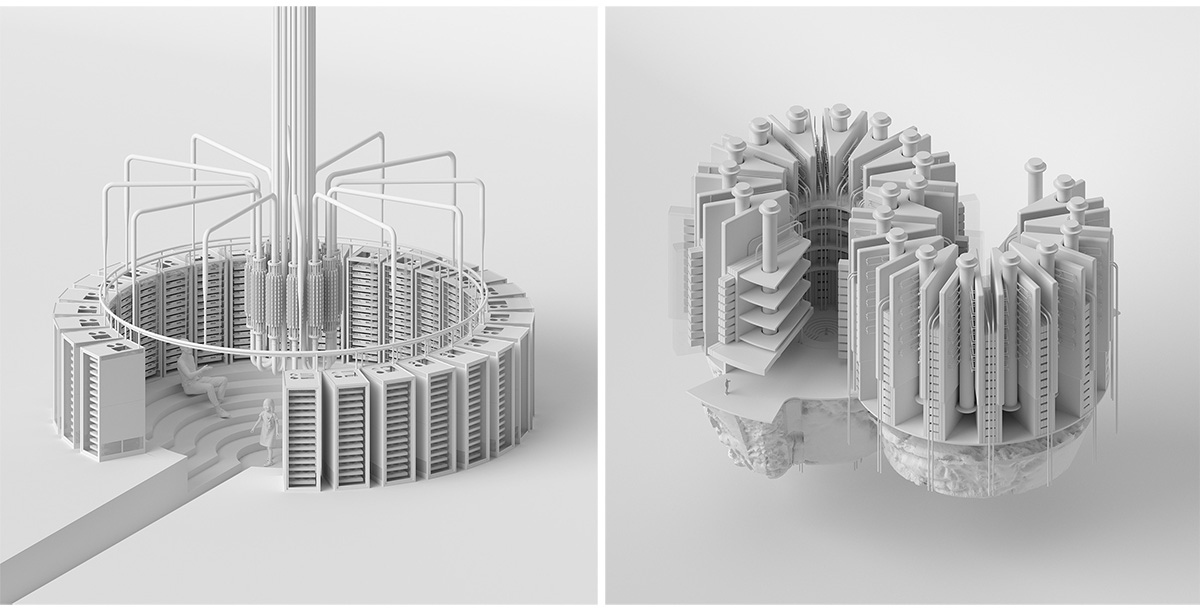
The design process began with a close examination of data center infrastructure, specifically focusing on technologies that capture and reuse waste heat energy. This research informed an exploration of how these systems could shape architectural form and experience.
Hybrid Model StudiesHybrid Model Studies
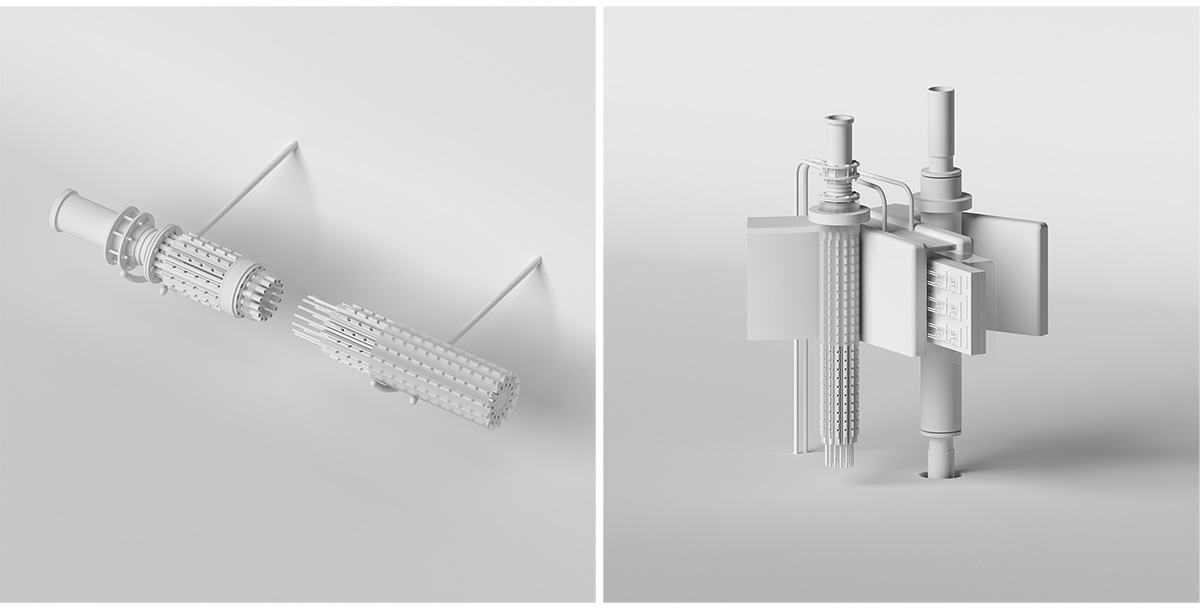
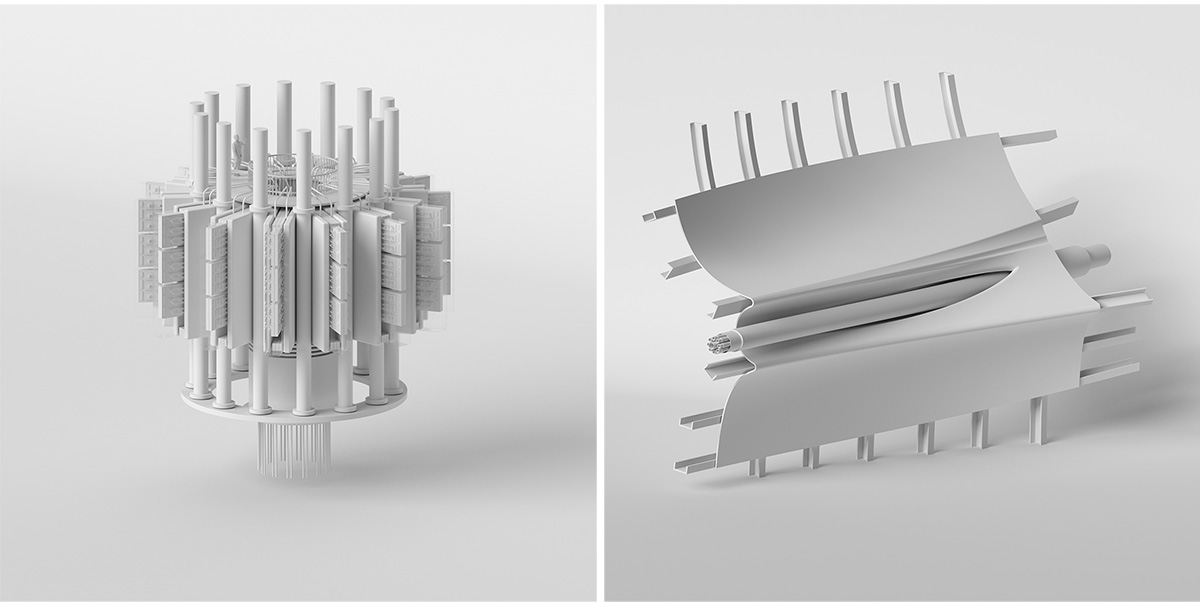
A series of hybrid models were developed to test the formal and geometric potentials of these infrastructural elements. Through iterative making, these models evolved into complex spatial configurations that produced distinct atmospheric and experiential qualities.
Hybrid Model Studies
As the process progressed, these hybrid objects were translated into an architectural proposal. The formal language derived from infrastructural systems was adapted to accommodate residential programs, allowing the project to merge technical performance with human habitation. This approach ensured that energy systems were not simply embedded within the building, but actively shaped its spatial and social organization.
Final Outcome
Floor PlansSection | Facade Close UpProgram Diagram | Diagram Of Conditions
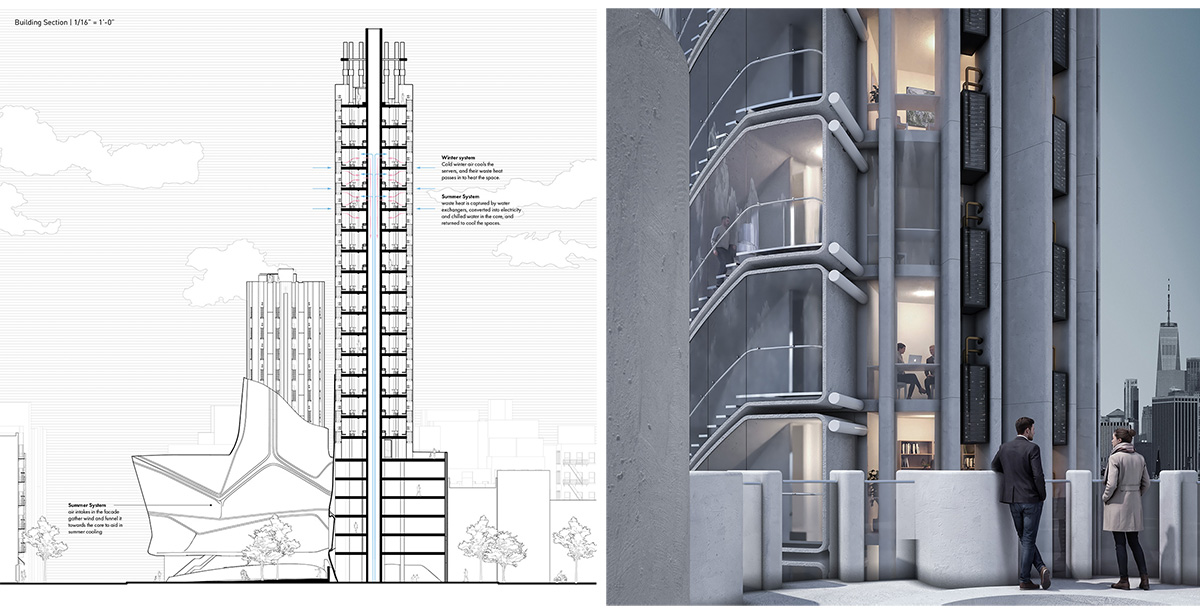
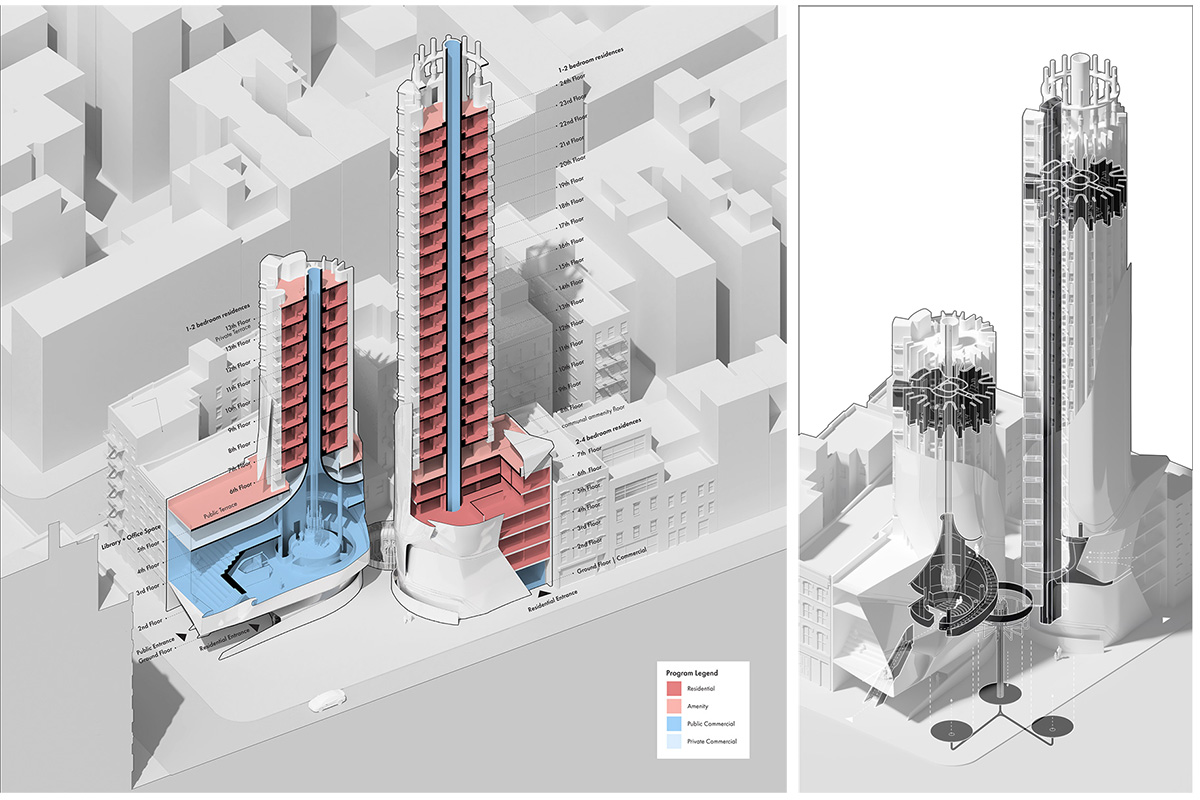
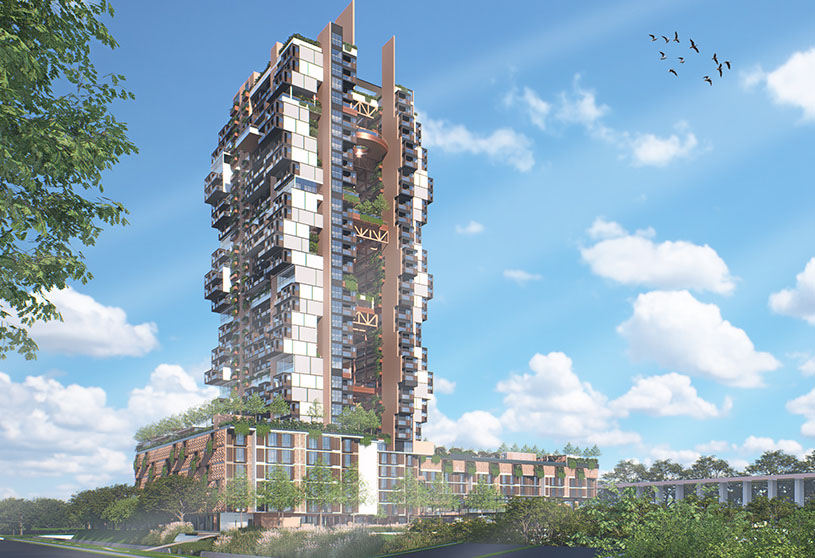
The final proposal presents a fully developed living data center that hybridizes residential, public, and commercial programs. Waste heat generated by servers is captured and repurposed to heat the building and generate electricity, transforming infrastructure into a shared economic and environmental resource.
Isometric PlanData Center Byproduct UtilizationInterior RenderInterior Render
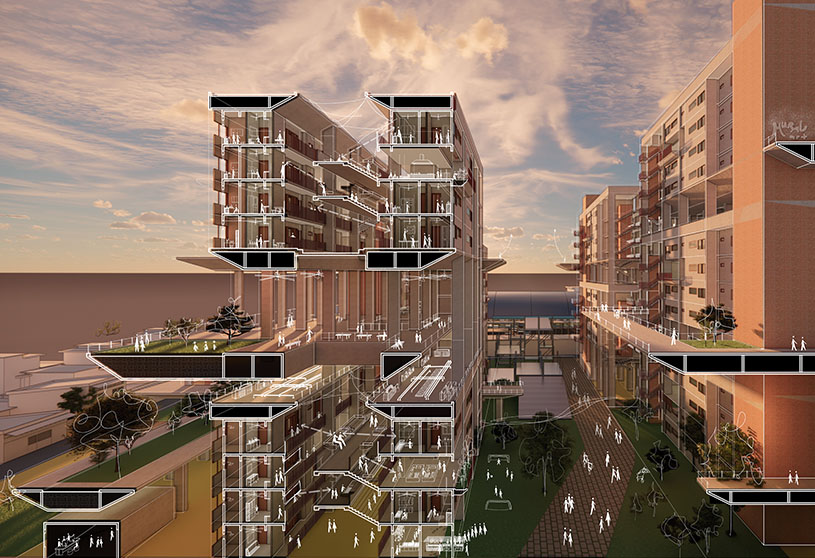
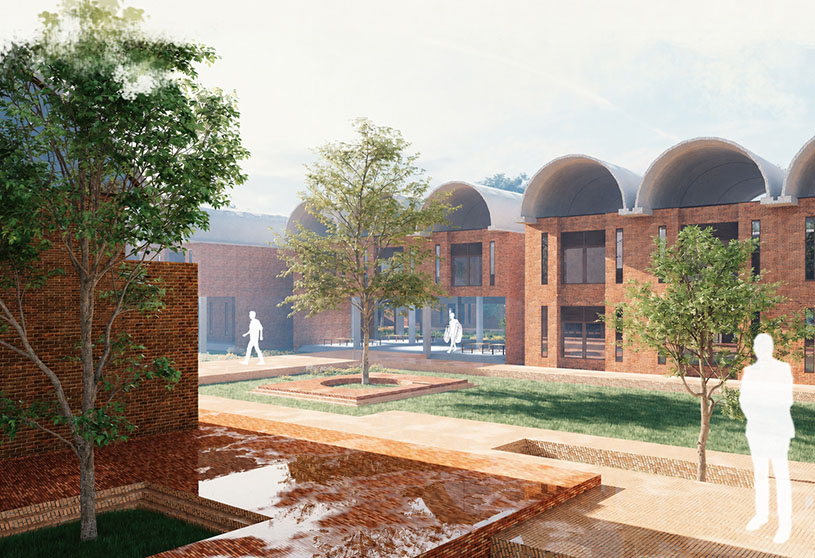
The building incorporates adaptable housing units, public spaces, a library, and commercial areas, fostering a continuous exchange of energy, information, and atmosphere. Seasonal variation further influences these interactions, creating a dynamic architectural experience.
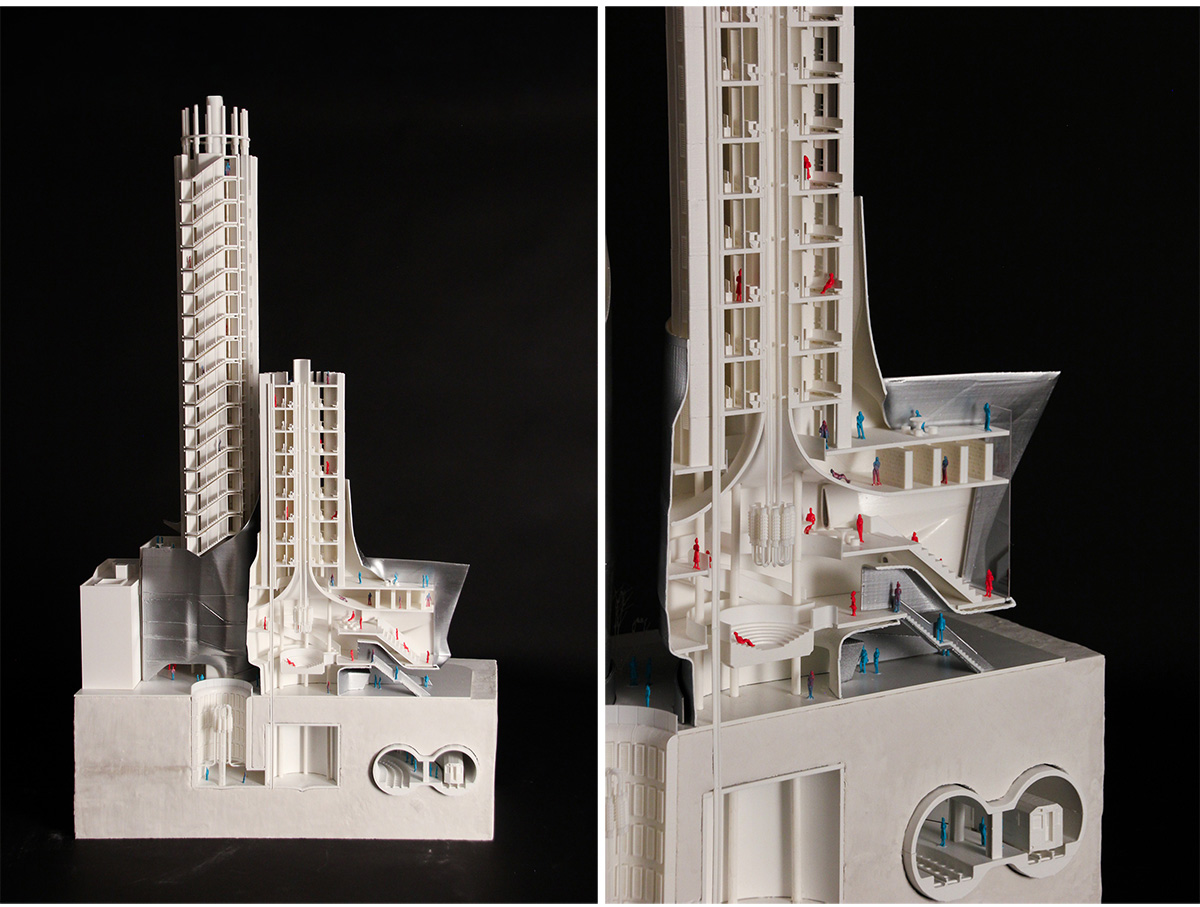
Interior RenderPhysical ModelPhysical Model
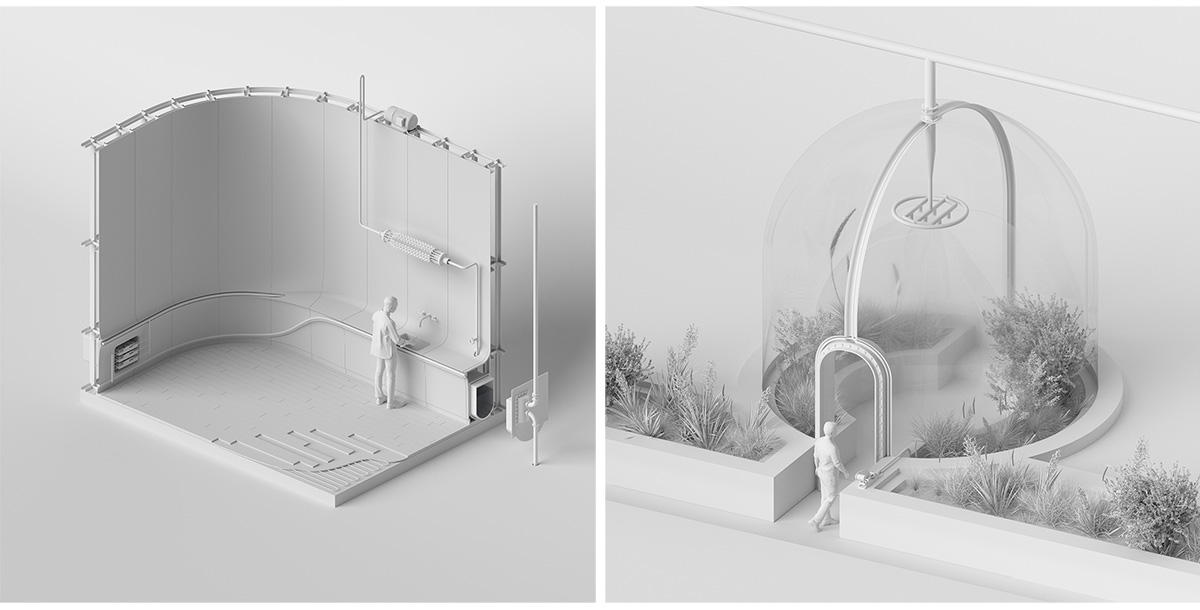
The project was resolved through a comprehensive set of orthographic drawings, including plans and sections that articulate relationships between systems and programs. A series of detailed diagrammatic drawings further illustrate the interaction between infrastructural networks and residential life.
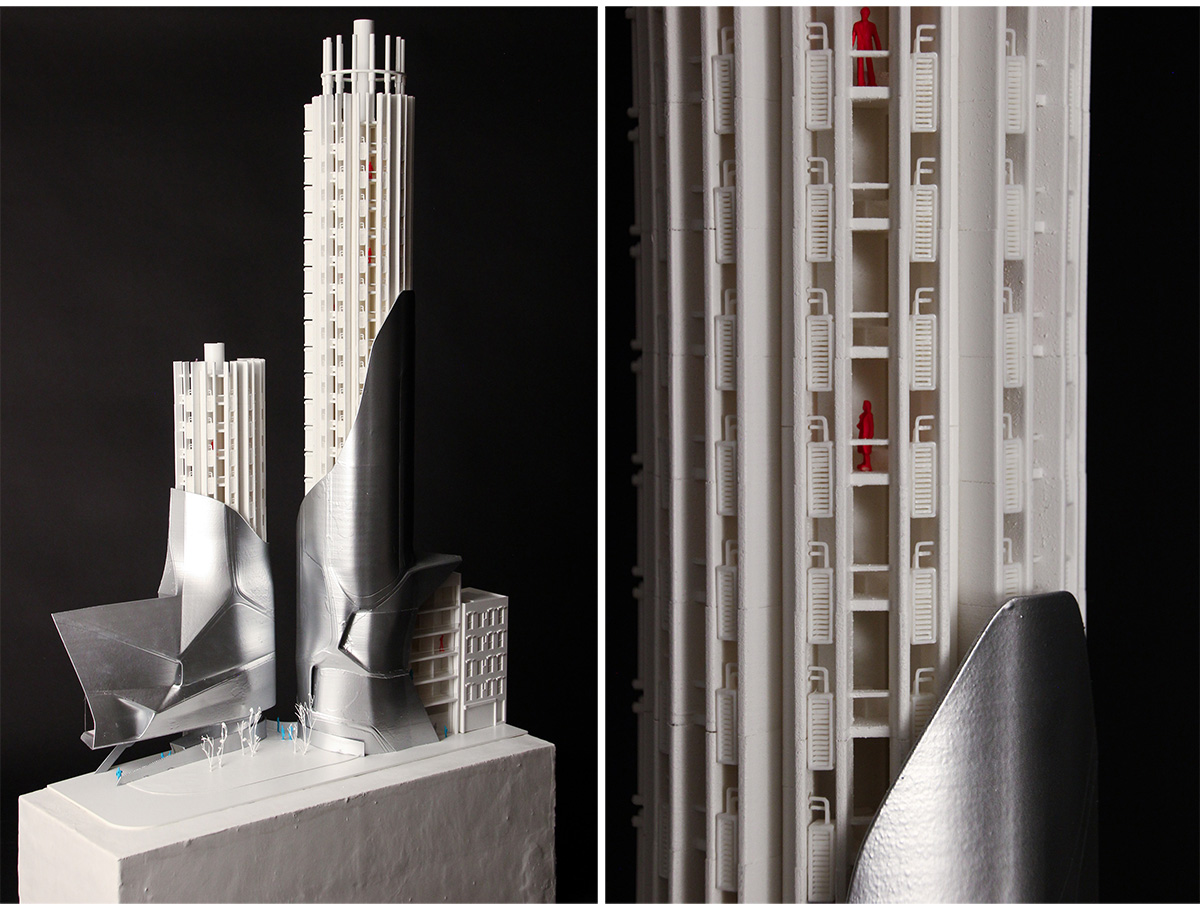
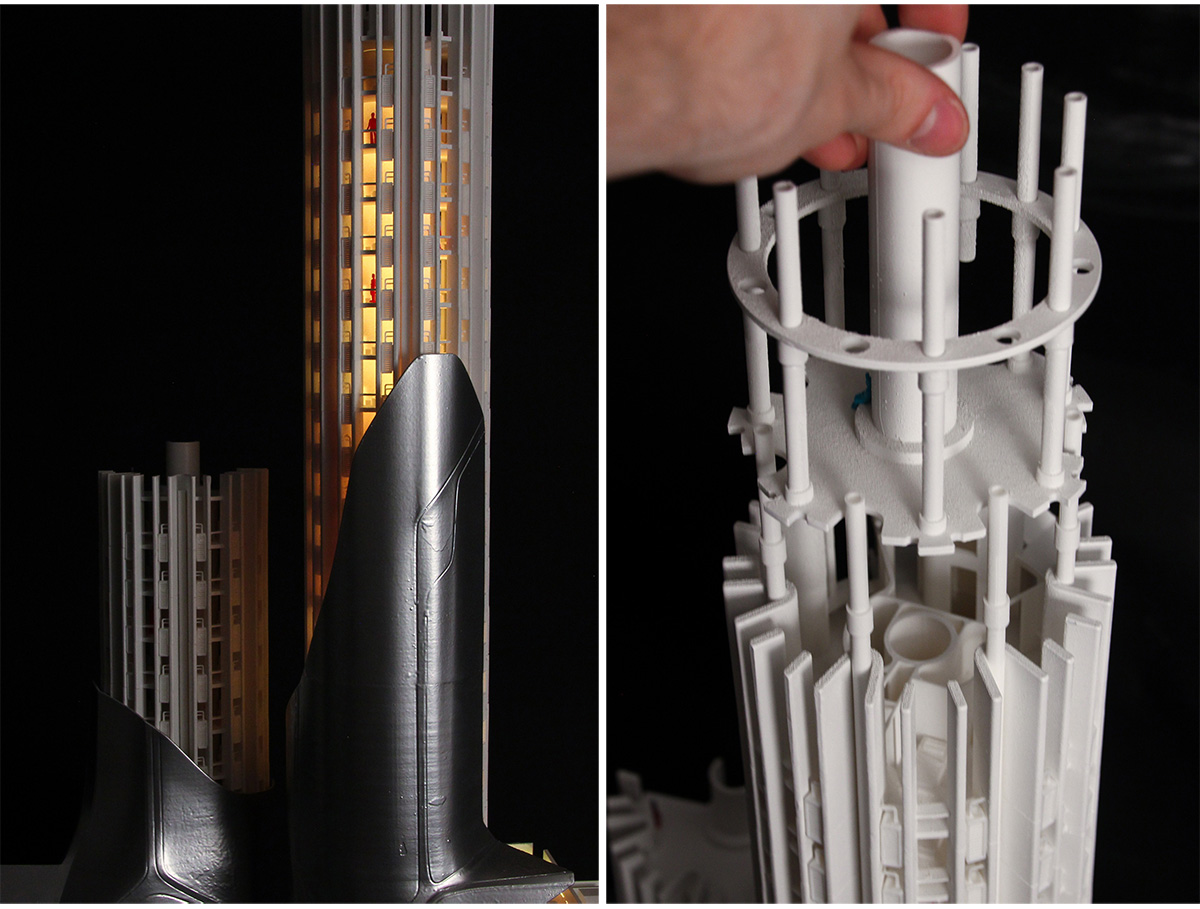
Physical ModelPhysical Model
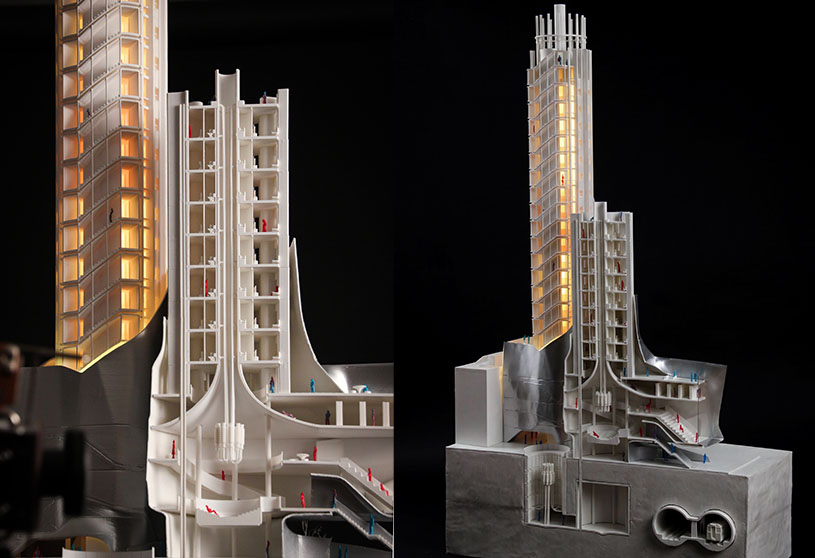
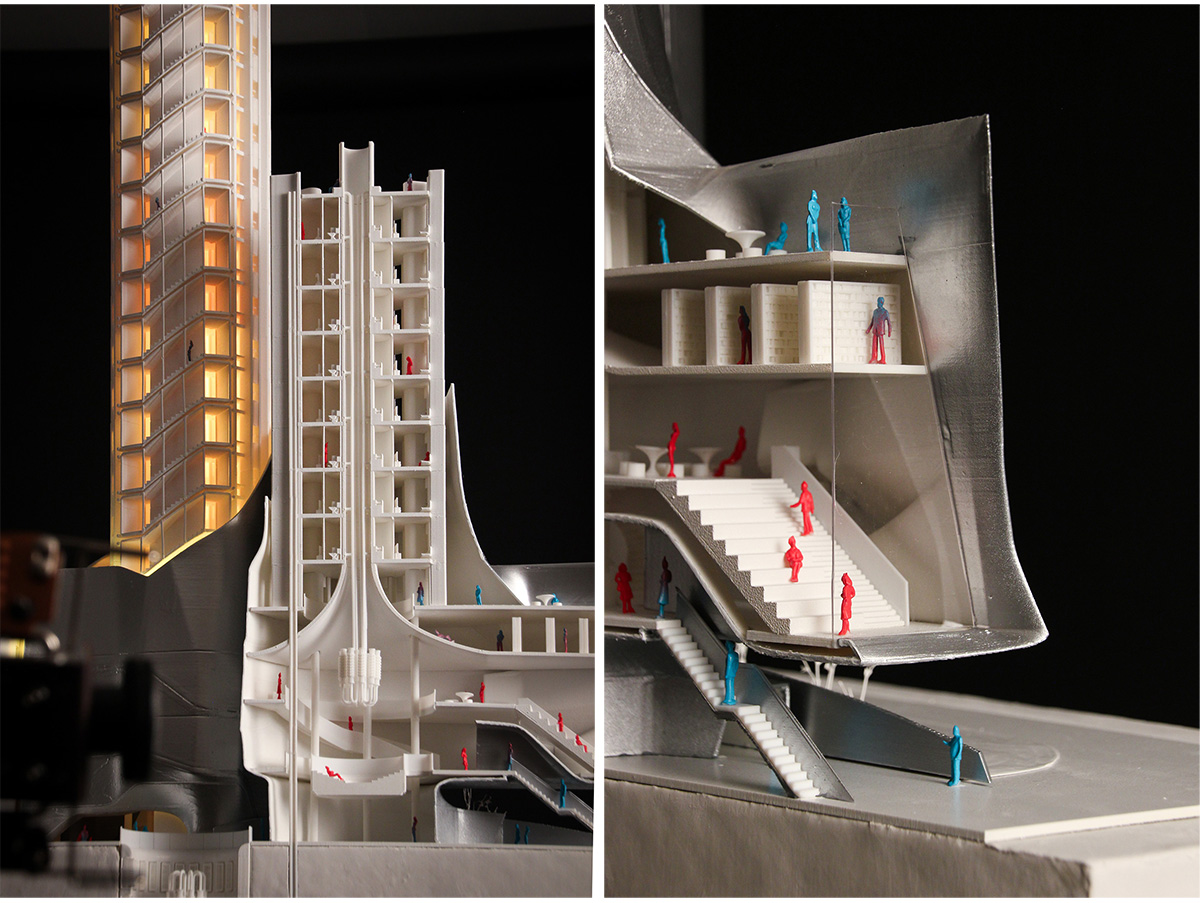
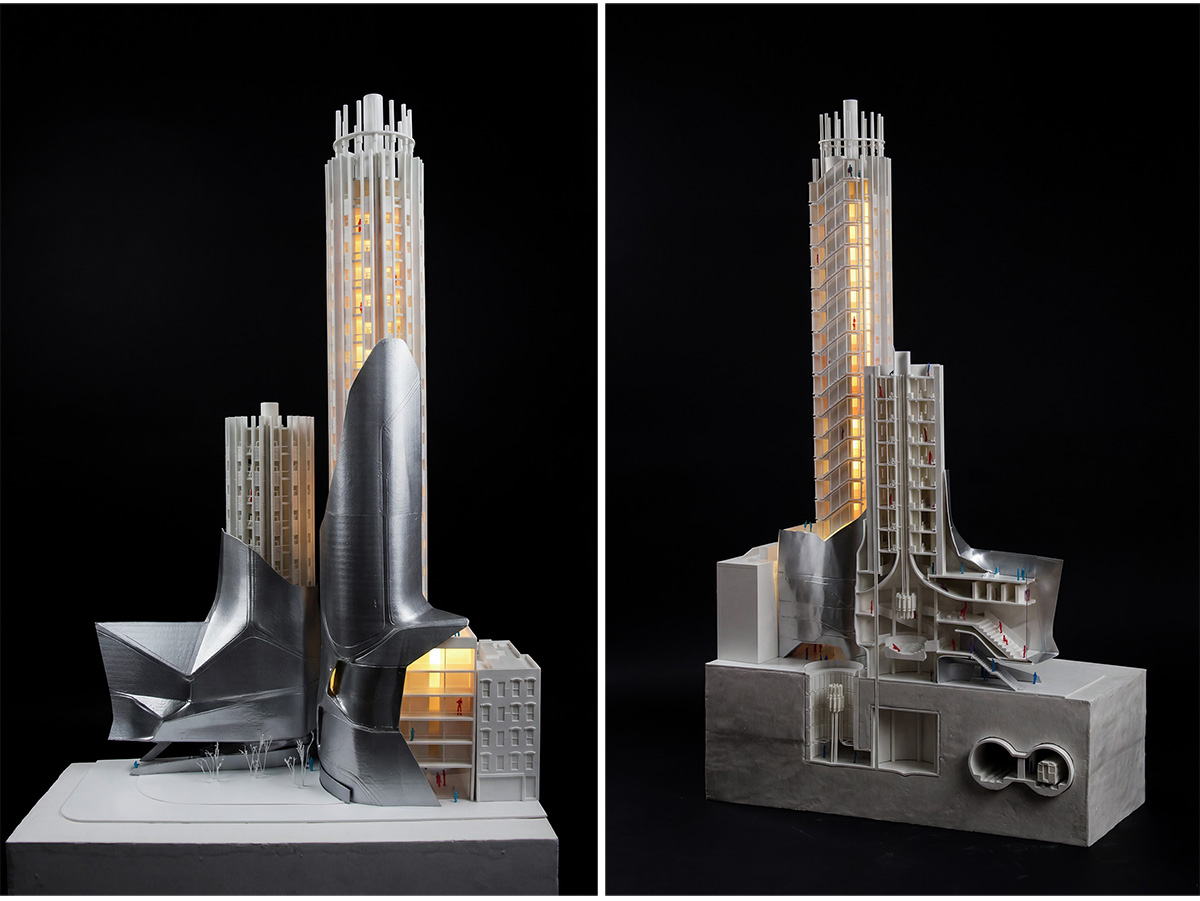
In addition, a large-scale sectional model at 1:100, approximately four feet tall, was constructed. This model highlights the spatial complexity of the library, along with the integration of data centers and the energy conversion systems that underpin the project.
Physical ModelExterior Render
Conclusion: Ultimately, the project reimagines the data center as inhabitable infrastructure, transforming waste into resources while integrating energy, housing, and public space, demonstrating how architecture can merge technological performance with everyday life and shared urban experience.
[This Academic Project has been published with text and images submitted by the student]
Site Context
Design Process
Final Outcome
To submit your academic project for publication at ArchiDiaries, please visit the following link >> Submit
Get the best of ArchiDiaries, directly in your inbox.
We use cookies on our website to give you the most relevant experience by remembering your preferences and repeat visits. By clicking “Accept All”, you consent to the use of ALL the cookies. However, you may visit "Cookie Settings" to provide a controlled consent.
This website uses cookies to improve your experience while you navigate through the website. Out of these, the cookies that are categorized as necessary are stored on your browser as they are essential for the working of basic functionalities of the website. We also use third-party cookies that help us analyze and understand how you use this website. These cookies will be stored in your browser only with your consent. You also have the option to opt-out of these cookies. But opting out of some of these cookies may affect your browsing experience.
Necessary cookies are absolutely essential for the website to function properly. These cookies ensure basic functionalities and security features of the website, anonymously.
Cookie
Duration
Description
cookielawinfo-checkbox-analytics
11 months
This cookie is set by GDPR Cookie Consent plugin. The cookie is used to store the user consent for the cookies in the category "Analytics".
cookielawinfo-checkbox-functional
11 months
The cookie is set by GDPR cookie consent to record the user consent for the cookies in the category "Functional".
cookielawinfo-checkbox-necessary
11 months
This cookie is set by GDPR Cookie Consent plugin. The cookies is used to store the user consent for the cookies in the category "Necessary".
cookielawinfo-checkbox-others
11 months
This cookie is set by GDPR Cookie Consent plugin. The cookie is used to store the user consent for the cookies in the category "Other.
cookielawinfo-checkbox-performance
11 months
This cookie is set by GDPR Cookie Consent plugin. The cookie is used to store the user consent for the cookies in the category "Performance".
viewed_cookie_policy
11 months
The cookie is set by the GDPR Cookie Consent plugin and is used to store whether or not user has consented to the use of cookies. It does not store any personal data.
Functional cookies help to perform certain functionalities like sharing the content of the website on social media platforms, collect feedbacks, and other third-party features.
Performance cookies are used to understand and analyze the key performance indexes of the website which helps in delivering a better user experience for the visitors.
Analytical cookies are used to understand how visitors interact with the website. These cookies help provide information on metrics the number of visitors, bounce rate, traffic source, etc.
Advertisement cookies are used to provide visitors with relevant ads and marketing campaigns. These cookies track visitors across websites and collect information to provide customized ads.