Home » Academic projects » Skinning the Landscape: The Beauty of the Imprint – Reimagining Tannery Architecture Through Craft, Memory, and Landscape | Bachelors Design Project
Skinning the Landscape: The Beauty of the Imprint – Reimagining Tannery Architecture Through Craft, Memory, and Landscape | Bachelors Design Project
Excerpt: ‘Skinning the Landscape’ is a Bachelors Design Project by Kate-Olivia Wakeford from the ‘Bartlett School of Architecture – UCL.’ The project aims to reinterpret traditional vegetable tanning through architecture, creating a functioning tannery rooted in its landscape, material processes, and craft traditions. It explores how natural materials, existing terraces, structural systems, and traces of making can shape spaces that connect production, craftsmanship, and the experience of place.
Introduction: Emerging from an exploration of imprint, trace, and material transformation, Skinning the Landscape reimagines the tannery as an architecture of memory embedded within the terraced landscape of Longarone. Inspired by the marks left upon paper, bark, leather, and land, the project revives a lost tradition of artisanal tanning through bark-derived dyes and craft-based production. Rather than existing as an object placed upon the site, the building becomes an inscription within the terrain, recording the traces of making, weathering, and occupation over time.
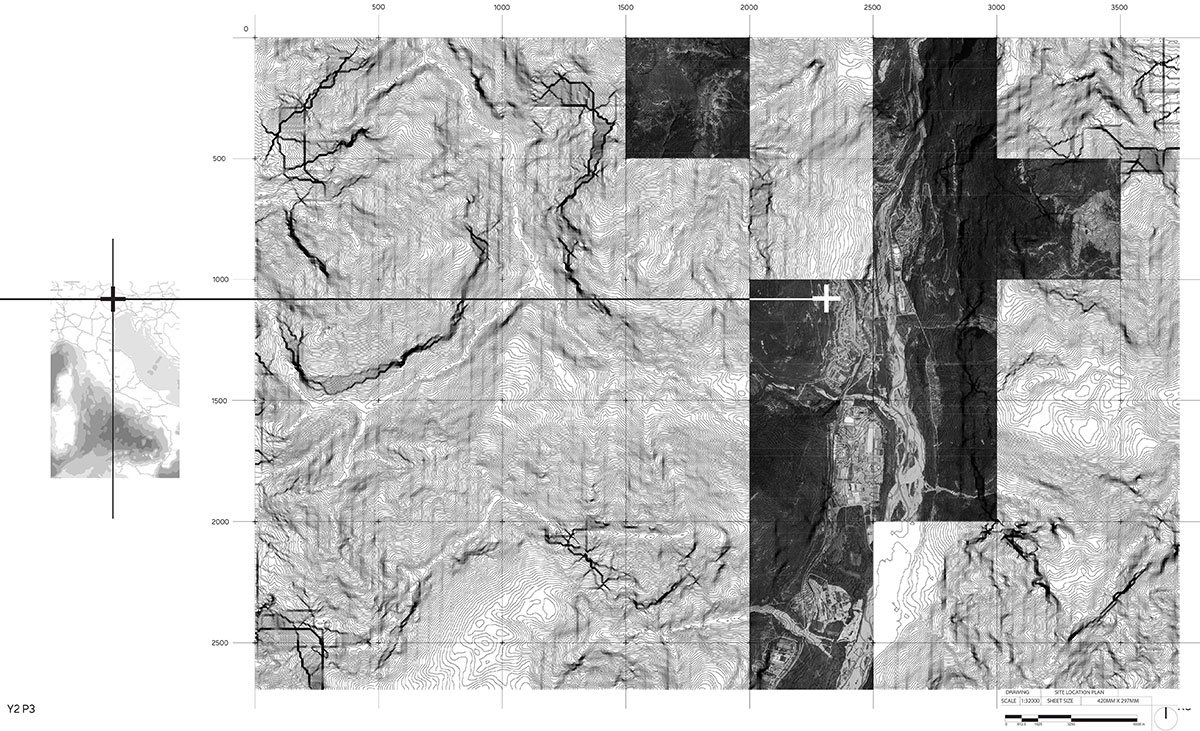
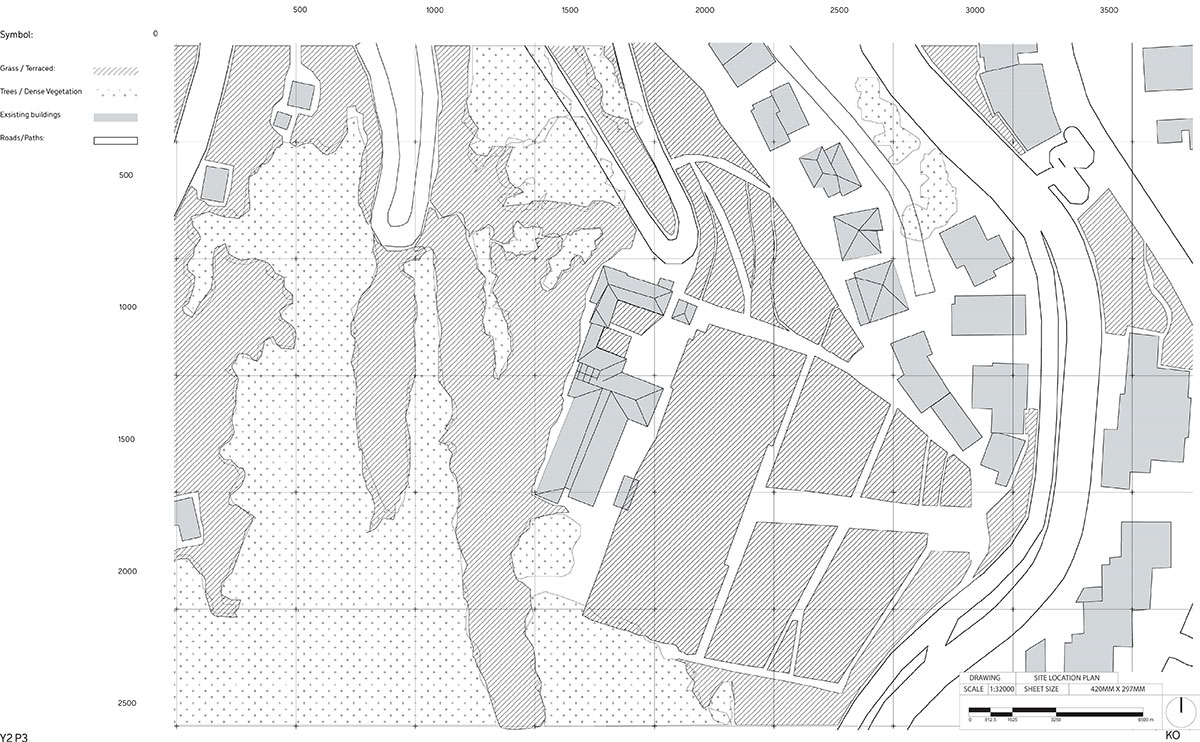
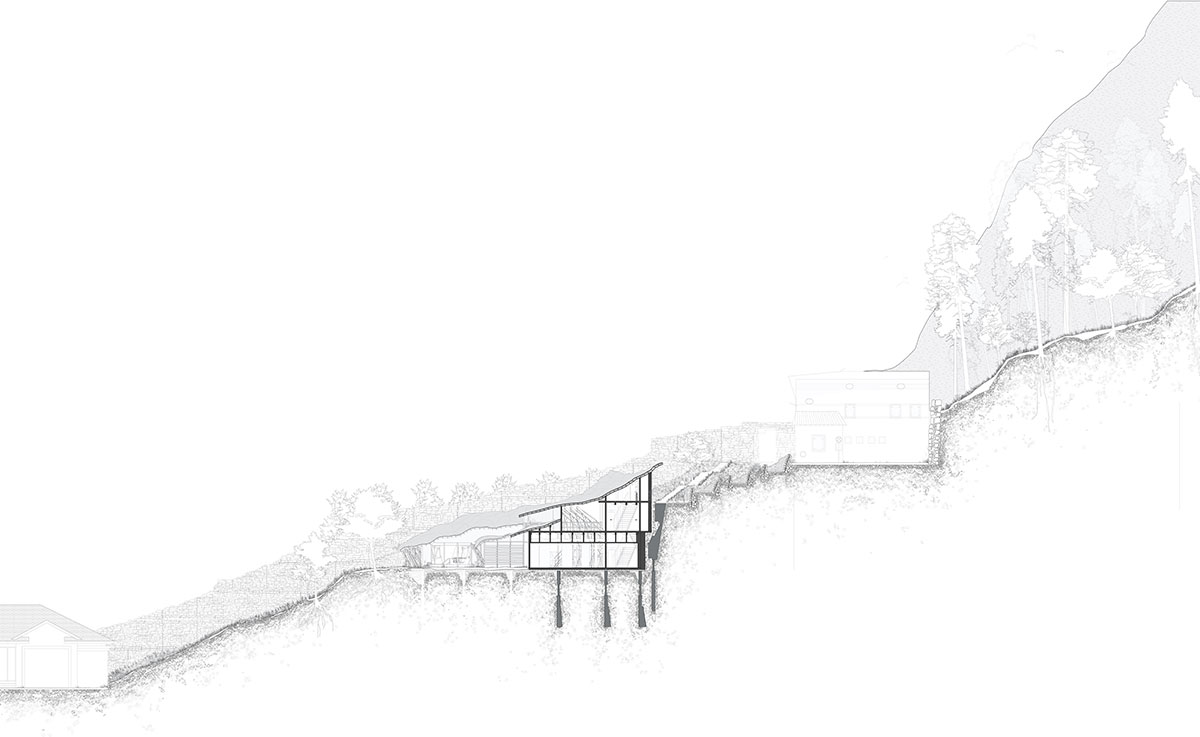
Longarone sits within a dramatic Alpine valley shaped by steep slopes, the Piave River, terraced ground, and exposed retaining walls. Rock, water, weather, and altitude define its character, making the site a landscape of pressure, memory, and trace.This site drawing records the terraces as a constructed imprint within the landscape.
Longarone is a landscape defined by both natural and human traces. The project occupies a hillside next to large existing terraces embedded in the steep Piave valley, where retaining walls, vegetation, and changes in ground level record successive occupations of the landscape. This condition became particularly significant in relation to Longarone’s history, a town reconstructed after the Vajont disaster of 1963.
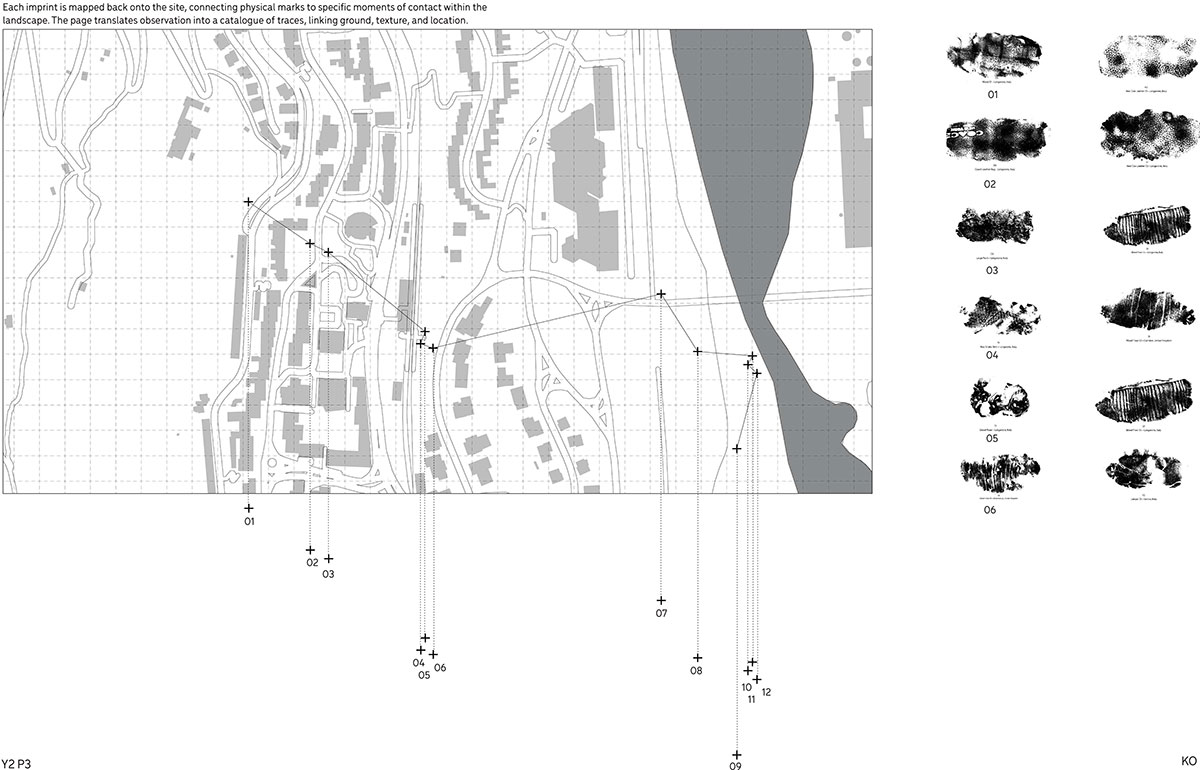
Printing the Site Landscape Areas of ImprintationPrinting the Site Landscape
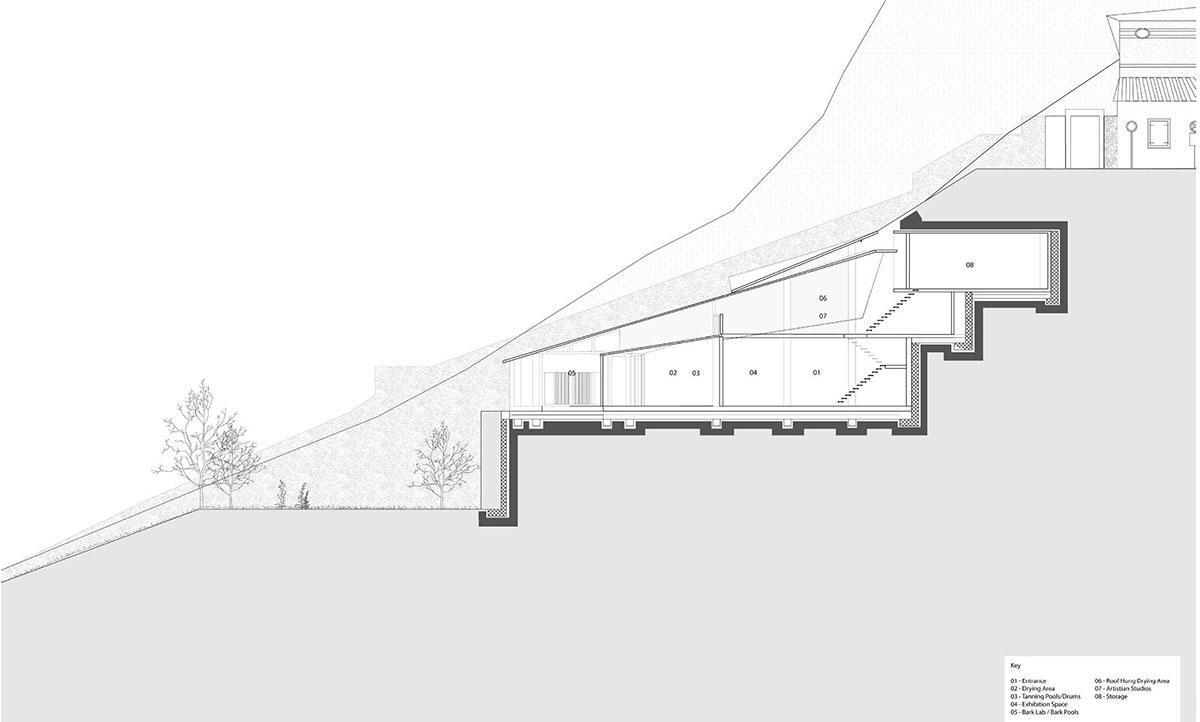
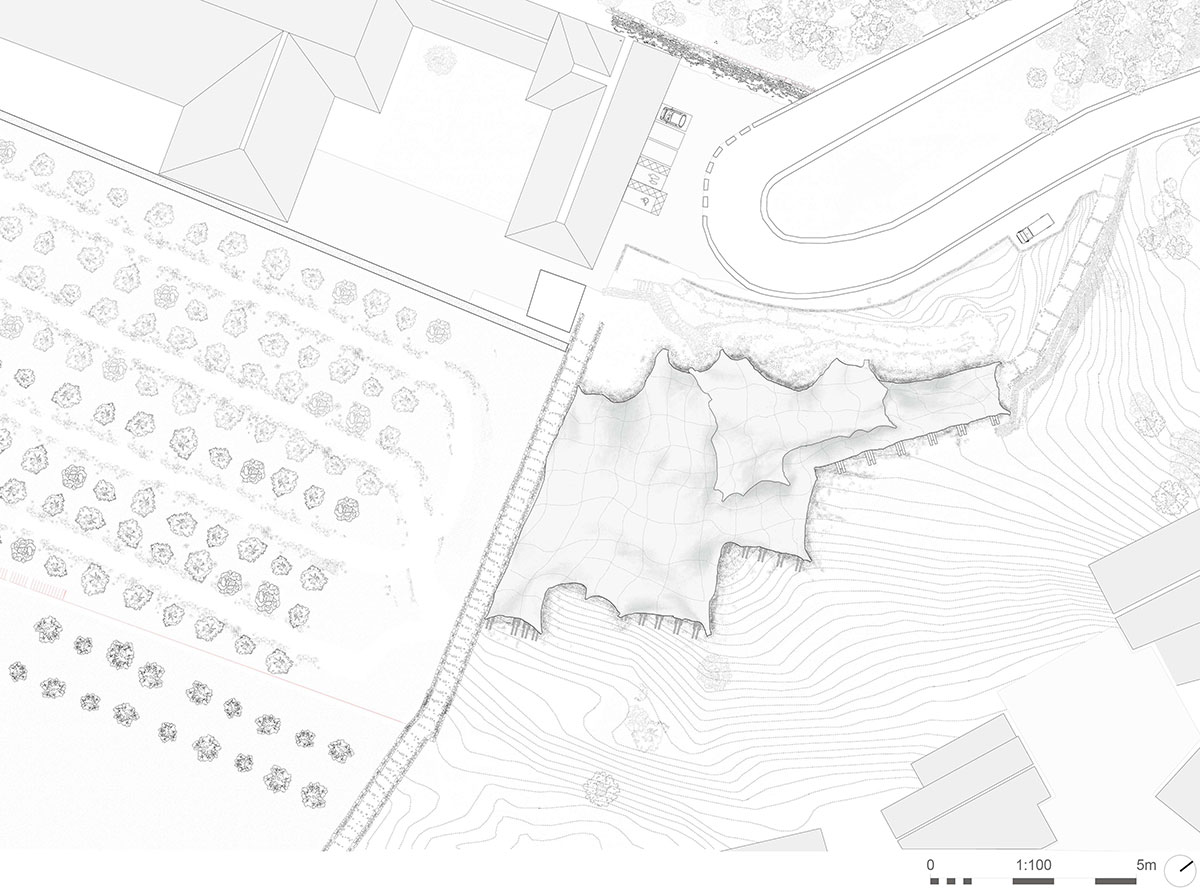
The proposal introduces a small-scale artisanal tannery into this terrain, reviving traditional vegetable tanning through locally available materials and resources. Beech bark provides tannins for tanning and dyeing, while water, timber, and stone create a direct relationship between production and the surrounding landscape. The program follows the transformation of the hide through receiving, washing, tanning, drying and making, culminating in artisan workshops. Rather than levelling the site, the tannery inhabits its existing terraces, allowing production to unfold through the changing levels of the ground.
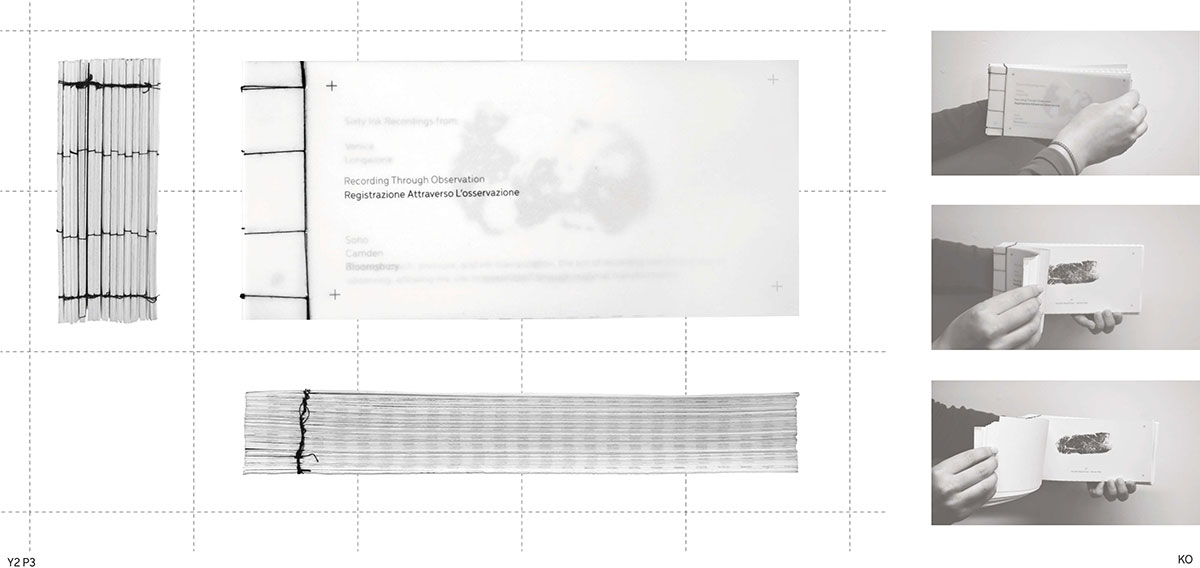
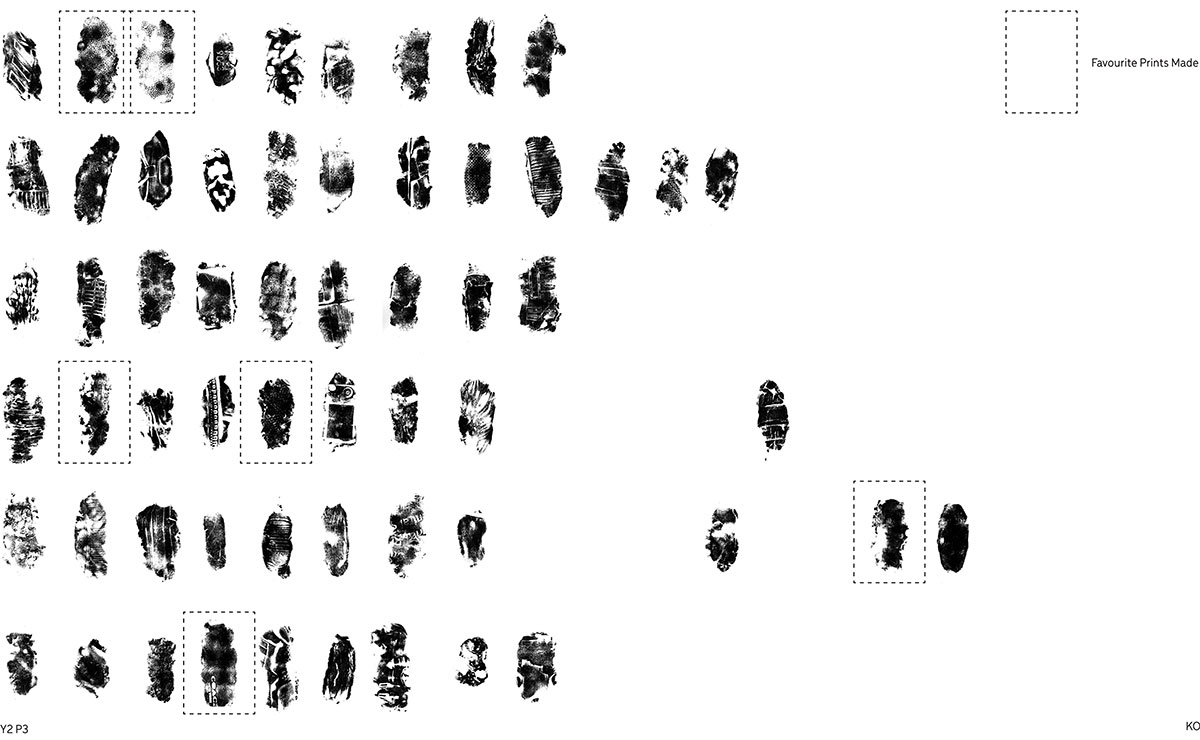
Book of all Documented ImprintsFavourite Prints MadeLeather Site Sketches in BookLeather Site Sketches in Book
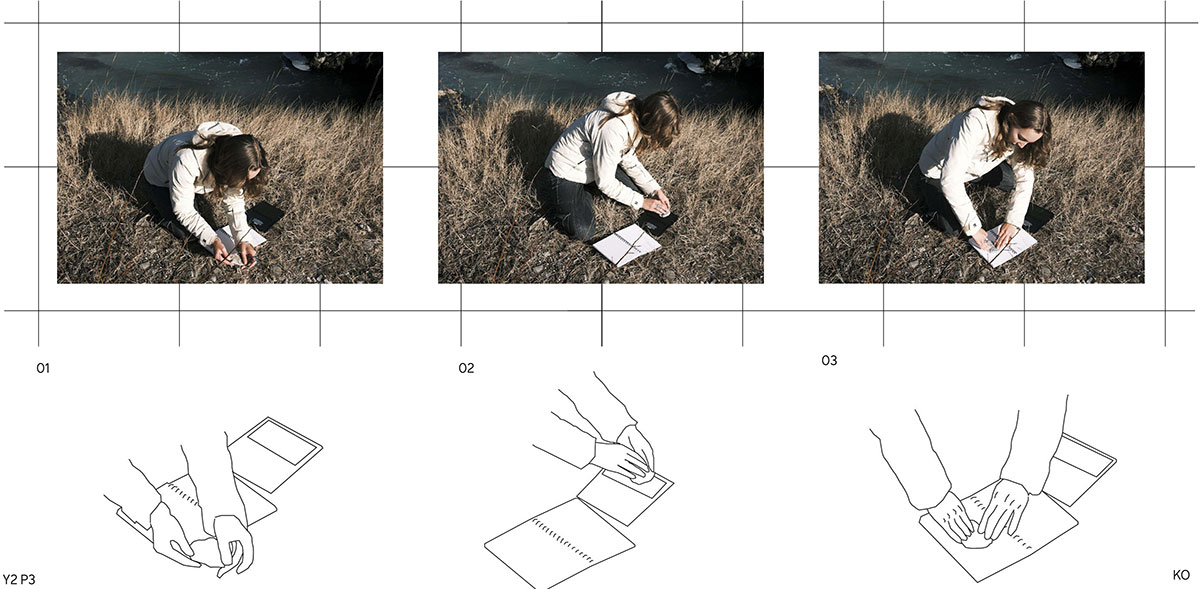
Recording through imprint began as a direct act of contact with the landscape. Through touch, pressure, and ink, the surface of Longarone was translated into a series of marks, allowing the site to be understood through material traces rather than observation alone. The process began by pressing kneadable erasers into desired textures, such as the rocky earth of Longarone, embedding the physical qualities of the landscape into their surfaces. The textured erasers were then gently pressed onto an inked page, taking care not to disturb or erase the texture captured within them. Finally, the ink-filled erasers were pressed onto the paper for as long as possible, leaving behind a clear imprint of the landscape and transforming its physical surface into a recorded material trace.
Design Process
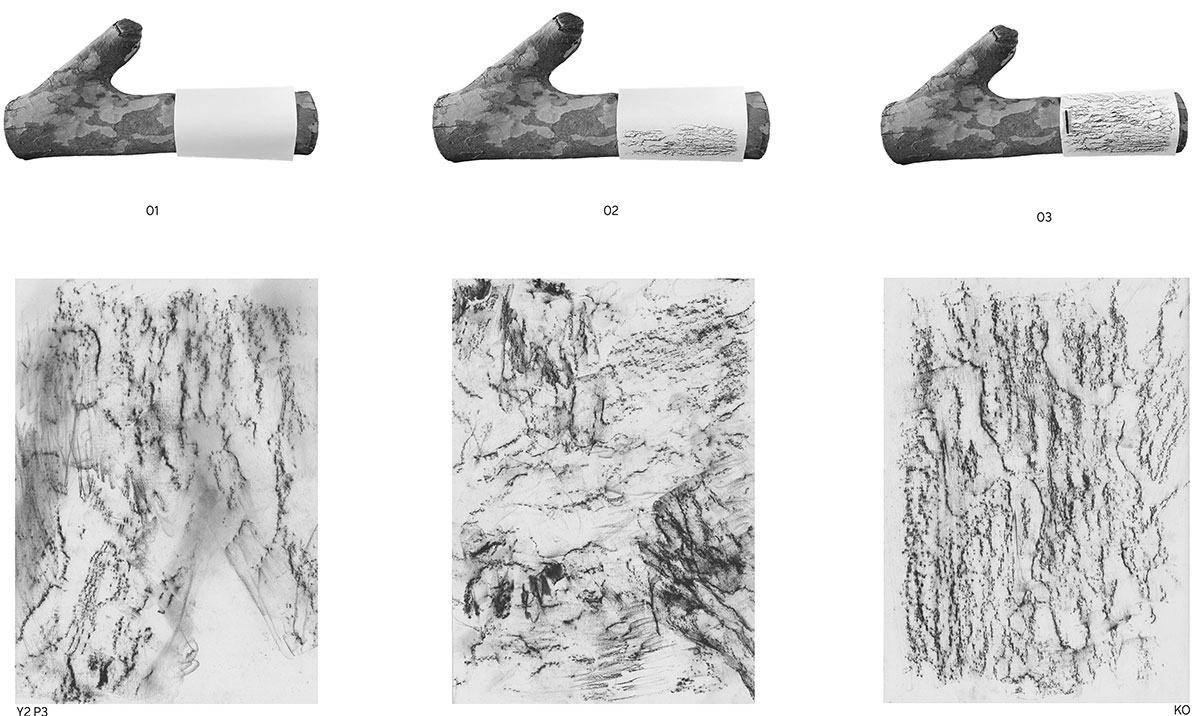
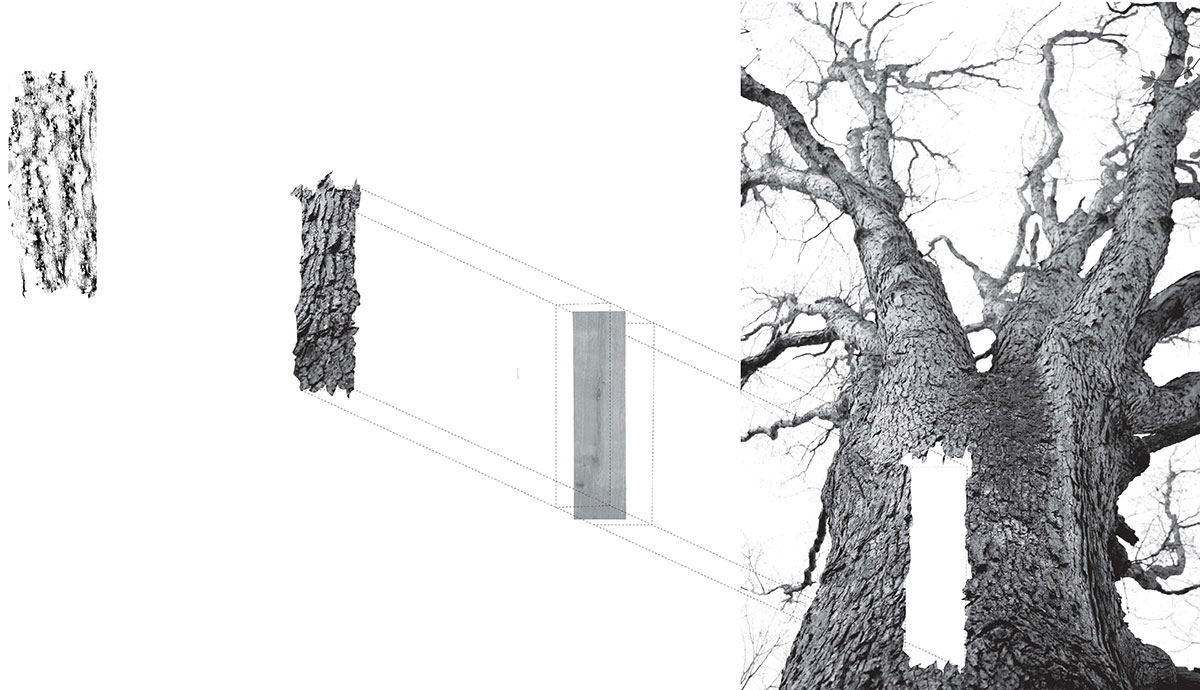
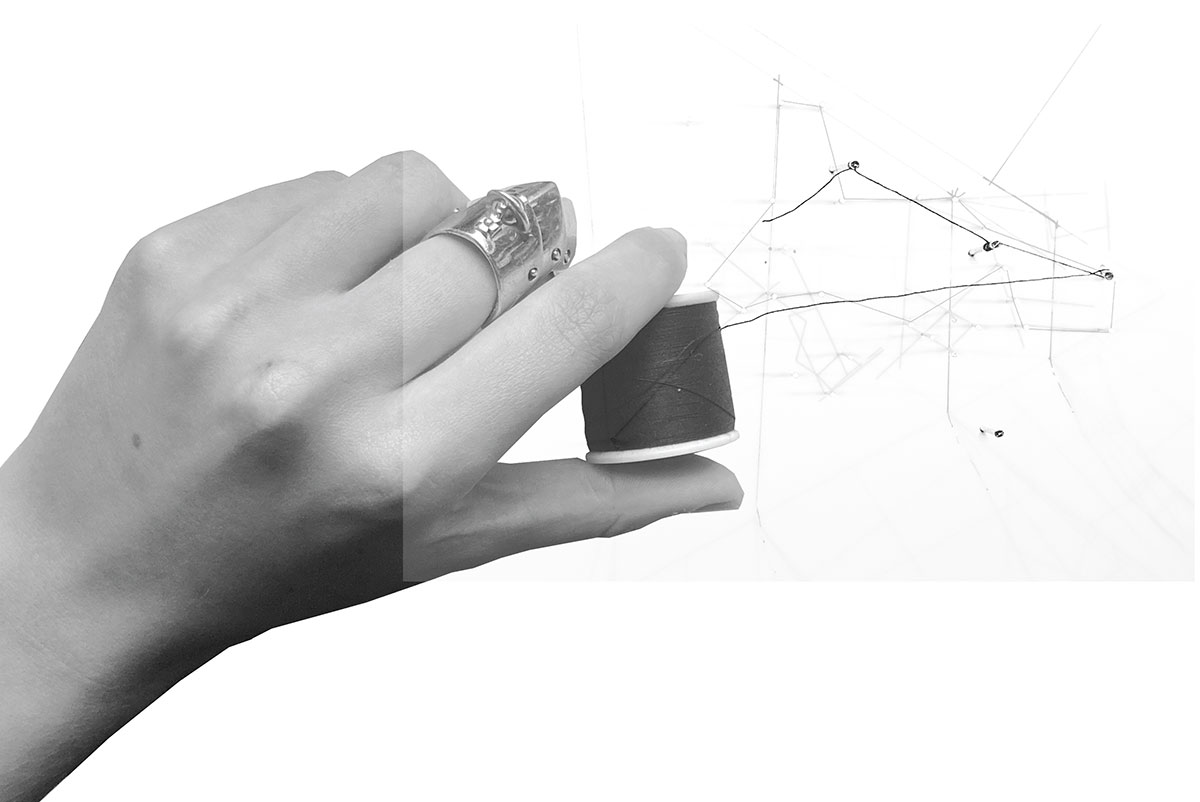
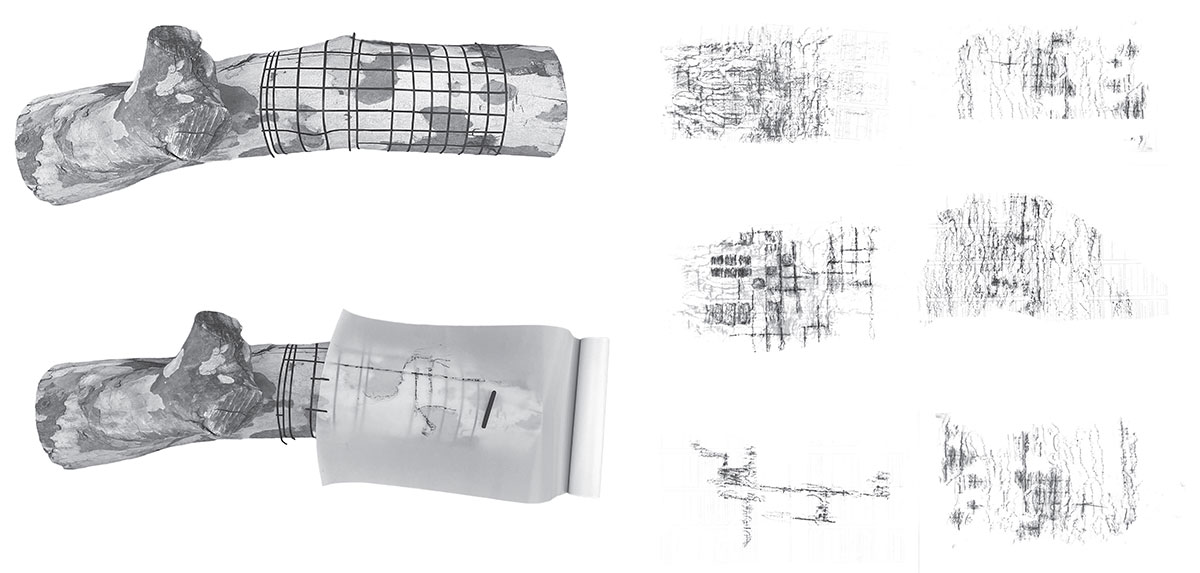
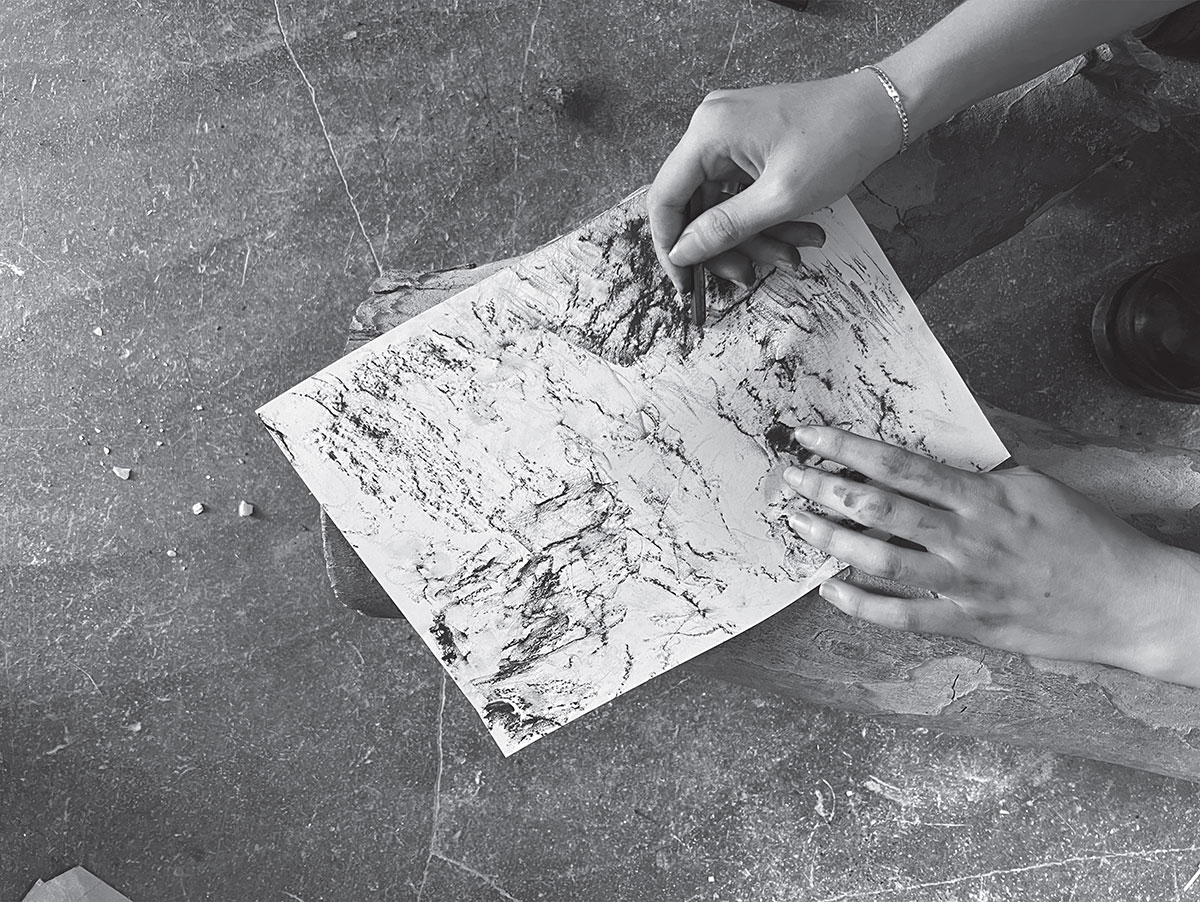
Bark rubbings record local timber through pressure and contact, capturing varied grain conditions as material studies and textures for the project’s drawings, dye research, and architectural language.The bark rubbing becomes a material study, linking the tree’s surface to the building’s timber components. Its grain, texture, and irregular marks inform an architecture that carries traces of the forest.Hand And String
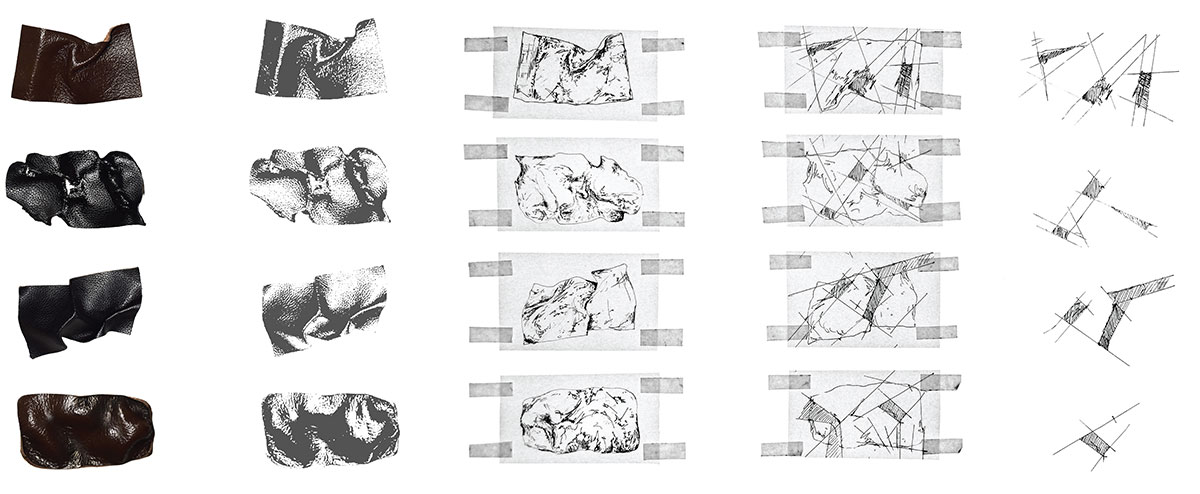
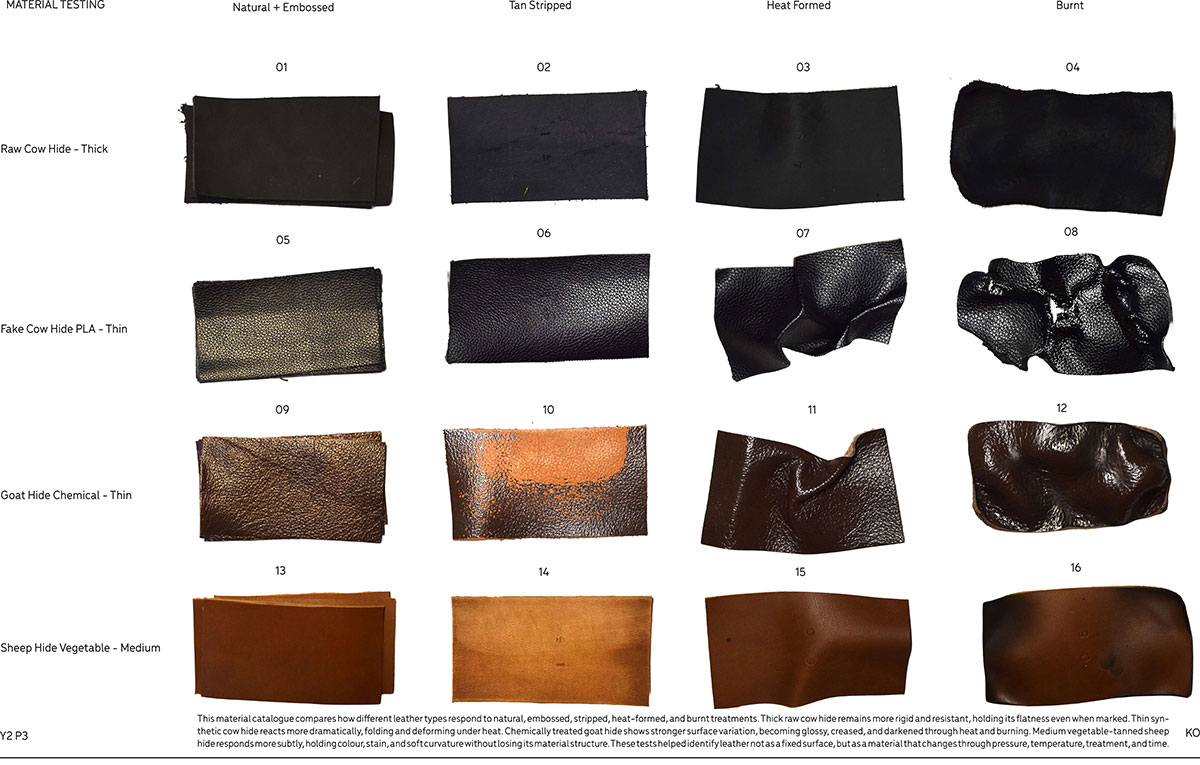
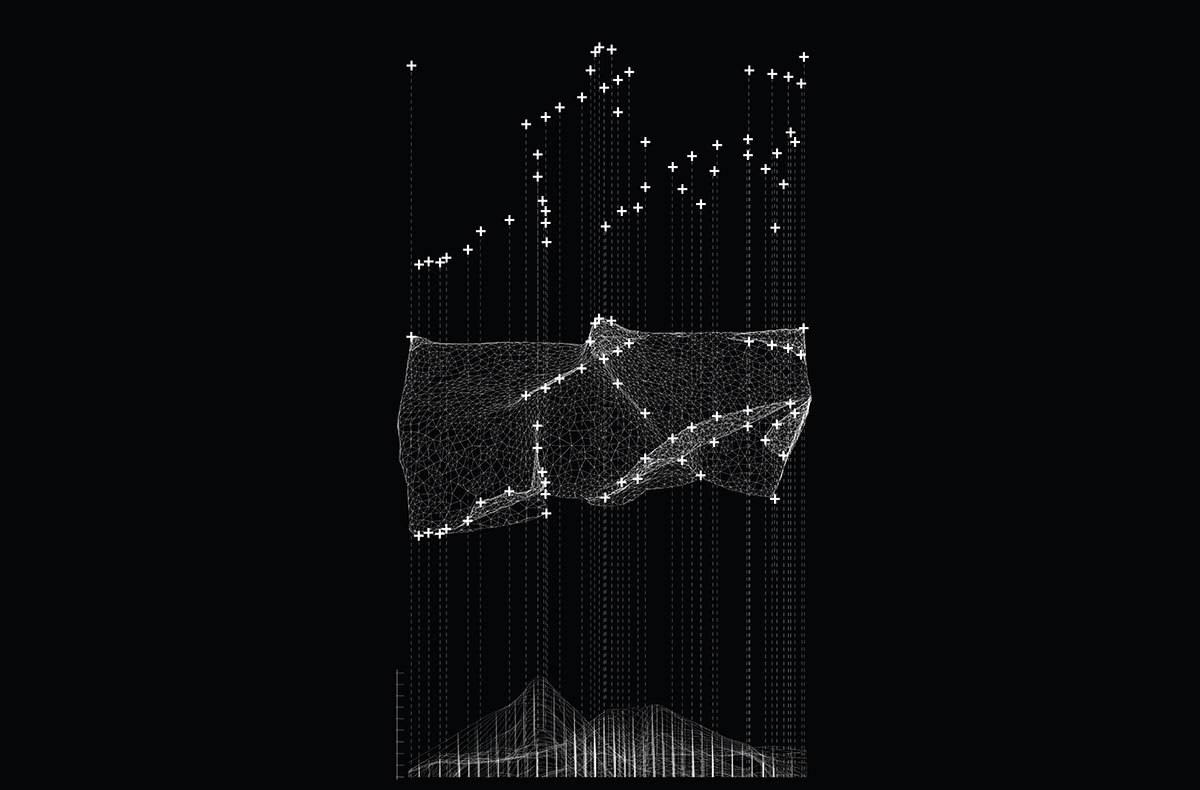
The design process began by reading the landscape as a skin—a surface that carries marks, scars, and evidence of change. Through bark rubbings, ink prints, and material experiments with wood and leather, the designer investigated how pressure, texture, and contact could produce an imprint. These studies gradually shifted from recording existing surfaces towards creating architectural form.
Leather DrawingsLeather ExperimentationLeather Grid and StarLogs and Rubbings
Trees became both material and geometric tools within this process. Their branching structures and irregular rhythms informed studies of structural organisation, while bark became central to the tannery itself as a source of natural tannins. Alongside these investigations, the designer studied the sequence and machinery of traditional vegetable tanning, developing an understanding of the requirements of production, circulation, and spatial relationships.
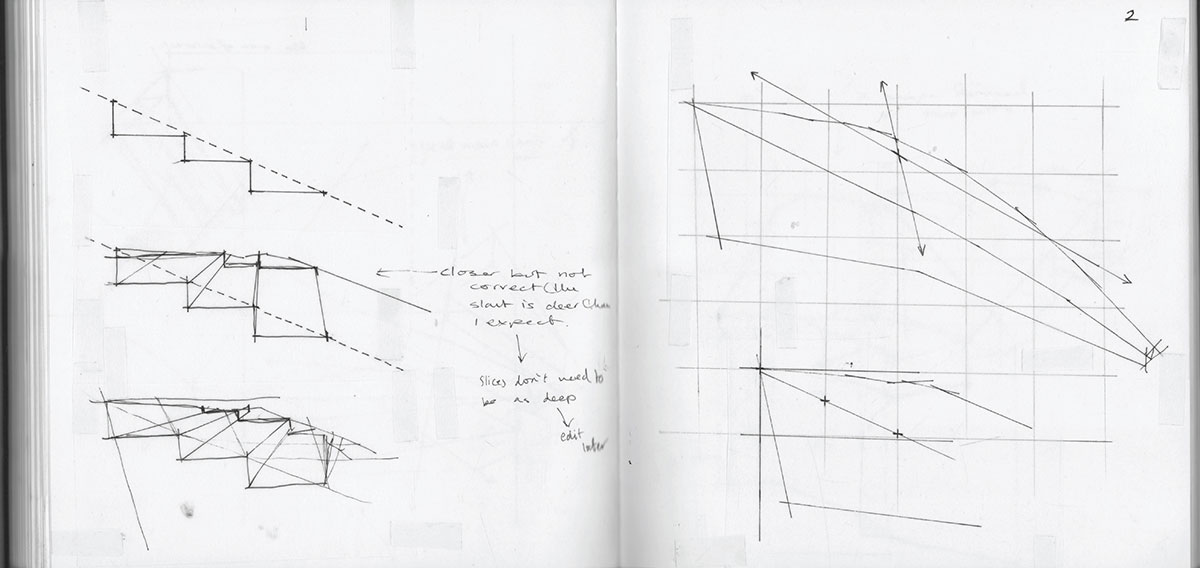
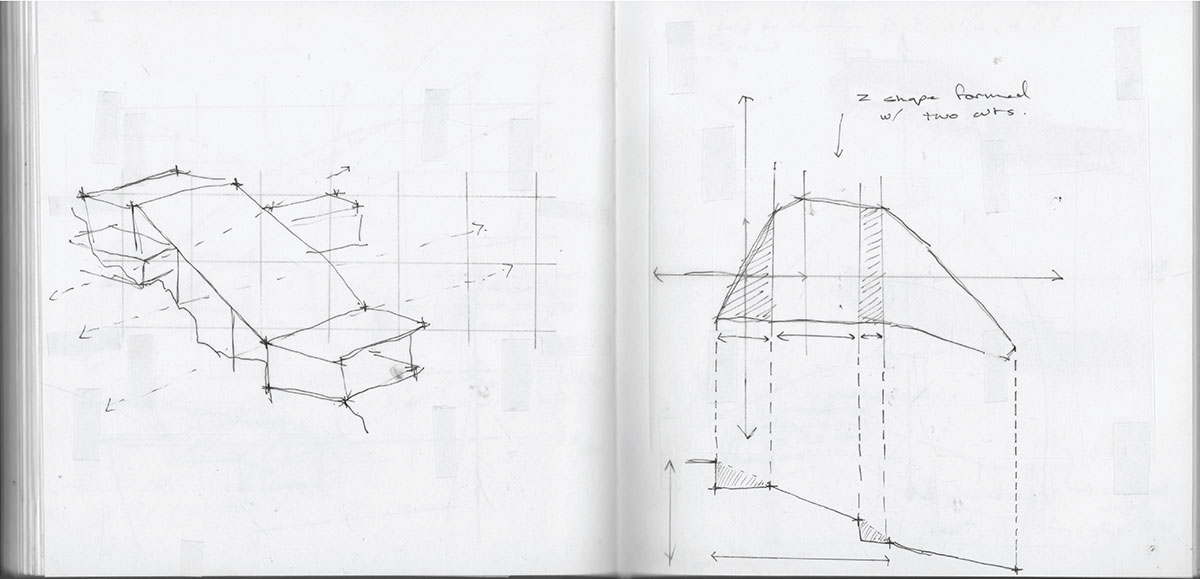
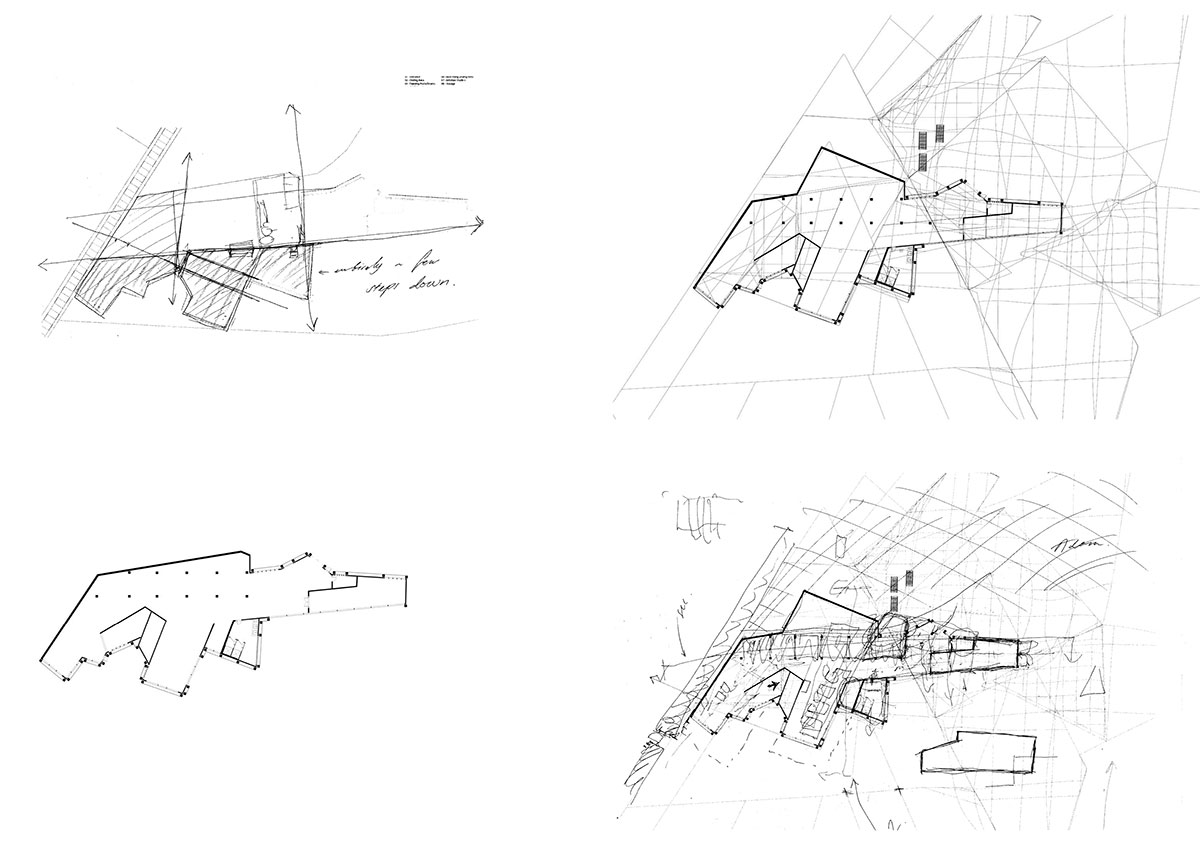
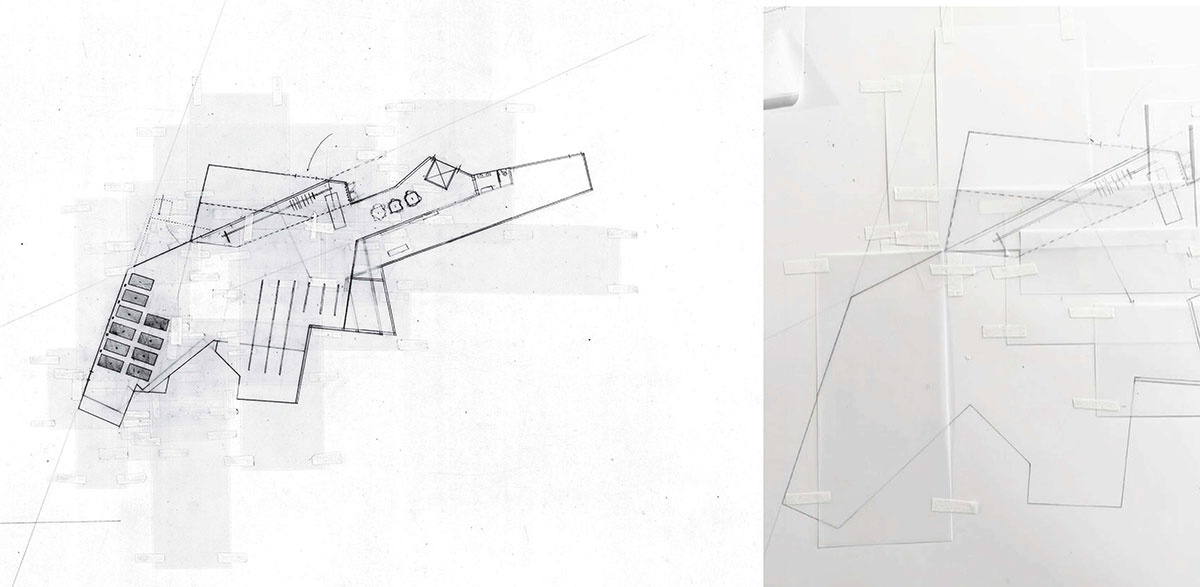
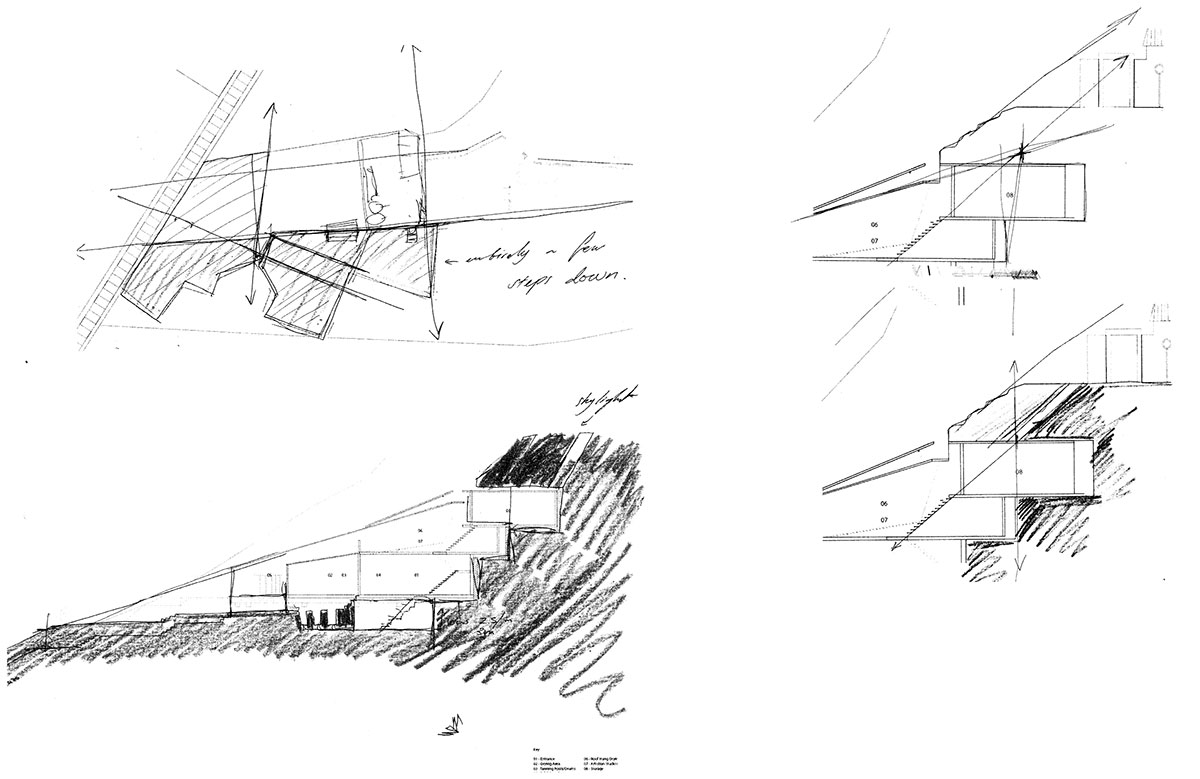
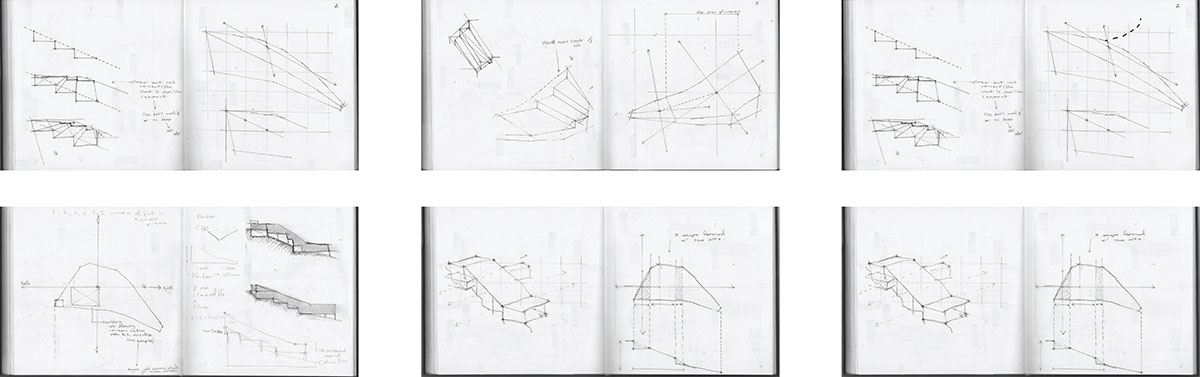
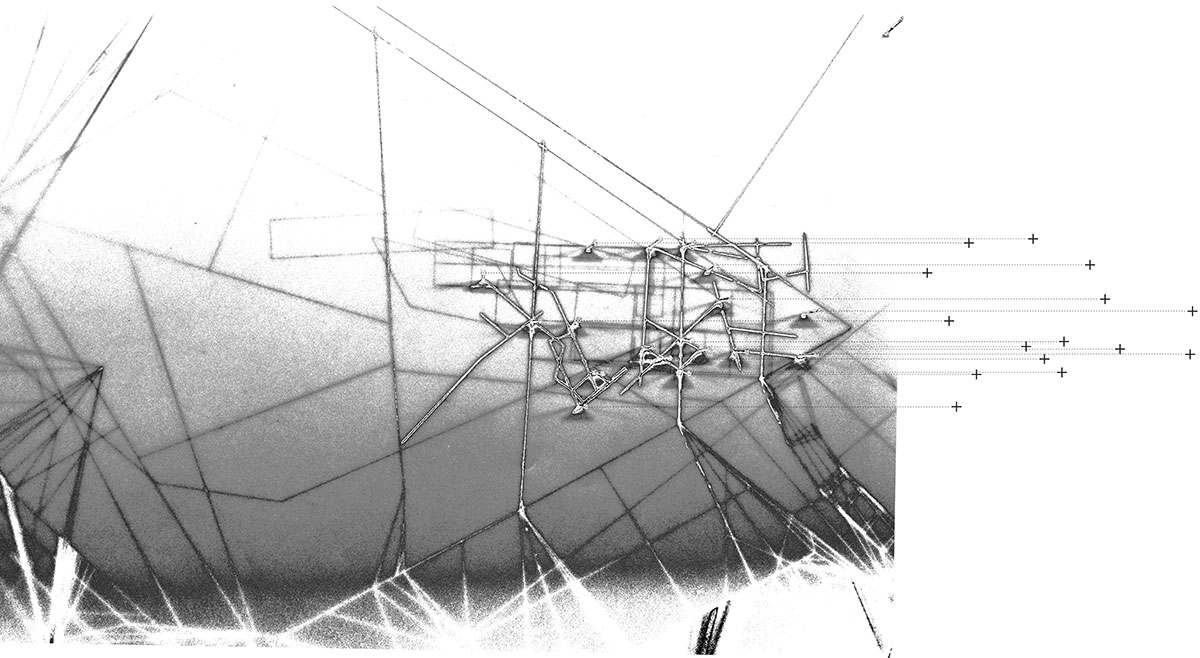
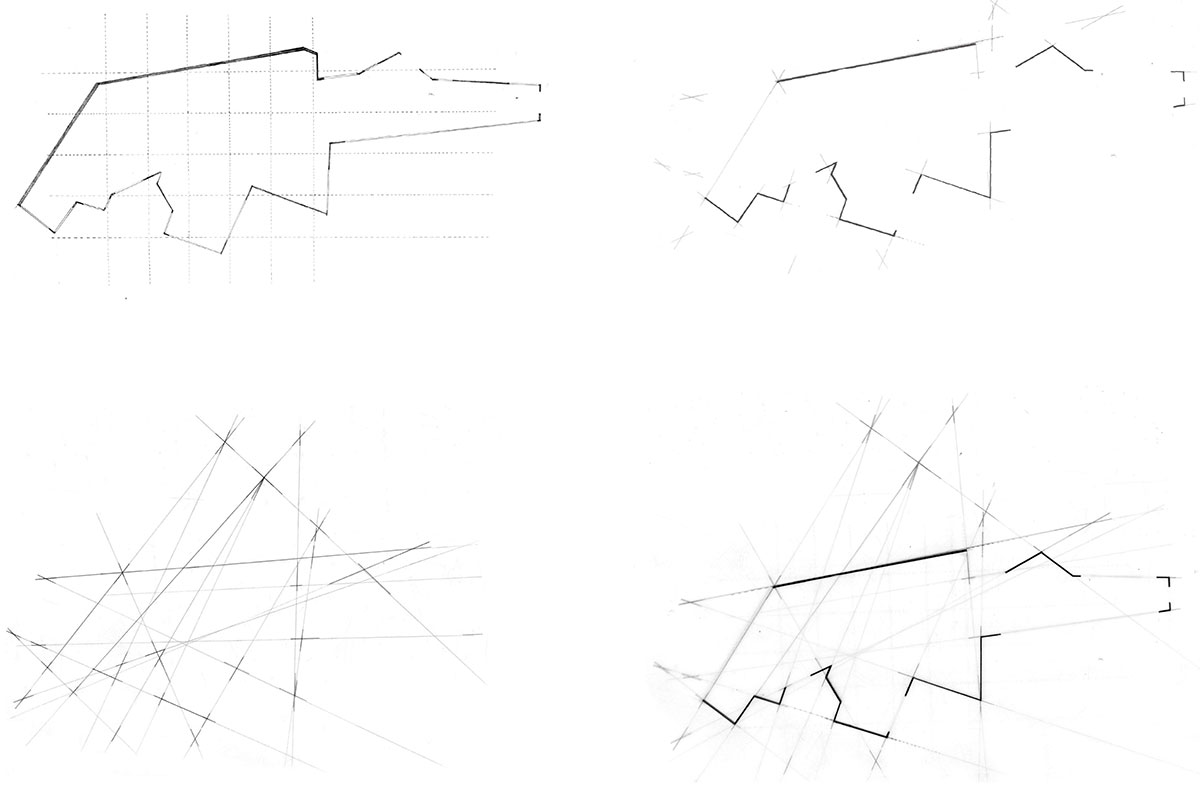
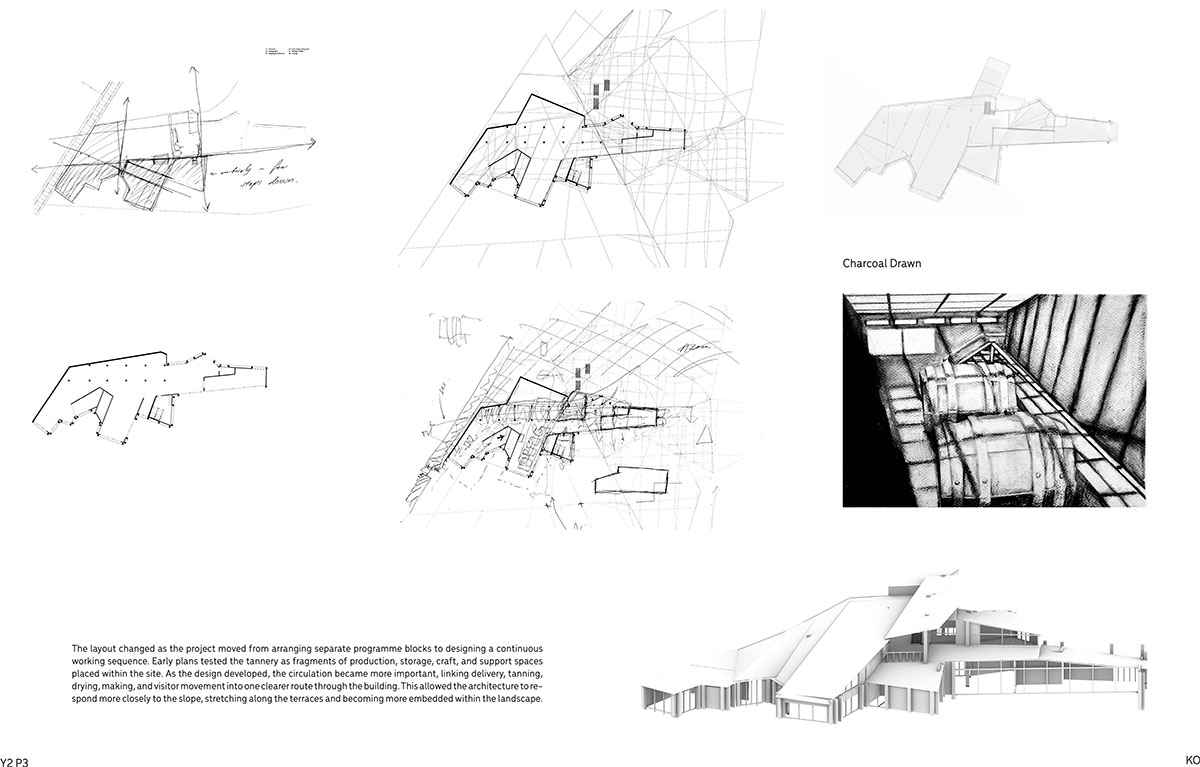
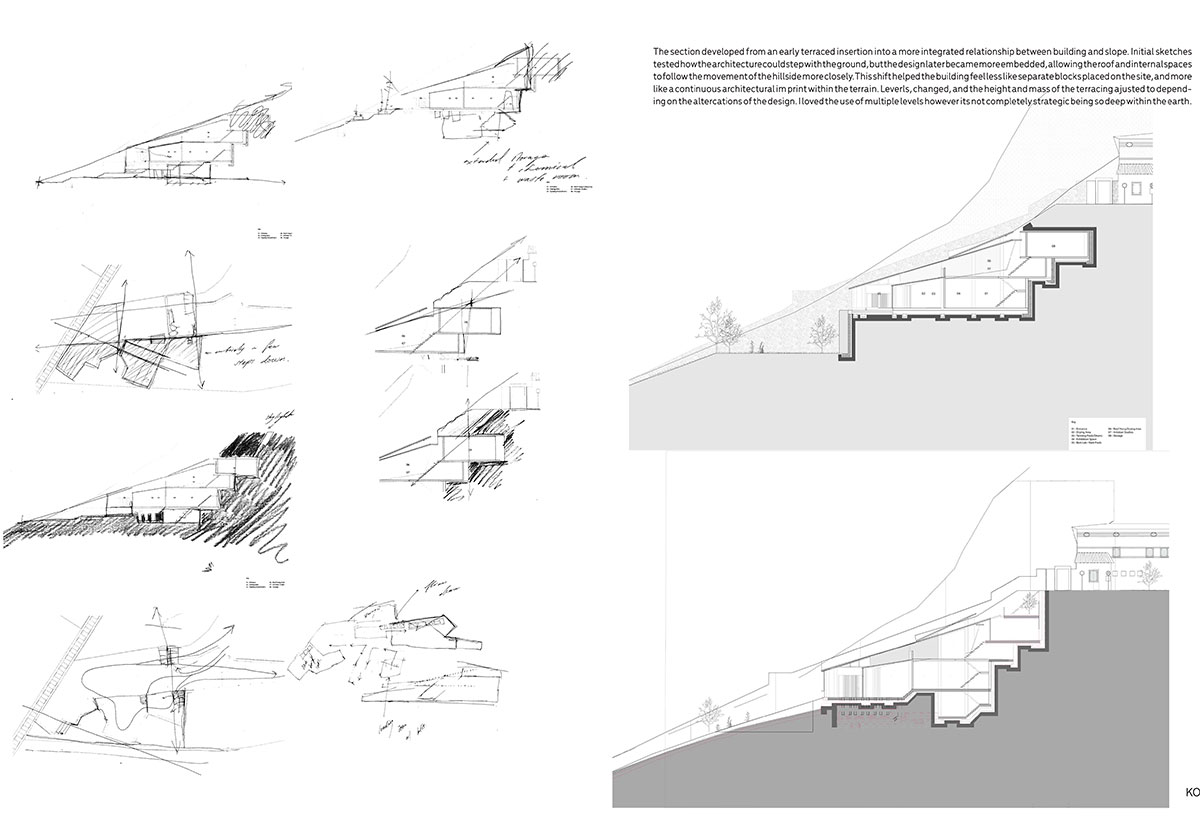
Sketches of PlanThe extracted linework developed into angular grids and geometric studies, exploring how individual marks could form spatial structures. These drawings defined edges, directions, and room boundaries, translating folds and tension into architectural space.Sketches of SectionSketches of Section
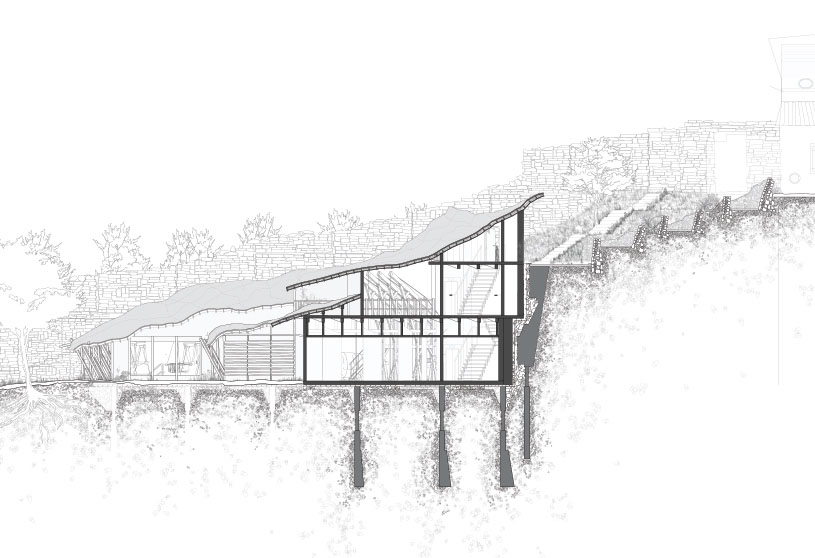
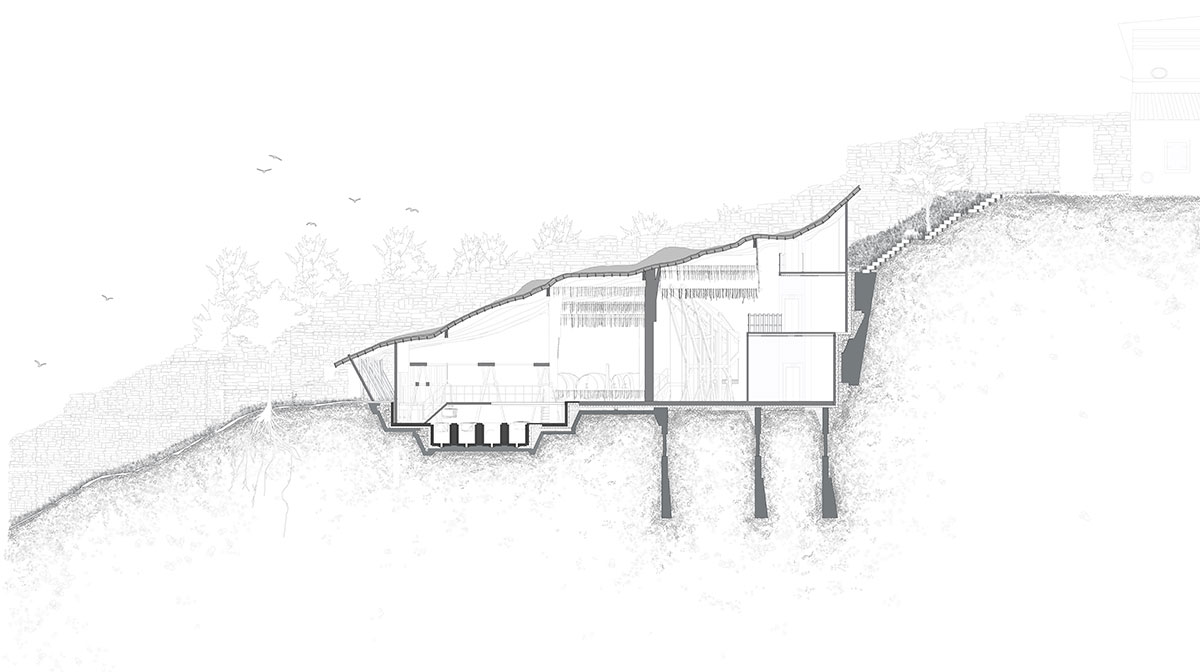
The final geometry developed through an exchange between these systems and the existing terraces. Walls follow, cut into, and extend lines already present within the landscape, while the timber structure establishes a lighter layer above them. The building therefore operates as another skin: shaped by the landscape beneath it while gradually accumulating the traces of making, weathering, and occupation.
Final Outcome
Roof PlanFloor Plan Outline
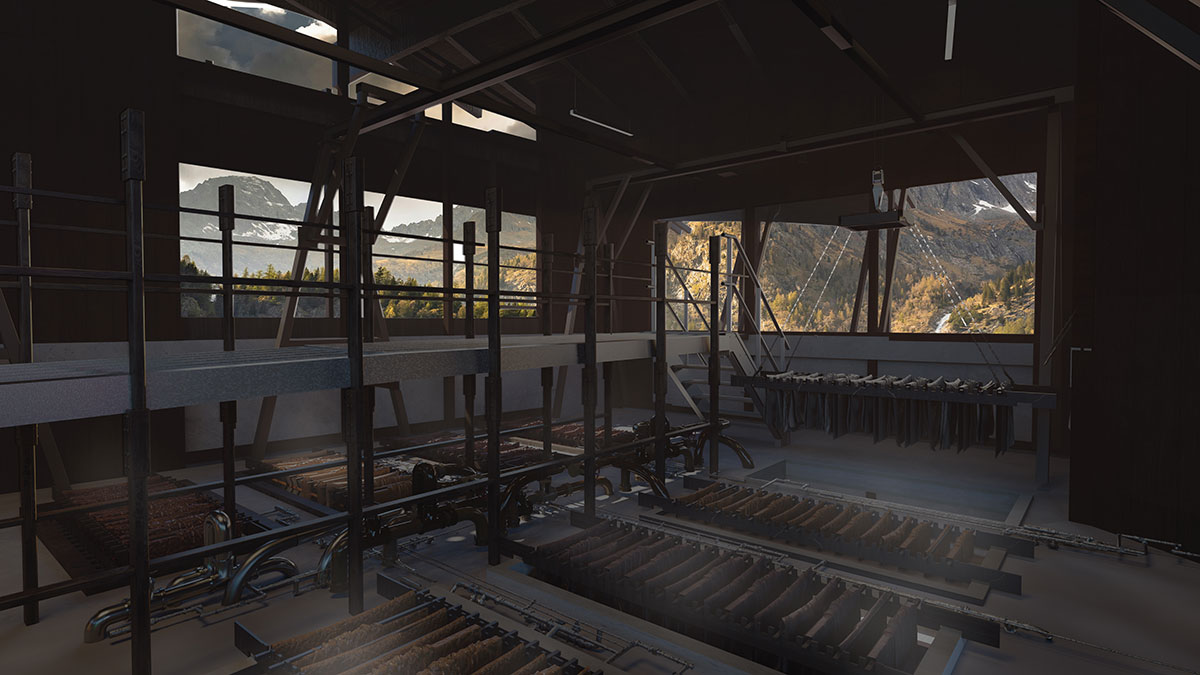
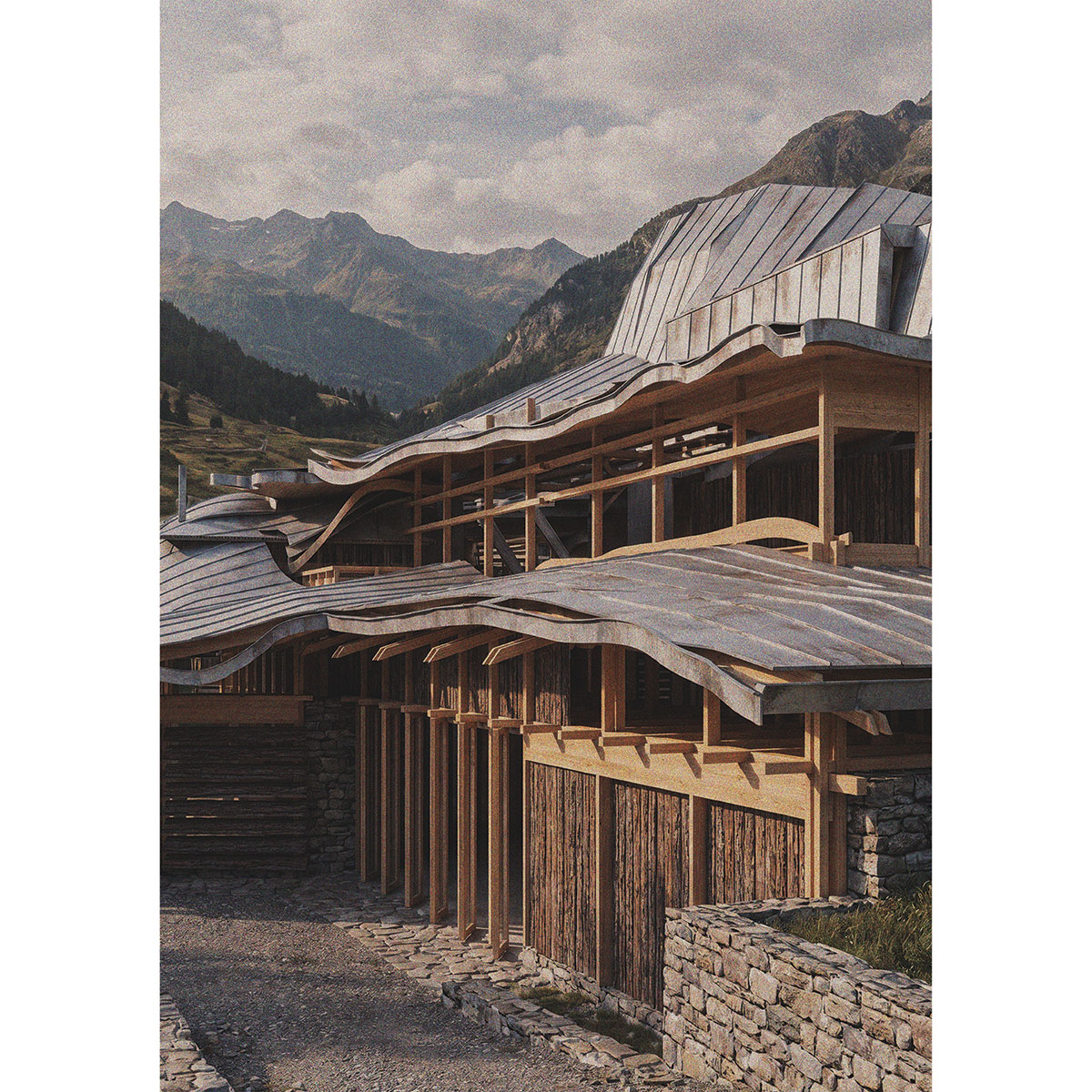
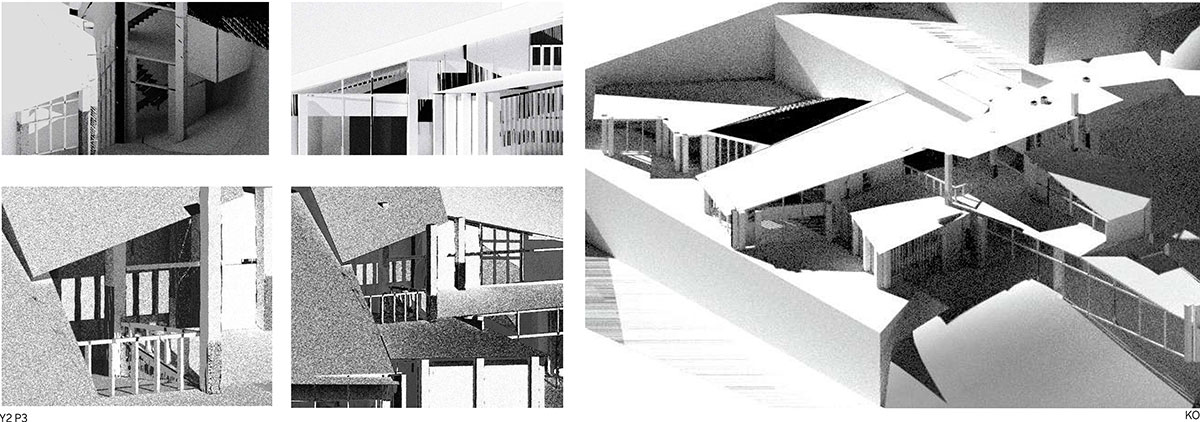
The outcome brings together resolution and material representation to communicate the tannery as both a functioning place of production and an architecture rooted in traditional craft. Detailed interior renders reveal the atmosphere of the working tannery, its materiality, machinery, and relationship between craft, production, and feel.
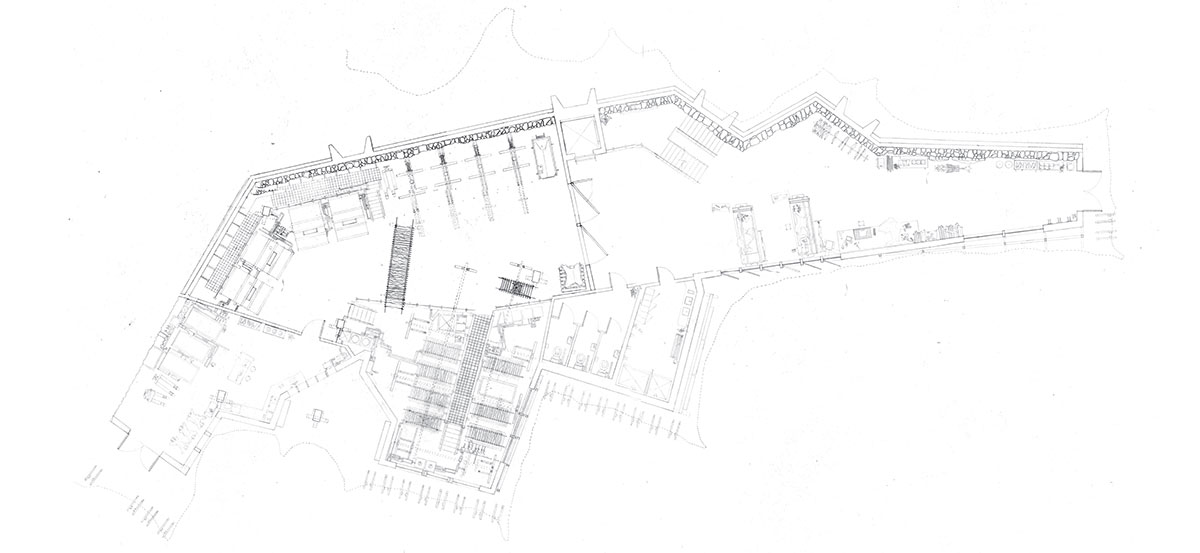
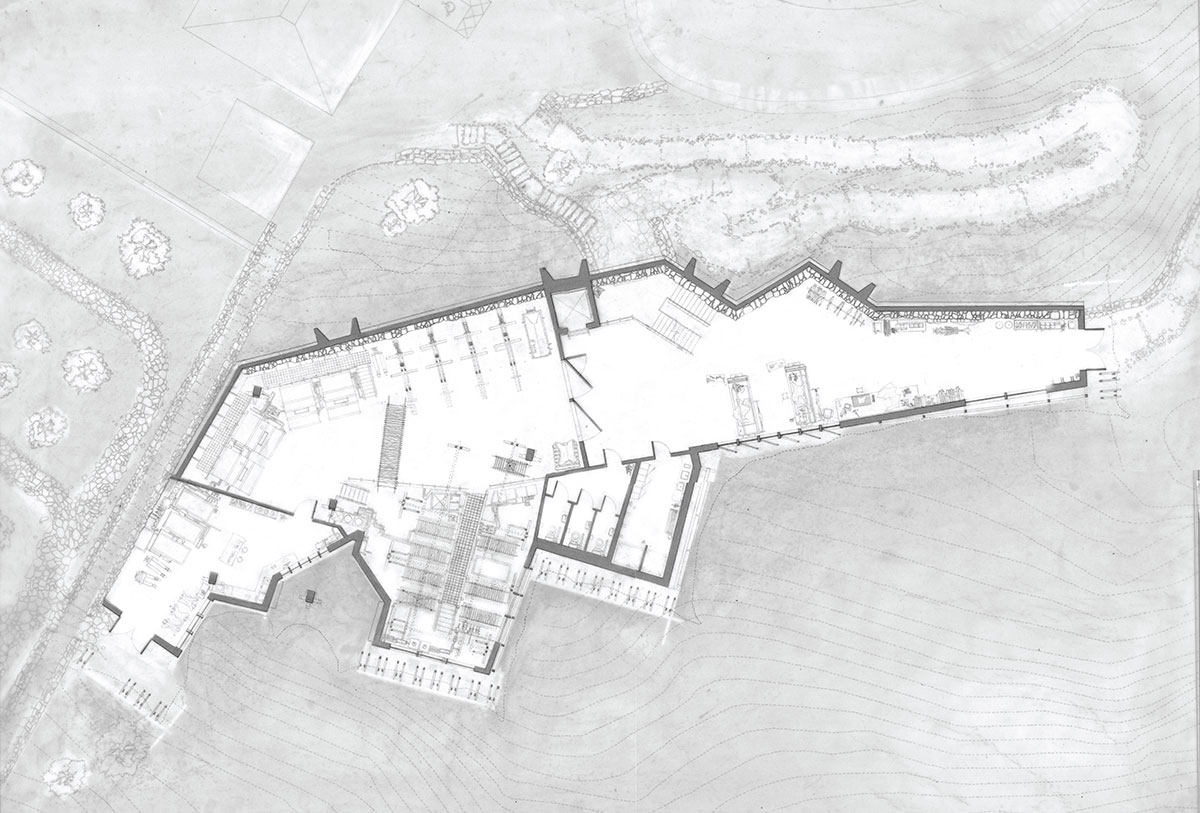
Plan Hand Drawing A0Short Section 1.100
The project was resolved through large scale A0 hand-drawn plans alongside precisely constructed digital sections, allowing two contrasting methods of representation to coexist. While the digital drawings communicate the technical resolution of the building, the hand drawings deliberately retain the marks, irregularities and imperfections produced through the act of making. Rather than treating these as errors, they become traces of the drawing process itself, reflecting the tactile and traditional processes taking place within the tannery.
A0 Short Section 1.50Render Interior
Bark rubbings were incorporated into the drawings as textured backgrounds, physically transferring material from the project’s landscape into its representation. The final drawings therefore become imprints themselves, combining precision with the human trace of making.
Render Exterior
Conclusion: Ultimately, the project brings together craft, production, and representation, allowing the tannery to exist as both a functional workplace and a material expression of traditional making, where precision and human traces coexist.
[This Academic Project has been published with text and images submitted by the student]
Site Context
Design Process
Final Outcome
To submit your academic project for publication at ArchiDiaries, please visit the following link >> Submit
Get the best of ArchiDiaries, directly in your inbox.
We use cookies on our website to give you the most relevant experience by remembering your preferences and repeat visits. By clicking “Accept All”, you consent to the use of ALL the cookies. However, you may visit "Cookie Settings" to provide a controlled consent.
This website uses cookies to improve your experience while you navigate through the website. Out of these, the cookies that are categorized as necessary are stored on your browser as they are essential for the working of basic functionalities of the website. We also use third-party cookies that help us analyze and understand how you use this website. These cookies will be stored in your browser only with your consent. You also have the option to opt-out of these cookies. But opting out of some of these cookies may affect your browsing experience.
Necessary cookies are absolutely essential for the website to function properly. These cookies ensure basic functionalities and security features of the website, anonymously.
Cookie
Duration
Description
cookielawinfo-checkbox-analytics
11 months
This cookie is set by GDPR Cookie Consent plugin. The cookie is used to store the user consent for the cookies in the category "Analytics".
cookielawinfo-checkbox-functional
11 months
The cookie is set by GDPR cookie consent to record the user consent for the cookies in the category "Functional".
cookielawinfo-checkbox-necessary
11 months
This cookie is set by GDPR Cookie Consent plugin. The cookies is used to store the user consent for the cookies in the category "Necessary".
cookielawinfo-checkbox-others
11 months
This cookie is set by GDPR Cookie Consent plugin. The cookie is used to store the user consent for the cookies in the category "Other.
cookielawinfo-checkbox-performance
11 months
This cookie is set by GDPR Cookie Consent plugin. The cookie is used to store the user consent for the cookies in the category "Performance".
viewed_cookie_policy
11 months
The cookie is set by the GDPR Cookie Consent plugin and is used to store whether or not user has consented to the use of cookies. It does not store any personal data.
Functional cookies help to perform certain functionalities like sharing the content of the website on social media platforms, collect feedbacks, and other third-party features.
Performance cookies are used to understand and analyze the key performance indexes of the website which helps in delivering a better user experience for the visitors.
Analytical cookies are used to understand how visitors interact with the website. These cookies help provide information on metrics the number of visitors, bounce rate, traffic source, etc.
Advertisement cookies are used to provide visitors with relevant ads and marketing campaigns. These cookies track visitors across websites and collect information to provide customized ads.
![Factory[n]Certainty: Redefining Industrial Architecture Through Work, Life, and Community | Bachelors Design Thesis](https://archidiaries.com/wp-content/uploads/2026/09/Siam-Rahman_APR_feat_img.jpg)